
NHTSA ID Number: 10153728
Manufacturer Communication Number: B012218
TSB/Document Date: 2019-02-25
Summary
1. Class Vehicles Previously Retrofitted with a 105 AH AGM 12 V Battery (No repair necessary) Some Class Vehicles have already been retrofitted to a 105 AH battery through a prior action or repair.
Vehicles that require an oil consumption test, have passed the oil consumption test or do not require any
repairs do not need authorization.
12. Only continue if one of the 5 inspections above have failed in steps 3 – 8 and there is no engine
oil found under the turbo chargers using the borescope.
Inspect the turbochargers for engine oil leakage.
13
B01_21_18_N63_Oil_Consumption_Instructions
December 2018
The turbocharger is OK.
No engine oil can be seen around the
turbocharger impeller.
The turbocharger is OK.
No engine oil can be seen around the
turbocharger impeller.
The turbocharger is not OK.
The turbocharger impeller seals are leaking
engine oil.
14
B01_21_18_N63_Oil_Consumption_Instructions
December 2018
The turbocharger is not OK.
The turbocharger impeller seals are leaking
engine oil.
If the turbocharger inspection is “OK”, then go to step 13.
Or,
If the turbocharger inspection is “NOT OK”, then replace the turbochargers in conjunction with the
recommendations in step 12. Go to step 13.
13. Replace the engine.
If the turbocharger inspection is “not OK” then replace the turbochargers. Refer to repair instruction 11
65 025 “Removing and installing exhaust turbocharger, cylinders 1-4” and Repair Instruction 11 65 030
“Removing and installing exhaust turbocharger, cylinders 5-8”
Do not replace the turbo chargers if they are not leaking.
Complete the “B01_21_18_N63_Oil_Consumption_Checklist”
All components or measurements that are found to be outside the specification need to be documented
with pictures and submitted for authorization via a PuMA TeileClearing Hotline case and wait for a
response. Weekend and holiday submissions must wait for a response on the following business day
before starting any repairs.
Vehicles that require an oil consumption test, have passed the oil consumption test or do not require any
repairs do not need authorization.
Engine Repairs and Replacements:
Replacement engine assemblies are NOT pre-filled with engine oil.
After replacing an engine with a new or remanufactured engine assembly, the engine oil level must be
verified as outlined in the procedure below first, before starting the engine for the first time.
If the replacement engine is started to determine electronically if the engine is filled with the appropriate
amount of engine oil, damage to the replacement engine can occur immediately.
The engine may have some residual engine oil from assembly, but this is not enough engine oil to properly
lubricate the engine to measure the engine oil level electronically when it is started for the first time.
15
B01_21_18_N63_Oil_Consumption_Instructions
December 2018
Further, the electronic engine oil measurement is only operational when the engine is running at its full
operating temperature. Checking the engine oil without the engine running at operating temperature will lead to
an incorrect or incomplete measurement.
After replacing the engine or making engine repairs that require the replacement or removal of the engine
bearings, VANOS gears, camshafts, bed plate resealing, engine oil pump, engine oil filter housing, cylinder
head, engine oil cooler or anything that interrupts the engine oil supply circuit of the engine requires a short oil
pump and oil supply circuit priming procedure.
Refer to SI B11 09 15 for the detailed bleeding procedure.
After engine repair or replacement, pay attention to a proper installation of all engine ground
connections.
In particular, follow the recommendations from SI B12 24 14 (N63: Proper Ignition Harness Installation and
Ground Connections) for the ignition harness grounding. Any consequential damage to DME, alternator, or
QLT sensor resulted from a loose ground (causing BSD communication faults), is not covered under N63
Class Settlement.
16
B01_21_18_N63_Smoke_Instructions
December 2018
1. Start the vehicle and allow it to reach operating temperature, approximately 15 minutes or less.
2. Quickly push-and-release the accelerator
pedal from idle position to between 2,000
and 3,000 RPM, then immediately allow
the engine to return to idle and observe
the exhaust tail pipes for smoke.
If smoke is present continue to step 3.
If smoke is NOT present then refer to the
“N63 Oil Consumption Instructions”
attached to SI B01 21 18.
IMPORTANT!
• If the vehicle is
smoking from the
exhaust then a clear
picture of the smoke
must be submitted with
the PuMA TeileClearing
Hotline case.
3. Inspect or measure the following 5 items in order. Note the inspection results on the attached “N63
Smoke Checklist.”
•
•
•
•
•
Engine front cover
Engine upper oil pan
Lower bell housing/cylinder heads valley area
Perform the timing chain test plan
Perform a compression test
IMPORTANT!
• If the engine is leaking engine oil, the oil leak must be an
active major engine oil leak, not seepage or wetness.
All components or measurements that are found to be outside the specification need to be documented
with pictures and submitted for authorization via a PuMA TeileClearing Hotline case at the end of this
procedure.
Vehicles that are not smoking or do not require any repairs do not need authorization.
1
B01_21_18_N63_Smoke_Instructions
December 2018
GENERAL NOTES REGARDING ENGINE OIL LEAKS:
“Oil Leaks” are being defined as clearly visible oil presence (like oil drops) at the engine
components (e.g. area of oil pan, front cover, etc.), and in their vicinity. Also, large visible oil
stains (or oil accumulation) on the underbody panels are indication of oil leaks, causing a
substantial oil capacity loss.
The black (dirt stained) “wetness” marks on the engine components, DO NOT qualify as oil leaks.
4. Inspect the front engine cover for engine oil leakage.
Front cover is not leaking. Go to step 5.
Front cover is leaking. Go to step 7.
5. Inspect the upper engine oil pan for engine oil leakage.
The upper engine oil pan is not leaking.
Go to step 6.
The upper engine oil pan is leaking.
Go to step 7.
2
B01_21_18_N63_Smoke_Instructions
December 2018
6. Inspect the lower bell housing for engine oil leakage
The lower bell housing is not leaking. Go
to step 8.
The lower bell housing is leaking. Go to
step 7.
7. Turbocharger oil line diagnosis.
Remove the heat shield (1) to diagnose
the engine oil leak.
Refer to Repair Instruction 11 65 180
Removing and installing/replacing heat
shield at top.
3
B01_21_18_N63_Smoke_Instructions
December 2018
The illustration shows an overview of the
components found on cylinder bank 1.
Cylinder head cover (1)
Cylinder # 4 (2)
Inspection location (3)
The illustration shows an overview of the
components frond on cylinder bank 1.
Cylinder head cover (1)
Bank 1 post O2 sensor (2)
Heat shield mounting hole (3)
Preparing for the inspection:
Bore scope specifications:
The recommended diameter of the fiber
optic cable (imager) should not be
greater than 5.5 mm. The 8 mm fiber
optic cable (imager) will work but it is
very tight and damage may occur to the
larger cable and imager.
The recommended borescope and
imager can be found at
www.centersolutions.com or refer to SI
B04 19 15 for more information about
the BMW Equipment Program.
Equipment Program Part Numbers:
4
B01_21_18_N63_Smoke_Instructions
December 2018
107 - BK5000 - SNAP ON Video Scope
107- BK8000 – 5.5 mm Dual View Side
Imager
The illustration shows an overview of the
components frond on cylinder bank 1.
Cylinder head cover (1)
Bank 1 post O2 sensor (2)
Heat shield mounting hole (3)
Insert bore scope here (4) on an angle
downward.
Approach angle of the bore scope (1) is
approximately 45 degrees.
5
B01_21_18_N63_Smoke_Instructions
December 2018
After inserting the bore scope you must
locate the cylinder head gasket tab. (1).
The tab is approximately 135 mm strait
down from original entry point.
Cylinder head gasket tab (1)
Gap in heat shields (2)
Cylinder head (3)
Feed the bore scope past the left side (1)
of the cylinder head gasket tab (2)
towards the vacuum reservoir (3).
Continue to push the bore scope
towards the vacuum reservoir (1). The
engine valley drain hole is location is just
to the left of the vacuum reservoir (2).
Metal vacuum reservoir shown in photo.
As the bore scope approaches the drain
hole it will become more apparent.
6
B01_21_18_N63_Smoke_Instructions
December 2018
Inspect the surrounding area of the
engine valley drain hole (1).
Engine valley drain hole (1)
Metal vacuum reservoir (2) shown.
This is a clean picture. No oil can be
seen in the oil drain hole (1).
The dark material at the bottom of the
photo is dust and dirt. This material
appears to be reflective but it is dry
It is possible that a black plastic vacuum
reservoir (1) is installed. This illustration
provides an overview of the entire
component and specific points of the
component.
Reservoir (1)
Reservoir mounting screw (2)
Plastic vacuum reservoir tab (3)
Plastic vacuum reservoir tab (1)
Mounting screw (2)
7
B01_21_18_N63_Smoke_Instructions
December 2018
Diagnosis in the vehicle:
It may be more difficult to position the
bore scope but it will only take a few
minutes more to make the diagnosis.
Engine valley drain hole (1)
Plastic vacuum reservoir tab (2)
Reservoir mounting screw (3)
Continue to push bore scope down ward
towards the plastic vacuum reservoir tab
(2).
The bore scope needs to be moved
towards the direction of the red arrow
and under the tab (2) to have the best
viewing angle of the engine valley drain
hole (1).
Engine valley drain hole (1)
Plastic vacuum reservoir tab (2)
Reservoir mounting screw (3)
Once the bore scope has gone under the
plastic reservoir tab then the engine
valley drain hole (1) and surrounding area
can be clearly inspected.
The dark material at the bottom of the
photo is dust and dirt. This material
appears to be reflective but it is dry.
Engine valley drain hole (1)
Plastic vacuum reservoir (2)
8
B01_21_18_N63_Smoke_Instructions
December 2018
If engine oil is found in the valley area, then the root cause of the engine oil
leak resides in the components on top of the engine i.e. turbocharger oil lines
cover, turbo charger, etc. Further basic diagnosis will be needed to find the
root cause this engine oil leak. Do not remove the transmission from the
vehicle. Go to Step 8.
If NO engine oil residue is found at the engine valley drain hole, but an
original visual inspection indicated leak in the bell housing area, the root
cause of the engine leak resides in the rear main seal and rear engine cover.
Do not remove transmission from the vehicle. Go to step 8.
If NO engine oil residue is found at the engine valley drain hole, then the root
cause of the engine oil leak will be related to the original visual inspection of
front cover, or oil pan. Go to step 12.
Using the borescope, provide a picture of the engine valley drain hole
regardless if oil is present or not.
8. Perform the timing chain test plan.
All Models: Timing Chains Test Plan path:
1.
2.
3.
4.
5.
6.
7.
8.
Select “Vehicle management”
Select “Troubleshooting”
Select “Function structure”
Select “Powertrain”
Select “Engine electronics, quality control valve (MSV)”
Select “Valve gear”
Select “Start Search”
From the list of available test plans, select “VANOS solenoid valve, exhaust” or “Exhaust Camshaft
Sensor”
9. Select “Continue”
10. Select “VANOS Solenoid Valve”
11. Select “Display”
12. Select “Continue test module” and “Next”
13. Select “Timing chain test” and follow the steps to complete the test plan.
14. If the test plan asks “Solenoid valves ok?” Select “Yes”.
15. Follow the test plan steps to check the timing chain.
16. Test plan will conclude with the statement “Timing chain is OK” or “Timing chain is not OK”.
If the test plan results indicate the timing chains are not stretched (“OK”), then go to step 9.
Or
If the test plan results indicate the timing chains are stretched (“not OK”), then go to step 14.
9
B01_21_18_N63_Smoke_Instructions
December 2018
9. Preform the compression test.
Test Plan path:
1.
2.
3.
4.
5.
6.
Select “Vehicle management”
Select “Service functions”
Select “Powertrain”
Select “Engine Electronics quality control (MSV)”
Select “Compression test”
The compression test plan and the compression test repair instructions will be shown on the screen.
Review the compression test repair instruction to become more familiar with the tools and the
procedure before starting the compression test plan.
7. Select “ABL Compression test”
8. Follow the test plan steps to complete the compression tests.
For reference the compression test procedure instructions can also be found in Repair Instruction 11 00 039
“Checking compression of all cylinders”
For the compression test procedure instructions refer to Repair Instruction 11 00 039 “Checking compression
of all cylinders”
The compression test should be performed after the engine has reached operating temperature. When
performing the test count the rotations of the engine crankshaft and apply the same rotations to each cylinder
compression test. The industry standard is 4 rotations per cylinder.
When comparing the values of all cylinders the compression results should not vary by more than 2.5 bar or
36.25 psi. If the difference is greater than 2.5 bar or 36.25 psi then proceed to step 14.
The test plan will record the measurements but you will have to determine if they are within specification or not.
If the BMW special tools are not available at the dealer then a manual gauge procedure can be substituted,
record all values in the oil consumption checklist. Use the limit values listed above to determine if the values
are within specification.
If the engine passes the compression test then proceed to step 10.
10. Inspect the turbochargers for engine oil leakage.
The turbocharger is OK.
No engine oil can be seen around the
turbocharger impeller.
10
B01_21_18_N63_Smoke_Instructions
December 2018
The turbocharger is OK.
No engine oil can be seen around the
turbocharger impeller.
The turbocharger is not OK.
The turbocharger impeller seals are leaking
engine oil.
The turbocharger is not OK.
The turbocharger impeller seals are leaking
engine oil.
11
B01_21_18_N63_Smoke_Instructions
December 2018
If the turbocharger inspection is “OK”, then go to step 11.
Or
If the turbocharger inspection is “NOT OK”, then replace the turbochargers in conjunction with the
recommendations in step 11. Go to step 11.
11. Replace the intake and exhaust valve seals using the
N63 Valve Seal Replacement Tool Kit P/N 83 30 2 408
268 as per SI B11 08 15 or Repair Instruction 11 34
570 “Replace all valve stem seals using special tool 83
30 2 408 268 (N63)”.
Refer to SI B04 15 15 for additional ordering
information.
NOTE:
Prior to proceeding with VANOS units removal, and
after removing the valve covers, make sure that the
timing chain guides are intact (not broken).
Specifically, turn the engine manually 2-3 times over,
while listening for any unusual noises coming from the
timing chains area.
Using boroscope, run the probe down the chains on
both banks, to inspect for possible guides
breakage/cracks.
If any chains guides damage is found, supplement
your PuMA TC case with additional information and
pictures, and wait for response before proceeding
further.
Replace the cylinder head cover oil separators as per
Repair Instruction 11 15 140 “ Replace oil separator”
If the turbocharger inspection is “not OK” then replace
the turbochargers. Refer to repair instruction 11 65 025
“Removing and installing exhaust turbocharger,
cylinders 1-4” and Repair Instruction 11 65 030
“Removing and installing exhaust turbocharger,
cylinders 5-8”
Do not replace the turbo chargers if they are not
leaking.
12
B01_21_18_N63_Smoke_Instructions
December 2018
If engine oil is found under the turbos using a
borescope then the oil return line cover (1) or the oil
return line gaskets (2) are leaking engine oil.
(1) The oil return cover comes with all 3 O-rings. Use
P/N 11 42 7 935 572.
Gasket asbestos free. Use P/N 11 42 8 624 158.
If the bell housing area shows a major oil leak, but
engine valley area is dry (no oil puddle present), then
also replace the rear main oil seal (find the correct PN
in the ETK), with the rear engine cover (PN 11 14 2
446 298). Follow repair instructions from SI B11 09 16.
12. Complete the “B01_21_18_N63_Smoke_Checklist”.
All components or measurements that are found to be outside the specification need to be documented
with pictures and submitted for authorization via a PuMA TeileClearing Hotline case and wait for a
response. Weekend and holiday submissions must wait for a response on the following business day
before starting any repairs.
Vehicles that are not smoking or do not require any repairs do not need authorization.
13. Only continue if one of the 5 inspections above have failed in steps 3 – 8 and there is no engine
oil found under the turbo chargers using the borescope.
Inspect the turbochargers for engine oil leakage.
The turbocharger is OK.
No engine oil can be seen around the
turbocharger impeller.
13
B01_21_18_N63_Smoke_Instructions
December 2018
The turbocharger is OK.
No engine oil can be seen around the
turbocharger impeller.
The turbocharger is not OK.
The turbocharger impeller seals are leaking
engine oil.
The turbocharger is not OK.
The turbocharger impeller seals are leaking
engine oil.
If the turbocharger inspection is “OK”, then go to step 14.
Or
14
B01_21_18_N63_Smoke_Instructions
December 2018
If the turbocharger inspection is “NOT OK”, then replace the turbochargers in conjunction with the
recommendations in step 14. Go to step 14.
14. Replace the engine.
If the turbocharger inspection is “not OK” then replace the turbochargers. Refer to repair instruction 11
65 025 “Removing and installing exhaust turbocharger, cylinders 1-4” and Repair Instruction 11 65 030
“Removing and installing exhaust turbocharger, cylinders 5-8”
Do not replace the turbo chargers if they are not leaking.
Complete the “B01_21_18_N63_Smoke_Checklist
All components or measurements that are found to be outside the specification need to be documented
with pictures and submitted for authorization via a PuMA TeileClearing Hotline case and wait for a
response. Weekend and holiday submissions must wait for a response on the following business day
before starting any repairs.
Vehicles that are not smoking or do not require any repairs do not need authorization.
Engine Repairs and Replacements:
Replacement engine assemblies are NOT pre-filled with engine oil.
After replacing an engine with a new or remanufactured engine assembly, the engine oil level must be
verified as outlined in the procedure below first, before starting the engine for the first time.
If the replacement engine is started to determine electronically if the engine is filled with the appropriate
amount of engine oil, damage to the replacement engine can occur immediately.
The engine may have some residual engine oil from assembly, but this is not enough engine oil to properly
lubricate the engine to measure the engine oil level electronically when it is started for the first time.
Further, the electronic engine oil measurement is only operational when the engine is running at its full
operating temperature. Checking the engine oil without the engine running at operating temperature will lead to
an incorrect or incomplete measurement.After replacing the engine or making engine repairs that require the
replacement or removal of the engine bearings, VANOS gears, camshafts, bed plate resealing, engine oil
pump, engine oil filter housing, cylinder head, engine oil cooler or anything that interrupts the engine oil supply
circuit of the engine requires a short oil pump and oil supply circuit priming procedure.
Refer to SI B11 09 15 for the detailed bleeding procedure.
After engine repair or replacement, pay attention to a proper installation of all engine ground
connections.In particular, follow the recommendations from SI B12 24 14 (N63: Proper Ignition Harness
Installation and Ground Connections) for the ignition harness grounding. Any consequential damage to DME,
alternator, or QLT sensor resulted from a loose ground (causing BSD communication faults), is not covered
under N63 Class Settlement.
15
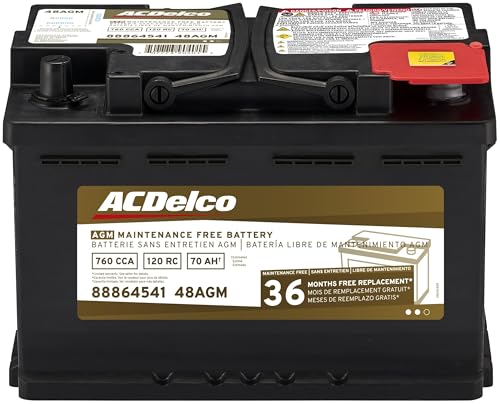
- High density negative paste, improves performance and...
- Enhanced life alloy or Silver Calcium stamped alloy...
- Calcium lead positive grid, maximizes conductivity and...
- Robust envelope separator with puncture resistant back...
- Vent cap design that resists acid leakage

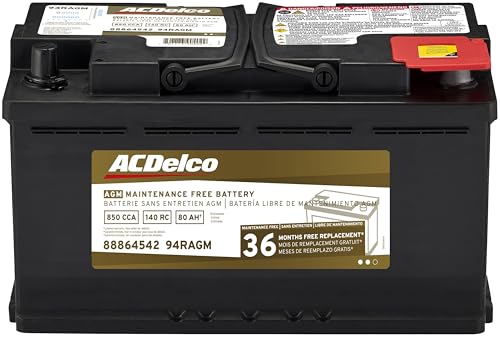
- High density negative paste, improves performance and...
- Enhanced life alloy or Silver Calcium stamped alloy...
- Calcium Lead positive grid, maximizes conductivity and...
- Robust Envelope Separator with puncture-resistant back...
- Vent cap design that resists acid leakage
Last update on 2026-05-30 / Affiliate links / Images from Amazon Product Advertising API
If the PDF is very large, it may not load in the preview below.
Some older TSBs had multiple PDFs — visit the NHTSA Website to view all PDFs.
If the TSB PDF does not show, download or view it on the NHTSA Website.
Click on the (+) Plus Sign
Then Click on Associated Document(s)
Search NHTSA Database for Recalls
Search NHTSA Database for Vehicle Investigations
View Latest Vehicle Investigations
Search NHTSA Database for Vehicle Complaints
View Latest Vehicle Complaints
TSB/Document ID: B012218
Replacement Service Bulletin Number:
MFR Communication Date: 2019-01-01
MFR Internal Campaign ID/Software Version:
Communication Type: Service Bulletin/Repair Instructions
NHTSA Components: ELECTRICAL SYSTEM:12V/24V/48V BATTERY
MFR Component System:
MFR Component Subsystem:
Previous TSB | Next TSB |

- 2026 ALL-IN-ONE HEAVY DUTY TRUCK SCANNER – BUILT FOR DIESEL DIAGNOSTICS:The ANCEL X7HD PRO combines full-system diagnostics, bi-directional control, ECU coding, HDOBD/OBD2 functions, and 42+ reset services in one powerful heavy duty truck scanner. This diesel scan tool helps technicians, fleet owners, and repair shops diagnose problems faster, reduce downtime, and complete more repairs without switching between multiple truck diagnostic tools. Features a 10.1" Android tablet, Bluetooth & Wi-Fi, live data graphing, and 2 years of f-ree updates
- 42+ RESET FUNCTIONS – MORE THAN A BASIC TRUCK CODE READER:Perform essential service functions including forced DPF regeneration, injector coding, speed limiter adjustment, idle adjustment, oil reset, ABS reset, SRS reset, EPB reset, throttle reset, and suspension calibration. Designed for real truck maintenance and fleet service, this commercial truck diagnostic scanner helps reduce dealer visits, avoid unnecessary downtime, and handle more repair jobs with one diesel diagnostic tool
- ACTIVE TEST & ECU CODING – ADVANCED BIDIRECTIONAL SCAN TOOL FOR TRUCKS:Quickly locate faults by activating components and sending commands directly to vehicle systems. Test injectors, ABS, throttle, cooling systems, and other modules in real time without unnecessary disassembly. ECU coding and module matching help adapt replacement parts, restore factory settings, and reduce repeat repairs, making this semi truck scan tool ideal for advanced troubleshooting and daily shop work
- FULL-SYSTEM HDOBD/OBD2 DIAGNOSTICS – WIDE TRUCK & ENGINE COVERAGE:Read and clear codes, monitor live data, freeze frame, and diagnose engine, transmission, ABS, body, and other major systems. Compatible with Freightliner
 , Kenworth, Peterbilt, Volvo, Mack, International, and other commercial truck brands, plus Cummins, Caterpillar, Detroit, Paccar, and Navistar diesel engines. Also supports full OBD2/EOBD diagnostics for standard vehicles, making it a versatile truck obd2 scanner for mixed fleets and repair shops
 - PROFESSIONAL HARDWARE + RELIABLE SUPPORT – BUILT FOR DAILY SHOP USE:This professional diesel diagnostic computer features a 10.1" touchscreen, Android 10.0 system, 6000mAh battery, Bluetooth/Wi-Fi connectivity, and built-in front & rear cameras for documenting repairs and remote troubleshooting. Includes 2 years of fr-ee updates, 1-year w-arranty, and responsive technical support. Contact [email protected] before purchase to confirm compatibility and supported functions for your truck or diesel engine

- 【Built for Heavy Duty Diesel Diagnostics】Designed for SAE J1939 and J1708 compliant trucks, buses, and diesel-powered commercial vehicles. HD601 truck scanner diagnostic tool helps owner-operators, small fleets, mobile technicians, and independent repair shops quickly identify fault codes, view live data, and make informed repair decisions—saving time, reducing downtime, and avoiding unnecessary shop visits
- 【Full System Diagnostics+All HD OBD Modes】The New HD601 heavy duty truck scanner delivers full-system diagnostics on SAE J1939 and J1708-compliant commercial vehicles—digging into engine, transmission, ABS, fuel, every system that keeps your rig rolling. It supports all HD OBD modes, giving you live data, freeze frame, ECU info, vehicle info, emissions data tracking, plus code reading and clearing. Not just what broke, but why—so you fix it right the first time. Pinpoint issues faster, cut repair costs, and spend less time on the shoulder
- 【Wide Heavy-Duty Vehicle Coverage】Supports a wide range of heavy-duty vehicle manufacturers and systems, including Freightliner, Kenworth, Peterbilt, Volvo, International, Detroit, Cummins, Paccar, Allison, Eaton, Bendix, Wabco, and more. Coverage varies by vehicle make, model, year, and system configuration. Contact our support team before purchase if compatibility verification is needed
- 【Speaks Major Truck Protocol】The New HD601 diesel truck scanner is built for American-made trucks—and supports the heavy‑duty protocols you' re most likely to run into on the road: SAE J1939, J1708/J1587, ISO 15765‑4, ISO 14230‑4, ISO 9141‑2, J1850 PWM/VPW, ISO 27145‑4, and EURO‑6. For most trucks, model years, and systems, it speaks the language your vehicle understands. Just plug it in and start diagnosing—no guesswork, no gatekeeping. Note: vehicle functions and module availability may vary by manufacturer and model year
- 【Save Hundreds on Diagnostic Fees】Why pay $150–300 for someone to read your codes? With the New ANCEL heavy duty truck scanner, you can pull fault codes yourself—in minutes, without leaving the truck. One or two uses pays for the tool. After that, every diagnostic is money back in your pocket. Smart investment for owner-operators, techs, and small fleets. Read and clear stored fault codes in minutes. Active fault codes may require repairs before they can be cleared

- 【One Tool, Total Fleet Coverage: 6/9/16 Pin Ready】Featuring an integrated 16-pin OBD2 connector and professional-grade 6-pin & 9-pin adapters, this heavy duty truck scanner provides extensive support for J1939, J1708, J1587, ISO 14230-4, ISO 15765-4 and ISO 9141-2, ISO 27145-4 protocols. It offers reliable diagnostic coverage for major American diesel brands—including Cummins, Paccar, Caterpillar, Detroit, and Freightliner—making it a versatile semi truck scanner for managing any diverse fleet.
- 【2 in 1 Diesel Code Reader & Advanced HD OBDII】Equipped with professional-grade diesel scanner capabilities, the HD301 features intuitive Read/Erase codes and turn off the "Check Engine" light. With the built-in DTC Lookup library, you can instantly access fault code definitions on-device without searching the internet. It also retrieves hundreds of essential live sensor data—such as coolant temperature, fuel pressure, and engine RPM—in a stable text format for precise and rapid troubleshooting. (Please note that the HD301 can not support DPF Regen.)
- 【Full System Truck Diagnostic】The FOXWELL HD301 heavy duty scan tool is engineered to deeply access and scan all available electronic control modules specifically for truck, including Engine, Transmission, ABS, SRS, Chassis, and Body Control. This professional truck scanner diagnostic tool allows you to identify issues across the entire vehicle, ensuring your rig stays in peak condition for the long haul.
- 【Versatile for most big Rigs: Commercial, Passenger & Beyond】Engineered for more than just trucks, this heavy duty scan tool offers extensive coverage for pickups, buses, trailers, and even marine vessels. From construction machinery (excavators, loaders) to agricultural equipment (tractors, harvesters), it provides a true all-in-one diagnostic solution.
- 【Plug-and-Play & No Subscription】Designed for the road! No WiFi, no batteries, and no complex App setup required. Simply plug it into your vehicle’s diagnostic port to start scanning immediately. Enjoy lifetime free software updates to keep your HD301 diesel truck scanner current with the latest vehicle models and features—without any hidden subscription fees—While overcoming language barriers with support for Spanish and English.
Last update on 2026-06-23 / Affiliate links / Images from Amazon Product Advertising API
This product presentation was made with AAWP plugin.