
NHTSA ID Number: 10253663
Manufacturer Communication Number: OwnersB
TSB/Document Date: 2024-04-29
Summary
Tesla does not provide physical owner's manual copies. Instead, all available owner?s manual content is integrated into the vehicle software, and only the content relevant for a given vehicle, based on vehicle configuration and software version installed, is displayed on its touchscreen. This file contains all available owner?s manual content for 2015-2020 Model X vehicles converted to PDF format, and given the distribution method and NHTSA?s submission format requirements, it is the best available representative copy of owner?s manual content. However, a customer who accesses the owner?s manual via their vehicle?s touchscreen would only see the parts of this PDF file that are relevant to their vehicle.
with that tire.
Tread
The portion of a tire that comes into contact with the road.
Tread rib
A tread section running around the circumference of a tire.
Tread separation
The pulling away of the tread from the tire carcass.
293
Owners Manual
Tread wear
indicators (TWI)
The projections within the principal grooves designed to give a visual indication of the
degrees of wear of the tread.
Wheel-holding
fixture
The fixture used to hold the wheel and tire assembly securely during testing.
Instructions for Transporters
294
Owners Manual
Instructions for Transporters
When Transporting Model X
Always transport Model X with all four tires off the ground. A flatbed truck or comparable transport vehicle is
recommended. A wheel lift and dolly can be used only when transporting Model X for a very short distance to
reposition the vehicle for loading onto a flatbed truck or comparable transport vehicle (for example, the vehicle is
located in a low-clearance garage) or if otherwise specified by Tesla. When transporting, whether on a flatbed truck
or using a wheel lift and dolly, Model X can face either direction.
Do not transport Model X using any other method unless specified by Tesla. Follow the steps provided and observe
all warnings and cautions. Damage caused by transporting your vehicle is not covered by the warranty.
NOTE: The following illustrations are for demonstration purposes only.
WARNING: Model X is equipped with high voltage components (see High Voltage Components on page 237).
Before transporting Model X as a result of an event (such as a collision) that may have compromised a high
voltage component, it is important to assume that these components are energized. Always follow high
voltage safety precautions (wearing personal protective equipment, etc.) until emergency response
professionals have evaluated the vehicle and can accurately confirm that all high voltage systems are no longer
energized. Failure to do so may result in serious injury or death.
Disable Self-Leveling (air suspension vehicles only)
If Model X is equipped with the air suspension system, it automatically self-levels, even when power is off. To prevent
damage, you must activate Jack Mode to disable self-leveling:
1. Touch Controls > Suspension on the touchscreen.
2. Press the brake pedal, then touch Very High to maximize height.
3. Touch Controls > Service > Jack Mode.
NOTE: Jack Mode cancels when Model X is driven over 4 mph (7 km/h).
WARNING: Failure to activate Jack Mode on a Model X equipped with the air suspension system can result in
the vehicle becoming loose during transport, which may cause significant damage.
295
Owners Manual
Activate Tow Mode
Model X may automatically shift into Park when it detects the driver leaving the vehicle, even if it has previously
been shifted into Neutral. To keep Model X in Neutral (which disengages the brake), you must use the touchscreen to
activate Tow Mode:
1. Shift into Park.
2. Chock the tires or otherwise ensure Model X is stable.
3. Press and hold the brake pedal, then on the touchscreen touch Controls > Service > Tow Mode.
Ensure the vehicle is not connected to a charger. Transport Mode is not available if Model X is still plugged in.
When Tow Mode is active, Model X displays this yellow indicator light on the instrument panel, along
with a message telling you that Model X is free-rolling.
To cancel Tow Mode, shift Model X into Park.
CAUTION: If the electrical system is not working, and you therefore cannot release the electric parking brake,
attempt to jump start the low voltage battery (see Jump Starting on page 307). If a situation occurs where
you cannot disengage the parking brake, use a self-loading dolly or tire skates. Before doing so, always check
the manufacturer’s specifications and recommended load capacity.
Pull onto the Flatbed Truck
The method used to pull Model X onto the truck depends on whether a tow eye is available (provided with your
vehicle at time of purchase).
If equipped with a tow eye:
1. Remove the tow eye cover by inserting a small flat screwdriver into the slot located along the top of the cover,
then prying gently to release the cover from the top snap.
CAUTION: Keep the tow eye cover in a safe place so you can replace it when transporting is complete.
296
Owners Manual
2. Fully insert the tow eye into the opening, then turn it counter-clockwise until securely fastened.
3. Attach the winch cable to the tow eye.
CAUTION: Before pulling, make sure the tow eye is securely tightened.
4. Pull Model X slowly onto the flatbed truck.
5. Shift Model X into Park by pressing the button on the end of the gear selector.
297
Owners Manual
If not equipped with a tow eye:
WARNING: If the vehicle is pulled onto the flatbed truck without a tow eye, all suspension fasteners should be
checked for proper torque and all components should be visually inspected for damage prior to driving the
vehicle again. If a fastener is loose, or if any damage is found, the affected component(s) should be replaced.
1. Attach the tow straps to the large hole on each of the rearmost lower suspension arms underneath the front of
the vehicle.
2. To protect the underbody from any damage, place a protective barrier (such as a piece of wood) between the
tow strap and the underbody.
3. Pull Model X slowly onto the flatbed truck.
4. Shift Model X into Park by pressing the button on the end of the gear selector.
Secure the Tires
The vehicle's tires must be secured onto the truck using the eight-point tie-down method.
• Ensure any metal parts on the tie-down straps do not contact painted surfaces or the face of the wheels.
• Do not place tie-down straps over body panels or through the wheels.
CAUTION: Attaching tie-down straps to the chassis, suspension or other parts of the vehicle's body may cause
damage.
298
Owners Manual
If Vehicle Has No Power
If Model X has no low voltage power, perform the following steps to open the hood or jump start the low voltage
battery.
1. Open the hood. See Opening the Hood with No Power on page 306 for more information on opening the hood if
the vehicle does not have power.
2. Jump start the low voltage battery (see Jump Starting on page 307).
NOTE: Tow providers: See Running Out of Range on page 306 for more information on transporting the vehicle to a
charging station and preparing the vehicle to charge.
299
Owners Manual
Instructions for Transporters
DO NOT TRANSPORT WITH WHEELS ON THE GROUND
The front motor in Model X generates power when the wheels spin. Always transport Model X with all four tires off
the ground. Ensure that the tires are unable to spin at any time during transport.
WARNING: NEVER TRANSPORT YOUR VEHICLE WITH THE TIRES IN A POSITION WHERE THEY CAN SPIN.
DOING SO CAN LEAD TO SIGNIFICANT DAMAGE AND OVERHEATING. IN RARE CASES EXTREME
OVERHEATING MAY CAUSE THE SURROUNDING COMPONENTS TO IGNITE.
Do not transport Model X using any method that is not specified by Tesla. Adhere to the instructions provided in the
following sections and observe all warnings and cautions provided. Damage caused by improper transporting of
your vehicle is not covered by the warranty.
NOTE: Tesla is not liable or responsible for reimbursing services not dispatched through Tesla Roadside Assistance.
Approved Methods for Transporting
NOTE: The tires are allowed to rotate slowly (under 3 mph or 5 km/h) and for a very short distance (less than 30 feet
or 10 meters) only when Transport Mode is enabled (see Activate Transport Mode on page 301) while the vehicle is
being winched onto a flatbed truck or pulled out of a parking space for repositioning. Exceeding these boundaries
can lead to significant damage and overheating that is not covered by the warranty.
A flatbed truck or comparable transport vehicle is the recommended method of transporting Model X. The vehicle
can face either direction when using a flatbed.
If Model X must be transported without a flatbed truck, then wheel lifts and dollies must be used to ensure that all
four wheels are off of the ground. This method may only be used for a maximum of 35 miles (55 km), and must not
exceed the manufacturer speed rating of the dollies. With this method, Tesla recommends the vehicle facing forward
so that the front wheels are lifted and the rear wheels are on dollies.
NOTE: Transporting Model X with the front wheels on dollies is not recommended, but may be done if an external
steering wheel lock is applied and care is taken to prevent the front wheels from spinning. DO NOT TRANSPORT
YOUR VEHICLE IF THERE IS ANY CHANCE OF THE FRONT WHEELS SPINNING.
300
Owners Manual
CAUTION: Enable Transport Mode (see Activate Transport Mode on page 301) before winching Model X onto
a flatbed truck (see Pull onto the Flatbed Truck - With Tow Eye on page 302). If Transport Mode is not
available or the touchscreen is not accessible, self-loading dollies or tire skates must be used to load the
vehicle into the approved transportation position. Tesla is not responsible for any damage caused by or during
the transport of Model X, including personal property damage or damage caused by using self-loading dollies
or tire skates.
WARNING: Model X is equipped with high voltage components that may be compromised as a result of a
collision (see High Voltage Components on page 237). Before transporting Model X, it is important to assume
these components are energized. Always follow high voltage safety precautions (wearing personal protection
equipment, etc.) until emergency response professionals have evaluated the vehicle and can accurately
confirm that all high voltage systems are no longer energized. Failure to do so may result in serious injury.
Disable the Self-Leveling Air Suspension System
If Model X is equipped with the air suspension system, it automatically self-levels, even when power is off. To prevent
damage, you must activate Jack Mode to disable self-leveling:
1. Touch Controls > Suspension on the touchscreen.
2. Press the brake pedal, then touch Very High to maximize height.
3. Touch Controls > Service > Jack Mode.
NOTE: Jack Mode cancels when driving speed exceeds 4 mph (7 kph).
WARNING: Failure to activate Jack Mode on a vehicle equipped with the air suspension system can result in
the vehicle becoming loose during transport, which may cause significant damage.
Activate Transport Mode
Transport Mode keeps the parking brake disengaged while winching Model X onto a flatbed truck. When active,
Transport Mode displays a message indicating that the vehicle will remain free-rolling. The following are required to
enable Transport Mode:
• Low voltage power is required. You are unable to use the touchscreen to activate Transport Mode if Model X has
no power.
• Model X must detect a key fob. Transport Mode is available only when a key fob is detected.
• Ensure the vehicle is not connected to a charger. Transport Mode is not available if Model X is still plugged in.
To activate Transport Mode:
1. Ensure the vehicle is in Park.
2. Chock the tires or otherwise ensure Model X is secure.
3. Press and hold the brake pedal, then on the touchscreen, touch Controls > Service > Towing. The touchscreen
displays a message reminding you how to properly transport Model X.
4. Press the Transport Mode button. You can tell Transport Mode is enabled because this button is blue. Model X is
now free-rolling and can slowly be rolled (no faster than walking speed) or winched.
To cancel Transport Mode, shift Model X into Park.
NOTE: If Model X loses low voltage power after Transport Mode is enabled, Transport Mode cancels.
CAUTION: If the electrical system is not working, and you therefore cannot use the touchscreen to activate
Transport Mode, use self-loading dollies or tire skates. Before doing so, always check the manufacturer's
specifications and recommended loading capacity.
301
Owners Manual
Pull onto the Flatbed Truck - With Tow Eye
1. Locate the tow eye.
2. Remove the tow eye cover by inserting a small flat screwdriver into the slot located along the top of the cover,
then prying gently to release the cover from the top snap.
NOTE: Keep the tow eye cover in a safe place so you can replace it when towing is complete.
3. Fully insert the tow eye into the opening, then turn it counter-clockwise until securely fastened.
302
Owners Manual
4. Attach the winch cable to the tow eye.
CAUTION: Before pulling, make sure the tow eye is securely fastened.
5. Activate Transport Mode by touching Controls > Service > Towing.
6. Pull Model X slowly onto the flatbed truck.
Pull onto the Flatbed Truck - Without Tow Eye
CAUTION: To avoid damage, only pull the vehicle onto a flatbed truck using a properly-installed tow eye. Using
the chassis, frame, or suspension components to pull the vehicle can result in damage.
WARNING: If the vehicle is pulled onto the flatbed truck without a tow eye, all suspension fasteners should be
checked for proper torque and all components should be visually inspected for damage prior to driving the
vehicle again. If a fastener is loose, or if any damage is found, the affected component(s) should be replaced.
It is strongly recommended that you connect the winch to your vehicle's tow eye, as described previously. However,
if a situation arises in which the tow eye is not available (lost, misplaced, etc.), the following instructions describe
how to attach tow straps.
1. Attach the tow straps to each of the lower suspension arms underneath the front of the vehicle.
2. To protect the underbody from damage, place a protective barrier (such as a piece of wood) between the tow
strap and underbody.
3. Activate Transport Mode by touching Controls > Service > Towing.
4. Pull Model X slowly onto the flatbed truck.
Secure the Tires
The vehicle's tires must be secured onto the truck using the eight-point tie-down method.
• Ensure any metal parts on the tie-down straps do not contact painted surfaces or the face of the wheels.
• Do not place tie-down straps over body panels or through the wheels.
CAUTION: Attaching the tie-down straps to the chassis, suspension or other parts of the vehicle's body may
cause damage.
303
Owners Manual
If Vehicle Has No Power
If Model X has no low voltage power, perform the following steps to open the hood or jump start the low voltage
battery.
1. Open the hood. See Opening the Hood with No Power on page 306 for more information on opening the hood if
the vehicle does not have power.
2. Jump start the low voltage battery (see Jump Starting on page 307).
NOTE: Tow providers: See Running Out of Range on page 306 for more information on transporting the vehicle to a
charging station and preparing the vehicle to charge.
In Case of Emergency
Contacting Tesla Roadside Assistance
Tesla Roadside Assistance is available to you 24 hours a day, 365 days a year, for the duration of your warranty
period. Tesla Roadside Assistance is also available to speak with roadside service professionals to answer any
questions and explain the proper procedure for transporting your vehicle.
When contacting Tesla Roadside Assistance, please provide:
• The Vehicle Identification Number (VIN). The VIN is displayed when you touch Controls > Software. The VIN can
also been seen by looking through the driver's side of the windshield.
• Your exact location.
• The nature of the problem.
If available in your region, you can also expedite your request, by choosing the Roadside Assistance option in the
Tesla mobile app.
NOTE: For a detailed description of Tesla's Roadside Assistance policy, go to the support page on the Tesla web site
for your region.
Regional Phone Number(s)
Canada: 1-877-79TESLA (1-877-798-3752)
Mexico: 800-228-8145
United States: 1-877-79TESLA (1-877-798-3752)
304
Owners Manual
NOTE: The phone number is also available by touching Controls > Service.
305
Owners Manual
Running Out of Range
CAUTION: It is your responsibility to monitor the state of the high voltage Battery and the remaining range of
your vehicle. Do not assume that there is any range available when the range displayed on the instrument
cluster is at 0 miles (0 km) (or 0%). Damage to the low voltage battery due to running out of range is not
covered by the warranty.
NOTE: In the unlikely event your vehicle runs out of range while driving, pull over when safe to do so and contact
Tesla Roadside Assistance on page 304 or your preferred tow provider.
If Model X runs out of range, the low voltage battery is no longer supported – and when low voltage is not
supported, the vehicle cannot charge. Therefore, the low voltage battery must be supported by an external power
supply to allow you to charge the High Voltage (HV) Battery. Once the vehicle begins charging, the external power
supply is no longer required.
In the case of running out of range away from a charger, the tow provider should transport Model X to the nearest
charging station and unload the vehicle within the charging cable's reach. Once the vehicle is positioned next to a
charger, follow these instructions:
NOTE: If the vehicle is being transported to a charger, make sure the tow provider does not leave until confirming
that the vehicle's high voltage Battery is successfully charging.
1. Jump start the low voltage system (see Jump Starting on page 307). The low voltage battery must be jump
started to support the high voltage Battery.
2. Wait a few minutes. Once the touchscreen powers on, plug the charge cable into Model X to begin charging the
high voltage Battery.
3. When Model X begins to charge, disconnect the external power supply from the low voltage battery.
Before transporting to a non-Tesla charger, ensure your vehicle is equipped with an adapter that accommodates the
specific type of charging station you will be using. Even at a non-Tesla charger, you will need to jump start the low
voltage system before you can begin charging.
CAUTION: Always ensure Model X has enough range for your drive, or for being stored for an extended period.
Do not rely on the range estimates displayed on the touchscreen or mobile app as range can decrease faster
than projected due to ambient temperature, driving habits, wind, vehicle settings (such as Sentry Mode), etc.
NOTE: Towing your vehicle as a result of running out of range is not covered by the warranty.
Opening the Hood with No Power
Opening the Hood with No Power
If Model X has no electrical power, or if you are unable to open the front trunk using the touchscreen or key, follow
these steps to open it:
1. Remove the tow eye cover (see Instructions for Transporters on page 295Instructions for Transporters on page
300).
2. Locate the two straps. One of these straps is labeled 'A' and the other is labeled 'B'.
3. Pull strap 'A' to release the primary latch.
4. Pull strap 'B' to release the secondary latch.
5. Lift the hood. You may need to push the hood down slightly to release the pressure against the secondary latch.
NOTE: It is important to pull the straps in the correct sequence or the appropriate latch does not release and the
front trunk can not open.
When opening the front trunk using this method, the latches remain in the open position and you can not close it
again without electrical power. To close a front trunk that has been opened by pulling the manual straps:
1. Charge the low voltage battery (for instructions, contact Tesla).
2. Press the Front Trunk button on the touchscreen to reset the primary and secondary latches.
306
Owners Manual
Jump Starting
The following instructions assume you are using an external low voltage power supply (such as a portable jump
starter). If jump starting Model X using another vehicle, refer to the vehicle manufacturer's instructions.
CAUTION: Model X cannot be used to jump start another vehicle. Doing so can result in damage.
CAUTION: Avoid short circuits when jump starting Model X. Connecting cables to the wrong jump post,
touching leads together, etc., can damage Model X.
Follow these steps:
Ensure you have an external power supply. After opening the hood:
1. Remove the maintenance panel.
2. Find the positive (+) and negative (-) jump posts.
3. Release the cover from the red positive (+) jump post, and then connect the low voltage power supply's red
positive (+) cable to the red positive (+) jump post.
4. Connect the low voltage power supply's black negative (-) cable to the vehicle.
5. Turn on the external power supply (refer to the manufacturer’s instructions). Touch the touchscreen to wake it up.
NOTE: It may take several minutes to receive enough power to wake up the touchscreen.
6. When external low voltage power is no longer required, disconnect both cables, beginning with the black
negative (-) cable.
7. On top of the low voltage battery, push the connector housing towards the electrical connector so that the
electrical connector engages the low voltage battery.
8. On top of the low voltage battery, push down the locking tab that attaches the electrical connector to the
connector housing.
9. Replace the maintenance panel by placing it back in its original location and pressing down until it is secure.
10. Close the hood.
Opening Doors with No Power
Opening a Front Door with No Power
If Model X has no electrical power, the front doors open as usual using the interior door handles.
Opening a Rear Door with No Power
To open the falcon wing doors in the unlikely situation when Model X has no power, carefully remove the speaker
grille from the door and pull the mechanical release cable down and towards the front of the vehicle. After the latch
is released, manually lift up the door.
307
Owners Manual
CAUTION: Manual door releases are designed to be used only in situations when Model X has no power. When
Model X has power, use the button located at the top of the interior door handle.
Troubleshooting
Troubleshooting Alerts
APP_w009
Automatic Emergency Braking is unavailable
Feature may be restored on next drive
What this alert means:
The Automatic Emergency Braking feature is unavailable for the rest of your current drive. This alert does not
specifically indicate any other braking functions or features are unavailable.
This alert may be present for several reasons. Other alerts may be present for conditions that also cause Automatic
Emergency Braking to be unavailable.
What to do:
No action is typically required. Automatic Emergency Braking will usually be available again when you start your
next drive.
If this alert persists across multiple drives, or occurs with increasing frequency over several drives, it is recommended
that you schedule service at your earliest convenience.
For more information, see Collision Avoidance Assist on page 202.
308
Owners Manual
APP_w048
Autopilot features temporarily unavailable
Features may be restored on next drive
What this alert means:
Autopilot features are currently unavailable on your vehicle. Depending on the configuration of your vehicle,
Autopilot features that are disabled may include:
• Autosteer
• Traffic-Aware Cruise Control
• Automatic Emergency Braking
• Forward Collision Warning
• Lane Departure Warning
What to do:
This alert can be set for several reasons. Check for additional alerts that indicate the cause of this condition.
Typically, Autopilot features are restored on your next drive. If this alert persists across multiple drives, schedule
service at your earliest convenience.
For more information and the full list of Autopilot features, see About Autopilot on page 157.
APP_w207
Autosteer temporarily unavailable
What this alert means:
Autosteer is temporarily unavailable. This could be a temporary condition caused by an external factor, such as:
• Missing or faded lane markers.
• Narrow or winding roads.
• Poor visibility due to rain, snow, fog, or other weather.
• Extremely hot or cold temperatures.
• Bright light due to other vehicle headlights, direct sunlight, or other light sources.
This alert will also be present if you exceeded the maximum speed limit for Autosteer with Autosteer active. In this
case, Autosteer will not be available for the rest of your current drive.
What to do:
Continue to your destination. If Autosteer is not available by the time you reach your destination, and remains
unavailable during your next planned drive, check for the following:
• Damage or obstruction caused by mud, ice, snow, or other environmental factors
• Obstruction caused by an object mounted on the vehicle, like a bike rack
• Obstructions caused by adding paint or adhesive products like wraps, stickers, or rubber coatings to your vehicle
• A damaged or misaligned bumper
If there are no obvious obstructions, or if you find damage to the vehicle, schedule service at your convenience. Your
vehicle is OK to drive in the meantime.
For more information, see Autosteer on page 169.
309
Owners Manual
APP_w218
Autosteer speed limit exceeded
Take control of steering wheel
What this alert means:
Autosteer is unavailable because your vehicle has exceeded the maximum speed limit for this driver assistance
feature.
What to do:
Take immediate control of the steering wheel and maintain control until you reach your destination.
In most cases, Autosteer will not be available for the rest of your current drive. To reset it, bring the vehicle to a
complete stop and shift into Park. When you shift into Drive to travel to your next destination, Autosteer should be
available again.
NOTE: If this alert becomes active while you are driving in Germany, Autosteer should be available again once your
vehicle is traveling below the Autosteer speed limit.
If Autosteer is not available during your next drive, and remains unavailable throughout subsequent drives, schedule
service at your convenience. Your vehicle is OK to drive in the meantime.
For more information, see Autosteer on page 169.
APP_w221
Cruise control unavailable
Reduced front radar visibility
What this alert means:
Traffic-Aware Cruise Control and Autosteer are unavailable because the radar located in the front bumper area of
your vehicle has no or low visibility.
This could be a temporary obstruction caused by factors like snow, ice, dirt, or mud.
What to do:
Continue to your destination. Your vehicle is OK to drive. Traffic-Aware Cruise Control and Autosteer will remain
unavailable as long as the radar lacks adequate visibility.
If the alert persists throughout your drive, examine the front bumper before your next planned drive and attempt to
clear any obstruction. See Cleaning a Camera on page 266 for more information on clearing dirt or debris from that
area of the vehicle.
If this alert persists throughout subsequent drives but no obstruction is visible on the front bumper where the radar
is located, schedule service at your earliest convenience. Your vehicle is OK to drive in the meantime.
APP_w222
Cruise control unavailable
Reduced front camera visibility
What this alert means:
Traffic-Aware Cruise Control and Autosteer are unavailable because one or more of the front cameras in your vehicle
is blocked or blinded by external conditions.
Traffic-Aware Cruise Control and Autosteer will remain unavailable while a front camera lacks adequate visibility.
Cameras may have limited or no visibility due to:
• Dirt or debris on the camera surface.
• Environmental conditions like rain, fog, snow, or dew.
• Bright sunlight or glare from another light source.
310
Owners Manual
• Low or limited light conditions, including unlit or poorly lit roadways at night.
• Condensation (water droplets or mist) on the camera surface.
• Monotonous environmental features, including tunnel walls or highway dividers.
What to do:
Continue to your destination. Your vehicle is OK to drive.
This is often a temporary issue that clears up on its own. If the alert does not clear by the end of your drive:
• Inspect and clean the front camera area at the top center of the windshield before your next planned drive.
• Check the camera surface for condensation, dirt, or other debris and attempt to clear any obstruction.
See Cleaning a Camera on page 266 for more information on clearing dirt or debris from that area of the vehicle.
Although condensation on the inside of the front camera enclosure cannot be wiped clean, you can usually clear it
quicker by following these steps:
1. Pre-condition the cabin with the temperature set to High and A/C turned ON.
2. Turn on the front windshield defroster.
If this alert persists throughout subsequent drives but no front camera obstruction is visible, schedule service at your
earliest convenience. Your vehicle is OK to drive in the meantime.
APP_w224
Cruise control unavailable
Continue driving to allow cameras to calibrate
What this alert means:
Traffic-Aware Cruise Control and Autosteer are unavailable because the cameras on your vehicle are not fully
calibrated.
Your vehicle must maneuver with great precision when features like Traffic-Aware Cruise Control and Autosteer are
active. Before these features can be used for the first time, the cameras must complete an initial self-calibration.
Occasionally, one or more cameras can become uncalibrated.
What to do:
Continue to your destination. Your vehicle is OK to drive.
Traffic-Aware Cruise Control and Autosteer will remain unavailable until camera calibration is complete.
When calibration is complete, Traffic-Aware Cruise Control and Autosteer should be available.
For your convenience, a calibration progress indicator is displayed on the touchscreen. Calibration typically
completes after your vehicle has driven 20-25 miles (32-40 km), but the distance varies depending on road and
environmental conditions. For example, driving on a straight road with highly visible lane markings helps the
cameras calibrate quicker.
If the alert persists and camera calibration has not completed after your vehicle has driven 100 miles (160 km) or
more, or Traffic-Aware Cruise Control and Autosteer remain unavailable despite successful camera calibration,
schedule service at your earliest convenience. Your vehicle is OK to drive in the meantime.
APP_w304
Camera blocked or blinded
Clean camera or wait for it to regain visibility
What this alert means:
311
Owners Manual
One or more of the vehicle cameras has limited visibility, or no visibility at all, due to external conditions. When the
cameras on your vehicle cannot provide accurate visual information, some or all Autopilot features may be
temporarily unavailable.
Cameras may have limited or no visibility due to:
• Dirt or debris on the camera surface.
• Environmental conditions like rain, fog, snow, or dew.
• Bright sunlight or glare from another light source.
• Low or limited light conditions, including unlit or poorly lit roadways at night.
• Condensation (water droplets or mist) on the camera surface.
• Monotonous environmental features, including tunnel walls or highway dividers.
What to do:
Continue to your destination. Your vehicle is OK to drive. This is often a temporary issue that will be resolved when
condensation evaporates, or when a particular environmental condition or feature is no longer present.
If the alert does not clear by the time you reach your destination, check camera surfaces for condensation, dirt, or
other debris. For camera locations, see Cameras on page 22.
Clean the cameras as necessary before your next planned drive. For recommended cleaning procedures, see
Cleaning a Camera on page 266.
If you continue to see this alert after cleaning the cameras, check the inside surfaces of the door pillar camera
enclosures for condensation. Although condensation inside the camera enclosures cannot be wiped clean, you can
usually clear it faster by following these steps:
1. Precondition the cabin by turning Climate ON, setting temperature to High, and making sure A/C is ON.
2. Turn on the front windshield defroster.
3. Direct the air vents toward the door pillar cameras.
For more information on clearing condensation from camera enclosures, see Cleaning a Camera on page 266.
If the alert does not clear by the end of your next planned drive, despite cleaning the indicated camera(s) and
following recommended steps to clear condensation, schedule service at your next convenient opportunity. Your
vehicle is OK to drive in the meantime.
BMS_u006
Vehicle shutting down - PULL OVER SAFELY
Battery charge level too low
What this alert means:
Your vehicle has detected that the high voltage battery does not have enough energy remaining to support driving.
Your vehicle will be unable to drive or continue driving until charged.
If this alert is present while you are driving, your vehicle needs to shut down. A separate vehicle alert should be
present to indicate this condition. It is also possible your vehicle may shut down unexpectedly.
If this alert is present when your vehicle is parked, you may be unable to drive.
This alert is usually present because your vehicle's high voltage battery charge level has been reduced through
normal operation.
What to do:
Charge your vehicle immediately. Charging your vehicle should restore your vehicle's ability to drive.
312
Owners Manual
If this alert occurs during subsequent drives, despite a displayed battery charge level of 5% or higher, schedule
service at your earliest convenience.
For more information on the high voltage battery, see High Voltage Battery Information on page 239.
For more information on charging, see Charging Instructions on page 241.
BMS_u018
Maximum battery charge level reduced
OK to drive - Schedule service
What this alert means:
Your vehicle has detected a condition internal to the high voltage battery that is limiting the battery’s performance.
As a result, maximum charge level and range are reduced. Service is required to restore full performance.
What to do:
If this alert persists, schedule service soon. Without service, your vehicle's maximum charge level and range will
remain limited.
Your vehicle is OK to drive and charge.
For more information on the high voltage battery, see High Voltage Battery Information on page 239.
BMS_u030
Charging adapter has electric arc flash hazard
Use different charging equipment
What this alert means:
Charging is unavailable because your vehicle has detected an electric arc flash hazard in the third-party charging
adapter used to connect a Combined Charging System (CCS) charge handle to your vehicle’s charge port.
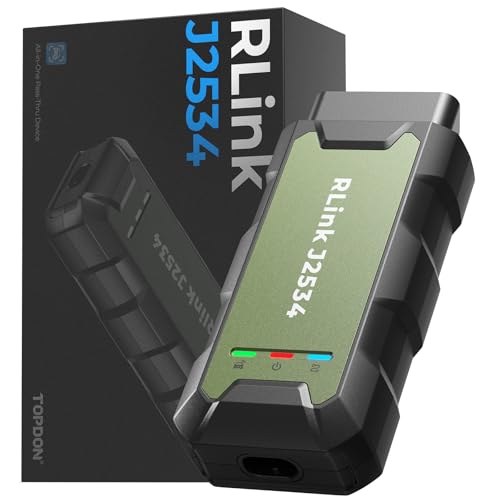
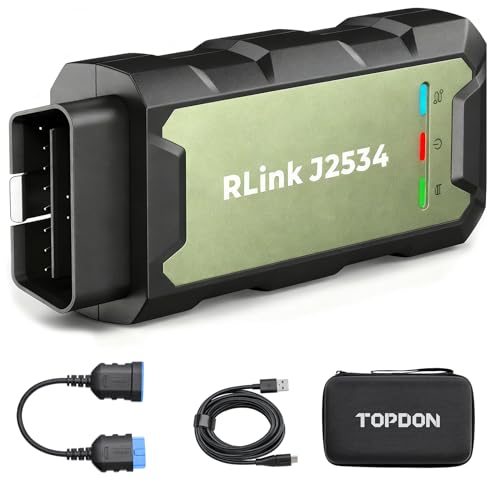
- Advanced VCI Box, Industry-leading J2534 Pass-Thru...
- High-Speed OEM-Level Diagnostics & Programming: Unlock true...
- Coverage for 17 Car Brands & Ultra Reliability: Works...
- User-Friendly RLink Platform & Expert Support: TOPDON’s...
- 6.6 ft USB-C Cable & Portable Storage Case: The RLink J...
Last update on 2026-06-23 / Affiliate links / Images from Amazon Product Advertising API
If the PDF is very large, it may not load in the preview below.
Some older TSBs had multiple PDFs — visit the NHTSA Website to view all PDFs.
If the TSB PDF does not show, download or view it on the NHTSA Website.
Click on the (+) Plus Sign
Then Click on Associated Document(s)
Search NHTSA Database for Recalls
Search NHTSA Database for Vehicle Investigations
View Latest Vehicle Investigations
Search NHTSA Database for Vehicle Complaints
View Latest Vehicle Complaints
TSB/Document ID: OwnersB
Replacement Service Bulletin Number:
MFR Communication Date: 2024-03-27
MFR Internal Campaign ID/Software Version:
Communication Type: Service Bulletin/Repair Instructions
NHTSA Components: EQUIPMENT:ELECTRICAL:INFOTAINMENT:VIDEO (TOUCH)SCREEN/MONITOR/UNIT
MFR Component System:
MFR Component Subsystem:
Previous TSB | Next TSB |
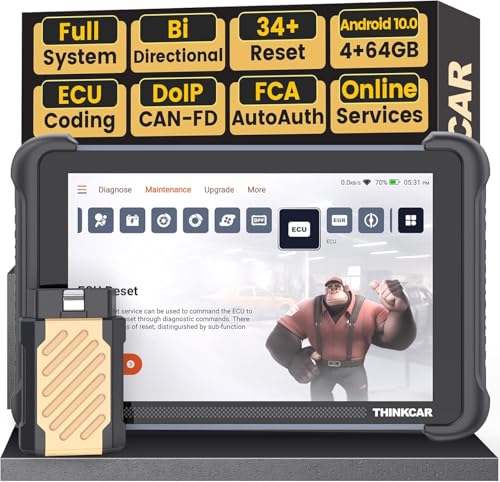
- [Notice] When you receive a used device, it may be a customer return resold by Amazon without inspection. You can exchange it for a new one through Amazon. As this situation is unavoidable, we sincerely apologize. For any issues, contacting us via Amazon's "Messages" is the best way. THINKSCAN 689BT Bidirectional Scan Tool Can Be Used Immediately After It is Turned On, Without Complicated Registration Process, Which is More Convenient & Quick.
- Full Bi-Directional Control & 3000+ Active Tests: Take control and test components like actuators, fuel injectors, relays, and cooling fans in real time. You’ll quickly see if the problem is in the part itself or the control module — saving you hours of guesswork and frustrating trial-and-error.
- Advanced ECU Coding Capabilities: Handle module matching and hidden feature activation with confidence. When you replace an ECU or want to customize settings, this obd2 scanner diagnostic bi directional tool gives you the professional-level capabilities you need without the dealership price tag.
- 34+ Useful Reset and Maintenance Functions: Complete everyday service tasks smoothly with a wide range of helpful reset and maintenance functions. Whether you’re keeping up with regular upkeep or tackling a specific job, this scanner makes maintenance simpler and less stressful for both DIYers and pros.
- Comprehensive Full System Diagnostics: Diagnose every major system — Engine, Transmission, ABS
 , SRS, TPMS, and more — all in one place. Finally stop wondering if you’re missing something important; get the full picture and clear codes with ease.
Last update on 2026-07-02 / Affiliate links / Images from Amazon Product Advertising API
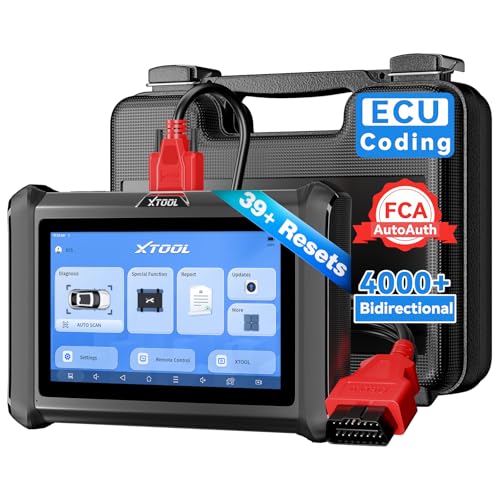
- Top Reasons to Choose the D7S OBD2 Scanner: XTOOL D7S car scan tool, an upgrade of XTOOL D7, offers comprehensive features for automotive technicians, workshops, and DIY enthusiasts 1. Upgraded Hardware: 2+64GB memory, rear camera, intuitive interface, foldable bracket 2. Complete Diagnostics: FCA Autoauth, OE-level all system scan, 39+ maintenance services, 4K+ bidirectional, CANFD/DoIP protocol 3. Advanced Capabilities: ECU c0ding, PMI functions 4. Wide Compatibility: Support 10,000+ models, covering 99% vehicle brands 5. Multi-language: Available in 22+ languages, No IP Restrictions 6. 3-Year Updates: Save 300 bucks on software updates for the latest features and optimizations
- 2026 Upgraded D7S Car Scanner Features: The newly 2026 D7S V2.0 scanner for car brings exciting features for advanced vehicle diagnostics and enhanced user experience 1. FCA AutoAuth: Now supports FCA SGW module for Chrysler, for Jeep, for Dodge (2018+), for Fiat (2017+), enabling faster vehicle communication without gateway restrictions 2. PMI (Offline ECU Pr0gramming): Allows for Ford, for Lincoln, and for Mazda ECU pr0gramming for new modules 3. Optimized Diagnostic Report 2.0: Personalized reports with logos and customer info for auto shops. Note: Compatibility varies by cars, please check before order
- 39+ Services/Resets/Adaptations/Relearns/Calibrations: XTOOL D7S full system car scanner diagnostic tool tackles 99% of common car issues through its 36+ special functions, including Oil Reset, EPB, SAS, BMS, Throttle Reset, Injector C0ding, ABS Bleed, TPMS Reset, Power Balance, etc and also covers specific-vehicle functions like Crank Sensor Relearn, ABS Initialization, Cylinder Power Balance, Fuel Trim Reset, Idle Relearn etc. This car diagnostic scanner enhances efficiency, making repairs and maintenance hassle-free. Tip: DO NOT for All vehicles, please check compatibility first
- Cost-effective ECU C0ding Scan Tool for Specific Brands: Enhance your vehicle's performance with XTOOL D7S! This obd2 scanner all systems bidirectional offers advanced capabilities at an affordable price, supports online for BMW, for Benz and offline for BENZ, for MIT, along with PMI functions for Ford, for Mazda, and for Lincoln. Ideal for technicians and DIY enthusiasts, this automotive scanner diagnostic tool optimizes vehicle performance and enhances the driving experience. Note: Not for all cars and modules, please send car VIN to check the compatibility before purchase
- OE All System Diagnostic & 8 Pids Graphing: XTOOL D7S is a comprehensive all system bi directional obd2 scanner that delivers dealer-level diagnostics, completely controlling over your vehicle’s performance and health. This automotive scan tool can read and clear DTCs, view live data and ECU information, retrieve freeze frames, and perform active tests and full obd2 functions. This bi-directional scan tool can can identify your vehicle's make, model, and year information with just one click and show up to 8 PIDs live data with options for CSV viewing, playback, and recording for in-depth analysis. It is easy-to-use for both professionals and beginners, helping pinpoint issues efficiently
Last update on 2026-06-30 / Affiliate links / Images from Amazon Product Advertising API
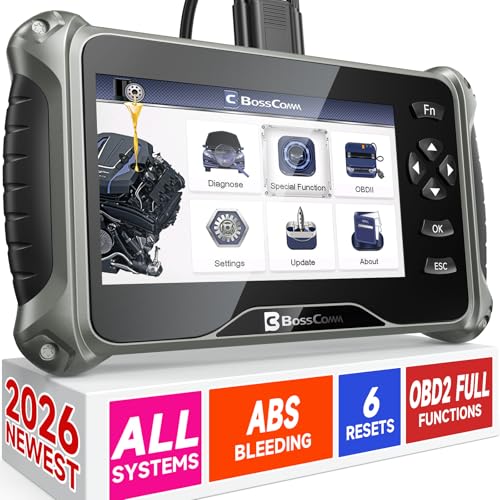
- 【✅Compared to BOSSCOMM IF742, IF745 Offers Full-System Diagnostics】The BOSSCOMM IF745 car diagnostic scanner is an upgraded model of IF742. In addition to supporting all OBD2 Code Reader functions and 6 reset options (ABS/EPB/SAS/BMS/Oil/Throttle), it expands diagnostics from 4 systems (Check Engine/ABS/SRS/Transmission) to vehicle All systems, including Steering, Suspension, and Body Electronics. This provides deeper, more comprehensive diagnostic capabilities.
- 【✨10 OBD2 Functions】The BOSSCOMM IF745 scan tool’s DTC Lookup instantly translates fault codes into user-friendly explanations, its I/M Readiness feature streamlines emissions testing with a single tap, and Freeze Frame lets you pinpoint the exact moment of a fault for in-depth root-cause diagnosis. Combined with a live data dashboard and advanced diagnostics (O2S, OBMon, EVAP), it delivers comprehensive insights for confident troubleshooting.
- 【✨Deep Diagnostics for All Vehicle System Modules】Beyond code reading/clearing and ECU information retrieval, our all-in-one data stream feature lets you inspect all current fault codes and their locations across the vehicle’s systems. This vehicle code reader helps you turn off dashboard warning lights and perform a comprehensive self-check of your car at home—no more back-and-forth trips to the repair shop or hefty inspection fees.
- 【✨6 Essential Resets: ABS Bleeding, Oil, EPB, SAS, Throttle, BMS】The BOSSCOMM IF745 obd2 scanner diagnostic tool swiftly purges air from brake lines to restore braking sensitivity, fine-tunes maintenance cycles to eliminate false alerts, resolves parking brake issues with one-click control, recalibrates steering sensors for stability, optimizes engine idling/acceleration for smoother performance, and deeply resets battery systems to extend lifespan and range via precise parameter adjustments.❗NOTE: Does NOT support bidirectional control, coding, or programming.
- 【✨10,000+ Car Models, AutoVIN, 13 Languages】The BOSSCOMM IF745 vehicle scanner diagnostic tool covers 73+ global car brands and offers support in 13 languages, making it perfect for DIYers, auto mechanics, or as a thoughtful gift. With a single-click AutoVIN feature, it instantly retrieves vehicle serial numbers, streamlining diagnostics for users globally. This adaptable tool balances user-friendliness with precision, catering to both personal and professional requirements.✅Unsure about compatibility? Compatibility will vary on vehicles' model and year, pls reach us via 📧 [email protected] 📧 before purchase.
Last update on 2026-07-02 / Affiliate links / Images from Amazon Product Advertising API
This product presentation was made with AAWP plugin.