
NHTSA ID Number: 11005739
Manufacturer Communication Number: 2024.26.3_SX_0724.pdf
TSB/Document Date: 2024-08-06
Summary
Tesla does not provide physical owner's manual copies. Instead, all available owner’s manual content is integrated into the vehicle software, and only the content relevant for a given vehicle, based on vehicle configuration and software version installed, is displayed on its touchscreen. This file contains all available owner’s manual content for the vehicle converted to PDF format, and given the distribution method and NHTSA’s submission format requirements, it is the best available representative copy of owner’s manual content. However, a customer who accesses the owner’s manual via their vehicle’s touchscreen would only see the parts of this PDF file that are relevant to their vehicle.
If you have checked for and cleared any debris or foreign objects, but charging is still limited or your vehicle will not charge at
all, the charge port latch may be frozen. Press the Defrost Car button in your Tesla Mobile App to defrost your vehicle for
approximately 30 - 45 minutes. This should help thaw any ice on the charge port latch so the charge cable can be properly
inserted.
NOTE: Be sure to use Defrost Car in your Mobile App to defrost your vehicle. Adjusting the climate control settings in your
vehicle's touchscreen will not be as effective.
As this alert usually indicates a temporary condition due to cold ambient temperature or a charge port inlet obstruction, and it
does not typically indicate an issue with your vehicle that can be resolved by scheduling service, it is recommended that you:
• Make sure the charge cable is fully inserted during charging.
• Make sure any charge port inlet obstruction has been removed.
• Press the Defrost Car button in your Tesla Mobile App to defrost your vehicle for approximately 30 - 45 minutes before
trying to charge again.
If the alert remains present, limited AC charging should still be available.
(CP_a101)
Charge rate reduced - Wall connection hot
Outlet or Wall Connector wiring must be checked
High temperature detected by Wall Connector alerts indicate the building connection to the Wall Connector is getting too
warm, so charging has been slowed to protect the wiring and Wall Connector.
This is not typically an issue with your vehicle or your Wall Connector, but rather an issue with the building wiring. This may be
caused by a loose building wiring connection to the Wall Connector and can be fixed quickly by an electrician.
To regain normal charge speed, contact an electrician to inspect the building wiring connection to the Wall Connector. They
should make sure that all wires are properly connected and torqued according to the installation guide for the Wall Connector.
Owner's Manual
1001
Troubleshooting
(CP_a102)
Unable to charge - Wall connection too hot
Outlet or Wall Connector wiring must be checked
High temperature detected by Wall Connector alerts indicate the building connection to the Wall Connector is getting too
warm, so charging has stopped to protect the wiring and Wall Connector.
This is not typically an issue with your vehicle or your Wall Connector, but rather an issue with the building wiring. This may be
caused by a loose building wiring connection to the Wall Connector and can be fixed quickly by an electrician.
To regain normal charge operation, contact an electrician to inspect the building wiring connection to the Wall Connector.
They should make sure that all wires are properly connected and torqued according to the installation guide for the Wall
Connector.
(CP_a143)
Charging adapter has electric arc flash hazard
Use different charging equipment
Charging is unavailable because your vehicle has detected an electric arc flash hazard in the third-party charging adapter used
to connect a Combined Charging System (CCS) charge handle to your vehicle’s charge port.
An electric arc flash can occur if you attempt to unplug while actively charging with the third-party charging adapter, and an
electric arc flash can cause serious bodily injury and/or property damage.
Follow the steps below to mitigate this risk:
1. Make sure charging is completely stopped.
a. Use your vehicle touchscreen to confirm charging has stopped, or to stop charging if necessary.
b. Use the charging station display and controls to confirm charging has stopped, or to end any active charging session.
2. Make sure no flashing green or blue light (LED) is visible on your vehicle’s charge port.
3. Unplug the charging adapter from your vehicle’s charge port.
4. Confirm again that the charging station indicates no active charging session.
5. Unplug the charging adapter from the charge handle.
Use different charging equipment to charge your vehicle.
(DI_a175)
Cruise control unavailable
Cruise Control, including Traffic-Aware Cruise Control, is currently unavailable. Take control and drive your vehicle manually.
Continue to your destination. Your vehicle is OK to drive.
Cruise Control might become unavailable due to many factors, including:
• Driver input or behavior:
◦ Unbuckling the driver’s seat belt
◦ Not closing the doors, front trunk, or trunk
◦ Canceling a Cruise Control request
◦ Trying to activate Cruise Control below minimum speed of 18mph (30 km/h)
• Environmental / external conditions
• Vehicle System Restraints:
◦ May include camera or radar lack of visibility
• Valet Mode is active:
1002
Owner's Manual
Troubleshooting
◦ For more information, see Valet Mode on page 183.
When any condition preventing Cruise Control activation is no longer present, Cruise Control should be available.
If this alert persists throughout subsequent drives, schedule service at your convenience. Your vehicle is OK to drive in the
meantime.
For more information, see Traffic-Aware Cruise Control on page 299.
(DI_a184)
Autopark canceled
Take control
Autopark has been canceled. You need to park or finish parking your vehicle manually.
Once the parking maneuver is complete, apply the brakes and shift into Park. Your vehicle will otherwise remain free-rolling.
Autopark can be canceled due to many factors, including the following:
• Driver input or behavior
◦ Moving the steering wheelsteering yoke
◦ Pressing the accelerator pedal
◦ Pressing the brake pedal
◦ Opening a door and/or exiting the vehicle
◦ Pressing the Cancel button on the touchscreen
• Environmental / external conditions
◦ Steep slope / grade
◦ Weather conditions affecting visibility / sensor function
◦ Curb cannot be detected
• A trailer is attached to the vehicle
• Vehicle system constraints
Autopark should be available again during your next drive.
If this alert persists throughout subsequent drives, schedule service at your earliest convenience. Your vehicle is OK to drive
in the meantime.
For more information, see To Cancel Parking on page 329 and Limitations on page 329.
(DI_a185)
Autopark aborted
Autopark has aborted and the Electronic Parking Brake has been applied. You need to park or finish parking your vehicle
manually.
Once the parking maneuver is complete, apply the brakes and shift into Park. Your vehicle will otherwise remain free-rolling.
Autopark can abort due to many factors, including the following:
• Driver input or behavior
◦ Using the gear stalk
◦ Moving the steering wheelsteering yoke
◦ Pressing the accelerator pedal
◦ Pressing the brake pedal
Owner's Manual
1003
Troubleshooting
◦ Opening a door and/or exiting the vehicle
◦ Pressing the Cancel button on the touchscreen
• Environmental / external conditions
◦ Steep slope / grade
◦ Weather conditions affecting visibility / sensor function
◦ Curb cannot be detected
• A trailer is attached to the vehicle
• Vehicle system constraints
Autopark should be available again during your next drive.
If this alert persists throughout subsequent drives, contact Tesla Service at your earliest convenience. Your vehicle is OK to
drive in the meantime.
For more information, see To Cancel Parking on page 329 and Limitations on page 329.
(DI_a201)
Regenerative braking temporarily reduced
Regen will increase as vehicle is driven
Regenerative braking performance has been temporarily reduced to below 65% of its full capacity. The exact reduction is
indicated by the dashed lines on the power meter.
While this alert is present, the deceleration rate of the vehicle due to regenerative braking will be reduced and more brake
pedal application will be required to slow the vehicle (similar to what is needed in a gas-powered, non-electric, vehicle).
This alert is expected under the following conditions:
• Battery is near full charge:
◦ Regenerative braking is reduced when the battery is at 95% charge or higher.
• Battery is cold:
◦ The battery may not be warm enough for full regenerative braking performance (possibly at the beginning of a drive).
◦ In extremely cold climates, this alert may remain present indefinitely and regenerative braking may remain reduced, as
driving the vehicle may not warm the battery enough to fully restore performance.
Typically, driving will clear this alert because it will reduce the battery charge level below 95% and sufficiently warm the
battery.
This is a completely normal part of vehicle operation and should not cause alarm. The notice on the screen is for your
information only.
For more information on regenerative braking, see the Regenerative Braking section in the Owner’s Manual. Regenerative
Braking on page 233.
(DI_a245)
Vehicle Hold feature unavailable
Keep brake pedal pressed while stopped
Vehicle Hold is currently unavailable due to system constraints. When stopping, use the brake pedal to bring your vehicle to a
complete stop and keep your vehicle stationary.
Continue to your destination. Your vehicle is OK to drive.
If Vehicle Hold is not available during your next drive, contact Tesla Service. Your vehicle is OK to drive in the meantime.
For more information, see Vehicle Hold on page 252.
1004
Owner's Manual
Troubleshooting
(ESP_a118)
Assist for low brake performance activated
To stop, keep brake pedal firmly pressed
Hydraulic Fade Compensation is active. This brake assist function activates temporarily to make sure you have full braking
capability in conditions where reduced braking performance is detected by your vehicle.
Continue to press the brake pedal as you normally would, and do not "pump" (repeatedly press and release) the pedal as this
will interrupt the function.
This alert will clear when your vehicle comes to a stop or you are no longer pressing the brake pedal. It may still be displayed
for up to 5 seconds afterward.
When this assist function activates, you may feel the brake pedal pull away from your foot and notice a strong increase in brake
pressure. You may also hear a pumping sound coming from the brake hydraulic unit at the front of the vehicle. This will usually
last for a few seconds, depending on road surface and vehicle speed. This is completely normal and does not indicate any
issue with your vehicle.
Reduced braking performance is usually temporary, and can occur for a number of reasons including high brake temperatures
after heavy brake use, or driving in extremely cold or wet conditions. It can also indicate that your brake pads or rotors have
worn to the point that normal replacement is needed.
If you continue to experience reduced braking performance which does not improve over time, please contact Tesla service at
your convenience for a brake inspection.
For more information, see Hydraulic Fade Compensation on page 232.
(PCS_a016)
Cannot charge - Poor grid power quality possible
Retry / Try other charge location or Supercharging
Charging has stopped due to a condition that prevents your vehicle from charging with AC power. DC fast charging /
Supercharging should still function as expected.
This condition could occur due to power supply disturbances caused by the external charging equipment or by the electrical
power grid. In some cases, this condition can even result from turning on nearby electric devices that draw a lot of power.
If these possible causes can be ruled out, then a condition with your vehicle itself may also be affecting AC charging.
This alert is often accompanied by other alerts that can help you identify and troubleshoot the condition. Start by investigating
any other displayed alerts that relate to charging.
Further troubleshooting tips based on equipment type:
• If using a Mobile Connector, try charging your vehicle with a different wall outlet.
◦ If your vehicle starts to charge and continues to charge as expected, the issue was likely with the original wall outlet. It
is recommended that you contact an electrician to inspect the building wiring connection to that outlet.
◦ If your vehicle still does not start to charge, or does not continue to charge as expected, the issue may be with the
Mobile Connector or the electrical grid.
• If using a Wall Connector, try charging your vehicle with different charging equipment like a Mobile Connector powered by
a separate wall outlet.
◦ If your vehicle starts to charge and continues to charge as expected, the issue was likely with the Wall Connector.
Contact an electrician to inspect the building wiring connection to the Wall Connector. They should make sure that all
wires are properly connected and torqued according to the installation guide for the Wall Connector.
As this alert is usually specific to external charging equipment and power sources, and it does not typically indicate an issue
with your vehicle that can be resolved by scheduling service, it is recommended that you:
• Try charging with different wall outlets.
• Try charging with multiple, different types of charging equipment at different locations.
Owner's Manual
1005
Troubleshooting
(PCS_a017)
Charging stopped - Power lost while charging
Check power source and charging equipment
Power has been lost during charging. This could result from the charging equipment losing power from the source (for
example, a wall outlet) or from an issue with the charging equipment.
This alert is often accompanied by other alerts that can help you identify and troubleshoot the issue. Start by investigating any
other displayed alerts that relate to charging issues.
Alternatively, you can check Mobile Connector or Wall Connector status lights to confirm power to the device, and also refer
to the product owner’s manual for troubleshooting information based on blink codes. If using other (non-Tesla) external
charging equipment, check for a display or other user interface that provides troubleshooting help.
If there is clearly no power to the charging equipment, check the circuit breaker for the wall outlet / Wall Connector to make
sure it has not tripped.
Further troubleshooting tips based on equipment type:
• If using a Mobile Connector, try charging the vehicle with a different wall outlet.
◦ If the vehicle starts to charge, the issue was likely with the original wall outlet. It is recommended that you contact an
electrician to inspect the building wiring connection to that outlet.
◦ If the vehicle still does not charge, the issue may be with the Mobile Connector.
• If using a Wall Connector, try charging the vehicle with different charging equipment like a Mobile Connector powered by a
separate wall outlet.
◦ If the vehicle starts to charge, the issue was likely with the Wall Connector. Contact an electrician to inspect the
building wiring connection to the Wall Connector. They should make sure that all wires are properly connected and
torqued according to the installation guide for the Wall Connector.
• Try charging with different wall outlets.
• Try charging with different charging equipment.
(PCS_a019)
Charging slowed - Poor grid power quality possible
Unplug and retry / Try different charging location
Charging speed has been reduced due to a condition that affects your vehicle’s ability to charge with AC power. DC fast
charging / Supercharging should still function as expected.
This condition could occur due to power supply disturbances caused by the external charging equipment or by the electrical
power grid. In some cases, this condition can even result from turning on nearby electric devices that draw a lot of power.
If these possible causes can be ruled out, then a condition with your vehicle itself may also be affecting AC charging.
This alert is often accompanied by other alerts that can help you identify and troubleshoot the condition. Start by investigating
any other displayed alerts that relate to charging.
Further troubleshooting tips based on equipment type:
• If using a Mobile Connector, try charging your vehicle with a different wall outlet.
◦ If charging speed is no longer reduced, the issue was likely with the original wall outlet. It is recommended that you
contact an electrician to inspect the building wiring connection to that outlet.
◦ If charging speed is still reduced, the issue may be with the Mobile Connector or the electrical grid.
• If using a Wall Connector, try charging your vehicle with different charging equipment like a Mobile Connector powered by
a separate wall outlet.
1006
Owner's Manual
Troubleshooting
◦ If charging speed is no longer reduced, the issue was likely with the Wall Connector. Contact an electrician to inspect
the building wiring connection to the Wall Connector. They should make sure that all wires are properly connected and
torqued according to the installation guide for the Wall Connector.
As this alert is usually specific to external charging equipment and power sources, and it does not typically indicate an issue
with your vehicle that can be resolved by scheduling service, it is recommended that you:
• Try charging with different wall outlets.
• Try charging with multiple, different types of charging equipment at different locations.
(PCS_a032)
Poor electric grid power quality detected
Try different charging station or location
Charging speed has been reduced or charging has been interrupted due to a condition that affects your vehicle’s ability to
charge with AC power. DC fast charging / Supercharging should still function as expected.
The onboard charger in your vehicle has detected power supply disturbances in the electrical power grid. These disturbances
interfere with your vehicle's charging process.
Typical causes of these power supply disturbances include:
• Issues with the building wiring and/or the wall outlet.
• Issues with the external charging equipment.
• Other large electric devices, such as washing machines or air conditioning units, that temporarily draw a lot of power or
otherwise disturb the electrical power grid.
• External conditions affecting the electrical power grid.
As this alert is usually specific to external charging equipment and power sources, and it does not typically indicate an issue
with your vehicle that can be resolved by scheduling service, it is recommended that you:
• Try charging with different wall outlets.
• Try charging again (disconnect and reconnect to retry) when other large electric devices are not drawing power.
• Try charging with multiple, different types of charging equipment at different locations.
(PCS_a052)
External charging equipment not providing power
Check power source or try different equipment
Charging cannot begin due to a condition that prevents your vehicle from charging with AC power. DC fast charging /
Supercharging should still function as expected.
Your vehicle has requested AC power from the external charging equipment, but the onboard charger does not detect any
supply voltage coming from the equipment.
This can sometimes be caused by a hardware issue specific to the external charging equipment, which prevents the charging
equipment from switching power to the vehicle on or off when requested. It could also occur due to another condition
affecting the external charging equipment, the power source it is connected to, or your vehicle itself.
As this alert is usually specific to external charging equipment and power sources, and it does not typically indicate an issue
with your vehicle that can be resolved by scheduling service, it is recommended that you try charging with multiple, different
types of charging equipment.
For more information on troubleshooting Mobile Connector or Wall Connector status lights, refer to the product's Owner's
Manual at Charging & Adapter Product Guides. If using other external charging equipment, refer to the manufacturer's
provided documentation for troubleshooting tips.
Owner's Manual
1007
Troubleshooting
(PCS_a053)
Charge rate reduced - Unexpected voltage drop
Remove extension cords / Have wiring inspected
Charging speed has been reduced because the onboard charger in your vehicle has detected a large voltage drop during
charging.
Likely causes of this issue include:
• Problems with the building wiring and/or the wall outlet.
• An extension cord or other wiring that cannot support the requested charge current.
This issue can also result from turning on electric devices that draw a lot of power from the same branch circuit while the
vehicle is charging.
If this issue has occurred multiple times at your normal charging location, contact an electrician to inspect the electrical
installation. They should check the following:
• Any installed charging equipment and its connection to the building wiring.
• The building wiring, including any wall outlet used with a Mobile Connector.
• The electrical connection to the power utility line where it enters the building.
Discuss with the electrician whether the charge current on the vehicle should be lowered, or if the installation should be
upgraded to support a higher charge current.
• Try charging with multiple, different types of charging equipment at different locations.
• Contact an electrician to inspect the wiring and equipment at your normal charging location.
(PCS_a054)
Charging stopped due to large voltage drop
Remove extension cords / Have wiring inspected
Charging has been interrupted because the onboard charger in your vehicle has detected an unusually large voltage drop.
Likely causes of this issue include:
• Problems with the building wiring and/or the wall outlet.
• An extension cord or other wiring that cannot support the requested charge current.
This issue can also result from turning on electric devices that draw a lot of power from the same branch circuit while the
vehicle is charging.
If this issue has occurred multiple times at your normal charging location, contact an electrician to inspect the electrical
installation. They should check the following:
• Any installed charging equipment and its connection to the building wiring.
• The building wiring, including any wall outlet used with a Mobile Connector.
• The electrical connection to the power utility line where it enters the building.
Discuss with the electrician whether the charge current on the vehicle should be lowered, or if the installation should be
upgraded to support a higher charge current.
• Try charging with multiple, different types of charging equipment at different locations.
• Contact an electrician to inspect the wiring and equipment at your normal charging location.
1008
Owner's Manual
Troubleshooting
(PCS_a073)
External charging equipment error detected
Try different charging equipment
AC charging cannot begin due to a condition that prevents your vehicle from charging with AC power. DC fast charging /
Supercharging should still function as expected.
Your vehicle's onboard charger is detecting input voltage at the charge port when no power has been requested from the
external charging equipment, which indicates the external charging equipment is not functioning as expected.
This can sometimes be caused by a hardware issue specific to the external charging equipment, which prevents the charging
equipment from switching power to the vehicle on or off when requested. It could also occur due to another condition
affecting the external charging equipment, or a condition affecting your vehicle itself.
As this alert is usually specific to external charging equipment, and it does not typically indicate an issue with your vehicle that
can be resolved by scheduling service, it is recommended that you try charging with multiple, different types of charging
equipment.
(PCS_a090)
Charging slowed - Some AC phases not powered
Check power source and charging equipment
Charging speed has been reduced due to a condition that affects your vehicle’s ability to charge with AC power. DC fast
charging / Supercharging should still function as expected.
Your vehicle's onboard charger has detected that one or more power converters is not receiving the necessary AC input
voltage. For example: during three-phase charging, one phase might be missing from the AC input power provided by the
external source. This could occur due to a condition affecting the external charging equipment, the power source it is
connected to, or your vehicle itself.
As this alert is usually specific to external charging equipment and power sources, and it does not typically indicate an issue
with your vehicle that can be resolved by scheduling service, it is recommended that you try charging with multiple, different
types of charging equipment.
(UI_a006)
Service is required
Schedule service now
This alert is set remotely by Tesla when a condition requiring service is detected on your vehicle.
This alert can be set due to various conditions. When you schedule service, more information should be available.
This alert can only be cleared by a service technician after your vehicle has been serviced.
As this alert can be present due to various conditions, it is recommended that you schedule service at your earliest
convenience.
(UI_a137)
Active service connection to vehicle
Service performing remote diagnostics
A service technician is remotely logged into your vehicle for diagnosis or repair. You may notice some loss of Infotainment
functionality while the connection persists, but this alert does not indicate an issue with your vehicle.
Your vehicle is OK to drive.
This alert should clear automatically after the technician completes vehicle diagnosis or repair. You may find it necessary to
restart your touchscreen to restore full Infotainment functionality after the alert has cleared. For more information, see
Restarting the Touchscreen in your vehicle's Do It Yourself Guide.
Owner's Manual
1009
Troubleshooting
If this alert does not clear after 24 hours, it is recommended that you schedule service via your Tesla Mobile App or with an
independent service provider. Please note that independent service provider options may vary, based on your vehicle
configuration and your location.
(UMC_a002)
Unable to charge - Mobile Connector GFCI tripped
Unplug charge handle from charge port and retry
The vehicle cannot charge because the ground-fault circuit interrupter (GFCI) in the Mobile Connector has tripped.
Like the GFCI in a wall outlet, this feature is designed to stop the flow of electricity when there is a problem. It has interrupted
charging to protect your vehicle and the charging equipment.
This could happen for many reasons. The problem could be in the charge cable, the charge handle, the charge port, or even an
onboard vehicle component.
Inspect the charge port as well as the charge handle for pooled water or unusual levels of moisture.
• If you find excessive moisture, wait and let both the inside area of the charge port and the exposed portion of the charge
handle dry sufficiently before trying again.
Inspect the charge equipment for damage.
• If the cable is in any way damaged or deteriorated, do not use it. Try different charging equipment instead.
• If the cable is in good condition, try charging again with the same Mobile Connector.
If the issue persists and prevents charging, try charging with different charging equipment.
• Try charging with multiple, different types of charging equipment.
(UMC_a004)
Unable to charge with Mobile Connector
Voltage too high / Try a different wall outlet
The vehicle cannot charge, or charging is interrupted, because either the Mobile Connector:
• Detects the wall outlet voltage is too high.
OR
• Detects an unexpected increase in supply voltage from the wall outlet.
Try charging the vehicle with a different wall outlet.
If the vehicle starts to charge, the issue was likely with the original wall outlet. It is recommended that you contact an
electrician to inspect the building wiring connection to that outlet.
If the vehicle still does not charge when you try a different wall outlet, try charging at a different location.
• Try charging with different wall outlets.
• Try charging with different charging equipment.
(UMC_a005)
Unable to charge with Mobile Connector
Voltage too low / Try a different wall outlet
The vehicle cannot charge, or charging is interrupted, because either the Mobile Connector:
1010
Owner's Manual
Troubleshooting
• Does not detect enough supply voltage from the wall outlet.
OR
• Detects an unexpected drop in supply voltage from the wall outlet.
Try charging the vehicle with a different wall outlet.
If the vehicle starts to charge, the issue was likely with the original wall outlet. It is recommended that you contact an
electrician to inspect the building wiring connection to that outlet.
If the vehicle still does not charge when you try a different wall outlet, try charging at a different location.
• Try charging with different wall outlets.
• Try charging with different charging equipment.
(UMC_a008)
Unable to charge - Wall plug temperature high
Wall outlet and wiring inspection recommended
High temperature detected by Mobile Connector alerts indicate the outlet used to charge is becoming too warm, so charging
has stopped to protect the outlet.
This is not typically an issue with your vehicle or your Mobile Connector, but rather an issue with the outlet. A warm outlet may
be caused by a plug that is not fully inserted, a loose building wiring connection to the outlet, or an outlet that is beginning to
wear out.
To regain normal charge operation, make sure your adapter is fully plugged into the outlet. If charging speed does not return to
normal, contact an electrician to inspect the outlet and building wiring connections to the outlet and complete any repairs
needed.
If the outlet is worn, it should be replaced with a high-quality outlet. Consider upgrading to a Tesla Wall Connector for greater
convenience and highest charging speed.
(UMC_a013)
Wall plug adapter error - Charge rate reduced
Plug adapter fully into Mobile Connector and retry
Your Mobile Connector is unable to communicate with the wall plug adapter. Because your Mobile Connector cannot monitor
the wall plug adapter temperature, charge current is automatically reduced to 8A.
It is recommended that you try the following troubleshooting steps:
1. Unplug your Mobile Connector, including the wall plug adapter, completely from the wall outlet.
2. Make sure the connection between the wall plug adapter and the main body of your Mobile Connector is secure.
a. Disconnect the wall plug adapter completely from the main body of your Mobile Connector.
b. Fully reinsert the wall plug adapter into the main body of your Mobile Connector by pushing it into the socket until it
snaps into place.
3. Try charging again by plugging the Mobile Connector, including wall plug adapter, fully into the wall outlet.
4. If the alert persists, try using a different wall plug adapter (see steps above to make sure the adapter is fully connected to
your Mobile Connector).
a. If the alert is no longer present, the issue is likely with the wall plug adapter you were using previously.
b. If the alert persists, the issue is likely with your Mobile Connector.
It is recommended that you obtain another wall plug adapter or Mobile Connector as needed, based on the troubleshooting
steps above.
Owner's Manual
1011
Troubleshooting
In the meantime, you can continue to charge with the same equipment. The charge rate will be reduced, as charge current will
be limited to 8A while this condition persists.
(UMC_a014)
Wall plug adapter error - Charge rate reduced
Plug adapter fully into Mobile Connector and retry
Your Mobile Connector is unable to communicate with the wall plug adapter. Because your Mobile Connector cannot identify
the type of wall outlet the wall plug adapter is connected to, charge current is automatically reduced to 8A.
It is recommended that you try the following troubleshooting steps:
1. Unplug your Mobile Connector, including the wall plug adapter, completely from the wall outlet.
2. Make sure the connection between the wall plug adapter and the main body of your Mobile Connector is secure.
a. Disconnect the wall plug adapter completely from the main body of your Mobile Connector.
b. Fully reinsert the wall plug adapter into the main body of your Mobile Connector by pushing it into the socket until it
snaps into place.
3. Try charging again by plugging the Mobile Connector, including wall plug adapter, fully into the wall outlet.
4. If the alert persists, try using a different wall plug adapter (see steps above to make sure the adapter is fully connected to
your Mobile Connector).
a. If the alert is no longer present, the issue is likely with the wall plug adapter you were using previously.
b. If the alert persists, the issue is likely with your Mobile Connector.
It is recommended that you obtain another wall plug adapter or Mobile Connector as needed, based on the troubleshooting
steps above.
In the meantime, you can continue to charge with the same equipment. The charge rate will be reduced, as charge current will
be limited to 8A while this condition persists.
(UMC_a015)
Wall plug adapter error - Charge rate reduced
Plug adapter fully into Mobile Connector and retry
Your Mobile Connector is unable to communicate with the wall plug adapter. Because your Mobile Connector cannot identify
the type of wall outlet the wall plug adapter is connected to, charge current is automatically reduced to 8A.
It is recommended that you try the following troubleshooting steps:
1. Unplug your Mobile Connector, including the wall plug adapter, completely from the wall outlet.
2. Make sure the connection between the wall plug adapter and the main body of your Mobile Connector is secure.
a. Disconnect the wall plug adapter completely from the main body of your Mobile Connector.
b. Fully reinsert the wall plug adapter into the main body of your Mobile Connector by pushing it into the socket until it
snaps into place.
3. Try charging again by plugging the Mobile Connector, including wall plug adapter, fully into the wall outlet.
4. If the alert persists, try using a different wall plug adapter (see steps above to make sure the adapter is fully connected to
your Mobile Connector).
a. If the alert is no longer present, the issue is likely with the wall plug adapter you were using previously.
b. If the alert persists, the issue is likely with your Mobile Connector.
It is recommended that you obtain another wall plug adapter or Mobile Connector as needed, based on the troubleshooting
steps above.
In the meantime, you can continue to charge with the same equipment. The charge rate will be reduced, as charge current will
be limited to 8A while this condition persists.
1012
Owner's Manual
Troubleshooting
(UMC_a017)
Charge rate reduced - Wall plug temperature high
Wall outlet and wiring inspection recommended
High temperature detected by Mobile Connector alerts indicate the outlet used to charge is becoming too warm, so charging
has been slowed to protect the outlet.
This is not typically an issue with your vehicle or your Mobile Connector, but rather an issue with the outlet. A warm outlet may
be caused by a plug that is not fully inserted, a loose building wiring connection to the outlet, or an outlet that is beginning to
wear out.
To regain normal charge speed, make sure your adapter is fully plugged into the outlet. If charging speed does not return to
normal, contact an electrician to inspect the outlet and building wiring connections to the outlet and complete any repairs
needed.
If the outlet is worn, it should be replaced with a high-quality outlet. Consider upgrading to a Tesla Wall Connector for greater
convenience and highest charging speed.
(VCBATT_a180)
Electrical system power reduced
Vehicle may shut down unexpectedly
The electrical system cannot maintain the voltage required to support all vehicle features.
If this alert is present while you are driving, it is possible your vehicle will shut down unexpectedly. It is also possible that your
vehicle will not restart after the current drive.
If this alert is present when your vehicle is in Park or when it first wakes, it is possible your vehicle may not have adequate
electrical power to start driving. A separate vehicle alert may be present to indicate that condition.
It is recommended that you eliminate or reduce your use of any nonessential features. This can help your vehicle maintain
adequate electrical power for essential functions.
If this alert remains active, it is recommended that you schedule service immediately. Without service, your vehicle may not
drive, may shut down unexpectedly, or may not restart.
(VCBATT_a182)
Schedule service to replace low voltage battery
Software will not update until battery is replaced
The low voltage battery is showing degraded performance and needs to be replaced. Until the low voltage battery is replaced,
vehicle software updates will not complete.
It is recommended that you have the low voltage battery replaced at your earliest convenient opportunity.
You can schedule service via your Tesla Mobile App, or with an independent service provider that offers low voltage battery
replacement for your vehicle. Please note that independent service provider options may vary, based on your vehicle
configuration and your location.
If the PDF is very large, it may not load in the preview below.
Some older TSBs had multiple PDFs — visit the NHTSA Website to view all PDFs.
If the TSB PDF does not show, download or view it on the NHTSA Website.
Click on the (+) Plus Sign
Then Click on Associated Document(s)
Search NHTSA Database for Recalls
Search NHTSA Database for Vehicle Investigations
View Latest Vehicle Investigations
Search NHTSA Database for Vehicle Complaints
View Latest Vehicle Complaints
TSB/Document ID: 2024.26.3_SX_0724.pdf
Replacement Service Bulletin Number:
MFR Communication Date: 2024-07-31
MFR Internal Campaign ID/Software Version: 2024.26.3
Communication Type: Over The Air
NHTSA Components: UNKNOWN OR OTHER
MFR Component System:
MFR Component Subsystem:
Previous TSB | Next TSB |
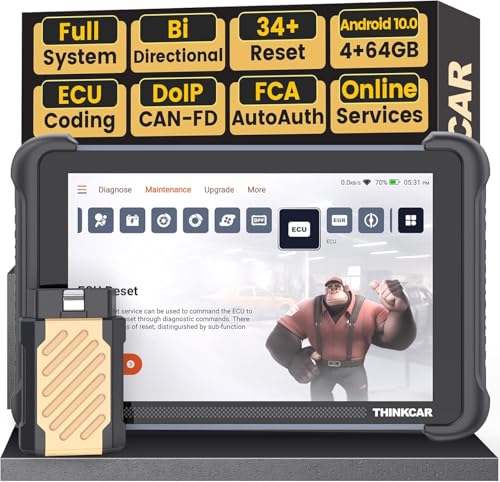
- [Notice] When you receive a used device, it may be a customer return resold by Amazon without inspection. You can exchange it for a new one through Amazon. As this situation is unavoidable, we sincerely apologize. For any issues, contacting us via Amazon's "Messages" is the best way. THINKSCAN 689BT Bidirectional Scan Tool Can Be Used Immediately After It is Turned On, Without Complicated Registration Process, Which is More Convenient & Quick.
- Full Bi-Directional Control & 3000+ Active Tests: Take control and test components like actuators, fuel injectors, relays, and cooling fans in real time. You’ll quickly see if the problem is in the part itself or the control module — saving you hours of guesswork and frustrating trial-and-error.
- Advanced ECU Coding Capabilities: Handle module matching and hidden feature activation with confidence. When you replace an ECU or want to customize settings, this obd2 scanner diagnostic bi directional tool gives you the professional-level capabilities you need without the dealership price tag.
- 34+ Useful Reset and Maintenance Functions: Complete everyday service tasks smoothly with a wide range of helpful reset and maintenance functions. Whether you’re keeping up with regular upkeep or tackling a specific job, this scanner makes maintenance simpler and less stressful for both DIYers and pros.
- Comprehensive Full System Diagnostics: Diagnose every major system — Engine, Transmission, ABS, SRS, TPMS, and more — all in one place. Finally stop wondering if you’re missing something important; get the full picture and clear codes with ease.
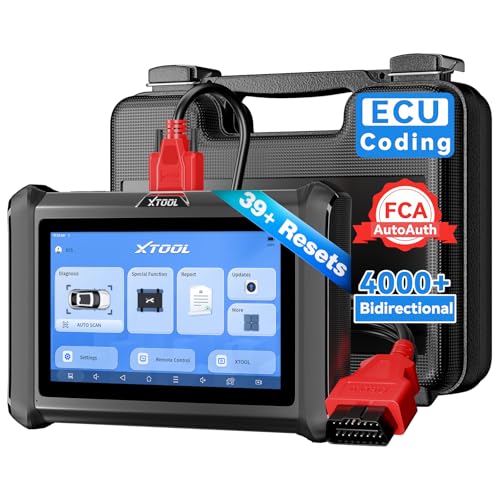
- Top Reasons to Choose the D7S OBD2 Scanner: XTOOL D7S car scan tool, an upgrade of XTOOL D7, offers comprehensive features for automotive technicians, workshops, and DIY enthusiasts 1. Upgraded Hardware: 2+64GB memory, rear camera, intuitive interface, foldable bracket 2. Complete Diagnostics: FCA
 Autoauth, OE-level all system scan, 39+ maintenance services, 4K+ bidirectional, CANFD/DoIP protocol 3. Advanced Capabilities: ECU c0ding, PMI functions 4. Wide Compatibility: Support 10,000+ models, covering 99% vehicle brands 5. Multi-language: Available in 22+ languages, No IP Restrictions 6. 3-Year Updates: Save 300 bucks on software updates for the latest features and optimizations
 - 2026 Upgraded D7S Car Scanner Features: The newly 2026 D7S V2.0 scanner for car brings exciting features for advanced vehicle diagnostics and enhanced user experience 1. FCA AutoAuth: Now supports FCA SGW module for Chrysler, for Jeep, for Dodge (2018+), for Fiat (2017+), enabling faster vehicle communication without gateway restrictions 2. PMI (Offline ECU Pr0gramming): Allows for Ford, for Lincoln, and for Mazda ECU pr0gramming for new modules 3. Optimized Diagnostic Report 2.0: Personalized reports with logos and customer info for auto shops. Note: Compatibility varies by cars, please check before order
- 39+ Services/Resets/Adaptations/Relearns/Calibrations: XTOOL D7S full system car scanner diagnostic tool tackles 99% of common car issues through its 36+ special functions, including Oil Reset, EPB, SAS, BMS, Throttle Reset, Injector C0ding, ABS Bleed, TPMS Reset, Power Balance, etc and also covers specific-vehicle functions like Crank Sensor Relearn, ABS Initialization, Cylinder Power Balance, Fuel Trim Reset, Idle Relearn etc. This car diagnostic scanner enhances efficiency, making repairs and maintenance hassle-free. Tip: DO NOT for All vehicles, please check compatibility first
- Cost-effective ECU C0ding Scan Tool for Specific Brands: Enhance your vehicle's performance with XTOOL D7S! This obd2 scanner all systems bidirectional offers advanced capabilities at an affordable price, supports online for BMW, for Benz and offline for BENZ, for MIT, along with PMI functions for Ford, for Mazda, and for Lincoln. Ideal for technicians and DIY enthusiasts, this automotive scanner diagnostic tool optimizes vehicle performance and enhances the driving experience. Note: Not for all cars and modules, please send car VIN to check the compatibility before purchase
- OE All System Diagnostic & 8 Pids Graphing: XTOOL D7S is a comprehensive all system bi directional obd2 scanner that delivers dealer-level diagnostics, completely controlling over your vehicle’s performance and health. This automotive scan tool can read and clear DTCs, view live data and ECU information, retrieve freeze frames, and perform active tests and full obd2 functions. This bi-directional scan tool can can identify your vehicle's make, model, and year information with just one click and show up to 8 PIDs live data with options for CSV viewing, playback, and recording for in-depth analysis. It is easy-to-use for both professionals and beginners, helping pinpoint issues efficiently
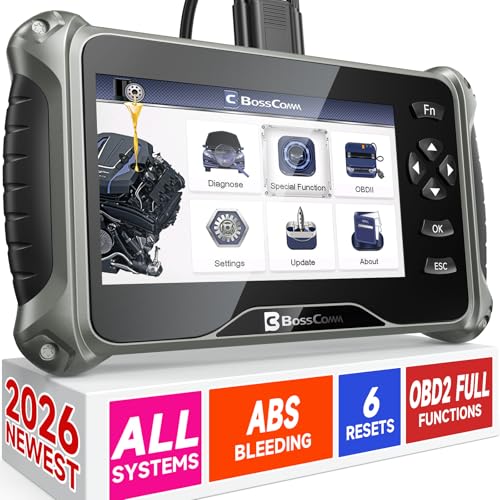
- 【✅Compared to BOSSCOMM IF742, IF745 Offers Full-System Diagnostics】The BOSSCOMM IF745 car diagnostic scanner is an upgraded model of IF742. In addition to supporting all OBD2 Code Reader functions and 6 reset options (ABS/EPB/SAS/BMS/Oil/Throttle), it expands diagnostics from 4 systems (Check Engine/ABS/SRS/Transmission) to vehicle All systems, including Steering, Suspension, and Body Electronics. This provides deeper, more comprehensive diagnostic capabilities.
- 【✨10 OBD2 Functions】The BOSSCOMM IF745 scan tool’s DTC Lookup instantly translates fault codes into user-friendly explanations, its I/M Readiness feature streamlines emissions testing with a single tap, and Freeze Frame lets you pinpoint the exact moment of a fault for in-depth root-cause diagnosis. Combined with a live data dashboard and advanced diagnostics (O2S, OBMon, EVAP), it delivers comprehensive insights for confident troubleshooting.
- 【✨Deep Diagnostics for All Vehicle System Modules】Beyond code reading/clearing and ECU information retrieval, our all-in-one data stream feature lets you inspect all current fault codes and their locations across the vehicle’s systems. This vehicle code reader helps you turn off dashboard warning lights and perform a comprehensive self-check of your car at home—no more back-and-forth trips to the repair shop or hefty inspection fees.
- 【✨6 Essential Resets: ABS Bleeding, Oil, EPB, SAS, Throttle, BMS】The BOSSCOMM IF745 obd2 scanner diagnostic tool swiftly purges air from brake lines to restore braking sensitivity, fine-tunes maintenance cycles to eliminate false alerts, resolves parking brake issues with one-click control, recalibrates steering sensors for stability, optimizes engine idling/acceleration for smoother performance, and deeply resets battery systems to extend lifespan and range via precise parameter adjustments.❗NOTE: Does NOT support bidirectional control, coding, or programming.
- 【✨10,000+ Car Models, AutoVIN, 13 Languages】The BOSSCOMM IF745 vehicle scanner diagnostic tool covers 73+ global car brands and offers support in 13 languages, making it perfect for DIYers, auto mechanics, or as a thoughtful gift. With a single-click AutoVIN feature, it instantly retrieves vehicle serial numbers, streamlining diagnostics for users globally. This adaptable tool balances user-friendliness with precision, catering to both personal and professional requirements.✅Unsure about compatibility? Compatibility will vary on vehicles' model and year, pls reach us via 📧 [email protected] 📧 before purchase.

This product presentation was made with AAWP plugin.