
NHTSA ID Number: 10253676
Manufacturer Communication Number: OwnersI
TSB/Document Date: 2024-04-29
Summary
Tesla does not provide physical owner's manual copies. Instead, all available owner?s manual content is integrated into the vehicle software, and only the content relevant for a given vehicle, based on vehicle configuration and software version installed, is displayed on its touchscreen. This file contains all available owner?s manual content for 2021-2024 Model X vehicles converted to PDF format, and given the distribution method and NHTSA?s submission format requirements, it is the best available representative copy of owner?s manual content. However, a customer who accesses the owner?s manual via their vehicle?s touchscreen would only see the parts of this PDF file that are relevant to their vehicle.
13. Align the right side panel with the front and rear locator slots on the center console, then apply pressure until all
of the clips are fully secure.
14. Reinstall the front passenger floor mat then move the front passenger seat back into place.
Replacing the Low Voltage Lead-Acid Battery
This procedure is intended for vehicles in North America only.
CAUTION: It is your responsibility to monitor the low voltage battery health. Damage to the low voltage
battery due to running out of range is not covered by the warranty.
CAUTION: To avoid damage that is not covered by the warranty, replace your low voltage lead-acid battery
with the same type of battery. The low voltage lead-acid battery for North American vehicles is AtlasBX /
Hankook 85B24LS 12V 45Ah. You can purchase a new lead-acid low voltage battery that is compatible with
your vehicle from your local service center
NOTE: Vehicles manufactured between approximately July 2017 and October 2020 do not have a heat pump and
should use Vehicles Manufactured Before Approximately October 2020 on page . Vehicles manufactured afterward
have a heat pump and should use Vehicles Manufactured After Approximately October 2020 on page .
NOTE: Vehicles manufactured in Gigafactory Shanghai before approximately October 2021, and in the Fremont
Factory before approximately December 2021, are equipped with a Lead-Acid low voltage battery. Vehicles
manufactured after these dates are equipped with a Lithium-Ion low voltage battery. Before performing this
procedure, it is your responsibility to double check and confirm whether your vehicle is equipped with a Lead-Acid
or Lithium-Ion low voltage battery.
267
Owners Manual
Vehicles Manufactured Before Approximately October 2020
Perform the following procedure to replace the lead-acid low voltage battery. Wear appropriate personal protection
equipment (such as safety glasses, leather gloves when handling the lead-acid battery etc.).
Removal:
1. Prepare the vehicle to remove the low voltage lead-acid battery:
a. Ensure the vehicle is in Park.
b. Lower all windows.
c. Open the front trunk.
d. Leave a door propped open so you can get back into the vehicle if needed.
e. Disconnect the charge cable from the charge port.
2. Move the driver and front passenger seat fully forward.
3. Under the rear seat, press the left and right tabs to the side and lift the seat cushion up. The seat separates from
the base but is still restrained by one wire harness on each side.
4. Disconnect the wire harnesses and remove the seat cushion. Set the cushion aside.
5. In the front trunk, remove the vehicle’s underhood apron by inserting a small, non-marring flat tool or your fingers
underneath the panel. Pull up to loosen the clips and set the underhood apron aside.
268
Owners Manual
6. Remove the cabin intake duct and set it aside.
7. Power off the vehicle by navigating to Controls > Safety > Power Off on the touchscreen.
8. With a 10mm socket, loosen the nut that secures the negative (-) terminal clamp to the negative (-) post on the
low voltage lead-acid battery. Release the terminal clamp from the negative (-) post.
9. Disconnect the low voltage cable from penthouse:
a. In the rear passenger seat, remove the foam cover and set it aside. The foam covers the low voltage cable.
269
Owners Manual
b. Release and pull down the gray lever-arm on the side of the low voltage connector.
c. Pull the connector upward to disconnect it from the penthouse.
WARNING: The area under the seat cushion houses the high voltage Battery. DO NOT TOUCH OR PLACE
ITEMS ON THE METAL HOUSING! Doing so can cause serious damage or injury.
10. With a 10mm socket, release the terminal cover and loosen the nut that secures the positive (+) terminal clamp to
the positive (+) post on the low voltage lead-acid battery. Release the terminal clamp from the positive (+) post
and cover the terminal clamp with a dry rag.
270
Owners Manual
CAUTION: Do not allow the positive (+) terminal clamp to contact nearby components like the low voltage
battery hold down bracket or A/C cooling lines.
11. Unplug the vent tube hose from the negative (-) terminal side of the low voltage lead-acid battery.
12. With a 10mm socket, loosen the nut and release the battery hold down from the top of the low voltage lead-acid
battery by unhooking and sliding it back, taking care to ensure it does not slip into the vehicle.
13. Using the battery handle, carefully remove the low voltage lead-acid battery, taking care not to touch or damage
the surrounding components.
WARNING: When lifting the low voltage lead-acid battery, stand in front of the vehicle and use proper
lifting technique. The low voltage battery weighs approximately 25 lb (12 kg). Failure to do so may cause
serious injury.
271
Owners Manual
14. Inspect the new low voltage lead-acid battery to ensure it is equipped a red plug on the positive (+) terminal side.
If the new low voltage battery does not have a red plug, use a small trim tool transfer the red plug from the old
battery to the new one.
CAUTION: Dispose of the old low voltage lead-acid battery according to local laws, such as dropping it off
at a battery recycling facility. Keep the low voltage battery upright and place it on a towel or piece of
cardboard when transporting it.
Installation:
1. Remove the protective caps from the positive (+) and negative (-) posts on new low voltage lead-acid battery.
2. Carefully maneuver the new low voltage battery into place, taking care not to touch or damage nearby
components.
3. Install the low voltage battery hold down and use a 10mm socket to tighten the bolt that secures it to the low
voltage lead-acid battery. Torque the bolt to 6 Nm (4.4 ft-lb).
272
Owners Manual
4. In the rear passenger seat, connect the penthouse cable to the connector:
a. Ensure the gray lever-arm is down, then install the connector.
b. Secure the connector by gently tugging the gray lever-arm upward until it clicks into place.
c. Replace the foam cover on top of the penthouse cable.
273
Owners Manual
WARNING: The area under the seat cushion houses the high voltage Battery. DO NOT TOUCH OR PLACE
ITEMS ON THE METAL HOUSING! Doing so can cause serious damage or injury.
5. Connect the positive (+) terminal by positioning the terminal clamp over the terminal post. Using a 10mm socket,
torque the nut to 6 Nm (4.4 ft-lb). Install the positive (+) terminal cover.
6. Connect the negative (-) terminal by positioning the terminal clamp over the connector. Using a 10mm socket,
torque the nut to 6 Nm (4.4 ft-lb).
7. Connect the vent tube hose into the negative (-) terminal side of the low voltage lead-acid battery.
274
Owners Manual
8. Replace the cabin intake duct.
9. Open one of the vehicle’s doors to make sure power has been correctly restored and the touchscreen turns on
(this may take several minutes).
10. In the rear seat, connect the seat wire harnesses (one on each side) and replace the seat cushion.
11. Press the seat cushion back into the base until it clicks into place.
275
Owners Manual
12. Replace the underhood apron by aligning the clips into their openings in the front trunk. Press down to lock them
in place. The clips make an audible clicking sound when secured.
13. Close the front trunk. If an alert to replace to low voltage lead-acid battery was previously shown on the
touchscreen, ensure the alert no longer appears.
Vehicles Manufactured After Approximately October 2020
Removal:
1. Prepare the vehicle to remove the low voltage lead-acid battery:
a. Ensure the vehicle is in Park.
b. Lower all windows.
c. Open the front trunk.
d. Leave a door propped open so you can get back into the vehicle if needed.
e. Disconnect the charge cable from the charge port.
2. Remove the vehicle’s underhood apron by inserting a small, non-marring flat tool or your fingers underneath the
panel. Pull up to loosen the clips and set the underhood apron aside.
276
Owners Manual
3. In the front trunk, remove the cabin intake duct and set it aside.
4. Power off the vehicle by navigating to Controls > Safety > Power Off on the touchscreen.
5. With a 10mm socket, loosen the nut that secures the negative (-) terminal clamp to the negative (-) post on the
low voltage lead-acid battery. Release the terminal clamp from the negative (-) post.
6. In the front trunk, disconnect the first responder loop by sliding the red locking tab toward you, pressing the
black tab, and releasing it. Set the first responder loop aside.
277
Owners Manual
7. With a 10mm socket, release the terminal cover and loosen the nut that secures the positive (+) terminal clamp to
the positive (+) post on the low voltage lead-acid battery. Release the terminal clamp from the positive (+) post
and cover the terminal clamp with a dry rag.
CAUTION: Do not allow the positive (+) terminal clamp to contact nearby components like the low voltage
lead-acid battery hold down bracket or A/C cooling lines.
8. Unplug the vent tube hose from the negative (-) terminal side of the low voltage battery.
9. With a 10mm socket, loosen the nut and release the battery hold down from the top of the low voltage lead-acid
battery by unhooking and slipping it back. If needed, tilt the battery hold down backward so it does not slip into
the vehicle.
278
Owners Manual
10. Carefully remove the low voltage lead-acid battery, taking care not to damage the surrounding components.
WARNING: When lifting the lead-acid battery, stand in front of the vehicle and use proper lifting technique.
The lead-acid battery weighs approximately 25 lb (12 kg). Failure to do so may cause serious injury.
11. Inspect the new low voltage lead-acid battery to make sure it is equipped with a red plug on the positive (+)
terminal side. If the new lead-acid battery does not have a red plug, transfer the red plug from the old battery to
the new one.
CAUTION: Dispose of the old low voltage lead-acid battery according to local laws, such as dropping it off
at a battery recycling facility. Keep the battery upright and place it on a towel or piece of cardboard when
transporting it.
279
Owners Manual
Installation:
1. Remove the protective caps from the positive (+) and negative (-) posts on the new low voltage lead-acid
battery.
2. Carefully place the new lead-acid battery in the vehicle, taking care not to damage nearby components.
3. Install the low voltage lead-acid battery hold down and use a 10mm socket to tighten the nut that secures it to
the battery. Torque the nut to 6 Nm (4.4 ft-lb).
4. Reconnect the first responder loop.
5. Reconnect the positive (+) terminal by positioning the terminal clamp over the terminal post. Using a 10mm
socket, torque the nut to 6 Nm (4.4 ft-lb). Reinstall the positive (+) terminal cover.
6. Reconnect the negative (-) terminal by positioning the terminal clamp over the connector. Using a 10mm socket,
torque the nut to 6 Nm (4.4 ft-lb).
280
Owners Manual
7. Connect the vent tube hose into the negative (-) terminal side of the low voltage lead-acid battery.
8. Open one of the vehicle’s doors to make sure power has been correctly restored and the touchscreen turns on
(this may take several minutes).
9. Reinstall the cabin intake duct.
10. Replace the underhood apron by aligning the clips into their openings in the front trunk. Press down to lock them
in place. The clips make an audible clicking sound when secured.
281
Owners Manual
11. Close the front trunk. If an alert to replace to low voltage lead-acid battery was previously shown on the
touchscreen, ensure the alert no longer appears.
Using RFID Transponders
When attaching an RFID transponder (used by many automated toll systems) inside Model 3, place the transponder
next to the rear view mirror. This ensures best results and minimizes any obstruction to your driving view. Refer to
the RFID manufacturer's instructions for specific placement.
NOTE: You can also attach a weather-proof transponder to the front license plate.
Installing Front License Plate Bracket
To accommodate jurisdictions that require a license plate on the front of your vehicle, Model 3 is equipped with a
license plate bracket. This bracket conforms to the shape of your vehicle's front bumper and is adhered to it using
strong adhesive.
NOTE: Tesla recommends performing this procedure on a clean, dry vehicle during a warm day. Cold and/or wet
conditions may result in reduced performance of the adhesive.
To install the front license plate bracket:
1. Get isopropyl alcohol and test it on a non-visible painted surface of your vehicle to confirm that it does not
damage or remove the paint.
2. Clean the mounting site with isopropyl alcohol and allow to dry for at least one minute.
3. Fully remove the protective tape from the adhesive at the top of the bracket and partially remove the tape from
the top of the adhesive on each side. Leave the bottom half of the tape on the sides in place and fold the
unattached tape outward for easy removal after aligning the bracket to the bumper.
282
Owners Manual
4. While tilting the top of the license plate bracket away from the bumper (to prevent adhering it to the wrong
location), align the bottom center of the license plate bracket with the middle of the grille as shown.
NOTE: Be as precise as possible when aligning the bracket because you will be unable to reposition it once
adhered to the bumper.
5. While correctly aligned, move the top of the bracket against the bumper and apply pressure so that it is held in
place by the adhesive.
283
Owners Manual
6. Remove the remaining tape from the sides of the bracket then press the entire bracket firmly against the bumper,
ensuring the bracket is held in place by all adhesive areas.
7. Once the bracket is securely mounted, use the four supplied screws to attach your license plate to the bracket
(tighten to 3 Nm/2.2 ft-lbs).
284
Owners Manual
Do It Yourself Maintenance
Learn how to perform simple Do It Yourself procedures, such as replacing wiper blades and cabin filters, or installing
the paint protection film kit. Go to https://www.tesla.com/support/do-it-yourself-guides for instructions, animations,
and videos of these procedures.
NOTE: Due to market region or vehicle configuration specifics, some parts and procedures may not be available for
your vehicle. When navigating to https://www.tesla.com/support/do-it-yourself-guides, select your vehicle, region,
and/or language to see an updated list of parts and accessories available for your region.
CAUTION: Perform each procedure in a dry and well-lit area. For your safety, only perform a procedure if you
feel comfortable doing so, and always follow provided instructions.
Specifications
Identification Labels
Vehicle Identification Number
You can find the VIN at the following locations:
• Touch Controls > Software on the touchscreen.
• Stamped on a plate located at the top of the dashboard. Can be seen by looking through the windshield.
• Printed on the Vehicle Certification label, located on the door pillar. This can be seen when the driver's door is
open.
285
Owners Manual
• Cars manufactured in Gigafactory Shanghai starting September 2020: The VIN is stamped onto the floor and can
be seen by moving the front passenger seat rearward and lifting the carpet.
Emission Control Label
The emission control label is located on the opening face of the liftgate.
NOTE: For vehicles with a model year of 2022 or newer, the emission control label is now located on the inside of the
front hood and may not match the label shown.
286
Owners Manual
Vehicle Loading
Vehicle Labeling
It is important to understand your vehicle's original tire sizes and pressures, and the GVWR (Gross Vehicle Weight
Rating) and GAWR (Gross Axle Weight Rating)TPMLM (Technically Permissible Maximum Label Mass) and TPMAM
(Technically Permissible Maximum Mass on Axle). This information can be found on two labels attached to Model 3.
Both labels are visible on the door pillar when the front door is open.
NOTE: If your Model 3 is fitted with Tesla accessory wheels or tires, your Model 3 may include an additional label
indicating that values may differ from what is stated on the label. If this is the case, see Accessory Wheels and Tires
on page 261.
1. Tire and Loading Information Label
2. Vehicle Certification Label
WARNING: Overloading Model 3 has an adverse effect on braking and handling, which can compromise your
safety or cause damage.
CAUTION: Never store large amounts of liquid in Model 3. A significant spill can cause electrical components to
malfunction.
Tire and Loading Information Label
• The maximum number of occupant seating positions.
• The maximum vehicle capacity weight.
• The size of the original tires.
• The cold inflation pressures for the original front and rear tires. These pressures are recommended to optimize
ride and handling characteristics.
Label Format:
287
Owners Manual
Never change this label, even if you use different tires in the future.
NOTE: If Model 3 is loaded to its full capacity, double check all tires to ensure they are inflated to their recommended
pressure levels.
Vehicle Certification Label
The Vehicle Certification label provides:
• GVWR - Gross Vehicle Weight Rating. The maximum allowable total mass of Model 3. This is calculated as the
weight of Model 3 equipped with the heaviest factory selectable options, all passengers, fluids, and cargo.
• GAWR FRT and GAWR RR - Gross Axle Weight Rating for the front and rear axles. The GAWR is the maximum
distributed weight that each axle can support.
United States:
Canada:
Mexico:
288
Owners Manual
CAUTION: To prevent damage, never load Model 3 so that it is heavier than GVWR or exceeds the individual
GAWR weights.
Towing a Trailer
WARNING: Do not use Model 3 for towing purposes. Model 3 does not currently support towing. Towing can
cause damage and increase the risk of a collision.
CAUTION: Using Model 3 for towing without Tesla-approved towing components and accessories may void the
warranty.
Roof Racks
Model 3 supports the use of Tesla-approved roof racks using a Tesla mounting accessory. To install roof racks, you
must use this accessory and you must use only roof rack systems that have been approved by Tesla (see Parts and
Accessories on page 261). Failure to do so can cause significant damage.
Calculating Load Limits
1. Locate the statement “The combined weight of occupants and cargo should never exceed XXX lbs or XXX kg” on
the “Tire and Loading Information” label.
2. Determine the combined weight of all occupants that will ride in the vehicle.
3. Subtract the combined weight of the occupants from XXX lbs or XXX kg (see Step 1).
4. The resulting figure equals the available cargo load capacity. For example, if the “XXX” amount equals 1400 lbs
(635 kg) and there will be five 150 lb (68 kg) passengers in the vehicle, the amount of available cargo capacity is
650 lbs (1400 ‑ 750 (5 x 150) = 650 lbs) or 295 kg (635 ‑ 340 (5 x 68) = 295 kg).
5. Determine the combined cargo weight being loaded on the vehicle. That weight must not exceed the available
cargo load capacity calculated in Step 4.
WARNING: Trunks are the preferred places to carry objects. In a collision, or during hard braking and sharp
turns, loose items in the cabin could injure occupants.
Example Load Limit Calculations
How much cargo Model 3 can carry depends on the number and weight of passengers. The following calculated load
limit examples assume passengers weigh 150 lbs (68 kg). If passengers weigh more or less, available cargo weight
decreases or increases respectively.
Driver and one passenger
Description
Total
Vehicle capacity weight
954 lbs (433 kg)
Subtract occupant weight (2 x 150 lbs/68 kg)
300 lbs (136 kg)
Available cargo weight
654 lbs (297 kg)
289
Owners Manual
Driver and four passengers
Description
Total
Vehicle capacity weight
954 lbs (433 kg)
Subtract occupant weight (5 x 150 lbs/68 kg)
750 lbs (340 kg)
Available cargo weight
204 lbs (93 kg)
When carrying cargo, distribute the weight as evenly as possible between the front and rear trunks. For maximum
load limits specific to the trunks, see Front Trunk Load Limit on page 42 and Rear Trunk Load Limits on page 39.
290
Owners Manual
Dimensions
Exterior Dimensions
A
Overall Length
184.8 in
4,695 mm
B
Overall Width (including mirrors)
Overall Width (including folded mirrors)
Overall Width (excluding mirrors)
82.2 in
76.1 in
72.8 in
2,088 mm
1,933 mm
1,850 mm
C
Overall Height
56.8 in
1,445 mm
D
Wheel Base
113.2 in
2,875 mm
E
Overhang - Front
33 in
841 mm
F
Overhang - Rear
39 in
978 mm
G
Ground Clearance
5.5 in
140 mm
H
Track - Front
Track - Rear
62.2 in
62.2 in
1,580 mm
1,580 mm
*Values are approximate. Dimensions can vary depending on a vehicle's options and various other factors.
CAUTION: Depending on configuration (such as wheel selection), your vehicle's rear trunk can open up to
approximately 6.5 feet (2 meters) high. See Adjusting Opening Height of Powered Trunk on page 38 to adjust
the rear trunk height and prevent it from coming into contact with low ceilings or other objects.
Interior Dimensions
Head Room
Front
Rear
40.3 in
37.7 in
1,024 mm
958 mm
Leg Room
Front
Rear
42.7 in
35.2 in
1,085 mm
894 mm
291
Owners Manual
Shoulder Room
Front
Rear
56.3 in
54 in
1,430 mm
1,372 mm
Hip Room
Front
Rear
53.4 in
52.4 in
1,356 mm
1,331 mm
Cargo Volume
Front Trunk
3.1 cu ft (88 L)
Behind 2nd row
19.8 cu ft (561 L)
Maximum total cargo volume with 5 passengers
22.9 cu ft (649 L)
Subsystems
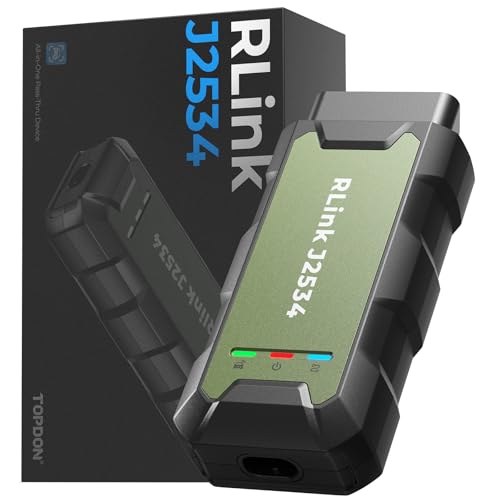
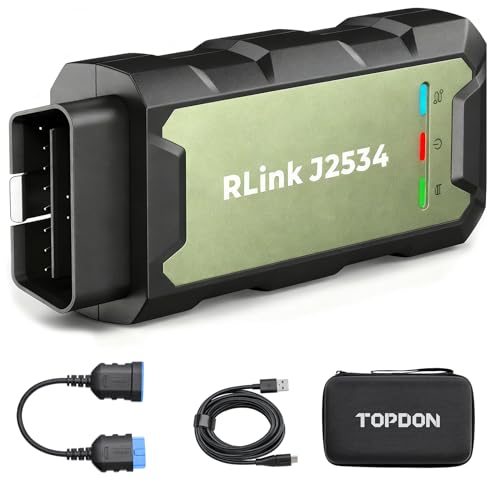
- Advanced VCI Box, Industry-leading J2534 Pass-Thru...
- High-Speed OEM-Level Diagnostics & Programming: Unlock true...
- Coverage for 17 Car Brands & Ultra Reliability: Works...
- User-Friendly RLink Platform & Expert Support: TOPDON’s...
- 6.6 ft USB-C Cable & Portable Storage Case: The RLink J...
Last update on 2026-06-23 / Affiliate links / Images from Amazon Product Advertising API
If the PDF is very large, it may not load in the preview below.
Some older TSBs had multiple PDFs — visit the NHTSA Website to view all PDFs.
If the TSB PDF does not show, download or view it on the NHTSA Website.
Click on the (+) Plus Sign
Then Click on Associated Document(s)
Search NHTSA Database for Recalls
Search NHTSA Database for Vehicle Investigations
View Latest Vehicle Investigations
Search NHTSA Database for Vehicle Complaints
View Latest Vehicle Complaints
TSB/Document ID: OwnersI
Replacement Service Bulletin Number:
MFR Communication Date: 2024-03-30
MFR Internal Campaign ID/Software Version:
Communication Type: Service Bulletin/Repair Instructions
NHTSA Components: EQUIPMENT
MFR Component System:
MFR Component Subsystem:
Previous TSB | Next TSB |
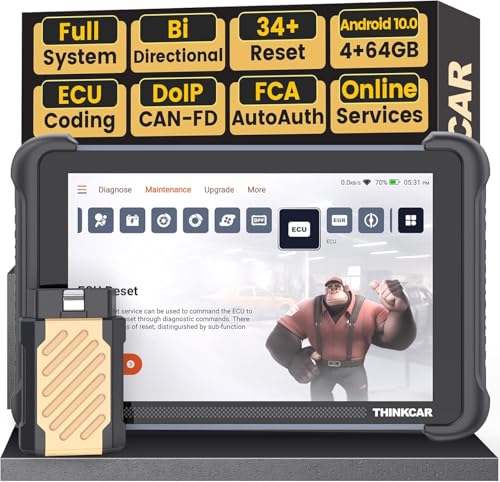
- [Notice] When you receive a used device, it may be a customer return resold by Amazon without inspection. You can exchange it for a new one through Amazon. As this situation is unavoidable, we sincerely apologize. For any issues, contacting us via Amazon's "Messages" is the best way. THINKSCAN 689BT Bidirectional Scan Tool Can Be Used Immediately After It is Turned On, Without Complicated Registration Process, Which is More Convenient & Quick.
- Full Bi-Directional Control & 3000+ Active Tests: Take control and test components like actuators, fuel injectors, relays, and cooling fans in real time. You’ll quickly see if the problem is in the part itself or the control module — saving you hours of guesswork and frustrating trial-and-error.
- Advanced ECU Coding Capabilities: Handle module matching and hidden feature activation with confidence. When you replace an ECU or want to customize settings, this obd2 scanner diagnostic bi directional tool gives you the professional-level capabilities you need without the dealership price tag.
- 34+ Useful Reset and Maintenance Functions: Complete everyday service tasks smoothly with a wide range of helpful reset and maintenance functions. Whether you’re keeping up with regular upkeep or tackling a specific job, this scanner makes maintenance simpler and less stressful for both DIYers and pros.
- Comprehensive Full System Diagnostics: Diagnose every major system — Engine, Transmission, ABS
 , SRS, TPMS, and more — all in one place. Finally stop wondering if you’re missing something important; get the full picture and clear codes with ease.
Last update on 2026-07-02 / Affiliate links / Images from Amazon Product Advertising API
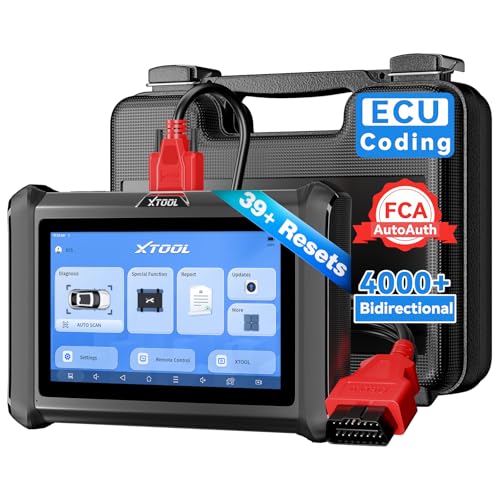
- Top Reasons to Choose the D7S OBD2 Scanner: XTOOL D7S car scan tool, an upgrade of XTOOL D7, offers comprehensive features for automotive technicians, workshops, and DIY enthusiasts 1. Upgraded Hardware: 2+64GB memory, rear camera, intuitive interface, foldable bracket 2. Complete Diagnostics: FCA Autoauth, OE-level all system scan, 39+ maintenance services, 4K+ bidirectional, CANFD/DoIP protocol 3. Advanced Capabilities: ECU c0ding, PMI functions 4. Wide Compatibility: Support 10,000+ models, covering 99% vehicle brands 5. Multi-language: Available in 22+ languages, No IP Restrictions 6. 3-Year Updates: Save 300 bucks on software updates for the latest features and optimizations
- 2026 Upgraded D7S Car Scanner Features: The newly 2026 D7S V2.0 scanner for car brings exciting features for advanced vehicle diagnostics and enhanced user experience 1. FCA AutoAuth: Now supports FCA SGW module for Chrysler, for Jeep, for Dodge (2018+), for Fiat (2017+), enabling faster vehicle communication without gateway restrictions 2. PMI (Offline ECU Pr0gramming): Allows for Ford, for Lincoln, and for Mazda ECU pr0gramming for new modules 3. Optimized Diagnostic Report 2.0: Personalized reports with logos and customer info for auto shops. Note: Compatibility varies by cars, please check before order
- 39+ Services/Resets/Adaptations/Relearns/Calibrations: XTOOL D7S full system car scanner diagnostic tool tackles 99% of common car issues through its 36+ special functions, including Oil Reset, EPB, SAS, BMS, Throttle Reset, Injector C0ding, ABS Bleed, TPMS Reset, Power Balance, etc and also covers specific-vehicle functions like Crank Sensor Relearn, ABS Initialization, Cylinder Power Balance, Fuel Trim Reset, Idle Relearn etc. This car diagnostic scanner enhances efficiency, making repairs and maintenance hassle-free. Tip: DO NOT for All vehicles, please check compatibility first
- Cost-effective ECU C0ding Scan Tool for Specific Brands: Enhance your vehicle's performance with XTOOL D7S! This obd2 scanner all systems bidirectional offers advanced capabilities at an affordable price, supports online for BMW, for Benz and offline for BENZ, for MIT, along with PMI functions for Ford, for Mazda, and for Lincoln. Ideal for technicians and DIY enthusiasts, this automotive scanner diagnostic tool optimizes vehicle performance and enhances the driving experience. Note: Not for all cars and modules, please send car VIN to check the compatibility before purchase
- OE All System Diagnostic & 8 Pids Graphing: XTOOL D7S is a comprehensive all system bi directional obd2 scanner that delivers dealer-level diagnostics, completely controlling over your vehicle’s performance and health. This automotive scan tool can read and clear DTCs, view live data and ECU information, retrieve freeze frames, and perform active tests and full obd2 functions. This bi-directional scan tool can can identify your vehicle's make, model, and year information with just one click and show up to 8 PIDs live data with options for CSV viewing, playback, and recording for in-depth analysis. It is easy-to-use for both professionals and beginners, helping pinpoint issues efficiently
Last update on 2026-06-30 / Affiliate links / Images from Amazon Product Advertising API
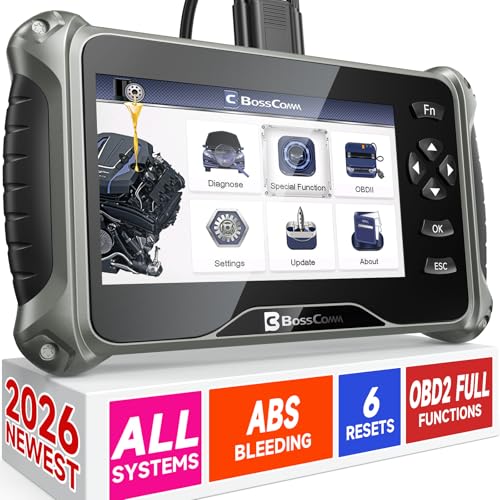
- 【✅Compared to BOSSCOMM IF742, IF745 Offers Full-System Diagnostics】The BOSSCOMM IF745 car diagnostic scanner is an upgraded model of IF742. In addition to supporting all OBD2 Code Reader functions and 6 reset options (ABS/EPB/SAS/BMS/Oil/Throttle), it expands diagnostics from 4 systems (Check Engine/ABS/SRS/Transmission) to vehicle All systems, including Steering, Suspension, and Body Electronics. This provides deeper, more comprehensive diagnostic capabilities.
- 【✨10 OBD2 Functions】The BOSSCOMM IF745 scan tool’s DTC Lookup instantly translates fault codes into user-friendly explanations, its I/M Readiness feature streamlines emissions testing with a single tap, and Freeze Frame lets you pinpoint the exact moment of a fault for in-depth root-cause diagnosis. Combined with a live data dashboard and advanced diagnostics (O2S, OBMon, EVAP), it delivers comprehensive insights for confident troubleshooting.
- 【✨Deep Diagnostics for All Vehicle System Modules】Beyond code reading/clearing and ECU information retrieval, our all-in-one data stream feature lets you inspect all current fault codes and their locations across the vehicle’s systems. This vehicle code reader helps you turn off dashboard warning lights and perform a comprehensive self-check of your car at home—no more back-and-forth trips to the repair shop or hefty inspection fees.
- 【✨6 Essential Resets: ABS Bleeding, Oil, EPB, SAS, Throttle, BMS】The BOSSCOMM IF745 obd2 scanner diagnostic tool swiftly purges air from brake lines to restore braking sensitivity, fine-tunes maintenance cycles to eliminate false alerts, resolves parking brake issues with one-click control, recalibrates steering sensors for stability, optimizes engine idling/acceleration for smoother performance, and deeply resets battery systems to extend lifespan and range via precise parameter adjustments.❗NOTE: Does NOT support bidirectional control, coding, or programming.
- 【✨10,000+ Car Models, AutoVIN, 13 Languages】The BOSSCOMM IF745 vehicle scanner diagnostic tool covers 73+ global car brands and offers support in 13 languages, making it perfect for DIYers, auto mechanics, or as a thoughtful gift. With a single-click AutoVIN feature, it instantly retrieves vehicle serial numbers, streamlining diagnostics for users globally. This adaptable tool balances user-friendliness with precision, catering to both personal and professional requirements.✅Unsure about compatibility? Compatibility will vary on vehicles' model and year, pls reach us via 📧 [email protected] 📧 before purchase.
Last update on 2026-07-02 / Affiliate links / Images from Amazon Product Advertising API
This product presentation was made with AAWP plugin.