
NHTSA ID Number: 10253673
Manufacturer Communication Number: OwnersF
TSB/Document Date: 2024-04-29
Summary
Tesla does not provide physical owner's manual copies. Instead, all available owner?s manual content is integrated into the vehicle software, and only the content relevant for a given vehicle, based on vehicle configuration and software version installed, is displayed on its touchscreen. This file contains all available owner?s manual content for Model Y vehicles converted to PDF format, and given the distribution method and NHTSA?s submission format requirements, it is the best available representative copy of owner?s manual content. However, a customer who accesses the owner?s manual via their vehicle?s touchscreen would only see the parts of this PDF file that are relevant to their vehicle.
the belt tightly across your hips, not across your stomach.
Model Y seats include integrated head supports in the front that cannot be adjusted or removed.
46
Owners Manual
Adjusting the Front Seats
1. Move seat forward/backward and adjust the seat’s height and tilt angle up/down.
2. Adjust backrest.
3. Adjust lumbar support.
CAUTION: Do not move a front seat's backrest fully forward when the seat is also in the fully forward position.
Doing so can cause the top of the seat to hit, and potentially damage, the sun visor.
WARNING: Before adjusting a front seat, check that the area around the seat is free of obstacles (people and
objects).
47
Owners Manual
WARNING: Do not adjust seats while driving. Doing so increases the risk of a collision.
WARNING: Riding in a moving vehicle with the seat back reclined can result in serious injuries in a collision, as
you could slide under the lap belt or be propelled into the seat belt. Ensure your seat back is reclined no more
than 30 degrees when the vehicle is moving.
Calibrating Seats
You can calibrate the driver seat. This is useful if you find your seat range limited or your driver profile does not
automatically adjust the seat for you. Navigate to Controls > Service > Driver Seat, Steering & Mirrors Calibration
and follow the instructions on the touchscreen.
WARNING: Ensure nothing is behind or underneath the driver seat during calibration. Failure to do so may
cause serious injury.
Adjusting Second Row Seat Backs
Model Y provides seating for up to three passengers in the second row. The seat back is split 60/40 so adjusting the
left seat back moves the seat backs for both the left and center seating positions, whereas adjusting the right seat
back moves only the rightmost seat back.
For vehicles with 5 seats:
Use the adjustment handles on the outside corner of each second row outboard seat back to adjust the
corresponding seat back. While pulling and holding the handle, move the seat back to the desired position, and then
release the handle. Ensure the seat back is securely latched into position by pushing it forward and rearward.
For vehicles with 7 seats:
Use the adjustment handles on the side shield of each outboard seating position to adjust the corresponding second
row seat backs. While pulling and holding the handle, move the seat back to the desired position, and then release
the handle. Ensure the seat back is securely latched into position by pushing it forward and rearward.
48
Owners Manual
Folding Second Row Seat Backs
To maximize cargo space, each second row seat back can be folded fully forward to lay flat. While pulling and
holding the handle, push the corresponding seat back fully forward.
NOTE: Before folding seats fully forward, remove any items from the seats and the rear footwell. To allow the seat
backs to fold completely flat, you may need to move the front seats forward.
NOTE: Driving with second row seats folded forward may increase perceivable noise and/or vibration coming from
the rear of the vehicle (trunk, suspension, etc.).
To allow you to carry long items (such as skis) in the rear of Model Y, the center seat back can also be independently
folded forward. Pull the handle on the rear of the seat back to unlatch it, then pull it forward.
49
Owners Manual
You can also fold the second row seat backs fully forward by pressing the corresponding switch located on the left
side of the rear trunk. Pressing the switch causes the seat back to swing forward. You can then push it downward so
it lays fully flat.
50
Owners Manual
WARNING: Before pressing the switch to fold the seat back, you MUST keep body parts (hands, fingers, etc.)
and objects away from the edges of rear seats. The seat can swing forward with considerable force and cause
injury or damage.
To return the seat backs to their upright position, pull it upwards until it locks into place. To confirm that the seat
back is locked in the upright position, try pulling it forward.
NOTE: Before raising a second row seat back, make sure that the seat belts are not trapped behind the backrest.
WARNING: Always ensure the seat backs are locked in their upright position by pushing it forward or rearward.
Failure to do so increases the risk of injury.
Moving Second Row Seats (7-seater only)
Lift the bar located beneath each outboard seating position to unlock and move the second row seats forward or
rearward. The bench seats have a 60/40 split. Therefore, the bar on the left side moves the seat for the left and
center seats, whereas the bar on the right side moves only the rightmost seat. Pull up and hold the bar while moving
the seat forward or rearward. Release the lever when the seat is at the desired location. Push the seat rearward and
forward to ensure the seat(s) are locked into position.
51
Owners Manual
Accessing Third Row Seats (7-seater only)
A third row ingress button is located on the backrest of each second row outside seat. This button makes it easy for
passengers to access the third row seating positions. To access a third row seat:
1. Press the button on the associated second row backrest.
NOTE: If you press the button and do not move the seats, the seats relock.
2. Push the second row backrest forward. The seat then releases and pitches upward.
3. Push the seat fully forward.
To relock the seats, first push the seat rearward. You will hear the seat tracks lock. Then push the seat downward to
engage the rear latches onto the floor strikes. You will hear the latches lock. If the seat does not latch onto the floor,
the touchscreen displays a warning indicating that the seat is not properly locked into position.
52
Owners Manual
WARNING: Do not use the button when a child is seated in a seat that will move. Using the button moves the
combined left and center seats forward and can squeeze the occupant. Use this button only when the second
row seat is unoccupied. Before driving, ensure the seat and the seat back are securely latched into position.
WARNING: Do not use a second row seating position when the seat is not securely latched into position,
WARNING: After using the button to access the third row, push the second row seat backs into their upright
position, ensuring that the seat backs are securely latched and "clicked" into position by trying to move them
forward and rearward. Failure to do so increases the risk of injury.
WARNING: Keep the area on the underside of the second row seats free of debris to ensure reliable locking of
the floor latches.
WARNING: If an occupant is seated in the the third row when pushing down on the second row seat to engage
the floor latches, ensure that the occupant's feet are not located under the second row seat.
Folding Third Row Seat Backs (7-seater only)
To fold a third row seat, first ensure that the head support is fully down as shown (see Head Supports on page 54).
Then press the button located in the top corner of the seat back and fold the backrest downward.
53
Owners Manual
NOTE: To return the seat backs to the upright position, pull the seat back upward until it latches into place. Try
pulling the backrest forward to confirm that it is securely latched in the upright position.
NOTE: Before folding the seat backs, remove any items from the seats and the footwell. To allow the backrests to
fold completely flat, you may need to move the second row seats forward.
NOTE: Driving with the third row backrests folded forward may result in increased perceivable noise and/or vibration
coming from the rear of the vehicle (trunk, suspension, etc.).
WARNING: Always ensure the seat backrests are locked in their upright position before travel. Failure to do so
increases the risk of injury.
Head Supports
The front seats include integrated head supports that you can not adjust.
The second row outboard seats include an adjustable head support that you can raise, lower, or remove. When either
of these seats is occupied by a passenger that is not in a child safety seat, the corresponding head support should
be adjusted (align the center of the head support with the center of the occupant's head) and locked into position.
To raise a head support on a second row outboard seat, pull it upward to the desired position. To lower it, press and
hold the button on the base of the outer post while pushing it downward.
The second row center seat, and both third row seats (if equipped), are equipped with the option to raise a head
support. Initially stowed into the seat's back rest, you can access the head support by pulling it upward.
54
Owners Manual
WARNING: When installing a child safety seat in a second row seating position, or in the third row (if
equipped), you must lower the head support. The headrest must be raised and locked in place when sitting in
the rear middle seat.
To stow the head support in the second row center seat, press and hold the button on the base of the post while
pushing the head support fully downward.
To lower a head support in the third row, press and hold the button on the base of the post while pushing the head
support fully downward.
WARNING: To minimize the risk of severe injury or death in the event of a collision, ensure that head supports
are positioned correctly before driving.
Removing/Installing a Head Support
All head supports in the second and third row (if equipped) seating positions can be removed. To remove a head
support:
1. Fully raise the head support by pulling it upward.
2. Press and hold the button located at the base of one of the posts.
55
Owners Manual
3. Insert a short, flat object (such as a small flat-head screwdriver) into the opening in the base of the opposite post
and pull the head support upward.
To re-install the head support:
1. With the front of the head support facing forward, insert both posts into the corresponding holes on the seat
back.
2. Press downward on the head support until it clicks into place.
3. Pull upward on the head support to ensure that it is secure.
WARNING: Ensure that the head support is correctly installed before seating an occupant. Failure to do so
increases the risk of injury or death if a collision occurs.
Seat Heaters
The front and second row seats operate at three levels from 3 (highest) to 1 (lowest). To operate the seat heaters,
see Operating Climate Controls on page 212.
WARNING: To avoid burns resulting from prolonged use, individuals who have peripheral neuropathy, or whose
capacity to feel pain is limited because of diabetes, age, neurological injury, or some other condition, should
exercise caution when using the climate control system and seat heaters.
Seat Covers
WARNING: Do not use seat covers on a front seat. Doing so could restrict deployment of the seat-mounted
side airbags if a collision occurs. Also, if the vehicle is equipped with an occupant detection system that is used
to determine the status of the passenger front airbag, seat covers may interfere with this system.
56
Owners Manual
Seat Belts
Wearing Seat Belts
Using seat belts and child safety seats is the most effective way to protect occupants if a collision occurs. Therefore,
wearing a seat belt is required by law in most jurisdictions.
All seats are equipped with three-point inertia reel seat belts. Inertia reel belts are automatically tensioned to allow
occupants to move comfortably during normal driving conditions. To securely hold child safety seats, all passenger
seating positions are equipped with an automatic locking retractor (ALR) feature that, by fully extracting the seat
belt (beyond the length needed for a typical adult occupant), locks the belt into place until the seat belt is
unbuckled (see Installing Seat Belt Retained Child Seats on page 64).
The seat belt reel automatically tightens or locks to prevent movement of occupants if Model Y experiences a force
associated with hard acceleration, braking, cornering, or an impact in a collision.
Seat Belt Reminders
The seat belt reminder on the touchscreen alerts you if a seat belt for an occupied driver or passenger
seat is unbuckled. If all occupants are buckled up and the reminder stays on, re-buckle seat belts to
ensure they are correctly latched. Also remove any heavy objects (such as a briefcase) from an
unoccupied seat. If the reminder light continues to stay on, contact Tesla.
You can temporarily disable a seat belt reminder associated with a rear seating position. This is useful when you are
carrying an object in a rear seat that triggers the seat belt reminder alert. To disable the reminder, touch the
associated seat on the seat belt reminder popup message that displays on the touchscreen when a seat belt
reminder is active. When a reminder is disabled, the seat belt reminder icon is replaced by a seat icon, for the current
drive only. Touch the seat again to re-enable the reminder.
WARNING: Do not disable a seat belt reminder when the seating position is occupied by a passenger.
WARNING: Seat belts must be worn by passengers in all seating positions.
NOTE: In regions where regulations require seat belt reminders in rear seating positions, these reminders cannot be
disabled. To cancel the reminder in an unoccupied seat when an object is detected, you must either fasten the seat
belt or remove the object.
To Fasten a Belt
1. Ensure correct positioning of the seat. See (see Correct Driving Position on page 46) for details on the correct
position of the driver's seat.
2. Draw the belt out smoothly, ensuring the belt lays flat across the pelvis, chest and mid-point of your collar bone,
between the neck and shoulder. Ensure the belt is routed correctly and is not twisted. Never sit on the seat belt or
any seat belt component.
WARNING: A twisted or incorrectly routed seat belt can cause damage and interfere with the functionality
of the seat belt system.
3. Insert the latch plate into the buckle and press together until you hear a click indicating it is locked in place.
57
Owners Manual
4. Pull the belt to check that it is securely fastened.
5. Pull the diagonal part of the belt toward the reel to remove excess slack.
To Adjust the Shoulder Anchor Height
Model Y is equipped with an adjustable shoulder anchor for each front seat to ensure that the seat belt is positioned
correctly. The seat belt should lay flat across the mid-point of your collar bone while in the correct driving position
(see Correct Driving Position on page 46). Adjust the height of the shoulder anchor if the seat belt is not positioned
correctly:
1. Press and hold the button on the shoulder anchor to release the locking mechanism.
2. While holding the button, move the shoulder anchor up or down, as necessary, to correctly position the seat belt.
3. Release the button on the shoulder anchor so that it locks into position.
4. Without pressing the button, pull on the seat belt webbing and attempt to move the shoulder anchor downward
to check that it is locked into position.
WARNING: Ensure that the seat belt is positioned correctly and that the shoulder anchor is locked into position
before driving. Riding in a moving vehicle with the seat belt positioned incorrectly or with the shoulder anchor
not locked into position can reduce the effectiveness of the seat belt in a collision.
To Release a Belt
Hold the belt near the buckle to prevent the belt from retracting too quickly, then press the button on the buckle.
The belt retracts automatically. Ensure there is no obstruction that prevents the belt from fully retracting. The belt
should not hang loose. If a seat belt does not fully retract, contact Tesla.
58
Owners Manual
Wearing Seat Belts When Pregnant
Do not put the lap or shoulder sections of the seat belt over the abdominal area. Wear the lap section of the belt as
low as possible across the hips, not the waist. Position the shoulder portion of the belt between the breasts and to
the side of the abdomen. Consult your doctor for specific guidance.
WARNING: If the seat belt is uncomfortable, adjust the seating position instead of wearing the seat belt
incorrectly.
WARNING: Never place anything between you and the seat belt to cushion the impact in the event of a
collision.
Seat Belt Pre-tensioners
The front seat belts are equipped with pre‑tensioners that work in conjunction with the airbags in a collision. The
pre‑tensioners automatically retract both the seat belt lower anchor and the upper shoulder webbing, reducing slack
in both the lap and diagonal portions of the belts, resulting in reduced forward movement of the occupant.
59
Owners Manual
If the pre-tensioners and airbags did not activate in an impact, this does not mean they malfunctioned. It usually
means that the strength or type of force needed to activate them was not present.
The second row outboard seats are equipped with shoulder pre-tensioners to retract the seat belt webbing to
reduce forward movement of the occupant.
WARNING: Do not bend, sit on, or interfere with the pre-tensioner assembly. Doing so can cause damage that
interferes with the proper functionality of the seat belt system.
WARNING: Once the seat belt pre-tensioners have been activated, they must be replaced. After any collision,
have the airbags, seat belt pre-tensioners and any associated components checked and, if necessary, replaced.
Testing Seat Belts
To confirm that seat belts are operating correctly, perform these checks on each seat belt.
1. With the seat belt fastened, give the webbing nearest the buckle a quick and forceful pull. The buckle should
remain securely locked.
2. With the seat belt fastened, give the webbing closest to the door a quick and forceful pull. The permanent seat
belt attachment should remain securely locked. Never attempt to remove this attachment.
3. With the belt unfastened, unreel the webbing to its limit. Check that unreeling is free from snags, and visually
check the webbing for wear. Allow the webbing to retract, checking that retraction is smooth and complete.
4. With the webbing half unreeled, hold the tongue plate and pull forward quickly. The mechanism should lock
automatically and prevent further unreeling.
If a seat belt fails any of these tests, repair immediately. Do not allow occupants to sit in a seat with a failed seat belt.
For information about cleaning seat belts, see Seat Belts on page 267.
Seat Belt Warnings
WARNING: Seat belts should be worn by all occupants at all times, even if driving for a very short distance.
Failure to do so increases the risk of injury or death if a collision occurs.
WARNING: Secure small children in a suitable child safety seat as described in the Owner's Manual. Always
follow the child safety seat manufacturer's instructions when installing.
60
Owners Manual
WARNING: Ensure that all seat belts are worn correctly. An improperly worn seat belt increases the risk of
injury or death if a collision occurs.
WARNING: Never sit on top of any seat belt component. Doing so can cause damage or improper deployment
of safety equipment.
WARNING: Do not wear seat belts over hard, fragile or sharp items in clothing, such as pens, keys, eyeglasses,
etc. The pressure from the seat belt on such items can cause injury.
WARNING: Seat belts should not be worn with any part of the strap twisted.
WARNING: Each seat belt assembly must be used by one occupant only. It is dangerous to put a seat belt
around a child being carried on an occupant’s lap.
WARNING: Seat belts that have been worn in a collision must be inspected or replaced by Tesla, even if
damage to the assembly is not obvious.
WARNING: Seat belts that show signs of wear, or have been cut or damaged in any way must be replaced
immediately.
WARNING: Avoid contaminating a seat belt’s components with any chemicals, liquids, grit, dirt or cleaning
products. If a seat belt fails to retract or latch into the buckle, it must be replaced immediately. Use the mobile
app to schedule a service appointment.
WARNING: Do not make modifications or additions that can prevent a seat belt mechanism from taking up
slack, or that can prevent a seat belt from being adjusted to remove slack. A seat belt with slack greatly
reduces occupant protection.
WARNING: Do not make modifications that can interfere with the operation of a seat belt, or that can cause a
seat belt to become inoperable.
WARNING: Do not use after market comfort and convenience products that attach to the seat belts.
WARNING: When seat belts are not in use, they should be fully retracted and not hanging loose. If a seat belt
does not fully retract, schedule a service appointment.
WARNING: The seat belt system has no user serviceable parts and may contain pyrotechnics. Do not
disassemble, remove, or replace components.
61
Owners Manual
Child Safety Seats
Guidelines for Seating Children
Your Model Y seat belts are designed for adults and larger children. You must restrain infants and small children in a
rear seating position only, and you must use a suitable child safety seat appropriate for the child’s age, weight, and
size.
WARNING: Never seat a child on a rear-facing child seat with an ACTIVE AIRBAG in front of it. DEATH or
SERIOUS INJURY to the child can occur. See Airbag Status Indicator on page 87.
WARNING: Never seat a child on a seat with an ACTIVE AIRBAG in front of it. DEATH or SERIOUS INJURY to
the child can occur.
WARNING: Always ensure that all Model Y seats are locked in position before traveling. Failure to do so
increases the risk of injury. Pay attention to all warnings displayed on the touchscreen.
WARNING: Do not associate the Easy Entry setting with the driver's profile when a child is seated in the
second row. Doing so can cause the driver's seat to push against the child, especially when a child is seated in
a forward-facing child seat or booster seat. Do not rely on Model Y to recognize or accommodate a child
seated in the second row while using this setting (see Driver Profiles on page 136).
Refer to the following label located on the sun visors.
NOTE: The image shown below is representative only and may not be identical to the label(s) in your vehicle.
Model Y has an occupancy sensor in the front passenger seat that controls the status of the passenger front airbag
(see Airbags on page 83).
When driving with a child seat on the front passenger seat, always double-check the status of the
passenger front airbag to confirm that it is OFF.
To protect an adult subsequently occupying the front passenger seat, check to verify that the
passenger front airbag is ON.
62
Owners Manual
Choosing a Child Safety Seat
All children age 12 and under should ride in the second and third row seats. Always use a child safety seat suitable
for a young child’s age and weight. The following table is based on child safety seat recommendations determined
by the National Highway Traffic Safety Administration (NHTSA) in the United States (for more information, go to
www.nhtsa.gov/ChildSafety/Guidance).
Infants
Toddlers
Young children
Age
Birth to 1 year*
Over 1 year*
4 years and older, and less
than 57 in. (145 cm) tall
Weight
Up to at least 20 lbs (9
kg)**
Over 20 lbs (9 kg)
(minimum) and up to 40 lbs
(18 kg)*
Over 40 lbs (18 kg)
Type of child safety seat
Rear-facing (or
convertible)
Forward-facing (or
convertible)*
Seat belt retained booster
seat
Seat position
Rear-facing only*
Forward-facing*
Forward-facing
Recommended
attachment method
If combined weight of
child and safety seat is up
to 65 lbs (29.5 kg), attach
using either LATCH**
(lower anchor only) or the
seat belt only.*** If
combined weight of child
and safety seat is over 65
lbs (29.5 kg), attach using
the seat belt only.***
If combined weight of child
and safety seat is up to 65
lbs (29.5 kg), attach using
either LATCH** (both lower
anchors and top tether
anchor), or the seat belt and
upper tether strap.*** If
combined weight of child
and safety seat is over 65 lbs
(29.5 kg), attach using the
seat belt and upper tether
strap.***
Secure the booster seat
using lower LATCH
anchors (if available) and
then restrain the child with
the seat belt. If the
booster seat is not
equipped with LATCH
anchors, then secure the
booster seat with the child
using the seat belt.
However, if the combined
weight of the child and
booster seat exceeds
65 lbs (29 kg), secure the
booster seat with the child
using the seat belt
only.****
* Many child safety seats currently available allow children to ride rear-facing using the child safety seat’s
integrated 5-point harness for a longer period of time BASED UPON SPECIFIC HEIGHT AND WEIGHT LIMITS.
Keep your child in a rear-facing seat for as long as possible. CHECK THE CHILD SAFETY SEAT MANUFACTURER’S
INSTRUCTIONS AND CAREFULLY FOLLOW ALL INSTRUCTIONS
** ISOFIX is the international standard for attachment points for child safety seats in passenger cars. The system
has other regional names including LATCH ("Lower Anchors and Tethers for Children") in the United States and
LUAS ("Lower Universal Anchorage System") or Canfix in Canada. It has also been called the "Universal Child
Safety Seat System" or UCSSS.
*** Subject to instructions provided by the child safety seat manufacturer.
****In the center seating position, the vehicle's head support can be adjusted if the booster seat is not equipped
with an integrated head support.
WARNING: Laws that govern how and where children should be carried when traveling in a vehicle are subject
to change. It is the driver’s responsibility to keep up to date on, and comply with, all current regulations in the
region(s) where Model Y is driven. To check the child passenger safety laws for states in the U.S., go to: http://
www.ghsa.org/html/stateinfo/laws/childsafety_laws.html.
WARNING: Do not use LATCH/Isofix/i-Size anchors with child safety seats or booster seats that have an
integral safety belt where the combined weight of the child plus the child safety seat exceeds 65 lbs (29.5 kg).
63
Owners Manual
WARNING: Do not use Easy Entry (as described in Driver Profiles on page 136) to automatically move the
driver's seat to the full rearward position if a child safety seat is installed in the second row located behind the
driver's seat. With reduced clearance, the movement of the seat may impact a child's legs, cause injury, or
dislodge the seat.
Seating Larger Children
If a child is too large to fit into a child safety seat, but too small to safely fit into the standard seat belts, use a
booster seat appropriate for the child’s age and size. Carefully follow the manufacturer’s instructions to secure the
booster seat.
The automatic locking retractor (ALR) feature is not used for booster seats in which a large child is restrained by the
vehicle's seat belts directly, and therefore not using a child safety seat's integrated restraints.
Installing Child Safety Seats
There are two general methods used to install child safety seats:
• Seat belt retained - these seats are secured using the vehicle’s seat belts.
• LATCH retained - these seats attach to anchor bars built into the second row seats.
Check the child safety seat manufacturer’s instructions and the table provided in this document to determine which
installation method to use. Some child safety seats can be installed using either method. Always follow the child
safety seat manufacturer’s instructions.
Installing Seat Belt Retained Child Seats
First, make sure that the child safety seat is appropriate for the weight, height, and age of the child.
Avoid dressing the child in bulky clothing and do not place any objects between the child and the restraint system.
Adjust harnesses for every child, every trip.
To securely hold child safety seats, all passenger seating positions are equipped with an automatic locking retractor
(ALR) that, by pulling the seat belt beyond the length needed for a typical adult occupant, locks the belt into place
until the seat belt is unbuckled and the webbing is fully retracted. The ALR mechanism operates as a ratchet,
winding in slack and preventing the seat belt from extending any further until it has been completely rewound. When
installing a child safety seat, engage the belt's automatic locking retractor by pulling the seat belt webbing until it is
fully extended. The ALR system engages only when the seat belt is at its maximum extension point.
64
Owners Manual
The automatic locking retractor (ALR) feature is not used for booster seats in which a large child is restrained by the
vehicle's seat belts directly, and therefore not using a child safety seat's integrated restraints.
NOTE: An automatic locking retractor disengages only when the seat belt is unbuckled and fully retracted. The belt
can then be worn as a normal belt, sliding freely in and out and locking tight only in an emergency. Once
disengaged, the belt must be fully extended to re-engage the locking mechanism whenever you install a child safety
seat.
Always follow the detailed instructions provided by the child safety seat manufacturer. General guidelines are
provided below.
1. Place the child safety seat in Model Y, and fully extend the seat belt. Route and buckle the seat belt in accordance
with the child safety seat manufacturer’s instructions.
2. Allow the seat belt to retract, and remove all slack in the seat belt while firmly pushing the child safety seat into
the Model Y seat.
3. Once all slack has been removed, forcefully pull the seat belt webbing to confirm that the automatic locking
retractor (ALR) is engaged.
NOTE: The ALR disengages only after unbuckling and fully retracting the seat belt webbing. Once disengaged,
the belt must be fully extended to re-engage the locking mechanism.
4. If the seat belt retained child safety seat has an upper tether, attach it to the back of the seat (see Attaching
Upper Tether Straps on page 67).
Installing LATCH (ISOFIX) Child Seats
Lower LATCH anchors are provided in the second row outboard seats. The anchors are located between the seat's
back rest and rear cushion. The exact location of each anchor is identified by a child safety seat identification button,
illustrated below. The button is located on the seat, near the associated anchor.
65
Owners Manual
For the second row, install LATCH child safety seats in the outboard seating positions only. Use only a seat belt
retained seat in the center position.
To install a LATCH child safety seat, slide the safety seat latches onto the anchor bars until they click into place.
Carefully read and follow the instructions provided by the child safety seat manufacturer.
NOTE: Lower LATCH anchors should not be used with child seats or booster seats that have an integrated safety
belt in situations where the combined weight of the child plus the child restraint is more than 65 lbs (29.5 kg). In
these situations, use the safety belt instead.
66
Owners Manual
NOTE: If Model Y is equipped with seven seats, the third row seating positions are not equipped with LATCH
anchors. Use only seat belt retained child safety seats in a third row seating position.
Once installed, test the security of the installation before seating a child. Attempt to twist the child safety seat from
side to side and try to pull it away from the seat, then check to ensure the anchors remain securely in place.
Attaching Upper Tether Straps
If an upper tether strap is provided, attach its hook to the anchor point located behind the seat.
NOTE: The location of anchor points may not be readily visible but can be found by identifying a slice in the seat's
material.
WARNING: Tighten upper tether straps according to the instructions provided by the manufacturer of the child
safety seat.
WARNING: USE ONLY SEAT BELT RETAINED CHILD SAFETY SEATS IN THE CENTER SEATING POSITION.
67
Owners Manual
Make sure the hook is fully seated on the anchor point.
For dual-strap tethers, position a strap on each side of the head support.
For dual-strap tethers in the third row (if equipped), position both straps over the head support.
68
Owners Manual
WARNING: Before running a tether strap OVER a head support, you MUST LOWER the head support (see
Head Supports on page 54).
For single-strap tethers at the outboard seating positions, run the strap over the outside-facing side of the head
support (same side of the head support as the seat belt retraction mechanism).
If routing the strap over the outside-facing side of the head support is not possible (such as there is not enough
slack in the strap), raise the head support (see Head Supports on page 54) and route the strap under the head
support.
69
Owners Manual
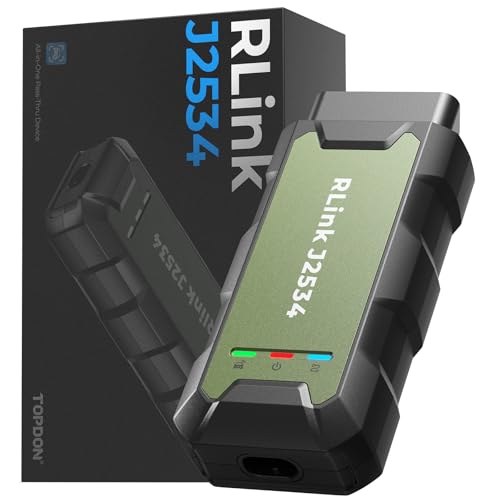
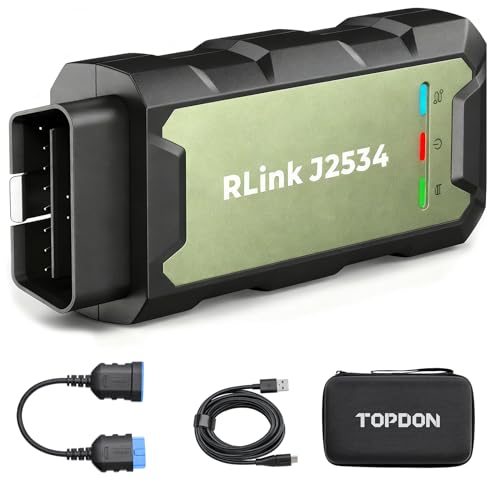
- Advanced VCI Box, Industry-leading J2534 Pass-Thru...
- High-Speed OEM-Level Diagnostics & Programming: Unlock true...
- Coverage for 17 Car Brands & Ultra Reliability: Works...
- User-Friendly RLink Platform & Expert Support: TOPDON’s...
- 6.6 ft USB-C Cable & Portable Storage Case: The RLink J...
Last update on 2026-06-23 / Affiliate links / Images from Amazon Product Advertising API
If the PDF is very large, it may not load in the preview below.
Some older TSBs had multiple PDFs — visit the NHTSA Website to view all PDFs.
If the TSB PDF does not show, download or view it on the NHTSA Website.
Click on the (+) Plus Sign
Then Click on Associated Document(s)
Search NHTSA Database for Recalls
Search NHTSA Database for Vehicle Investigations
View Latest Vehicle Investigations
Search NHTSA Database for Vehicle Complaints
View Latest Vehicle Complaints
TSB/Document ID: OwnersF
Replacement Service Bulletin Number:
MFR Communication Date: 2024-03-30
MFR Internal Campaign ID/Software Version:
Communication Type: Service Bulletin/Repair Instructions
NHTSA Components: EQUIPMENT
MFR Component System:
MFR Component Subsystem:
Previous TSB | Next TSB |
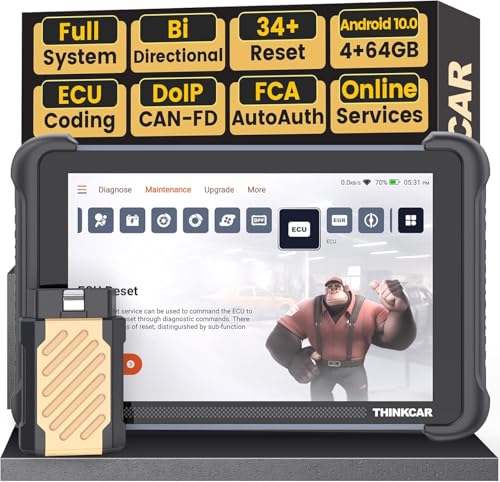
- [Notice] When you receive a used device, it may be a customer return resold by Amazon without inspection. You can exchange it for a new one through Amazon. As this situation is unavoidable, we sincerely apologize. For any issues, contacting us via Amazon's "Messages" is the best way. THINKSCAN 689BT Bidirectional Scan Tool Can Be Used Immediately After It is Turned On, Without Complicated Registration Process, Which is More Convenient & Quick.
- Full Bi-Directional Control & 3000+ Active Tests: Take control and test components like actuators, fuel injectors, relays, and cooling fans in real time. You’ll quickly see if the problem is in the part itself or the control module — saving you hours of guesswork and frustrating trial-and-error.
- Advanced ECU Coding Capabilities: Handle module matching and hidden feature activation with confidence. When you replace an ECU or want to customize settings, this obd2 scanner diagnostic bi directional tool gives you the professional-level capabilities you need without the dealership price tag.
- 34+ Useful Reset and Maintenance Functions: Complete everyday service tasks smoothly with a wide range of helpful reset and maintenance functions. Whether you’re keeping up with regular upkeep or tackling a specific job, this scanner makes maintenance simpler and less stressful for both DIYers and pros.
- Comprehensive Full System Diagnostics: Diagnose every major system — Engine, Transmission, ABS
 , SRS, TPMS, and more — all in one place. Finally stop wondering if you’re missing something important; get the full picture and clear codes with ease.
Last update on 2026-07-02 / Affiliate links / Images from Amazon Product Advertising API
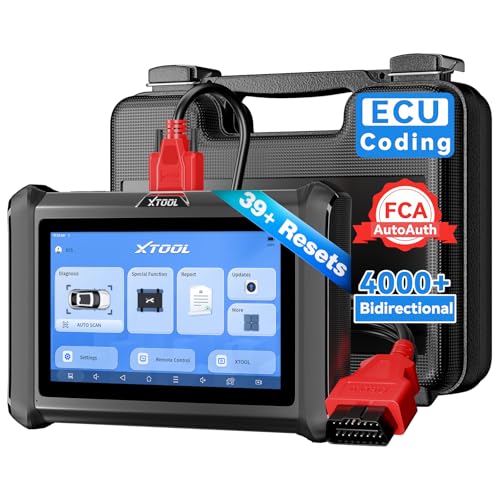
- Top Reasons to Choose the D7S OBD2 Scanner: XTOOL D7S car scan tool, an upgrade of XTOOL D7, offers comprehensive features for automotive technicians, workshops, and DIY enthusiasts 1. Upgraded Hardware: 2+64GB memory, rear camera, intuitive interface, foldable bracket 2. Complete Diagnostics: FCA Autoauth, OE-level all system scan, 39+ maintenance services, 4K+ bidirectional, CANFD/DoIP protocol 3. Advanced Capabilities: ECU c0ding, PMI functions 4. Wide Compatibility: Support 10,000+ models, covering 99% vehicle brands 5. Multi-language: Available in 22+ languages, No IP Restrictions 6. 3-Year Updates: Save 300 bucks on software updates for the latest features and optimizations
- 2026 Upgraded D7S Car Scanner Features: The newly 2026 D7S V2.0 scanner for car brings exciting features for advanced vehicle diagnostics and enhanced user experience 1. FCA AutoAuth: Now supports FCA SGW module for Chrysler, for Jeep, for Dodge (2018+), for Fiat (2017+), enabling faster vehicle communication without gateway restrictions 2. PMI (Offline ECU Pr0gramming): Allows for Ford, for Lincoln, and for Mazda ECU pr0gramming for new modules 3. Optimized Diagnostic Report 2.0: Personalized reports with logos and customer info for auto shops. Note: Compatibility varies by cars, please check before order
- 39+ Services/Resets/Adaptations/Relearns/Calibrations: XTOOL D7S full system car scanner diagnostic tool tackles 99% of common car issues through its 36+ special functions, including Oil Reset, EPB, SAS, BMS, Throttle Reset, Injector C0ding, ABS Bleed, TPMS Reset, Power Balance, etc and also covers specific-vehicle functions like Crank Sensor Relearn, ABS Initialization, Cylinder Power Balance, Fuel Trim Reset, Idle Relearn etc. This car diagnostic scanner enhances efficiency, making repairs and maintenance hassle-free. Tip: DO NOT for All vehicles, please check compatibility first
- Cost-effective ECU C0ding Scan Tool for Specific Brands: Enhance your vehicle's performance with XTOOL D7S! This obd2 scanner all systems bidirectional offers advanced capabilities at an affordable price, supports online for BMW, for Benz and offline for BENZ, for MIT, along with PMI functions for Ford, for Mazda, and for Lincoln. Ideal for technicians and DIY enthusiasts, this automotive scanner diagnostic tool optimizes vehicle performance and enhances the driving experience. Note: Not for all cars and modules, please send car VIN to check the compatibility before purchase
- OE All System Diagnostic & 8 Pids Graphing: XTOOL D7S is a comprehensive all system bi directional obd2 scanner that delivers dealer-level diagnostics, completely controlling over your vehicle’s performance and health. This automotive scan tool can read and clear DTCs, view live data and ECU information, retrieve freeze frames, and perform active tests and full obd2 functions. This bi-directional scan tool can can identify your vehicle's make, model, and year information with just one click and show up to 8 PIDs live data with options for CSV viewing, playback, and recording for in-depth analysis. It is easy-to-use for both professionals and beginners, helping pinpoint issues efficiently
Last update on 2026-06-30 / Affiliate links / Images from Amazon Product Advertising API
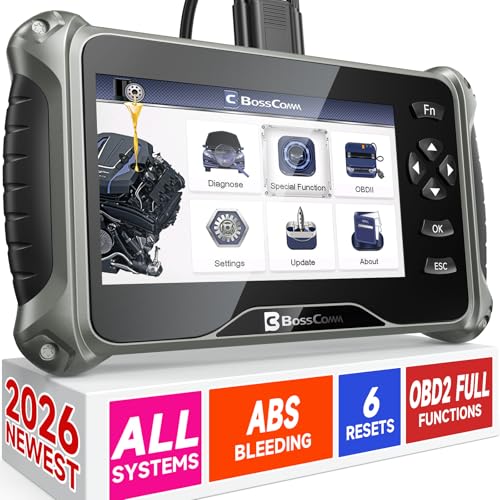
- 【✅Compared to BOSSCOMM IF742, IF745 Offers Full-System Diagnostics】The BOSSCOMM IF745 car diagnostic scanner is an upgraded model of IF742. In addition to supporting all OBD2 Code Reader functions and 6 reset options (ABS/EPB/SAS/BMS/Oil/Throttle), it expands diagnostics from 4 systems (Check Engine/ABS/SRS/Transmission) to vehicle All systems, including Steering, Suspension, and Body Electronics. This provides deeper, more comprehensive diagnostic capabilities.
- 【✨10 OBD2 Functions】The BOSSCOMM IF745 scan tool’s DTC Lookup instantly translates fault codes into user-friendly explanations, its I/M Readiness feature streamlines emissions testing with a single tap, and Freeze Frame lets you pinpoint the exact moment of a fault for in-depth root-cause diagnosis. Combined with a live data dashboard and advanced diagnostics (O2S, OBMon, EVAP), it delivers comprehensive insights for confident troubleshooting.
- 【✨Deep Diagnostics for All Vehicle System Modules】Beyond code reading/clearing and ECU information retrieval, our all-in-one data stream feature lets you inspect all current fault codes and their locations across the vehicle’s systems. This vehicle code reader helps you turn off dashboard warning lights and perform a comprehensive self-check of your car at home—no more back-and-forth trips to the repair shop or hefty inspection fees.
- 【✨6 Essential Resets: ABS Bleeding, Oil, EPB, SAS, Throttle, BMS】The BOSSCOMM IF745 obd2 scanner diagnostic tool swiftly purges air from brake lines to restore braking sensitivity, fine-tunes maintenance cycles to eliminate false alerts, resolves parking brake issues with one-click control, recalibrates steering sensors for stability, optimizes engine idling/acceleration for smoother performance, and deeply resets battery systems to extend lifespan and range via precise parameter adjustments.❗NOTE: Does NOT support bidirectional control, coding, or programming.
- 【✨10,000+ Car Models, AutoVIN, 13 Languages】The BOSSCOMM IF745 vehicle scanner diagnostic tool covers 73+ global car brands and offers support in 13 languages, making it perfect for DIYers, auto mechanics, or as a thoughtful gift. With a single-click AutoVIN feature, it instantly retrieves vehicle serial numbers, streamlining diagnostics for users globally. This adaptable tool balances user-friendliness with precision, catering to both personal and professional requirements.✅Unsure about compatibility? Compatibility will vary on vehicles' model and year, pls reach us via 📧 [email protected] 📧 before purchase.
Last update on 2026-07-02 / Affiliate links / Images from Amazon Product Advertising API
This product presentation was made with AAWP plugin.