
NHTSA ID Number: 10253672
Manufacturer Communication Number: Index380
TSB/Document Date: 2024-04-29
Summary
Tesla does not provide physical owner's manual copies. Instead, all available owner?s manual content is integrated into the vehicle software, and only the content relevant for a given vehicle, based on vehicle configuration and software version installed, is displayed on its touchscreen. This file contains all available owner?s manual content for 2021-2024 Model X vehicles converted to PDF format, and given the distribution method and NHTSA?s submission format requirements, it is the best available representative copy of owner?s manual content. However, a customer who accesses the owner?s manual via their vehicle?s touchscreen would only see the parts of this PDF file that are relevant to their vehicle.
• Flash the lights or honk the horn to find where Model X is parked.
• Enable Keyless Driving.
NOTE: Keyless Driving can be used when you do not have your key or to bypass PIN to Drive in cases where you
forgot your PIN or your touchscreen is unresponsive (see PIN to Drive on page 199).
• Open and close your garage door if your vehicle has a programmed HomeLink connection, if available (see Smart
Garage on page 95).
• Vent the windows.
Climate
You can check the interior temperature and heat or cool the cabin before driving (even if it’s in a garage), control the
seat heaters, and defrost the windshield:
• Enable or disable Defrost Car, which helps melt snow, ice, and frost on the windshield, windows, and mirrors, by
swiping up from the bottom of the screen.
• Enable or disable Dog Mode or Camp Mode.
• Enable Cabin Overheat Protection, which prevents the cabin from getting too warm in hot ambient conditions.
You can choose whether you want the A/C or just the fan to run when the temperature in the cabin exceeds 105°
F (40° C) or the selected temperature (if available). See Operating Climate Controls on page 207 for more
information.
• Vent or close the windows.
• Precondition the cabin to your desired temperature and turn on or off the steering yoke (or steering wheel) and
seat heaters.
Using the mobile app to precondition Model X also warms the Battery as needed. The mobile app will notify you
once your vehicle has reached the desired preconditioning temperature.
NOTE: In extremely cold weather or icy conditions, it is possible that your charge port latch may freeze in place. In
cases where you cannot remove or insert the charge cable, or the vehicle is not Supercharging due to the latch
being frozen in place, use your Tesla mobile app to enable Defrost Car for approximately 30-45 minutes. This can
help thaw ice on the charge port latch so the charge cable can be removed or inserted.
Location
Locate Model X with directions, or track its movement across a map.
Summon
You can park or retrieve Model X using Summon (see Summon on page 176) or Smart Summon (see Smart Summon
on page 180).
87
Owners Manual
Schedule
Enable scheduled charging or departure, and precondition the vehicle. See Scheduled Charging and Scheduled
Departure on page 243 for more information. Scheduled charging or departure can also be saved based on a
preferred location.
Security
The Security tab allows you to do the following:
• Pair your phone to the vehicle (see Phone Key on page 24).
• Enable or disable Sentry Mode (see How to Use Sentry Mode (With a USB Flash Drive) on page 203).
• Enable or disable Valet Mode (see Valet Mode on page 131).
• Enable or disable Speed Limit Mode and receive notifications when the vehicle's driving speed is within
approximately 3 mph (5 km/h) of your selected maximum speed (see Speed Limit Mode on page 200).
Upgrades
View and purchase the latest upgrades available for your vehicle, such as full self-driving.
Service
See Schedule Service on page 249 for information on how to schedule service through the mobile app.
Roadside
View roadside resources and request roadside assistance (where applicable). For more information on Roadside
Assistance, see Contacting Tesla Roadside Assistance on page 294.
Granting Access to a Second Driver
Add and remove access permission for an additional driver from the Tesla mobile app.
NOTE: Tesla mobile app version 4.3.1 or higher is required. Additional drivers can either use a previously registered
Tesla Account or use the app to create a new Tesla Account.
To add an additional driver, in the Tesla mobile app from the vehicle home screen, go to Security > Add Driver and
follow the onscreen instructions.
NOTE: The additional driver has access to all app features except purchasing upgrades.
To remove access, use the mobile app and go to Security > Manage Drivers and follow the onscreen instructions.
88
Owners Manual
Wi-Fi
Wi-Fi is available as a data connection method and is often faster than cellular data networks. Connecting to Wi-Fi is
especially useful in areas with limited or no cellular connectivity. To ensure fast, reliable delivery of software and map
updates, Tesla recommends leaving Model X connected to a Wi-Fi network whenever possible (for example, when
parked at home).
To connect to a Wi-Fi network:
1. Touch Controls > Wi-Fi icon at the top of the Controls screen. Model X begins to scan and display detected Wi-Fi
networks that are within range.
NOTE: If a known Wi-Fi network does not appear in the list, move Model X closer to the access point or consider
using a range extender.
NOTE: When connecting to a 5GHz network (if available), check which channels are supported in your region.
5GHz Network Channels Supported
36-48
52-64
100-140
149-165
✓
✓
✓
✓
2. Select the Wi-Fi network you want to use, enter the password (if necessary), then touch Confirm.
NOTE: Model X does not currently support connections to captive Wi-Fi networks (a captive Wi-Fi, commonly
used by public hotspots, requires you to access a custom web portal and agree to terms of service prior to
allowing you to log in).
3. Model X connects to the Wi-Fi network. Whenever the network is within range, Model X connects to it
automatically.
You can also connect to a hidden network that isn't shown on the list of scanned networks. Just touch Wi-Fi
Settings, enter the name of the network in the resulting dialog box, select the security setting, then touch Add
Network.
NOTE: If more than one previously connected network is within range, Model X connects to the one most recently
used.
NOTE: At Tesla Service Centers, Model X automatically connects to the Tesla Service Wi-Fi network.
Hotspots and Connectivity
You can also use a mobile hotspot or your phone's Internet connection via Wi-Fi tethering (subject to fees and
restrictions of your mobile carrier) to access the internet. To remain connected to Wi-Fi when shifting into Drive or
Reverse, choose the connection from the Wi-Fi settings screen, then touch Remain connected in Drive.
89
Owners Manual
Bluetooth
Bluetooth® Compatibility
You can use various Bluetooth devices in Model X provided it is paired and within operating range. For
example, you can pair your Bluetooth-capable phone so you can use it hands-free. In addition to
phones, you can pair other Bluetooth-enabled devices with Model X. For example, you can pair an
iPod Touch, iPad, Android tablet, etc. from which you can play music.
Before using your phone or other Bluetooth device with Model X, you must pair it. Pairing sets up Model X to
communicate with supported Bluetooth-capable devices. You can pair up to ten Bluetooth phones. Unless you've
specified a specific phone as a Priority Device, or if the phone specified as Priority Device is not within range,
Model X always connects to the last phone that was used (provided it is within range). To connect to a different
phone, see Connecting to a Paired Device on page 91.
NOTE: Authenticating your phone to use as a key (see Keys on page 24) does not also allow you to use the phone
hands-free, play media from it, etc. You must also pair it as described below.
NOTE: On many phones, Bluetooth turns off if the phone’s battery is low.
NOTE: Although Bluetooth typically supports wireless communication over distances of up to approximately 30 feet
(nine meters), performance can vary based on the phone, or other device, you are using.
CAUTION: Do not leave your paired phone in your vehicle (for example, if you are hiking or at the beach). If
you must leave your phone in the vehicle, disable Bluetooth and/or turn the phone off.
Pairing a Bluetooth Device
Pairing allows you to use your Bluetooth-capable phone hands-free to make and receive phone calls, access your
contact list, recent calls, etc. It also allows you to play media files from your phone. Once a phone is paired, Model X
can connect to it whenever the phone is within range.
To pair a phone, follow these steps while sitting inside Model X:
1. Ensure both the touchscreen and the phone are powered on.
2. On your phone, enable Bluetooth and ensure it is discoverable.
NOTE: On some phones, this may require you to go to Bluetooth Settings for the remainder of the procedure.
3. Touch the Bluetooth icon located at the top of the Controls screen.
4. On the touchscreen, touch Add New Device > Start Search. The Bluetooth settings screen displays a list of all
available Bluetooth devices within operating distance.
5. Choose the phone (or device) with which you want to pair. When pairing a phone, the Bluetooth settings screen
displays a randomly generated number. Your phone also display a number.
6. Check that the number displayed on your phone matches the number on the Bluetooths settings screen. Then, on
your phone, confirm that you want to pair.
7. If prompted on your phone, specify whether you want to allow Model X to access your personal information, such
as calendar, contacts and media files (see Importing Contacts and Recent Calls on page 91).
If you are experiencing issues importing or connecting to Bluetooth, see Troubleshooting Bluetooth on page 91 for
more information.
When paired, Model X automatically connects, and the Bluetooth settings screen displays the Bluetooth symbol next
to the device name to indicate that the connection is active.
You can display the Bluetooth settings screen at any time and change the settings associated with a connected
device. For example, you can designate a connected phone as the Priority Device. This is useful in situations where
you have connected more than one phone, and both phones are frequently used in Model X at the same time.
Model X automatically attempts to connect to the priority device before others. If a priority device is not specified,
or is not within range, Model X connects to the most recently used phone (if applicable).
90
Owners Manual
NOTE: Model X can only support up to two Bluetooth devices at a time (such as two controllers, or one phone and
one controller).
Importing Contacts and Recent Calls
Once a phone is paired, use the Bluetooth settings screen to specify whether you want to allow access to your
phone’s contacts, recent calls and text messages. If you allow access, you can use the phone app to make calls and
send messages to people in your list of contacts and on your recent calls list (see Phone, Calendar, and Web
Conferencing on page 93). Before contacts can be imported, you may need to either set your phone to allow
syncing, or respond to a popup on your phone to confirm that you want to sync contacts. This varies depending on
the type of phone you are using. For details, refer to the documentation provided with your phone.
If you are having trouble importing contacts or paiting with Bluetooth, see Troubleshooting Bluetooth on page 91 for
more information.
NOTE: You can turn access to your contacts and recent calls on or off at any time by touching the Bluetooth icon on
the touchscreen, choosing your phone, and then changing the associated access settings.
Unpairing a Bluetooth Device
If you want to disconnect your phone, or Bluetooth device, and use it again later, simply touch Disconnect on the
Bluetooth settings screen. If you no longer want to use your device with Model X, touch Forget This Device. Once
you forget a device, you must pair it again if you want to use it with Model X (see Pairing a Bluetooth Device on
page 90).
NOTE: Your phone automatically disconnects when you leave Model X.
NOTE: Unpairing the phone has no effect on using the phone as a key. To forget an authenticated phone, see
Managing Keys on page 31.
Connecting to a Paired Device
Model X automatically connects to a phone that you designated as Priority Device on the Bluetooth settings screen.
If you have not set a phone as a priority, Model X connects to the last phone to which is was connected, provided it
is within operating range and has Bluetooth turned on. If the last phone is not within range, it attempts to connect
with the next phone that it has been paired with.
To connect to a different phone, touch the Bluetooth icon at the top of the Controls screen. The Bluetooth settings
screen displays a list of paired phones. Choose the phone you want to connect to, then touch Connect. If the phone
you want to connect to is not listed, you must pair the phone. See Pairing a Bluetooth Device on page 90.
When connected, the Bluetooth settings screen displays the Bluetooth symbol next to the phone's name to show
that Model X is connected to the phone.
Troubleshooting Bluetooth
Your vehicle uses Bluetooth and BLE (Bluetooth Low Energy) to seamlessly connect your smartphone to Model X.
Due to several potential factors, Bluetooth or BLE may sometimes disconnect or experience issues in the pairing
process. Connecting to Bluetooth allows your vehicle to use phone functions such as audio, phone calls, calendars,
text messages, etc.
BLE is used for passive functions like phone key.
NOTE: Do not unpair your vehicle to your phone or remove it as phone key without a working key card nearby.
Try the following to troubleshoot Bluetooth, starting with your smartphone.
Smartphone Troubleshooting
Bluetooth may not connect due to settings and updates on your smartphone:
• Enable Bluetooth on your phone. If already enabled, disable and re-enable Bluetooth again.
• Ensure Airplane Mode is turned off.
• Charge your phone; if your phone battery is too low, it may not support Bluetooth functions.
91
Owners Manual
• Pair your device properly. If already paired, try unpairing and re-pairing again.
• Update your phone to the latest software provided by the manufacturer.
• Check that your vehicle's sound system is selected as the audio output source.
• Ensure your phone's settings allow for Bluetooth (ex: data is turned on or you are connected to Wi-Fi).
• Turn your phone off and on again.
• Ensure location permissions set to “Always On” for the mobile app.
Tesla Mobile App Troubleshooting
Check the Tesla mobile app:
• Confirm the Tesla mobile app is up to date on software.
• Verify you're logged into the Tesla mobile app while using your phone key.
• Ensure the Tesla app is running in the background.
• Double check that you have completely set up your profile in the mobile app and properly configured your
settings.
Vehicle Troubleshooting
Your vehicle's settings may affect its ability to pair with your smartphone:
• Charge Model X: If the vehicle Battery is too low, you may lose Bluetooth function.
• Update vehicle software and make sure it is always up to date. Check for new software updates available by
navigating to Controls > Software
• Reboot your vehicle.
If Bluetooth still does not work, unpair from your vehicle AND smartphone. Then try re-pairing both again.
For BLE phone key issues, when in the vehicle, navigate to Controls > Locks and remove your phone as "Phone as
Key". Then set it back up again. But only do this while you are in the vehicle and have a reliable back up key available
(such as a key card).
92
Owners Manual
Phone, Calendar, and Web Conferencing
Using the Phone App
When your phone is connected to Model X using Bluetooth (see Bluetooth on page 90), and you have
allowed access to information on your phone (see Importing Contacts and Recent Calls on page 91),
you can use the phone app to display and make a hands-free call to anyone listed on your phone.
• Calls: Displays recent calls in chronological order with the most recent call listed first.
• Messages: Displays message in chronological order with the most recent message listed first. You can view, send,
and receive text messages. Instead of typing a text message, touch the microphone button on the right side of
the steering yoke (or steering wheel) to enter text using your voice.
WARNING: To minimize distraction and ensure the safety of occupants as well as other road users, do not
view or send text messages when the vehicle is in motion. Pay attention to road and traffic conditions at all
times when driving.
• Contacts: Contacts are listed in alphabetical order and can be sorted by first name or last name. You can also
choose a letter on the right side of the list to quickly scroll to the names that begin with the selected character.
When you touch a name on your contacts list, the contact's available number(s) displays on the right pane, along
with other available information (such as address). Touch the contact's number to make a call.
• Favorites: Displays the contacts from your phone that you have identified as Favorites.
• Calendar: Displays calendar entries from your phone (see Calendar on page 94). If an entry includes a phone
number or an address, you can make a phone call, or navigate to a destination, by touching the corresponding
information in the calendar entry.
Making a Phone Call
You can make a phone call by:
• Speaking a voice command (see Voice Commands on page 20). Voice commands are a convenient, hands-free
way to call or text your contacts.
• Touching a phone number shown in a list in the phone app - Contacts, Calls, or Calendar.
• Using the Model X on-screen dialer in the Phone app.
NOTE: If it is safe and legal to do so, you can also initiate a call by dialing the number or selecting the contact
directly from your phone.
NOTE: You can also make a phone call by touching a pin on the map and choosing the phone number (if available)
on the popup screen.
Receiving a Phone Call
When your phone receives an incoming call, the touchscreen displays the caller’s number or name (if the caller is in
your phone’s contact list and Model X has access to your contacts).
Touch one of the options on the touchscreen to Answer or Ignore the call. Depending on the phone you are using
and what speakers you used for your most recent call, your phone may prompt you to choose which speakers you
want to use for the incoming call.
WARNING: Stay focused on the road at all times while driving. Using or programming a phone while driving,
even with Bluetooth enabled, can result in serious injury or death.
WARNING: Follow all applicable laws regarding the use of phones while driving, including, but not limited to,
laws that prohibit texting and require hands-free operation at all times.
93
Owners Manual
In Call Options
When a call is in progress, the call displays on the touchscreen. To adjust the call volume, roll the left scroll button
during a call. Tilt the left scroll button left to mute/unmute and tilt right to end the call.
Calendar
The calendar displays scheduled events from your phone’s (iPhone® or Android™) calendar for the
current and next day. The calendar is conveniently integrated with the phone app so you can dial into
your meeting from a Calendar entry. It is also integrated with the navigation system so you can
navigate to the event's location.
1. Ensure your phone is paired to Model X.
2. Ensure your are logged into the Tesla mobile app.
3. In your Tesla mobile app, touch Profile > Settings > Calendar Sync.
NOTE: To ensure you have access to all of the calendar's features, it is recommended that you use the most
recent version of the mobile app.
4. On your phone, go to Settings and allow access/give permission to share your calendar with the Tesla mobile
app. The mobile app can then periodically (and automatically) send calendar data from your phone to Model X.
If a calendar event includes an address, a navigation arrow displays to indicate that you can touch the address to
navigate to the event's location. When an event on your calendar takes place within the next hour and has a uniquely
specified address, the touchscreen notifies you if there is a better route due to traffic, even when you’re not actively
using navigation.
If an event has a uniquely specified address and takes place within two hours of you entering your vehicle and
preparing to drive, Model X automatically routes you to the event's address (see Automatic Navigation on page 221).
Touch an event's information icon to display all notes associated with the event. If the notes include one or more
phone numbers, the information icon shows a phone icon and the calendar displays the first phone number found.
Touch to initiate a phone call. You can also initiate a phone call by touching any number in an event's notes popup
screen (this is especially useful for conference calls). If notes include a web link, you can touch the link to open it in
the Web browser.
Zoom
Seamlessly take meetings and calls through your vehicle's touchscreen. To set up, touch the Zoom app
and sign in or enter the meeting ID. You can even access meetings shown on your calendar or in text
messages by touching the Zoom link. Your vehicle's cabin camera can be used in calls over Zoom only
when Model X is Parked. When the vehicle is shifted out of Park in the middle of a Zoom call, the cabin
camera turns off and you switch to audio only. Use the touchscreen to turn on/off the video, mute/
unmute yourself, and customize various preferences for your meeting.
WARNING: Do not to use the video function when the vehicle is “temporarily parked” on a public road (such as
when the vehicle is parked along the curb or in a spot that is not a designated parking spot)..
WARNING: Stay focused on your surroundings and follow all applicable laws while driving, including, but not
limited to, laws that require hands-free operation at all times.
94
Owners Manual
Smart Garage
myQ
If equipped, Model X can intelligently connect to your myQ smart garage, which allows you to remotely
monitor and control your garage door from the vehicle's touchscreen. This is convenient if you forget
to close your garage door, want to allow friends and family inside, or need the garage to open or close
automatically when your vehicle is detected nearby.
Follow these steps to set up myQ on your vehicle:
1. Your garage door must be myQ compatible. Use the myQ Compatibility tool (https://www.myq.com/app/myqcompatibility) to determine this.
2. Ensure your garage is Wi-Fi compatible. myQ uses Wi-Fi to communicate with your smart phone and vehicle.
Some garages will have a Wi-Fi or myQ symbol on the hub. Your garage must have a strong Wi-Fi signal to
control and monitor your garage through your vehicle.
NOTE: If your garage is not compatible, you may be able to purchase an external myQ hub to use this feature.
3. Download the myQ app from your smart phone's app store. Use the app to set up your account information and
pair the garage to your phone. myQ requires a paid subscription, which you can purchase in the app.
4. Check that your vehicle is running the latest available software version and has Wi-Fi or LTE connectivity.
5. Touch the garage icon at the top of the touchscreen or navigate to Controls > Locks > myQ Connected Garage >
Link Account and follow the instructions to pair the garage with Model X. Once paired, monitoring and controlling
the garage becomes available on the touchscreen, where you can further customize myQ.
For more information, questions, or troubleshooting assistance, visit www.myQ.com/Tesla.
HomeLink Universal Transceiver
If your vehicle is equipped with the HomeLink® Universal Transceiver, you can operate up to three Radio
Frequency (RF) devices, including garage doors, gates, lights, and security systems.
NOTE: Depending on date of manufacture, market region, and options selected at time of purchase, some vehicles
are not equipped with a HomeLink Universal Transceiver.
WARNING: Do not use the HomeLink Universal Transceiver with a device that does not have safety stop and
reverse features. Using a device without these safety features increases the risk of injury or death.
Supported Modes
HomeLink supports three different transmit modes, which is how your vehicle and the RF device communicate.
Selecting a transmit mode is determined by your RF device's compatibility:
• Standard Mode: Use Standard Mode if your RF device is equipped with a remote control that must be used to
operate the device (for example, a remote-controlled garage door). This mode is the most commonly used
transmit mode for HomeLink devices.
• D-Mode or UR-Mode: Use D-Mode or UR-Mode if the RF device does not have a remote control, and the receiver
has a "Learn" button (may also be called "Program" or "Smart"). D-Mode and UR-Mode function similarly in that
Model X communicates directly with the device's receiver as opposed to the remote control.
NOTE: D-Mode is used primarily in North America whereas UR-Mode is popular in Europe, the Middle East, and
Asia. To determine the mode your device is compatible with, contact HomeLink by going to www.homelink.com
or calling 1-800-355-3515.
95
Owners Manual
Each of your devices can be set to a different mode. For example, your garage door can be set to Standard Mode,
your front gate can be set to D-Mode, etc. To change a transmit mode, touch the HomeLink icon at the top of the
Controls screen and select the device you want to change. Then, select Program and choose the desired mode for
your device. Confirm by touching Set Mode and follow the onscreen instructions.
NOTE: Check the product information for your HomeLink device to determine which mode is compatible with your
device.
Programming HomeLink
To program HomeLink®:
1. Park Model X so that the front bumper is in front of the device you want to program.
CAUTION: Your device might open or close during programming. Therefore, before programming, make
sure that the device is clear of any people or objects.
2. Check that the device's remote control has a healthy battery. Tesla recommends replacing the battery in the
device's remote control before Programming HomeLink.
3. Touch the HomeLink icon at the top of the Controls screen.
4. Touch Create HomeLink.
5. On the HomeLink screen, enter a name for the device, then touch Enter or Add New HomeLink.
6. Choose the mode you wish to use (Standard, D-Mode, or UR-Mode), then touch Set Mode.
7. Touch Start and follow the onscreen instructions.
NOTE: If you see a screen called “Train the receiver” while programming the device, remember that this is a timesensitive step. After pressing the Learn/Program/Smart button on the device's remote control, you have only
approximately 30 seconds to return to your vehicle and press Continue, and then press the trained HomeLink
device name twice. Consider having an assistant to ensure you can complete this step within 30 seconds.
8. Once your device is programmed, touch Save to complete the programming.
9. Ensure HomeLink works as expected. In some cases, you may need to repeat the programming process multiple
times before succeeding.
Once programmed, you can operate the device by touching its corresponding HomeLink icon on the touchscreen.
HomeLink remembers the location of your programmed devices. When you approach a known location, the
HomeLink control on the touchscreen automatically appears. When you drive away, it disappears.
NOTE: For additional assistance or compatibility questions, contact HomeLink (www.homelink.com or call
1-800-355-3515).
96
Owners Manual
Auto Opening and Closing
To operate a HomeLink device without using the touchscreen, you can automate the device to open as you
approach, and close as you drive away:
1. Touch the HomeLink icon at the top of the Controls screen, touch HomeLink Settings, then choose the device
you want to automate.
2. Adjust the device's HomeLink settings as needed:
◦ Select the Auto-open when arriving checkbox if you want the device to open as you approach.
◦ Touch the arrows to specify the distance you want Model X to be from the device before it opens.
◦ Select the Auto-close when leaving checkbox if you want the device to close as you drive away.
◦ Select the Auto-fold mirrors checkbox if you want mirrors to fold when you arrive at the HomeLink location.
This is useful for narrow garages.
◦ Select the Chime for Auto-open and Auto-close checkbox if you want Model X to sound a chime when a signal
has been sent to open or close the device.
As you approach (or drive away from) a device that is set to operate automatically, the HomeLink status icon
displays a count-down message to let you know when the device automatically opens or closes. In situations where
you don't want the device to automatically open or close, touch Skip Auto-Open or Skip Auto-Close at any time
during the count-down message.
NOTE: Do not rely on HomeLink to ensure the device fully closes.
Resetting the Location of the HomeLink Device
If you experience situations in which you sometimes drive up to your HomeLink device and it doesn't open, or the
touchscreen does not display a notification as you approach a programmed device, you may need to reset the
device's location. To do so, park as close as possible to the HomeLink device (garage door, gate, etc.) and display
the HomeLink settings page by touching the HomeLink icon at the top of the Controls screen. Touch the name of the
device you want to reset, then touch Reset Location.
Deleting a Device
To delete a HomeLink device, touch the HomeLink icon at the top of the Controls screen, then touch HomeLink
Settings. Touch the name of the device you want to delete, then touch Delete.
NOTE: You can also perform a factory reset to erase your HomeLink settings, along with all other personal data
(saved addresses, music favorites, imported contacts, etc.). See Erasing Personal Data on page 10.
NOTE: For security reasons, delete your HomeLink devices if you sell your Model X.
Troubleshooting HomeLink
Standard Mode
In Standard Mode, Model X records the RF signal from your HomeLink device's remote control. The touchscreen
instructs you to stand in front of the vehicle, point the device's remote control at the front bumper, and press and
hold the button until the headlights flash. When the headlights flash, Model X has learned the remote control and
you can touch Continue on the touchscreen. If the headlights do not flash:
• Check the batteries in the remote control. It is a good idea to replace the batteries before you start programming.
• Ensure you are standing in front of Model X with the device's remote control positioned within two inches (five
cm) of the Tesla emblem.
• Press and hold the button on your device's remote control until the headlights flash. In some cases you must hold
the button on the remote control for up to three minutes.
NOTE: Some HomeLink remote controls require multiple short presses (approximately one second each press)
instead of one long duration press. If you are unsuccessful after multiple attempts of using long presses, try
repeated presses of one second each.
97
Owners Manual
D-Mode and UR-Mode
In D-Mode and UR-Mode, the device’s receiver learns Model X. The touchscreen instructs you to press the "Learn"
button (may also be called "Program" or "Smart") on the device's receiver. If this does not work, refer to the
following guidelines:
• Park Model X with its bumper as close as possible to the garage door, gate, etc. that you are trying to program.
• Make sure you are pressing the receiver's Learn/Program/Smart button. For instructions on how to put the
receiver into learning mode, refer to the product details provided with your RF device that you are trying to
program.
• If you see a screen called "Train the receiver" while programming the device, remember that this is a timesensitive step. After pressing the Learn/Program/Smart button on the device's remote control or receiver, you
only have approximately 30 seconds to return to your vehicle, press Continue, then press the trained HomeLink
device name twice. Consider having someone assist you with this step.
• Most devices stay in learning mode for only three to five minutes. Immediately after pressing the device's Learn/
Program/Smart button, follow the instructions displayed on the vehicle's touchscreen.
For additional assistance or compatibility questions, contact HomeLink (www.homelink.com or call 1-800-355-3515).
Driving
98
Owners Manual
Starting and Powering Off
Starting
When you open a door to enter Model X, the touchscreen powers on and you can operate all controls. To shift
Model X, press the brake pedal and swipe up for Drive or down for Reverse on the touchscreen's drive mode strip
(see Shifting on page 107).
If Auto Shift out of Park is enabled, Model X automatically selects Drive or Reverse based on the detected
surroundings . Pressing the brake pedal shifts the vehicle into the selected drive mode displayed on the instrument
panel (provided the driver's door is closed and the driver's seat belt is buckled), and pressing the accelerator moves
the vehicle in that direction.
NOTE: To turn Auto Shift out of Park on or off, touch Controls > Pedals & Steering > Auto Shift out of Park.
Before accelerating when Auto Shift out of Park is enabled, check the instrument panel to make sure that Model X
has shifted into the drive mode you want (Drive or Reverse). If the selection is not correct, or if Auto Shift out of
Park is not enabled, swipe up for Drive or down for Reverse on the touchscreen's drive mode strip to choose a new
drive mode. See Shifting on page 107.
NOTE: If PIN to Drive is enabled (see PIN to Drive on page 199), you must enter a valid PIN on the touchscreen
before you can drive Model X.
Everything you need to know when driving Model X displays on the instrument panel.
Drive Disabled - Requires Authentication
If Model X does not detect a key when you press the brake (a phone key is not detected or two minutes have passed
since you used the key card), the touchscreen displays a message telling you that driving requires authentication.
If you see this message, place the key card in either phone dock where the RFID transmitter can read it. The twominute authentication period restarts and you can start Model X by pressing the brake pedal.
A number of factors can affect whether Model X can detect a phone key (for example, the device's battery is low or
dead and is no longer able to communicate using Bluetooth).
Always keep your phone key or a key card with you. After driving, your key is needed to restart Model X. And when
you leave the vehicle, you must bring your key with you to lock Model X, either manually or automatically.
Powering Off
When you finish driving and shift into Park, simply exit the vehicle. When you leave Model X with your phone key and
key fob, it powers off automatically, turning off the instrument panel and touchscreen.
99
Owners Manual
Model X also powers off automatically after being in Park for 30 minutes, even if you are sitting in the driver’s seat.
Although usually not needed, you can power off Model X while sitting in the driver’s seat, provided the vehicle is not
moving. Touch Controls > Safety > Power Off. Model X automatically powers back on after a short period if you
press the brake pedal or touch the touchscreen.
NOTE: Model X automatically shifts into Park whenever it determines that you are exiting the vehicle (for example,
the driver's seat belt is unbuckled and the vehicle is almost at a standstill). If you shift into Neutral, your vehicle shifts
into Park when you open the door to exit. To keep your vehicle in Neutral, see Instructions for Transporters on page
289.
Power Cycling the Vehicle
You can power cycle Model X if it demonstrates unusual behavior or displays a nondescript alert.
NOTE: If the touchscreen is unresponsive or demonstrates unusual behavior, reboot it before you power cycle the
vehicle (see Restarting the Touchscreen on page 8).
1. Shift into Park.
2. On the touchscreen, touch Controls > Safety > Power Off.
3. Wait for at least two minutes without interacting with the vehicle. Do not open the doors, touch the brake pedal,
touch the touchscreen, etc.
4. After two minutes, press the brake pedal or open the door to wake the vehicle.
100
Owners Manual
Steering Yoke (or Steering Wheel)
Adjusting the Steering Yoke (or Steering Wheel) Position
Depending on options purchased, you may have either a steering yoke or a steering wheel: the design may differ but
the function is the same.
To adjust the steering yoke (or steering wheel), touch Controls and touch the Steering icon.
Use the left scroll button on the steering yoke (or steering wheel) to move the steering yoke (or steering wheel) to
the desired position:
• To adjust the height/tilt angle of the steering yoke (or steering wheel), roll the left scroll button up or down.
• To move the steering yoke (or steering wheel) closer to you, or further away from you, press the left scroll button
to the left or right.
You can also customize what you want the left scroll button to control, such as Climate or Dashcam status. To
customize, hold down the left scroll button and navigate the menu on the instrument cluster.
WARNING: Do not make steering yoke (or steering wheel) adjustments while driving.
Adjusting Steering Effort
You can adjust the feel and sensitivity of the steering system to suit your personal preference:
1. On the touchscreen, touch Controls > Pedals & Steering > Steering Mode.
2. Choose a steering option:
◦ Comfort - Reduces the effort required to turn the steering yoke (or steering wheel). In town, Model X feels
easier to drive and park.
◦ Standard - Tesla believes that this setting offers the best handling and response in most conditions.
◦ Sport - Increases the effort required to turn the steering yoke (or steering wheel). When driving at higher
speeds, Model X feels more responsive.
Overview of Buttons
Your Model X features stalkless driving in which all controls you need when driving are accessible on the steering
yoke (or steering wheel).
101
Owners Manual
1. Right turn signal (see Turn Signals on page 113).
2. High beam headlights* (see High Beam Headlights on page 112).
3. Left turn signal (see Turn Signals on page 113).
4. Left scroll button (see Left Scroll Button on page 102).
5. Horn (see Horn on page 103).
6. Identifier that is always illuminated to indicate that the right scroll wheel can be used with cruise control.
7. Wipers* (see Wipers and Washers on page 116).
8. Right scroll button (see Right Scroll Button on page 103).
9. Voice commands (see Voice Commands on page 20).
*The behaviors associated with the buttons for headlight high beams and wipers vary depending on whether you
press or press and hold the button. Refer to the corresponding sections in this Owner's Manual for details.
NOTE: Simultaneously holding down both the left and right scroll buttons while Model X is parked causes the
touchscreen to restart (see Restarting the Touchscreen on page 8).
Left Scroll Button
Use the scroll button on the left side of the steering yoke (or steering wheel) to adjust the position of the mirrors
and steering yoke (or steering wheel). It also controls the wipers and media player.
• When using media player, push the button to the left to go back to the previous song or station or push it to the
right to skip to the next song or station.
102
Owners Manual
• To increase/decrease the volume of the sound system, roll the button up/down respectively.
NOTE: The scroll button adjusts the volume for media and phone calls based on what is currently in use. As you
adjust the volume, the touchscreen displays the volume level and whether you are adjusting volume for media or
phone.
• To mute the media volume, or to pause/play an audio file, push the scroll button.
• When adjusting mirrors, push the button to the left/right to move the associated mirror inward/outward and up/
down to position the mirror upward or downward (see Mirrors on page 105).
• When adjusting the position of the steering yoke (or steering wheel), roll the button up/down to adjust the tilt/
angle and press the button to the left or right to move the steering yoke (or steering wheel) closer or further (see
Adjusting the Steering Yoke (or Steering Wheel) Position on page 101).
• When a menu displays on the instrument panel from which you can choose options (for example, wipers), use the
scroll button to choose an option (up, down, left, or right).
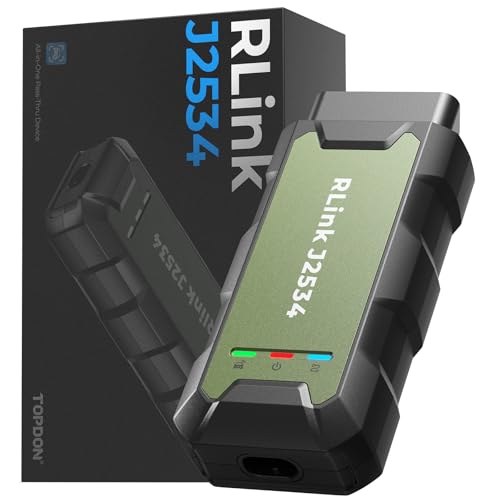
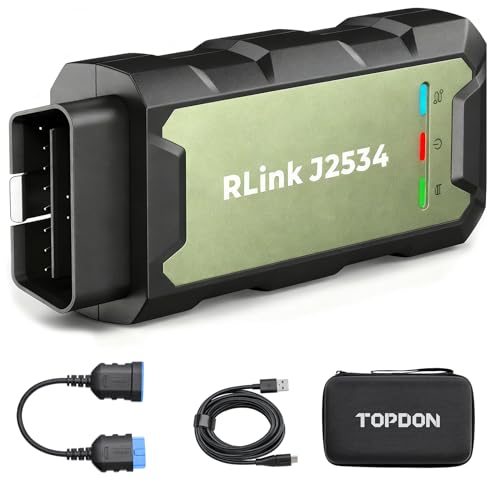
- Advanced VCI Box, Industry-leading J2534 Pass-Thru...
- High-Speed OEM-Level Diagnostics & Programming: Unlock true...
- Coverage for 17 Car Brands & Ultra Reliability: Works...
- User-Friendly RLink Platform & Expert Support: TOPDON’s...
- 6.6 ft USB-C Cable & Portable Storage Case: The RLink J...
Last update on 2026-06-23 / Affiliate links / Images from Amazon Product Advertising API
If the PDF is very large, it may not load in the preview below.
Some older TSBs had multiple PDFs — visit the NHTSA Website to view all PDFs.
If the TSB PDF does not show, download or view it on the NHTSA Website.
Click on the (+) Plus Sign
Then Click on Associated Document(s)
Search NHTSA Database for Recalls
Search NHTSA Database for Vehicle Investigations
View Latest Vehicle Investigations
Search NHTSA Database for Vehicle Complaints
View Latest Vehicle Complaints
TSB/Document ID: Index380
Replacement Service Bulletin Number:
MFR Communication Date: 2024-03-30
MFR Internal Campaign ID/Software Version:
Communication Type: Service Bulletin/Repair Instructions
NHTSA Components: EQUIPMENT
MFR Component System:
MFR Component Subsystem:
Previous TSB | Next TSB |
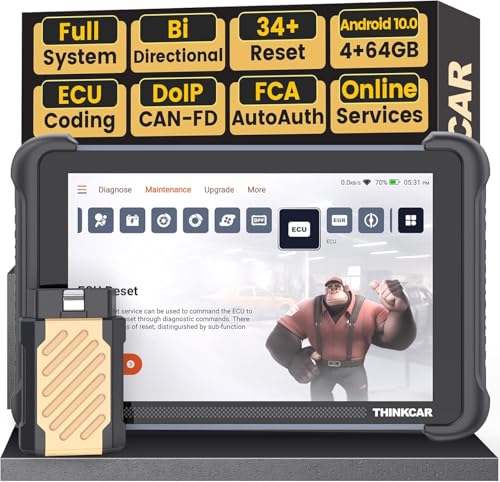
- [Notice] When you receive a used device, it may be a customer return resold by Amazon without inspection. You can exchange it for a new one through Amazon. As this situation is unavoidable, we sincerely apologize. For any issues, contacting us via Amazon's "Messages" is the best way. THINKSCAN 689BT Bidirectional Scan Tool Can Be Used Immediately After It is Turned On, Without Complicated Registration Process, Which is More Convenient & Quick.
- Full Bi-Directional Control & 3000+ Active Tests: Take control and test components like actuators, fuel injectors, relays, and cooling fans in real time. You’ll quickly see if the problem is in the part itself or the control module — saving you hours of guesswork and frustrating trial-and-error.
- Advanced ECU Coding Capabilities: Handle module matching and hidden feature activation with confidence. When you replace an ECU or want to customize settings, this obd2 scanner diagnostic bi directional tool gives you the professional-level capabilities you need without the dealership price tag.
- 34+ Useful Reset and Maintenance Functions: Complete everyday service tasks smoothly with a wide range of helpful reset and maintenance functions. Whether you’re keeping up with regular upkeep or tackling a specific job, this scanner makes maintenance simpler and less stressful for both DIYers and pros.
- Comprehensive Full System Diagnostics: Diagnose every major system — Engine, Transmission, ABS
 , SRS, TPMS, and more — all in one place. Finally stop wondering if you’re missing something important; get the full picture and clear codes with ease.
Last update on 2026-07-02 / Affiliate links / Images from Amazon Product Advertising API
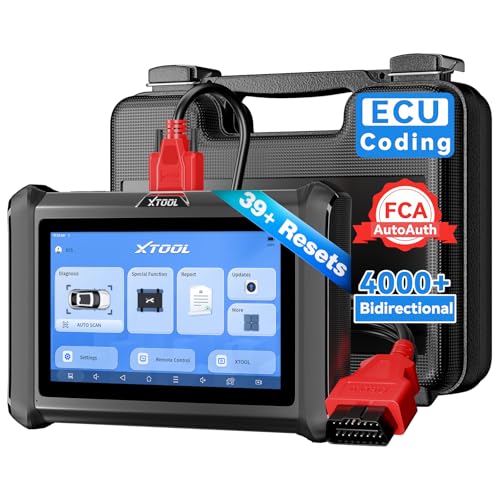
- Top Reasons to Choose the D7S OBD2 Scanner: XTOOL D7S car scan tool, an upgrade of XTOOL D7, offers comprehensive features for automotive technicians, workshops, and DIY enthusiasts 1. Upgraded Hardware: 2+64GB memory, rear camera, intuitive interface, foldable bracket 2. Complete Diagnostics: FCA Autoauth, OE-level all system scan, 39+ maintenance services, 4K+ bidirectional, CANFD/DoIP protocol 3. Advanced Capabilities: ECU c0ding, PMI functions 4. Wide Compatibility: Support 10,000+ models, covering 99% vehicle brands 5. Multi-language: Available in 22+ languages, No IP Restrictions 6. 3-Year Updates: Save 300 bucks on software updates for the latest features and optimizations
- 2026 Upgraded D7S Car Scanner Features: The newly 2026 D7S V2.0 scanner for car brings exciting features for advanced vehicle diagnostics and enhanced user experience 1. FCA AutoAuth: Now supports FCA SGW module for Chrysler, for Jeep, for Dodge (2018+), for Fiat (2017+), enabling faster vehicle communication without gateway restrictions 2. PMI (Offline ECU Pr0gramming): Allows for Ford, for Lincoln, and for Mazda ECU pr0gramming for new modules 3. Optimized Diagnostic Report 2.0: Personalized reports with logos and customer info for auto shops. Note: Compatibility varies by cars, please check before order
- 39+ Services/Resets/Adaptations/Relearns/Calibrations: XTOOL D7S full system car scanner diagnostic tool tackles 99% of common car issues through its 36+ special functions, including Oil Reset, EPB, SAS, BMS, Throttle Reset, Injector C0ding, ABS Bleed, TPMS Reset, Power Balance, etc and also covers specific-vehicle functions like Crank Sensor Relearn, ABS Initialization, Cylinder Power Balance, Fuel Trim Reset, Idle Relearn etc. This car diagnostic scanner enhances efficiency, making repairs and maintenance hassle-free. Tip: DO NOT for All vehicles, please check compatibility first
- Cost-effective ECU C0ding Scan Tool for Specific Brands: Enhance your vehicle's performance with XTOOL D7S! This obd2 scanner all systems bidirectional offers advanced capabilities at an affordable price, supports online for BMW, for Benz and offline for BENZ, for MIT, along with PMI functions for Ford, for Mazda, and for Lincoln. Ideal for technicians and DIY enthusiasts, this automotive scanner diagnostic tool optimizes vehicle performance and enhances the driving experience. Note: Not for all cars and modules, please send car VIN to check the compatibility before purchase
- OE All System Diagnostic & 8 Pids Graphing: XTOOL D7S is a comprehensive all system bi directional obd2 scanner that delivers dealer-level diagnostics, completely controlling over your vehicle’s performance and health. This automotive scan tool can read and clear DTCs, view live data and ECU information, retrieve freeze frames, and perform active tests and full obd2 functions. This bi-directional scan tool can can identify your vehicle's make, model, and year information with just one click and show up to 8 PIDs live data with options for CSV viewing, playback, and recording for in-depth analysis. It is easy-to-use for both professionals and beginners, helping pinpoint issues efficiently
Last update on 2026-06-30 / Affiliate links / Images from Amazon Product Advertising API
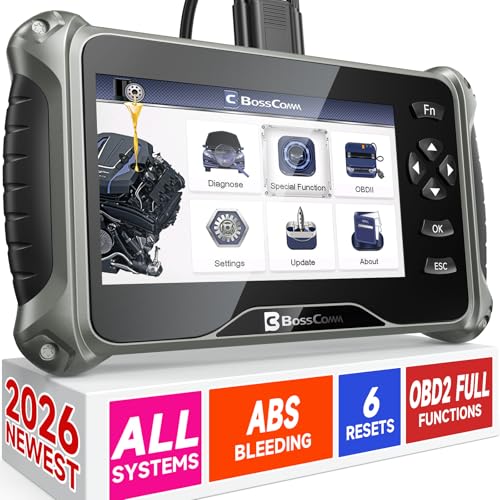
- 【✅Compared to BOSSCOMM IF742, IF745 Offers Full-System Diagnostics】The BOSSCOMM IF745 car diagnostic scanner is an upgraded model of IF742. In addition to supporting all OBD2 Code Reader functions and 6 reset options (ABS/EPB/SAS/BMS/Oil/Throttle), it expands diagnostics from 4 systems (Check Engine/ABS/SRS/Transmission) to vehicle All systems, including Steering, Suspension, and Body Electronics. This provides deeper, more comprehensive diagnostic capabilities.
- 【✨10 OBD2 Functions】The BOSSCOMM IF745 scan tool’s DTC Lookup instantly translates fault codes into user-friendly explanations, its I/M Readiness feature streamlines emissions testing with a single tap, and Freeze Frame lets you pinpoint the exact moment of a fault for in-depth root-cause diagnosis. Combined with a live data dashboard and advanced diagnostics (O2S, OBMon, EVAP), it delivers comprehensive insights for confident troubleshooting.
- 【✨Deep Diagnostics for All Vehicle System Modules】Beyond code reading/clearing and ECU information retrieval, our all-in-one data stream feature lets you inspect all current fault codes and their locations across the vehicle’s systems. This vehicle code reader helps you turn off dashboard warning lights and perform a comprehensive self-check of your car at home—no more back-and-forth trips to the repair shop or hefty inspection fees.
- 【✨6 Essential Resets: ABS Bleeding, Oil, EPB, SAS, Throttle, BMS】The BOSSCOMM IF745 obd2 scanner diagnostic tool swiftly purges air from brake lines to restore braking sensitivity, fine-tunes maintenance cycles to eliminate false alerts, resolves parking brake issues with one-click control, recalibrates steering sensors for stability, optimizes engine idling/acceleration for smoother performance, and deeply resets battery systems to extend lifespan and range via precise parameter adjustments.❗NOTE: Does NOT support bidirectional control, coding, or programming.
- 【✨10,000+ Car Models, AutoVIN, 13 Languages】The BOSSCOMM IF745 vehicle scanner diagnostic tool covers 73+ global car brands and offers support in 13 languages, making it perfect for DIYers, auto mechanics, or as a thoughtful gift. With a single-click AutoVIN feature, it instantly retrieves vehicle serial numbers, streamlining diagnostics for users globally. This adaptable tool balances user-friendliness with precision, catering to both personal and professional requirements.✅Unsure about compatibility? Compatibility will vary on vehicles' model and year, pls reach us via 📧 [email protected] 📧 before purchase.
Last update on 2026-07-02 / Affiliate links / Images from Amazon Product Advertising API
This product presentation was made with AAWP plugin.