
NHTSA ID Number: 10199662
Manufacturer Communication Number: SD-22-70147
TSB/Document Date: 2021-08-02
Summary
Service Data Sheet - The Bendix ® ES™ foundation drum brake is used in various applications on axles of commercial vehicles, providing the service and parking brake function. This document is intended to act as a source of maintenance information to those involved in servicing Bendix® brakes.
the tire and wheel, the following preliminary steps must
be taken to ensure your safety. Refer to Figure 7.
1. Set the parking brake and block the wheels to prevent
vehicle movement.
Brake Adjustment - Automatic / Manual
Slack Adjuster
NOTE: An assistant is required to make a brake
adjustment.
Block all wheels before beginning this adjustment
procedure.
To determine whether the Bendix® ES™ brakes require
adjustment, the applied stroke is measured and compared
to the maximum value for the air chamber size in use on
the vehicle.
1. Perform “Brake Maintenance Preliminary Steps”
described earlier.
2. With the air chamber pushrod fully retracted, measure
the distance from the face of the air chamber to the
centerline of the clevis pin hole. Refer to Figure 8.
If the measurement is not within the ranges shown
in Table 2, reposition the clevis. Remeasure the
distance and repeat until the measurement is within
range. Record the exact measured distance as
dimension “A”.
Block Wheels
Support on
Jack Stands
of Adequate
Capacity
A
Measure this
Distance with
Chamber "At Rest",
Dimension "A"
Figure 7 – Vehicle Maintenance Support
2. Raise the drive axle with a jack and support it on
suitable stands.
Never work under a vehicle supported by a jack.
3. Cage the spring-type brake chamber following vehicle
manufacturer’s instructions.
Figure 8 – Measurement, At Rest
13
Periodic Service
MAINTENANCE AND ADJUSTMENT
3. Measure the applied free stroke using a lever, and
again measure from the face of the air chamber to
the clevis pin centerline. Refer to Figure 9. Record
the distance as dimension “B”.
Measure Applied
Free Stroke using
a Lever
Dimension "B"
B
the brake shoes contact the drum. If the applied stroke
exceeded the maximum and adjustment is necessary,
adjust the brakes as described in steps 5 through 7.
5. Apply 90-100 psi pressure and measure from the face
of the chamber to the center of the large clevis pin.
Refer to Figure 10. Subtract dimension "C" from "A"
for the applied stroke at 90-100 psi. Refer to Table
2 for the maximum legal stroke for the chamber you
have.
C
Measure the
Applied Stroke
at 90-100 psi
Dimension "C"
Figure 9 – Measure Applied Free Stroke Using A Lever
4. Subtract dimension “A” from “B”. The difference is the
applied free stroke. Compare the applied free stroke
to the maximum value in Table 2. If the applied free
stroke equals or exceeds the maximum applied stroke
shown, adjust the brakes. If the applied free stroke
is less than the maximum value, no adjustment is
required and you may perform the Brake Operation
Check (page 15).
90-100 PSI
Maximum
Applied
Stroke
Desired
Free
Stroke
Type 12
1-3/8"
3/8" to 1/2"
Type 16
1-3/4"
3/8" to 1/2"
Type 20
1-3/4"
3/8" to 1/2"
Type 24
1-3/4"
Air Chamber Size
Type 24 (w/ 2-1/2"
Extended Stroke)
Type 24 (w/ 3" Extended Stroke)
Type 30
Type 30 Long Stroke
2"
2.5"
2"
3/8" to 5/8"
(Without
Drag)
2.5"
Table 2 – Stroke Values
NOTE: If adjustment is necessary, Bendix® brakes are
adjusted to achieve proper free stroke. The difference
between free stroke and applied stroke is merely the
method used to move the slack adjuster from rest. Applied
stroke uses a 90-100 psi brake application; free stroke is
measured using a lever to move the slack adjuster until
14
Figure 10 – Measure Applied Stroke at 90-100 PSI
6. Verify that brakes are not dragging by spinning the
wheels by hand or tapping the drum lightly with a
hammer and listening for a sharp ringing sound.
7. Perform the Brake Operation Check (page 15), to
verify the proper operation of brakes before releasing
the vehicle for service.
Periodic Service
PERIODIC INSPECTIONS
Brake Adjustment - Automatic Slack Adjuster
NOTE: A properly working Automatic Slack Adjuster
(ASA) does not require manual adjustment while in
service. The manual adjuster hex is intended for use
during adjuster installation and brake overhaul.
Automatic slack adjusters must never be repeatedly
adjusted to correct excessive in service pushrod stroke,
because this condition indicates that a problem exists
with the automatic adjuster, with the installation of the
adjuster, or with related foundation brake components
which manual adjustment will not correct.
1. Brake adjustment for automatic slack adjusters is the
same as for manual slack adjusters.
2. Refer to the automatic slack adjuster manufacturer's
instructions for proper installation.
Brake Operation Check
NOTE: An assistant is required to make a thorough brake
operation check.
1. Apply the brakes to 80 psi and hold. Check all air line
fittings and air chambers for leakage.
2. Apply and release the brakes while observing
operation of the slack adjusters on each axle. As the
brakes are applied and released, the slack adjusters
should move in unison visually.
3. Investigate the source and make corrections for any
discrepancies found in Steps 1 and 2.
4. Drive the vehicle at low speeds in a safe area and
make several brake applications to verify safe
operation and absence of pulling, grabbing, or noise.
If any of these are noted, investigate and repair prior
to releasing the vehicle for service.
Never release a vehicle for service if any brake discrepancy
– no matter how minor – is evident.
Lubrication
When servicing brakes or replacing components, lubricate
per the guidelines listed in Table 3 below. Lubricate the
following components with grease specified in the table
below:
• One-piece roller - lubricate the shoe roller recess
• Two-piece roller - lubricate the shoe roller I.D.
• Roller and anchor pin recesses of each shoe on
the Bendix® ES™-150-04L brake model.
Note: When lubricating the camshaft bracket, lubricate
until the grease comes out at the slack adjuster
end. The seal is installed at this end – with the air
side in – so that grease purges out.
Do not use moly-disulfide loaded grease or oil because
this may shorten the service life.
IMPORTANT
Do Not Lubricate The Following:
• The cam head surface or related parts that contact
the cam head surface. For efficient operation, the
cam head surface must remain free of oil, grease,
or other contaminants.
In no case should the lubrication interval exceed the
published intervals in the table below.
Slack Adjuster Lubrication: Pressure lubricate
according to the manufacturer’s instructions.
Component
Lubrication Interval
Type of Lubricant
Standard
Every 50,000 miles or every three (3) months
Standard Chassis Grease
Table 3 – Lubrication Intervals
15
Periodic Service
PERIODIC INSPECTIONS
Periodic Inspections
The component inspections discussed below are general
in nature. More detailed component inspections are
normally done at an overhaul. For more specific guidelines,
refer to the appropriate inspection instructions in Brake
Overhaul Service Interval on this page.
Visual Inspection
A thorough visual inspection for brake wear, loose
fasteners, broken parts, and/or obvious damage should
be made each time the brake is being serviced or the
wheel and drum have been removed. In no case should
the visual inspection interval exceed three (3) months
of service.
Lining Inspection
A visual check of lining thickness and condition should
be made each time the vehicle is being serviced in
the maintenance shop. In no case should the lining
thickness/condition inspection interval exceed three
(3) months of service.
Brake Adjustment
Brake adjustment should be checked, (if the
adjustment is out of specification, inspection of all
brake components for damage or out of specification)
WEEKLY or any time the applied stroke exceeds the
maximums shown in Periodic Maintenance: Brake
Adjustment - Manual Slack Adjuster on page 13.
Brake Operation Check
A complete operation check of the braking system should
be made following the instructions in the Brake Operation
Check (page 15), after any brake service. In no case
should the operation check interval exceed three (3)
months of service.
16
Service Intervals
Brake Reline
A brake reline should be done any time the lining thickness
or condition indicates the need.
Camshaft Radial Play
Camshaft radial play should be checked with a dial
indicator any time the brake shoes have been removed
from the vehicle to assess the condition of the camshaft
bushings. Refer to Camshaft Inspection.
Camshaft Axial Play
Camshaft axial play should be checked any time the
camshaft or slack adjuster has been removed from the
vehicle. Refer to the axial play instructions in Slack
Adjuster Installation, (page 39) starting with Step 6.
Brake Overhaul
A complete brake overhaul following the instructions in
the service manual should be accomplished at every
third brake reline.
Lubrication
See Periodic Service/Lubrication for detailed lube
instructions and intervals.
Removal / Disassembly
SHOE REMOVAL
A complete brake overhaul consists of:
• complete disassembly
• cleaning
• inspection
• repair and replacement of components
• assembly
• brake operation check
Detailed instructions for each of these steps are listed
on the following pages in the order in which they would
normally be encountered during a typical brake overhaul.
The long-term effects of non-asbestos fibers have
not been determined. Therefore, precautions should
be used when handling these materials. See General
Information / Lining Material Warning.
Turn the Adjuster Nut
counterclockwise to
"Back-Off" Adjustment
Figure 11 – Slack Adjuster Adjustment
Brake Assembly Removal
1. Perform “Brake Maintenance Preliminary Steps”.
2. Back off the slack adjuster per the manufacturer's
recommendations. Refer to Figure 11. Continue
turning until the shoes are fully returned to the
released position and clear of the drum.
NOTE: Remove the wheels and brake drums per
manufacturer's recommendations.
3. Back the slack adjuster off (counterclockwise) until
the brake shoes are clear of the brake drum or the
slack adjuster comes to a stop.
17
Removal / Disassembly
SHOE REMOVAL
Bendix® ES™-150-04D
ES-150-04L
ES-150-08D
ES-165-05D, L, X
ES-165-06D, L, X
ES-165-07D, L, X, Z
ES-165-08D, L, X
The long term effects of non-asbestos fibers have not
been determined. Therefore, precautions should be used
when handling these materials.
See General Information / Lining Material Warning
3. Using a large screwdriver or lever, lift the upper shoe
to stretch the return spring as shown in Figure 13.
1. Perform steps in Removal/Disassembly: Drum
Removal.
2. For Bendix models ES-150-04D/ES-150-08D/
ES-165-05,-06,-07,-08,D,L ONLY: Pry the roller
retainer coiled loops out of both shoe web holes as
shown in Figure 12. Pivot the roller retainer to swing
the loops clear of the shoe webs.
Lift Upper Shoe
to Stretch Spring
Remove Roller, Then
Repeat for Lower Shoe.
For ES Brakes, See Note Below
Figure 13 – Upper Cam Roller & Pin Removal
4. Remove the upper cam roller.
Shoe Web
Roller Retainer
Disengage
Retainer Coiled
Loops From
Shoe Webs
Pivot Retainer to
Swing Loops Clear
of Shoe Web
Figure 12 – Roller Retainer Removal
18
NOTE: For Bendix models ES-150-04D, L/ES-150-08D,
ES-165-05D, L,X/ES-165-06D, L, X/ES-165-07D, L, X, Z/
ES-165-08D,L,X. Remove the roller and roller retainer
as a unit.
5. Repeat Steps 2 through 4 to remove the lower shoe
roller and retainer.
NOTE: Bendix recommends the use of a suitable brake
tool when removing the rollers and the return springs.
Removal / Disassembly
SHOE REMOVAL
6. Push the cam end of both shoes toward the cam and
unhook the shoe return spring. Remove and discard
the spring.
Stretch Using Suitable
Tool Positioned as Shown
Brake Assembly Inspection
1. Clean the brake spider, anchor pin, and cam head.
2. Inspect all fasteners, spider mounting, cam bracket,
and chamber mounting bolts.
3. Inspect all welds for cracks.
4. Measure the cam-bushing radial play and cam endplay.
5. Replace out-of-spec parts as needed.
Figure 14 – Bendix® ES™-165-07D, L Shoe Removal
NOTE: To remove the return spring, position a lever or
suitable tool – with a notch – to engage the spring rod.
Refer to Figure 14. Apply a downward force to stretch
the spring, allowing removal of the upper spring hook.
Remove and discard the spring.
Rotate Both Shoes
Around Anchor
Pin and Lift Off
Brake Shoes
Figure 15 – Shoe Removal
7. Rotate both shoes around the anchor pin and
remove them from the vehicle. Refer to Figure 15.
8. Clean and inspect the remaining parts as outlined
in the removal/disassembly section of this manual.
NOTE: Bendix ® ES ™ -150-06D / ES-165-05D,L,X /
ES-165-06D,L,X/ES-165-07D,L,X,Z / ES-165-08Z:
steer axle brakes may use two return springs with a
horse collar or dual spring post. To remove the return
springs, position a lever or suitable tool – with a notch –
to engage the spring. Refer to Figure 14. Apply a
downward force to stretch the upper spring, allowing
removal of the upper spring hook. Remove and discard.
Repeat the procedure for the lower spring.
Cast Spider w/
Horse Collar
Figure 16 – Cast Spider With Horse Collar
19
Removal / Disassembly
SHOE REMOVAL
Bendix® ES™-150-04L Brake
1. Perform the steps in Removal/Disassembly: Drum
Removal.
2. Using a large screwdriver or lever, lift the upper shoe
to stretch the return spring.
3. Remove the upper roller.
The long term effects of non-asbestos fibers, have not
been determined. Therefore, precautions should be used
when handling these materials.
See General Information / Lining Material Warning
4. Repeat steps 2 through 3 to remove the lower roller.
5. Stretch the shoe return spring and unhook it from the
upper shoe web. Refer to Figure 18.
Stretch Spring to
Unhook from the
Shoe Web
Shoe Return
Spring
Figure 17 – Shoe Return Spring Removal
6. Rotate the shoe downward and turn it to allow
disengagement of the shoe retaining spring from the
lower shoe web. Refer to Figure 17.
7. Rotate the upper shoe upward and remove the shoe
and shoe retaining spring.
8. Clean and inspect the remaining brake parts as
outlined in the Removal/Disassembly section of this
manual.
20
Unhook the
Retaining Spring
Rotate Down
Figure 18 – Lower Shoe Removal
Removal / Disassembly
ROLLER REMOVAL
Bendix® ES™-165-07M Heavy-Duty Brake
1. Remove the retaining ring and washer from the drum
side of both anchor pins. Refer to Figure 19.
3. To remove the upper and lower shoes, remove the
anchor pins with a brass drift or a mallet. Refer to
Figure 21.
Remove
Retaining Rings
and Washers
Figure 19 – Retaining Ring and Washer Removal
Figure 21 – Anchor Pin Removal
2. To allow removal of the anchor pins, cut the lockwire
and remove the cap screws from the spider. Refer to
Figure 20.
NOTE: Inspect the anchor pin and bushings. If the pin
was seized, or if the bushing is grooved or worn beyond
0.031" (0.79mm), replace the pin and bushing. Always
replace the pins and bushings with each brake reline.
Cut the Lockwire
and Remove
the Cap Screws
Drive Out Bushings
with a Suitable
Driver
Figure 20 – Cap Screw Removal
Figure 22 – Anchor Pin Bushing Removal
4. If any noted conditions are found, drive out the
old anchor pin bushings from the spider. Refer to
Figure 22.
5. Clean and inspect the remaining brake parts as
outlined in the Removal/Disassembly section of this
manual.
21
Removal / Disassembly
ROLLER REMOVAL
Bendix® ES™ -165-07H Severe-Duty Brake
5. Remove the upper anchor pin with a brass drift or a
mallet. Refer to Figure 25.
The long term effects of non-asbestos fibers, have not
been determined. Therefore, precautions should be used
when handling these materials.
See General Information / Lining Material Warning
Drive Out
Anchor Pin
1. Perform the steps necessary for drum removal, see
Removal/Disassembly: Drum Removal.
2. Remove the cap screws and dust shield, if applicable.
3. Remove the retaining ring and washer from the drum
side of each anchor pin. Refer to Figure 23.

- Mixes well with conventional fluids
- Low-moisture formula provides excellent vapor lock...
- Ideal for hydraulic and disc brakes


- Provides an extra margin of safety in extreme braking...
- Mix of polyglycol ethers ensures hot brake-system operation...
- Excellent for ABS, disc and drum brake systems
- Delivers braking power when needed by avoiding a spongy...
- Both wet and dry boiling points exceed the minimum...
Last update on 2026-06-23 / Affiliate links / Images from Amazon Product Advertising API
If the PDF is very large, it may not load in the preview below.
Some older TSBs had multiple PDFs — visit the NHTSA Website to view all PDFs.
If the TSB PDF does not show, download or view it on the NHTSA Website.
Click on the (+) Plus Sign
Then Click on Associated Document(s)
Search NHTSA Database for Recalls
Search NHTSA Database for Vehicle Investigations
View Latest Vehicle Investigations
Search NHTSA Database for Vehicle Complaints
View Latest Vehicle Complaints
TSB/Document ID: SD-22-70147
Replacement Service Bulletin Number:
MFR Communication Date: 2021-07-13
MFR Internal Campaign ID/Software Version:
Communication Type: Service Bulletin/Repair Instructions
NHTSA Components: SERVICE BRAKES, HYDRAULIC:FOUNDATION COMPONENTS:DRUM:DRUM
MFR Component System:
MFR Component Subsystem:
Previous TSB | Next TSB |
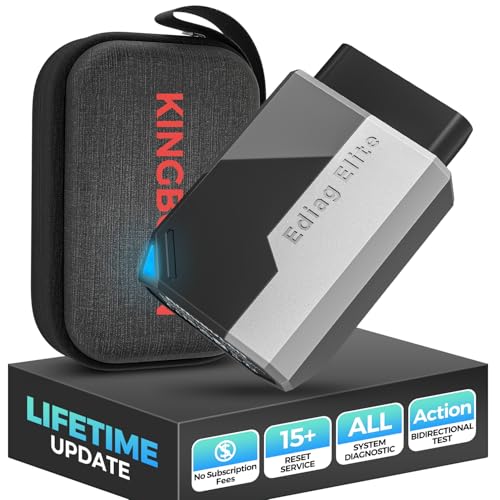
- Obd2 Bluetooth Scanner Lifetime Update: Ediag Elite offers revolutionary Advantage Lifetime Updates with unlimited access to the superior 15 reset service, bidirectional testing and full system diagnostics.The Ediag Elite is an excellent Bluetooth obd2 scanner diagnostic tool ideal for diy's and private car owners
- Bidirectional Control for Quickly Locating Problems: The Bidirectional Scan tool allows you to send commands directly from your smartphone to your vehicle for active testing. This feature helps to quickly narrow down problems such as air conditioning clutches, windows, doors, sunroofs, etc., reducing diagnostic time for mechanics and helping Diy users locate faults more easily. In addition, Ediag Elite provides fault analysis and repair guidance to help you solve problems efficiently.
- 15 Maintenance Resets: The current version introduces 15 popular special features: Oil Reset, Headlight Matching, Bleeding Reset, TPMS Reset, BMS Reset, Gear Box Relearn, Throttle Learning, Injector Coding, SAS Reset and more special functions in system diagnose menu. These functions make it easy for owners to carry out the necessary maintenance and servicing, ensuring that your vehicle stays in top condition, prolonging its service life and preventing common problems and breakdowns. Note: The Special function vary by model& year, Reach us check compatibility.
- Wide Compatibility CANFD & FCA
 Autoauth: Compatible with GM, Ford, Toyota, Chrysler, Honda, Mazda, Nissan, Mitsubishi, Hyundai, KIA with standard OBD2 port from 1996 to newer. More car brands and features will be released gradually. Newest Ediag Elite scanner supports CANFD Protocol and FCA cars. Note: Coverage may vary on different vehicle by model& year ,Please contact us to confirm compatibility before purchase.
 - Perfect for Monitoring The Health of Your Vehicle: Ediag Elite is designed to make vehicle maintenance simple and efficient. With intelligent AutoVIN quick recognition, it is easy to connect to your car without the need for manual input. Real-time data is visualized in a variety of formats, including graphs, numeric, meter displays and clear 4-in-1 data charts, allowing you to effortlessly monitor real-time data. Data logging/reporting is available for playback and further analysis.
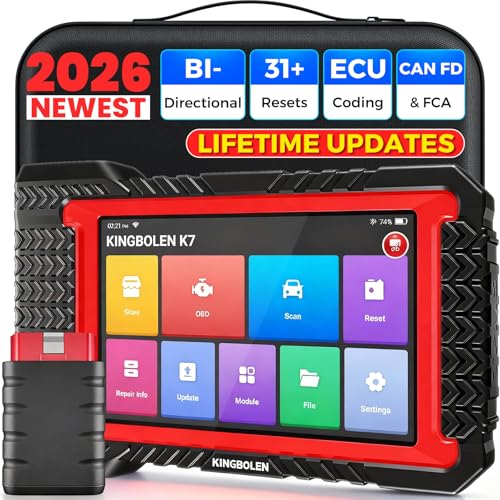
- No Annual Fees & 2026 Upgraded CAN FD: Why pay $199/year or more for updates? The 2026 newest Kingbolen K7 obd2 scanner features have been upgraded to Lifetime Updates without subscription fees, saving you significant costs in the long run. K7 scan tool also adds the CAN FD protocol for the latest GM models (2019+), enabling faster data transfer, reducing the risk of undetected errors
- 2026 Newest Top-tier Car Scanner: Kingbolen K7 diagnostic scan tool is equipped with most capabilities for daily repair/maintenance: Wireless diagnosis via Bluetooth, Bidirectional Test, ECU Online/Offline Code, 31+ Resets, PMI for Ford, Lincoln, Mazda, Global version for 100+ brand vehicles and 17 languages, no area limit, FCA AutoAuth
- OE-Level Full Systems Scan Tool: K7 professional diagnostic scanner with Auto Vin can do one-click to scan ECUs on most of vehicles, like pcm, ecm, eps, bcm, tpms, sas, a/c system... to read/clear code, view live data, freeze frame, read ecu info. 4-in-1 data stream graphics can make data viewing more intuitive. Detailed diagnostic reports will help you easily master the car situation as it can be shared by bluetooth or email! Adding workshop information can help your customers to know more
- Bidirectional Test/Active Test & ECU Code: Stop guessing and start fixing. Bidirectional scan tool Kingbolen K7 can perform real active test that can send commands to the vehicle's ECU to drive the actuators to work, like window, rear mirrors, sunroof, door, solenoids, wipers, headlamp, etc, helping you quickly find out bad parts and pinpoint faulty issues. K7 bidirectional scanner will be a good choice to save money and time on car repairs when performing complex maintenance and repair
- 31 Reset Functions: Avoid expensive dealership visits for simple services. Experience tells us that just a small repair service may cost a lot of money. Kingbolen K7 is a professional diagnostic scanner with 31 common maintenance services like Oil /SAS/EPB/TPMS Reset, Battery Matching, ABS Bleeding, Injector Code, etc. It effectively handles most of the car reset and relearning jobs, perfect for experienced DIYers and mechanics. Note: Functions in the menu vary across vehicles. Kindly check the compatibility before purchase
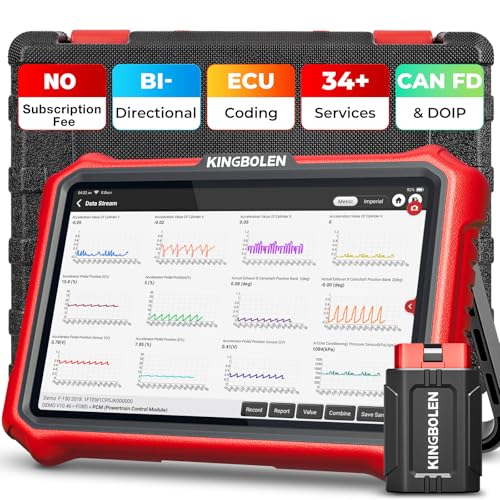
- 【Lifetime Database & Software Updates— No Subscription Fee, No Feature Lock, Save you $399/Y】KINGBOLEN K8 Pro's software can already be permanently upgraded and used for while software of other same price product still needs annual fee of almost $400. K8 pro scanner has packed all capabilities auto technicians would ever need for repair & maintenance services: Added CAN-FD & DOIP protocol, Bluetooth Wireless Diagnosis, Bidirectional Test, ECU Online/Offline Code & Guided Functions for VW, for Audi...34+ Restes, Autoauth for FCA SGW, Larger 4GB+64GB memory, 12600mAh battery, 8'' touch screen with 1280 * 800 Resolution. A Kickstand can allow the tablet to sit at a comfortable angle
- 【Newly Added CAN FD & DOIP Protocol】As Upgrade Version of Kingbolen K8, K8 Pro obd2 scanner supports CANFD and DOIP protocol, which will save you 200+ bucks as no need extra buy for special adapter. CANFD protocol suits for the latest GM(2019-), reducing the risk of undetected errors. The DoIP protocol (comes with DoIp cable) fits for 2017+ BMW(F&G chassis), for Jaguar & Land Rover after 2017, for Volvo after 2018. Plus, K8 Pro's Memory from 2G+32G expanded to 4G+64G, update period extended from 2 years to permanent
- 【34+ Hot Special Functions & V.A.G Guide】KINGBOLEN K8 pro bluetooth obd2 scanner covers almost all common services including Oil Reset, EPB, SAS, BMS Reset, ABS bleed, Throttle Reset, Suspension, Injector Code, Power Balance, Transmission Adaptation, Fuel Trim Learn, HVAC Control Module Calibrate, Language Change, A/F Settings, Stop/Start Reset, Crankshaft Sensor Relearn, TPMS, PMI function and etc. Imagine how much money and time you spend on car maintenance every year? K8 pro car scanner will be a good helper and saver for your car. V.A.G Guided function provides step-by-step guide to work for Volkswagen/Audi/Skoda. Note: Please send us model/year/vin to check compatibility before order
- 【Powerful Bidirectional Test/Active Test & ECU Code】As a bidirectional scan tool, KINGBOLEN K8 pro allows you to request information from a vehicle's ECU or send commands to the vehicle's modules to perform specific tests and functions, such as EVAP Tests, Turn on/off radiator fan, Window/Mirror/Door Lock Test, Pump and Value Tests, Sound horn Test, et. Without using the vehicle control system and dismantling car’s parts, it can quickly and accurately pinpoint the fault causes, simple operation saves time and money
- 【Wireless OE-Level All Systems Diagnostics】Equipped with Bluetooth VCI, you can do car diagnostics out of the car (up to 33F/10M) without being confined to a small space inside the car. Provides the convenience of Auto VIN, K8 pro allowing for easy access and diagnosis of all available modules on a wide range of vehicles, like PCM, ECM, BCM, TPMS, SAS, Fuel System, etc, to perform read/clear codes, view live data, freeze frame, perform active tests, and read ECU info... 12-In-1 Data Stream Graphics make data viewing more intuitive.Diagnostic reports can be shared via QR Code, Bluetooth or email.Built-in Browser and Fault Code Library allows you directly query the fault code when diagnosing
Last update on 2026-06-23 / Affiliate links / Images from Amazon Product Advertising API
This product presentation was made with AAWP plugin.