NHTSA ID Number: 10199127
Manufacturer Communication Number: TSB-21-00-011
TSB/Document Date: 2021-07-09
Summary
This Technical Service Bulletin was sent to dealers informing them of Pre Delivery Inspection procedures for the 2022 Outlander PHEV.
G. FINAL STEPS FOR TECHNICAL INSPECTION (After Road Test)
1.
Record the ENDING mileage.
Record the ending mileage of your road test on the PDI form.
2.
Check ELECTRIC PARKING BRAKE & AUTO HOLD.
Pull Up Electric Parking
Brake Switch
3.
a.
Park the vehicle on a slight incline and leave the
transaxle in NEUTRAL. Apply the electric
parking brake as shown.
b.
With your foot off the service brake, the
parking brake should hold the vehicle from
moving.
c.
Pull up on the Auto Hold switch and verify that
it holds the vehicle from moving on an incline.
Check AUTOMATIC TRANSAXLE FLUID.
Check automatic transaxle fluid level as per the Service Manual. Add or extract fluid if necessary,
to ensure fluid is at the correct level. If necessary, add DiaQueen automatic transmission fluid,
ATF SPIII (part number MZ320200).
4.
For California Dealers ONLY: Beginning August 30,
2018, a new Proposition 65 warning label must be
attached to the driver's side window.
For more details, refer to the Dealer Letter that was
sent out August 20, 2018, and reprinted in Tech Talk
241.
Sample of Prop 65 Label
(California Dealers Only)
5.
Sign and install the PDI Quality Assurance Pledge decal.
6.
Sign and date the Technician's Signature area on the PDI form. Leave the form with the vehicle
for the Detail Specialist to complete “Detailing After PDI.”
Page 32 of 41
TSB-21-00-011
DETAIL INSPECTION
A. DETAILING BEFORE PDI
BEFORE YOU START:
•
Always keep your hands and uniform clean when performing a PDI.
•
To protect the interior of the vehicle, be sure to remove sharp objects from your body and
clothing before starting the detailing procedures.
Make sure the following information is recorded in the spaces provided on the PDI form:
Repair order number
Dealer stock number
Model Year
•
•
•
1.
•
•
•
Ignition key code
Wheel lock code (if equipped)
Vehicle Identification Number (VIN)
RAP-FILM REMOVAL (if applicable).
Before a technician can perform the Technical portion of a PDI, the protective film (RAP-film)
must be removed from the exterior body surfaces.
NOTE: For easiest removal, RAP-film temperature should be between 32°F (0°C) and 122°F (50°C).
The driver entry area may be protected by a clear
RAP-film placed on the scuff plate and/or lower door
area. This is to protect the area from damage while
the vehicle is available for viewing by customers or in
dealer storage, improving Initial Quality Survey (IQS)
scores.
THIS AREA SHOULD REMAIN PROTECTED BY THE
CLEAR RAP-FILM UNTIL THE VEHICLE IS DELIVERED TO
THE FINAL RETAIL CUSTOMER. Please do not remove
clear RAP-film from the lower door or sill area prior
to retail delivery.
a. Remove the exterior RAP-film from all body surfaces.
•
If the temperature of the vehicle body is higher than 122°F (50°C), the film softens,
allowing more residue to remain on the body surface. For easier removal, decrease the
temperature of the vehicle body surface to less than 104°F (40°C) with cool water and/or
store the vehicle inside, out of the sun.
OR
•
If the body surface temperature is lower than 32°F (0°C), increase the temperature using
warm water or put the vehicle inside a heated facility until the body surface
temperature rises.
Then, starting at the corners, pull up on the RAP-film, fold it back, and pull it off at an angle
of 180 degrees to minimize glue residue.
b. Wash the vehicle with water.
NOTE: ALL RAP-FILM MUST BE REMOVED AFTER 5 MONTHS
Page 33 of 41
TSB-21-00-011
2.
!! IMPORTANT!! Remove RAP-FILM RESIDUE
A line of adhesive residue can form at the edge of
the RAP-film. As the film shrinks due to exposure
to the elements, the adhesive is exposed and
collects dirt and other debris. Use either of the
following methods to remove RAP-film residue
from the body surface.
•
If there is a considerable amount of residue,
remove it by wiping down the affected body
surface area with isopropyl alcohol, diluted 50%
with mineral spirits (petroleum benzene).
OR
•
If there is only a small amount of residue, use a
very mild (white) polishing compound on the
affected surface area.
For details on removing RAP-film and residue, refer
to TSB-97-00-006 & TSB-21-00-010.
3.
Inspect for PAINT DAMAGE.
a.
Inspect the vehicle's surfaces for paint swelling (paint will have a milky appearance). This
condition occurs when moisture is trapped between the RAP-film and the body panel
surface.
b. Most occurrences of paint swelling can be corrected by parking the vehicle in bright sun
light for approximately one hour.
NOTE: If there is still discoloration or blotching or a
“milky” color on the paint surface after RAP-Film
removal and cleaning (as shown), DO NOT REPAINT THE
VEHICLE. Submit a PRC entry with photos for DPSM
review, then send the vehicle to a body shop that can
use an ultraviolet heat lamp to eliminate milky color
spots.
For more details, refer to TIN-18-42A-001.
NOTE: If the above repairs are not successful for correcting paint swelling, refer to the paint repair
procedures in the Body Repair Manual for the model.
c.
It is recommended that the Technical Inspection be completed at this time. Continue with
the Detailing After PDI section after the Technical Inspection is finished.
Whenever possible, install all accessories and dealer-installed options BEFORE performing
Detailing and Final Delivery Preparation.
Page 34 of 41
TSB-21-00-011
B. DETAILING AFTER PDI
1.
Remove RAP-FILM (if not already done). Refer to previous section, “Detailing Before PDI.”
2.
Wash ALL EXTERIOR BODY PANELS.
a. Always make sure the windows and sunroof (if equipped) are fully closed.
b. Wash all body panels with water, not in direct sunlight.
c. Start washing from the roof, working downward, using a sponge and water.
d. After washing, wipe water from body surfaces using a chamois or soft cloth.
NOTE: When using a high-pressure washer avoid directing high-pressure spray at weatherstrips.
3.
Check for WATER LEAKS immediately after washing.
In some cases, it may take 4 minutes or longer to produce any evidence of a leak.
During storage, when the vehicle has been exposed to rain with the RAP-film removed, or while
washing the vehicle, note any water leaks that may require repair.
Remember, the source of the water leak is not always where the leak appears. To accurately
locate and repair a leak, a thorough understanding of the conditions the leak was identified
must be made known to the person making repairs.
4. Wash and inspect ALL WHEELS; THOROUGHLY REMOVE ALL GLUE RESIDUE; Apply TIRE
DRESSING.
a. Install any missing tire valve caps using the correct cap. TPMS equipped vehicles require
specific valve caps. Your parts department can provide the correct part for the vehicle.
Refer to TSB-12-31-001 for information.
b. Wash the wheels with mild detergent and rinse with water. See TSB-09-31-005 for
information.
c. After washing, wipe water from wheels using a chamois or soft cloth.
d. Inspect wheels and tires for nicks, scratches, and other damage.
e. Clean off any residue or foreign material.
f. Apply tire dressing to each tire.
g. Wipe dry with a clean cloth.
5.
Check DOOR AND TRUNK OPENING CLEANLINESS AND UNDERHOOD CLEANLINESS.
Wipe off any dirt with a damp cloth.
Under hood
a. Remove any debris such as leaves, etc. from the engine compartment.
b. Wipe up any fluid spills and note any evidence of leakage on the repair order.
c. Wipe down the engine compartment components with a damp cloth.
6. Inspect PAINT AND ALL BODY PANELS FOR DAMAGE, ALIGNMENT, AND FIT & FINISH.
a. Check for scratches and dents. Inspect the body panels from different angles.
b. Check the alignment of all body panels for uniform gaps and flushness. All body panels
should be flush with their adjoining panels and all gaps should be uniform.
c. Inspect painted surfaces for uniform color. Inspect from different angles.
d. Inspect painted areas for damage. Note any discrepancies on the repair order.
e. Inspect painted areas for environmental fallout such as acid rain and rail dust. Remove any
fallout by following MMNA-approved techniques.
NOTE: If any paint damage is noted, refer to TSB-92-51-001 and training video #44.
Page 35 of 41
TSB-21-00-011
7.
Inspect ALL GLASS FOR DAMAGE AND CLEANLINESS, INSIDE AND OUTSIDE.
Use a suitable glass cleaner and wipe dry with a soft lint-free cloth.
a.
Use an approved glass polish to remove minor scratches and imperfections.
b. If there is a problem with any glass, follow your dealer's procedures to correct it.
8. Inspect ALL MOLDING, TRIM, AND CHROME PARTS, AND REMOVE PROTECTIVE TAPE.
NOTE: For 2022 model year, the “MITSUBISHI ”
”
badge has been eliminated from the rear of the
Instead,
the
model
name
(e.g.,
vehicle.
Outlander PHEV) is placed on the left side, and
the trim badge (e.g., SEL, GT) remains on the right
side.
a.
Inspect the moldings, trim, and chrome parts for looseness, proper alignment, and
cleanliness.
b. Clean off any residue.
c. Note any items that need corrected. Remember, repairs are not part of your PDI time.
Follow warranty policy and procedures.
9. Inspect ALL WEATHERSTRIPPING AND RUBBER MOLDINGS.
a. Inspect all weatherstrips and rubber moldings for damage. Make sure they are securely
attached.
b. Clean off any residue.
10. Clean the INTERIOR and check ALL INTERIOR PANELS AND TRIM FOR PROPER FIT.
a. Wipe plastic interior components with a soft damp cloth.
b. Remove minor stains and soil using a mild detergent, then wipe dry with a clean, soft cloth.
c. Check alignment of all interior panels and trim for uniform gaps and flushness. All interior
panels and trim should be flush with their adjoining panels, and all gaps should be uniform.
NOTE: DO NOT remove the protective seat covers at this time.
11. Check for STAINS, DIRT, SCUFFS, OR TEARS.
If stains or soil are found on interior trim, do the following:
a. Clean with a mild soap solution or reliable vinyl cleaner.
b. Apply a small amount of solution with a clean cloth or sponge and work into a lather, then
wipe with a damp cloth.
c. When the lather has been removed, wipe again with a soft, clean dry cloth.
NOTE: Damage and/or stains which cannot be removed using the above method should be noted
on the repair order and corrected prior to customer delivery.
12. Check that DOOR EDGE GUARDS ARE IN PLACE.
Check that door edge guards are in the proper position and securely fastened.
Page 36 of 41
TSB-21-00-011
13. Check CARGO NET installation (if applicable).
Check that the cargo net has been installed properly at the port.
14. Install all accessories (if applicable).
Install any accessories listed on the Monroney label (e.g., cargo tray, cargo mat, all weather floor
mats, etc.) according to the instructions in the package or vehicle Owner's Manual.
15. Install license plate(s).
Dimples
Install license plate on rear bumper (and front
bumper, if required). For states that require front
license plates, dealers should use self-tapping
screws and mount in the locations indicated by the
dimples in the front fascia.
Install using hand tools only.
NOTE: Front license plate brackets and hardware are
not shipped with the vehicle. Dealers should use locally
sourced, non-corroding M6 fasteners, 20 mm to 25 mm
long.
NOTE: For rear license plates, use appropriate size noncorroding fasteners.
16. Place PAPER MATS IN ALL FLOOR AREAS.
Install paper floor mats on the driver's side and all passenger areas of the vehicle.
! CAUTION
Make sure only one type of floor mat is installed at a time.
17. Check HEADLINER AND SUN VISOR CLEANLINESS.
If stains or soil are found on the headliner or sun visors:
a. Clean with a mild soap solution or reliable vinyl cleaner.
b. Apply a small amount of solution with a clean cloth or sponge and work into a lather, then
wipe with a damp cloth.
c. When the lather has been removed, wipe again with a soft, clean dry cloth. After cleaning
the headliner, use a small brush to raise the nap on the headliner material.
!! IMPORTANT !!
Do NOT remove the IOD connector once it is engaged. For PHEV vehicles, the
IOD connector must remain engaged even while in storage. Also, do NOT disconnect the
negative battery terminal.
Page 37 of 41
TSB-21-00-011
CUSTOMER DELIVERY PREPARATION
1.
Wash ALL EXTERIOR BODY PANELS.
a. Always make sure the windows and sunroof (if equipped) are fully closed to prevent water
entry.
b. Wash all body panels with water, not in direct sunlight.
c. Start washing from the roof, working downward, using a sponge and water.
d. After washing, wipe water from body surfaces using a chamois or 100% cotton terry towel.
NOTE: When using a high-pressure washer avoid directing high-pressure spray at weatherstrips.
2.
Wash ALL WHEELS AND APPLY TIRE DRESSING.
a. Install any missing valve stem caps with the correct cap. TPMS equipped vehicles require
specific caps. Your Parts department can provide the correct part for the vehicle.
b. Wash the wheels with mild detergent and rinse with water. See TSB-09-31-005 for
information.
c. After washing, wipe water from wheels using a chamois or 100% cotton terry towel.
d. Apply tire dressing to each tire.
e. Wipe dry with a clean cloth.
3.
Check DOOR AND LIFTGATE OPENING, AND UNDER HOOD for CLEANLINESS.
Wipe off any dirt with a damp cloth.
UNDER HOOD:
a. Remove any debris such as leaves, etc. from the engine compartment.
b. Wipe up any fluid spills. Note any evidence of leakage on the repair order.
c. Wipe engine compartment components with a clean damp cloth.
4. Inspect ALL BODY PANELS FOR DAMAGE AND ALIGNMENT.
Check for scratches and dents. Inspect the body panels from different angles.
5.
Inspect ALL PAINTED SURFACES FOR DAMAGE AND FINISH QUALITY.
a. Inspect painted surfaces for uniform color. Inspect from different angles.
b. Inspect painted areas for damage.
c. Inspect painted areas for environmental fallout, such as acid rain and rail dust. Remove any
fallout by following MMNA-approved techniques.
NOTE: If any paint damage is noted, refer to TSB-92-51-001 and training video #44.
6. Clean ALL GLASS (INSIDE AND OUT); Inspect ALL GLASS for DAMAGE.
a. Use a suitable glass cleaner and wipe dry with a soft lint-free cloth.
b. Clean any dirt off the wiper blades.
c. Use an approved glass polish to remove minor scratches and imperfections.
7.
Inspect ALL MOLDING, TRIM, AND CHROME PARTS.
a. Inspect the moldings, trim, and chrome parts for looseness, proper alignment, and
cleanliness.
b. Clean off any residue.
Page 38 of 41
TSB-21-00-011
8. Confirm GLOVEBOX ITEMS are complete.
Confirm the Owner's Manual and other owner booklets shipped with the vehicle (e.g.,
maintenance manual, warranty statements, etc.) are placed inside the Owner's Manual
Portfolio and then placed in the glove box.
NOTE: The Owner's Manual Portfolio also contains a first aid kit, pen, and tire pressure gauge.
9. Remove SEAT AND TRIM PROTECTORS.
a. Carefully remove the protectors from all seats.
b. Carefully remove all trim protectors.
10. Latch SECOND ROW CENTER SEAT BELT.
Due to its unique arrangement, latch the center seat belt for the second row seat, showing the
retail customer the proper configuration (refer to TIN-13-52A-001 for details).
11. Check HEADLINER AND SUN VISOR CLEANLINESS.
If stains or soil are found on the headliner or sun visors:
a. Clean with a mild soap solution or reliable vinyl cleaner.
b. Apply a small amount of solution with a clean cloth or sponge, then wipe with a damp cloth.
c. After removing the lather, wipe again with a soft, clean cloth.
12. Check for STAINS, DIRT, SCUFFS, OR TEARS.
If the interior trim is scuffed, stained or soiled, clean as described in “Detailing After PDI,” step 11.
NOTE: Damage and/or stains which cannot be removed using the described method should be noted
on the repair order.
13. Remove PAPER MATS, FOOT PEDAL PLASTIC PROTECTORS, VACUUM ALL FLOOR CARPETS,
INSTALL AND ANCHOR ALL FLOOR MATS.
a. Remove all paper floor mats and plastic pedal protectors (if equipped).
b. Vacuum all floor carpets.
c. Install and anchor floor mats for all seating positions. Do not install more than one floor mat
in the driver's position. Refer to TSB-12-00-009 for additional information.
14. Confirm VEHICLE INSTALLED ACCESSORY WEIGHT.
Refer to TSB-19-00-008 for details. Complete and attach a “Load Carrying Capacity Reduced”
label if applicable.
15. Check tire pressures and adjust if necessary. Reinstall valve stem caps.
NOTE: Tire pressures are listed on the Tire Pressure and Loading label on the driver's side B-pillar.
16. Confirm clock is set and audio system presets are set to local stations.
Page 39 of 41
TSB-21-00-011
17. Remote Control registration card.
Confirm the remote control registration card with
Wi-Fi information is securely attached to F.A.S.T. Key.
This card contains necessary ID and password
information for the customer to register the
smartphone Remote Control
app. Be sure
customer is given this card at final delivery.
18. Set up Wi-Fi EV Remote / Smartphone Remote Control App.
On the customer's personal smartphone or tablet, install the Wi-Fi EV Remote Control App.
a. For more details, go to the following website:
http://www.mitsubishi-motors.com/en/products/outlander_phev2/app/remote/
b. For vehicles sold in the U.S., use software version PHEV II, available from the Apple App Store
and Google Play.
c. Confirm versions for i-Phone (iOS 7.0 or later) or Android (OS 4.4 or later).
d. Confirm all functions can be controlled remotely (e.g., preheat/cool interior, set charge
times, customize vehicle settings).
19. Check Drive Battery Production Month, Perform Procedures if Older than 3 Months.
Locate the label on the drive battery and find the
production date in upper right corner.
If battery is older than 3 months (as shown in the
example on the left, where production month is April
2017) the following procedures MUST be performed
before final delivery to the customer:
•
Manually Write BMU Learning Value
Refer to Service Manual, Group 00 / Precautions
Before Service / Procedures for Writing BMU
Learning Value / BMU Learning Value Manual
Written.
•
Drive Battery Capacity Automatic Measurement
Refer to Service Manual, Group 54D / Electric Motor
Unit and Drive Battery / Battery Management Unit
(BMU) and Traction Battery / On-Vehicle Service /
Drive Battery Capacity Automatic Measurement.
20. Charge main drive lithium-ion battery to 100% before final delivery to customer.
21. Recheck the Warranty Superscreen to confirm all recall procedures have been performed.
!! IMPORTANT !!
Unless required to complete an electrical check, always make sure the
POWER switch is in the LOCK (OFF) position and remove the FAST key from the vehicle.
Page 40 of 41
TSB-21-00-011
COMPLETING THE PDI FORM
When finished, make sure both the PDI Technician and the Detail Specialist have signed the PDI
form. Leave the yellow (2nd copy) in the vehicle's glove box. Keep the original copy with the vehicle's
service file. A sample of the PDI form appears at the end of this bulletin.
PARTS INFORMATION
The table below lists Genuine Mitsubishi fluids which may be required during PDI:
Description
Part Number
DiaQueen Super Long Life Coolant Premium (or equivalent)
MZ320125
Brake Fluid (DOT3 or DOT4)
MZ311987
Washer Fluid (concentrate)
ACH3ZC1X07
Automatic Transmission Fluid SP III
MZ320200
CVT Fluid J4 (for oil cooler)
MZ320185
Engine Oil 0W-20 Synthetic (or equivalent)
MZ320934
Prop 65 Label (California dealers ONLY)*
PROP65WL
* Only order if needed.
NOTE: Fluid additions or reductions are included as part of the PDI reimbursement labor times.
WARRANTY INFORMATION
Only one PDI procedure will be reimbursed per vehicle. In regards to dealer trades of vehicles,
the first PDI procedure claim entered and paid will be the only PDI claim allowed.
The PDI procedures described in this bulletin, as well as any fluids or shop supplies required during
the PDI process, are reimbursed under a single PDI labor time allowance. Each MMNA model
has an assigned PDI labor time allowance. PDI labor time allowances by model and model
year are provided in a separate Warranty Bulletin. Warranty Bulletins by model year may
be found on the MDL, under Service > Warranty Central > Warranty Bulletins. For 2022
Outlander PHEV, refer to WB 2020-007.
NOTE: Any additional repairs and/or needed adjustments due to issues with materials
and/or workmanship that are not part of these PDI procedures should be claimed on a separate
warranty claim (W) using applicable published LOTS labor times and operation numbers. Use the
nearest applicable LOTS operation number as a “zero-zero” actual time operation for non-published
repairs and/or adjustments.
Page 41 of 41
TSB-21-00-011
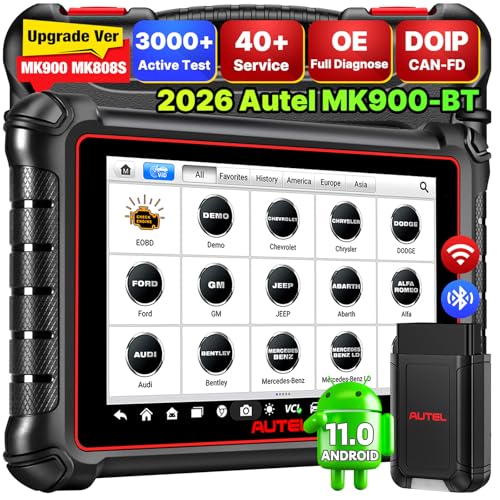
- 💯【Conta.ct us for Support Directly】If you met any...
- 🔥🔥🔥【2026 AUTEL FLAGSHIP MK900BT MK900-BT, NEW...
- 🚗【3000+ ACTIVE TESTS (50➡3000+), SAME AS MS...
- 🚗【40+ HOT SERVICES FOR 150 MAKES (28+➡40+)】Full...
- 🚗【OE ALL SYSTEM DIAGNOSE, AUTO SCAN 2.0: SCAN LICENSE...

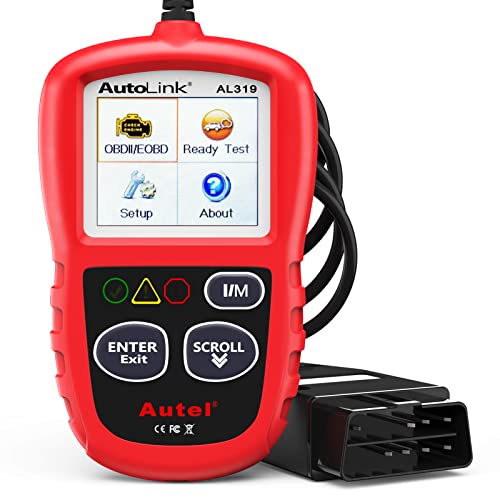
- 【TURN OFF CEL】 This AL319 car scanner diagnostic tool...
- 【EXTENSIVE APPLICATION】 Autel AL319 Compatible with...
- 【FOR END USER & DIYERS】 This error code reader AL319 is...
- 【USER-FRIENDLY DESIGN】 This OBD2 scanner and check...
- 【HIGH-QUALITY SERVICES】 12 months war.ranty from the...
Last update on 2026-06-23 / Affiliate links / Images from Amazon Product Advertising API
If the PDF is very large, it may not load in the preview below.
Some older TSBs had multiple PDFs — visit the NHTSA Website to view all PDFs.
If the TSB PDF does not show, download or view it on the NHTSA Website.
Click on the (+) Plus Sign
Then Click on Associated Document(s)
Search NHTSA Database for Recalls
Search NHTSA Database for Vehicle Investigations
View Latest Vehicle Investigations
Search NHTSA Database for Vehicle Complaints
View Latest Vehicle Complaints
TSB/Document ID: TSB-21-00-011
Replacement Service Bulletin Number:
MFR Communication Date: 2021-06-11
MFR Internal Campaign ID/Software Version:
Communication Type: Service Bulletin/Repair Instructions
NHTSA Components: EQUIPMENT
MFR Component System:
MFR Component Subsystem:
Previous TSB | Next TSB |
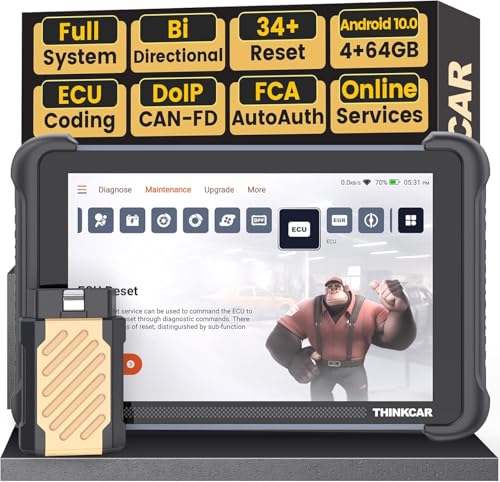
- [Notice] When you receive a used device, it may be a customer return resold by Amazon without inspection. You can exchange it for a new one through Amazon. As this situation is unavoidable, we sincerely apologize. For any issues, contacting us via Amazon's "Messages" is the best way. THINKSCAN 689BT Bidirectional Scan Tool Can Be Used Immediately After It is Turned On, Without Complicated Registration Process, Which is More Convenient & Quick.
- Full Bi-Directional Control & 3000+ Active Tests: Take control and test components like actuators, fuel injectors, relays, and cooling fans in real time. You’ll quickly see if the problem is in the part itself or the control module — saving you hours of guesswork and frustrating trial-and-error.
- Advanced ECU Coding Capabilities: Handle module matching and hidden feature activation with confidence. When you replace an ECU or want to customize settings, this obd2 scanner diagnostic bi directional tool gives you the professional-level capabilities you need without the dealership price tag.
- 34+ Useful Reset and Maintenance Functions: Complete everyday service tasks smoothly with a wide range of helpful reset and maintenance functions. Whether you’re keeping up with regular upkeep or tackling a specific job, this scanner makes maintenance simpler and less stressful for both DIYers and pros.
- Comprehensive Full System Diagnostics: Diagnose every major system — Engine, Transmission, ABS
 , SRS, TPMS, and more — all in one place. Finally stop wondering if you’re missing something important; get the full picture and clear codes with ease.
Last update on 2026-07-02 / Affiliate links / Images from Amazon Product Advertising API
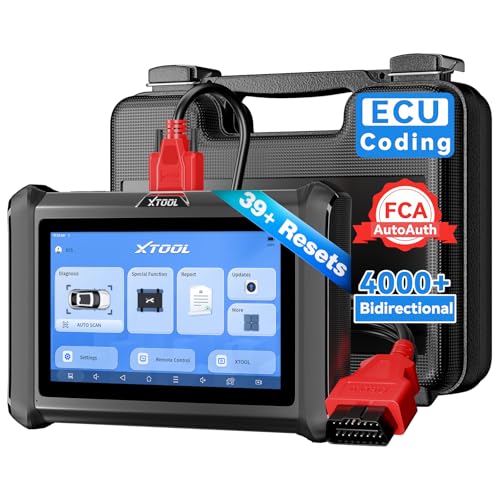
- Top Reasons to Choose the D7S OBD2 Scanner: XTOOL D7S car scan tool, an upgrade of XTOOL D7, offers comprehensive features for automotive technicians, workshops, and DIY enthusiasts 1. Upgraded Hardware: 2+64GB memory, rear camera, intuitive interface, foldable bracket 2. Complete Diagnostics: FCA Autoauth, OE-level all system scan, 39+ maintenance services, 4K+ bidirectional, CANFD/DoIP protocol 3. Advanced Capabilities: ECU c0ding, PMI functions 4. Wide Compatibility: Support 10,000+ models, covering 99% vehicle brands 5. Multi-language: Available in 22+ languages, No IP Restrictions 6. 3-Year Updates: Save 300 bucks on software updates for the latest features and optimizations
- 2026 Upgraded D7S Car Scanner Features: The newly 2026 D7S V2.0 scanner for car brings exciting features for advanced vehicle diagnostics and enhanced user experience 1. FCA AutoAuth: Now supports FCA SGW module for Chrysler, for Jeep, for Dodge (2018+), for Fiat (2017+), enabling faster vehicle communication without gateway restrictions 2. PMI (Offline ECU Pr0gramming): Allows for Ford, for Lincoln, and for Mazda ECU pr0gramming for new modules 3. Optimized Diagnostic Report 2.0: Personalized reports with logos and customer info for auto shops. Note: Compatibility varies by cars, please check before order
- 39+ Services/Resets/Adaptations/Relearns/Calibrations: XTOOL D7S full system car scanner diagnostic tool tackles 99% of common car issues through its 36+ special functions, including Oil Reset, EPB, SAS, BMS, Throttle Reset, Injector C0ding, ABS Bleed, TPMS Reset, Power Balance, etc and also covers specific-vehicle functions like Crank Sensor Relearn, ABS Initialization, Cylinder Power Balance, Fuel Trim Reset, Idle Relearn etc. This car diagnostic scanner enhances efficiency, making repairs and maintenance hassle-free. Tip: DO NOT for All vehicles, please check compatibility first
- Cost-effective ECU C0ding Scan Tool for Specific Brands: Enhance your vehicle's performance with XTOOL D7S! This obd2 scanner all systems bidirectional offers advanced capabilities at an affordable price, supports online for BMW, for Benz and offline for BENZ, for MIT, along with PMI functions for Ford, for Mazda, and for Lincoln. Ideal for technicians and DIY enthusiasts, this automotive scanner diagnostic tool optimizes vehicle performance and enhances the driving experience. Note: Not for all cars and modules, please send car VIN to check the compatibility before purchase
- OE All System Diagnostic & 8 Pids Graphing: XTOOL D7S is a comprehensive all system bi directional obd2 scanner that delivers dealer-level diagnostics, completely controlling over your vehicle’s performance and health. This automotive scan tool can read and clear DTCs, view live data and ECU information, retrieve freeze frames, and perform active tests and full obd2 functions. This bi-directional scan tool can can identify your vehicle's make, model, and year information with just one click and show up to 8 PIDs live data with options for CSV viewing, playback, and recording for in-depth analysis. It is easy-to-use for both professionals and beginners, helping pinpoint issues efficiently
Last update on 2026-06-30 / Affiliate links / Images from Amazon Product Advertising API
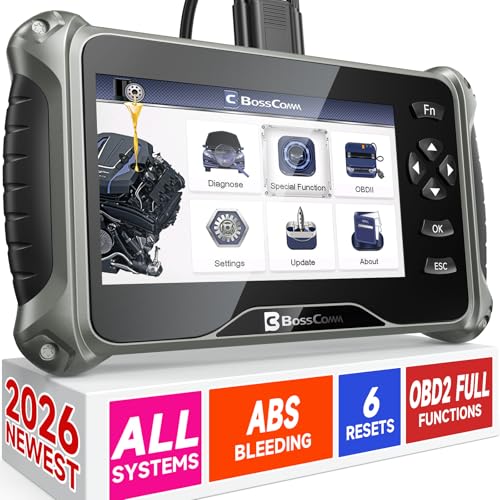
- 【✅Compared to BOSSCOMM IF742, IF745 Offers Full-System Diagnostics】The BOSSCOMM IF745 car diagnostic scanner is an upgraded model of IF742. In addition to supporting all OBD2 Code Reader functions and 6 reset options (ABS/EPB/SAS/BMS/Oil/Throttle), it expands diagnostics from 4 systems (Check Engine/ABS/SRS/Transmission) to vehicle All systems, including Steering, Suspension, and Body Electronics. This provides deeper, more comprehensive diagnostic capabilities.
- 【✨10 OBD2 Functions】The BOSSCOMM IF745 scan tool’s DTC Lookup instantly translates fault codes into user-friendly explanations, its I/M Readiness feature streamlines emissions testing with a single tap, and Freeze Frame lets you pinpoint the exact moment of a fault for in-depth root-cause diagnosis. Combined with a live data dashboard and advanced diagnostics (O2S, OBMon, EVAP), it delivers comprehensive insights for confident troubleshooting.
- 【✨Deep Diagnostics for All Vehicle System Modules】Beyond code reading/clearing and ECU information retrieval, our all-in-one data stream feature lets you inspect all current fault codes and their locations across the vehicle’s systems. This vehicle code reader helps you turn off dashboard warning lights and perform a comprehensive self-check of your car at home—no more back-and-forth trips to the repair shop or hefty inspection fees.
- 【✨6 Essential Resets: ABS Bleeding, Oil, EPB, SAS, Throttle, BMS】The BOSSCOMM IF745 obd2 scanner diagnostic tool swiftly purges air from brake lines to restore braking sensitivity, fine-tunes maintenance cycles to eliminate false alerts, resolves parking brake issues with one-click control, recalibrates steering sensors for stability, optimizes engine idling/acceleration for smoother performance, and deeply resets battery systems to extend lifespan and range via precise parameter adjustments.❗NOTE: Does NOT support bidirectional control, coding, or programming.
- 【✨10,000+ Car Models, AutoVIN, 13 Languages】The BOSSCOMM IF745 vehicle scanner diagnostic tool covers 73+ global car brands and offers support in 13 languages, making it perfect for DIYers, auto mechanics, or as a thoughtful gift. With a single-click AutoVIN feature, it instantly retrieves vehicle serial numbers, streamlining diagnostics for users globally. This adaptable tool balances user-friendliness with precision, catering to both personal and professional requirements.✅Unsure about compatibility? Compatibility will vary on vehicles' model and year, pls reach us via 📧 [email protected] 📧 before purchase.
Last update on 2026-07-02 / Affiliate links / Images from Amazon Product Advertising API
This product presentation was made with AAWP plugin.