
NHTSA ID Number: 10183209
Manufacturer Communication Number: 20NA211
TSB/Document Date: 2020-11-30
Summary
2021 Cadillac Escalade New Model Features
Replacing any of the following components will require
the TCM to be programmed with the new or existing
solenoid valve performance data.
• TCM: Program the new TCM with the existing
solenoid data files stored on the TIS2Web site for
all pressure regulating solenoid valves.
• Lower control valve body assembly with solenoid
valves: Program the TCM with the new data files
stored on the TIS2Web site for all pressure
regulating solenoid valves.
• Transmission assembly: Program the TCM with
the new data files stored on the TIS2Web site for
all pressure regulating solenoid valves.
Transmission Fluid Level and Condition Check
This procedure checks both the transmission fluid level
and the condition of the fluid itself. Since the
transmission on this vehicle is not equipped with a fill
tube and dipstick, a tube in the bottom pan is used to
set the fluid level.
Note: This vehicle is equipped with an internal thermal
bypass valve. The transmission fluid level should be
checked only after the transmission fluid temperature
has reached or exceeded an operating temperature of
70°C (158°F). Once the transmission fluid temperature
has reached or exceeded 70°C (158°F), it is OK to
check the fluid level.
Bulletin No.: 20-NA-211
Transmission Service Fast Learn Procedure
This procedure is required for any condition/repair
related to shift quality or following a calibration update
or software update. This procedure is required when
the K71 transmission control module, T12 automatic
transmission assembly or torque converter assembly
have been repaired, replaced, removed, or serviced.
Note: Failure to perform this procedure may result in
poor system performance, DTCs being set, or customer
dissatisfaction.
The fast learn procedure performs a series of individual
clutch applications, which allow the transmission
control module to learn initial clutch apply pressures.
The control module uses the learn values for clutch
control and timing of shifts.
Heating, Ventilation, and Air
Conditioning
Overview
The 2021 Cadillac Escalade features a dual-zone
automatic climate control system to regulate
temperature inside the passenger compartment. The
Heating, Ventilation, and Air Conditioning (HVAC)
system also transfers undesirable heat and moisture
from inside the vehicle cabin to the outside air. The
system contains a particulate and dust filter. In addition,
vehicles equipped with the 3.0L (LM2) diesel engine
use a reinforced electric heater to assist in warming the
passenger compartment when the engine coolant has
not sufficiently warmed to operating temperature.
Dual-Zone Automatic Climate Control
The dual-zone automatic climate control system with
electronic controls allows the driver and front
passenger to set separate desired interior
temperatures.
AUTO mode for both the driver zone and the front
passenger zone is enabled by pressing the AUTO
control on the HVAC control panel or infotainment touch
screen. Interior temperature for each zone may be
manually set using the HVAC blower controls or the
temperature control dials on the center stack.
Temperatures between the driver and the front
passenger zones may be synchronized using the
SYNC control on the HVAC control panel or
infotainment touch screen.
In AUTO mode, the HVAC control module maintains the
comfort level inside of the vehicle by controlling the A/C
compressor clutch, the blower motor, the air
temperature actuators, mode actuator, and recirculation
actuator.
To put the HVAC system in AUTO mode, the following
are required:
• The auto switch must be activated.
• The air temperature switch must not be in either
the full hot or full cold position.
Once the desired temperature is reached, the blower
motor and the mode, recirculation, and temperature
actuators automatically adjust to maintain the
temperature selected.
Bulletin No.: 20-NA-211
October, 2020
When the warmest position is selected in automatic
operation, the blower speed will increase gradually until
the vehicle reaches normal operating temperature.
When normal operating temperature is reached, the
blower stays on high speed and the air temperature
actuators stay in the full heat position.
When the coldest position is selected in automatic
operation, the blower stays on high and the air
temperature actuators stay in the full cold position. The
mode actuator remains in the panel position and the
recirculation actuator will remain in the recirculation
position.
Under cold ambient temperatures, the automatic HVAC
system provides heat in the most efficient manner. The
operator can select an extreme temperature setting, but
the system will not warm the vehicle any faster. Under
warm ambient temperatures, the automatic HVAC
system also provides air conditioning in the most
efficient manner. Selecting an extreme cold
temperature will not cool the vehicle faster.
The HVAC system may affect the operation of the stop/
start system. The stop/start system will not shut the
engine off at stops when the HVAC system has not
reached the desired comfort level inside the vehicle.
The system also prevents stop/start operation when in
defogger mode to maintain the operation of the HVAC
compressor.
Dual-Zone Automatic Climate Control System
Components
The dual-zone automatic climate control system
includes the following components:
HVAC Control Panel
The HVAC control display on the infotainment screen
contains all switches, buttons, and dials that are
required to control the functions of the HVAC system
and serve as the interface between the operator and
the HVAC control module. The selected values are
passed to the HVAC control module via Local
Interconnect Network (LIN) bus.
Page 25
The HVAC control contains the switches required to
control the functions of the HVAC system and serve as
an interface between the operator and the Body Control
Module (BCM). The selected values are communicated
to the BCM via serial data.
Body Control Module
The BCM is a Controller Area Network (CAN) device
that interfaces between the operator and the HVAC
system to maintain and control the desired air
temperature and air distribution settings The BCM
provides a device ON signal for the HVAC controls. The
BCM provides blower, air delivery mode, and air
temperature control.
Once the desired temperature is reached, the blower
motor, mode, recirculation, and temperature actuators
automatically adjust to maintain the temperature
selected.
The BCM performs the following functions to maintain
the desired air temperature:
• monitors these sensors:
– ambient air temperature sensor
– ambient light/sunload sensor
– windshield temperature and inside moisture sensor
• regulates the blower motor speed
• positions the air temperature actuators
• positions the mode door actuator
• positions the recirculation actuator
• requests A/C operation
• controls the A/C compressor
The HVAC controls interface between the operator and
the BCM to maintain and control the desired air
temperature and air distribution settings. The battery
positive (B+) voltage circuit provides power that the
HVAC control module uses for keep alive memory. If
the B+ voltage circuit loses power, all HVAC Diagnostic
Trouble Codes (DTCs) and settings will be erased from
keep alive memory. The BCM, which is the vehicle
power mode master, provides a device ON signal. The
HVAC control module provides blower, air delivery
mode, and air temperature settings.
Air Distribution (First Row)
Blower Motor Assembly
To operate, the blower motor uses a fused B+, ground,
control, and speed output signal circuits. The blower
motor speed is controlled by increasing or decreasing
the voltage drop on the ground side of the blower motor
speed control circuit. The BCM provides a low side
Pulse Width Modulation (PWM) signal to the blower
motor to request a specific motor speed. The blower
motor internal circuitry translates the PWM signal and
drives the motor accordingly.
5619545
Page 26
October, 2020
Bulletin No.: 20-NA-211
The blower motor has a signal wire used to output a
speed signal. The signal is monitored by the BCM, and
the value is sent to the ECM via serial data. The ECM
monitors the blower motor speed to modify the total
commanded engine coolant flow rate, which is a
percentage of available coolant flow sent to the heater
core for occupant comfort and windshield defrosting.
When the HVAC blower speed is determined to be
zero, the ECM disables the heater core coolant flow to
optimize engine coolant flow for fuel economy and
emissions.
Actuators
The HVAC case assembly uses doors to control air
flow. The HVAC control module operates the doors
through the use of actuators, with one actuator used for
each door. The system has the following air control
doors and associated actuators: mode, left
temperature, right temperature, and recirculation. Each
actuator used in the system is a 4-wire stepper motor.
The BCM supplies a 12V reference voltage to the
stepper motor and energizes the four stepper motor
coils with a pulsed ground signal. The stepper motor
moves the associated air control door into the
calculated position in order to reach the selected
position.
Actuator Recalibration
When installing a new actuator motor, the null point
must be recalibrated. When the actuator is calibrated,
the HVAC control module can drive the applicable coil
to reach exactly the desired position of the door.
Evaporator Temperature Sensor
The evaporator temperature sensor is a 2-wire negative
temperature coefficient thermistor and is located on the
evaporator. The thermistor operates within a
temperature range of -40 to +85°C (-40 to +185°F). The
sensor is installed at the evaporator and measures its
temperature. Based on vehicle operating conditions
and operator settings, the HVAC software algorithms
determine a target evaporator air temperature. The
operation of the variable-displacement compressor
solenoid is adjusted as needed to quickly reach and
maintain the targeted evaporator temperature.
5619546
The passenger compartment temperature sensor is a
negative temperature coefficient thermistor, connected
to a low reference and 5 V supplied by the BCM. As the
interior air temperature increases, the sensor
resistance decreases. The passenger compartment
temperature sensor signal varies between 0–5 V.
Bright or high intensity light can cause the vehicle’s
interior temperature to increase. The HVAC system
uses the sunload sensor values to compensate for the
increased temperature and maintain the system HVAC
settings.
Inside Air Moisture and Windshield Temperature
Sensor
The windshield temperature and inside moisture sensor
is located at the top center of the windshield. The
relative humidity sensor, windshield temperature
sensor, and humidity sensing element temperature
sensor are all in one assembly.
Sunload, Temperature, and Ambient Light and
Security Sensor
The sunload, temperature, ambient light, and security
sensor includes a solar (sunload) sensor and
passenger compartment temperature sensor. The
sunload sensor is connected to a low reference and 5 V
supplied by the BCM. As the sunload increases, the
sensor signal voltage increases and vice versa. The
signal provided to the BCM varies between 1.2–4.85 V.
5619547
Bulletin No.: 20-NA-211
October, 2020
This sensor assembly (location shown by the rectangle
above) provides information about:
• relative humidity level at the windshield
(passenger compartment side)
• temperature of the windshield (passenger
compartment side)
• temperature of the humidity sensor element
The values for the humidity and temperature of the
windshield are control inputs for the BCM application.
The BCM calculates the fog risk on the windshield
compartment side and can reduce fuel consumption by
decreasing A/C compressor power to a minimum
without causing any fog. The sensor will also enable
partial recirculation mode in order to improve heat-up
performance of the passenger compartment under cold
ambient temperature conditions without the risk of mist
build-up on the windshield. The humidity sensor
element temperature sensor supplies the temperature
of the humidity sensor element. It is only needed if the
thermal contact between the humidity sensing element
and the inside windshield surface is not sufficient.
The sensor is part of a LIN windshield sensor array, and
the windshield temperature and humidity values are
transmitted to the BCM via serial data.
Passenger Compartment Air Filter
The passenger compartment air filter removes dust and
other irritants from the air before it enters the cabin. The
filter is located behind the glove box door.
The recommended filter change interval is every 2
years or 36,000 km (22,500 mi). If there is a reduction in
airflow or window fogging, inspect the filter. Vehicles
driven in environments with poor air quality or high dust
levels may require more frequent service.
Refrigerant System
The refrigerant system has unique refrigerant lines that
contain an internal heat exchanger. The refrigerant
system comes filled with R-1234yf refrigerant. The
refrigerant system consists of the following
components.
A/C Compressors
The A/C compressor is located at the front lower right of
the engine. The compressor uses a conventional belt
driven magnetic clutch to engage and mechanically
turn on the compressor. When the A/C switch is
pressed, the HVAC control module sends an A/C
request message to the Engine Control Module (ECM)
via serial data. If specific criteria are met, the ECM then
grounds the A/C compressor clutch relay control circuit,
which closes the A/C compressor clutch relay contacts.
With the relay contacts closed, battery voltage is
supplied to the permanently grounded A/C compressor
clutch. The A/C compressor clutch then activates. This
A/C system utilizes a variable-displacement solenoid
valve to alter the amount of displacement created by
the turning of the compressor. The HVAC control
module provides both battery voltage and a PWM
ground to the variable displacement solenoid valve.
The performance of the A/C compressor is regulated
based on cooling load.
Page 27
Condenser and Receiver/Dehydrator
The condenser is made of aluminum tubing and
aluminum cooling fins and is located in front of the
radiator for maximum heat transfer. As the refrigerant
flows through the condenser, the heat of the refrigerant
is transferred to the ambient air passing through the
condenser. Cooling the refrigerant causes the
refrigerant to condense and change from a vapor to a
liquid state. The semi-cooled liquid refrigerant exits the
condenser and flows through the internal heat
exchanger in the refrigerant line to the thermal
expansion valve. The semi-cooled liquid refrigerant
exits the condenser and flows through the receiver/
dehydrator where any moisture in the system is
absorbed. The receiver/dehydrator mounts directly to
the condenser.
Refrigerant Lines and Internal Heat Exchanger
The refrigerant lines contain an internal heat exchanger
designed into the refrigerant system to increase
efficiency. The internal heat exchanger is a refrigerant
line assembly where the liquid line from the condenser
is routed around the vapor line. The heat exchanger
line transfers heat energy from the liquid line to the
vapor line by removing heat from the liquid line. The
heat exchanger pre-cools the liquid refrigerant before
reaching the expansion valve. The heat exchanger also
increases cooling capacity.
Evaporator
As the refrigerant absorbs heat from the passenger
compartment, the refrigerant vaporizes. Refrigerant
vapor travels out of the evaporator, through the internal
heat exchanger, and back to the compressor inlet.
Then, the cycle begins again.
A/C Refrigerant Pressure Sensor
The A/C refrigerant pressure sensor is located on the
high side line from the compressor to the condenser.
The sensor is a 3-wire piezoelectric pressure
transducer. A 5V reference voltage, low reference, and
signal circuits enable the sensor to operate. The A/C
pressure signal can be between 0.2–4.8 V. When the A/
C refrigerant pressure is low, the signal value is near 0
V. When the A/C refrigerant pressure is high, the signal
value is near 5 V. The ECM converts the voltage signal
to a pressure value. When pressure is too high or too
low, the ECM will not allow the A/C compressor clutch
to engage.
Thermostatic Expansion Valve
The Thermostatic Expansion Valve (TXV) is connected
to the evaporator core and regulates the flow of
refrigerant into the evaporator. Both lines run through
the TXV valve. The TXV is the dividing point for the
high and low pressure sides of the A/C system. The
pressure change causes some of the refrigerant to boil,
reducing the temperature. The low temperature, low
pressure refrigerant is directed to the evaporator.
Page 28
October, 2020
Refrigerant Oil and Quantity Charts
Refrigerant oil is required to lubricate the internal
moving components of the compressor. It is important
to replace the same amount of oil removed during
refrigerant recovery to ensure proper functioning of the
compressor. Polyalkylene Glycol (PAG) oil must be
used. The following is a list of the approximate
refrigerant oil capacities:
• Compressor Replacement: 41 ml* (1.4 oz*)
• Condenser Replacement: 30 ml* (1.0 oz*)
• Evaporator Replacement (Front): 60 ml*
(2.0 oz*)
• Evaporator Replacement (Rear): 60 ml*
(2.0 oz*)
• Total System Refrigerant Oil Capacity: 195 ml
(6.59 oz)
R-1234yf
• Refrigerant Charge: 0.82 kg (1.8 lb)
* If more than the specified amount of PAG oil was
drained from a component, add the equal amount of oil
drained.
Auxiliary Rear Heat and A/C System (C69)
The 2021 Cadillac Escalade is equipped with an
auxiliary HVAC system. This system features a rear
HVAC control unit, heater core, air conditioning
evaporator, blower motor, and overhead air distribution
vents. The HVAC case is located in the right rear corner
of the vehicle wheel well and behind the trim panel. The
HVAC auxiliary controls contain the switches, buttons,
and dials required to control the functions of the rear
HVAC system. Mode and temperature selections
communicate with the A34 HVAC auxiliary controls via
serial data. Rear blower motor speed is controlled via a
signal circuit from the HVAC auxiliary controls to the
auxiliary blower motor control module. The rear HVAC
settings can be controlled by the front or the rear
control units.
Rear Air Distribution
The desired rear air distribution mode can be selected
with the mode switch at the auxiliary HVAC control. The
auxiliary control communicates the values to the BCM
via serial data. The BCM controls the auxiliary mode
door actuator via the LIN bus to move the door to the
calculated position. Depending on the position of the
door, air is distributed through the headliner or lower
panel ducts.
Auxiliary Blower Motor
The auxiliary blower motor regulates the air speed from
the rear passenger ducts. The rear blower speed may
be selected from the rear auxiliary HVAC controls.
Distribution Temperature Sensors
The air temperature sensors are 2-wire negative
temperature co-efficient thermistors. The sensors
operate within a temperature range of −40 to +85°C
(−40 to +185°F). The sensors are installed in the
headliner air distribution ducts and measure the
temperature of the air that streams from the ducts. The
HVAC auxiliary controls use these values to calculate
the mixed air door position.
Bulletin No.: 20-NA-211
A signal circuit to each sensor and a common low
reference circuit are provided by the A34 HVAC
auxiliary controls.
Thermostatic Expansion Valve
The rear thermostatic expansion valve is connected to
the rear auxiliary evaporator and regulates the flow of
refrigerant through the rear evaporator.
Auxiliary Coolant Pump
The HVAC system includes an auxiliary coolant pump
to circulate engine coolant through the heater core
when the engine is off. The pump only runs when the
cabin requires heat for comfort. The pump circulates
coolant when the mechanical pump stops because the
engine was turned off. The HVAC control module sends
a serial data message to the ECM requesting pump
operation. The ECM operates the pump by controlling
the heater core coolant pump relay.
Electrical Auxiliary Heater and Defroster (C3A)
Some models are equipped with an electrical auxiliary
heater and defroster to assist in warming the passenger
compartment when the engine coolant has not
sufficiently warmed to operating temperature. The
heater is a 12V positive temperature coefficient heating
element located in the HVAC case just downstream of
the traditional heater core. The HVAC control module
will activate it when the outside temperature is less than
approximately 8°C (46°F), the engine coolant
temperature is less than approximately 75°C (167°F),
and the temperature blend door is commanded to the
full hot position.
Body Systems
Overview
Depending on the region, the 2021 Cadillac Escalade
may offer an all new power sliding console, a
panoramic sunroof, and third row amenities, such as
USB charging ports, 120/230 volt outlets, and cup
holders, as well as more cargo area. Always refer to
Service Information and the owner’s manual for the
most up-to-date information on features, configuration,
use, and diagnostics.
Windows
Power Windows
The 2021 Cadillac Escalade offers the following
window systems:
• express up/down driver and passenger windows
• express down left and right rear windows
• lockout switch feature
On vehicles equipped with an express up/down window
system, a smart motor located in the driver and
passenger doors is capable of detecting excessive
resistance during the express up function. It
automatically reverses direction if an occupant or other
object is trapped between the window and the door
frame while the window is closing. This detection of
excessive resistance and automatic reversal of
Bulletin No.: 20-NA-211
October, 2020
direction acts as a safety feature to help prevent injury
to vehicle occupants. Pulling and holding the widow
switch overrides the automatic reverse feature.
A logic circuit located in the window motor monitors the
requested state of the window switch. Operating the
switch closes the contacts and causes the normally B+
voltage to drop on the appropriate signal circuit. The
motor detects the voltage drop and performs the
requested function.
Left and Right Rear Express Down Window Motors
The left and right rear doors also use smart motors.
When the window switch is pressed in the down
position, battery positive voltage is applied to the
respective window motor control circuit and ground to
the other window motor control circuit, causing that
window to open. When the individual window switch is
pulled in the up position, voltage and ground are
applied to the window motor in the opposite direction,
causing that window to close. The return path to ground
is supplied through the inactive control circuit being
normally grounded through the window switch.
All four windows operate with a serial data circuit allows
the window switch and the Body Control Module (BCM)
to communicate. Operating the switch sends a serial
data signal to the BCM, allowing the driver to control
the passenger windows. After receiving a signal from
the driver switch, the BCM will send a control signal to
the appropriate door, causing the window to move in
the requested direction.
Window Normalization
A window motor that has not been normalized will no
longer perform the express close and express open
functions. This may occur when:
• a window motor has been disconnected
• a door harness has been disconnected
• the battery has been disconnected
Power Window Lockout Feature
The driver front side door window control switch
contains a window lockout switch. When the driver
presses the window lockout switch, a serial data
message is sent to the BCM. The BCM then
communicates a disable command to the rear side door
window switches, deactivating them. The rear windows
still function normally when using the switches on the
driver front side door window control switch.
Seat Systems
The 2021 Cadillac Escalade is equipped with a driver
and front passenger power seat system. Depending on
the trim level, the power seats may be 8-way or 10-way
on base models and 12-way on uplevel models. Some
base models may have a passenger 6-way power seat.
Uplevel models also may include heated/vented seats
and memory features. Power seats include the
following components.
• seat adjuster switch
• seat horizontal motor
• seat front vertical motor (if equipped)
• seat rear vertical motor
• seat recline motor
• seat memory control module (if equipped)
Page 29
4-Way Lumbar/Massage Seats (AVK)
Some models have a front driver and passenger 4-way
pneumatic lumbar support system. The power seat
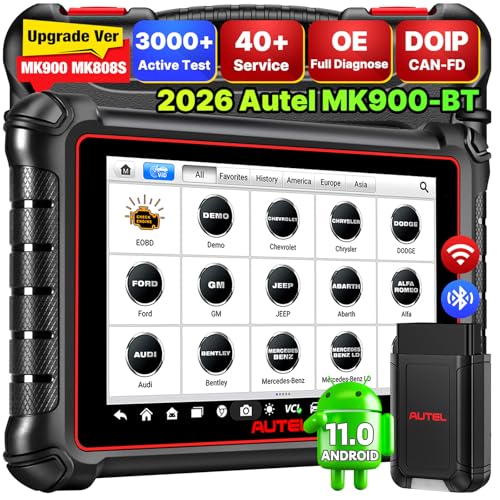
- 💯【Conta.ct us for Support Directly】If you met any...
- 🔥🔥🔥【2026 AUTEL FLAGSHIP MK900BT MK900-BT, NEW...
- 🚗【3000+ ACTIVE TESTS (50➡3000+), SAME AS MS...
- 🚗【40+ HOT SERVICES FOR 150 MAKES (28+➡40+)】Full...
- 🚗【OE ALL SYSTEM DIAGNOSE, AUTO SCAN 2.0: SCAN LICENSE...

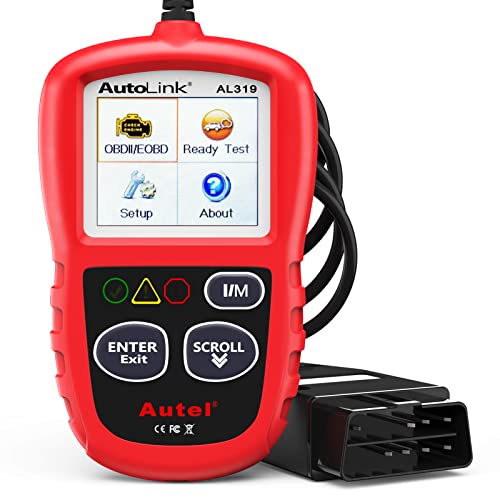
- 【TURN OFF CEL】 This AL319 car scanner diagnostic tool...
- 【EXTENSIVE APPLICATION】 Autel AL319 Compatible with...
- 【FOR END USER & DIYERS】 This error code reader AL319 is...
- 【USER-FRIENDLY DESIGN】 This OBD2 scanner and check...
- 【HIGH-QUALITY SERVICES】 12 months war.ranty from the...
If the PDF is very large, it may not load in the preview below.
Some older TSBs had multiple PDFs — visit the NHTSA Website to view all PDFs.
If the TSB PDF does not show, download or view it on the NHTSA Website.
Click on the (+) Plus Sign
Then Click on Associated Document(s)
Search NHTSA Database for Recalls
Search NHTSA Database for Vehicle Investigations
View Latest Vehicle Investigations
Search NHTSA Database for Vehicle Complaints
View Latest Vehicle Complaints
TSB/Document ID: 20NA211
Replacement Service Bulletin Number:
MFR Communication Date: 2020-10-19
MFR Internal Campaign ID/Software Version:
Communication Type: Service Bulletin/Repair Instructions
NHTSA Components: EQUIPMENT:OTHER:OWNERS/SERVICE/OTHER MANUAL
MFR Component System:
MFR Component Subsystem:
Previous TSB | Next TSB |
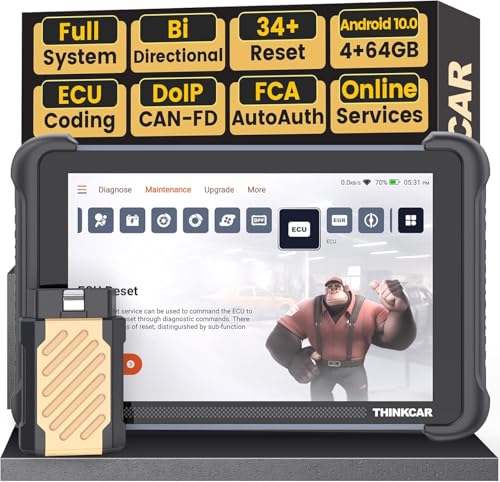
- [Notice] When you receive a used device, it may be a customer return resold by Amazon without inspection. You can exchange it for a new one through Amazon. As this situation is unavoidable, we sincerely apologize. For any issues, contacting us via Amazon's "Messages" is the best way. THINKSCAN 689BT Bidirectional Scan Tool Can Be Used Immediately After It is Turned On, Without Complicated Registration Process, Which is More Convenient & Quick.
- Full Bi-Directional Control & 3000+ Active Tests: Take control and test components like actuators, fuel injectors, relays, and cooling fans in real time. You’ll quickly see if the problem is in the part itself or the control module — saving you hours of guesswork and frustrating trial-and-error.
- Advanced ECU Coding Capabilities: Handle module matching and hidden feature activation with confidence. When you replace an ECU or want to customize settings, this obd2 scanner diagnostic bi directional tool gives you the professional-level capabilities you need without the dealership price tag.
- 34+ Useful Reset and Maintenance Functions: Complete everyday service tasks smoothly with a wide range of helpful reset and maintenance functions. Whether you’re keeping up with regular upkeep or tackling a specific job, this scanner makes maintenance simpler and less stressful for both DIYers and pros.
- Comprehensive Full System Diagnostics: Diagnose every major system — Engine, Transmission, ABS, SRS, TPMS, and more — all in one place. Finally stop wondering if you’re missing something important; get the full picture and clear codes with ease.
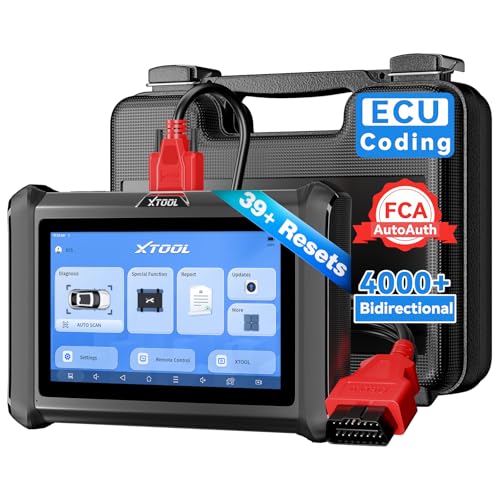
- Top Reasons to Choose the D7S OBD2 Scanner: XTOOL D7S car scan tool, an upgrade of XTOOL D7, offers comprehensive features for automotive technicians, workshops, and DIY enthusiasts 1. Upgraded Hardware: 2+64GB memory, rear camera, intuitive interface, foldable bracket 2. Complete Diagnostics: FCA
 Autoauth, OE-level all system scan, 39+ maintenance services, 4K+ bidirectional, CANFD/DoIP protocol 3. Advanced Capabilities: ECU c0ding, PMI functions 4. Wide Compatibility: Support 10,000+ models, covering 99% vehicle brands 5. Multi-language: Available in 22+ languages, No IP Restrictions 6. 3-Year Updates: Save 300 bucks on software updates for the latest features and optimizations
 - 2026 Upgraded D7S Car Scanner Features: The newly 2026 D7S V2.0 scanner for car brings exciting features for advanced vehicle diagnostics and enhanced user experience 1. FCA AutoAuth: Now supports FCA SGW module for Chrysler, for Jeep, for Dodge (2018+), for Fiat (2017+), enabling faster vehicle communication without gateway restrictions 2. PMI (Offline ECU Pr0gramming): Allows for Ford, for Lincoln, and for Mazda ECU pr0gramming for new modules 3. Optimized Diagnostic Report 2.0: Personalized reports with logos and customer info for auto shops. Note: Compatibility varies by cars, please check before order
- 39+ Services/Resets/Adaptations/Relearns/Calibrations: XTOOL D7S full system car scanner diagnostic tool tackles 99% of common car issues through its 36+ special functions, including Oil Reset, EPB, SAS, BMS, Throttle Reset, Injector C0ding, ABS Bleed, TPMS Reset, Power Balance, etc and also covers specific-vehicle functions like Crank Sensor Relearn, ABS Initialization, Cylinder Power Balance, Fuel Trim Reset, Idle Relearn etc. This car diagnostic scanner enhances efficiency, making repairs and maintenance hassle-free. Tip: DO NOT for All vehicles, please check compatibility first
- Cost-effective ECU C0ding Scan Tool for Specific Brands: Enhance your vehicle's performance with XTOOL D7S! This obd2 scanner all systems bidirectional offers advanced capabilities at an affordable price, supports online for BMW, for Benz and offline for BENZ, for MIT, along with PMI functions for Ford, for Mazda, and for Lincoln. Ideal for technicians and DIY enthusiasts, this automotive scanner diagnostic tool optimizes vehicle performance and enhances the driving experience. Note: Not for all cars and modules, please send car VIN to check the compatibility before purchase
- OE All System Diagnostic & 8 Pids Graphing: XTOOL D7S is a comprehensive all system bi directional obd2 scanner that delivers dealer-level diagnostics, completely controlling over your vehicle’s performance and health. This automotive scan tool can read and clear DTCs, view live data and ECU information, retrieve freeze frames, and perform active tests and full obd2 functions. This bi-directional scan tool can can identify your vehicle's make, model, and year information with just one click and show up to 8 PIDs live data with options for CSV viewing, playback, and recording for in-depth analysis. It is easy-to-use for both professionals and beginners, helping pinpoint issues efficiently
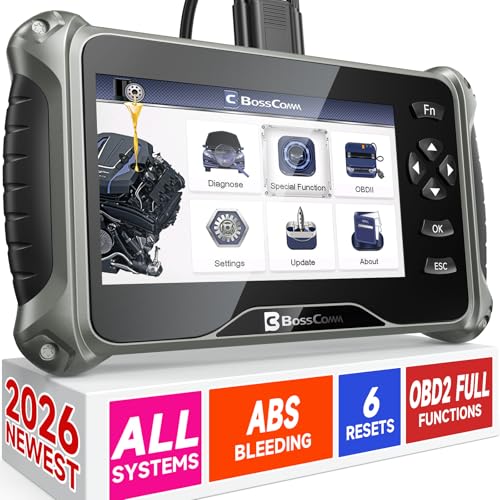
- 【✅Compared to BOSSCOMM IF742, IF745 Offers Full-System Diagnostics】The BOSSCOMM IF745 car diagnostic scanner is an upgraded model of IF742. In addition to supporting all OBD2 Code Reader functions and 6 reset options (ABS/EPB/SAS/BMS/Oil/Throttle), it expands diagnostics from 4 systems (Check Engine/ABS/SRS/Transmission) to vehicle All systems, including Steering, Suspension, and Body Electronics. This provides deeper, more comprehensive diagnostic capabilities.
- 【✨10 OBD2 Functions】The BOSSCOMM IF745 scan tool’s DTC Lookup instantly translates fault codes into user-friendly explanations, its I/M Readiness feature streamlines emissions testing with a single tap, and Freeze Frame lets you pinpoint the exact moment of a fault for in-depth root-cause diagnosis. Combined with a live data dashboard and advanced diagnostics (O2S, OBMon, EVAP), it delivers comprehensive insights for confident troubleshooting.
- 【✨Deep Diagnostics for All Vehicle System Modules】Beyond code reading/clearing and ECU information retrieval, our all-in-one data stream feature lets you inspect all current fault codes and their locations across the vehicle’s systems. This vehicle code reader helps you turn off dashboard warning lights and perform a comprehensive self-check of your car at home—no more back-and-forth trips to the repair shop or hefty inspection fees.
- 【✨6 Essential Resets: ABS Bleeding, Oil, EPB, SAS, Throttle, BMS】The BOSSCOMM IF745 obd2 scanner diagnostic tool swiftly purges air from brake lines to restore braking sensitivity, fine-tunes maintenance cycles to eliminate false alerts, resolves parking brake issues with one-click control, recalibrates steering sensors for stability, optimizes engine idling/acceleration for smoother performance, and deeply resets battery systems to extend lifespan and range via precise parameter adjustments.❗NOTE: Does NOT support bidirectional control, coding, or programming.
- 【✨10,000+ Car Models, AutoVIN, 13 Languages】The BOSSCOMM IF745 vehicle scanner diagnostic tool covers 73+ global car brands and offers support in 13 languages, making it perfect for DIYers, auto mechanics, or as a thoughtful gift. With a single-click AutoVIN feature, it instantly retrieves vehicle serial numbers, streamlining diagnostics for users globally. This adaptable tool balances user-friendliness with precision, catering to both personal and professional requirements.✅Unsure about compatibility? Compatibility will vary on vehicles' model and year, pls reach us via 📧 [email protected] 📧 before purchase.
This product presentation was made with AAWP plugin.