
NHTSA ID Number: 10183209
Manufacturer Communication Number: 20NA211
TSB/Document Date: 2020-11-30
Summary
2021 Cadillac Escalade New Model Features
Bulletin No.: 20-NA-211
October, 2020
At extreme cold temperatures, the ECM may close the
turbocharger vanes in low load conditions in order to
accelerate engine coolant heating. The ECM may also
close the turbocharger vanes under exhaust braking
conditions.
Charge Air Cooler
An air-to-water charge air cooler system incorporates a
heat exchanger integrated into the intake manifold
housing. This system reduces the engine inlet air
temperature by up to 100°C (180°F), which enhances
performance. The intercooler uses conventional
DEX-COOL® coolant in a system that is separate from
the engine cooling system. The system also includes a
low temperature auxiliary radiator and a charge air
coolant pump. The low temperature auxiliary radiator is
also referred to as the auxiliary radiator and is located
in the front fascia. Coolant is directed into and through
the charge air cooler/heat exchanger. Coolant exits
through the outlet port and is pumped back to the
charge air cooler radiator.
Page 13
Primary Timing
The oil pump sprocket and the crankshaft reluctor ring
are press fit on the rear of the crankshaft. The sprocket
for the primary chain drive is machined into the rear of
the crankshaft and the timing chain drives the high
pressure fuel pump.
Secondary Timing
The camshafts are driven by the camshaft sprockets,
which in turn are driven by the secondary timing chain.
Charge Air Cooler Pump
5619531
Camshaft removal and installation require special tools
to hold the crankshaft and camshaft in alignment.
1. To install the crankshaft tool properly, the locking
hole in the counterweight must be aligned with the
hole in the front of the block.
2. Rotate the engine until the holes align.
3. Install the tool. Make sure that the arrows on the
cam ladder frame line up with the notches on the
ends of the camshafts.
5619530
The charge air coolant pump is a solid state device.
When the engine starts, the ECM sends a request via
the serial data circuit to the charge air coolant pump.
This causes the pump to operate at the desired speed.
The charge air coolant pump provides operational and
diagnostic feedback to the ECM on the serial data
circuit. If a condition exists with the physical pump, or
microprocessor logic, the device reports fault-specific
information via the serial data circuit to the ECM. The
ECM sets the corresponding Diagnostic Trouble Code
(DTC) if the device fails to communicate, or if a
condition exists with external circuits, the device’s
corresponding U-code will set.
Timing System
The 3.0L (LM2) diesel engine uses two camshafts, one
to actuate all intake valves and the other to actuate all
exhaust valves.
Oil Pump and Oil Pump Drive
The oil pump is driven by the engine crankshaft by a
wet belt. The wet belt drives the oil pump pulley
connected to the oil pump via a driveshaft that passes
through the rear of the lower crankcase extension. The
oil pump is not timed to the engine.
Lubrication System
The lubrication system incorporates a continuously
variable oil pump. An oil control valve controls the oil
pressure inside the mechanical oil pump. The ECM
controls the commanded state of the valve based on
the following inputs:
• engine speed
• calculated engine oil temperature
• engine oil pressure
• engine run time
When the control module commands the valve OFF, oil
pressure increases. When the solenoid valve is
commanded ON, oil pressure decreases.
Page 14
October, 2020
Bulletin No.: 20-NA-211
Oil is pulled from the oil pump suction pipe to the oil
pump. The oil pump flow control valve, controlled by the
ECM, is mounted to the oil pump and provides
two-stage functionality.
The oil is then applied under pressure through the oil
cooler to the oil filter, where contaminants are removed.
The engine oil pressure sensor and engine oil
temperature sensor are located on the lower crankcase
extension. These sensors provide the engine oil
pressure and temperature data to the ECM.
The clean oil flows from the oil filter in different
passages. One passage flows to the primary timing
chain tensioner.
Oil Pan
The oil pan is made of stamped aluminum. The oil pan
is attached at the engine block lower crankcase
extension.
Oil Heat Exchanger
The engine oil heater exchanger is attached to the left
side of the engine and exchanges heat between the
engine oil and engine coolant.
5619533
1.
2.
3.
4.
5.
Water Cooled Charge Air Cooler
Intake Air Flow Valve
Intake Manifold
EGR Pipe
Resonator
Intake Air System
Resonator
The resonator reduces the pressure sound waves in
the intake system, resulting in a quieter operating
engine.
5619532
1.
2.
3.
4.
5.
Oil Heat Exchanger
Oil Pump Drive Belt
Oil Pump
Oil Pick Up Tube
Oil Pan
Oil Pan
Air Intake System
Intake Manifold:
The intake manifold directs airflow to the cylinder head
combustion chamber. The intake manifold incorporates
an intake manifold runner control valve to create a swirl
in the combustion chamber to get a homogeneous
diesel air mixture.
Intake Air Flow Valve
The intake airflow valve is a throttle plate that aids in
achieving high exhaust gas recirculation rates. The flow
valve increases the pressure difference between
exhaust and intake so the appropriate exhaust quantity
can be mixed with the intake air.
The ECM controls the intake airflow valve using
dedicated circuits to provide power and ground to the
motor. Switching the polarity reverses the direction of
travel. The intake airflow valve contains a throttle
position sensor that monitors the position of the valve
and translates the reading to a digital signal that is
transmitted to the ECM.
The throttle position sensor is mounted within the valve
assembly and is not serviceable. The throttle position
sensor provides a variable voltage signal, which is
relative to the throttle blade angle. The ECM decodes
the serial data signal into separate voltage values; the
scan tool displays the position voltage parameters as
throttle position sensors 1 and 2.
Exhaust Gas Recirculation System
The 3.0L (LM2) diesel engine has a low and high
pressure EGR system. The low pressure EGR loop
recirculates the exhaust gas into a gas-to-liquid heat
exchanger to cool before being passed through the
turbocharger and the charge air cooler. This results in a
lower overall charge air temperature when compared to
a similar amount of EGR being added through a high
Bulletin No.: 20-NA-211
October, 2020
pressure EGR loop. A low pressure EGR is used at
high loads and as an additional control to increase low
pressure EGR flow at part load operation.
To avoid condensation at the turbocharger compressor
inlet, the low pressure EGR valve is closed when
coolant temperatures are below 60°C (140°F) and
during the exhaust aftertreatment warm up phase. In
both conditions, only the high pressure EGR is
functional.
The high pressure EGR valve is water-cooled and is
mainly used under low-load conditions where there is a
lack of pressure in the low pressure loop to drive
EGR flow.
The exhaust throttle valve controls exhaust gas flow for
the low pressure EGR system. The valve is
water-cooled to protect the component’s circuitry from
high exhaust temperatures.
Exhaust Aftertreatment System
5619534
1. NOx Sensor 1
2. Selective Catalyst Reduction and Diesel
Particulate Filter
3. Exhaust Gas Temperature Sensor 3
4. Diesel Exhaust Fluid (DEF) Injector
5. Diesel Oxidation Catalyst
6. Exhaust Gas Temperature Sensor 2
7. Exhaust Gas Temperature Sensor 1
The 3.0L (LM2) diesel engine aftertreatment system
functions the same as other GM diesel engines, though
it is packaged differently. The diesel oxidation catalyst
is in the front, while the selective catalyst reduction filter
is toward the rear of this component. The selective
catalyst reduction also includes the diesel particulate
filter.
NOx Sensors
The selective catalytic reduction aftertreatment system
has three NOx sensors that monitor the function of the
selective catalytic reduction system. The ECM uses the
NOx sensor information to provide closed-loop control
Page 15
of the reductant injector. The sensors have integrated
circuits that manage the sensor heater, relay sensor
signals, and diagnostic information to the ECM. NOx
Sensor 1 is located after the turbocharger. NOx Sensor
2 is located before the rear selective catalyst, and NOx
Sensor 3 is located after the selective catalyst.
Selective Catalyst Reduction and Diesel Particulate
Filter
When DEF is injected into the hot exhaust stream, the
heat in the exhaust decomposes the DEF into
ammonia. The NOx and ammonia enter the selective
catalytic reduction and are converted to nitrogen,
carbon dioxide (CO2), and water vapor through the
catalytic reaction substrate.
The diesel particulate filter captures exhaust gas
particulates, preventing their release into the
atmosphere. Particulate-laden exhaust flows through
the filter substrate, which consists of thousands of
porous cells. Half of the cells are open at the filter inlet
but are capped at the filter outlet. The other half of the
cells are capped at the filter inlet and open at the filter
outlet. This forces the particulate-laden exhaust gases
through the porous walls of the inlet cells into the
adjacent outlet cells, trapping the particulate matter.
Over time, the soot trapped on the cell walls restricts
exhaust flow through the particulate filter, reducing its
effectiveness as well as reducing engine efficiency.
Once soot buildup reaches a specified limit, as signaled
by the increased pressure drop across the filter, the
ECM commands a regeneration event to burn-off the
collected soot. Regeneration events occur
automatically and without driver knowledge during
vehicle operation. In general, the vehicle needs to be
operating continuously at speeds above 48 km/h (30
MPH) for approximately 20–30 minutes for a full and
effective regeneration to complete.
Differential Pressure Sensor
Restrictions in exhaust flow produce a pressure drop
across the particulate filter. As the cell walls become
saturated with trapped soot, the pressure drop
becomes greater. A differential pressure sensor
monitors the pressure drop across the filter and
provides the ECM with a voltage signal proportional to
soot buildup.
Diesel Exhaust Fluid Injector
The DEF injector is located between the diesel
oxidation catalyst and the selective catalytic reduction/
diesel particulate filter. A PWM signal controls this
injector. NOx concentrations, based on the NOx
sensors, determine DEF dosing into the exhaust
stream. The correct amount of DEF dosing is important
to proper operation.
Diesel Exhaust Fluid Under-Dosing
Under-dosing, caused by an insufficient amount of DEF
being injected, will not allow the selective catalytic
reduction to reduce NOx emissions properly. This
causes high levels of NOx to enter the atmosphere,
usually causing DTCs to set in the ECM.
Page 16
October, 2020
Diesel Exhaust Fluid Over-Dosing
Over-dosing is caused by an excessive amount of DEF
being injected. Over-dosing saturates the selective
catalyst reduction, cools down exhaust temperatures,
and creates a condition known as ammonia slip, where
a high level of ammonia exits the selective catalyst
reduction. The NOx sensor cannot differentiate
between NOx and ammonia. Ammonia slip causes the
NOx sensor after the selective catalyst reduction to
detect higher levels of NOx than what actually exist.
Conditions that may cause over-dosing include a
stuck-open dosing injector, malfunctioning NOx
sensors, or an electrical concern.
Exhaust Gas Temperature Sensors
There are three exhaust gas temperature sensors
located in the front, middle, and rear of the assembly.
The ECM monitors the exhaust gas temperature
sensors to ensure the exhaust gas temperatures
upstream and downstream of the exhaust system
components are within a calibrated range so that
maximum NOx conversion occurs.
5619535
1.
2.
3.
4.
5.
Particulate Matter Sensor
NOx Sensor 3
NOx Sensor 2
Rear Oxidation Catalyst
Selective Catalyst Reduction
Exhaust Gas Temperature Sensors
6.2L (L87) V8 Engine
The 2021 Cadillac Escalade is available with the Gen 5
V8 engine. The engine isequipped with Active Fuel
Management™ systems. The 6.2L (L87) V8 engine is
essentially the same as the 5.3L (L84) V8 engine with
more cylinder displacement.
6.2L (L87) V8 Engine Specifications
• Engine Type: V8 VVT DI with AFM
• Displacement: 6.2L (376 CID)
• Bore x Stroke: 103.25 mm × 92 mm (4.06 in ×
3.62 in)
•
•
•
•
•
•
Bulletin No.: 20-NA-211
Block Material: Cast Aluminum
Cylinder Head Material: Cast Aluminum
Compression Ratio: 11.5:1
Firing Order: 1-8-7-2-6-5-4-3
Horsepower (@5000 RPM) 313 kW (420 HP)
Torque (@4000 RPM) 527 Nm (460 lb ft)
Mechanical Features
The 6.2L (L87) V8 engine has the following mechanical
features:
• cast aluminum pistons
• powdered metal connecting rods
• one-piece cast aluminum oil pan with a rear-sump
design
• hardened forged steel crankshaft
• dual-stage oil pump
Engine Control Systems
The 6.2L (L87) V8 engine has the following engine
control systems:
• direct fuel injection
• coil near plug ignition
• variable valve timing
• throttle actuator control system
• new dynamic fuel management systems
Dynamic Fuel Management
Dynamic fuel management is an Active Fuel
Management™ technology that can deactivate any
combination of cylinder valves of an internal
combustion engine. This technology combines
millisecond-accurate torque control with cylinder
deactivation to optimize fuel consumption. The control
of every cylinder event optimizes engine operation for
peak efficiency throughout the range of engine
operation. Because any cylinder can be deactivated, a
large variety of firing sequences are possible, including
rotating cylinder deactivation patterns and fixed
patterns. For rotating patterns, the cylinders being
deactivated can change with each subsequent engine
cycle. Transitions between firing sequences is
accomplished in a continuous fashion, making the
transitions seamless and transparent to the vehicle
operator.
Valve Lifter Oil Solenoid Valve Location
The cylinder deactivation system uses electrically
operated electro-hydraulic actuator devices called the
valve lifter oil solenoid valves. The valve lifter oil
solenoid valves are bolted at each cylinder in the
engine block valley, below the intake manifold
assembly.
Dynamic Valve Lifter Oil Solenoid Valve Assembly
Mounted in the Engine Block Valley
Valve Lifter Oil Solenoid Valve Operation
The valve lifter oil solenoid valves are energized with
peak-hold current drivers for faster response with lower
variation. Each solenoid controls the application of
engine oil pressure to the intake and exhaust valve
lifters on the cylinders selected to deactivate. Engine oil
pressure is routed to internal oil passages on the
cylinder block.
Bulletin No.: 20-NA-211
October, 2020
When all enabling conditions are met for cylinder
deactivation, the ECM allows current to flow through
the solenoid windings. With the coil windings
energized, the solenoid valve opens, redirecting engine
oil pressure through the valve lifter oil solenoid valves
into separate vertical passages in the engine lifter
valley. Each cylinder has two vertical passages
connected to the valve lifter bores. When vehicle
operating conditions require cylinder activation, the
ECM turns off the control circuits for the solenoids,
allowing the solenoid valves to close. With the solenoid
valves closed, engine oil pressure in the control ports is
exhausted. Air trapped in the system is purged by
turning the solenoid on periodically with very short
purge pulses.
Dynamic Fuel Management Solenoid Remover Tool
The dynamic fuel management solenoid requires a tool
to remove the valve lifter oil solenoid valves. This
magnetic tool helps gain leverage to remove the valve
lifter oil solenoids from the block. Once installed on top
of the solenoid, place your hand over the remover and
solenoid with a finger under the solenoid. Twist while
pulling up on the tool and the solenoid.
5619536
For diagnosis, no special tools are needed other than
GDS2. Parameters and special functions can be used
to review data and actuate the valve lifter oil solenoid
valves.
Stop/Start System
The stop/start system on all Escalade engines
improves fuel efficiency in stop/start driving. The
vehicle automatically shuts down the engine in
appropriate conditions, such as when stopped at a
traffic light.
Page 17
5619537
The tachometer needle points to AUTO STOP when
the engine is shut down by the stop/start system. When
the engine restarts, the tachometer resumes normal
operation.
As soon as the brake pedal releases and/or the
accelerator is pressed, the engine will start. The system
takes approximately 0.3 seconds to start the engine.
To support the increased number of engine starts, a
high performance electric starter motor with a stronger
pinion engagement mechanism to reduce noise levels
replaces the starter motor.
Along with the upgraded starter motor, advanced
battery technology is required to ensure the vehicle’s
battery can handle the frequent charge and discharge
cycles common with stop/start operation.
There is a battery sensor module connected to the
battery, which continually monitors the battery charge
and health state. The ECM uses this information from
the battery sensor module to determine if the battery
charge and health are sufficient for a stop/start
condition.
Diagnostic Aids
When using a vehicle hoist to verify stop/start system
operation, the following conditions must be met:
• transmission gear selector is in the DRIVE
position
• no DTCs are set
• traction control is off
Start/Stop System Components
The following is a list of the system components in the
stop/start system.
Engine Control Module
The ECM monitors the inputs from the Engine Coolant
Temperature (ECT) sensor, Vehicle Speed
Sensor (VSS), battery sensor module, hood ajar switch,
brake booster vacuum sensor, and engine speed to
determine autostart and autostop conditions. The ECM
also controls the auxiliary coolant pump motor (if
equipped).
Page 18
October, 2020
Transmission Control Module
The Transmission Control Module (TCM) monitors the
inputs from the transmission neutral safety switch to
determine the driver-selected gear. This information is
transmitted to the ECM via serial data to support the
auto stop/start algorithm.
Engine Coolant Temperature Sensor
The ECT sensor is used to determine engine operating
temperature.
Intake Air Temperature Sensor
The ECM uses the Intake Air Temperature (IAT) sensor
to monitor ambient air temperature. If the temperature
is too cold, the autostop will not occur.
Inside Air Temperature Sensor
The HVAC control module monitors the passenger
compartment temperature sensor to determine the
temperature inside the passenger compartment. The
HVAC control module sends this temperature reading
to the ECM on the data communication circuit. The
ECM uses this temperature value to determine if a
restart is required based on the temperature inside the
passenger compartment.
Vehicle Speed Sensor
The VSS is used to determine vehicle speed. If vehicle
speed is detected above a calculated value during an
autostop condition, the ECM will start the engine.
Hood Ajar Switch
If the hood switch is in the open position, the vehicle
will not autostop. If the hood is opened during an
autostop, the vehicle will automatically restart.
Brake Booster Vacuum Sensor
The ECM monitors vacuum in order to ensure proper
power assist for the brake pedal. If the ECM determines
vacuum is too low, it will restart the engine.
Brake Pedal Position Sensor and Accelerator Pedal
Position Sensor
The ECM monitors both the Brake Pedal Position
(BPP) sensor and the Accelerator Pedal Position (APP)
sensor to determine the level of activation for each. If
the accelerator pedal is in the at-rest position with no
pressure applied by the operator, a partially depressed
brake pedal will cause the ECM to prepare the engine
for an autostop event. When the vehicle is in an
autostop event, if the status of the BPP sensor changes
from meeting the autostop criteria to not meeting the
criteria, the engine will be restarted provided all other
autostart conditions are met. If the accelerator pedal is
moved from the at-rest position, the vehicle will also
enter an autostart event if all other conditions to support
an autostart event, except for the brake pedal position,
are met.
Transmission Gear Shift Position Switch
The transmission gear shift position switch is used to
determine if the transmission is in the proper state to
allow an autostop/autostart event. The ECM will not
allow autostop until the brake is engaged, the
transmission is in the forward gear position, and the
vehicle slows to below the minimum speed required to
allow an autostop, while meeting all of the other
minimum criteria to support an autostop event.
Bulletin No.: 20-NA-211
Coolant Pump Motor
The ECM turns on the auxiliary coolant pump motor
during autostop to maintain engine operating
temperature and HVAC temperature. Once the engine
is running, the ECM turns off the coolant pump motor.
Body Control Module
The BCM monitors the Autostop Disable switch in order
to enable or disable the system. It sends the
appropriate messages to the ECM via serial data to
enable or disable the system.
Battery Sensor Module
The battery sensor module monitors the battery current
load, state of health, and state of charge; the
information is sent to the BCM via Local Area Network
(LIN) and then to the ECM via serial data. If the module
detects high current load, or the battery is in a poor
state of health or a low charge condition, the ECM will
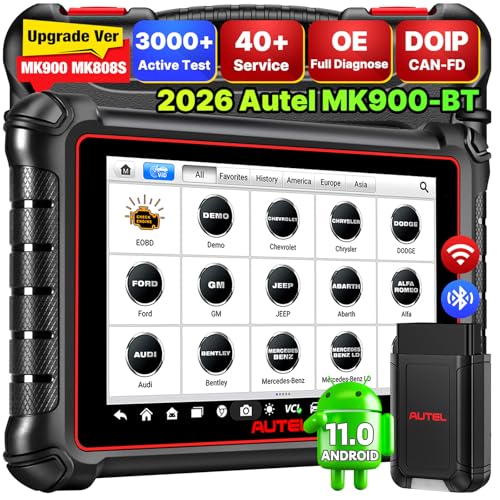
- 💯【Conta.ct us for Support Directly】If you met any...
- 🔥🔥🔥【2026 AUTEL FLAGSHIP MK900BT MK900-BT, NEW...
- 🚗【3000+ ACTIVE TESTS (50➡3000+), SAME AS MS...
- 🚗【40+ HOT SERVICES FOR 150 MAKES (28+➡40+)】Full...
- 🚗【OE ALL SYSTEM DIAGNOSE, AUTO SCAN 2.0: SCAN LICENSE...

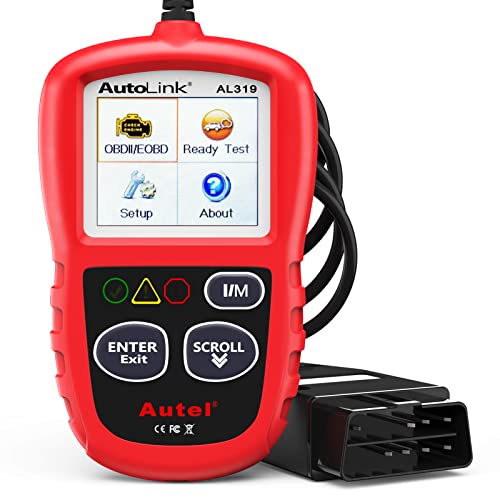
- 【TURN OFF CEL】 This AL319 car scanner diagnostic tool...
- 【EXTENSIVE APPLICATION】 Autel AL319 Compatible with...
- 【FOR END USER & DIYERS】 This error code reader AL319 is...
- 【USER-FRIENDLY DESIGN】 This OBD2 scanner and check...
- 【HIGH-QUALITY SERVICES】 12 months war.ranty from the...
If the PDF is very large, it may not load in the preview below.
Some older TSBs had multiple PDFs — visit the NHTSA Website to view all PDFs.
If the TSB PDF does not show, download or view it on the NHTSA Website.
Click on the (+) Plus Sign
Then Click on Associated Document(s)
Search NHTSA Database for Recalls
Search NHTSA Database for Vehicle Investigations
View Latest Vehicle Investigations
Search NHTSA Database for Vehicle Complaints
View Latest Vehicle Complaints
TSB/Document ID: 20NA211
Replacement Service Bulletin Number:
MFR Communication Date: 2020-10-19
MFR Internal Campaign ID/Software Version:
Communication Type: Service Bulletin/Repair Instructions
NHTSA Components: EQUIPMENT:OTHER:OWNERS/SERVICE/OTHER MANUAL
MFR Component System:
MFR Component Subsystem:
Previous TSB | Next TSB |
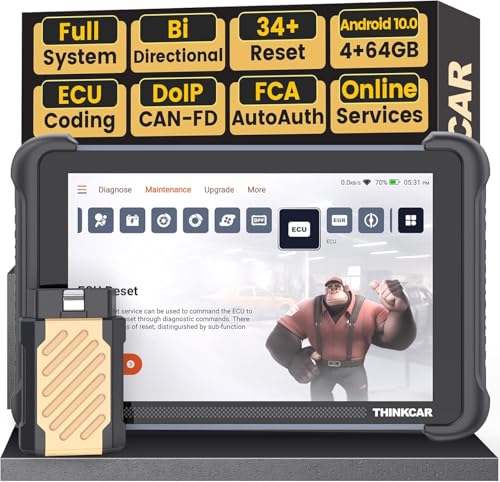
- [Notice] When you receive a used device, it may be a customer return resold by Amazon without inspection. You can exchange it for a new one through Amazon. As this situation is unavoidable, we sincerely apologize. For any issues, contacting us via Amazon's "Messages" is the best way. THINKSCAN 689BT Bidirectional Scan Tool Can Be Used Immediately After It is Turned On, Without Complicated Registration Process, Which is More Convenient & Quick.
- Full Bi-Directional Control & 3000+ Active Tests: Take control and test components like actuators, fuel injectors, relays, and cooling fans in real time. You’ll quickly see if the problem is in the part itself or the control module — saving you hours of guesswork and frustrating trial-and-error.
- Advanced ECU Coding Capabilities: Handle module matching and hidden feature activation with confidence. When you replace an ECU or want to customize settings, this obd2 scanner diagnostic bi directional tool gives you the professional-level capabilities you need without the dealership price tag.
- 34+ Useful Reset and Maintenance Functions: Complete everyday service tasks smoothly with a wide range of helpful reset and maintenance functions. Whether you’re keeping up with regular upkeep or tackling a specific job, this scanner makes maintenance simpler and less stressful for both DIYers and pros.
- Comprehensive Full System Diagnostics: Diagnose every major system — Engine, Transmission, ABS, SRS, TPMS, and more — all in one place. Finally stop wondering if you’re missing something important; get the full picture and clear codes with ease.
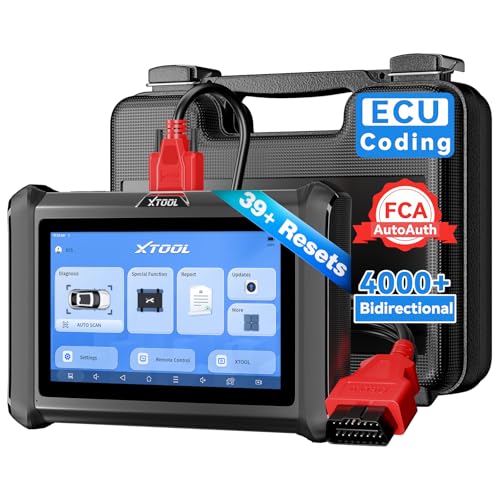
- Top Reasons to Choose the D7S OBD2 Scanner: XTOOL D7S car scan tool, an upgrade of XTOOL D7, offers comprehensive features for automotive technicians, workshops, and DIY enthusiasts 1. Upgraded Hardware: 2+64GB memory, rear camera, intuitive interface, foldable bracket 2. Complete Diagnostics: FCA
 Autoauth, OE-level all system scan, 39+ maintenance services, 4K+ bidirectional, CANFD/DoIP protocol 3. Advanced Capabilities: ECU c0ding, PMI functions 4. Wide Compatibility: Support 10,000+ models, covering 99% vehicle brands 5. Multi-language: Available in 22+ languages, No IP Restrictions 6. 3-Year Updates: Save 300 bucks on software updates for the latest features and optimizations
 - 2026 Upgraded D7S Car Scanner Features: The newly 2026 D7S V2.0 scanner for car brings exciting features for advanced vehicle diagnostics and enhanced user experience 1. FCA AutoAuth: Now supports FCA SGW module for Chrysler, for Jeep, for Dodge (2018+), for Fiat (2017+), enabling faster vehicle communication without gateway restrictions 2. PMI (Offline ECU Pr0gramming): Allows for Ford, for Lincoln, and for Mazda ECU pr0gramming for new modules 3. Optimized Diagnostic Report 2.0: Personalized reports with logos and customer info for auto shops. Note: Compatibility varies by cars, please check before order
- 39+ Services/Resets/Adaptations/Relearns/Calibrations: XTOOL D7S full system car scanner diagnostic tool tackles 99% of common car issues through its 36+ special functions, including Oil Reset, EPB, SAS, BMS, Throttle Reset, Injector C0ding, ABS Bleed, TPMS Reset, Power Balance, etc and also covers specific-vehicle functions like Crank Sensor Relearn, ABS Initialization, Cylinder Power Balance, Fuel Trim Reset, Idle Relearn etc. This car diagnostic scanner enhances efficiency, making repairs and maintenance hassle-free. Tip: DO NOT for All vehicles, please check compatibility first
- Cost-effective ECU C0ding Scan Tool for Specific Brands: Enhance your vehicle's performance with XTOOL D7S! This obd2 scanner all systems bidirectional offers advanced capabilities at an affordable price, supports online for BMW, for Benz and offline for BENZ, for MIT, along with PMI functions for Ford, for Mazda, and for Lincoln. Ideal for technicians and DIY enthusiasts, this automotive scanner diagnostic tool optimizes vehicle performance and enhances the driving experience. Note: Not for all cars and modules, please send car VIN to check the compatibility before purchase
- OE All System Diagnostic & 8 Pids Graphing: XTOOL D7S is a comprehensive all system bi directional obd2 scanner that delivers dealer-level diagnostics, completely controlling over your vehicle’s performance and health. This automotive scan tool can read and clear DTCs, view live data and ECU information, retrieve freeze frames, and perform active tests and full obd2 functions. This bi-directional scan tool can can identify your vehicle's make, model, and year information with just one click and show up to 8 PIDs live data with options for CSV viewing, playback, and recording for in-depth analysis. It is easy-to-use for both professionals and beginners, helping pinpoint issues efficiently
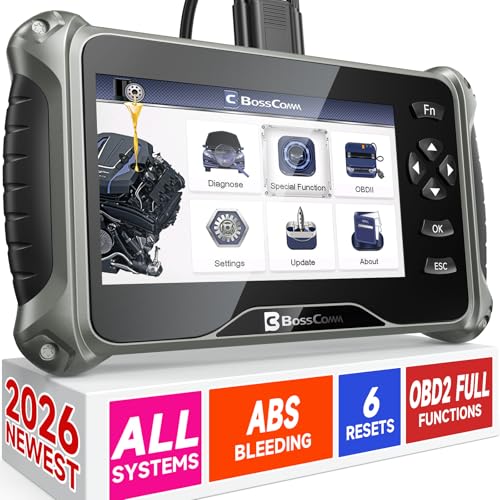
- 【✅Compared to BOSSCOMM IF742, IF745 Offers Full-System Diagnostics】The BOSSCOMM IF745 car diagnostic scanner is an upgraded model of IF742. In addition to supporting all OBD2 Code Reader functions and 6 reset options (ABS/EPB/SAS/BMS/Oil/Throttle), it expands diagnostics from 4 systems (Check Engine/ABS/SRS/Transmission) to vehicle All systems, including Steering, Suspension, and Body Electronics. This provides deeper, more comprehensive diagnostic capabilities.
- 【✨10 OBD2 Functions】The BOSSCOMM IF745 scan tool’s DTC Lookup instantly translates fault codes into user-friendly explanations, its I/M Readiness feature streamlines emissions testing with a single tap, and Freeze Frame lets you pinpoint the exact moment of a fault for in-depth root-cause diagnosis. Combined with a live data dashboard and advanced diagnostics (O2S, OBMon, EVAP), it delivers comprehensive insights for confident troubleshooting.
- 【✨Deep Diagnostics for All Vehicle System Modules】Beyond code reading/clearing and ECU information retrieval, our all-in-one data stream feature lets you inspect all current fault codes and their locations across the vehicle’s systems. This vehicle code reader helps you turn off dashboard warning lights and perform a comprehensive self-check of your car at home—no more back-and-forth trips to the repair shop or hefty inspection fees.
- 【✨6 Essential Resets: ABS Bleeding, Oil, EPB, SAS, Throttle, BMS】The BOSSCOMM IF745 obd2 scanner diagnostic tool swiftly purges air from brake lines to restore braking sensitivity, fine-tunes maintenance cycles to eliminate false alerts, resolves parking brake issues with one-click control, recalibrates steering sensors for stability, optimizes engine idling/acceleration for smoother performance, and deeply resets battery systems to extend lifespan and range via precise parameter adjustments.❗NOTE: Does NOT support bidirectional control, coding, or programming.
- 【✨10,000+ Car Models, AutoVIN, 13 Languages】The BOSSCOMM IF745 vehicle scanner diagnostic tool covers 73+ global car brands and offers support in 13 languages, making it perfect for DIYers, auto mechanics, or as a thoughtful gift. With a single-click AutoVIN feature, it instantly retrieves vehicle serial numbers, streamlining diagnostics for users globally. This adaptable tool balances user-friendliness with precision, catering to both personal and professional requirements.✅Unsure about compatibility? Compatibility will vary on vehicles' model and year, pls reach us via 📧 [email protected] 📧 before purchase.
This product presentation was made with AAWP plugin.