
NHTSA ID Number: 10169263
Manufacturer Communication Number: 18NA366
TSB/Document Date: 2019-12-16
Summary
This New Model Features Bulletin provides General Information and other Topics to help the Service Personnel become familiar with features specific to the new Medium Duty 2019 Chevrolet Silverado 4500HD, 5500HD and 6500HD.
control circuitry is integrated within the blower motor
assembly. The HVAC control module provides a low
side PWM signal to the blower motor to request a
specific motor speed. The blower motor translates the
PWM signal and drives the motor accordingly.
Rear Vision Camera
Important: The RVC camera is shipped loose in the
cab for upfitter installation.
If equipped, the Rear Vision Camera (RVC) may help
the driver park or avoid objects. Always check around
the vehicle when parking or backing. When the vehicle
is shifted into R (Reverse), the RVC displays an image
of the area behind the vehicle in the infotainment
display. The previous screen displays when the vehicle
is shifted out of R after a short delay. To return to the
previous screen sooner, press any button on the
infotainment system, shift into P, or reach a vehicle
speed of approximately 8 mph (12 km/h).
Refer to the GM Upfitter Integration Group website for
mounting locations.
Refueling the Vehicle
The fuel fill port(s) is located on the driver side of the
vehicle. If equipped with dual fuel tanks, each tank
must be filled through its own fill port.
Page 21
Supplemental Inflatable Restraint
System
SIR System Overview
The Supplemental Inflatable Restraint (SIR) system
supplements the protection offered by the seat belts.
The SIR system contains an inflatable restraint sensing
and diagnostic module (SDM), the airbags, seat belt
pretensioners (retractor), and impact sensor. When the
SDM detects a collision, it will process the information
provided by the sensors to further support airbag or
pretensioner deployment. The SDM will deploy the
airbags and pretensioners if it detects a collision of
sufficient force. If the force of the impact is not sufficient
to warrant airbag deployment, the SDM may still deploy
the seat belt pretensioners. The SDM contains a
sensing device that converts vehicle velocity changes
to an electrical signal. The SDM compares these
signals to values stored in memory. If the signals
exceed a stored value, the SDM will determine the
severity of the impact and either cause current to flow
through the frontal deployment loops deploying the
frontal airbags and pretensioners, or it will deploy the
pretensioners only. The SDM continuously monitors the
deployment loops for malfunctions and illuminates the
AIRBAG indicator if a fault is detected. The SDM
performs continuous diagnostic monitoring of the SIR
system electrical components. Upon detection of a
circuit malfunction, the SDM will set a DTC and inform
the driver by illuminating the AIRBAG indicator. The
steering column and knee bolsters are designed to
absorb energy and compress during frontal collisions in
order to limit leg movement and decrease the chance of
injury to the driver and passenger.
Inflatable Restraint Sensing and Diagnostic Module
The SDM is a microprocessor and the control center for
the SIR system. The SDM contains internal sensors
along with an external impact sensor mounted at a
strategic location on the front of the vehicle. In the
event of a collision, the SDM compares the signals from
the internal and external impact sensors to a value
stored in memory. When the generated signals exceed
the stored value, the SDM will cause current to flow
through the appropriate deployment loops to deploy the
airbags. The SDM records the SIR system status when
a deployment occurs and illuminates the AIRBAG
indicator located in the instrument cluster.
Airbags
This vehicle contains 2 airbags. The 2 airbags are
located in the steering wheel (single inflator) and
instrument panel on the passenger side (single inflator).
Airbags contain a housing, inflatable airbag, initiating
device, canister of gas generating material and in some
cases, stored compressed gas. The deployment loops
supply current through the inflator modules to deploy
the airbags. For moderate frontal collisions the airbags
deploy at less than full deployment which consists of
stage 1. The current passing through the airbag, ignites
the material in the canister producing a rapid
generation of gas and is some cases, the release of
compressed gas. The gas produced from this reaction
rapidly inflates the airbag. Once the airbag is inflated it
Page 22
November, 2019
quickly deflates through the airbag vent holes and/or
the airbag fabric. Each airbag is equipped with a
shorting bar located in the connectors of the module.
The shorting bar shorts the airbag deployment loop
circuitry to prevent unwanted deployment of the airbag
when it is disconnected.
Impact Sensor
There is one impact sensor which is located in the front
of the vehicle. The impact sensor contains a sensing
device which monitors vehicle acceleration to detect
collisions that are severe enough to warrant airbag
deployment. The impact sensor is not part of the
deployment loop, but instead provides input to the
SDM. The SDM contains a microprocessor that
performs calculations using the measured inputs from
acceleration and pressure sensors. When the
generated calculations exceed the stored value, the
SDM will cause current to flow through the deployment
loops deploying the appropriate airbags.
Seat Belt Pretensioners
Important: Once a pyrotechnic pretensioner is
activated it must be replaced.
The pyrotechnic pretensioner is the most sophisticated
type of pretensioning device. The seat belt
pretensioners for the driver and passenger consist of a
housing, the seat belt retractor which is located in the
B-pillar, seat belt webbing, an initiator and a canister of
gas generating materials. The initiator is part of the seat
belt pretensioner deployment loop. When the vehicle is
involved in a collision of sufficient force, the SDM
causes current to flow through the seat belt deployment
loops to the initiator. Current passing through the
initiator ignites the material in the canister producing a
rapid generation of gas. The gas produced from this
reaction deploys the seat belt pretensioners which
removes all of the slack in the seat belts. Depending on
the severity of the collision, the seat belt pretensioners
may deploy without the frontal airbags deploying, or
they will deploy immediately before the frontal airbags
deploy. Each seat belt pretensioner is equipped with a
shorting bar that is located in the connector of the seat
belt pretensioner. The shorting bar shorts the seat belt
pretensioner circuitry to prevent unwanted deployment
of the seat belt pretensioner when the connector is
disconnected.
Snow Plow
If a snow plow is added to the vehicle, the airbags
should still work properly. The airbag systems were
designed to work properly under a wide range of
conditions, including snow plowing with vehicles that
have the optional snow plow prep package —
RPO VYU
Do not change or defeat the snow plow's "tripping
mechanism." If you do, it can damage the snow plow
and the vehicle, and may cause an airbag deployment.
Bulletin No.: 18-NA-366
Suspension — Air Ride
Operation
If equipped, the Air Ride Suspension provides a
smooth, shock and vibration free ride with a preset
constant frame height. The air springs on the air ride
suspension take the place of steel springs, which
eliminates the need to overcome inter-leaf friction
resulting in a minimum amount of road shock being
transferred to the frame, cargo and suspension. The air
ride suspension adjusts to load changes automatically,
providing a low rate suspension with a light or no load
condition, and a higher rate suspension with heavier
loads.
Air Ride Suspension Dump Switch
5124391
Control button positioning may vary depending on
equipment and options.
The air ride suspension system allows the rear
suspension to be temporarily lowered by approximately
6 inches. The system is controlled by the Air
Suspension Dump (ASD) switch in the center stack.
This switch controls solenoids, which direct air to the
suspension dump and height valve. Pressing the ASD
switch when the vehicle is in P and the ignition is in the
ON/RUN position releases air supplied to the rear
suspension, lowering (dumping) the rear air suspension
for loading. The indicator on the ASD switch
illuminates. When the vehicle is shifted out of P, air is
filled into the system and the indicator on the switch will
turn OFF. Vehicles with air suspension have an AUX
warning lamp immediately to the left of the ASD switch.
The suspension may refill slowly if this lamp is ON.
Suspension — Front
Non-Driving Axle
The non-driving axle is a solid I-Beam type with
knuckles attached by kingpins. By matching steering
geometry with specific wheelbase lengths, tire scrub
and premature tire wear are reduced.
Bulletin No.: 18-NA-366
November, 2019
The front axle has two primary functions:
– Support the front of the truck including the load.
– Provide good maneuverability through steering
control.
Page 23
Tire/Certification Label Legend
Leaf Springs
Tapered leaf springs are used at the front axle.
Parabolic tapered leaf springs are thicker in the middle
than at the ends. Because of this design, these
suspensions are able to use fewer spring leaves, which
helps to reduce leaf-to-leaf friction and produces a
smoother ride than flat multi-leaf springs.
Stabilizer Bar
The stabilizer bar reduces body roll while turning,
keeping weight more evenly distributed above all
wheels, improving traction and reducing tire wear.
Suspension — Rear
Multileaf Variable Rate Springs
This leaf spring design offers a variable deflection rate
by changing the effective length of the spring with the
use of a cam-type frame mounting bracket. As the
spring deflects, due to increased load, the point of
spring contact on the bracket moves toward the center
of the spring, making it stiffer as the load increases.
This type of rear suspension provides good stability
and control.
Tires and Wheels
Tire/Certification Label
The Tire/Certification Label is typically located on the
driver side door frame of the vehicle and indicates the
size of the original equipment tires installed on each
axle of the vehicle. The load rating of the tires installed
on the vehicle at the time of production is at or in
excess of the Gross Axle Weight Rating (GAWR) on the
Tire/Certification Label. When replacing the tires be
sure the replacement tire load rating (listed separately
in pounds and kilograms on the tire sidewall for single
or dual applications) multiplied by the number of tires
on that axle is equal to or higher than the specified
listed Steer Axle or Drive Axle GAWR. Failure to do so
will adversely affect maximum load-carrying capacity.
Tires with the same size specifications do not always
have the same load specification. Dual tires should be
matched using tires of equivalent size. Tires which
differ more than 1/4 in (6 mm) in diameter or 3/4 in
(19 mm) in circumference should not be mounted on
the same dual wheel assembly.
5152209
1.
2.
3.
4.
Gross Weight Rating of the Front Axle
Tire Size for Front Axle
Tire Size for Rear Axle
Gross Weight Rating of the Rear Axle
Tires — Lug and Rib Patterns
While a truck’s application plays the primary role in
selecting a tire tread pattern, there are really only two
options, lug and rib. Lug patterns can be closed or open
shoulder design, and are typically used on drive axles.
Rib patterns can be straight or zigzagged and typically
are used on steer and trailer axles. A straight rib pattern
is designed for high mileage, good fuel economy and
resistance to irregular wear. The zigzagged pattern
offers additional biting edges for improved traction on
wet road surfaces. Use tires of the same type on the
same axle.
Tires
The vehicle can be equipped with the following:
– Tires: Front, 225/70R19.5G Highway, Blackwall,
Continental (Standard)
– Tires: Rear, 225/70R19.5G Highway, Blackwall,
Continental (Standard)
– Tires: Front, 225/70R19.5G Highway, Blackwall,
Goodyear (Available)
– Tires: Rear, 225/70R19.5G Highway, Blackwall,
Goodyear (Available)
– Tires: Rear, 225/70R19.5G Traction, Blackwall,
Continental (Available)
– Tires: Rear, 225/70R19.5G Traction, Blackwall,
Goodyear (Available)
– Tire: Spare, Match Tire to Vehicle Equipment
Tire Rotation
Tires should be rotated every 7,500 mi (12,000 km).
Tires are rotated to achieve a uniform wear for all tires.
The first rotation is the most important. The outer tire on
a dual wheel setup generally wears faster than the
inner tire. Adjust the front and rear tires to the
Page 24
November, 2019
recommended inflation pressure on the Tire and
Loading Information label after the tires have been
rotated.
Bulletin No.: 18-NA-366
Wheels — Overview
While some steel wheels look similar and some
aluminum alloy wheels look very similar, there is more
of a difference in them than can normally be seen by
the naked eye, when they are already mounted on a
vehicle. The two basic types of commercial wheels are
determined by how the wheel is centered on the hub.
Stud Piloted wheels have tapered stud holes and the
lug nuts have a matching taper. The centering of each
lug nut in the stud hole of the wheel will cause the
wheel to be centered on the hub. The hub hole in the
wheel only serves to allow hub clearance. Hub Piloted
wheels use the center hole of the wheel (hub bore) to fit
over the matching size ridge on the hub. The wheel is
centered on the hub by the hub bore. The lug nuts will
have a flush face in contact with the wheel. The lug
nuts only secure the wheel to the hub. Interchanging
lug nuts between the two different style of wheels is
NOT recommended and could cause damage to the
wheel or more. To avoid surface damage on wheels
and wheel trim, do not use strong soaps, chemicals,
abrasive polishes, cleaners, or brushes. Use only GM
approved cleaners. Do not drive the vehicle through an
automatic car wash that uses silicone carbide tire/
wheel cleaning brushes.
Tire Rotation Pattern — Aluminum Wheels
5152010
Vehicles with aluminum wheels have two unique
wheels. They are aluminum front and rear outer
wheels, and steel rear inner wheels. The aluminum
wheels can only be rotated using the front and rear
outer positions. The steel wheels can only be rotated
on the rear inner positions. Use this rotation pattern
when rotating tires that are mounted on aluminum
wheels.
Tire Rotation Pattern — Steel Wheels
Wheel Size — Material — Color
Notice: On a vehicle that is equipped with
aluminum wheels, the two front and two outside
rear wheels are aluminum. The two rear inner
wheels are steel.
The wheel selections are:
– Wheels: 19.5" x 6.75", Steel, Black Painted,
8-holes, Hub Piloted (Standard)
– Wheels: 19.5" x 6.75", Steel, Grey Painted, 8-holes,
Hub Piloted (Available)
– Wheels: 19.5" x 6.75", Steel, White Painted,
8-holes, Hub Piloted (Available)
– Wheels: 19.5" x 6.75", Aluminum, 8-holes, Hub
Piloted (Available)
– Wheel: 19.5" x 6.75", Spare, Steel, Black, 8-holes,
Temporarily Mounted on Frame, Hub Piloted
(Available)
Traction Control System
5151982
Use this rotation pattern when rotating tires that are
mounted on steel wheels. DO NOT use this rotation
pattern for tires mounted on aluminum wheels.
If equipped, the steel spare wheel can be used in any
position in the event of a flat tire.
System Operation
The vehicle has a Traction Control System (TCS). This
system helps limit wheel spin and assist the driver in
maintaining control, especially on slippery road
conditions. TCS activates if it senses any of the drive
wheels are spinning or beginning to lose traction. When
this happens, TCS applies the brakes to the spinning
wheel(s) and reduces engine power to assist in limiting
wheel spin.
If the cruise control is being used and traction control
begins to limit wheel spin, the cruise control will
disengage. Cruise control may be turned back ON
when road conditions allow. The TCS turns ON
automatically when the vehicle is started and begins to
move. The system may be heard or felt while operating
or while it is performing diagnostic checks. This is
Bulletin No.: 18-NA-366
November, 2019
Page 25
normal and does not mean there is a problem with the
vehicle. It is recommended to leave TCS ON for normal
driving conditions, but it may be necessary to turn TCS
OFF if the vehicle gets stuck in sand, mud, ice, or snow.
Emergency Vehicle Series™
Allison Emergency Vehicle Series™ offers a complete
family of automatic transmissions to meet the special
needs of fire and emergency vehicles.
Turning the System OFF and ON
Highway Series™
Allison Highway Series™ automatic transmission are
designed to meet all the horsepower needs of strictly
on-highway vehicles that do not require a PTO
operation.
Motorhome Series™
Allison Motorhome Series™ automatic transmissions
are designed to provide enhanced performance and
exceptional value to the motorhome market.
Rugged Duty Series™
Allison Rugged Duty Series™ automatic transmissions
are suited for any vehicle that operates on/off highway
and requires PTO operation.
5181620
The control button for the TCS (shown) is on the center
stack control panel.
• To turn TCS OFF, press and release the button.
The Traction OFF light displays in the instrument
cluster. The appropriate message will display in
the DIC.
• To turn TCS ON, press and release the button.
The Traction OFF light displayed in the instrument
cluster will turn OFF.
Transmission Allison® 6-Speed
Notice: The Allison® Transmission and TCM will
be warrantied by Allison® and will have to be taken
to an Allison® Authorized Distributor and Dealer
Location for repair or replacement.
Transmission Component and System Description
The Allison® 6-speed fully automatic transmission
delivers solid fuel efficiency, superior performance and
outstanding vehicle safety. If equipped, Allison’s Power
Take-Off (PTO) provision, which draws energy from the
truck’s running engine, enables the operator to power
attachments and accessories with ease.
Depending on the vehicle, the following transmissions
are used on the 2WD and 4WD applications:
– Allison® 1700 with double overdrive
– Allison® 1750 with double overdrive
– Allison® 2700 with double overdrive
For additional transmission application information,
refer to the section titled: Gross Combined Weight
Rating Table
Automatic Transmission Shift Lock Control
The Automatic Transmission Shift Lock Control System
is a safety device that prevents an inadvertent shift out
of P when the engine is running. The driver must press
the brake pedal before moving the shift lever out of the
P position. The shift lock control solenoid is
permanently grounded. The BCM supplies voltage to
the automatic transmission shift lock control solenoid,
releasing the mechanical lock on the shift lever as the
solenoid energizes. The energized solenoid allows the
driver to move the shift lever out of the P position.
When the brake pedal is not applied, the BCM turns the
control voltage output of the shift lock control solenoid
OFF, de-energizing the shift lock control solenoid.
When the transmission is in P, the de-energized shift
lock control solenoid will prevent shifting as the lever is
mechanically locked in P.
The system consists of the following components:
– The Automatic Transmission Shift Lock Solenoid
(serviced as the Automatic Transmission Shift Lock
Actuator)
– The ECM
– The Body Control Module (BCM)
Transfer Case — Four-Wheel Drive
When equipped with four-wheel drive, the engine's
driving power can be sent to all four wheels for extra
traction.
Page 26
November, 2019
Manual Locking Hubs
Bulletin No.: 18-NA-366
Electronic Transfer Case Switch
5141552
5141562
The locking hubs are on each end of the front axle and
must be manually turned to LOCK before the
four-wheel drive modes can be used. The hubs may
remain in the LOCK position when road surface traction
conditions are variable or it is temporarily unsafe to exit
the vehicle and unlock them. When four-wheel drive is
no longer needed, turn the locking hubs to FREE. If the
hubs are locked when in two-wheel drive, driveline
vibration may be experienced.
Caution: Shifting the transmission into gear before
the requested mode indicator light has stopped
flashing could damage the transfer case.
All of the lights on the transfer case switch will flash ON
then OFF momentarily when the ignition is turned ON.
The light that remains ON indicates the current state of
the transfer case. The indicator mark on the switch
must line up with the indicator light before a shift can be
commanded. With the ignition ON, rotate the switch
located to the left of the steering wheel, to shift into and
out of four-wheel drive for extra traction. The light will
flash indicating that the shift is in progress. When the
shift is completed the new position will be illuminated. If
the transfer case cannot complete a shift command, it
will go back to its last chosen setting.
Bulletin No.: 18-NA-366
November, 2019
Page 27
Turbocharger System Description
Variable Vane Turbocharger Overview
4584300
Legend
(1)
(2)
(3)
(4)
(5)
(6)
(7)
(8)
Turbine Housing
Lower Vane Ring
Vane Ring Assembly Spacer
Upper Vane Ring Assembly
Adjusting Ring Assembly
V-Band Nut
V-Band
Compressor Housing Bolt
The turbocharger increases engine power by pumping
compressed air into the combustion chambers, allowing
a greater quantity of fuel to combust at the optimal air/
fuel ratio. The turbine spins as exhaust gas flows out of
the engine and over the turbine blades, and turns the
compressor wheel at the other end of the turbine shaft,
pumping more air into the intake system. This is a
BorgWarner single stage, water cooled, variable
geometry turbocharger (VGT) capable of producing
220 kPa (31.9 psi) boost pressure.
The ECM communicates with the turbocharger vane
position actuator via the controller area network (CAN)
bus to control the turbocharger vanes. The smart
actuator incorporates a brushless motor and is
mounted on top of the turbocharger. It is connected to
(9)
(10)
(11)
(12)
(13)
(14)
(15)
Core Assembly
Linkage Assembly
Linkage Assembly Nut
Compressor Housing O-Ring
Actuator Nut
Compressor Housing
Actuator

- 💯【Conta.ct us for Support Directly】If you met any...
- 🔥🔥🔥【2026 AUTEL FLAGSHIP MK900BT MK900-BT, NEW...
- 🚗【3000+ ACTIVE TESTS (50➡3000+), SAME AS MS...
- 🚗【40+ HOT SERVICES FOR 150 MAKES (28+➡40+)】Full...
- 🚗【OE ALL SYSTEM DIAGNOSE, AUTO SCAN 2.0: SCAN LICENSE...

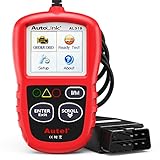
- 【TURN OFF CEL】 This AL319 car scanner diagnostic tool...
- 【EXTENSIVE APPLICATION】 Autel AL319 Compatible with...
- 【FOR END USER & DIYERS】 This error code reader AL319 is...
- 【USER-FRIENDLY DESIGN】 This OBD2 scanner and check...
- 【HIGH-QUALITY SERVICES】 12 months war.ranty from the...
Last update on 2026-06-23 / Affiliate links / Images from Amazon Product Advertising API
If the PDF is very large, it may not load in the preview below.
Some older TSBs had multiple PDFs — visit the NHTSA Website to view all PDFs.
If the TSB PDF does not show, download or view it on the NHTSA Website.
Click on the (+) Plus Sign
Then Click on Associated Document(s)
Search NHTSA Database for Recalls
Search NHTSA Database for Vehicle Investigations
View Latest Vehicle Investigations
Search NHTSA Database for Vehicle Complaints
View Latest Vehicle Complaints
TSB/Document ID: 18NA366
Replacement Service Bulletin Number:
MFR Communication Date: 2019-11-01
MFR Internal Campaign ID/Software Version:
Communication Type: Service Bulletin/Repair Instructions
NHTSA Components: EQUIPMENT
MFR Component System:
MFR Component Subsystem:
Previous TSB | Next TSB |
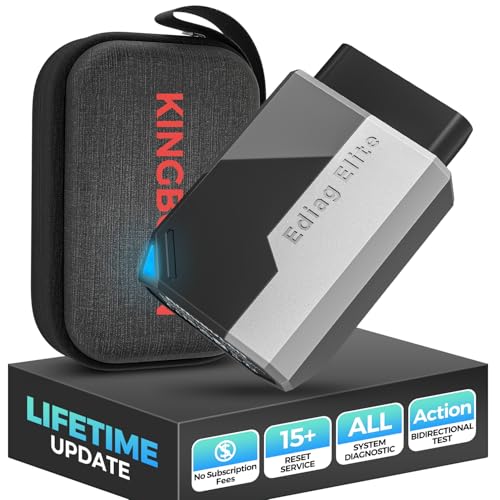
- Obd2 Bluetooth Scanner Lifetime Update: Ediag Elite offers revolutionary Advantage Lifetime Updates with unlimited access to the superior 15 reset service, bidirectional testing and full system diagnostics.The Ediag Elite is an excellent Bluetooth obd2 scanner diagnostic tool ideal for diy's and private car owners
- Bidirectional Control for Quickly Locating Problems: The Bidirectional Scan tool allows you to send commands directly from your smartphone to your vehicle for active testing. This feature helps to quickly narrow down problems such as air conditioning clutches, windows, doors, sunroofs, etc., reducing diagnostic time for mechanics and helping Diy users locate faults more easily. In addition, Ediag Elite provides fault analysis and repair guidance to help you solve problems efficiently.
- 15 Maintenance Resets: The current version introduces 15 popular special features: Oil Reset, Headlight Matching, Bleeding Reset, TPMS Reset, BMS Reset, Gear Box Relearn, Throttle Learning, Injector Coding, SAS Reset and more special functions in system diagnose menu. These functions make it easy for owners to carry out the necessary maintenance and servicing, ensuring that your vehicle stays in top condition, prolonging its service life and preventing common problems and breakdowns. Note: The Special function vary by model& year, Reach us check compatibility.
- Wide Compatibility CANFD & FCA
 Autoauth: Compatible with GM, Ford, Toyota, Chrysler, Honda, Mazda, Nissan, Mitsubishi, Hyundai, KIA with standard OBD2 port from 1996 to newer. More car brands and features will be released gradually. Newest Ediag Elite scanner supports CANFD Protocol and FCA cars. Note: Coverage may vary on different vehicle by model& year ,Please contact us to confirm compatibility before purchase.
 - Perfect for Monitoring The Health of Your Vehicle: Ediag Elite is designed to make vehicle maintenance simple and efficient. With intelligent AutoVIN quick recognition, it is easy to connect to your car without the need for manual input. Real-time data is visualized in a variety of formats, including graphs, numeric, meter displays and clear 4-in-1 data charts, allowing you to effortlessly monitor real-time data. Data logging/reporting is available for playback and further analysis.
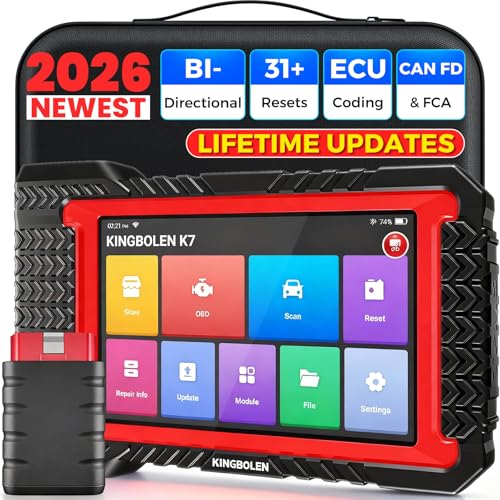
- No Annual Fees & 2026 Upgraded CAN FD: Why pay $199/year or more for updates? The 2026 newest Kingbolen K7 obd2 scanner features have been upgraded to Lifetime Updates without subscription fees, saving you significant costs in the long run. K7 scan tool also adds the CAN FD protocol for the latest GM models (2019+), enabling faster data transfer, reducing the risk of undetected errors
- 2026 Newest Top-tier Car Scanner: Kingbolen K7 diagnostic scan tool is equipped with most capabilities for daily repair/maintenance: Wireless diagnosis via Bluetooth, Bidirectional Test, ECU Online/Offline Code, 31+ Resets, PMI for Ford, Lincoln, Mazda, Global version for 100+ brand vehicles and 17 languages, no area limit, FCA AutoAuth
- OE-Level Full Systems Scan Tool: K7 professional diagnostic scanner with Auto Vin can do one-click to scan ECUs on most of vehicles, like pcm, ecm, eps, bcm, tpms, sas, a/c system... to read/clear code, view live data, freeze frame, read ecu info. 4-in-1 data stream graphics can make data viewing more intuitive. Detailed diagnostic reports will help you easily master the car situation as it can be shared by bluetooth or email! Adding workshop information can help your customers to know more
- Bidirectional Test/Active Test & ECU Code: Stop guessing and start fixing. Bidirectional scan tool Kingbolen K7 can perform real active test that can send commands to the vehicle's ECU to drive the actuators to work, like window, rear mirrors, sunroof, door, solenoids, wipers, headlamp, etc, helping you quickly find out bad parts and pinpoint faulty issues. K7 bidirectional scanner will be a good choice to save money and time on car repairs when performing complex maintenance and repair
- 31 Reset Functions: Avoid expensive dealership visits for simple services. Experience tells us that just a small repair service may cost a lot of money. Kingbolen K7 is a professional diagnostic scanner with 31 common maintenance services like Oil /SAS/EPB/TPMS Reset, Battery Matching, ABS Bleeding, Injector Code, etc. It effectively handles most of the car reset and relearning jobs, perfect for experienced DIYers and mechanics. Note: Functions in the menu vary across vehicles. Kindly check the compatibility before purchase
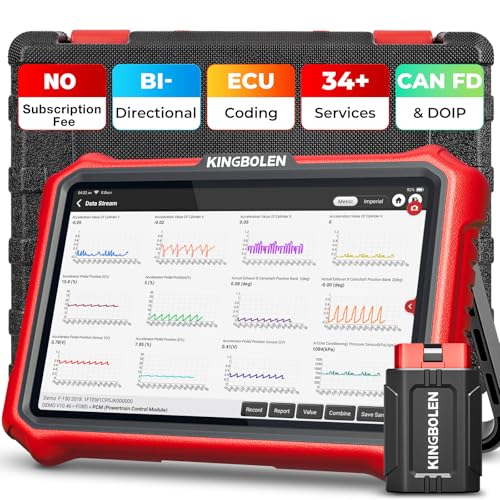
- 【Lifetime Database & Software Updates— No Subscription Fee, No Feature Lock, Save you $399/Y】KINGBOLEN K8 Pro's software can already be permanently upgraded and used for while software of other same price product still needs annual fee of almost $400. K8 pro scanner has packed all capabilities auto technicians would ever need for repair & maintenance services: Added CAN-FD & DOIP protocol, Bluetooth Wireless Diagnosis, Bidirectional Test, ECU Online/Offline Code & Guided Functions for VW, for Audi...34+ Restes, Autoauth for FCA SGW, Larger 4GB+64GB memory, 12600mAh battery, 8'' touch screen with 1280 * 800 Resolution. A Kickstand can allow the tablet to sit at a comfortable angle
- 【Newly Added CAN FD & DOIP Protocol】As Upgrade Version of Kingbolen K8, K8 Pro obd2 scanner supports CANFD and DOIP protocol, which will save you 200+ bucks as no need extra buy for special adapter. CANFD protocol suits for the latest GM(2019-), reducing the risk of undetected errors. The DoIP protocol (comes with DoIp cable) fits for 2017+ BMW(F&G chassis), for Jaguar & Land Rover after 2017, for Volvo after 2018. Plus, K8 Pro's Memory from 2G+32G expanded to 4G+64G, update period extended from 2 years to permanent
- 【34+ Hot Special Functions & V.A.G Guide】KINGBOLEN K8 pro bluetooth obd2 scanner covers almost all common services including Oil Reset, EPB, SAS, BMS Reset, ABS bleed, Throttle Reset, Suspension, Injector Code, Power Balance, Transmission Adaptation, Fuel Trim Learn, HVAC Control Module Calibrate, Language Change, A/F Settings, Stop/Start Reset, Crankshaft Sensor Relearn, TPMS, PMI function and etc. Imagine how much money and time you spend on car maintenance every year? K8 pro car scanner will be a good helper and saver for your car. V.A.G Guided function provides step-by-step guide to work for Volkswagen/Audi/Skoda. Note: Please send us model/year/vin to check compatibility before order
- 【Powerful Bidirectional Test/Active Test & ECU Code】As a bidirectional scan tool, KINGBOLEN K8 pro allows you to request information from a vehicle's ECU or send commands to the vehicle's modules to perform specific tests and functions, such as EVAP Tests, Turn on/off radiator fan, Window/Mirror/Door Lock Test, Pump and Value Tests, Sound horn Test, et. Without using the vehicle control system and dismantling car’s parts, it can quickly and accurately pinpoint the fault causes, simple operation saves time and money
- 【Wireless OE-Level All Systems Diagnostics】Equipped with Bluetooth VCI, you can do car diagnostics out of the car (up to 33F/10M) without being confined to a small space inside the car. Provides the convenience of Auto VIN, K8 pro allowing for easy access and diagnosis of all available modules on a wide range of vehicles, like PCM, ECM, BCM, TPMS, SAS, Fuel System, etc, to perform read/clear codes, view live data, freeze frame, perform active tests, and read ECU info... 12-In-1 Data Stream Graphics make data viewing more intuitive.Diagnostic reports can be shared via QR Code, Bluetooth or email.Built-in Browser and Fault Code Library allows you directly query the fault code when diagnosing
Last update on 2026-06-23 / Affiliate links / Images from Amazon Product Advertising API
This product presentation was made with AAWP plugin.