
NHTSA ID Number: 10169263
Manufacturer Communication Number: 18NA366
TSB/Document Date: 2019-12-16
Summary
This New Model Features Bulletin provides General Information and other Topics to help the Service Personnel become familiar with features specific to the new Medium Duty 2019 Chevrolet Silverado 4500HD, 5500HD and 6500HD.
•
•
•
•
•
•
•
November, 2019
with a biodiesel content up to 20% by volume may
be used (e.g., named B20). Look for the TOP
TIER Diesel Fuel Logo.
– Do not use diesel fuel with more than 15 ppm
Sulfur.
– Do Not Use Non-Highway Diesel Fuel.
Glow Plugs: The engine utilizes eight ceramic
glow plugs. Compared to conventional glow plugs,
ceramic glow plugs enable greater efficiency
through higher temperature capability and faster
preheating time. However, ceramic glow plugs are
much more sensitive to damage than conventional
glow plugs. Damage can occur to the glow plug
and not be visible, causing future engine failure.
Therefore, ceramic glow plugs are considered
one-time-use. Be sure to discard and replace with
NEW whenever a ceramic glow plug is removed
from the cylinder head. If the cylinder head is ever
removed with the ceramic glow plugs, the ceramic
glow plugs must all be replaced with new.
Whenever installing a new ceramic glow plug,
clean the glow plug bore with a proper tool as
outlined in the service procedure. Carbon build-up
in the glow plug bore can damage the ceramic
glow plugs.
Governed Speed: 2900 RPM
Horsepower: 350 hp (257 kW) @ 2700 RPM.
Torque: 700 lb-ft (949 Nm) @ 1600 RPM.
Intake Airflow Valve: The intake airflow valve is
a throttle plate actuator and is used to achieve
high exhaust gas recirculation rates. It increases
the pressure difference between exhaust and
intake so that the appropriate exhaust quantity
can be mixed with the intake air.
Maximum Braking Speed: 4,800 RPM.
Maximum Powered Speed: 3,450 RPM.
Oil Cooler: The oil cooler lowers engine
temperature by cooling the oil with engine coolant.
Engine coolant is directed from the water pump to
the oil cooler by a coolant tube. The oil filter
attaches directly to the oil cooler.
Oil Pump: The oil pump is gear driven directly
from the crankshaft. The oil pump drive gear is a
slip fit to the crankshaft.
•
•
•
•
•
Bulletin No.: 18-NA-366
Piston: The pistons are a full-floating design. The
piston pins are a slip fit in the bronze bushed
connecting rod and are retained in the piston by
round wire retainers. The pistons have a piston
cooling oil channel cast inside of the piston. These
cooling oil channels utilize an oil jet located at the
bottom of the cylinder bore to direct oil into the
piston channel. There are two compression rings
and one oil control ring. There is a groove
machined into the pistons between the first and
second compression rings. This groove reduces
compression ring leakage by providing an empty
space for expanding gases, reducing the
combustion gas pressure on the second
compression ring.
Turbocharger: The turbocharger is water cooled
for improved durability. It is a variable vane style.
The pitch of the turbine vanes can be changed by
ECM command to meet varying conditions.
Upper Oil Pan: A single piece cast aluminum
upper oil pan contributes to crankshaft and block
rigidity while reducing overall weight.
Valvetrain: The engine utilizes a mechanical
roller lifter for valve operation. One rocker arm
operates two valves simultaneously through a
valve bridge.
Water Pump: The water pump is gear driven for
improved reliability.
Elevated Idle
The engine has a cold temperature high idle feature
which elevates the engine idle speed from base idle to
1050 to 1100 RPM when outside temperatures are
colder than 32°F (0°C), and the engine coolant
temperature (ECT) is colder than 150°F (65°C). This
feature enhances heater performance by increasing the
ECT faster.
Engine Block Heater
If equipped, the engine block heater can provide easier
starting and better fuel economy during the engine
warm-up period in weather conditions that are colder
than 0°F (−18°C). Vehicles with an engine block heater
should be plugged in at least four hours before starting.
An internal thermostat in the plug-end of the cord may
exist, which will prevent engine block heater operation
at temperatures warmer than 0°F (−18°C).
Bulletin No.: 18-NA-366
November, 2019
Page 11
Fuel System Overview
L5D Fuel System Diagram
5135268
Legend
(1)
(2)
(3)
(4)
(5)
(6)
(7)
(8)
Secondary Fuel Tank (if equipped)
Fuel Filter with Water in Fuel Sensor
Fuel Heater
Fuel Temperature Sensor
Fuel Pressure Sensor
Exhaust Aftertreatment Fuel Injector (not
equipped on the L5D)
Dual Fuel Rail Pressure Sensor
(Contains Fuel Rail Pressure Sensor 1
and Fuel Rail Pressure Sensor 2)
Fuel Rail Assembly
The primary fuel tank and secondary fuel tank (if
equipped) stores the fuel supply. A fuel transfer pump is
located in the secondary fuel tank to transfer fuel to the
primary tank. The primary fuel tank contains a 3–phase
electric fuel pump that is controlled by the fuel pump
driver control module and ECM. Fuel is pumped from
the primary fuel tank through the fuel feed line to the
fuel filter assembly. The fuel filter assembly consists of
a fuel filter/water separator, fuel heater, fuel
temperature sensor, and a water in fuel sensor. Fuel
flows out of the fuel filter assembly through the rear fuel
feed pipe and past the fuel pressure sensor to the fuel
injection pump. High pressure fuel is supplied through
the high pressure fuel line to the fuel rails and then
(9)
(10)
(11)
(12)
(13)
(14)
(15)
(16)
Fuel Rail Pressure Regulator 2
Fuel Pressure Regulator 1 (Located in
Fuel Injection Pump)
Fuel Injection Pump
Fuel Injectors
Primary Fuel Tank
Electric 3–Phase Fuel Pump
Fuel Transfer Pump (if equipped with
secondary tank)
Fuel Pump Driver Control Module
through the fuel injector lines to the fuel injectors. High
pressure fuel is controlled by the ECM, Fuel Pressure
Regulator 1 and Fuel Pressure Regulator 2. Excess fuel
returns to the fuel tank through the fuel return pipes.
Exhaust Aftertreatment Uses Post Injection
The engine uses post combustion injection through the
engine fuel injectors to increase the exhaust gas
temperature as needed for regeneration. It does not
use an HC Injector.
Page 12
November, 2019
Bulletin No.: 18-NA-366
Exhaust Brake
Specification
Engine oil with the letters CJ-4 or CK-4 are required for
the Duramax® 6.6L diesel engine. The CJ-4 or CK-4
designation can appear either alone or in combination
with other American Petroleum Institute (API)
designations, such as API CJ-4/SL. These letters show
API levels of quality.
Operation
The exhaust brake can be used to enhance the vehicle
brake system and reduce brake lining wear. Downshifts
may be automatically selected to increase engine
speed, which increases the effectiveness of the
exhaust brake. The number of downshifts selected is
determined by the length of time the brakes are applied
and the rate the vehicle is slowing. The system delivers
the correct amount of braking to assist in vehicle
control. The heavier the vehicle load, the more active
the engine exhaust brake will be. Automatic downshifts
will not occur if the vehicle is in Range Selection Mode.
American Petroleum Institute (API) Symbol
Activation
5123610
This doughnut-shaped logo (symbol) is used on most
oil containers to help you select the correct oil. It means
that the oil has been certified by the American
Petroleum Institute. Look for this on the oil container,
and use only those oils that display this logo.
Caution: Use only engine oils that have the
designation CJ-4 or CK-4 for the diesel engine.
Failure to use the recommended oil can damage the
DPF and result in engine damage not covered by
the vehicle warranty.
Viscosity Grade
Use SAE 15W-40 viscosity grade engine oil. When it is
very cold, below 0°F (−18°C), use SAE 5W-40 to
improve cold starting. These numbers on the oil
container show its viscosity, or thickness.
5182573
The exhaust brake only activates when the
transmission torque converter is locked. This can vary
based on vehicle speed, gear, and load. To activate the
system, press the exhaust brake switch in the control
panel. A light in the switch will turn ON when the
exhaust brake is activated. The DIC displays the
message EXHAUST BRAKE ON for approximately
three seconds, then clears. To turn the brake OFF,
press the exhaust brake switch a second time. The DIC
displays the message EXHAUST BRAKE OFF for
approximately three seconds, then clears. The switch
must be pressed at each vehicle start for the system to
be active.
Exhaust Aftertreatment System
Tip: Depending on the Service Information being
referenced by the Technician, such as Diagnostic
Trouble Codes, Description and Operation, Component
Replacement Procedures, Power and Signal Master
Electrical Component List, Bulletins and the Electronic
Parts Catalog, component names for the various parts
in the Exhaust Aftertreatment System will vary.
Bulletin No.: 18-NA-366
November, 2019
Page 13
L5D Emission Control System Architecture
5138795
Legend
(1)
(2)
(3)
(4)
(5)
NOx Sensor 1 (B195A Nitrogen Oxides
Sensor 1)
EGT Sensor 2 (B131B Exhaust
Temperature Sensor 2)
Differential Pressure Sensor (B154
Diesel Particulate Filter Exhaust
Differential Pressure Sensor)
EGT Sensor 4 (B131D Exhaust
Temperature Sensor 4)
DEF Injector (Q61 Reductant Injector)
Exhaust Aftertreatment System
Diesel Fuel Requirements
Notice:
• Use Ultra Low Sulfur Diesel Fuel (ULSD) only.
Do Not use a diesel blend containing more than
20% biodiesel by volume.
• Do Not Use Non-Highway Fuel. Fuel labeled as
off road or non-highway is typically very high in
sulfur content and will damage the emission
control system. Non-highway fuel is not
intended for use in on-highway vehicles and
does not have the fuel properties needed by the
Duramax® Exhaust Aftertreatment System to
properly function.
(6)
(7)
(8)
(9)
(10)
EGT Sensor 5 (B131E Exhaust
Temperature Sensor 5)
NOx Sensor 2 (B195B Nitrogen Oxides
Sensor 2)
Particulate Matter Sensor (B136 Exhaust
Particulate Matter Sensor)
EGT Sensor 3 (B131C Exhaust
Temperature Sensor 3)
EGT Sensor 1 (B131A Exhaust
Temperature Sensor 1)
Overview
The diesel exhaust aftertreatment system is designed
to reduce the levels of hydrocarbons (HC), carbon
monoxide (CO), oxides of nitrogen (NOx), and
particulate matter remaining in the vehicle’s exhaust
gases. Reducing these pollutants to acceptable levels
is achieved through a 3 stage process as follows:
1. The close coupled Diesel Oxidation Catalyst
(DOC) stage
2. The Diesel Particulate Filter (DPF) stage
3. The Selective Catalyst Reduction (SCR) stage
Page 14
November, 2019
Component Function
The main components function as follows:
– The Close Coupled Diesel Oxidation Catalyst (DOC)
removes exhaust HC and CO through an oxidation
process.
– Particulate Matter (PM) consisting of extremely small
particles of carbon remaining after combustion are
removed from the exhaust gas by the porous barrier
in the Diesel Particulate Filter (DPF) which lets the
gases pass through and retains the particulates.
– Diesel Exhaust Fluid (DEF), is injected into the
exhaust gases prior to entering the SCR. Within the
SCR, NOx is converted to nitrogen (N2) and water
vapor (H2O) through a catalytic reduction fueled by
the injected DEF. The SCR is a single assembly
canister, consisting of two separate SCR bricks
which are separated by a small space in which EGT
Sensor 5 resides.
Close Coupled Diesel Oxidation
Catalyst (Oxidation Catalytic Converter)
Close Coupled Diesel Oxidation Catalyst (Oxidation
Catalytic Converter) Overview
The close coupled DOC functions much like the
catalytic converter used with gasoline fueled engines.
As with all catalytic converters, the DOC must be hot in
order to effectively convert the exhaust HC and CO into
CO2 and H2O. On cold starts, the exhaust gases are
not hot enough to create temperatures within the DOC
high enough to support full HC and CO conversion. The
temperature at which conversion starts to occur is
known as light-off. Proper DOC function requires the
use of ultra-low sulfur diesel (ULSD) fuel containing
less than 15 parts-per-million (ppm) sulfur. Levels
above 15 ppm will reduce catalyst efficiency and
eventually result in poor driveability and one or more
DTCs being set.
Bulletin No.: 18-NA-366
consisting of thousands of porous cells. Half of the cells
are open at the filter inlet but are capped at the filter
outlet. The other half of the cells are capped at the filter
inlet and open at the filter outlet. This forces the
particulate-laden exhaust gases through the porous
walls of the inlet cells into the adjacent outlet cells
trapping the particulate matter. The DPF is capable of
removing more than 90% of particulate matter, or soot
carried in the exhaust gases.
Differential Pressure Sensor (Diesel Particulate
Filter Exhaust Differential Pressure Sensor)
Operation
Pressure connections at the DPF inlet and outlet allow
the Differential Pressure Sensor (DPS) to measure the
pressure drop across the DPF. The pressure drop
increases as trapped soot collects in the cells of the
DPF during vehicle operation. The rate at which soot
collects varies with the power demands placed on the
engine. If left unchecked, the increasing backpressure
will eventually result in a driveability problem. There are
two sensing elements in the Differential Pressure
Sensor (DPS), one for the upstream side of the DPF,
and the other for the downstream side. Pressure from
each side of the DPF is applied to the bottom side of a
silicon diaphragm in each sensing element;
atmospheric pressure is applied to the top side of each
diaphragm. Relative pressure differences in each
sensing element is converted to a voltage (V1 & V2).
The difference in these voltages is sent to the ECM. As
the DPF becomes clogged, the pressure on the
upstream side increases because of back pressure due
to the restriction of the exhaust gas flow through
the DPF.
DOC Operation
In addition to reducing emissions, the DOC also
generates the exhaust heat needed by the SCR stage
to perform its function. Exhaust gas temperature
sensors are located upstream and downstream of the
DOC. By monitoring the temperature differential
between these two sensors, the ECM is able to confirm
DOC light-off. Light-off is confirmed by a DOC output
temperature that is greater than its input temperature.
In order to generate the high exhaust temperatures
needed for regeneration, the aftertreatment system
increases exhaust temperatures by injecting additional
diesel fuel into the post combustion process.
Diesel Particulate Filter (Exhaust Particulate Filter)
Regeneration
Over time, the soot trapped on the cell walls acts to
restrict exhaust flow through the DPF reducing engine
efficiency. This restriction in exhaust flow produces a
pressure drop across the DPF that increases as the
once porous cell walls become saturated with trapped
soot. The DPS monitors the pressure drop across the
DPF and provides the ECM with a voltage signal
proportional to soot buildup. Once soot buildup reaches
a specified limit (100%), as signaled by the increased
pressure drop across the DPF, the ECM commands a
regeneration event to burn-off the collected soot during
normal vehicle operation. Regeneration events
occurring during vehicle operation are known as normal
regenerations as they occur automatically and without
driver knowledge. In general, the vehicle will need to be
driven safely at a steady speed, preferably without
stopping for approximately 20–30 minutes for a full and
effective regeneration to complete.
Diesel Particulate Filter (Exhaust
Particulate Filter)
Selective Catalyst Reduction (Warm up
Nitrogen Oxides Catalytic Converter)
Diesel Particulate Filter (Exhaust Particulate Filter)
Overview
The DPF captures diesel exhaust gas particulates, also
known as soot, preventing their release into the
atmosphere. This is accomplished by forcing
particulate-laden exhaust through a filter substrate
Selective Catalyst Reduction (Warm up Nitrogen
Oxides Catalytic Converter)
While diesel engines are more fuel efficient and
produce less HC and CO than gasoline engines, they
generate higher levels of Nitrous Oxide (NOx). In order
Bulletin No.: 18-NA-366
November, 2019
to meet today’s tighter NOx limits, an SCR catalyst,
using the injected DEF, is used to convert NOx into N2
and H2O.
NOx Sensor (Nitrogen Oxides Sensor) Operation
The ECM uses two smart NOx sensors to control
exhaust NOx levels. The first NOx sensor is located in
the DOC inlet and monitors the engine out NOx. The
second NOx sensor is located in the exhaust tailpipe
downstream of the SCR and monitors NOx levels
exiting the aftertreatment system. The smart NOx
sensors communicate with the ECM over the serial
data line.
The smart NOx sensors consist of two components, the
NOx module and the NOx sensor element that are
serviced as a unit. The NOx sensors incorporate an
electric heater that is controlled by the NOx module to
quickly bring the sensors to operating temperature. As
moisture remaining in the exhaust pipe could interfere
with sensor operation, there is a delay turning on the
heaters until the exhaust temperature exceeds a
calibrated value. This allows any moisture remaining in
the exhaust pipe to boil off before it can effect NOx
sensor operation. Depending on engine temperature at
start up, the delay can be less than a minute or as long
as two minutes. Typically, NOx sensor 1 will reach
operating temperature faster than NOx sensor 2 as it’s
closer to the engine’s hot exhaust. At idle or low engine
speeds, NOx sensor 2 may require up to 5 minutes to
reach operating temperature. The sensors must be hot
before accurate exhaust NOx readings are available to
the ECM.
Diesel Exhaust Fluid (Reductant) Overview
Diesel Exhaust Fluid (DEF) is a mixture of carefully
blended aqueous urea solution of 32.5% high purity
urea (Pharmaceutical Grade Urea) and 67.5%
deionized water. Within the SCR, exhaust heat
converts the urea into ammonia (NH3) that reacts with
NOx to form nitrogen, CO2, and water vapor. Optimum
NOx reduction occurs at SCR temperatures of more
than 480°F (250°C). At lower temperatures, NH3 and
NOx may react to form Ammonium Nitrate (NH4NO3)
which can lead to temporary deactivation of the SCR
catalyst. To prevent this, the ECM will suspend DEF
injection when the exhaust temperature is less than a
calibrated minimum.
Exhaust Gas Temperature Sensor (Exhaust
Temperature Sensor)
The engine uses Exhaust Gas Temperature (EGT)
management to maintain the SCR catalyst within the
optimum NOx conversion temperature range of
390–750°F (200–400°C). The ECM monitors the EGT
sensors located upstream and within the SCR in order
to determine if the SCR catalyst is within the
temperature range where maximum NOx conversion
occurs.
Page 15
Particulate Matter Sensor (Exhaust
Particulate Matter Sensor)
Particulate Matter Sensor (Exhaust Particulate
Matter Sensor)
The PM sensor determines the amount of particulates
(soot) in the diesel exhaust gas exiting the tailpipe by
monitoring the collection efficiency of the DPF and this
also assists in emission diagnostics. The PM sensor is
similar to the heated oxygen sensor with a ceramic
element but also includes an individually calibrated
control unit. The PM sensor sensing element includes
two comb-shaped inter-digital electrodes, a heater and
a positive temperature coefficient (PTC) resistor for
temperature measurement.
Particulate Matter Sensor (Exhaust Particulate
Matter Sensor) Operation
The operation of the PM sensor is based on the
electrical conductivity characteristic of the soot. As the
exhaust gas flows over the sensing element, soot is
absorbed in the combs between the electrodes,
eventually creating a conductive path. When the path is
formed, it generates a current based on the voltage
being applied to the element. The measurement
process continues until a preset current value is
reached. To avoid misleading readings, the sensor
operates on a “regenerative” principle, which means
the soot is removed by heating up the element to burn
off the carbon, before the measurement phase begins.
The amount of regenerations is based on vehicle
strategy; when the amount of regeneration is reached,
the cumulative current readings are used to determine
the amount of soot concentration in the exhaust gas,
and thus the collection efficiency of the DPF.
The PM sensor is operated in 3 successive modes:
1. Standby mode after power-up to ensure protective
heating. On power-up, the control unit starts the
heating process to avoid condensation of liquids
on the sensing element. Presence of liquid can
cause thermal shock during the heating process,
resulting in damage to the ceramic element.
Regeneration is not initiated until the dew point
temperature has been exceeded.
2. Regeneration mode is conducted before each
measurement to ensure a soot free sensing
element. Before starting measurements, absorbed
soot is burned off the sensing element by heating it
up; this ensures each measurement starts off at
the same condition. Regeneration is conducted for
a pre-determined period of time based on soot
level.
3. Measurement mode is when soot is actively

- 💯【Conta.ct us for Support Directly】If you met any...
- 🔥🔥🔥【2026 AUTEL FLAGSHIP MK900BT MK900-BT, NEW...
- 🚗【3000+ ACTIVE TESTS (50➡3000+), SAME AS MS...
- 🚗【40+ HOT SERVICES FOR 150 MAKES (28+➡40+)】Full...
- 🚗【OE ALL SYSTEM DIAGNOSE, AUTO SCAN 2.0: SCAN LICENSE...

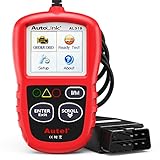
- 【TURN OFF CEL】 This AL319 car scanner diagnostic tool...
- 【EXTENSIVE APPLICATION】 Autel AL319 Compatible with...
- 【FOR END USER & DIYERS】 This error code reader AL319 is...
- 【USER-FRIENDLY DESIGN】 This OBD2 scanner and check...
- 【HIGH-QUALITY SERVICES】 12 months war.ranty from the...
Last update on 2026-06-23 / Affiliate links / Images from Amazon Product Advertising API
If the PDF is very large, it may not load in the preview below.
Some older TSBs had multiple PDFs — visit the NHTSA Website to view all PDFs.
If the TSB PDF does not show, download or view it on the NHTSA Website.
Click on the (+) Plus Sign
Then Click on Associated Document(s)
Search NHTSA Database for Recalls
Search NHTSA Database for Vehicle Investigations
View Latest Vehicle Investigations
Search NHTSA Database for Vehicle Complaints
View Latest Vehicle Complaints
TSB/Document ID: 18NA366
Replacement Service Bulletin Number:
MFR Communication Date: 2019-11-01
MFR Internal Campaign ID/Software Version:
Communication Type: Service Bulletin/Repair Instructions
NHTSA Components: EQUIPMENT
MFR Component System:
MFR Component Subsystem:
Previous TSB | Next TSB |

- [2026 Top-Tier Hardware and Software Upgrade]: Topdon ArtiDiag900 Lite scanner has enhanced hardware and latest features, including Android 11.0, 5x faster CPU, 10000mAh battery for 12 hours of continuous operation, stable wireless diagnosis with Bluetooth 5.0, 8-inch touchscreen. Added bi-directional control, wireless diagnosis, battery testing (optional), and DTC repair guide
- [TOPDON Bidirectional Scan Tool]: This bidirectional obd2 scanner sends commands to the vehicle's ECU for active testing, enabling users to accurately and quickly locate faulty components such as injectors, coolant pumps, windows, wipers, headlights, mirrors, etc. The bidirectional control scanner is the ideal choice for workshops/automotive repair shops as it significantly reduces mechanic's diagnostic time.
- [Wireless Bluetooth Diagnostic Experience]: The AD900 Lite scan tool comes with a Bluetooth 5.0 VCI, supporting a wireless diagnostic range of up to 33 feet (10 meters), allowing you to diagnose without being confined to cables or tight spaces. Stable and fast wireless diagnosis provides a comfortable repair environment. It also offers VCI cables to increase connectivity options.
- [DTC Repair Guide Function]: Easily diagnose issues with your vehicle and receive guidance on repairs with the topdon scan tool's fault code definitions for all systems,maximize your diagnostic capabilities. This function is compatible with Chrysler
 /Dodge/Jeep/Fiat 2010-2014 and expanding with continual updates,the AritDiag 900 Lite car diagnostic scanner is the must-have tool for any technician or DIY enthusiast.
 - [OE-Level Full System Diagnostics]:AritDiag900 Lite full system diagnostic scanner can scan ALL available modules(Engine, Transmission, Airbag, ABS, ESP, TPMS, Gateway, Steering, Radio, Air conditioning, ect.) to✔read ECU info, ✔read/clear codes, ✔view live data stream, ✔retrieves freeze-frame, ✔perform active tests, and more. With just a simple click, it provides you with accurate and in-depth diagnostics.

- Dual WiFi & 10.1" Touchscreen: Provides a stable, high-speed wireless link 3x faster than bluetooth, and a responsive, professional interface. Topdon ONE obd2 scanner diagnostic tool ensures smooth, non-lagging diagnostic scan, boosting mechanic efficiency
- J2534 Pass-Thru Support: The included ONE VCI supports the J2534 standard, allowing it to function as a pass-thru device when paired with OEM diagnostic software.Through TOPDON’s RLink platform, technicians can perform dealer-level coding, expanding in-house capabilities without investing in multiple factory automotive scan tools
- OE Topology Mapping: Visualize the vehicle’s ECU network exactly as it’s built.Zoom, pan, and highlight specific modules to pinpoint component issues with precision.Topology mapping displays real-time communication between modules
- 50 Plus Service Functions: Covers high-demand services like ADAS calibration, DPF regen, TPMS reset, ABS bleed, and throttle adaptation.Expands your service menu, allows you to charge premium rates, and turns away zero jobs due to lack of tooling. Vehicle-specific functionality may vary
- Advaned ECU Coding: 10 of the most serviced brands in North America, including full ECU coding and flash hidden support for BMW, VW, Au-di, Benz, Porsche, Toyota, Ni ssan and more. Enables module replacement, feature customization, and personal settings with automatic backup or restore.Lets your shop safely offer high-margin customization services, attracting more customers and boosting profit

- Bi-Directional Control, Quickly Locate Problems: Turn your phone into a professional diagnostic tool. You can send commands from your phone to the ECU to test injectors, cooling fans, headlights, A/C clutch, windows, wipers, and more. See which one doesn't respond. Helps you quickly locate the problem and save time. No need to tear things apart, avoid blind disassembly.
- Flexible Subscription, Choose Advanced Features as Needed: TopScan Lite provides free-for-life access to core diagnostics, including full system scan, code reading, performance tests, and repair information. After purchase, advanced features (bi-directional control, service operations, live data, code clearing, and AI functions) are free-for-the-first-year. After the first year, if you want to use advanced features, you need to subscribe on a monthly, quarterly, or yearly basis. As new models and reset functions are updated, the tool will also be continuously upgraded.
- Full System Diagnostics, No Fault Hides: Unlike basic diagnostic tools that only cover 4 systems, TopScan can scan all systems. Read and clear trouble codes, view live data streams, and generate a complete vehicle health report – all issues are clear at a glance. Covers 10,000+ vehicle models and is compatible with 99.99% of vehicles.
- AI Assistant - TopFix: Think of TopFix as your personal AI mechanic. It leverages a repair database and OEM data to deliver clear, step-by-step repair solutions. Features include AI Q&A, one-click translation, and a full repair log, making your diagnostic process simpler and more efficient.
- 8+ Hot Resets, Keep Your Car in Top Shape: One-tap resets for oil, throttle, EPB, steering angle, DPF, ABS, BMS, and airbag. It enables car owners to easily perform essential maintenance, ensuring the vehicle stays in optimal condition and extends its service life.
Last update on 2026-06-23 / Affiliate links / Images from Amazon Product Advertising API
This product presentation was made with AAWP plugin.