
NHTSA ID Number: 10169263
Manufacturer Communication Number: 18NA366
TSB/Document Date: 2019-12-16
Summary
This New Model Features Bulletin provides General Information and other Topics to help the Service Personnel become familiar with features specific to the new Medium Duty 2019 Chevrolet Silverado 4500HD, 5500HD and 6500HD.
collected on the sensing element. The sensor
heater is deactivated during measurement, so the
temperature on the element is equivalent to that of
the exhaust gas. Voltage is applied until a preset
12 micro-amp current threshold is achieved due to
increasing current as the soot builds up on the
element. The time from the end of the regeneration
to reach the threshold is used to calculate the
concentration of soot in the exhaust gas.
Page 16
November, 2019
Diesel Exhaust Fluid (Reductant)
System
Diesel Exhaust Fluid (Reductant) Overview
The DEF system consists of the following components
located at the DEF reservoir:
• An electrically-operated DEF pump.
• An integrated DEF level sensor and DEF
temperature sensor.
• A DEF control module.
• A DEF quality sensor.
• DEF system heaters.
The remaining DEF system component is an
electrically-controlled DEF injector which is external to
the reservoir.
The on-board reservoir holds approximately 7 gallons
(26 liters) of DEF. A pump within the reservoir supplies
pressurized DEF to the DEF injector located upstream
of the SCR. A DEF level sensor within the DEF
reservoir provides the DEF control module a signal
indicating DEF level. The DEF pressure sensor
provides the DEF control module with a voltage signal
proportional to the DEF pressure generated by the DEF
pump. The DEF control module varies the duty-cycle of
the pump voltage to maintain DEF pressure within a
calibrated range.
When the ignition is turned OFF, the DEF pump will run
in reverse for about 45 seconds in order to purge the
supply line of DEF. There is a one minute delay
between ignition OFF and the start of purge to allow the
exhaust system to cool in order to prevent hot exhaust
gas from being drawn into the DEF line. The ECM also
commands the DEF injector open during the purge
process. Purging prevents the DEF from freezing in the
pump or supply line to the DEF injector.
The ECM energizes the DEF injector to dispense a
precise amount of DEF upstream of the SCR in
response to changes in exhaust NOx levels. Feedback
from NOx sensor 1 and NOx sensor 2 allow the ECM to
accurately control the amount of DEF supplied to the
SCR. If more DEF is supplied to the SCR than is
needed for a given NOx level, the excess DEF results
in what is called ammonia slip where significant levels
of ammonia exit the SCR. Since the NOx sensors are
unable to differentiate between NOx and ammonia,
ammonia slip will cause NOx sensor 2 to detect higher
NOx levels than actually exist.
Bulletin No.: 18-NA-366
Cold Weather Operation
A 32.5% solution of urea with 67.5% deionized
water will begin to crystallize and freeze at 12°F
(−11°C). At this ratio, both the urea and water will
freeze at the same rate, ensuring that as it thaws, the
fluid does not become diluted, or over concentrated.
The freezing and thawing of DEF will not cause
degradation of the product. There are 2 DEF heaters in
the system. DEF Heater 1 is in the DEF reservoir and
DEF Heater 2 is in the supply line to the DEF injector.
The DEF control module monitors the DEF temperature
sensor located within the reservoir in order to determine
if the DEF temperature is below its freeze point. If the
module determines that the DEF may be frozen, it
energizes the DEF heaters. DEF pump operation is
disabled for a calibrated amount of time to allow the
heaters an adequate amount of time to thaw the frozen
DEF. Once the thaw time period expires, the module
energizes the DEF pump to circulate warm DEF back to
the reservoir to speed thawing. The ECM looks for an
increase in the DEF temperature to verify that the DEF
reservoir heater is working.
Diesel Exhaust Fluid Level Gauge
5182514
The DEF level must be maintained for the vehicle to
run properly. As the DEF level becomes low, warnings
are displayed on the DIC. These warnings will increase
in intensity as the DEF level is reduced. As the tank
nears empty, vehicle speed will be limited in a series of
steps. At least 2 gallons (7.57L) of DEF must be added
to release the engine speed limitation.
Bulletin No.: 18-NA-366
November, 2019
Recommended DEF — Storage and
Transfer — DEF Reservoir
Page 17
extended exposure to temperatures warmer than 75°F
(23.8°C), the ammonia scent grows stronger, indicating
nitrogen has vaporized, changing the urea-to-water
ratio of the product. Because DEF is highly reactive to
many metals, it must be stored in stainless steel,
polypropylene or high-density polyethylene (HDPE)
storage tanks. All pumps, valves and fittings must be
DEF compatible and used only to transfer DEF.
Recommended DEF
DEF Reservoir
5138259
API Certified Diesel Exhaust Fluid Mark
• GM DEF is an aldehyde free, NOx reducing
treatment. It is a mixture of 32.5% high purity
synthetic urea and 67.5% deionized water. GM
DEF meets the stringent ISO 22241 standard for
purity and concentration. GM DEF is a stable,
colorless, non-flammable, non-toxic primary
component used to help convert NOx, an
environmental pollutant, into harmless nitrogen
and water. Use Diesel Exhaust Fluid GM
PN 19286291 or DEF that meets the International
Organization for Standardization ISO 22241
specification or displays the API Certified Diesel
Exhaust Fluid Mark (meets API certification
requirements). Classified as minimum risk for
transportation.
• ACDelco® DEF is an aldehyde free, NOx reducing
treatment. It is a mixture of 32.5% high purity
synthetic urea and 67.5% deionized water.
ACDelco® DEF meets the stringent ISO 22241
standard for purity and concentration. ACDelco®
DEF is a stable, colorless, non-flammable,
non-toxic primary component used to help convert
NOx, an environmental pollutant, into harmless
nitrogen and water. It meets API regulations, and
meets or exceeds GM OE specifications.
Classified as minimum risk for transportation.
Storage and Transfer of DEF
DEF has a shelf life of approximately 24 months, but
when exposed to sunlight or prolonged exposure to
temperatures warmer than 75°F (23.8°C), the nitrogen
in DEF begins to volatilize into ammonia gas and can
reduce shelf life. Once volatilized, it will not go back into
suspension and the percentage of urea in the product
decreases to less than the optimum 32.5%. Fresh DEF
has a slightly pungent smell of ammonia. After
5124361
The DEF reservoir cap is blue and is positioned on the
right fender behind the front wheel for easy reservoir
fluid refills. It is recommended to fill the DEF tank on
level ground and when the engine is not running.
DEF Warning Light
5152580
When there is an issue with the DEF such as a low fluid
level or fluid contamination, the DEF Warning Light will
illuminate, a DIC message will display and a chime will
Page 18
November, 2019
sound. To avoid vehicle speed limitations, fill the DEF
tank at the first opportunity after a Low Fluid Level
warning message displays.
DEF Website
For more information, click on:
Regeneration
Bulletin No.: 18-NA-366
damaging high temperatures within the DPF. Vehicles
operated for short distances or extended idle where
normal regeneration does not occur will eventually
reach a high soot load condition. When the increased
pressure drop across the DPF is detected by the DPS,
the ECM illuminates the DPF lamp in the instrument
cluster and sends a Clean Exhaust Filter message to
the DIC.
Service Regeneration
Normal Regeneration
Over time, the soot trapped on the cell walls acts to
restrict exhaust flow through the DPF reducing its
effectiveness as well as reducing engine efficiency.
This restriction in exhaust flow produces a pressure
drop across the DPF that increases as the once porous
cell walls become saturated with trapped soot. A DPS
monitors the pressure drop across the DPF and
provides the ECM with a voltage signal proportional to
soot buildup. Once soot buildup reaches a specified
limit (100%), as signaled by the increased pressure
drop across the DPF, the ECM commands a
regeneration event to burn-off the collected soot during
normal vehicle operation. Regeneration events
occurring during vehicle operation are known as normal
regenerations as they occur automatically and without
driver knowledge. In general, the vehicle will need to be
driven safely at a steady speed, preferably without
stopping for approximately 20–30 minutes for a full and
effective regeneration to complete.
The frequency of normal DPF regeneration in this
system is determined by soot accumulation using the
pressure drop across the DPF and engine run time
which is approximately 18 hours. The L5D does not
utilize a Hydrocarbon (HC) Injector, so in order to
initiate a normal DPF regeneration event, the ECM
commands additional post injection diesel fuel in order
to create the additional exhaust heat in the DOC
necessary to promote regeneration and burn-off the
collected soot in the DPF.
During regeneration exhaust temperatures may exceed
1,184°F (640°C) due to the rapid catalytic combustion
of soot within the DPF. Conversely, under low engine
speed or light loads, exhaust temperatures may be too
low to promote proper regeneration. To protect the DPF
catalyst from thermal damage due to excessive soot
combustion, the ECM monitors the EGT sensors
upstream and downstream of the DPF during
regeneration. If the vehicle is slowed to idle speed
during a normal DPF regeneration, the engine may
maintain an elevated idle of 900 RPM until the DPF is
cooled to a calibrated temperature.
Should the EGT sensors indicate that regeneration
temperatures have exceeded a calibrated threshold,
regeneration will be temporally suspended until the
sensors return to a normal temperature. If regeneration
temperatures fall below a calibrated threshold,
regeneration is terminated and a corresponding DTC is
set in the ECM.
Under most conditions, the soot collected within the
DPF burns off during normal regeneration cycles.
Periodic regeneration prevents the buildup of soot from
reaching a level where its burn-off could produce
Exhaust temperatures at the tailpipe may exceed
572°F (300°C) during service regeneration. Observe
the following precautions:
• Service regeneration must be performed
outdoors. Most exhaust removal hoses cannot
withstand the high exhaust temperatures
generated during regeneration.
• Park the vehicle outdoors and keep people, other
vehicles, and combustible material away during
service regeneration.
• Park the vehicle in an area that provides a
clearance area of at least 10 feet on all sides of
the vehicle and open the hood.
• Ensure the tailpipe is not obstructed by mud or
debris.
• Do not leave the vehicle unattended during
service regeneration.
The ECM uses two EGT sensors to measure the
temperature of the exhaust gases at the inlet and outlet
of the DPF. Optimum DPF temperature is critical for
emission reduction and for ensuring complete
regeneration. Excessive DPF temperatures could
damage the ceramic substrate. The ECM monitors the
inlet and outlet EGT sensors in order to maintain the
DPF at its optimum temperature.
Service Regeneration Precautions
Warning: Tailpipe outlet exhaust temperature will
be greater than 572°F (300°C) during this
procedure. To help prevent personal injury or
property damage from fire or burns, perform the
following:
1. Do not connect any shop exhaust removal hoses
to the vehicle tailpipe.
2. Park the vehicle outdoors and keep people, other
vehicles, and combustible material away during
this procedure.
3. Do not leave the vehicle unattended.
Should the vehicle operator fail to drive the vehicle
within the conditions necessary to initiate a normal
regeneration cycle, the ECM illuminates the Service
Engine Soon lamp and displays a REDUCED ENGINE
POWER message on the DIC once the soot buildup
exceeds a calibrated value. The vehicle will remain in
the REDUCED ENGINE POWER mode until service
regeneration is performed.
Service regeneration is required because the amount of
soot collected in the DPF, known as soot load, is too
high to be burned off without possible thermal damage
to the DPF’s ceramic substrate. Service regeneration is
one of several output control functions available on the
Bulletin No.: 18-NA-366
November, 2019
scan tool. When service regeneration is commanded,
the ECM takes control of engine operation until the
service regeneration is completed in approximately
35 minutes or until the service regeneration is either
cancelled by the technician or is aborted by the ECM
when it detects unexpected conditions. The ECM
commands additional post injection diesel fuel in order
to create the additional exhaust heat in the DOC
necessary to promote regeneration and burn-off the
collected soot in the DPF. The service regeneration can
be terminated by applying the brake pedal,
commanding service regeneration OFF using the scan
tool, or disconnecting the scan tool from the vehicle.
(Q20 Intake Air Flow Valve)
The Intake Air Flow Valve is located upstream of the
intake air heater, and is normally in the open position.
The ECM commands the valve to close in order to
precisely control combustion temperature during DPF
regeneration. The IA valve will ensure the temperature
of the exhaust gas remains in an efficient range under
all operating conditions. The IA valve system uses a
position sensor located within the valve assembly to
monitor the position of the valve. The IA valve uses a
motor to move the valve to a closed position and spring
tension returns it to the open position. The motor is
operated through Motor Control 1 and Motor Control 2
circuits.
Ash Loading
Ash is a non-combustible by-product from normal oil
consumption. Low ash content engine oil (CJ-4 or
CK-4) is required for these vehicles with the exhaust
aftertreatment system. Ash accumulation will eventually
cause a restriction in the DPF. Being non-combustible,
ash is not burned off during regeneration. A DPF that is
ash loaded will need to be removed from the vehicle
and replaced.
Manual Regeneration
Page 19
may be under the Settings menu. If the vehicle cannot
be stopped when the DIC message first indicates
cleaning is available, automatic self-cleaning may have
begun. If conditions cannot be met for self-cleaning to
complete, and manual regeneration is selected, it may
take up to four minutes for the system to switch to
manual regeneration. When the switch occurs, a DIC
message prompts to start the cleaning process. After
making sure all of the safety conditions have been met,
press the trip odometer reset stem or the check-mark
symbol on the steering wheel control for at least one
second to select Start on the infotainment display.
Follow the instructions in the DIC messages. Touch
ACCEPT to acknowledge that all of these safety
conditions have been met and to activate regeneration.
Continue to follow the instructions in the DIC
messages. Hold the Exhaust Brake switch on the
instrument panel below the climate controls for more
than three seconds, and then release it, to begin the
regeneration process.
If the EXHAUST BRAKE ON message displays, then
the switch was released too soon. Press it again to turn
OFF the exhaust brake, then try again when the DIC
message prompts.
When manual regeneration begins, the engine speed
increases, the engine cooling fan sound increases, and
a DIC message indicates that cleaning is in progress.
A DIC message will display when cleaning has
completed. The message will remain as long as
cleaning is not necessary. Cleaning could take up to
30 minutes. Upon completion, the engine will return to
normal idle, but exhaust components will remain hot for
several minutes. Do not move the vehicle until the
exhaust has had time to cool. Manual regeneration can
be canceled at any time by pressing the brake pedal or
turning the engine off. Unusual noises may be heard if
regeneration is interrupted.
Manual Regeneration Overview
Important: This feature is available as an option.
To verify if the vehicle has this feature, refer to Build
Information in Investigate Vehicle History (IVH) or click
on: to contact the GM Upfitter Integration Group for
assistance.
If equipped, this feature allows for manual regeneration
of the DPF when it is unable to clean itself. It may be
necessary to perform a manual regeneration if driving
conditions, such as extended slow speed, stop-and-go
traffic, extended idle times, short drive cycles, or
stationary PTO operation, prevent DPF self-cleaning.
EGR Purpose
The Exhaust Gas Recirculation (EGR) system is used
to reduce the amount of nitrogen oxide (NOx) emission
levels caused by high combustion temperatures. At
temperatures above 1,371° C (2,500° F) oxygen and
nitrogen combine to form NOx. Introducing small
amounts of exhaust gas back into the combustion
chamber displaces the amount of oxygen entering the
engine. With less oxygen in the air/fuel mixture, the
combustion pressures are reduced, and as a result,
combustion temperatures are decreased, restricting the
formation of NOx.
Starting Manual Regeneration
Manual regeneration can only be used when the DPF
has become at least 90% full. At 100% full, it will
attempt to automatically self-clean if proper driving
conditions are met. The DPF will clean itself if the
vehicle can be driven more than 30 mph (50 km/h) for
about 30 minutes. A DIC message displays when
manual regeneration is possible. Scroll through the DIC
pages to find the Exhaust Cleaning menu. Depending
on whether the vehicle has a base or up-level cluster, it
EGR Operation
Air coming from the intake air filter housing is
compressed by the turbocharger, cooled by the charge
air cooler and mixed with cooled exhaust gas coming
from the exhaust gas recirculation EGR valve. The
exhaust gas mixes with the intake air to satisfy
emissions, performance, fuel economy and cool the
combustion process. The Mass Air Flow (MAF) sensor
signal is used by the ECM to detect the proper amount
of EGR flow. The ECM will close the EGR valve, then
Page 20
November, 2019
open the EGR valve to 100%. The ECM will then
calculate the MAF difference and determine if the
proper EGR flow has been detected. The recirculated
gas also prevents the formation of NOx related gases,
refer to as NOx emissions, which are a common cause
for failing emissions testing. When a failure occurs both
the air intake system and exhaust system should be
checked in order to isolate the root cause.
Marketplace, GM’s In-Vehicle
Commerce Platform
Tap, Tap and Away — Pay for Fuel Directly From
Your Dashboard
Through Marketplace, GM’s in-vehicle commerce
platform, drivers can pay for fuel through their
infotainment touchscreens at more than 22,000
different Shell, Exxon and Mobil stations across the
U.S. The process is simple. First, the owner needs to
download Marketplace from the vehicle’s app shop (on
the infotainment touchscreen) and link either an
ExxonMobil Speedpass+™ account or a Shell Fuel
Rewards® account. If they don’t have an existing
account, Marketplace will send an email to create a free
account and start collecting rewards points.
Once a rewards account is linked, the driver can pull
into the nearest eligible fuel station, select the pump
number and activate the fuel pump with a few simple
clicks on the infotainment touchscreen. The fuel cost is
charged to the payment method on file and drivers can
earn ExxonMobil Speedpass+™ or Shell Fuel
Rewards® points with each transaction. All of this can
be done without swiping a card or paying with cash,
providing security and convenience to GM vehicle
owners.
This technology requires no mobile phone and takes
fewer steps than other fuel payment features on the
market. The service is powered by Marketplace, the
automotive industry’s first commerce platform for
on-demand reservations and purchases of goods and
services.
Power Take-Off
Overview
If equipped, the Power Take-Off (PTO) is used to create
an auxiliary power source for running add-on
equipment, such as salt spreaders, snow plows,
winches, and lift buckets. The PTO system controls
engine speed to values higher than normal base idle,
PTO load relay engagement, and remote starting and
shutdown of the engine. When installing PTO
aftermarket equipment, the PTO wiring and operation
recommendations provided by the service manual and
GM Upfitter documentation must be followed.
Refer to the bulletins in the GM Upfitter Integration
Group website for the Power Take-Off operating
description and application guide. Click on:
Bulletin No.: 18-NA-366
Primary PTO Operating Modes
Refer to the Owner Manual for the Preset Enable
Conditions for each Mode before operating. PTO
modes of operation are:
• Preset: Stationary operation only: In-cab control
is standard, remote control is available.
Remote Operation requires programming with the
GM Service Tool and remote switch panel
provided by GM Upfitter Group.
• Variable: Stationary operation only: In-cab
control is standard, remote control is available.
Remote Operation requires programming with the
GM Service Tool and remote switch panel
provided by GM Upfitter Group.
• Mobile: In-cab control only.
This requires programming with the GM
Service Tool.
• Operator Selectable In-Cab Mode (OSIM):
OSIM is for in-cab operation only. OSIM is for
vehicles that require both stationary and mobile
modes.
OSIM is available via the GM Service Tool only.
During the configuration of OSIM, two modes must
be paired. The options for pairing are: stationary
preset and mobile, or stationary variable and
mobile.
Refrigerant R-1234yf
Air Conditioning Service Fittings
Service fittings meeting SAE J639 are used on these
vehicles for R-1234yf refrigerant. GM has chosen gray
caps to designate systems with R-1234yf.
A/C Compressor (Manual)
The A/C compressor uses a conventional belt driven
magnetic clutch to engage and mechanically turn the
compressor. When the A/C switch is pressed, the
HVAC control module sends an A/C request message
to the ECM via serial data. If specific criteria is met, the
ECM then grounds the A/C compressor clutch relay
control circuit, which will switch the A/C compressor
clutch relay. With the relay contacts closed, battery
voltage is supplied to the permanently grounded A/C
compressor clutch. The A/C compressor clutch will then
be activated.
This A/C system utilizes a variable displacement
solenoid valve to alter the amount of displacement
created by the turning of the compressor. The HVAC
control module provides both battery voltage and a
pulse width modulated ground to the variable
displacement solenoid valve. When the A/C switch is
pressed, the HVAC control module grounds the
variable displacement solenoid using a pulse width
modulation (PWM) signal in order to determine the
amount of compressor displacement. The performance
of the A/C compressor is regulated based on
cooling load.
Bulletin No.: 18-NA-366
November, 2019
A/C Evaporator Temperature Sensor
The evaporator temperature sensor is a 2-wire negative
temperature co-efficient thermistor. The sensor
operates within a temperature range of −40 to +185°F
(−40 to +85°C). The sensor is installed at the
evaporator and measures its temperature. If the
temperature drops below 38°F (3°C), the compressor
will be switched OFF in order to prevent evaporator
icing.
A/C Refrigerant Pressure Sensor
The A/C refrigerant pressure sensor is a 3-wire
piezoelectric pressure transducer. The sensor has a
5 V reference voltage, low reference, and signal circuit.
The A/C pressure signal can be between 0.2–4.8 V.
When the A/C refrigerant pressure is low, the signal
value is near 0 V. When the A/C refrigerant pressure is
high, the signal value is near 5 V. The ECM converts
the voltage signal to a pressure value. When pressure
is too high or too low, the ECM will not allow the A/C
compressor clutch to engage.
Actuators
Doors in the HVAC case assembly are used to control
air flow. The HVAC control module operates the doors
through the use of actuators, with one actuator being
used for each door. The system has the following air
control doors and associated actuators: mode,
temperature, and recirculation.
Blower Motor
The blower motor speed control signal from the HVAC
Control Module, battery positive and ground circuits
enable the blower motor to operate. The blower motor

- 💯【Conta.ct us for Support Directly】If you met any...
- 🔥🔥🔥【2026 AUTEL FLAGSHIP MK900BT MK900-BT, NEW...
- 🚗【3000+ ACTIVE TESTS (50➡3000+), SAME AS MS...
- 🚗【40+ HOT SERVICES FOR 150 MAKES (28+➡40+)】Full...
- 🚗【OE ALL SYSTEM DIAGNOSE, AUTO SCAN 2.0: SCAN LICENSE...

- 【TURN OFF CEL】 This AL319 car scanner diagnostic tool...
- 【EXTENSIVE APPLICATION】 Autel AL319 Compatible with...
- 【FOR END USER & DIYERS】 This error code reader AL319 is...
- 【USER-FRIENDLY DESIGN】 This OBD2 scanner and check...
- 【HIGH-QUALITY SERVICES】 12 months war.ranty from the...
Last update on 2026-06-23 / Affiliate links / Images from Amazon Product Advertising API
If the PDF is very large, it may not load in the preview below.
Some older TSBs had multiple PDFs — visit the NHTSA Website to view all PDFs.
If the TSB PDF does not show, download or view it on the NHTSA Website.
Click on the (+) Plus Sign
Then Click on Associated Document(s)
Search NHTSA Database for Recalls
Search NHTSA Database for Vehicle Investigations
View Latest Vehicle Investigations
Search NHTSA Database for Vehicle Complaints
View Latest Vehicle Complaints
TSB/Document ID: 18NA366
Replacement Service Bulletin Number:
MFR Communication Date: 2019-11-01
MFR Internal Campaign ID/Software Version:
Communication Type: Service Bulletin/Repair Instructions
NHTSA Components: EQUIPMENT
MFR Component System:
MFR Component Subsystem:
Previous TSB | Next TSB |
- 💯【Conta.ct us for Support Directly】If you met any issues about: Received a registered device/ Language Changing/ Function not Support/ VCI150 Blueto-oth connector malfunction/ Subscription Renewal, please conta.ct us via 📞autelsupply @outlook. com🛣️, we will provide perfect solution for you. ⚠️Note: Autel MK900BT comes with 1-Year Free Software Update, most features will remain active after update subscription expires. 1. For questions regarding updates or need more useful accessories, please conta.ct us via 📞autelsupply @outlook.com🛣️. 2. If the device fails to charge or turn on, please conta.ct us via 📞autelsupply @outlook. com🛣️, we will handle it promptly.
- 🔥🔥🔥【2026 AUTEL FLAGSHIP MK900BT MK900-BT, NEW MODEL OF MK808S MK900 MX900 MK808BT MX808S】2026 newest Autel MK900BT retains all features of MK808S MX900 MX808S MK808Z MK808Z-BT MK808K-BT, while EXTRA added powerful functions (value 2000+ bucks). The Pro-level Autel MK900BT makes a big leaps: 28+➡40+, 50+➡3000+ Active Tests, 2026 NEW✅CAN FD & DOIP protocols ✅Pre&Post diagnostic report ✅WIFI Print ✅Auto VIN&Auto Scan 2.0 ✅Scan VIN/ License ✅Battery Test (Need purcha.se BT506). If found defect or us.ed, please conta-ct 📞autelsupply @outlook. com📞 get perf-ect solut.ion.
- 🚗【3000+ ACTIVE TESTS (50➡3000+), SAME AS MS906 PRO】Differ from MS906BT MS906 MP808 MK808 MX808 MK808BT only 50 tests, Autel scanner MK900BT escaner automotriz professional offers 3000+ active tests, it can send command to ECUs & monitor actuators operation, quickly locating faulty components. Bidirectional scanning takes your diagnostics to the next level with menu lists 3000+ active tests, such as windows, rear mirrors, sunroof, wipers, fuel injector, coolant fans, radiator fan, AC clutch, coolant pump and more. Note: Functions are not available for all vehicles, please send vehicle VIN to us check compatibility.
- 🚗【40+ HOT SERVICES FOR 150 MAKES (28+➡40+)】Full level-up of OBD2 code reader MaxiCOM MK808S MK808 MK808Z MX808 MK808Z-BT with 28 service, Autel scan tool MK900BT/ MK900-BT offers 40+ maintenance service on 150+ brands 10,000 vehicles from 1996-2025-2026. Hottest Services like: Oil Reset, ABS Bleed, SAS Calibration, Injector Coding, SRS, Throttle Reset, Gearbox Reset, Battery Registration etc. Added 12+ advanced resets: rain slash light sensor reset, HVA.C/ SUS calibration etc. Welcome to send Vehicle Make>Model>Year>VIN>Functions you required to 📞autelsupply @ outlook . com📞 check compatibility.
- 🚗【OE ALL SYSTEM DIAGNOSE, AUTO SCAN 2.0: SCAN LICENSE/ AUTO VIN】2026 new release Autel MaxiCOM MK900-BT scan tool embodies all system diagnostic with its 8in display for all vehicles. Like Sna.p-on tools, it can perform ✔Read/Clear Codes✔Displays 5-in-1 Live Data✔Record & Playback Data✔Retrieve Info on all available systems like ABS ECM BCM SRS TCM etc. In addition to Auto VIN technology, Autel MK900BT adds Scan License/ Auto Scan 2.0 to identify vehicle’s VIN/ license, make, year, model, no need manual input; One-click WiFi Printing of Pre&Post comparison diagnostic reports, highlight root causes of problems.
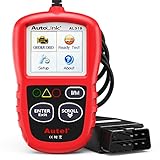
- 【TURN OFF CEL】 This AL319 car scanner diagnostic tool supports Reading and Clearing DTCs, DTC Look Up, displaying Live Data, Freeze Frame & I/M Readiness, view vehicle information, etc., to figure out the root cause of the Check Engine Light (CEL) and turn it off, helping you catch any potential issues early and avoid excessive costs from unnecessary repairs.
- 【EXTENSIVE APPLICATION】 Autel AL319 Compatible with 7 languages (English, French, Spanish, etc.) and various post-1996 OBD II protocol vehicles (Toyota
 , Nissan, Honda, Ford, etc.), this OBD II scanner provides accurate and fast diagnosis for worldwide car owners.
 - 【FOR END USER & DIYERS】 This error code reader AL319 is “plug and play” and comes with an easy interface. Even if you’re not familiar with vehicle repair, you can quickly take control of this obd2 scanner, and get the information you want.
- 【USER-FRIENDLY DESIGN】 This OBD2 scanner and check engine code reader features a patented One-Click I/M Readiness, TFT color display, built-in speaker, LED Indicator etc. The cable is long enough without being too long and getting in the way. No batteries are needed.
- 【HIGH-QUALITY SERVICES】 12 months war.ranty from the date of purchase and lifetime free update are offered by this Automobile OBDII scan tool. Welcome to contact us via Q&A, email, or hotline, and our after-sale-service team for technical support.
- 👨🎓Tips Before Order: 🚩All function are vehicle-specific - send VIN(17 digits)/Make/Model/Year & needed function via 📞auteldirect @ outlook . com📞 to check before order. 🚩Register tool: a) Follow on-screen guide; or b) Register em-ail on Autel we-b, then bind using SN(back of device) + verification code (find in tool settings or con-tact us via above em-ail). MK808BT PRO comes with ✅English, if need Spanish, please s.end device SN to add. ✅1-year war-ranty. ✅$150 worth 1yr fr-ee updates(New users: ignore renewal alerts). ⚠️📢Post-expiry: Most functions remain functional,for exclusions, refer to A+ Tips. ⚠️Fee for FCA AutoAuth Ga.teway(optional): $50/year, charged by AutoAuth,not Autel.
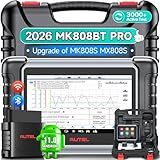
- 【2026 MK808BT PRO: Same as MK900BT, up of MK900 MX900 MK808S MX808S】Why pay more? 2026 MK808BT PRO functions as MK900BT and saves you 100USD. At same c0st, you now get diagnostic 8X faster and sup-port for 150+ models(1996-2026).💡Dramatically Improved: ✔️Faster & Smarter OS: Android 4.4➡ Android 11 ✔️More Services: 28+➡ 40+ ✔️Bidirectional Control: 50+➡ 3,000+ ✔️Enhanced Hardware: 1/32G➡ 4G/64G ✔️2.4GHz➡ 5G Dual WiFi ✔️Working range: 0.9m➡ 10m+ 🔋Battery test is clear on the large 7in display(BT506 required). 🔔Your Autel scanner is shipped brand new. For any issues(used, damaged, incompatible), e-m-a-il 📞auteldirect @ outlook . com📞 for priority resolution.
- 👍【New Next-Level Bidirectional Control, 50➡3000+ Tests, Covers Daily Repairs】Unlike the Autel DS708 DS808 MP808 MK808 and MX808 car diagnostic scanners, which offer only 50 functional tests, the Autel bidirectional scan tool MK808BT PRO is equipped with over 3000 active tests. These tests are widely used on car subsystems to help technicians quickly check if the car's actuators are functioning properly. Such as ABS, windows, rearview mirrors, wipers, sunroofs, fuel injectors, AC clutches, coolant fans, radiator fans, coolant pumps,etc. Tips📢: All functions are vehicle-specific, not universal to all vehicles,pls send VIN to 📞auteldirect @ outlook . com📞check compatibility before order.
- 👍【28+ Hot Services for 150+ Makes】Autel scan tool MK808BT PRO, upgraded with a BT VCI Mini(valued at 120USD), surpasses the old wired OBDII scanner MK808S MK900, by providing a convenient 33ft wireless working range, offering greater freedom and comfort compared to the 3.3ft cable limit of the MK900 MK808S MX808S car scanner. New features include VIN Check across different modules for comparison and 28+ resets, such as injector coding, ABS autobleed, Oil reset, SAS cali.bration, BMS, throttle relearn, suspension adjustments, etc. ⚠️📢Tips: Service functions are vehicle-specific, not universal to all vehicles, pls send VIN to 📞auteldirect @ outlook . com📞check compatibility before order.
- 👍【All Available Module Diagnosis - OE-Level Scanner】The OE versatile OBDII scan tool MK808BT PRO escaner para autos effectively works with all car systems: ABS, ECM, BCM, SRS, TCM,etc. It identifies vehicles via AutoVIN/manual input/select, like S.nap-on tools, it can ✔read/clear 7000+ DTCs, ✔read ECU info, ✔view 5-in-1 live data, ✔perform active tests, and ✔reset services. ✔Reports can be shared via QR-code and printed, working globally and 21+ multilingual. Supports 150+ US/EU/Asian makes, with ongoing updates from 2024 to 2026. ⚠️Note📢: The AutoVIN function usually works for post-2006 cars, depending on if the vehicle's VIN is stored in the ECU. You can always do manual input/select.
Last update on 2026-06-23 / Affiliate links / Images from Amazon Product Advertising API
This product presentation was made with AAWP plugin.