
NHTSA ID Number: 10164649
Manufacturer Communication Number: NTB16-017a
TSB/Document Date: 2019-09-10
Summary
MOONROOF ADJUSTMENT AND REPAIRS This bulletin has been amended. See Amendment History on the last page. Please discard previous versions of this bulletin.
ing
Classification:
Reference:
BT15-037a
Date:
NTB16-017a
August 12, 2019
MOONROOF ADJUSTMENT AND REPAIRS
This bulletin has been amended. See Amendment History on the last page.
Please discard previous versions of this bulletin.
APPLIED VEHICLE:
2016 – 2019 Maxima (A36)
SERVICE INFORMATION
When working on the Moonroof, most items can be replaced, repaired, or adjusted, without
the need to replace the entire Moonroof assembly.
Refer to the following procedures in this bulletin, as needed, to help resolve Moonroof
issues.
Knock Insert (Knock) Replacement (Page 2)
IMPORTANT: Knocks that are out of place may lodge in the track and prevent
correct Moonroof, wind deflector, or sunshade operation. Before any other
adjustments or repairs are performed, the Knocks should be checked.
Wind Deflector Replacement (Page 7)
For wind deflector being damaged, scratched, or having a broken clip.
Roof Finisher Replacement (Page 13)
For roof finisher being damaged, having seal issues, roof finisher not being seated,
or Moonroof rattle.
Moonroof Glass Adjustment (Page 21)
For adjusting fit, tightening loose screws or for glass being out of position.
Front or Rear Sunshade Replacement (Page 29)
For sunshade replacement due to discoloration, being jammed, out of track, loss of
tension or popping/clicking while in motion.
Moonroof or Sunshade Motor and Drive Cable Replacement (Page 33)
For inoperative or noisy.
Rear Link Replacement (Page 36)
For rattle noise when opening or closing the Moonroof OR when driving with
Moonroof NOT CLOSED (open or tilt position).
IMPORTANT: Do not lower the headliner unless instructed.
If the headliner is lowered, allow it to rest on the seats. Do not remove the headliner
from the vehicle.
Nissan Bulletins are intended for use by qualified technicians, not 'do-it-yourselfers'. Qualified technicians are
properly trained individuals who have the equipment, tools, safety instruction, and know-how to do a job
properly and safely. NOTE: If you believe that a described condition may apply to a particular vehicle, DO
NOT assume that it does. See your Nissan dealer to determine if this applies to your vehicle.
1/54
SERVICE PROCEDURE
“Knock Insert” (Knock) Inspection (same for left or right side)
IMPORTANT:
Detached knocks (Knock shown in Figure 1) may lodge in the Moonroof track and
prevent correct Moonroof, wind deflector, or sunshade operation.
Do not remove the headlining for “knock” inspection or replacement.
Knocks are available only as part of a left or right side specific Moonroof cable repair
kit and are listed as GUIDE ASSY-SUNROOF in the PARTS INFORMATION table.
Knock
Figure 1
1. Turn the ignition ON, but do not start engine.
2. Completely open the Moonroof.
3. Remove the left and right inner blinds (Figure 2).
a. Unclip the left and right inner blinds at the front corners of the “Moonroof unit
assembly” (Moonroof frame) with an appropriate tool.
b. Rotate the inner blind to release the remaining clip.
Passenger side
inner blind
Securing
clips
Figure 2
2/54
NTB16-017a
Driver’s side
inner blind clip
NOTE: Figure 3 shows the inner blind
unclipped.
Figure 3
Driver’s side
inner blind
c. Carefully detach the inner blinds from
the Moonroof frame by pushing
toward the inside of the vehicle along
the bottom edge of inner blind
(Figure 4).
Bottom edge of driver’s
side inner blind
Figure 4
d. Slide each inner blind toward the front
of the vehicle and off of the Moonroof
guides (Figure 5).
NOTE: Figure 5 is shown from inside
the vehicle.
Driver’s side
inner blind
4. Close the Moonroof half way.
Figure 5
3/54
NTB16-017a
5. Confirm that both left and right knocks are present and correctly seated (Figure 6).
If both knocks are present, confirm that they are completely seated and lock clips
locked in place (Figure 7).
If both knocks are present and completely seated no further action is required.
If a knock is present, but not completely seated (Figure 8), proceed to step 6 and
replace only the unseated knock.
NOTE: Do not attempt to seat a knock that is out of place.
If one of the knocks is missing, proceed to step 6 and replace both the left and right
knocks.
Front edge of Moonroof
Driver’s
side Knock
Front sunshade
Moonroof guide
Figure 6
Lock clip locked
in place
Knock
Lock clip and
knock out of place
Moonroof
guide
Figures 7 and 8 shown with Moonroof guide unbolted from Moonroof frame for clarity.
Figure 7
Figure 8
4/54
NTB16-017a
6. Remove the affected knock(s) (Figure 9).
a. Lift the knock lock clip with a finesse tool vertically away from the Moonroof guide.
b. Slide the knock toward the inside of the vehicle.
Step 6a
Knock
Lock clip
Step 6b
Knock
Figure 9
7. Install new knock(s) for those affected.
When installing a new knock; listen for
an audible snap and then confirm that
the lock clip is flush.
Knock
NOTE: Knocks are marked left (L)
and right (R). Figure 10 shows a
knock for the passenger side and is
marked “R”.
Knock marking
8. Pull on the knock to confirm that it is
completely seated on the Moonroof
guide.
Figure 10
5/54
NTB16-017a
9. Reinstall the left and right inner blinds.
a. Slide the top of the left and right inner blinds onto their guides (Figure 11).
Driver’s side guide
for inner blind
Figure 11
b. Reconnect the front clip of the inner
blind to the front corner of the
Moonroof frame.
Front inner blind
clip connected
c. Attach the bottom of the inner blinds
to the Moonroof frame.
10. Close the Moonroof.
11. Turn the ignition OFF.
Figure 12
6/54
NTB16-017a
Wind Deflector Replacement
If the wind deflector is damaged, scratched, or has a broken clip follow the steps below.
IMPORTANT: Do not lower the headlining to repair wind deflector.
Removal
1. Remove the left and right inner blinds (Figure 13).
a. Unclip the left and right inner blinds at the front corners of the “Moonroof unit
assembly” (Moonroof frame) with an appropriate tool.
b. Rotate the inner blind to release the remaining clip.
Passenger side
inner blind
Securing
clips
Figure 13
c. Unclip the left and right inner
blinds at the front corners of the
“Moonroof unit assembly”
(Moonroof frame) with an
appropriate tool.
Securing clip
Figure 14 shows the inner blind
unclipped.
Securing clip
Driver’s side inner
blind unclipped
Figure 14
7/54
NTB16-017a
d. Carefully detach the inner blinds
from the Moonroof frame by
pushing toward the inside of the
vehicle along the bottom edge of
inner blind (Figure 15).
Driver’s side
inner blind
Bottom edge of driver’s
side inner blind
Figure 15
e. Slide each inner blind toward the front
of the vehicle and off of the Moonroof
guides (Figure 16).
NOTE: Figure 16 is shown from inside
the vehicle.
Driver’s side
inner blind
Figure 16
8/54
NTB16-017a
2. Remove the left and right “side pawl” (pivot clips) and “side arms” (wind deflector arms)
from the Moonroof unit assembly (Moonroof frame) as follows:
a. Depress the molded tab on the pivot clip to lift it out of the notch in the Moonroof
frame (Figure 18).
b. Slide the pivot clip and wind deflector arms toward the front of the vehicle.
Driver’s side wind
deflector arm
Molded tab
Notch in Moonroof
frame
Driver’s side wind
deflector arm
Figure 17
Front of
vehicle
Figure 18
Example only
Molded tab
Figure 19 shows a pivot clip with the
wind deflector arm removed so that
lifting the molded tab can be seen.
Front of
vehicle
Pivot clip
Figure 19
9/54
NTB16-017a
Driver’s side wind
deflector arm
c. Detach the pivot clip and wind
deflector arm from the frame
(Figure 20).
NOTE: The pivot clips are left and
right side specific. A piece of painter’s
tape marked “left” or “right” may help
distinguish them for reassembly.
Pivot clip
Front of
vehicle
Figure 20
3. Detach the wind deflector assembly from the front of the Moonroof frame:
a. Gently lift the 3 attachment clips with a small screw driver one at a time (Figure 21).
b. Slide the wind deflector assembly toward the rear of the vehicle to release it from the
Moonroof frame (Figure 21).
3 attachment clips
Front of
vehicle
Figure 21
10/54
NTB16-017a
Installation
4. Insert the four tabs of the wind deflector into the Moonroof frame (Figure 22).
Insert tabs here
Front of
vehicle
Figure 22
5. Slide the wind deflector toward the front of the vehicle and snap the 3 attachment clips
(shown in Figure 21) into the Moonroof frame.
NOTE: Confirm that all three attachment clips are completely engaged.
6. Install the pivot clips onto both wind deflector arms and then proceed to install the clips,
one at a time, onto the Moonroof frame.
7. Confirm that the molded tabs are completely locked into the Moonroof frame, and are
flush with Moonroof frame (Figure 23).
Example only
Figure 23 shows the driver’s side
pivot clip with wind deflector arm
removed so that the molded tab can
be seen.
Molded tab flush
Pivot clip
Figure 23
11/54
NTB16-017a
8. Reinstall the left and right inner blinds.
a. Slide the top of the left and right inner blinds onto their guides (Figure 24).
Driver’s side guide
for inner blind
Figure 24
Front inner blind
clip connected
b. Reconnect the front clip of the inner
blind to the front corner of the
Moonroof frame (Figure 25).
c. Attach the bottom of the inner blinds
to the Moonroof frame.
9. Close the Moonroof.
Figure 25
10. Turn the ignition OFF.
12/54
NTB16-017a
Roof Finisher Replacement
IMPORTANT: Do not lower the headlining to repair or replace roof finishers.
1. Is a roof finisher only loose (no scratches or seal issues)?
YES: Snap the roof finisher into place using even downward pressure over each clip. If
the roof finisher seats completely no further repairs are required. If it will not seat
proceed to step 2.
NO: Proceed to step 2 to replace roof finishers.
NOTE: This procedure applies to the left and/or right side as shown in the photos. The
process is the same for either side.
Roof finisher
2. Turn the ignition ON, but do not start the
engine.
3. Open the Moonroof completely.
Figure 26
4. Remove the inboard screw (single use
T25) securing the front of the affected
roof finisher.
Inboard screw
(T25)
Figure 27
13/54
NTB16-017a
5. Using a finesse stick, lift the roof finisher
at the front outside edge.
6. Slide the finesse stick down the length of
the outside edge of the roof finisher to
detach all pins.
7. Remove the roof finisher.
NOTE: Some vehicles were equipped
with adhesive under the roof finishers.
If the roof finisher released, continue
to step 10 on page 16.
If the roof finisher will not release after
the pins have been detached, cut
away any adhesive as described
starting on the next page.
Step 6
Lift here
Figure 28
14/54
NTB16-017a
8. Cut adhesive from the roof finisher.
The red dotted line indicates where
the adhesive will be cut in the next
step.
Figure 29
9. Using an adhesive cutting tool and
starting at the front, cut the adhesive
between the roof finisher and roof.
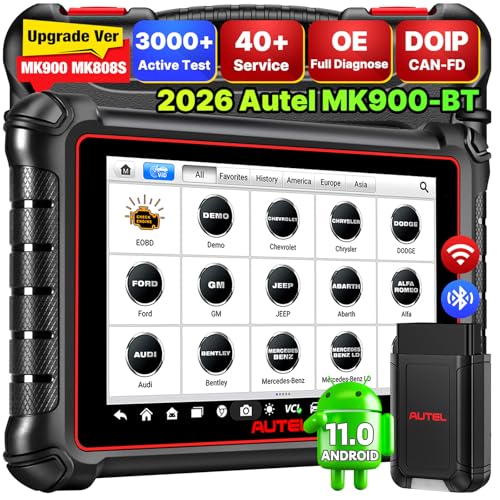
- 💯【Conta.ct us for Support Directly】If you met any...
- 🔥🔥🔥【2026 AUTEL FLAGSHIP MK900BT MK900-BT, NEW...
- 🚗【3000+ ACTIVE TESTS (50➡3000+), SAME AS MS...
- 🚗【40+ HOT SERVICES FOR 150 MAKES (28+➡40+)】Full...
- 🚗【OE ALL SYSTEM DIAGNOSE, AUTO SCAN 2.0: SCAN LICENSE...

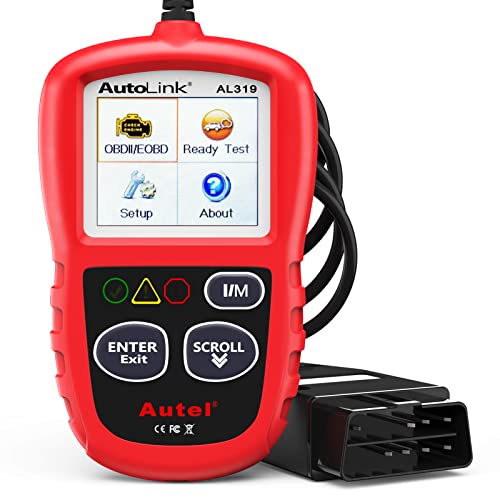
- 【TURN OFF CEL】 This AL319 car scanner diagnostic tool...
- 【EXTENSIVE APPLICATION】 Autel AL319 Compatible with...
- 【FOR END USER & DIYERS】 This error code reader AL319 is...
- 【USER-FRIENDLY DESIGN】 This OBD2 scanner and check...
- 【HIGH-QUALITY SERVICES】 12 months war.ranty from the...
Last update on 2026-06-23 / Affiliate links / Images from Amazon Product Advertising API
If the PDF is very large, it may not load in the preview below.
Some older TSBs had multiple PDFs — visit the NHTSA Website to view all PDFs.
If the TSB PDF does not show, download or view it on the NHTSA Website.
Click on the (+) Plus Sign
Then Click on Associated Document(s)
Search NHTSA Database for Recalls
Search NHTSA Database for Vehicle Investigations
View Latest Vehicle Investigations
Search NHTSA Database for Vehicle Complaints
View Latest Vehicle Complaints
TSB/Document ID: NTB16-017a
Replacement Service Bulletin Number:
MFR Communication Date: 2019-08-12
MFR Internal Campaign ID/Software Version:
Communication Type: Service Bulletin/Repair Instructions
NHTSA Components: VISIBILITY:SUN/MOON ROOF ASSEMBLY
MFR Component System:
MFR Component Subsystem:
Previous TSB | Next TSB |
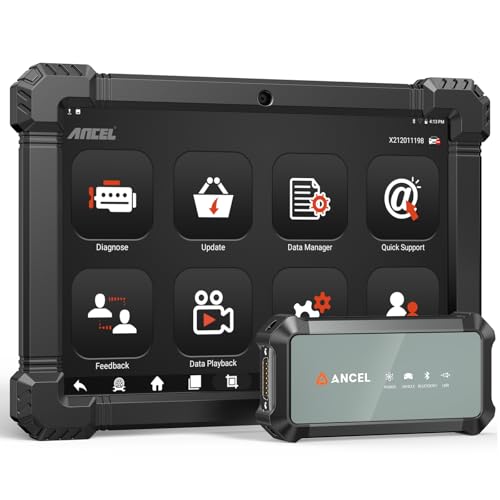
- 2026 ALL-IN-ONE HEAVY DUTY TRUCK SCANNER – BUILT FOR DIESEL DIAGNOSTICS:The ANCEL X7HD PRO combines full-system diagnostics, bi-directional control, ECU coding, HDOBD/OBD2 functions, and 42+ reset services in one powerful heavy duty truck scanner. This diesel scan tool helps technicians, fleet owners, and repair shops diagnose problems faster, reduce downtime, and complete more repairs without switching between multiple truck diagnostic tools. Features a 10.1" Android tablet, Bluetooth & Wi-Fi, live data graphing, and 2 years of f-ree updates
- 42+ RESET FUNCTIONS – MORE THAN A BASIC TRUCK CODE READER:Perform essential service functions including forced DPF regeneration, injector coding, speed limiter adjustment, idle adjustment, oil reset, ABS reset, SRS reset, EPB reset, throttle reset, and suspension calibration. Designed for real truck maintenance and fleet service, this commercial truck diagnostic scanner helps reduce dealer visits, avoid unnecessary downtime, and handle more repair jobs with one diesel diagnostic tool
- ACTIVE TEST & ECU CODING – ADVANCED BIDIRECTIONAL SCAN TOOL FOR TRUCKS:Quickly locate faults by activating components and sending commands directly to vehicle systems. Test injectors, ABS, throttle, cooling systems, and other modules in real time without unnecessary disassembly. ECU coding and module matching help adapt replacement parts, restore factory settings, and reduce repeat repairs, making this semi truck scan tool ideal for advanced troubleshooting and daily shop work
- FULL-SYSTEM HDOBD/OBD2 DIAGNOSTICS – WIDE TRUCK & ENGINE COVERAGE:Read and clear codes, monitor live data, freeze frame, and diagnose engine, transmission, ABS, body, and other major systems. Compatible with Freightliner
 , Kenworth, Peterbilt, Volvo, Mack, International, and other commercial truck brands, plus Cummins, Caterpillar, Detroit, Paccar, and Navistar diesel engines. Also supports full OBD2/EOBD diagnostics for standard vehicles, making it a versatile truck obd2 scanner for mixed fleets and repair shops
 - PROFESSIONAL HARDWARE + RELIABLE SUPPORT – BUILT FOR DAILY SHOP USE:This professional diesel diagnostic computer features a 10.1" touchscreen, Android 10.0 system, 6000mAh battery, Bluetooth/Wi-Fi connectivity, and built-in front & rear cameras for documenting repairs and remote troubleshooting. Includes 2 years of fr-ee updates, 1-year w-arranty, and responsive technical support. Contact [email protected] before purchase to confirm compatibility and supported functions for your truck or diesel engine

- 【Built for Heavy Duty Diesel Diagnostics】Designed for SAE J1939 and J1708 compliant trucks, buses, and diesel-powered commercial vehicles. HD601 truck scanner diagnostic tool helps owner-operators, small fleets, mobile technicians, and independent repair shops quickly identify fault codes, view live data, and make informed repair decisions—saving time, reducing downtime, and avoiding unnecessary shop visits
- 【Full System Diagnostics+All HD OBD Modes】The New HD601 heavy duty truck scanner delivers full-system diagnostics on SAE J1939 and J1708-compliant commercial vehicles—digging into engine, transmission, ABS, fuel, every system that keeps your rig rolling. It supports all HD OBD modes, giving you live data, freeze frame, ECU info, vehicle info, emissions data tracking, plus code reading and clearing. Not just what broke, but why—so you fix it right the first time. Pinpoint issues faster, cut repair costs, and spend less time on the shoulder
- 【Wide Heavy-Duty Vehicle Coverage】Supports a wide range of heavy-duty vehicle manufacturers and systems, including Freightliner, Kenworth, Peterbilt, Volvo, International, Detroit, Cummins, Paccar, Allison, Eaton, Bendix, Wabco, and more. Coverage varies by vehicle make, model, year, and system configuration. Contact our support team before purchase if compatibility verification is needed
- 【Speaks Major Truck Protocol】The New HD601 diesel truck scanner is built for American-made trucks—and supports the heavy‑duty protocols you' re most likely to run into on the road: SAE J1939, J1708/J1587, ISO 15765‑4, ISO 14230‑4, ISO 9141‑2, J1850 PWM/VPW, ISO 27145‑4, and EURO‑6. For most trucks, model years, and systems, it speaks the language your vehicle understands. Just plug it in and start diagnosing—no guesswork, no gatekeeping. Note: vehicle functions and module availability may vary by manufacturer and model year
- 【Save Hundreds on Diagnostic Fees】Why pay $150–300 for someone to read your codes? With the New ANCEL heavy duty truck scanner, you can pull fault codes yourself—in minutes, without leaving the truck. One or two uses pays for the tool. After that, every diagnostic is money back in your pocket. Smart investment for owner-operators, techs, and small fleets. Read and clear stored fault codes in minutes. Active fault codes may require repairs before they can be cleared
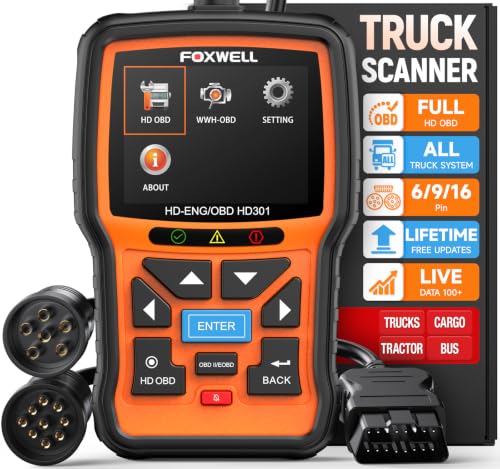
- 【One Tool, Total Fleet Coverage: 6/9/16 Pin Ready】Featuring an integrated 16-pin OBD2 connector and professional-grade 6-pin & 9-pin adapters, this heavy duty truck scanner provides extensive support for J1939, J1708, J1587, ISO 14230-4, ISO 15765-4 and ISO 9141-2, ISO 27145-4 protocols. It offers reliable diagnostic coverage for major American diesel brands—including Cummins, Paccar, Caterpillar, Detroit, and Freightliner—making it a versatile semi truck scanner for managing any diverse fleet.
- 【2 in 1 Diesel Code Reader & Advanced HD OBDII】Equipped with professional-grade diesel scanner capabilities, the HD301 diesel scanner features intuitive Read/Erase codes and turn off the "Check Engine" light. With the built-in DTC Lookup library, you can instantly access fault code definitions on-device without searching the internet. It also retrieves hundreds of essential live sensor data—such as coolant temperature, fuel pressure, and engine RPM—in a stable text format for precise and rapid troubleshooting. (Please note that the HD301 can not support DPF Regen.)
- 【Full System Truck Diagnostic】The FOXWELL HD301 heavy duty scan tool is engineered to deeply access and scan all available electronic control modules specifically for truck, including Engine, Transmission, ABS, SRS, Chassis, and Body Control. This professional truck scanner diagnostic tool allows you to identify issues across the entire vehicle, ensuring your rig stays in peak condition for the long haul.
- 【Versatile for most big Rigs: Commercial, Passenger & Beyond】Engineered for more than just trucks, this heavy duty scan tool offers extensive coverage for pickups, buses, trailers, and even marine vessels. From construction machinery (excavators, loaders) to agricultural equipment (tractors, harvesters), it provides a true all-in-one diagnostic solution.
- 【Plug-and-Play & No Subscription】Designed for the road! No WiFi, no batteries, and no complex App setup required. Simply plug it into your vehicle’s diagnostic port to start scanning immediately. Enjoy lifetime free software updates to keep your HD301 diesel truck scanner current with the latest vehicle models and features—without any hidden subscription fees—While overcoming language barriers with support for Spanish and English.
Last update on 2026-06-23 / Affiliate links / Images from Amazon Product Advertising API
This product presentation was made with AAWP plugin.