
NHTSA ID Number: 10163232
Manufacturer Communication Number: SD-13-4860-US-00
TSB/Document Date: 2019-07-29
Summary
Bendix WS-24? Antilock Wheel Speed Sensor service data sheet update
SD-13-4860
Bendix® WS-24™ Antilock Wheel Speed Sensor
Various Bendix® WS-24™ Wheel Speed Sensors
WS-24 Speed Sensors with Trade Dress
90° Angle
Bendix® WS-24™
Sensor
Straight
WS-24 Sensor
90° Angle
WS-24 Sensor
Straight
WS-24 Sensor
The appearance of the WS-24 wheel speed sensors
may vary depending upon the date and location of
manufacture, but they are interchangeable provided
they are the same type, e.g., straight or 90°.
Connectors
Packard®
GT 150
Series
Packard
Metripack
150.2 Series
Deutsch®
DTM06
Series
Packard
Metripack 280
Series (female)
Packard
Metripack 280
Series (male)
Deutsch
DT04 Series
Standard
Round
2-Pin
Figure 1 – Wheel Speed Sensors and Connectors
DESCRIPTION
The Bendix ® WS -24™ wheel speed sensor is an
electromagnetic device used to obtain vehicle speed
information for an antilock controller. When the wheel
rotates, the sensor and an exciter ring (sometimes called a
“rotor” or “tone” wheel) generate a simple AC signal. This
signal is sent to the controller, which analyzes the data and
commands the antilock system accordingly.
Specifically, the speed sensor consists of a coil, pole piece,
and a magnet. The exciter is a steel ring or gear-like device
Exciter Ring
Mounting Block
Wheel
Speed
Sensor
Figure 2 – Wheel End ABS Components
1
GENERAL SAFETY GUIDELINES
WARNING! PLEASE READ AND
FOLLOW THESE INSTRUCTIONS
TO AVOID PERSONAL INJURY OR DEATH:
When working on or around a vehicle, the following
guidelines should be observed AT ALL TIMES:
▲Park the vehicle on a level surface, apply the parking
brakes and always block the wheels. Always wear personal
protection equipment.
▲Stop the engine and remove the ignition key when working
under or around the vehicle. When working in the engine
compartment, the engine should be shut off and the ignition
key should be removed. Where circumstances require that
the engine be in operation, EXTREME CAUTION should be
used to prevent personal injury resulting from contact with
moving, rotating, leaking, heated or electrically-charged
components.
▲Do not attempt to install, remove, disassemble or
assemble a component until you have read, and thoroughly
understand, the recommended procedures. Use only the
proper tools and observe all precautions pertaining to use
of those tools.
▲If the work is being performed on the vehicle’s air brake
system, or any auxiliary pressurized air systems, make
certain to drain the air pressure from all reservoirs before
beginning ANY work on the vehicle. If the vehicle is
equipped with a Bendix® AD-IS® air dryer system, a Bendix®
DRM™ dryer reservoir module, or a Bendix ® AD-9si ® air
dryer, be sure to drain the purge reservoir.
▲Following the vehicle manufacturer’s recommended
procedures, deactivate the electrical system in a manner
that safely removes all electrical power from the vehicle.
▲Never exceed manufacturer’s recommended pressures.
▲Never connect or disconnect a hose or line containing
pressure; it may whip and/or cause hazardous airborne
dust and dirt particles. Wear eye protection. Slowly open
connections with care, and verify that no pressure is
present. Never remove a component or plug unless you are
certain all system pressure has been depleted.
▲Use only genuine Bendix ® brand replacement parts,
components and kits. Replacement hardware, tubing, hose,
fittings, wiring, etc. must be of equivalent size, type and
strength as original equipment and be designed specifically
for such applications and systems.
▲Components with stripped threads or damaged parts should
be replaced rather than repaired. Do not attempt repairs
requiring machining or welding unless specifically stated
and approved by the vehicle and component manufacturer.
▲Prior to returning the vehicle to service, make certain all
components and systems are restored to their proper
operating condition.
▲For vehicles with Automatic Traction Control (ATC), the ATC
function must be disabled (ATC indicator lamp should be
ON) prior to performing any vehicle maintenance where
one or more wheels on a drive axle are lifted off the ground
and moving.
▲The power MUST be temporarily disconnected from the
radar sensor whenever any tests USING A DYNAMOMETER
are conducted on a vehicle equipped with a Bendix ®
Wingman ® system.
▲You should consult the vehicle manufacturer's operating
and service manuals, and any related literature, in
conjunction with the Guidelines above.
2
WARNING: Not all wheels and valve stems are
compatible with Bendix® Air Disc Brakes. Use only
wheels and valve stems approved by the vehicle
manufacturer to avoid the risk of valve stem shear
and other compatibility issues.
WARNING: AVOID CREATING
DUST. POSSIBLE CANCER AND LUNG
DISEASE HAZARD.
While Bendix Spicer Foundation Brake LLC does
not offer asbestos brake linings, the long-term
affects of some non-asbestos fibers have not been
determined. Current Occupational Safety and Health
Administration (OSHA) Regulations cover exposure
levels to some components of non-asbestos linings,
but not all. The following precautions must be used
when handling these materials.
Avoid creating dust. Compressed air or dry brushing
must never be used for cleaning brake assemblies
or the work area.
▲ Bendix recommends that workers doing brake
work must take steps to minimize exposure
to airborne brake lining particles. Proper
procedures to reduce exposure include working
in a well-ventilated area, segregation of areas
where brake work is done, use of local filtered
ventilation systems or use of enclosed cells with
filtered vacuums. Respirators approved by the
Mine Safety and Health Administration (MSHA)
or National Institute for Occupational Safety
and Health (NIOSH) should be worn at all times
during brake servicing.
▲ Workers must wash before eating, drinking, or
smoking; shower after working, and should not
wear work clothes home. Work clothes should
be vacuumed and laundered separately without
shaking.
▲ OSHA & EPA Regulations regarding testing,
disposal of waste, and methods of reducing
exposure for asbestos are set forth in 29 &
40 Code of Federal Regulations §1910.1001 &
61.150, respectively. These Regulations provide
valuable information which can be utilized to
reduce exposure to airborne particles.
▲ Safety Data Sheets on this product, as required
by OSHA, are available from Bendix. Call
1-800-247-2725 and speak to the Tech Team or
e-mail techteam@bendix.com.
that has regularly spaced high and low spots called “teeth.”
The sensor is mounted in a fixed position, while the exciter
is installed on a rotating member so that its “teeth” move,
in close proximity, past the tip of the sensor.
The Bendix® WS-24™ sensor is available in both straight and
90° versions, to accommodate axle/wheel space limitations.
(See Figure 1.)
OPERATION
TECHNICAL INFORMATION
The sensor’s magnet and pole piece form a magnetic field.
As the exciter ring passes by the sensor, the magnetic field
is altered, which generates AC voltage in the sensor coil.
Each time an exciter tooth and its adjacent space move past
the tip of the sensor, an AC voltage “cycle” is generated.
Electrical connector - 2 Pin
The number of AC cycles per revolution of the vehicle’s
wheel depends on the number of teeth in the exciter ring,
which is programmed into the antilock controller. Using
the programmed data, the controller can calculate “vehicle
speed” by analyzing the frequency of AC cycles sent by
the speed sensor. (The frequency of AC cycles is directly
proportional to wheel speed.) See Figure 4.
Sensor body outer diameter - 0.627 inch
AC voltage is also proportional to speed, but voltage is not
used to determine speed. It is only an indication of AC signal
strength. The amount of AC voltage generated by a specific
speed sensor depends on the distance, or “gap” between
the tip of the sensor and the surface of the exciter. Voltage
increases as the sensor gap decreases.
Typically, the Bendix® WS-24™ wheel speed sensor is
installed in mounting blocks that are welded to the axle
housing. (See Figure 2.) The WS-24 wheel speed sensors
are protected by a stainless steel sheath. The sensors are
designed to be used with beryllium copper or stainless steel
clamping sleeves (sometimes referred to as a “retainer
bushing”, “friction sleeve” or “clip”) (See Figure 3). The
clamping sleeve provides a friction fit between the mounting
block bore and the WS-24 wheel speed sensor.
Sensor resistance (-40°C - 220°C) 1100 - 3400 ohms
Output voltage - At a minimum of 100 Hz (approximately
7 mph) at a gap of .028 inches should produce a sensor
voltage of 0.350 VAC
Sensor resistance (20°C) 1575 - 2100 ohms
Note: Previous model Bendix® WS-20™ sensor’s normal
resistance range across pins at room temperature was
rated at 2000 - 5000 ohms.
The friction fit allows the WS-24 sensor to “slide” back and
forth under force but to retain its position when the force is
removed.
When the WS-24 sensor is inserted all the way into the
mounting block and the wheel is installed on the axle, the
hub exciter contacts the sensor, which pushes the sensor
back. Also, normal bearing play will “bump” the sensor away
from the exciter. The combination of these two actions will
establish a running clearance or air gap between the sensor
and the exciter.
Peak to Peak
Low Speed
Note that Bendix® sleeve part number 5006849 can not be
used with the WS-24 wheel speed sensors. Always use
the correct clamping sleeves to avoid problems associated
with reduced retention force, such as unwanted sensor
movement and resulting ABS trouble codes.
Peak to Peak
High Speed
Figure 4 – Speed Sensor Voltage Cycle Output
Beryllium Copper Clamping Sleeves
Part No. 5006849
(Do not use with
Bendix® WS-24™
Sensors)
“BW” in a
diamond
Stainless Steel Clamping Sleeve
Part No.
5012878
“BX” in a
swoosh
symbol
Part No.
K152407
Knorr-Bremse
Logo
Swoosh
Symbol
Figure 3 – Clamping Sleeves
3
PREVENTIVE MAINTENANCE
1. Every 3 months; 25,000 miles; 900 operating hours; or
during the vehicle chassis lubrication interval, make the
visual inspections noted in “SERVICE CHECKS” below.
2. Every 12 months; 100,000 miles; or 3600 operating
hours, perform the OPERATIONAL TEST in this manual.
SERVICE CHECKS
Check all wiring and connectors. Make sure connections
are free from visible damage.
Antilock Controller &
Relay
Examine the sensor. Make sure the sensor, mounting
bracket, and foundation brake components are not
damaged. Repair/replace as necessary.
SENSOR IDENTIFICATION
Use Bendix® ACom® diagnostic software to identify the
suspected sensor. To verify the correct wheel sensor or axle
has been identified, the ACom software can be used to view
real time wheel speed sensor outputs. To determine which
axle has been identified as drive or additional, lift the axle in
question and hand spin the wheel at least ½ revolution per
second. The wheel speed will be displayed via the ACom
software.
INSPECT FOR PHYSICAL DAMAGE
Inspect the sensor cable for cuts, evidence of pinching
or wear, or abrasions with wiring exposed. Make sure the
block is securely attached to the axle housing. If any of
the above conditions are noted, replace the sensor and
clamping sleeve, then clear the Diagnostic Trouble Code
(DTC) according to the Electronic Control Unit (ECU) Service
Data sheet directions. Re-check the system before returning
the vehicle to service.
ELECTRICAL TESTING
The vehicle should be at an ambient temperature to achieve
a nominal resistance, or AC voltage, value. Be observant
of the wheel end temperature when taking measurement
readings. At extreme temperature ranges, -40°F to 428°F
(-40° to 220°C), the sensor resistance can vary from 1100
to 3400 ohms. To avoid possible connector seal damage
it is recommended to first check sensor resistance, or AC
voltage output, at the ECU connections. If the resistance
or voltage output is not within the stated parameters at this
location, perform the test at the next connector, typically the
wheel end. Before disconnecting any electrical connections
at the wheel end, remove as much contamination from the
connector as possible to preserve the sealing integrity of
the connection.
1. Inspect the connectors and terminals for corrosion,
physical damage (bent) or loose connections. If possible,
repair and/or clean the connector and terminals.
4
Bendix® WS-24™
Speed Sensors
Exciter
Ring
Front Wheels
Rear Wheels
Figure 5 – Typical Antilock System
2. Use a volt-ohm meter to measure the resistance across
the connector terminals, at an ambient temperature
range of 0°F to 100°F (-18°C to 38°C) sensor resistance
range can be 1200 to 2700 ohms. Record your
measurements.
OK - between 1200 and 2700 ohms.
Not OK - less than 1200 or more than 2700 ohms.
Resistance measurement = _______________.
If OK, continue to Step 3.
If Not OK, replace the sensor and clamping sleeve.
3. Confirm that wheel chocks are in place on the vehicle.
Raise the wheel off the ground to test the suspect wheel
speed sensor.
4. Release the parking brakes.
5. By hand, slowly rotate the wheel at a rate of at least ½
revolution per second. Using an AC rms voltage meter,
measure the voltage at the ECU across the sensor
terminals and record your measurement.
OK - Output voltage is 0.25 Volt AC minimum.
Not OK - Output voltage is less than 0.25 Volt AC.
AC voltage measurement = _______________.
6. If voltage is not OK, reposition the sensor by gently
pushing it closer toward the wheel until it touches the
exciter ring. Repeat the voltage measurement.
AC voltage measurement = _______________.
If still not OK, replace the sensor and the clamping sleeve.
Speed Sensor
Mounting Block
100 Tooth (typical)
Speed Sensor
Exciter Ring
Mounting
Block
Brake Drum
Max. Gap
(Sensor to Exciter)
.015 Inches
WS-24 Wheel
Speed Sensor
100 Tooth
Exciter
Ring
Bendix® WS-24™
Wheel Speed Sensor
(90°)
Hub
Assembly
Figure 6 – WS-24 Wheel Speed Sensor Installation
7. If the resistance and voltage readings are OK, the sensor
itself is not the cause of the Diagnostic Trouble Code
(DTC). Reconnect the sensor and examine the wiring
harness and ECU connector for causes of failure, such
as pinched wires, loose pins, abrasions, exposed wires,
etc.
3. Install the new clamping sleeve fully into the block, with
the retaining tabs toward the inside of the vehicle.
8. After repair, re-check the system before returning the
vehicle to service. If necessary, drive the vehicle to
confirm the system is functioning correctly.
5. Apply a moderate amount of dielectric non-conductive
grease to both the sensor connector and the harness
connector.
SENSOR REMOVAL
Before disconnecting any electrical connections at the wheel
end, remove as much contamination from the connector as
possible to preserve the sealing integrity of the connection.
1. Unplug the cable assembly connector from its lead. Lift
the lock tab and pull on the connector until it disengages.
2. Gently pry the sensor and clamping sleeve from the
mounting block.
4. Gently push (DO NOT STRIKE) the sensor into the
mounting block hole until it bottoms out on the face of
the tone ring. Secure the cable lead wire to the knuckle/
axle housing 3-6 inches from the sensor.
6. Engage the connectors, and push together until the lock
tab snaps into place.
NOTE: It is important for the wheel bearings to be
adjusted per the manufacturer’s recommendations.
Excessive wheel end play can result in excessive air gap
where the sensor is pushed too far away from the tone
ring leading to loss of ABS or Stability Control systems.
SENSOR INSTALLATION
1. When using clamping sleeve – Bendix® part number
5012878 – it is recommend a high-temperature rated
silicon- or lithium-based grease be applied to the interior
of the mounting block for better corrosion protection.
2. When using stainless steel clamping sleeve – Bendix®
part number K152407 – it is required to apply a hightemperature rated silicon- or lithium-based grease
to the sensor body. This lubrication will keep the
movement between the sensor and the clamping sleeve
independent from one another.
5
OPERATIONAL TESTING
There are multiple ways to verify the wheel speed sensor
has been installed properly.
Prior to connecting the sensor to its mating connector, raise
the vehicle wheel so it rotates easily. Connect a volt-ohm
meter to the sensor leads, set the meter to AC volts, spin
the wheel (approximately 0.5 revolutions per second). The
output voltage should read greater than 0.250 V.
Test Drive: it is recommended to test drive the vehicle to
verify the repair in a dynamic state. Test drive the vehicle
in a safe area to a minimum speed of 15 mph. Be sure to
make multiple right and left hand turns while driving, start
and stop the vehicle with the brakes several times. Observe
the following:
1. ABS dash lamp should not be illuminated after the test
drive.
2. The Light Emitting Diode (LED) display on the Bendix
controller, if so equipped, should only have the green
LED illuminated.
3
If Bendix® ACom® diagnostic software is available: During
the drive, wheel sensor output can be monitored and
recorded in the ACom diagnostic wheel speed window.
All sensors should record speeds.
If the sensor fails to operate as described, check the wiring
from the controller to the sensor. Make sure all connectors are
properly, and tightly, installed. Check for frayed or damaged
wires. For additional troubleshooting information reference
Bendix® Wheel Speed Sensor Checklist (BW2453 available
for download on bendix.com), or see the troubleshooting
procedure for the specific ABS system in use.
Log-on and Learn from the Best
On-line training that's available when you are
Visit brake-school.com.
6
24/7/365.
SD-13-4860 Rev. 002 © 2019 Bendix Commercial Vehicle Systems LLC, a member of the Knorr-Bremse Group • 04/19 • All Rights Reserved
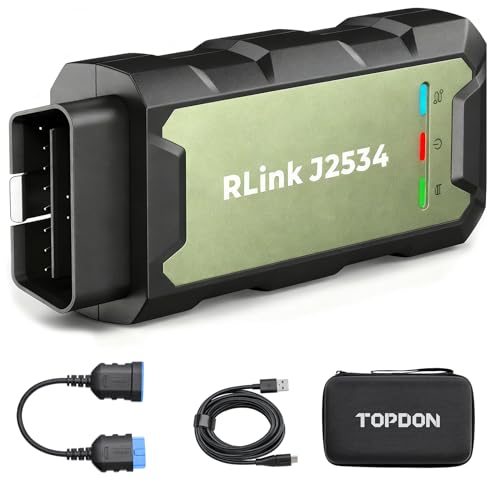
- Advanced VCI Box, Industry-leading J2534 Pass-Thru...
- High-Speed OEM-Level Diagnostics & Programming: Unlock true...
- Coverage for 17 Car Brands & Ultra Reliability: Works...
- User-Friendly RLink Platform & Expert Support: TOPDON’s...
- 6.6 ft USB-C Cable & Portable Storage Case: The RLink J...
Last update on 2026-06-12 / Affiliate links / Images from Amazon Product Advertising API
If the PDF is very large, it may not load in the preview below.
Some older TSBs had multiple PDFs — visit the NHTSA Website to view all PDFs.
If the TSB PDF does not show, download or view it on the NHTSA Website.
Click on the (+) Plus Sign
Then Click on Associated Document(s)
Search NHTSA Database for Recalls
Search NHTSA Database for Vehicle Investigations
View Latest Vehicle Investigations
Search NHTSA Database for Vehicle Complaints
View Latest Vehicle Complaints
TSB/Document ID: SD-13-4860-US-00
Replacement Service Bulletin Number:
MFR Communication Date: 2019-06-13
MFR Internal Campaign ID/Software Version:
Communication Type: Service Bulletin/Repair Instructions
NHTSA Components: SERVICE BRAKES, HYDRAULIC:ANTILOCK/TRACTION CONTROL/ELECTRONIC LIMITED SLIP:WHEEL SPEED SENSOR/TONE RING
MFR Component System:
MFR Component Subsystem:
Previous TSB | Next TSB |
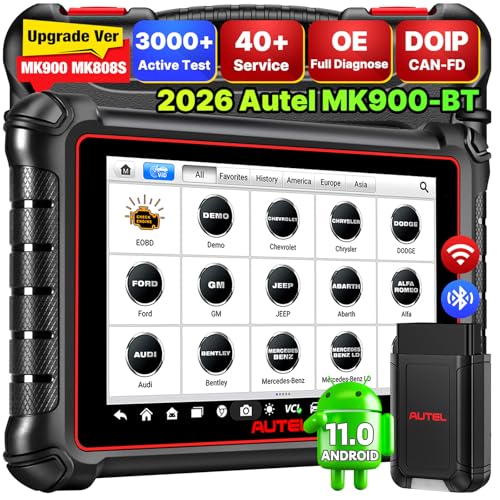
- 💯【Conta.ct us for Support Directly】If you met any issues about: Received a registered device/ Language Changing/ Function not Support/ VCI150 Blueto-oth connector malfunction/ Subscription Renewal, please conta.ct us via 📞autelsupply @outlook. com🛣️, we will provide perfect solution for you. ⚠️Note: Autel MK900BT comes with 1-Year Free Software Update, most features will remain active after update subscription expires. 1. For questions regarding updates or need more useful accessories, please conta.ct us via 📞autelsupply @outlook.com🛣️. 2. If the device fails to charge or turn on, please conta.ct us via 📞autelsupply @outlook. com🛣️, we will handle it promptly.
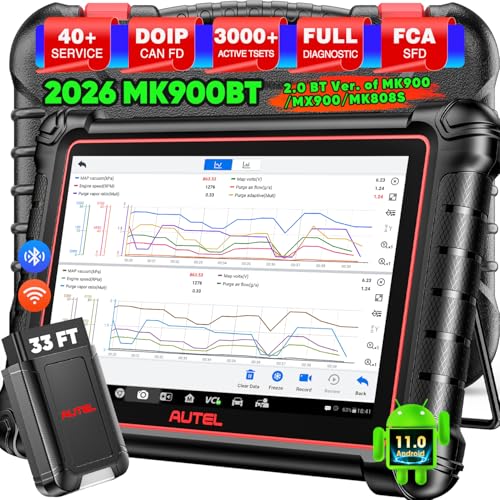
- 🔥🔥🔥【2026 AUTEL FLAGSHIP MK900BT MK900-BT, NEW MODEL OF MK808S MK900 MX900 MK808BT MX808S】2026 newest Autel MK900BT retains all features of MK808S MX900 MX808S MK808Z MK808Z-BT MK808K-BT, while EXTRA added powerful functions (value 2000+ bucks). The Pro-level Autel MK900BT makes a big leaps: 28+➡40+, 50+➡3000+ Active Tests, 2026 NEW✅CAN FD & DOIP protocols ✅Pre&Post diagnostic report ✅WIFI Print ✅Auto VIN&Auto Scan 2.0 ✅Scan VIN/ License ✅Battery Test (Need purcha.se BT506). If found defect or us.ed, please conta-ct 📞autelsupply @outlook. com📞 get perf-ect solut.ion.
- 🚗【3000+ ACTIVE TESTS (50➡3000+), SAME AS MS906 PRO】Differ from MS906BT MS906 MP808 MK808 MX808 MK808BT only 50 tests, Autel scanner MK900BT escaner automotriz professional offers 3000+ active tests, it can send command to ECUs & monitor actuators operation, quickly locating faulty components. Bidirectional scanning takes your diagnostics to the next level with menu lists 3000+ active tests, such as windows, rear mirrors, sunroof, wipers, fuel injector, coolant fans, radiator fan, AC clutch, coolant pump and more. Note: Functions are not available for all vehicles, please send vehicle VIN to us check compatibility.
- 🚗【40+ HOT SERVICES FOR 150 MAKES (28+➡40+)】Full level-up of OBD2 code reader MaxiCOM MK808S MK808 MK808Z MX808 MK808Z-BT with 28 service, Autel scan tool MK900BT/ MK900-BT offers 40+ maintenance service on 150+ brands 10,000 vehicles from 1996-2025-2026. Hottest Services like: Oil Reset, ABS Bleed, SAS Calibration, Injector Coding, SRS, Throttle Reset, Gearbox Reset, Battery Registration etc. Added 12+ advanced resets: rain slash light sensor reset, HVA.C/ SUS calibration etc. Welcome to send Vehicle Make>Model>Year>VIN>Functions you required to 📞autelsupply @ outlook . com📞 check compatibility.
- 🚗【OE ALL SYSTEM DIAGNOSE, AUTO SCAN 2.0: SCAN LICENSE/ AUTO VIN】2026 new release Autel MaxiCOM MK900-BT scan tool embodies all system diagnostic with its 8in display for all vehicles. Like Sna.p-on tools, it can perform ✔Read/Clear Codes✔Displays 5-in-1 Live Data✔Record & Playback Data✔Retrieve Info on all available systems like ABS ECM BCM SRS TCM etc. In addition to Auto VIN technology, Autel MK900BT adds Scan License/ Auto Scan 2.0 to identify vehicle’s VIN/ license, make, year, model, no need manual input; One-click WiFi Printing of Pre&Post comparison diagnostic reports, highlight root causes of problems.

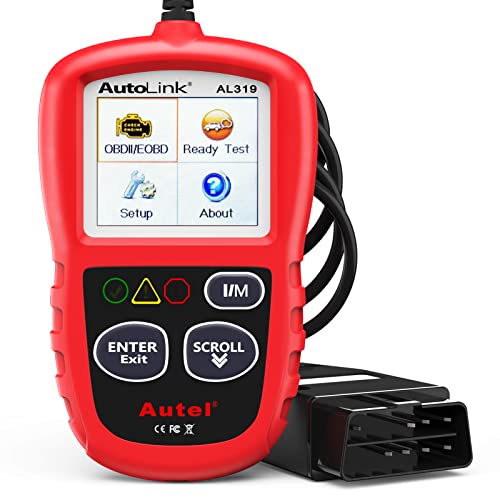
- 【TURN OFF CEL】 This AL319 car scanner diagnostic tool supports Reading and Clearing DTCs, DTC Look Up, displaying Live Data, Freeze Frame & I/M Readiness, view vehicle information, etc., to figure out the root cause of the Check Engine Light (CEL) and turn it off, helping you catch any potential issues early and avoid excessive costs from unnecessary repairs.
- 【EXTENSIVE APPLICATION】 Autel AL319 Compatible with 7 languages (English, French, Spanish, etc.) and various post-1996 OBD II protocol vehicles (Toyota
 , Nissan, Honda, Ford, etc.), this OBD II scanner provides accurate and fast diagnosis for worldwide car owners.
 - 【FOR END USER & DIYERS】 This error code reader AL319 is “plug and play” and comes with an easy interface. Even if you’re not familiar with vehicle repair, you can quickly take control of this obd2 scanner, and get the information you want.
- 【USER-FRIENDLY DESIGN】 This OBD2 scanner and check engine code reader features a patented One-Click I/M Readiness, TFT color display, built-in speaker, LED Indicator etc. The cable is long enough without being too long and getting in the way. No batteries are needed.
- 【HIGH-QUALITY SERVICES】 12 months war.ranty from the date of purchase and lifetime free update are offered by this Automobile OBDII scan tool. Welcome to contact us via Q&A, email, or hotline, and our after-sale-service team for technical support.
- 📞【Warm Tips】Dear friend, if you have any issues or need any tech support after receiving your MK900BT (received a registered item/ language changing/ functions compatibility/ renew subscription, etc.), please don't hesitate to tell us directly via 💌Autelonline @ outlook . com💌, we will do whatever we can to help you at first time. Besides, if you need other accessories, such as Autel endoscope MV108S, please don't hesitate to con-tact us.
- 🔥【Amazon Choice MK900BT, 2026 Newer of MK900 MX900 MS906 MK808BT PRO MP808S MK808S MX808S】Big News! 2026 Autel most cost-effective 8in All System & Bidirectional Scan Tool MK900BT is born! 619 only, yet featuring 40+ Hot Services same as MaxiSys Ultra/ Elite II/ MK908P/ MS906 PRO, among lots of advanced & newer functions: ✅3000+ Active Tests ✅CAN FD/ DoIP new protocols ✅Full Diagnosis ✅5-in-1 Live Data ✅Pre & Post Scan ✅Scan VIN/License ✅WiFi Print ✅FAC AutoAuth & Renault SGW, etc.
- 😊【Why Choose Autel Scanner MK900-BT, Not MK808S MK900 MX900?】➊ MK900BT escaner automotriz designs with Autel MaxiVCI V150, adopting advanced German Wireless Technology with more stable&faster data transmission, allowing you to work in and around vehicles with a 10M/33FT remote diagnostics. Instead, at almost the same b.udget, MK900 MK808S outdated wired code reader only with 1m cable, so you must curl up on the steering wheel! ➋ MK900BT can work with Autel BT506 to perform professional cranking charging system tests and in-vehicle & out-of-vehicle battery tests, but MK900 MK808S CANNOT. Some sellers say MK900 can work with BT506, pls don't believe it, who are not Autel a.uthorized sellers.
- 🚀【Upgraded Hardware 2.0, 10X F.aster than Ever】Based on old Android 4.4.4 ver. of MX808 MK808 MK808BT MP808 MP808BT MS906 MS906BT, Autel scan tool MK900-BT takes a big leap to 🟢f.astest OS 11 🟢4-core, 1.8GHz RK3566 speed boosted + lower power consumption🔋doubled 7700mAh Battery 🟢larger & sharper 8" 1280*800 touchscreen with intuitive user interface 🟢expanded 4+64G enough to save more files/data 🟢8M Rear camera gives clearer snapshot, etc. MK900BT scanner for car, is the best bang for your b.uck in the category.
- 📢【New Released: CAN FD/DoIP + WIFI Print + Pre & Post Scan + Scan VIN/ License】MK900BT OBD2 scanner diagnostic tool updates lots of advanced features previously available only for scanners above 2000 (MS906 Pro MS908S Pro, etc.) ✅New protocols CAN FD works for GM 2019+ ✅DOIP works for Volv.o 2018+, Jaguar&Land Rover 2017+, BM.W F&G chassis models ✅Same WIFI Print as MaxiSys Ultra ✅Detailed Pre/ Post scan reports to up repair efficiency ✅Scan VIN/License can identify your cars in seconds, more accurately! But Autel MK808S/ MK808BT PRO cannot.
Last update on 2026-06-12 / Affiliate links / Images from Amazon Product Advertising API
This product presentation was made with AAWP plugin.