NHTSA ID Number: 10054690
Manufacturer Communication Number: SU-1315
TSB/Document Date: 2014-02-18
Summary
BLUE BIRD (CUMMINS ): UPDATED INFORMATION BEING PROVIDED REGARDING THE FLEETGUARD FLEETCOOL EX COOLANT TO BE USED IN BLUE BIRD BUSES WITH CUMMINS ENGINE AND DECALS ON OR NEAR DEAERATION TANK FILLER TO STATE THE TYPE OF COOLANT FACTORY HAD INSTALLED. MODEL VISION, ALL AMERICAN. NO YEARS LISTED. *PE
2. SCA was added at 15K to 50K mile service interval to offset both dilution and
depletion. Dilution occurred as the system was refilled with light-duty coolant.
3. SCA was used as the total additive package for treated water coolants common in
warm climates and marine applications.
In the early 1990's the heavy-duty coolant market had begun to change. Most fleets no
longer drained coolant at the recommended 240K mile, or 6K hour recommendation, but
continued to use the same coolant until engine rebuild. Fully formulated heavy-duty
coolant became more readily available and this resulted in an increase in the length of
service intervals. Coolant additive replenishment was separated from servicing of the lube
system and pushed out to once per year, 150K miles, or 4K hours. SCA's are not
formulated for long life, extended service operation. Adding SCA to heavy-duty coolant
could result in excessive levels of additives in the coolant. Over time, this excessive
additive build up or high level of total dissolved solids in the coolant can cause water pump
leakage as well as solder and aluminum corrosion.
The first extended service additives, Extended Service Additives or “Extenders”, became
available in the late 1980's and were commonplace by the mid 1990's. An antifreeze
Extender is formulated to replace additive at the rate that it is consumed or depleted. This
assumes that the cooling system is being topped up with a fully formulated heavy-duty
coolant so that there are little or no issues with additive dilution. The composition of an
Extender is based upon the depletion rate of the various components. The Extender
contains a larger amount of those additives that deplete quickly and smaller amounts of
those additives that are consumed at a lower rate over time. For instance, Extender
contains twice the amount of nitrite and half as much phosphate as the regular SCA. This
is based on the fact that nitrite depletes faster than phosphate. Extenders are formulated
to maintain a proper balance of additives in the coolant over time. However, they will not
establish the proper initial additive levels, therefore extenders can not be used to
formulate treated water coolant.
“Organic Acid Technology (OAT)” Coolants or “Organic
Acid” Coolants
For both OAT and organic acid coolant, organic acids make up the large part of the
additive package. However, ethylene glycol or propylene glycol still make up 90 to 95
percent of the antifreeze as with conventional antifreeze. For this reason the heat transfer
characteristics and the physical properties such as freeze and boil over protection, specific
heat, etc. are very similar to other products in the market.
What is an organic acid? First a chemical is classified as organic if it contains the element
carbon as part of its structure. Organic acids are just one of the many classes of organic
compounds such as alcohols and carbohydrates. Common organic acids are acetic acid,
better known as vinegar, and adipic acid, which is the main ingredient in baking powder. In
reality it is the sodium or potassium salts of organic acids that are used as corrosion
inhibitors and buffers in engine coolants. The same is true for inorganic acids such as nitric
and phosphoric that are used in conventional coolants.
The use of organic acids in engine coolants goes back to the early 1950's when benzoic
acid was used in hybrid type coolants in Europe. Coolants are classified as “conventional”,
“hybrid”, or OAT based largely on how much organic acid is used in the coolant additive
package.
1. Conventional - Additive package made up predominately of inorganic type
compounds
2. Hybrid - Additive package contains a mixture of inorganic and organic acid
components
3. OAT - The additive package consists of 75 to 90 percent organic acids. Also OAT
coolants will generally not contain the buffers borate and phosphate or the
aluminum corrosion inhibitor silicate.
NOTE: Some OAT coolants do not contain nitrites and molybdates, therefore, they
do not have SCA units. These OAT coolants use organic acids to protect against
liner pitting.
DCA-4 versus Fleetcool (DCA-2)
DCA4, DCA-4 Plus & ES™ Liquid Extenders, as well as ES™ Compleat are all based on a
phosphate/molybdate/nitrite additive package. These chemicals, along with other
additives, provide protection to cooling system components. Many other SCAs or
Extenders such as Fleetcool (DCA-2) have a borate-nitrite base and higher levels of
silicate. The liner pitting protection of DCA-4 and Fleetcool (DCA-2) is equivalent, however
DCA-4 provides the following advantages:
Reduced risk of water pump leakage due to overtreatment as compared to DCA-2
DCA-4 is more tolerant of hard make-up water
DCA-4 is less likely to form silicate gel if overtreated
DCA-4 provides better solder protection, which reduces “bloom” deposits
DCA-4 provides aluminum protection without high levels of silicate
DCA-4 contains surfactants that limit or prevent oil and dirt from fouling metal
surfaces within the cooling system.
If the pitting protection performance of DCA4 and DCA2
(Fleetcool™) are equivalent, then why is DCA4 a
preferred chemistry?
It is preferred because of the added benefits described above, and because the
SCA package of DCA4 contains fewer dissolved solids to accomplish equivalent
performance. DCA4 depends on the combined effect of nitrites and molybdates,
whereas DCA2 (Fleetcool™) depends solely on the effect of nitrites. The presence
of molybdates enhances the protective qualities of nitrites. However, molybdates
alone will not provide adequate protection. Therefore, laboratory test results and
test kit charts are specifically designed to warn of insufficient nitrite levels by
indicating low SCA levels. On the other hand, the absence of molybdates will not
trigger warnings if nitrite levels are sufficient to provide pitting protection. That is
why the CC2602 test kit works well with both DCA4 and DCA2 (Fleetcool™).
How do SCAs/Extended Service Additives protect liners
and blocks from pitting damage?
SCAs/Extended Service Additives work by forming a protective coating on liner and
block surfaces that are subjected to cavitation. Cavitation is the driving force
responsible for pitting damage. It is caused by the collapse of vapor bubbles
created during liner movement following combustion. Vapor bubbles are formed
anytime the localized pressure of the coolant drops below the vapor pressure of the
coolant. Vapor pressure is a physical characteristic of the coolant that is primarily
controlled by the antifreeze-to-water ratio and coolant temperature. The localized
pressure is a function of many factors, including engine design, load, piston slap,
engine timing, and cooling system pressure.
Attachment 2 - Cummins Inc. Coolant and Filter
Specification
Cummins Inc. Coolant Specification
Cummins Engineering Standard 14603 requires that the antifreeze/coolant meet all
requirements of ASTM D6210 for glycol coolant. In addition, it must:
1. Meet the modified ASTM D1384, the Glassware Corrosion Test. This test has
stricter limits for corrosion weight loss for aluminum and solder. The solder tested
shall be the standard 70/30 material and also high lead solder, which is used in
many copper/brass radiators for heavy duty engine applications. Tests shall be run
at both 70 percent antifreeze and 30 percent antifreeze instead of the standard 331/3 percent solution only.
2. Meet the modified ASTM D2570, Simulated Service Corrosion Testing of Engine
Coolants. In addition to the standard ASTM test, various rubber seal and silicon
hose materials are tested for compatibility with the coolant. In addition, the standard
metal corrosion weight loss limits are stricter for aluminum and solder.
3. Meet Cummins Engineering Standard 14603, Coolant/Elastomer seal compatibility.
4. Be field tested in Cummins® engines.
For an antifreeze/coolant to be registered as meeting Cummins Engineering Standard
14603, the antifreeze/coolant supplier must have valid test results from competent,
independent testing labs as proof of meeting the above specifications.
Cummins Inc. Coolant Filter Specification
Cummins Engineering Standard 14315 is the Cummins Engineering Standard that covers
coolant filter performance. The standard contains the tests required to meet Cummins Inc.
performance requirements along with the performance limits for those tests. The tests
required in this standard cover the following:
Media Soak
Adhesive Durability
Corrosion Flow versus Restriction
Capacity and Efficiency
Bubble
Gasket Durability
Element Collapse
Hydrostatic Pressure
Impulse Fatigue
Vibration.
Attachment 3 - Monitor C Sample Report
Monitor 'C' Coolant Analysis - CC2700
Fleetguard®, Inc.
Service Engineering
P.O. Box 6001
Cookeville, Tennessee 38502
(615) 526-9551
1-800-22-FILTER (1-800-223-4583)
Customer:
Account Number:
Address:
Unit Number 34913504
Fluid Type: Ethylee Glycol Coolant (A/A Water
SCA)
EOT E
N/A
Date Sampled:
07/12/99
Date Tested:
08/02/99
Miles on Unit:
N/A
Miles/Hrs. on Coolant:
129,518
Lab Sample Number:
406514
pH:
8.6
Percent of Glycol:
73*
Freezing Point:
-61°C [-78°F]
Total Dissolved Solids (%)
0.5
Liner Pitting
N/A
-SCA (Units per Gallon):
0.6*
-Nitrite (The Maintenance Council RP
382):
248
-Molybdate
265
(The Maintenance Council RP328):
Corrosion Products
Customer:
Account Number:
Address:
-Iron:
1
-Aluminum:
0
-Copper:
4
-Lead:
0
-Silicate (The Maintenance Council RP
328):
60
-Buffers
-Phosphate (K2HPO4):
12733
-Borate (Na2B4O7):
1429
-Hardness:
0
-Chloride:
0
-Sulfate:
0
Note: *Chemical analysis results are PPM except where noted.
NOTE: Monitor C™ Tests are not sufficient to evaluate coolant recycling processes
Recommendations: SCA is underconcentrated. Glycol concentration is excessively above
recommended range for antifreeze. Use 40 to 60 percent. If system is overheating, drain
and flush with heavy-duty cleaner. Fill with fresh 50/50 antifreeze/water mixture. Contact
Fleetguard® for proper SCA dosage. precharge system at 1.5 units SCA per gallon, and
install a service filter. See "Coolant Analysis with Maintenance Recommendations" in this
section.
I have personally reviewed the data and recommendations for your sample.
Diagnostician)____________________________________________________________
__________Date_________________
Attachment 4 - Explanation of Coolant Analysis and
Maintenance Recommendations (Monitor C™)
Unit:
A measure of liner pitting protection based upon the nitrite-only, or nitrite and
molybdate concentration of the coolant.
Extender/SCA:
At initial fill, top-off, and coolant change-out, engine coolant will have a minimum
level of liner pitting protection of 0.3 units/liter [1.2 units per gal] using antifreeze
and/or supplemental coolant additives (SCA). Use of fully formulated coolants
meeting ASTM or The Maintenance Council specifications and a correctly-sized
service filter will result in a precharge of at least the required minimum 0.4 units/liter
[1.5 units per gal].
CAUTION
Failure to maintain Extender/SCA concentration level can result in severe engine damage.
For additional information, call Fleetguard® Service Engineering at 800-223-4583 and
follow the menu to get to Technical Assistance.
Glycol or Glycerin:
Engine manufacturers recommend coolants composed of 50/50 water/glycol or
glycerin solutions providing enhanced freeze and boil protection. An operating
range of 40 percent to 60 percent antifreeze is acceptable except in arctic climates
where 60 to 68 percent Ethylene Glycol is acceptable. Use of glycol percentages
exceeding 68 percent can cause SCA drop out, water pump seal leakage, and
engine overheating.
Water Quality:
For water quality specifications recommended by most major engine manufacturers,
see Section 9. Water exceeding any of the specifications in Section 9 must not be
used. Use distilled water, deionized water, or equivalent. Hardness must be
determined through testing of make-up water, not by testing used coolant.
pH:
Coolant pH values have a normal range of 8.5 to 10.5 when precharged with nitrite
or nitrite/molybdate SCA. If pH falls below 7.5, rapid nitrite depletion can result. This
will be shown as low SCA units. Continued additions of SCA into low pH coolant will
have little effect on SCA units per gallon. When pH is less than 7.5, coolant must
be drained and the cooling system must be flushed. Exceptions to this are hybrid or
OAT type coolants that can function properly at pH below 7.5. Coolant pH
exceeding 11 will corrode aluminum and promote scale formation. The cooling
system must be drained and flushed. If no serious problems are encountered, the
system can be flushed using tap water. If corrosion, scale, or gelation is present,
chemical cleaners such as Restore™ or Restore Plus™ must be used.
Total Dissolved Solids:
Total Dissolved Solids are composed of the basic inhibitor chemicals, silicates,
active SCAs, spent SCAs, contaminants, and water hardness compounds. Water
pump seals will tolerate gradual buildup of total dissolved solids until a 5 percent
level is achieved. If water pump seal leakage occurs, the coolant must be tested for
Total Dissolved Solids. If the total dissolved solids level is above the acceptable
limit, the coolant must be drained and replaced.
Silicates:
Silicates protect several cooling system metal surfaces. Automotive antifreeze
typically contains large amounts of silicate. Use of automotive antifreeze and
Extender/SCA leads to additive dropout which causes plugging of radiators, heater
cores, and restricts engine coolant passages. Sudden introduction of large amounts
of silicate through additions of automotive antifreeze or large doses of nitrite/borate
SCA (high silicates) can cause rapid failure of water pump seals. Reports of low
silicates and low water hardness in used coolants can be misleading. Both silicates
and hardness compounds will precipitate out in the presence of each other. For an
accurate evaluation of silicate levels, new undiluted antifreeze must be tested.
Buffering Agents:
The function of phosphate and borate buffers is to counter acid formation. Acids are
the product of thermal degradation of antifreeze. Without adequate buffers,
corrosion and rapid additive depletion will occur due to reduction in pH values. The
result will be cylinder liner pitting due to rapid nitrite depletion.
Corrosion Products: Typical sources for corrosion products are:
IRON: liners, water pump, cylinder block, cylinder head
ALUMINUM: radiator tanks, radiator cores, heater cores, coolant elbows, piping,
spacer plates, thermostat housings
COPPER: radiator core, heater core, oil cooler, aftercooler (intercooler), injector
sleeves
LEAD: radiator solder, heater core solder, aftercooler core solder.
Attachment 5 - Benefits of Coolant Filtration
Not all heavy-duty engine OEMs require the use of coolant filters on their engines.
However, it is Cummins Inc. experience that use of coolant filters reduces the total cost of
engine usage. After a comprehensive review of coolant filtration in 1988, Cummins Inc. 1
concluded the following:
1. Coolant is dirty. About 40 percent of the coolant filters taken at random from heavyduty units in the field had a significant amount of contaminant. This agrees well with
a Union Carbide study of several thousand automobile cooling systems where at
least 40 percent of the coolant samples contained heavy sediment.
2. The coolant filter is a good chemical maintenance tool. It is the most reliable way to
get the needed amount of Extender/SCA into the antifreeze/coolant. This reduces
the chance that the coolant will be either under or over treated. The filter serves as
a visible reminder that the cooling system requires periodic maintenance.
3. The coolant filter is a troubleshooting tool. Opening a used coolant filter and
observing what has collected on the filter media is very useful in the diagnosis of
engine problems.
4. There is a direct benefit of filtering the contaminant out of coolant as it reduces
wear, corrosion, cavitation-corrosion (pitting), plugging, and maintains effective heat
transfer. This is of benefit to cylinder liners, cylinder liner seals, water pump seals,
water pump impellers, thermostats, heat exchangers, and other cooling system
components. Filtration of coolant is critical when using extended service intervals.
5. Coolant filtration will become even more important as margin is taken out of the
cooling system to reduce cost, size, and weight, while the trade cycle for vehicles in
many fleets is pushed to higher mileages.
6. Since we are trying to cool more engine with a downsized cooling system, cooling
system cleanliness is an increasingly important issue. More emphasis needs to be
placed on effective coolant filtration that will help maintain peak system efficiency.
In early 2002, a study was made to determine whether coolant filtration is still beneficial
and necessary for Cummins® engines. This study looked at changes in coolants, engines,
and coolant maintenance practices since 1988 to determine if the need for coolant filtration
had increased or decreased since 1988. Also, additional technical data on coolants and
filtration, not included in the 1988 study, was reviewed to determine if it supports the
practice of coolant filtration. This updated study on coolant filtration concluded:
1. Cooling system and coolant changes that have occurred since the 1988 study show
an increased need for coolant filtration.
2. Additional technical literature and data not available or not referenced in the 1988
study show improved cooling system performance due to coolant filtration.
3. The results of the 2002 study were further updated and published in 20052.
It is apparent that coolant filtration continues to be an advantage to Cummins Inc. and
Cummins Inc. customers and, therefore, it is recommended on linered engines.
1
Hudgens, R.D. and Hercamp, R.D., “Filtration of Coolants for Heavy Duty Engines”, SAE
881270, 1988, pp. 1-21.
2
Hudgens, R.D. and Hercamp, R.D., “An Overview of Onboard Coolant Filtration for
Heavy Duty Diesel Engines”, SAE 2005-01-2014, 2005, pp. 1-14.
Last Modified: 12-Sep-2013
Copyright © 2000-2010 Cummins Inc. All rights reserved.
Technical Bulletin
Compatibility of Fleetguard
Coolants and SCAs with Competitor
Products
This bulletin is in response to customer inquiries about mixing various Fleetguard
coolant products with other coolants and supplemental coolant additives (SCAs).
While some may claim that a particular coolant is formulated such that it renders
other coolants incompatible or view it as contamination, laboratory testing has proven
that there are no real matters of chemical concern. Our coolant products represent
the spectrum of chemistries that are prevalent in the coolant market place. With over
30 years as original formulators and manufacturers of coolants and coolant
additives, we have performed extensive field testing at customer locations as real
world proof of the laboratory testing we have conducted. The results clearly show that
mixing of coolants and supplemental additives does not cause any negative chemical
reactions or cooling system problems.
Fleetguard coolant additives and coolant products are fully compatible with all known
competitive products. Our coolants, whether conventional SCA or OAT (organic acid
technology) inhibited, are compatible with each other as well as the various
conventional and OAT coolants of other manufacturers. OAT coolants are not
essentially different from conventional chemistry coolants. Both types use either
ethylene or propylene glycol as the base antifreeze. The additive chemistries are
different but still chemically compatible. All coolants formulated to meet ASTM
D6210-03 and TMC RP329 (North America) are compatible with Fleetguard coolant
products.
Fleetguard DCA2 coolant additive is an SCA composed of nitrite, borate, and silicate.
It must be noted that excessive levels of nitrite/borate SCA and coolants can become
aggressive to lead solder and aluminum. Water pump seal leakage is more prevalent
with this type of SCA than with our DCA4-type SCA chemistries. Fleetguard does
not recommend SCA levels exceeding 3.0 units per gallon when using DCA2 and
similar SCA from other manufacturers.
Fleetguard DCA4 coolant additive is an SCA principally composed of nitrite,
molybdate, phosphate and silicate. To address the issues with operating high levels
of DCA2-type SCA, Fleetguard introduced DCA4 with reduced levels of nitrite,
substitution of phosphate for borate, and reduced silicate levels. By this, we reduced
the aggressiveness of high levels of DCA2 on lead solder and aluminum. It is safe to
run DCA4 as high as 5.0 units per gallon without fear of corrosion issues or water
pump seal leakage.
Fleetguard OAT coolant, ES Optimax™, derives its protection properties by the use
of proprietary organic acids plus nitrite and molybdate. It has been designed to be
fully compatible with coolants formulated with 2-ethyl hexanoic acid.
Testing and field experience with customers has shown that both DCA2-type, DCA4type, and OAT chemistries have never had any negative chemical reactions nor
failed to protect system components when used in accordance with manufacturer’s
instructions.
While others may make marketing claims about contamination by addition of coolants
not of their own manufacture or brand name, there is in fact no technical merit in
saying that the coolants cannot be mixed.
ES Compleat™, ES Optimax™, Fleetcool™ EX, Fleetcool™ Recycled, DCA2 and
DCA4 are coolants and supplemental coolant additives that are known to us to be
compatible with the following (but not all inclusive) list of coolant products:
Fleetcharge® Antifreeze, Caterpillar® Diesel Engine Antifreeze Coolant, Prestone®
Heavy-Duty coolant, Final Charge®, Detroit Diesel POWERCOOL® and
POWERCOOL® Plus coolant, Caterpillar® ELC, ChevronTexaco Delo™ ELC, Shell
Rotella® ELC, Zerex® Extended Life Extreme 3/300, DEX-COOL®, Zerex® G-05,
Motorcraft® Premium Gold Coolant, DaimlerChrysler® / Mopar® 2003 coolant.
TB03/05-2
©2005 Fleetguard Inc.
Printed in the U.S.A.
For more information, visit us at www.fleetguard.com or contact
Customer Assistance at 1-800-22-FILTER (1-800-223-4583).

- Unsurpassed freeze protection and anti-boil performance...
- Organic acid technology resists rust, scale & corrosion...
- High-quality additives protect against leaks and won’t...
- Pre-mixed orange formula is ready-to-use in a 50/50 ratio...
- 5 year/150,000 mile guarantee protects against engine...

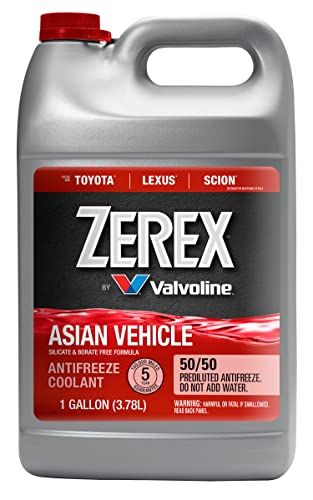
- Formulated to replace the OEM fluid in Asian make vehicles...
- 5 year/150, 000 mile . Silicate-free, long-life, phosphate...
- The long life formula provides protection for all cooling...
- Meets the following OEM and industry specifications: JIS K...
- Note: Please check the vehicle specification before...
Last update on 2026-06-23 / Affiliate links / Images from Amazon Product Advertising API
If the PDF is very large, it may not load in the preview below.
Some older TSBs had multiple PDFs — visit the NHTSA Website to view all PDFs.
If the TSB PDF does not show, download or view it on the NHTSA Website.
Click on the (+) Plus Sign
Then Click on Associated Document(s)
Search NHTSA Database for Recalls
Search NHTSA Database for Vehicle Investigations
View Latest Vehicle Investigations
Search NHTSA Database for Vehicle Complaints
View Latest Vehicle Complaints
TSB/Document ID: SU-1315
Replacement Service Bulletin Number:
MFR Communication Date: 2013-07-29
MFR Internal Campaign ID/Software Version:
Communication Type: Service Bulletin/Repair Instructions
NHTSA Components: ENGINE
MFR Component System:
MFR Component Subsystem:
Previous TSB | Next TSB |
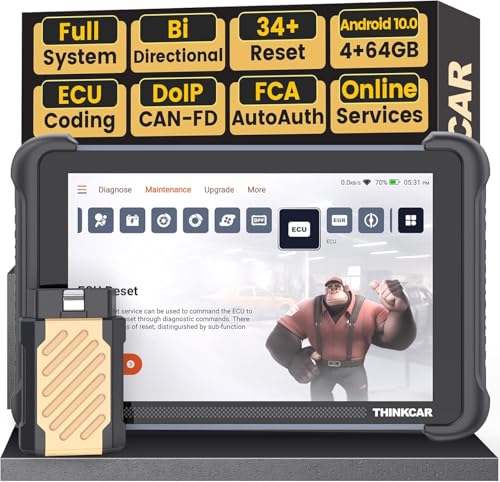
- [Notice] When you receive a used device, it may be a customer return resold by Amazon without inspection. You can exchange it for a new one through Amazon. As this situation is unavoidable, we sincerely apologize. For any issues, contacting us via Amazon's "Messages" is the best way. THINKSCAN 689BT Bidirectional Scan Tool Can Be Used Immediately After It is Turned On, Without Complicated Registration Process, Which is More Convenient & Quick.
- Full Bi-Directional Control & 3000+ Active Tests: Take control and test components like actuators, fuel injectors, relays, and cooling fans in real time. You’ll quickly see if the problem is in the part itself or the control module — saving you hours of guesswork and frustrating trial-and-error.
- Advanced ECU Coding Capabilities: Handle module matching and hidden feature activation with confidence. When you replace an ECU or want to customize settings, this obd2 scanner diagnostic bi directional tool gives you the professional-level capabilities you need without the dealership price tag.
- 34+ Useful Reset and Maintenance Functions: Complete everyday service tasks smoothly with a wide range of helpful reset and maintenance functions. Whether you’re keeping up with regular upkeep or tackling a specific job, this scanner makes maintenance simpler and less stressful for both DIYers and pros.
- Comprehensive Full System Diagnostics: Diagnose every major system — Engine, Transmission, ABS, SRS, TPMS, and more — all in one place. Finally stop wondering if you’re missing something important; get the full picture and clear codes with ease.
Last update on 2026-07-02 / Affiliate links / Images from Amazon Product Advertising API
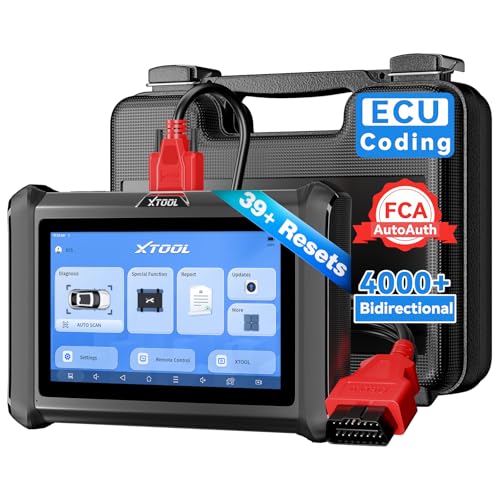
- Top Reasons to Choose the D7S OBD2 Scanner: XTOOL D7S car scan tool, an upgrade of XTOOL D7, offers comprehensive features for automotive technicians, workshops, and DIY enthusiasts 1. Upgraded Hardware: 2+64GB memory, rear camera, intuitive interface, foldable bracket 2. Complete Diagnostics: FCA
 Autoauth, OE-level all system scan, 39+ maintenance services, 4K+ bidirectional, CANFD/DoIP protocol 3. Advanced Capabilities: ECU c0ding, PMI functions 4. Wide Compatibility: Support 10,000+ models, covering 99% vehicle brands 5. Multi-language: Available in 22+ languages, No IP Restrictions 6. 3-Year Updates: Save 300 bucks on software updates for the latest features and optimizations
 - 2026 Upgraded D7S Car Scanner Features: The newly 2026 D7S V2.0 scanner for car brings exciting features for advanced vehicle diagnostics and enhanced user experience 1. FCA AutoAuth: Now supports FCA SGW module for Chrysler, for Jeep, for Dodge (2018+), for Fiat (2017+), enabling faster vehicle communication without gateway restrictions 2. PMI (Offline ECU Pr0gramming): Allows for Ford, for Lincoln, and for Mazda ECU pr0gramming for new modules 3. Optimized Diagnostic Report 2.0: Personalized reports with logos and customer info for auto shops. Note: Compatibility varies by cars, please check before order
- 39+ Services/Resets/Adaptations/Relearns/Calibrations: XTOOL D7S full system car scanner diagnostic tool tackles 99% of common car issues through its 36+ special functions, including Oil Reset, EPB, SAS, BMS, Throttle Reset, Injector C0ding, ABS Bleed, TPMS Reset, Power Balance, etc and also covers specific-vehicle functions like Crank Sensor Relearn, ABS Initialization, Cylinder Power Balance, Fuel Trim Reset, Idle Relearn etc. This car diagnostic scanner enhances efficiency, making repairs and maintenance hassle-free. Tip: DO NOT for All vehicles, please check compatibility first
- Cost-effective ECU C0ding Scan Tool for Specific Brands: Enhance your vehicle's performance with XTOOL D7S! This obd2 scanner all systems bidirectional offers advanced capabilities at an affordable price, supports online for BMW, for Benz and offline for BENZ, for MIT, along with PMI functions for Ford, for Mazda, and for Lincoln. Ideal for technicians and DIY enthusiasts, this automotive scanner diagnostic tool optimizes vehicle performance and enhances the driving experience. Note: Not for all cars and modules, please send car VIN to check the compatibility before purchase
- OE All System Diagnostic & 8 Pids Graphing: XTOOL D7S is a comprehensive all system bi directional obd2 scanner that delivers dealer-level diagnostics, completely controlling over your vehicle’s performance and health. This automotive scan tool can read and clear DTCs, view live data and ECU information, retrieve freeze frames, and perform active tests and full obd2 functions. This bi-directional scan tool can can identify your vehicle's make, model, and year information with just one click and show up to 8 PIDs live data with options for CSV viewing, playback, and recording for in-depth analysis. It is easy-to-use for both professionals and beginners, helping pinpoint issues efficiently
Last update on 2026-06-30 / Affiliate links / Images from Amazon Product Advertising API
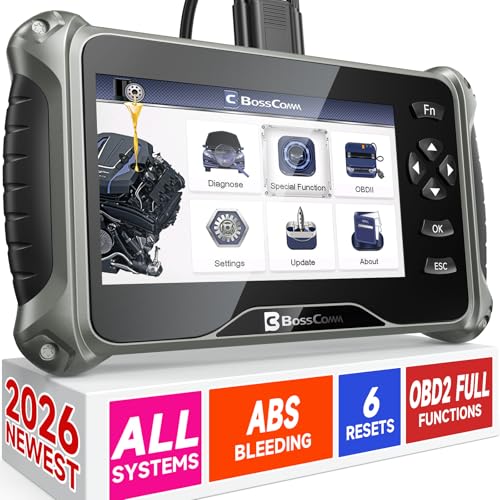
- 【✅Compared to BOSSCOMM IF742, IF745 Offers Full-System Diagnostics】The BOSSCOMM IF745 car diagnostic scanner is an upgraded model of IF742. In addition to supporting all OBD2 Code Reader functions and 6 reset options (ABS/EPB/SAS/BMS/Oil/Throttle), it expands diagnostics from 4 systems (Check Engine/ABS/SRS/Transmission) to vehicle All systems, including Steering, Suspension, and Body Electronics. This provides deeper, more comprehensive diagnostic capabilities.
- 【✨10 OBD2 Functions】The BOSSCOMM IF745 scan tool’s DTC Lookup instantly translates fault codes into user-friendly explanations, its I/M Readiness feature streamlines emissions testing with a single tap, and Freeze Frame lets you pinpoint the exact moment of a fault for in-depth root-cause diagnosis. Combined with a live data dashboard and advanced diagnostics (O2S, OBMon, EVAP), it delivers comprehensive insights for confident troubleshooting.
- 【✨Deep Diagnostics for All Vehicle System Modules】Beyond code reading/clearing and ECU information retrieval, our all-in-one data stream feature lets you inspect all current fault codes and their locations across the vehicle’s systems. This vehicle code reader helps you turn off dashboard warning lights and perform a comprehensive self-check of your car at home—no more back-and-forth trips to the repair shop or hefty inspection fees.
- 【✨6 Essential Resets: ABS Bleeding, Oil, EPB, SAS, Throttle, BMS】The BOSSCOMM IF745 obd2 scanner diagnostic tool swiftly purges air from brake lines to restore braking sensitivity, fine-tunes maintenance cycles to eliminate false alerts, resolves parking brake issues with one-click control, recalibrates steering sensors for stability, optimizes engine idling/acceleration for smoother performance, and deeply resets battery systems to extend lifespan and range via precise parameter adjustments.❗NOTE: Does NOT support bidirectional control, coding, or programming.
- 【✨10,000+ Car Models, AutoVIN, 13 Languages】The BOSSCOMM IF745 vehicle scanner diagnostic tool covers 73+ global car brands and offers support in 13 languages, making it perfect for DIYers, auto mechanics, or as a thoughtful gift. With a single-click AutoVIN feature, it instantly retrieves vehicle serial numbers, streamlining diagnostics for users globally. This adaptable tool balances user-friendliness with precision, catering to both personal and professional requirements.✅Unsure about compatibility? Compatibility will vary on vehicles' model and year, pls reach us via 📧 [email protected] 📧 before purchase.
Last update on 2026-07-02 / Affiliate links / Images from Amazon Product Advertising API
This product presentation was made with AAWP plugin.