
NHTSA ID Number: 10054690
Manufacturer Communication Number: SU-1315
TSB/Document Date: 2014-02-18
Summary
BLUE BIRD (CUMMINS ): UPDATED INFORMATION BEING PROVIDED REGARDING THE FLEETGUARD FLEETCOOL EX COOLANT TO BE USED IN BLUE BIRD BUSES WITH CUMMINS ENGINE AND DECALS ON OR NEAR DEAERATION TANK FILLER TO STATE THE TYPE OF COOLANT FACTORY HAD INSTALLED. MODEL VISION, ALL AMERICAN. NO YEARS LISTED. *PE
volume)
Glycol
Concentration
40
50
Specific Gravity,
16°C [60°F]
1.11
1.14
Freezing Point
°C
[°F]
-21
[-5]
-32
-53
[-25] [-64]
Boiling Point
°C
[°F]
at atmospheric
pressure
60
Ethylene Glycol
(percent by
volume)
40
50
Propylene Glycol
(percent by
volume)
60
40
50
60
Pure
H2O
0
1.16 1.062 1.076 1.088 1.038 1.043 1.047 1.000
-24
[-12]
-37
[-34]
-52
[-62]
-21
[-6]
-33
[-27]
-49
[-56]
0
[32]
106 108 111 106 108 111 104 106 109
[222] [227] [231] [222] [226] [232] [219] [222] [228]
100
[212]
NOTE: Glycerin used in antifreeze must meet ASTM D7640.
Cummins Inc. does not recommend the use of waterless coolant (coolants containing no
water). These coolants have different heat transfer properties which can result in hotter
engine temperatures. High engine temperatures can thin lubricating oil and cause wear
issues. It can negatively affect gasket and seal materials. Cummins Inc. is not responsible
for malfunctions or damage resulting from what Cummins® determines to be abuse or
neglect, including, tampering with key engine parts to accommodate such products. Any
unauthorized modifications could void warranty.
Section 8 - Treated Water Coolant
CAUTION
The recommendations in this section can in no way be interpreted as an endorsement by
Cummins Inc. to use treated water in place of antifreeze/coolant.
CAUTION
Engines using cooled exhaust gas recirculation (EGR) must not use treated water coolant.
The use of coolant with 40 to 60 percent antifreeze is mandatory on these engines. This is
due to increased coolant temperatures.
For purposes of this document, any coolant mixture with less than 40 percent antifreeze is
considered to be “treated water” and requires increased supplemental coolant additives
(SCA) as described in this section. Cummins Inc. does not recommend that water treated
with additives be used in place of fully formulated antifreeze/coolant. However, it is
recognized that certain applications operating only in warm-weather areas may have
compelling reasons to use treated water coolants. This section gives some guidance on
using treated water coolant in place of antifreeze/coolant if the user chooses to do so.
Customers must also be advised that not using fully formulated antifreeze at 40 to 60
percent glycol levels will reduce the level of engine protection against boil over, liner
pitting, water pump cavitation, corrosion, scale and deposit formation, heater core freeze
up, and microbial deterioration. Not using antifreeze can also decrease engine and vehicle
cooling system component life.
NOTE: Minimum SCA level required for treated water coolant is 0.8 units per liter [3
units per gal] and not 0.3 units per liter [1.2 units per gal] as required in other
sections of this bulletin.
Supplemental coolant additive (SCA) levels between 0.8 to 1.3 units per liter [3 to 5 units
per gal] must be achieved and maintained through routine replenishment. Replenishment
is necessary to make up for depleted SCA chemicals that are spent during normal
operation. Incorrect concentration levels can be avoided by usage of the test kit described
in Section 6. Cummins Inc. requires the use of quality water (see Section 9) and SCA
meeting the ASTM D5752 specification, (see Attachment 2). The greater the water
concentration, the more important its purity.
CAUTION
Marine engines must use a minimum of 25 percent antifreeze/coolant for both initial fill and
topping off, and must maintain high SCA levels as described below. Treated water
coolants with less than 25 percent antifreeze must never be used in marine engines.
The following steps are required for initial filling and maintenance of treated water cooling
systems.
Fill the cooling system with high-quality water (Marine engines use minimum 25
percent antifreeze with high-quality water) and liquid supplemental coolant additive
(Fleetguard® DCA-4 at a level of 5 units per 3.8 liters [1 gal]. Chemical filters must
not be used to precharge water for use as treated water coolant.
Fit the system with chemical-free filters. Chemical filters must not be used to treat
water in a treated water cooling system because the additives they contain may not
meet the D5752 specification.
Change the coolant filter(s) at every oil change.
Top off the cooling system using only a mixture of high-quality water (Marine
engines use minimum 25 percent antifreeze with high-quality water) and SCA at a
level of 5 units per 3.8 liters [1 gal].
Test the SCA level a minimum of twice per year. See Section 6 - Coolant Testing
for further information. If the SCA level is found to be below 3.0 units per 3.8 liters [1
gal], the frequency of testing and replenishment must be increased. The SCA level
must never be allowed to fall below 3.0 units per 3.8 liters [1 gal].
Test the coolant once per year, 240,000 km [150,000 mi], or 4000 hours, whichever
occurs first, to determine if it must be replaced. See Section 6 - Coolant Testing for
further information and test strip part numbers.
If SCA concentration level is below 5.0 units per gallon, add liquid SCA to bring the
level up to at least 5.0 units per 3.8 liters [1 gal]. Do not exceed 6.0 units per 3.8
liters [1 gal].
The recommended SCA is Fleetguard®'s liquid DCA4 containing molybdates as well as
nitrites. In addition to providing the needed liner and block protection, the engine's
tolerance of excess concentrations of DCA4 is higher as compared to DCA2. Fewer
dissolved solids are used in the DCA4 chemical formulation, which reduces the tendency
for water pump seal buildup and leakage. SCA formulations that do not contain
molybdates, such as Fleetguard®'s liquid Fleetcool (DCA-2), can be successfully used if
excess concentrations are avoided.
Section 9 - Water Quality Requirements
Cooling systems perform best with distilled or deionized water. If distilled or deionized
water is not available, the quality of the water used must meet all the requirements listed
below. Excessive levels of calcium and magnesium contribute to scaling problems, and
excessive levels of chloride and sulfate cause cooling system corrosion. If water quality is
unknown, it can be tested with the Fleetguard® Monitor C™ program or Water-Chek™ test
strip. Water test results can also be obtained from local water utility departments. Test
data must show the following elements, and the levels must not exceed the published
limits for use in cooling systems.
Table 5 - Water Quality Requirements
Element
Maximum Level Allowable
Calcium, Magnesium (Hardness)
170 ppm (as CaCO3)
Chloride
40 ppm (as Cl)
Sulfate
100 ppm (as SO4)
Fleetguard® Water-Chek™ Test Strip, Part Number CC2609, can be used to determine
the quality of make-up and shop tap water. The Water-Chek™ test strip measures
hardness, pH, and chloride levels in make-up water.
Section 10 - Maintenance Records
Accurate maintenance records are important. Maintenance programs must be
accompanied by accurate record-keeping practices. Records must be capable of
supplying the information required for the following:
Support diagnostic and troubleshooting procedures involving the cooling system
Support the investigation of potentially warrantable failures
Forecast repairs leading to the prevention of failures.
Routine cooling system maintenance records must include the following information:
Date of service and actions taken during service
Accumulated vehicle and coolant hours
Extender/SCA level when measured
Freezing point or antifreeze concentration as a percent of coolant volume
Coolant top-off quantity
Laboratory analysis readings (where available).
Section 11 - Cleaning the Cooling System
CAUTION
Failure to purge cleaning chemicals sufficiently can result in contamination of the new
coolant during the refill process, which can lead to engine failure.
CAUTION
Coolants and cooling system cleaning and flushing fluids that contain 5 ppm or more of
lead or 0.5 ppm of benzene are considered hazardous according to federal law in the
United States of America. Disposal must be done in accordance with local, state, and
federal laws.
Routine cleaning of cooling systems is not recommended. However, inadequate
maintenance practices, incorrect use of coolant products, or an engine component failure
(such as an oil cooler element) can lead to problems that require cleaning the cooling
system. Cummins Inc. recommends the use of cleaning products when one or more of the
following contaminants are found in the cooling system:
Silicate gel
Oil, grease, or fuel
Scale
Rust
Solder bloom.
To remove oil or fuel contamination from a cooling system, a low foaming cleaner
specifically designed for oil removal must be used. Fleetguard® Restore™ Heavy-Duty
Cleaner is an alkaline based product that has been modified to perform as an oil and
grease super cleaner. In addition, it can also effectively remove silicate gelation from a
cooling system.
For cleaning poorly maintained or severely contaminated cooling systems, an acid based
cleaner is recommended. Fleetguard® Restore Plus™ Heavy-Duty Cleaner is an acid
based product that is excellent in removing rust, scale, solder bloom, and other corrosion
contaminants from the cooling system.
Table 6 below lists various contaminants and the cleaning performance of each cleaner
with respect to those contaminants. The correct cleaner must be chosen based on the
type of contamination.
Table 6 - Cooling System Cleaner Application Chart
Contaminant
Fleetguard® Restore™
(Alkaline)
or Equivalent Product
Fleetguard® Restore Plus™
(Acid)
or Equivalent Product
Silicate gel
Excellent
Poor
Excellent
Good
Scale
Poor
Excellent
Rust
Poor
Good
Solder bloom
Poor
Good
Cooling systems must be cleaned carefully when any of the above conditions are
apparent. Overheating can also accompany the above conditions. If the cooling system is
overheating, inspect the system to determine if it requires cleaning. It is very important to
flush the cooling system of chemical cleaners completely and thoroughly at the conclusion
of the cleaning process. This must be done with water and will require more than one
flushing to purge the cooling system of the cleaning chemicals. See the remainder of this
section for recommended cleaning procedure.
WARNING
When using chemical products for cleaning, follow the manufacturer's recommendations
for use and disposal. Wear goggles and protective clothing to avoid personal injury.
WARNING
Some solvents are flammable and toxic. Read the manufacturer's instructions before
using.
CAUTION
The use of products containing hydrochloric acid will not result in adequate system
cleanup and may attack cooling system materials.
CAUTION
Prolonged use of any cleaner greater than 3 hours is not recommended.
Cleaning Procedure for Removal of Lubricating Oil and
Fuel from the Engine Cooling System Using
Fleetguard® Restore™ Liquid Cleaner
Prior to cleaning the cooling system, install adequate coolant system draincocks, fittings,
and hoses to allow the coolant to drain quickly. The system must be drained immediately
upon engine shut down. Therefore, it is suggested that a Tee fitting be installed in the fill
line to allow the top tank/expansion tank to drain quickly. In addition, a fabricated Tee
connection must be installed in the lower radiator out plumbing if sufficient drain ports are
not available to drain the system quickly.
1. Operate the engine at 1200 to 1500 RPM for 30 minutes with sufficient load to open
the thermostat(s) to produce flow through the radiator. Also, make certain that flow
is achieved through any cab heater cores or auxiliary heat exchangers.
2. Drain the contaminated coolant from the cooling system using available radiator,
cylinder block, and lower radiator hose drain ports. Flush the cooling system with
hot tap water as much as possible before beginning the chemical flush procedure.
Use caution when handling hot coolant and dispose of the used coolant in an
approved manner.
3. Pour 3.8 liters [1 gal] of the liquid cleaner into the radiator and finish filling the
system with tap water. This mixture is satisfactory for a 12 - 14 gallon cooling
system. For larger cooling systems, add 3.8 liters [1 gal] per 57 liters [15 gal] of
system capacity. Do not reinstall the radiator cap. Leaving the cap off facilitates
inspection of coolant flow in the radiator along with eliminating the cool-down time
required for radiator cap removal.
CAUTION
Do not use liquid dish soap. Foaming and air lock in the cylinder head(s) can occur
causing severe engine damage.
1. Operate the engine at 1200 to 1500 RPM for 30 minutes with sufficient load to open
the thermostat(s) (minimum 85°C [185°F] coolant temp) to produce flow through the
radiator and/or heat exchanger(s). Operating the engine without load will prolong
2.
3.
4.
5.
6.
7.
the cleaning process. To increase operating temperature and decrease cleaning
time, disable the fan drive or cover the radiator core completely. Check for flow
through the radiator. Failure to get the cooling system hot enough to fully open the
thermostat(s) will leave the radiator core contaminated although the engine side will
be clean. Be sure to open and/or set the heater controls in the maximum heating
position. If loaded engine operation is not possible, block the thermostat(s) open to
produce radiator circulation. If coolant does not become hot enough, adequate
cleaning will take much longer and additional flushes can be required.
Shut down the engine and drain the cleaning solution quickly by utilizing all of the
available drain cocks and/or via the fabricated lower plumbing arrangement.
Draining the cleaning solution quickly reduces the chances that oil residue will stick
to the cooling system surfaces, which will prolong the flushing process.
After the cleaning solution is drained from cooling system, fill the cooling system
with plain tap water. Operate the engine for 15 minutes at 1200 to 1500 RPM while
it is still hot.
Drain the tap water from the cooling system. The water will contain cleaner and oil
residue and must be disposed of in an approved manner.
If the tap water does contain oil residue, the system must be cleaned again. Return
to Step 3 above and repeat use of the cleaner until the tap water used to rinse the
system has no more oil residue and no oil is observed in the radiator. It may be
helpful to inspect the inside of coolant hoses and pipes for evidence of oil adhering
to the surfaces.
Once the cooling system is thoroughly cleaned, return the system to the original
configuration and install new, fully formulated antifreeze/coolant meeting Cummins
Engineering Standard 14603.
If applicable, install a new coolant filter sized appropriately.
Section 12 - Coolant for Arctic Operation
There are many factors, in addition to engine coolant, that need to be considered when
operating Cummins® engines in arctic climates. These are discussed in Cold Weather
Operation, Bulletin 3387266, and Operation of Diesel Engines in Cold Climates, Bulletin
3379009. Operation of Diesel Engines in Cold Climates defines arctic conditions as -32°C
to -54°C [-25°F to -65°F]. That bulletin recommends use of a 60 percent ethylene glycol
antifreeze mixture for coolant for arctic specifications. Cold Weather Operation states that
the maximum recommended mixture is 68 percent antifreeze (ethylene glycol).
To update the above recommendations on coolant for arctic operation, a review of the
pertinent literature was made and reported recently. The results of the review are:
1. Do not use propylene glycol or glycerin coolant in arctic climates because of its
higher viscosity compared to ethylene glycol coolants. Applications with remote
radiators mounted at some distance above the engine and exposed to low
temperatures can result in no coolant flow through the radiator due to high viscosity
of propylene glycol coolant solutions. Use ethylene glycol coolants in the
recommended range.
2. Use ethylene glycol coolants at 65 percent glycol concentration and stay within the
range of 60 to 68 percent glycol.
3. Do not over treat the coolant with supplemental coolant additives (SCA's) beyond
0.8 units per liter [3 units per gal] due to the limited solubility of additives at these
lower than normal temperatures and higher than normal glycol levels.
4. SCA concentration must be maintained between 1.2 and 3 units per 3.8 liters [1
gal].
Section 13 - Recycled Coolants
All documents previously published on recycled coolants are now obsolete. Cummins Inc.
requirements for recycled coolant are the same as for new coolant. New and recycled or
reclaimed coolant must meet Cummins® Engineering Standard 14603. Some recycled
products; based on distillation, dual deionization, or reverse osmosis/electrodialysis of
used engine coolant, are capable of meeting Cummins® Engineering Standard 14603.
However, glycol reclaimed from the following sources has been found to cause serious
engine problems in the field:
glycol bottoms
polyester manufacturing waste
aircraft deicers
medical waste.
Therefore, they would fail the field test portion of Cummins Engineering Standard 14603
and are not approved for use in Cummins® engines.
Attachment 1 - Summary of Coolant Additive
Technology
Antifreeze/coolant concentrate is made up of roughly the following components:
93 to 95 percent ethylene glycol or propylene glycol
2 to 5 percent of an additive package
1 to 3 percent water.
The glycol is present to lower the freeze point and increase the boiling point of the coolant.
See Section 7 - Antifreeze, for additional benefits of glycol. The small amount of water is
either contained in the additives used or is added to aid the blending of the product. This
allows the additive package to better dissolve in the glycol and prevents dropout or
precipitation during storage. More detail is given in the following section on the various
chemicals and functions of the coolant additive package.
Glycerin can also be used as an antifreeze. However, because glycerin concentrate has a
high viscosity, it is usually sold as a 50/50 premix.
Coolant Additives and their Function
A fully formulated antifreeze/coolant will perform the following functions to prevent
corrosion and maintain efficient heat transfer. See Section 1 - Introduction for a
comparison of the functions of light-duty and heavy-duty antifreeze/coolants.
Buffering
Additive or Chemical - Phosphate, Borate, or Salts of Organic Acids
Benefit or Effect - Maintain proper pH, Neutralize acidic material that enters coolant
Corrosion Inhibitor
Additive or Chemical - Nitrate, Silicate, Mercaptobenzothiazole (additive to protect
yellow metals), Tolyltriazole (additive to protect yellow metals), and Organic Acid
Salts
Benefit or Effect - Prevent corrosion of various cooling system metals
Liner Pitting Protection/ Control
Additive or Chemical - Nitrite and Molybdate
Benefit or Effect - Especially effective at cast iron cavitation-corrosion protection
Antifoam
Additive or Chemical - Polyglycols and Silicones
Benefit or Effect - Prevent the formation of stable foam which can cause heat
transfer/corrosion problems
Scale and Deposit Control
Additive or Chemical - Phosphonates and water soluble polymers such as
polyacrylates
Benefit or Effect - Prevents the buildup of scale or mineral deposits on heat transfer
surfaces
Antifouling
Additive or Chemical - Low foaming surfactants/detergents
Benefit or Effect - Prevent the buildup of oil & dirt that block heat transfer and
promote corrosion.
Supplemental Coolant Additives (SCAs) versus
Extended Service Additives
SCAs have been around in the form of chromate based products since the mid 1950's.
The chromate based SCA's were largely replaced by borate-nitrite products by the mid
1970's because of chromate's toxicity. In the mid 1980's a phosphate-molybdate based
product, DCA4 was made available to improve upon the performance of the borate-nitrite
products that then dominated the market. The SCAs had three uses.
1. SCA was used to precharge light-duty antifreeze to make it acceptable for heavyduty service.

- Unsurpassed freeze protection and anti-boil performance...
- Organic acid technology resists rust, scale & corrosion...
- High-quality additives protect against leaks and won’t...
- Pre-mixed orange formula is ready-to-use in a 50/50 ratio...
- 5 year/150,000 mile guarantee protects against engine...

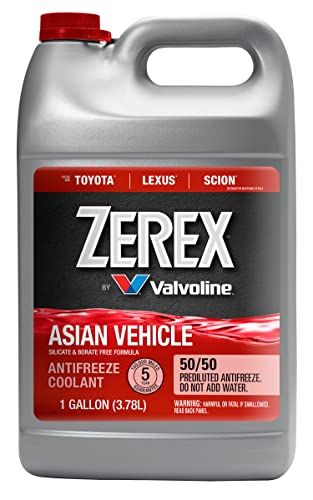
- Formulated to replace the OEM fluid in Asian make vehicles...
- 5 year/150, 000 mile . Silicate-free, long-life, phosphate...
- The long life formula provides protection for all cooling...
- Meets the following OEM and industry specifications: JIS K...
- Note: Please check the vehicle specification before...
Last update on 2026-06-23 / Affiliate links / Images from Amazon Product Advertising API
If the PDF is very large, it may not load in the preview below.
Some older TSBs had multiple PDFs — visit the NHTSA Website to view all PDFs.
If the TSB PDF does not show, download or view it on the NHTSA Website.
Click on the (+) Plus Sign
Then Click on Associated Document(s)
Search NHTSA Database for Recalls
Search NHTSA Database for Vehicle Investigations
View Latest Vehicle Investigations
Search NHTSA Database for Vehicle Complaints
View Latest Vehicle Complaints
TSB/Document ID: SU-1315
Replacement Service Bulletin Number:
MFR Communication Date: 2013-07-29
MFR Internal Campaign ID/Software Version:
Communication Type: Service Bulletin/Repair Instructions
NHTSA Components: ENGINE
MFR Component System:
MFR Component Subsystem:
Previous TSB | Next TSB |
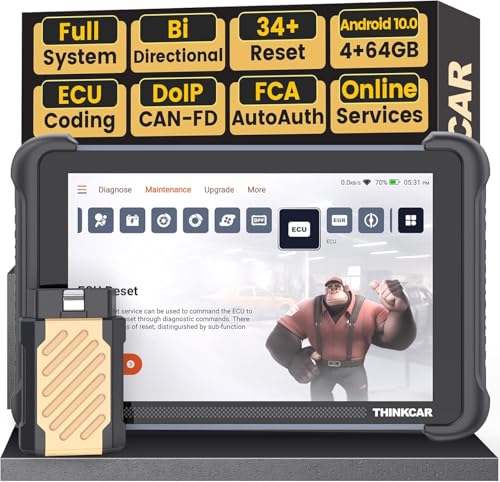
- [Notice] When you receive a used device, it may be a customer return resold by Amazon without inspection. You can exchange it for a new one through Amazon. As this situation is unavoidable, we sincerely apologize. For any issues, contacting us via Amazon's "Messages" is the best way. THINKSCAN 689BT Bidirectional Scan Tool Can Be Used Immediately After It is Turned On, Without Complicated Registration Process, Which is More Convenient & Quick.
- Full Bi-Directional Control & 3000+ Active Tests: Take control and test components like actuators, fuel injectors, relays, and cooling fans in real time. You’ll quickly see if the problem is in the part itself or the control module — saving you hours of guesswork and frustrating trial-and-error.
- Advanced ECU Coding Capabilities: Handle module matching and hidden feature activation with confidence. When you replace an ECU or want to customize settings, this obd2 scanner diagnostic bi directional tool gives you the professional-level capabilities you need without the dealership price tag.
- 34+ Useful Reset and Maintenance Functions: Complete everyday service tasks smoothly with a wide range of helpful reset and maintenance functions. Whether you’re keeping up with regular upkeep or tackling a specific job, this scanner makes maintenance simpler and less stressful for both DIYers and pros.
- Comprehensive Full System Diagnostics: Diagnose every major system — Engine, Transmission, ABS, SRS, TPMS, and more — all in one place. Finally stop wondering if you’re missing something important; get the full picture and clear codes with ease.
Last update on 2026-07-02 / Affiliate links / Images from Amazon Product Advertising API
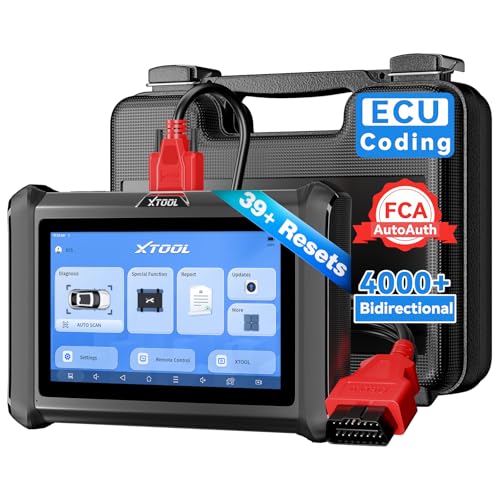
- Top Reasons to Choose the D7S OBD2 Scanner: XTOOL D7S car scan tool, an upgrade of XTOOL D7, offers comprehensive features for automotive technicians, workshops, and DIY enthusiasts 1. Upgraded Hardware: 2+64GB memory, rear camera, intuitive interface, foldable bracket 2. Complete Diagnostics: FCA
 Autoauth, OE-level all system scan, 39+ maintenance services, 4K+ bidirectional, CANFD/DoIP protocol 3. Advanced Capabilities: ECU c0ding, PMI functions 4. Wide Compatibility: Support 10,000+ models, covering 99% vehicle brands 5. Multi-language: Available in 22+ languages, No IP Restrictions 6. 3-Year Updates: Save 300 bucks on software updates for the latest features and optimizations
 - 2026 Upgraded D7S Car Scanner Features: The newly 2026 D7S V2.0 scanner for car brings exciting features for advanced vehicle diagnostics and enhanced user experience 1. FCA AutoAuth: Now supports FCA SGW module for Chrysler, for Jeep, for Dodge (2018+), for Fiat (2017+), enabling faster vehicle communication without gateway restrictions 2. PMI (Offline ECU Pr0gramming): Allows for Ford, for Lincoln, and for Mazda ECU pr0gramming for new modules 3. Optimized Diagnostic Report 2.0: Personalized reports with logos and customer info for auto shops. Note: Compatibility varies by cars, please check before order
- 39+ Services/Resets/Adaptations/Relearns/Calibrations: XTOOL D7S full system car scanner diagnostic tool tackles 99% of common car issues through its 36+ special functions, including Oil Reset, EPB, SAS, BMS, Throttle Reset, Injector C0ding, ABS Bleed, TPMS Reset, Power Balance, etc and also covers specific-vehicle functions like Crank Sensor Relearn, ABS Initialization, Cylinder Power Balance, Fuel Trim Reset, Idle Relearn etc. This car diagnostic scanner enhances efficiency, making repairs and maintenance hassle-free. Tip: DO NOT for All vehicles, please check compatibility first
- Cost-effective ECU C0ding Scan Tool for Specific Brands: Enhance your vehicle's performance with XTOOL D7S! This obd2 scanner all systems bidirectional offers advanced capabilities at an affordable price, supports online for BMW, for Benz and offline for BENZ, for MIT, along with PMI functions for Ford, for Mazda, and for Lincoln. Ideal for technicians and DIY enthusiasts, this automotive scanner diagnostic tool optimizes vehicle performance and enhances the driving experience. Note: Not for all cars and modules, please send car VIN to check the compatibility before purchase
- OE All System Diagnostic & 8 Pids Graphing: XTOOL D7S is a comprehensive all system bi directional obd2 scanner that delivers dealer-level diagnostics, completely controlling over your vehicle’s performance and health. This automotive scan tool can read and clear DTCs, view live data and ECU information, retrieve freeze frames, and perform active tests and full obd2 functions. This bi-directional scan tool can can identify your vehicle's make, model, and year information with just one click and show up to 8 PIDs live data with options for CSV viewing, playback, and recording for in-depth analysis. It is easy-to-use for both professionals and beginners, helping pinpoint issues efficiently
Last update on 2026-06-30 / Affiliate links / Images from Amazon Product Advertising API
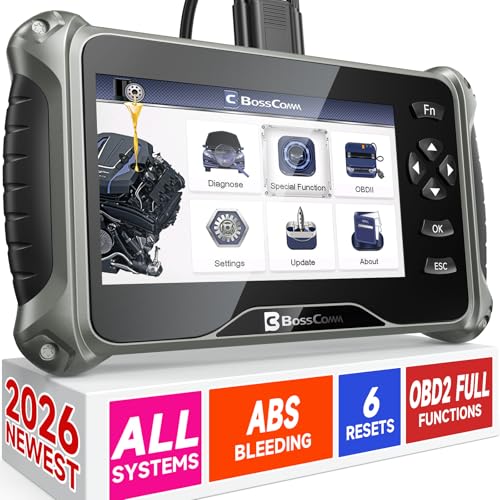
- 【✅Compared to BOSSCOMM IF742, IF745 Offers Full-System Diagnostics】The BOSSCOMM IF745 car diagnostic scanner is an upgraded model of IF742. In addition to supporting all OBD2 Code Reader functions and 6 reset options (ABS/EPB/SAS/BMS/Oil/Throttle), it expands diagnostics from 4 systems (Check Engine/ABS/SRS/Transmission) to vehicle All systems, including Steering, Suspension, and Body Electronics. This provides deeper, more comprehensive diagnostic capabilities.
- 【✨10 OBD2 Functions】The BOSSCOMM IF745 scan tool’s DTC Lookup instantly translates fault codes into user-friendly explanations, its I/M Readiness feature streamlines emissions testing with a single tap, and Freeze Frame lets you pinpoint the exact moment of a fault for in-depth root-cause diagnosis. Combined with a live data dashboard and advanced diagnostics (O2S, OBMon, EVAP), it delivers comprehensive insights for confident troubleshooting.
- 【✨Deep Diagnostics for All Vehicle System Modules】Beyond code reading/clearing and ECU information retrieval, our all-in-one data stream feature lets you inspect all current fault codes and their locations across the vehicle’s systems. This vehicle code reader helps you turn off dashboard warning lights and perform a comprehensive self-check of your car at home—no more back-and-forth trips to the repair shop or hefty inspection fees.
- 【✨6 Essential Resets: ABS Bleeding, Oil, EPB, SAS, Throttle, BMS】The BOSSCOMM IF745 obd2 scanner diagnostic tool swiftly purges air from brake lines to restore braking sensitivity, fine-tunes maintenance cycles to eliminate false alerts, resolves parking brake issues with one-click control, recalibrates steering sensors for stability, optimizes engine idling/acceleration for smoother performance, and deeply resets battery systems to extend lifespan and range via precise parameter adjustments.❗NOTE: Does NOT support bidirectional control, coding, or programming.
- 【✨10,000+ Car Models, AutoVIN, 13 Languages】The BOSSCOMM IF745 vehicle scanner diagnostic tool covers 73+ global car brands and offers support in 13 languages, making it perfect for DIYers, auto mechanics, or as a thoughtful gift. With a single-click AutoVIN feature, it instantly retrieves vehicle serial numbers, streamlining diagnostics for users globally. This adaptable tool balances user-friendliness with precision, catering to both personal and professional requirements.✅Unsure about compatibility? Compatibility will vary on vehicles' model and year, pls reach us via 📧 [email protected] 📧 before purchase.
Last update on 2026-07-02 / Affiliate links / Images from Amazon Product Advertising API
This product presentation was made with AAWP plugin.