
NHTSA ID Number: 11032152
Manufacturer Communication Number: TSB_2078548_2
TSB/Document Date: 2026-05-05
Summary
This TSB provides instructions for the combined baseline updates, and software version management.
A Connection offline
Technical Service Bulletin Transaction No.: 2078548/2
(SVM) for combined baseline updates and software version management Release date: Apr 23, 2026
Condition
Model(s) VIN Range Vehicle Specific Equipment
All Audi vehicles 2025 — 2026 Not applicable
REVISION HISTORY
revision [pate [rurpore
2 | | Revised Service (modify verbiage)
07/17/2025 | Initial publication
Instructions for combined baseline updates (SVM)
These work instructions offer assistance with the following topics:
+ SVM code cannot be used.
+ — Running the SVM code fails before, during and after the update.
+ Feedback documentation (version compare) cannot be transmitted.
+ Control units cannot be activated for the first time.
+ Functions have been lost.
Technical Background
Because of the variety and complexity of the vehicle electronics, it is necessary to check, after completing the repair,
whether the new hardware and software combination is approved. This check must be carried out with software
version management (SVM).
Production Solution
Ongoing.
Service
This bulletin may apply to vehicles still within the new model launch repair authorization period!
— For vehicles still in the launch phase, the workshop must create a case with the Technical Assistance
Center (TAC) per the repair authorization. Reference this TSB number in the first line of the TAC case.
List of contents:
1. General information.
2. Necessary information for contacting the SVM department.
3. General information on fault patterns.
Changes:
Complete revision for combined baseline updates!
1. General information:
The attached documents will be updated if new information becomes available!
1.1 Recommended ODIS configuration
1.1.1 Connection variants between diagnostic interface and ODIS tester recommended for performance
reasons during an update:
If available, we recommend always using VAS 6154A to update control units as this has very good
protection against electrostatic discharge.
1.1.2 Firewall — please note the current requirements
The requirements for the necessary firewall settings are subject to frequent changes, especially in the event of an
ODIS update.
Please check, especially when attempted updates are unsuccessful, whether your settings are up to date and
correct.
For information on the currently valid firewall settings, please refer to the ODIS release notes. For example, you can
search for “ODIS release notes’ in the information platforms available to you. Make sure that you refer to the ODIS
release notes for the current ODIS version of your tester.
1.2 How to avoid electrostatic discharge when updating control units
IMPORTANT: The following information only applies to a cable connection between ODIS tester and
diagnostic interface
To reduce the probability of problems due to electrostatic discharge while the control units are being updated, the
following precautions are recommended:
Before entering an SVM code, i.e. before starting the update:
+ Puton anti-static safety shoes according to the ESD standard DIN ISO 20345 or alternatively ESD heel
straps; both are available via the workshop equipment product catalogue.
+ Avoid using the ODIS tester inside the vehicle.
+ If necessary, connect ODIS tester charger.
* Connect the 12V charger for the vehicle battery.
+ Also make sure that the diagnostic interface is connected to the ODIS tester via USB cable.
Both chargers should be connected to the same circuit.
During the update:
+ Ensure the power supply to the vehicle and the ODIS tester before starting the update and do not disconnect
the 12V battery charger for the vehicle and the power supply unit for the ODIS tester during the update.
+ Avoid unnecessary contact with the vehicle.
+ Do not get into or out of the vehicle.
+ As much as possible, do not open and close any doors or lids.
+ Avoid activating any electric drives in the direct vicinity of the work bay, such as electric doors/gates or lifting
platforms.
1.3 Safe use of SVM codes
Always check the repair manual instructions in ETKA, or the corresponding TSB to determine whether the SVM
code is valid for this vehicle and its current equipment.
There are no safety-related queries and no alternative solutions.
Regardless of whether the SVM code is part of:
* aservice campaign.
+ amodification.
+ aretrofitting procedure.
or
+ a baseline update.
After the code has been used successfully, the vehicle will have a new baseline for SVM.
1.4 Important points to observe when performing updates
1.4.1 ALWAYS perform update according to service campaign BEFORE problem-related update
according to TSB
(i)
Caution! Processing in the wrong sequence can alter the data version of the vehicle in such a way that a
service campaign cannot be performed successfully anymore.
Example:
+ The customer comes to the workshop with a complaint.
+ Atthe vehicle reception, you discover that there is an uncompleted service campaign for the vehicle.
. In this case, ALWAYS work in the following sequence:
1.4.2 Correct sequence for performing service campaigns
When performing several service campaigns, ALWAYS proceed in the order of their start date.
General rules:
+ FIRST: perform the oldest service campaign NOT yet performed according to the start date.
+ LAST: perform the most recent service campaign NOT yet performed according to the start date.
(a)
Caution! Processing in the wrong sequence can alter the data version of the vehicle in such a way that an
older service campaign cannot be performed successfully anymore.
For EVERY service campaign and SVM code, it is essential to ensure that:
+ Each SVM code has been performed SUCCESSFULLY BEFORE using another SVM code in the same
service campaign or TSB.
+ Abus sleep cycle is completed between completing the service campaign/TSB in accordance with the
instructions and starting the next service campaign/TSB.
If the sequence of the service measures is ignored, it is possible that:
+ Anolder service campaign may not start if a newer one was performed beforehand.
— Reason: The vehicle is now in a condition for which an older service campaign no longer applies.
+ In this case you would have to open a Technical Assistance Center (TAC) ticket.
Example (assuming that no service campaigns have yet been completed):
+ The sequence of the service campaigns according to their start date is indicated by the red circles.
+ Please ignore the serial number column because the ordering is NOT correct.
Campaigns/Actions
Serial Campai ~ Panne Repair data Criteri
number C4mpaigit” jstart Designation P Criterion
1 45E7 2016-11-15 5 ore
6451 GR} 2016-05-09 | W-Segucema
7258 2016-09-23 4 Ea
91N6 2015-12-09 | W-Seqyicema’
9106 2017-03-15 6 3
9604 @] 1015-09-28 | W-Qualitatspé
7 9666 2017-04-19 7 a
Figure 1. Correct sequence of the service campaigns according to the start date.
Always send a support ticket!
+ Please send an ODIS support ticket for all ODIS tester issues to make data available for analysis.
- Technical support is NOT provided via the ODIS ticket!
+ — Note the information in the document “SVM updating failures”, chapter 4.2 “Failure during flash process”.
1.6 Observe the attached document “SVM updating failures”:
+ — Requirements for a correct update.
+ General information about the correct procedure for updates.
+ How to proceed in the event of failures before and during the update.
1.7 Observe the attached document “ETKA parts management”:
+ Parts search via chassis number — how to find the correct replacement part for the vehicle.
+ Assembly group control — includes the vehicles CURRENT data version for the parts search.
+ Part bulletins - important information for repairs and how to find it.
+ Activations and accessory installation procedures depend on the PR numbers
=> examples for trailer hitch and navigation
<= a
= - 2)
=
TR = - AY ¥
fe i <
at nana _*
a> START BY
- STOP
7 n/a
= \
> - ren |* Vv
-* a
- ah ? A aN
\a\ => \*
| ey ! ef
\ ed € = |
Figure 2. The reader coil is in the cupholder.
* Ignition on.
+ — Engine off.
+ Selector lever in P.
+ Wheel speed sensors connected.
+ Extended ambient conditions of engine control unit:
-— Speed signal = 0 (may vary e.g. if a tire change is performed during the update and the ABS control unit
recognizes a speed signal).
- Engine speed = 0.
It is essential to work through all authorized/relevant DTCs of all diagnostic addresses which may influence
fulfilment of the requirements BEFORE updating the affected diagnostic address.
e.g.:
- DA0003 ABS control unit reports speed signal = 158 MPH although the vehicle is stationary
1.9 Messages from ODIS tester during update
Check the attached document about SVM failures for the various messages and procedures.
Compact: If the update did not start or was unsuccessful although the TSB applies to the vehicle:
1. Is the battery charger connected? Is battery charge level (SOC) >80%? Unnecessary electrical equipment
deactivated?
2. Is the vehicle identification number specified in the order the same as that of the vehicle?
3. First perform a bus sleep cycle — close all doors and lids and lock the vehicle for at least 20 minutes.
- Important: bus sleep cycle! A terminal 30 reset will NOT have the desired effect here.
4. Now switch on the ignition for at least 5 minutes to start up all control units fully before starting diagnosis
again.
5. Completely restart the ODIS tester or use a different UP-TO-DATE ODIS tester.
6. In sucha case, please use diagnostic interface VAS 6154A for the best protection against electrostatic
discharge if possible.
7. Check whether the firewall settings correspond to the current ODIS release notes (refer to chapter 1.1.2).
8. Always start a new diagnosis session so that all control units can be read again.
9. Check whether the affected control units can be accessed via diagnosis. If NOT, perform a terminal 30 reset of
the control unit(s) that cannot be accessed for at least 20 minutes and check whether it is supplied
successfully with power.
10. If all affected control units can now be accessed, repeat the update.
11. If it still fails, always first send an ODIS support ticket with the message "data transmission only" and, when
communicating with the Technical Assistance Center, use the feedback ID from the subject of the ODIS
support ticket, as described in chapter 4.2 of the attached file “SVM updating failures”.
1.10 Event memory entries in various control units after an update/after replacing control units
First attempt the following procedure:
1. Bus sleep mode - close all doors and lids and lock the vehicle for at least 20 minutes.
2. Drive the vehicle and carry out an application drive.
3. Run any available test plans to rectify faults.
4. Check whether the event memory entries are now sporadic and can be erased.
5. Erase the event memory entries.
6. If the event memory entries still cannot be erased, try the following:
- Access Guided Functions in ODIS. Select the corresponding diagnostic address, e.g. “0003 Brake
electronics”, and then the function “Check and erase DTC memory”. This increases your chance of
success,
Also refer to chapter 3 for general information on fault patterns.
1.11 Vehicle functions have been lost (various diagnostic addresses)
After an update, control unit replacement or another repair, functions are lost (e.g. cruise control, drive select, rest
recommendation or navigation do not work any more).
Restore the existing functions via the ODIS tester:
+ Select “Special functions’ => “SVM activations”.
| eR Se Hs 7 a
Control modules | Orders biss TSB Test plan Procedure Special Functions Modes 8
“eso wo wie ll Ee
Status Checks 2 € ‘Component diagnosis
‘Software Version Management (SVM) |g Buas Status D ato |
es , }
= a l@rstng sid
[4B Ftashing
- MSwEaEEs [
=
= eo |
7
«< > -
‘Activation of data/functions a es 7.
‘Pete | Depa documents » @
‘The dognoste entrance was ended. jade e
Figure 3. ODIS screen.
+ Now select “-2- Restore already existing activations’.
Coral moaites | Orders | Diss | 788 | Test pian Procedure | Special Functions | Modes *
‘Activation of datatunctions C=] dames
= ess Paes
How do you want to proceed? {if Bud Sums Documentation
2 Recwerorvns) exten actvelons fo after control module replacement? [eisemores at
“3 End test program 1 Fasting
A recovery be performed if data/functions that have already rm —
[E Bpeapetetdi eg Riis bead etter lhe olalgtelt sy Measuring Equipment
\ Admin
Log .
oe a ,
Si{a]___ [16 <)> 1/91 |r| [orem =) 3)
(Chock wos stare. |Tet version ME 1<dee
Figure 4. ODIS screen.
+ You will then be shown at which diagnostic address(es) the existing activations can be restored.
+ The successfully activated functions will then be listed.
DISS TSB Procedure oes *
Diagnosis
Activation of data/functions
Active activations
The selected function for Software Version Management =
(SVM) will be carried out
Status:
The activation has been completed successfully,
Active activations.
Virtual Cockpit Pius
Driving profile adaptation - offroad level 3
Vanable ight signatures
Driving profile adaptation - offroad level 2
Light signatures (high) Function di
Navigation (HCP3)
Hold assistant
Driving profile adaptation - eco plus
High beam assistant Log ¥
Driving profile adaptation - comfort
Driving profile adaptation - sport
Driving profile adaptation - normal Data s
Scalable DC charging Vv
Sweeping turn signal lamps ogee ay.
Cy) ‘ Cance < > »
isch es vasa Fyecoai ME cadeu
Figure 5. ODIS screen.
+ Please note that retrofits which have been installed in the vehicle or coded manually which were NOT
performed by AUDI AG and are therefore not stored in the systems of AUDI AG may be lost after:
- Anupdate via TSB
— Anupdate via a service campaign
— Target/actual comparison
- Configuration check of control units
AUDI AG cannot answer questions about these retrofits and coding as they are not stored in the
systems for the vehicle and are not correctly activated either. To restore them, the coding of the control
units after a workshop visit must be performed again manually and independently.
- Also refer to chapter 3 for general information about individual fault patterns.
1.12 ALWAYS activate control units via the function test “Replace control module”
+ To replace control units, use Guided Fault Finding and ALWAYS use the function test “Replace control
module”.
+ Here the correct test plan is selected for this control unit in this vehicle.
+ NEVER activate a control unit by simply opening the control unit configuration.
— In this case, the control unit would possibly be included in the reference of the vehicle, but it would often
not be activated (no adaptation, coding and parameter setting etc.).
2. Necessary information for initial contact with the SVM department
2.1 An up-to-date diagnostic log has been sent online via GFF.
Describe in as much detail as possible which checks you have already performed, what the results were and
whether you referred to this TSB. If the update fails, ALWAYS send an ODIS support ticket before submitting an
enquiry and copy the feedback ID from the subject of the ODIS support ticket e-mail into the enquiry.
(Precise description in chapter 4.2 of the attached file “SVM updating failures”)
Add the following comment to the ODIS support ticket: “Data transmission only’.
2.2 The following information is essential so that the enquiries can be processed:
Campaign instructions cannot be opened? => Do NOT contact SVM, instead please open ELSA feedback
ticket.
+ Can the control unit be accessed via diagnosis?
+ Have the fuses of the affected control unit been checked?
+ If replacing: Is the correct control unit fitted according to diagnostic log and ETKA?
+ 12N battery charger connected?
+ — Is the high-voltage system not being charged during the update?
+ Battery charge level (SOC) >80%?
+ Unnecessary electrical equipment deactivated?
+ Is the diagnostic interface connected to the tester via USB cable or Wi-Fi?
+ Do the firewall settings correspond to the current ODIS release notes? (refer to chapter 1.1.2)
+ Bus sleep mode performed for >20 minutes?
+ Terminal 30 reset performed for >20 minutes?
+ Have you checked the general information on fault patterns in chapter 3?
3. General information on fault patterns
Campaign instructions cannot be opened? => Do NOT contact SVM, instead please open ELSA feedback
ticket.
+ After replacing control units, ALWAYS make sure to activate them via the function test “Replace control
module” to avoid event memory entries.
+ Please note: If you have any problems with the D3 edge box, please contact D3EdgeBox@audi.com.
Date / time missing in the vehicle due to lack of GPS signal
Search for missing ‘GPS signal DTC’ in the ODIS log:
+ Address 8124 — Application Server 1 System 2 Java


If the PDF is very large, it may not load in the preview below.
Some older TSBs had multiple PDFs — visit the NHTSA Website to view all PDFs.
If the TSB PDF does not show, download or view it on the NHTSA Website.
Click on the (+) Plus Sign
Then Click on Associated Document(s)
Search NHTSA Database for Recalls
Search NHTSA Database for Vehicle Investigations
View Latest Vehicle Investigations
Search NHTSA Database for Vehicle Complaints
View Latest Vehicle Complaints
TSB/Document ID: TSB_2078548_2
Replacement Service Bulletin Number:
MFR Communication Date: 2026-04-23
MFR Internal Campaign ID/Software Version:
Communication Type: Service Bulletin/Repair Instructions
NHTSA Components: ELECTRICAL SYSTEM
MFR Component System:
MFR Component Subsystem:
Previous TSB | Next TSB |
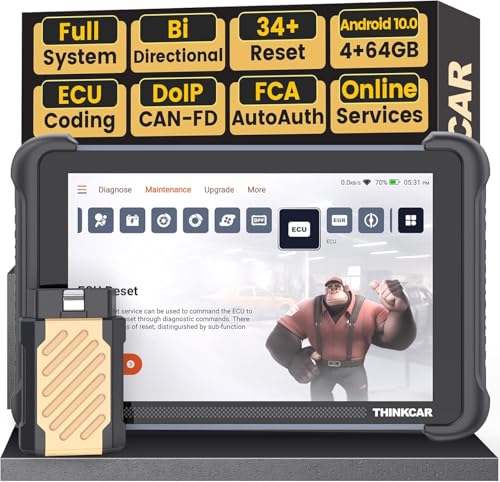
- [Notice] When you receive a used device, it may be a customer return resold by Amazon without inspection. You can exchange it for a new one through Amazon. As this situation is unavoidable, we sincerely apologize. For any issues, contacting us via Amazon's "Messages" is the best way. THINKSCAN 689BT Bidirectional Scan Tool Can Be Used Immediately After It is Turned On, Without Complicated Registration Process, Which is More Convenient & Quick.
- Full Bi-Directional Control & 3000+ Active Tests: Take control and test components like actuators, fuel injectors, relays, and cooling fans in real time. You’ll quickly see if the problem is in the part itself or the control module — saving you hours of guesswork and frustrating trial-and-error.
- Advanced ECU Coding Capabilities: Handle module matching and hidden feature activation with confidence. When you replace an ECU or want to customize settings, this obd2 scanner diagnostic bi directional tool gives you the professional-level capabilities you need without the dealership price tag.
- 34+ Useful Reset and Maintenance Functions: Complete everyday service tasks smoothly with a wide range of helpful reset and maintenance functions. Whether you’re keeping up with regular upkeep or tackling a specific job, this scanner makes maintenance simpler and less stressful for both DIYers and pros.
- Comprehensive Full System Diagnostics: Diagnose every major system — Engine, Transmission, ABS, SRS, TPMS, and more — all in one place. Finally stop wondering if you’re missing something important; get the full picture and clear codes with ease.
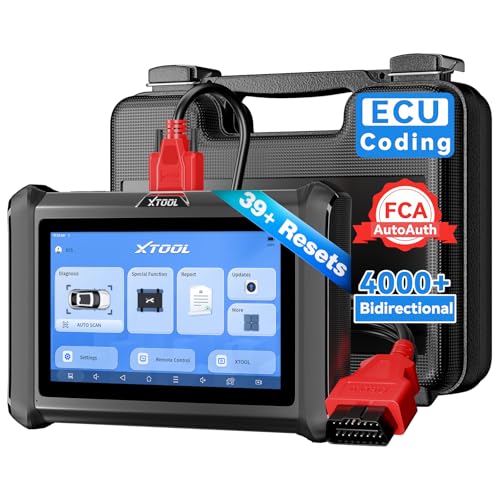
- Top Reasons to Choose the D7S OBD2 Scanner: XTOOL D7S car scan tool, an upgrade of XTOOL D7, offers comprehensive features for automotive technicians, workshops, and DIY enthusiasts 1. Upgraded Hardware: 2+64GB memory, rear camera, intuitive interface, foldable bracket 2. Complete Diagnostics: FCA
 Autoauth, OE-level all system scan, 39+ maintenance services, 4K+ bidirectional, CANFD/DoIP protocol 3. Advanced Capabilities: ECU coding, PMI functions 4. Wide Compatibility: Support 10,000+ models, covering 99% vehicle brands 5. Multi-language: Available in 22+ languages, No IP Restrictions 6. 3-Year Updates: Save 300 bucks on software updates for the latest features and optimizations
 - 2026 Upgraded D7S Car Scanner Features: The newly 2026 D7S V2.0 scanner for car brings exciting features for advanced vehicle diagnostics and enhanced user experience 1. FCA AutoAuth: Now supports FCA SGW module for Chrysler, for Jeep, for Dodge (2018+), for Fiat (2017+), enabling faster vehicle communication without gateway restrictions 2. PMI (Offline ECU Programming): Allows for Ford, for Lincoln, and for Mazda ECU programming for new modules 3. Optimized Diagnostic Report 2.0: Personalized reports with logos and customer info for auto shops. Note: Compatibility varies by cars, please check before order
- Cost-effective ECU Coding Scan Tool for Specific Brands: Enhance your vehicle's performance with XTOOL D7S! This obd2 scanner all systems bidirectional offers advanced capabilities at an affordable price, supports online for BMW, for Benz and offline for BENZ, for MIT, along with PMI functions for Ford, for Mazda, and for Lincoln. Ideal for technicians and DIY enthusiasts, this automotive scanner diagnostic tool optimizes vehicle performance and enhances the driving experience. Note: Not for all cars and modules, please send car VIN to check the compatibility before purchase
- OE All System Diagnostic & 8 Pids Graphing: XTOOL D7S is a comprehensive all system bi directional obd2 scanner that delivers dealer-level diagnostics, completely controlling over your vehicle’s performance and health. This automotive scan tool can read and clear DTCs, view live data and ECU information, retrieve freeze frames, and perform active tests and full obd2 functions. This bi-directional scan tool can can identify your vehicle's make, model, and year information with just one click and show up to 8 PIDs live data with options for CSV viewing, playback, and recording for in-depth analysis. It is easy-to-use for both professionals and beginners, helping pinpoint issues efficiently
- 3 Years Software Update, Value for Money: With 3 years of software updates and 22+ languages(no IP restrictions), XTOOL D7S auto scanner code scanner ensures ongoing compatibility for the latest car models and improved diagnostic functions. This all system vehicle diagnostic scanner comes with a 30-day return policy and a 24-month repair for dependable performance. XTOOL are dedicated to your satisfaction, so enjoy seamless support and lifetime expert assistance. Should you encounter any issues or concerns, don’t hesitate to reach out XTOOL. D7S with newest update with 22 languages freely transfer without authorization, check details from setting-language or from XTOOL
- 🔥 Historical lowest pr-ice now on sa-le--hot se-lling.
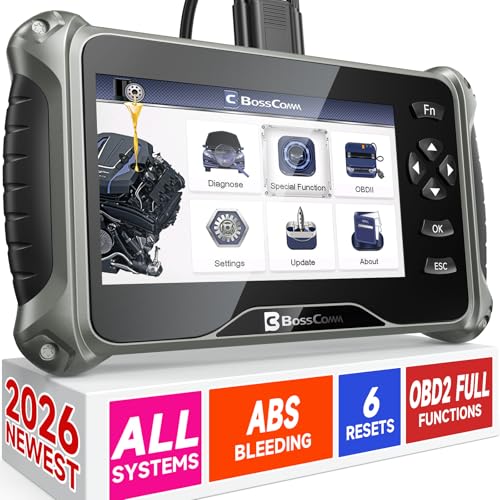
- 【🎈𝗜𝗙𝟳𝟰𝟱 𝗽𝗲𝗿𝗳𝗼𝗿𝗺𝘀 𝟲 𝗲𝘀𝘀𝗲𝗻𝘁𝗶𝗮𝗹 𝗿𝗲𝘀𝗲𝘁 𝗳𝘂𝗻𝗰𝘁𝗶𝗼𝗻𝘀—𝗔𝗕𝗦 𝗕𝗹𝗲𝗲𝗱𝗶𝗻𝗴, 𝗢𝗶𝗹 𝗥𝗲𝘀𝗲𝘁, 𝗘𝗣𝗕, 𝗦𝗔𝗦, 𝗧𝗵𝗿𝗼𝘁𝘁𝗹𝗲 𝗥𝗲𝗹𝗲𝗮𝗿𝗻, 𝗮𝗻𝗱 𝗕𝗠𝗦—𝗽𝘂𝘁𝘁𝗶𝗻𝗴 𝗽𝗿𝗼𝗳𝗲𝘀𝘀𝗶𝗼𝗻𝗮𝗹-𝗴𝗿𝗮𝗱𝗲 𝗺𝗮𝗶𝗻𝘁𝗲𝗻𝗮𝗻𝗰𝗲 𝗯𝗮𝗰𝗸 𝗶𝗻 𝘆𝗼𝘂𝗿 𝗵𝗮𝗻𝗱𝘀.】Spongy brakes? Stuck oil light? Parking brake won't release? Off-center steering? Rough idle after battery disconnect? Draining battery? IF745 handles all with a few taps. One tool covers six dealer-level resets, saving hundreds in labor costs. ❗ NOTE: Does NOT support bidirectional control, coding, or programming.
- 【✨ 𝗜𝗙𝟳𝟰𝟱 𝗴𝗼𝗲𝘀 𝗯𝗲𝘆𝗼𝗻𝗱 𝗯𝗮𝘀𝗶𝗰 𝗰𝗼𝗱𝗲 𝗿𝗲𝗮𝗱𝗶𝗻𝗴 𝘄𝗶𝘁𝗵 𝟭𝟬 𝗶𝗻𝘁𝗲𝗴𝗿𝗮𝘁𝗲𝗱 𝗳𝘂𝗻𝗰𝘁𝗶𝗼𝗻𝘀—𝗗𝗧𝗖 𝗟𝗼𝗼𝗸𝘂𝗽, 𝗜/𝗠 𝗥𝗲𝗮𝗱𝗶𝗻𝗲𝘀𝘀, 𝗙𝗿𝗲𝗲𝘇𝗲 𝗙𝗿𝗮𝗺𝗲, 𝗟𝗶𝘃𝗲 𝗗𝗮𝘁𝗮, 𝗢𝟮𝗦, 𝗢𝗕𝗠, 𝗘𝗩𝗔𝗣, 𝗮𝗻𝗱 𝗺𝗼𝗿𝗲. 】Pulling a code tells you something is wrong. IF745 tells you what the code means, when the fault happened, and what data surrounds it. Pass emissions with one I/M Readiness tap. Freeze the fault moment with Freeze Frame. Monitor live sensor data in real time. Turn cryptic codes into clear answers.
- 【🛒 𝗜𝗙𝟳𝟰𝟱 𝗽𝗲𝗿𝗳𝗼𝗿𝗺𝘀 𝗳𝘂𝗹𝗹-𝘀𝘆𝘀𝘁𝗲𝗺 𝗱𝗶𝗮𝗴𝗻𝗼𝘀𝘁𝗶𝗰𝘀 𝗮𝗰𝗿𝗼𝘀𝘀 𝗮𝗹𝗹 𝗺𝗼𝗱𝘂𝗹𝗲𝘀—𝗲𝗻𝗴𝗶𝗻𝗲, 𝗔𝗕𝗦, 𝗮𝗶𝗿𝗯𝗮𝗴, 𝘁𝗿𝗮𝗻𝘀𝗺𝗶𝘀𝘀𝗶𝗼𝗻, 𝘀𝘁𝗲𝗲𝗿𝗶𝗻𝗴, 𝘀𝘂𝘀𝗽𝗲𝗻𝘀𝗶𝗼𝗻, 𝗯𝗼𝗱𝘆 𝗲𝗹𝗲𝗰𝘁𝗿𝗼𝗻𝗶𝗰𝘀, 𝗮𝗻𝗱 𝗺𝗼𝗿𝗲. 】Warning lights on but you don't know why? Skip the $100+ diagnostic fee at the shop. Run a complete self-check from your driveway. IF745 reads and clears fault codes, retrieves ECU info, and displays live data from every accessible module—delivering a full vehicle health report in minutes, without leaving home.
- 【✅𝗜𝗙𝟳𝟰𝟱 𝗳𝗲𝗮𝘁𝘂𝗿𝗲𝘀 𝗮 𝟳-𝗶𝗻𝗰𝗵 𝗱𝗶𝘀𝗽𝗹𝗮𝘆, 𝗲𝗿𝗴𝗼𝗻𝗼𝗺𝗶𝗰 𝗱𝗲𝘀𝗶𝗴𝗻, 𝗪𝗶-𝗙𝗶 𝘂𝗽𝗱𝗮𝘁𝗲𝘀, 𝗮𝗻𝗱 𝘇𝗲𝗿𝗼 𝘀𝘂𝗯𝘀𝗰𝗿𝗶𝗽𝘁𝗶𝗼𝗻 𝗳𝗲𝗲𝘀 𝗳𝗼𝗿 𝗵𝗮𝘀𝘀𝗹𝗲-𝗳𝗿𝗲𝗲 𝗱𝗶𝗮𝗴𝗻𝗼𝘀𝘁𝗶𝗰𝘀.】Large screen means no squinting. Intuitive navigation and customizable data displays put key info at your fingertips. Wi-Fi delivers lifetime free updates without a computer. No recurring fees. No hidden costs. Just a reliable tool that works as hard as you do.
This product presentation was made with AAWP plugin.