
NHTSA ID Number: 11005739
Manufacturer Communication Number: 2024.26.3_SX_0724.pdf
TSB/Document Date: 2024-08-06
Summary
Tesla does not provide physical owner's manual copies. Instead, all available owner’s manual content is integrated into the vehicle software, and only the content relevant for a given vehicle, based on vehicle configuration and software version installed, is displayed on its touchscreen. This file contains all available owner’s manual content for the vehicle converted to PDF format, and given the distribution method and NHTSA’s submission format requirements, it is the best available representative copy of owner’s manual content. However, a customer who accesses the owner’s manual via their vehicle’s touchscreen would only see the parts of this PDF file that are relevant to their vehicle.
Summon. It is the driver's responsibility to remain in control of Model SModel X at all times. Pay close attention
whenever Summon is actively moving Model SModel X and stay prepared to take immediate action. Failure to do so can
result in serious property damage, injury or death.
WARNING: Model SModel X cannot detect obstacles that are located lower than the bumper, are very narrow, or are
hanging from a ceiling (for example, bicycles). In addition, many unforeseen circumstances can impair Summon's ability
to move in or out of a parking space and, as a result, Summon may not move Model SModel X appropriately. Therefore,
you must continually monitor the vehicle's movement and its surroundings and remain prepared to stop Model SModel X
at any time.
Smart Summon
CAUTION: Smart Summon is a BETA feature. You must continually monitor the vehicle and its surroundings and stay
prepared to take immediate action at any time. It is the driver's responsibility to use Smart Summon safely, responsibly,
and as intended.
CAUTION: Smart Summon is designed and intended for use only on parking lots and driveways located on private
property where the surrounding area is familiar and predictable. Do not use Smart Summon on public roads.
NOTE: Smart Summon is disabled if Model SModel X is in Valet mode (see Valet Mode on page 183).
CAUTION:
Smart Summon is unlikely to operate as intended in the following types of situations:
• GPS data is unavailable due to poor cellular coverage.
• The driving path is sloped. Smart Summon is designed to operate on flat roads only (up to 10% grade).
• A raised concrete edge is detected. Depending on the height of the concrete edge, Smart Summon may not move
Model SModel X over it.
• One or more of the sensors (if equipped) or cameras is damaged, dirty, or obstructed (such as by mud, ice, or snow,
or by a vehicle bra, excessive paint, or adhesive products such as wraps, stickers, rubber coating, etc.).
• Weather conditions (heavy rain, snow, fog, or extremely hot or cold temperatures) are interfering with sensor (if
equipped) or camera operation.
• The sensors (if equipped) are affected by other electrical equipment or devices that generate ultrasonic waves.
• Model SModel X is in Trailer Mode or an accessory is attached
WARNING: The list above does not represent an exhaustive list of situations that may interfere with proper operation of
Smart Summon. It is the driver's responsibility to remain in control of Model SModel X at all times. Pay close attention
whenever Smart Summon is actively moving Model SModel X and stay prepared to take immediate action. Failure to do
so can result in serious property damage, injury or death.
WARNING: Smart Summon must only be used on paved surfaces.
WARNING: Smart Summon may not stop for all objects (especially very low objects such as some curbs, or very high
objects such as a shelf) and may not react to all traffic. Smart Summon does not recognize the direction of traffic, does
not navigate around empty parking spaces, and may not anticipate crossing traffic.
WARNING: When using Smart Summon, you must maintain a clear line of sight between you and Model SModel X and
stay prepared to stop the vehicle at any time by releasing the button on the mobile app.
WARNING: When you release the button to stop Model SModel X, a slight delay occurs before the vehicle stops.
Therefore, it is critical that you pay close attention to the vehicle’s driving path at all times and proactively anticipate
obstacles that the vehicle may be unable to detect.
WARNING: Use extreme caution when using Smart Summon in environments where movement of obstacles can be
unpredictable. For example, where people, children or animals are present.
WARNING: Smart Summon may not stop for all objects (especially very low objects such as some curbs, or very high
objects such as a shelf) and may not react to all oncoming or side traffic. Pay attention and be ready to stop
Model SModel X at all times by releasing the button on the mobile app.
Owner's Manual
825
Active Safety Features
Lane Assist
Model SModel X monitors the markers on the lane you are driving in as well as the surrounding areas for the presence of
vehicles or other objects.
When an object is detected in your blind spot or near the side of Model SModel X (such as a vehicle, guard rail, etc.), the
instrument panel displays colored lines radiating from the image of your vehicle. The location of the lines correspond to the
location of the detected object. The color of the lines (white, yellow, orange, or red) represent the object's proximity to
Model SModel X, with white being the farthest and red being the closest and requiring your immediate attention. These
colored lines only display when driving between approximately 7 and 85 mph (12 and 140 km/h). When Autosteer is active,
these colored lines also display if driving slower than 7 mph (12 km/h). However, the colored lines do not display if
Model SModel X is at a standstill (for example, in heavy traffic).
826
Owner's Manual
Active Safety Features
CAUTION: Ensure all cameras and sensors are clean. Dirty cameras and sensors, as well as environmental conditions
such as rain and faded lane markings, can affect Autopilot performance.
WARNING: Lane Assist features are for guidance purposes only and is not intended to replace your own direct visual
checks. Before changing lanes, always use side mirrors and perform the appropriate shoulder checks to visually
determine if it is safe and appropriate to change lanes.
WARNING: Never depend on Lane Assist to inform you if you unintentionally drive outside of the driving lane, or to
inform you that there is a vehicle beside you or in your blind spot. Several external factors can reduce the performance
of Lane Assist (see Limitations and Inaccuracies on page 339). It is the driver's responsibility to stay alert and pay
attention to the driving lane and other road users. Failure to do so can result in serious injury or death.
Steering Interventions
Lane Assist provides steering interventions if Model SModel X drifts into (or close to) an adjacent lane in which an object,
such as a vehicle, is detected. In these situations, Model SModel X automatically steers to a safer position in the driving lane.
This steering is applied only when Model SModel X is traveling between 30 and 85 mph (48 and 140 km/h) on major roads
with clearly visible lane markings. When a steering intervention is applied, the instrument panel briefly displays a warning
message.
Lane Departure Warning
Lane Departure Warning alerts you of undesired lane departures by slightly vibrating the steering wheelsteering yoke if a front
wheel passes over a lane marking when the associated turn signal is off. To turn this warning on or off, touch Controls >
Autopilot > Lane Departure Warning. Lane Departure Warning is active only when driving between approximately 40 and 90
mph (64 and 145 km/h).
Owner's Manual
827
Active Safety Features
Lane Departure Avoidance
Lane Departure Avoidance is designed to warn you if Model SModel X is drifting out of, or nears the edge of, your driving lane.
Lane Departure Avoidance operates when driving between 40 and 90 mph (64 and 145 km/h) on roads with clearly visible lane
markings. You can choose if and how you want Lane Departure Warning to operate by touching Controls > Autopilot > Lane
Departure Avoidance and selecting between these options:
• OFF: You are not warned of lane departures or potential collisions with a vehicle in an adjacent lane.
• WARNING: If a front wheel passes over a lane marking, the steering wheelsteering yoke vibrates.
• ASSIST: Corrective steering is applied to keep Model SModel X in a safe position if Model SModel X drifts into an adjacent
lane or near the edge of the road.
When Lane Departure Avoidance is enabled and Traffic-Aware Cruise Control is active, if Model SModel X drifts out of the
driving lane when the associated turn signal is off, Lane Assist also checks to see whether your hands are on the steering
wheelsteering yoke. If hands are not detected, the instrument panel displays a series of alerts, similar to those that are used
when driving with Autosteer. If hands are repeatedly not detected Model SModel X gradually slows down to 15 mph (25 km/h)
below the detected speed limit, or below the set cruising speed, and the hazard lights start flashing.
NOTE: Lane Departure Avoidance does not warn you of lane departures, or provide steering interventions, if the associated
turn signal is on, which indicates an intentional lane change.
WARNING: Lane Departure Avoidance is intended to help keep you safe, but it does not work in every situation and does
not replace the need to remain attentive and in control.
WARNING: Keep your hands on the steering wheelsteering yoke and drive attentively at all times.
WARNING: Steering interventions are minimal and are not designed to move Model SModel X out of its driving lane. Do
not rely on steering interventions to avoid side collisions.
Emergency Lane Departure Avoidance
Emergency Lane Departure Avoidance automatically applies steering to avoid a potential collision in situations where:
• Model SModel X is departing a lane and may collide with a vehicle traveling in the same direction in the adjacent lane
(regardless of the status of the turn signal).
• Model SModel X is departing a lane into an oncoming lane, the turn signal is off, and an oncoming vehicle is detected.
• Model SModel X is departing the road and the turn signal is off (for example, very close to the edge of the road and a
collision may occur).
To turn this feature on or off, touch Controls > Autopilot > Emergency Lane Departure Avoidance.
When Emergency Lane Departure Avoidance applies steering, a chime sounds and the instrument panel displays a warning and
highlights the lane marking in red.
Emergency Lane Departure Avoidance operates when Model SModel X is traveling between 40 and 90 mph (64 and 145 km/h)
on a road with clearly visible lane markings, curbs, etc.
WARNING: Emergency Lane Departure Avoidance is not a substitute for attentive driving and sound judgment. Keep
your eyes on the road when driving and never depend on Emergency Lane Departure Avoidance to prevent a collision.
Several factors can reduce or impair performance. Depending on Emergency Lane Departure Avoidance to prevent a
potential collision can result in serious injury or death.
Blind Spot Camera and Collision Warning Chime
To display the image from the corresponding side repeater camera whenever you engage a turn signal to change lanes, touch
Controls > Autopilot > Blind Spot Camera.
If you want a chime to sound when a vehicle is in your blind spot and a possible collision is detected, touch Controls >
Autopilot > Blind Spot Collision Warning Chime.
828
Owner's Manual
Active Safety Features
WARNING: Blind Spot Camera does not eliminate the need to drive attentively and manually perform shoulder checks
when changing lanes.
WARNING: Blind Spot Collision Warning Chime cannot detect every collision. It is the driver's responsibility to remain
alert and perform the appropriate shoulder checks when changing lanes.
Limitations and Inaccuracies
Lane Assist features cannot always detect lane markings and you may experience unnecessary or invalid warnings in these
situations:
• Visibility is poor and lane markings are not clearly visible (due to heavy rain, snow, fog, etc.). The exact detection zone of
the ultrasonic sensors varies depending on environmental conditions.
• Bright light (such as from oncoming headlights or direct sunlight) is interfering with the view of the camera(s).
• A vehicle in front of Model SModel X is blocking the view of the camera(s).
• The windshield is obstructing the view of the camera(s) (fogged over, dirty, covered by a sticker, etc.).
• Lane markings are excessively worn, have visible previous markings, have been adjusted due to road construction, or are
changing quickly (for example, lanes branching off, crossing over, or merging).
• The road is narrow or winding.
• Objects or landscape features are casting strong shadows on lane markers.
Lane Assist may not provide warnings, or may apply inappropriate warnings, in these situations:
• One or more of the ultrasonic sensors is damaged, dirty, or obstructed (by mud, ice, or snow, or by a vehicle bra, excessive
paint, or adhesive products such as wraps, stickers, rubber coatings, etc.).
• Weather conditions (heavy rain, snow, fog, or extremely hot or cold temperatures) are interfering with sensor operation.
• The sensors are affected by other electrical equipment or devices that generate ultrasonic waves.
• An object that is mounted to Model SModel X is interfering with and/or obstructing a sensor (such as a bike rack or a
bumper sticker).
In addition, Lane Assist may not steer Model SModel X away from an adjacent vehicle, or may apply unnecessary or
inappropriate steering, in these situations:
• You are driving Model SModel X on sharp corners or on a curve at a relatively high speed.
• Bright light (such as from oncoming headlights or direct sunlight) is interfering with the view of the camera(s).
• You are drifting into another lane but an object (such as a vehicle) is not present.
• A vehicle in another lane cuts in front of you or drifts into your driving lane.
• Model SModel X is not traveling within the speeds at which the Lane Assist feature is designed to operate.
• One or more of the ultrasonic sensors is damaged, dirty, or obstructed (such as by mud, ice, or snow, or by a vehicle bra,
excessive paint, or adhesive products such as wraps, stickers, rubber coating, etc.).
• Weather conditions (heavy rain, snow, fog, or extremely hot or cold temperatures) are interfering with sensor operation.
• The sensors are affected by other electrical equipment or devices that generate ultrasonic waves.
• An object mounted to Model SModel X (such as a bike rack or a bumper sticker) is interfering with or obstructing a sensor.
• Visibility is poor and lane markings are not clearly visible (due to heavy rain, snow, fog, etc.).
• Lane markings are excessively worn, have visible previous markings, have been adjusted due to road construction or are
changing quickly (for example, lanes branching off, crossing over, or merging).
WARNING: The lists above do not represent every possible situation that may interfere with Lane Assist features. There
are many reasons why Lane Assist may not operate as intended. To avoid a collision, stay alert and always pay attention
to the road so you can anticipate the need to take corrective action as early as possible.
Owner's Manual
829
Active Safety Features
Collision Avoidance Assist
If your Model SModel X is equipped with Autopilot components (see About Autopilot on page 286), the following collision
avoidance features are designed to increase the safety of you and your passengers:
The following collision avoidance features are designed to increase the safety of you and your passengers:
• Forward Collision Warning - provides visual and audible warnings in situations when Model SModel X detects that there is a
high risk of a frontal collision (see Forward Collision Warning on page 340).
• Automatic Emergency Braking - automatically applies braking to reduce the impact of a frontal collision (see Automatic
Emergency Braking on page 342).
• Obstacle-Aware Acceleration - reduces acceleration if Model SModel X detects an object in its immediate driving path (see
Obstacle-Aware Acceleration on page 343).
CAUTION: Ensure all cameras and sensors are clean. Dirty cameras and sensors, as well as environmental conditions
such as rain and faded lane markings, can affect performance.
WARNING: Forward Collision Warning is for guidance purposes only and is not a substitute for attentive driving and
sound judgment. Keep your eyes on the road when driving and never depend on Forward Collision Warning to warn you
of a potential collision. Several factors can reduce or impair performance, causing either unnecessary, invalid,
inaccurate, or missed warnings. Depending on Forward Collision Warning to warn you of a potential collision can result
in serious injury or death.
WARNING: Automatic Emergency Braking is not designed to prevent all collisions. In certain situations, it can minimize
the impact of a frontal collision by attempting to reduce your driving speed. Depending on Automatic Emergency
Braking to avoid a collision can result in serious injury or death.
WARNING: Obstacle-Aware Acceleration is not designed to prevent a collision. In certain situations, it can minimize the
impact of a collision. Depending on Obstacle-Aware Acceleration to avoid a collision can result in serious injury or
death.
Forward Collision Warning
Model SModel X monitors the area in front of it for the presence of an object such as a vehicle, motorcycle, bicycle, or
pedestrian. If a collision is considered likely unless you take immediate corrective action, Forward Collision Warning is
designed to sound a chime and highlight the vehicle in front of you in red on the instrument panel. If this happens, TAKE
IMMEDIATE CORRECTIVE ACTION!
830
Owner's Manual
Active Safety Features
Warnings cancel automatically when the risk of a collision has been reduced (for example, you have decelerated or stopped
Model SModel X, or the object in front of your vehicle has moved out of your driving path).
If immediate action is not taken when Model SModel X issues a Forward Collision Warning, Automatic Emergency Braking (if
enabled) may automatically apply the brakes if a collision is considered imminent (see Automatic Emergency Braking on page
342).
By default, Forward Collision Warning is turned on. To turn it off or adjust its sensitivity, touch Controls > Autopilot > Forward
Collision Warning. Instead of the default warning level of Medium, you can turn the warning Off, or you can choose to be
warned Late or Early.
NOTE: Your chosen setting for Forward Collision Warning is retained until you manually change it.
Owner's Manual
831
Active Safety Features
WARNING: The camera(s) and sensors associated with Forward Collision Warning are designed to monitor an
approximate area of up to 525 feet (160 meters) in your driving path. The area being monitored by Forward Collision
Warning can be adversely affected by road and weather conditions. Use appropriate caution when driving.
WARNING: Forward Collision Warning is designed only to provide visual and audible alerts. It does not attempt to apply
the brakes or decelerate Model SModel X. When seeing and/or hearing a warning, it is the driver's responsibility to take
immediate corrective action.
WARNING: Forward Collision Warning may provide a warning in situations where the likelihood of collision may not exist.
Stay alert and always pay attention to the area in front of Model SModel X so you can anticipate whether any action is
required.
Forward Collision Warning operates only when driving between approximately 7 mph (10 km/h) and 90 mph (150 km/h) 3 mph
(5 km/h) and 90 mph (150 km/h).
Forward Collision Warning operates only when driving between approximately 7 mph (10 km/h) and 90 mph (150 km/h).
WARNING: Forward Collision Warning does not provide a warning when the driver is already applying the brake.
Automatic Emergency Braking
Model SModel X is designed to determine the distance from a detected object traveling in front of it. When a frontal collision
is considered unavoidable, Automatic Emergency Braking is designed to apply the brakes to reduce the vehicle's speed and
therefore, the severity of the impact. The amount of speed that is reduced depends on many factors, including driving speed
and environment.
When Automatic Emergency Braking applies the brakes, the instrument panel displays a visual warning and sounds a chime.
You may also notice abrupt downward movement of the brake pedal. The brake lights turn on to alert other road users that you
are slowing down.
Automatic Emergency Braking operates only when driving between approximately 5 mph (8 km/h) and 90 mph (150 km/h) 3
mph (5 km/h) and 90 mph (150 km/h).
In addition, your vehicle may apply the brakes, regardless of driving speed, to prevent or mitigate a subsequent impact after an
initial collision.
Automatic Emergency Braking operates only when driving between approximately 6 mph (10 km/h) and 90 mph (150 km/h).
Automatic Emergency Braking does not apply the brakes, or stops applying the brakes, when:
• You turn the steering wheelsteering yoke sharply.
• You press and release the brake pedal while Automatic Emergency Braking is applying the brakes.
• You accelerate hard while Automatic Emergency Braking is applying the brakes.
• The vehicle, motorcycle, bicycle, or pedestrian is no longer detected ahead.
Automatic Emergency Braking is always enabled when you start Model SModel X. To disable it for your current drive, touch
Controls > Autopilot > Automatic Emergency Braking. Even if you disable Automatic Emergency Braking, your vehicle may still
apply the brakes after detecting an initial collision to reduce further impact.
WARNING: It is strongly recommended that you do not disable Automatic Emergency Braking. If you disable it,
Model SModel X does not automatically apply the brakes in situations where a collision is considered likely.
WARNING: Automatic Emergency Braking is designed to reduce the severity of an impact. It is not designed to avoid a
collision.
832
Owner's Manual
Active Safety Features
WARNING: Several factors can affect the performance of Automatic Emergency Braking, causing either no braking or
inappropriate or untimely braking, such as when a vehicle is partially in the path of travel or there is road debris. It is the
driver’s responsibility to drive safely and remain in control of the vehicle at all times. Never depend on Automatic
Emergency Braking to avoid or reduce the impact of a collision.
WARNING: Automatic Emergency Braking is designed to reduce the impact of frontal collisions only and does not
function when Model SModel X is in Reverse.
WARNING: Automatic Emergency Braking is not a substitute for maintaining a safe traveling distance between you and
the vehicle in front of you.
WARNING: The brake pedal moves downward abruptly during automatic braking events. Always ensure that the brake
pedal can move freely. Do not place material under or on top of the driver’s floor mat (including an additional mat) and
always ensure that the driver’s floor mat is properly secured. Failure to do so can impede the ability of the brake pedal to
move freely.
Obstacle-Aware Acceleration
Obstacle-Aware Acceleration is designed to reduce the impact of a collision by reducing motor torque and in some cases
applying the brakes, if Model SModel X detects an object in its driving path. The instrument panel displays a visual warning
and sounds a chime when the brakes are automatically applied. For example, Model SModel X, while parked in front of a
closed garage door with Drive engaged, detects that you have pressed hard on the accelerator pedal. Although
Model SModel X still accelerates and hits the garage door, the reduced torque may result in less damage.
Obstacle-Aware Acceleration is designed to operate only when all of these conditions are simultaneously met:
• Drive or Reverse is engaged.
• Model SModel X is stopped or traveling less than 10 mph (16 km/h).
• Model SModel X detects an object in its immediate driving path.
To disable Obstacle-Aware Acceleration, touch Controls > Autopilot > Obstacle-Aware Acceleration.
WARNING: Obstacle-Aware Acceleration is designed to reduce the severity of an impact. It is not designed to avoid a
collision.
WARNING: Obstacle-Aware Acceleration may not limit torque in all situations. Several factors, including environmental
conditions, distance from an obstacle, and a driver's actions, can limit, delay, or inhibit Obstacle-Aware Acceleration.
WARNING: Obstacle-Aware Acceleration may not limit torque when performing a sharp turn, such as into a parking
space.
WARNING: Do not rely on Obstacle-Aware Acceleration to control acceleration or to avoid, or limit, the severity of a
collision, and do not attempt to test Obstacle-Aware Acceleration. Doing so can result in serious property damage,
injury, or death.
WARNING: Several factors can affect the performance of Obstacle-Aware Acceleration, causing an inappropriate or
untimely reduction in motor torque and/or undesired braking. It is the driver's responsibility to drive safely and remain in
control of Model SModel X at all times.
Limitations and Inaccuracies
Collision Avoidance features cannot always detect all objects, vehicles, bikes, or pedestrians, and you may experience
unnecessary, inaccurate, invalid, or missed warnings for many reasons, particularly if:
• The road has sharp curves.
• Visibility is poor (due to heavy rain, snow, fog, etc.).
• Bright light (such as from oncoming headlights or direct sunlight) is interfering with the view of the camera(s).
• A camera or sensor is obstructed (dirty, covered, fogged over, covered by a sticker, etc.).
• One or more of the ultrasonic sensors is damaged, dirty, or obstructed (such as by mud, ice, or snow, or by a vehicle bra,
excessive paint, or adhesive products such as wraps, stickers, rubber coating, etc.).
• Weather conditions (heavy rain, snow, fog, or extremely hot or cold temperatures) are interfering with sensor operation.
• The sensors are affected by other electrical equipment or devices that generate ultrasonic waves.
Owner's Manual
833
Active Safety Features
WARNING: The limitations previously described do not represent an exhaustive list of situations that may interfere with
proper operation of Collision Avoidance Assist features. These features may fail to provide their intended function for
many other reasons. It is the driver’s responsibility to avoid collisions by staying alert, paying attention, and taking
corrective action as early as possible.
CAUTION: If a fault occurs with a Collision Avoidance Assist feature, Model SModel X displays an alert. Contact Tesla
Service.
Speed Assist
How Speed Assist Works
Model SModel X displays a speed limit on the instrument panel and you can choose if and how you are warned when you
exceed the speed limit. Also, instead of using the detected speed limit, you can base warnings on an arbitrary speed limit that
you enter manually.
834
Owner's Manual
Active Safety Features
In situations where Model SModel X is unable to determine a speed limit, or if Speed Assist is uncertain that an acquired
speed limit is accurate, the instrument panel may not display a speed limit sign and warnings do not take effect.
NOTE: Speed limit warnings go away after ten seconds, or when Model SModel X slows down below the specified limit.
WARNING: Do not rely on Speed Assist to determine the appropriate speed limit or driving speed. Always drive at a safe
speed based on traffic and road conditions.
Controlling Speed Assist
To adjust the Speed Limit Warning setting, touch Controls > Autopilot > Speed Limit Warning, then choose one of these
options:
• Off - Speed limit warnings do not display and chimes are not sounded.
• Display - Speed limit signs display on the instrument panel and the sign increases in size when you exceed the determined
limit.
• Chime - In addition to the visual display, a chime is sounded when you exceed the determined speed limit.
You can also specify how the speed limit is determined:
• Relative - You can set a speed limit offset (+ or -) if you want to be alerted only when you exceed the offset speed limit by a
specified amount. For example, you can increase the offset to +10 mph (10 km/h) if you only want to be warned when you
exceed the speed limit by 10 mph (10 km/h).
Owner's Manual
835
Active Safety Features
NOTE: The offset from speed limit also affects the number shown in the gray speed icon on the instrument panel.
• Absolute - Manually specify any speed limit between 20 and 140 mph (30 and 240 km/h).
NOTE: Speed Assist is not always accurate. In some situations, the location of a road can be miscalculated and Speed Assist
can display a speed for a directly adjacent road that may have a different speed limit. For example, Speed Assist can assume
Model SModel X is on a controlled-access highway when it is actually on a nearby surface street, and vice versa.
NOTE: Your chosen setting is retained until you manually change it.
Limitations and Inaccuracies
Speed Assist may not be fully functional or may provide inaccurate information in these situations:
• Visibility is poor and speed limit signs are not clearly visible (due to heavy rain, snow, fog, etc.).
• Bright light (such as from oncoming headlights or direct sunlight) is interfering with the view of the camera(s).
• Model SModel X is being driven very close to a vehicle in front of it which is blocking the view of the camera(s).
• The windshield is obstructing the view of the camera(s) (fogged over, dirty, covered by a sticker, etc.).
• Speed limit signs are concealed by objects.
• The speed limits stored in the map database are incorrect or outdated.
• Model SModel X is being driven in an area where GPS or map data is not available or where speed limit signs can not be
detected.
• Traffic signs do not conform to standard recognizable formats.
• A road or a speed limit has recently changed.
WARNING: The list above does not represent an exhaustive list of situations that may interfere with proper operation of
Speed Assist. Speed Assist may fail to provide warnings for many other reasons.
836
Owner's Manual
Using the Touchscreen
Security Settings
About the Security System
If Model SModel X does not detect a key nearby and a locked door or trunk is opened, an alarm sounds. The headlights and
turn signals also flash. To deactivate the alarm, press any button on the key fob.
To manually enable or disable the alarm system, touch Controls > Safety > Security Alarm. When enabled, Model SModel X
activates its alarm one minute after you exit, the doors lock, and a recognized key is no longer detected.
A battery-backed siren (if equipped) sounds in situations where a locked door or trunk is opened and Model SModel X does
not detect a key nearby. If you also want this siren to sound in situations where the vehicle detects motion inside the cabin,
enable Tilt/Intrusion (see Tilt/Intrusion (if equipped) on page 394).
NOTE: If Model SModel X is in Sentry Mode (see Using Sentry Mode on page 397), you must disable Sentry Mode before you
can disable the Security alarm or the Tilt/Intrusion alarm.
Tilt/Intrusion (if equipped)
The Security Alarm must be on to enable Tilt/Intrusion.
Tilt/Intrusion sounds the alarm in your vehicle if Model SModel X detects motion inside the cabin, or is moved or tilted (for
example, with a tow truck or jack). To enable, touch Controls > Safety > Tilt/Intrusion.
The intrusion sensor automatically disables in situations where the climate control system is operating when you leave your
vehicle. To override, you can manually turn the Tilt/Intrusion Sensor on again after choosing Keep Climate On, Dog, or Camp
Mode.
NOTE: If you plan to leave something that moves inside your locked vehicle, remember to turn off Tilt/Intrusion. If this setting is
on, any motion detected inside Model SModel X activates the intrusion alarm.
Enhanced Anti-Theft Upgrade (if equipped)
If your vehicle is equipped with the Enhanced Anti-Theft upgrade, the horn sounds in situations where a locked door or trunk
is opened and Model SModel X does not detect a key nearby. If Tilt/Intrusion is on, the horn also sounds if Model SModel X
detects motion inside the cabin or if the vehicle is moved or tilted (for example, with a tow truck or jack). To turn the Tilt/
Intrusion detection system on or off, touch Controls > Safety > Tilt/Intrusion.
PIN to Drive
To increase security, you can prevent Model SModel X from being driven until a 4-digit PIN (Personal Identification Number) is
entered. To enable this setting, touch Controls > Safety > PIN to Drive and follow the on-screen prompts to create a driving
PIN.
When enabled, in addition to entering the 4-digit driving PIN to drive, you must also use it to enter Valet mode for the first
time and create the 4-digit valet PIN to enter and exit Valet mode. In Valet mode, Model SModel X can be driven without the
need for the valet to enter a driving PIN. The PIN to Drive setting is disabled whenever Valet mode is active.
If you forget your driving PIN, touch the link to enter your Tesla login credentials on the PIN to Drive popup, then follow the
on-screen prompts.
NOTE: In the unlikely event that your touchscreen is unresponsive, you may be unable to enter the PIN. In this case, first try to
restart the touchscreen (see Restarting the Touchscreen on page 197). If the touchscreen is still unresponsive, you can still
bypass PIN to Drive by turning on Keyless Driving in the Tesla mobile app.
Glovebox PIN
For additional security, you can protect the contents in your glovebox with a 4-digit PIN. To enable this setting, touch Controls
> Safety > Glovebox PIN and follow the on-screen prompts. When enabled, you are prompted to enter the PIN to open the
glovebox. To disable this setting, select the toggle to disable and then enter the PIN.
If you forget your glovebox PIN, reset it by entering your Tesla login credentials, then follow the on-screen prompts.
Owner's Manual
837
Using the Touchscreen
NOTE: When you open the glovebox with Glovebox PIN while Valet mode is enabled, Valet mode disables after the glovebox
opens.
Dashcam
NOTE: Depending on market region, vehicle configuration, options purchased, and software version, your vehicle may not be
equipped with Dashcam or the features may not operate exactly as described. It is your sole responsibility to consult and
comply with all local regulations and property restrictions regarding the use of cameras.
Dashcam records video footage of your vehicle's surroundings while driving. Use Dashcam to record driving incidents or other
notable events, like you would for an external dashcam on other vehicles.
The Dashcam icon is located in the app launcher. You can add the Dashcam app to the bottom bar for easy access (see
Customizing My Apps on page 19). When Model SModel X is in Park, touching the Dashcam icon displays the Viewer (see
Viewing Video Recordings on page 842).
To protect your privacy, video recordings are saved locally to a formatted USB flash drive's onboard memory. Recordings are
not sent to Tesla. Model SModel X does not record videos when Dashcam is Off.
How to Use Dashcam
1. Format a USB flash drive. Dashcam requires a properly formatted USB drive inserted in your vehicle's USB port to store and
retrieve footage. Vehicles manufactured beginning approximately 2020 are equipped with a pre-formatted USB flash drive
in the glove box. There are two ways to format the flash drive if needed:
◦ Format the flash drive with Model SModel X. Insert the flash drive into the USB port and navigate to Controls > Safety >
Format USB Drive.
◦ Format the flash drive on a computer. See USB Drive Requirements for Recording Videos on page 842 for more
information.
2. Insert the USB flash drive into your vehicle's USB port, preferably the one in the glovebox (if equipped).
3. Enable Dashcam by touching Controls > Safety > Dashcam. Dashcam allows you to choose how and when footage is saved.
You can choose between:
◦ Auto: Dashcam automatically saves a recording to the USB drive when Model SModel X detects a safety-critical event,
such as a collision or airbag deployment. When Auto is selected, detection can vary and is subject to your vehicle's
power, sleep, and Autopilot state.
NOTE: Several factors determine whether Dashcam automatically saves a recording of a safety-critical event (for
example, amount of force, whether or not airbags deploy, etc.). Do not rely on Dashcam to automatically record all
safety-critical events.
◦ Manual: You must manually touch the Dashcam icon to save a recording of the most recent ten minutes of footage.
◦ On Honk: When you press the horn, Dashcam saves a recording of the most recent ten minutes of footage. You can
enable this along with Auto or Manual simultaneously.
4. Once enabled, the Dashcam icon indicates when footage is saved. You can also view the status of the Dashcam icon in
Controls:
The icon changes to show the status of Dashcam:
838
Owner's Manual
Using the Touchscreen
RECORDING: Dashcam is recording. To save video footage, touch the icon. To pause recording, press and
hold the icon.
AVAILABLE: Dashcam Is available but not actively recording. Touch the dashcam icon to start recording
footage.
PAUSED: Dashcam is paused. To resume recording, touch the icon. To avoid losing video footage, pause
Dashcam before removing the flash drive.
BUSY: Dashcam is in the process of loading, saving, or overwriting footage. While dashcam is busy, footage
is not being captured and recorded.
SAVED: Footage is saved. You can also save Dashcam clips by touching the Dashcam icon in the app
launcher while Driving.
5. When your desired footage is saved, view the clips on the touchscreen or a computer:
◦ Touchscreen: Ensure Model SModel X is in Park and touch the Dashcam icon in the app launcher. Videos are organized
by timestamp. See Viewing Video Recordings on page 842 for more information.
◦ Computer: Insert the USB flash drive into a computer and navigate to the TeslaCam folder. Videos are organized by
timestamp. See Viewing Video Recordings on page 842 for more information.
6. To turn Dashcam off, navigate to Controls > Safety > Dash cam > Off. If set to Auto, Manual, or On Honk, Dashcam
automatically enables (but may not be actively saving footage, depending on your preferences) every time you drive.
Owner's Manual
839
Using the Touchscreen
Sentry Mode
NOTE: Depending on market region, vehicle configuration, options purchased, and software version, your vehicle may not be
equipped with Sentry Mode or the features may not operate exactly as described. It is your sole responsibility to consult and
comply with all local regulations and property restrictions regarding the use of cameras.
When enabled, your vehicle's cameras and sensors (if equipped) remain powered on and ready to record suspicious activity
around your vehicle when Model SModel X is locked and in Park. Think of Sentry Mode as an intelligent vehicle security
system that alerts you when it detects possible threats nearby.
If a threat is detected or the vehicle sensors determine there is a lot of jerky movement like when getting towed or shaken,
Sentry Mode pulses the headlights, sounds the alarm, and displays a message on the touchscreen indicating that the cameras
may be recording to inform individuals outside of the vehicle. The mobile app alerts you of the alarm and saves footage of the
event to a USB drive (if installed).
Sentry Mode is disabled by default. You can use voice commands or the Tesla mobile app to easily enable or disable Sentry
Mode. To enable Sentry Mode using voice commands, say "Keep Tesla safe," "Keep my car safe," "Sentry on," or "Enable
Sentry" (see Voice Commands on page 391).
Sentry Mode requires your Battery to be at least 20% charged. If the Battery falls below 20%, Sentry Mode turns off and the
mobile app sends you a notification. Power consumption may increase when Sentry Mode is active.
NOTE: When Sentry Mode is enabled, the Security Alarm settings (Controls > Safety > Security Alarm) are not available.
CAUTION: Do not rely on Sentry Mode to protect Model SModel X from all possible security threats. Sentry Mode uses
many factors to determine whether to activate the security alarm. All impacts may not be detected and the alarm may
not activate in all situations. While it may help deter some threats, no security system can prevent all attacks.
NOTE: Sentry Mode only sends notifications to the mobile app when the alarm is triggered or sudden jerky motions are
detected by the vehicle.
How to Use Sentry Mode (With a USB Flash Drive)
1. Sentry Mode requires a properly formatted USB drive inserted in your vehicle's USB port. Vehicles manufactured beginning
approximately 2020 are equipped with a pre-formatted USB flash drive in the glove box. There are two ways to format the
USB drive:
◦ Insert the USB drive into the USB port and navigate to Controls > Safety > Format USB Drive. Your vehicle automatically
formats the USB drive for you.
◦ Format the USB drive on a computer. See USB Drive Requirements for Recording Videos on page 842 for more
information.
2. Insert the USB drive into the vehicle's USB port, preferrable the one in the glove box (if equipped).
3. With your vehicle in Park, enable Dashcam by navigating to Controls > Safety > Dashcam (Dashcam must be enabled for
Sentry Mode to work).
4. Touch Controls > Safety > Sentry Mode > On. Once enabled, the Sentry Mode icon in Controlson the status bar turns red.
NOTE: Rear camera recordings are available only on vehicles manufactured after approximately February 2018.
When enabled, Sentry Mode is idle, ready to sound the alarm and save a recording of the security event if triggered. See
Viewing Video Recordings on page 842 for information on viewing footage.
5. To silence the security alarm and audio system when the alarm is triggered, navigate to Controls > Safety > Disable Sentry
Sounds. When enabled, Sentry Mode still sends a notification through the mobile app and saves the last 10 minutes
footage.
6. To manually enable/disable Sentry Mode until the next drive, touch the Sentry Mode icon. Sentry Mode is Off when the
icon is no longer red.
840
Owner's Manual
Using the Touchscreen
Turn Sentry Mode Off in Controls > Safety > Sentry Mode to disable for more than one drive cycle.
How to Use Sentry Mode (Without a USB Flash Drive)
If the PDF is very large, it may not load in the preview below.
Some older TSBs had multiple PDFs — visit the NHTSA Website to view all PDFs.
If the TSB PDF does not show, download or view it on the NHTSA Website.
Click on the (+) Plus Sign
Then Click on Associated Document(s)
Search NHTSA Database for Recalls
Search NHTSA Database for Vehicle Investigations
View Latest Vehicle Investigations
Search NHTSA Database for Vehicle Complaints
View Latest Vehicle Complaints
TSB/Document ID: 2024.26.3_SX_0724.pdf
Replacement Service Bulletin Number:
MFR Communication Date: 2024-07-31
MFR Internal Campaign ID/Software Version: 2024.26.3
Communication Type: Over The Air
NHTSA Components: UNKNOWN OR OTHER
MFR Component System:
MFR Component Subsystem:
Previous TSB | Next TSB |
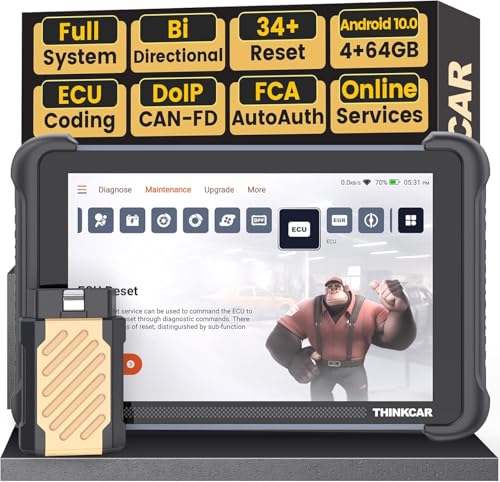
- [Notice] When you receive a used device, it may be a customer return resold by Amazon without inspection. You can exchange it for a new one through Amazon. As this situation is unavoidable, we sincerely apologize. For any issues, contacting us via Amazon's "Messages" is the best way. THINKSCAN 689BT Bidirectional Scan Tool Can Be Used Immediately After It is Turned On, Without Complicated Registration Process, Which is More Convenient & Quick.
- Full Bi-Directional Control & 3000+ Active Tests: Take control and test components like actuators, fuel injectors, relays, and cooling fans in real time. You’ll quickly see if the problem is in the part itself or the control module — saving you hours of guesswork and frustrating trial-and-error.
- Advanced ECU Coding Capabilities: Handle module matching and hidden feature activation with confidence. When you replace an ECU or want to customize settings, this obd2 scanner diagnostic bi directional tool gives you the professional-level capabilities you need without the dealership price tag.
- 34+ Useful Reset and Maintenance Functions: Complete everyday service tasks smoothly with a wide range of helpful reset and maintenance functions. Whether you’re keeping up with regular upkeep or tackling a specific job, this scanner makes maintenance simpler and less stressful for both DIYers and pros.
- Comprehensive Full System Diagnostics: Diagnose every major system — Engine, Transmission, ABS, SRS, TPMS, and more — all in one place. Finally stop wondering if you’re missing something important; get the full picture and clear codes with ease.
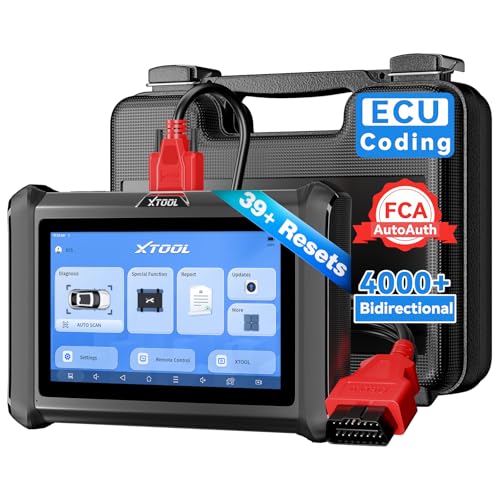
- Top Reasons to Choose the D7S OBD2 Scanner: XTOOL D7S car scan tool, an upgrade of XTOOL D7, offers comprehensive features for automotive technicians, workshops, and DIY enthusiasts 1. Upgraded Hardware: 2+64GB memory, rear camera, intuitive interface, foldable bracket 2. Complete Diagnostics: FCA
 Autoauth, OE-level all system scan, 39+ maintenance services, 4K+ bidirectional, CANFD/DoIP protocol 3. Advanced Capabilities: ECU c0ding, PMI functions 4. Wide Compatibility: Support 10,000+ models, covering 99% vehicle brands 5. Multi-language: Available in 22+ languages, No IP Restrictions 6. 3-Year Updates: Save 300 bucks on software updates for the latest features and optimizations
 - 2026 Upgraded D7S Car Scanner Features: The newly 2026 D7S V2.0 scanner for car brings exciting features for advanced vehicle diagnostics and enhanced user experience 1. FCA AutoAuth: Now supports FCA SGW module for Chrysler, for Jeep, for Dodge (2018+), for Fiat (2017+), enabling faster vehicle communication without gateway restrictions 2. PMI (Offline ECU Pr0gramming): Allows for Ford, for Lincoln, and for Mazda ECU pr0gramming for new modules 3. Optimized Diagnostic Report 2.0: Personalized reports with logos and customer info for auto shops. Note: Compatibility varies by cars, please check before order
- 39+ Services/Resets/Adaptations/Relearns/Calibrations: XTOOL D7S full system car scanner diagnostic tool tackles 99% of common car issues through its 36+ special functions, including Oil Reset, EPB, SAS, BMS, Throttle Reset, Injector C0ding, ABS Bleed, TPMS Reset, Power Balance, etc and also covers specific-vehicle functions like Crank Sensor Relearn, ABS Initialization, Cylinder Power Balance, Fuel Trim Reset, Idle Relearn etc. This car diagnostic scanner enhances efficiency, making repairs and maintenance hassle-free. Tip: DO NOT for All vehicles, please check compatibility first
- Cost-effective ECU C0ding Scan Tool for Specific Brands: Enhance your vehicle's performance with XTOOL D7S! This obd2 scanner all systems bidirectional offers advanced capabilities at an affordable price, supports online for BMW, for Benz and offline for BENZ, for MIT, along with PMI functions for Ford, for Mazda, and for Lincoln. Ideal for technicians and DIY enthusiasts, this automotive scanner diagnostic tool optimizes vehicle performance and enhances the driving experience. Note: Not for all cars and modules, please send car VIN to check the compatibility before purchase
- OE All System Diagnostic & 8 Pids Graphing: XTOOL D7S is a comprehensive all system bi directional obd2 scanner that delivers dealer-level diagnostics, completely controlling over your vehicle’s performance and health. This automotive scan tool can read and clear DTCs, view live data and ECU information, retrieve freeze frames, and perform active tests and full obd2 functions. This bi-directional scan tool can can identify your vehicle's make, model, and year information with just one click and show up to 8 PIDs live data with options for CSV viewing, playback, and recording for in-depth analysis. It is easy-to-use for both professionals and beginners, helping pinpoint issues efficiently
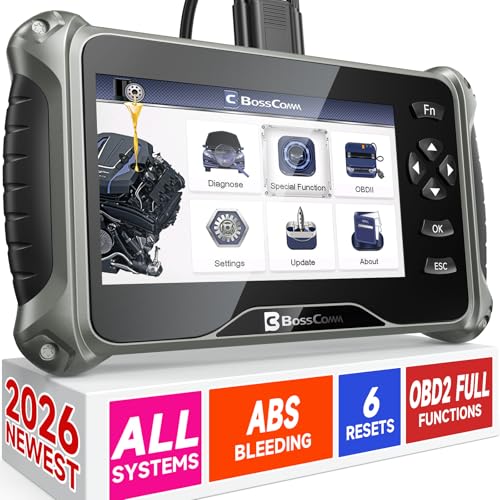
- 【✅Compared to BOSSCOMM IF742, IF745 Offers Full-System Diagnostics】The BOSSCOMM IF745 car diagnostic scanner is an upgraded model of IF742. In addition to supporting all OBD2 Code Reader functions and 6 reset options (ABS/EPB/SAS/BMS/Oil/Throttle), it expands diagnostics from 4 systems (Check Engine/ABS/SRS/Transmission) to vehicle All systems, including Steering, Suspension, and Body Electronics. This provides deeper, more comprehensive diagnostic capabilities.
- 【✨10 OBD2 Functions】The BOSSCOMM IF745 scan tool’s DTC Lookup instantly translates fault codes into user-friendly explanations, its I/M Readiness feature streamlines emissions testing with a single tap, and Freeze Frame lets you pinpoint the exact moment of a fault for in-depth root-cause diagnosis. Combined with a live data dashboard and advanced diagnostics (O2S, OBMon, EVAP), it delivers comprehensive insights for confident troubleshooting.
- 【✨Deep Diagnostics for All Vehicle System Modules】Beyond code reading/clearing and ECU information retrieval, our all-in-one data stream feature lets you inspect all current fault codes and their locations across the vehicle’s systems. This vehicle code reader helps you turn off dashboard warning lights and perform a comprehensive self-check of your car at home—no more back-and-forth trips to the repair shop or hefty inspection fees.
- 【✨6 Essential Resets: ABS Bleeding, Oil, EPB, SAS, Throttle, BMS】The BOSSCOMM IF745 obd2 scanner diagnostic tool swiftly purges air from brake lines to restore braking sensitivity, fine-tunes maintenance cycles to eliminate false alerts, resolves parking brake issues with one-click control, recalibrates steering sensors for stability, optimizes engine idling/acceleration for smoother performance, and deeply resets battery systems to extend lifespan and range via precise parameter adjustments.❗NOTE: Does NOT support bidirectional control, coding, or programming.
- 【✨10,000+ Car Models, AutoVIN, 13 Languages】The BOSSCOMM IF745 vehicle scanner diagnostic tool covers 73+ global car brands and offers support in 13 languages, making it perfect for DIYers, auto mechanics, or as a thoughtful gift. With a single-click AutoVIN feature, it instantly retrieves vehicle serial numbers, streamlining diagnostics for users globally. This adaptable tool balances user-friendliness with precision, catering to both personal and professional requirements.✅Unsure about compatibility? Compatibility will vary on vehicles' model and year, pls reach us via 📧 [email protected] 📧 before purchase.

This product presentation was made with AAWP plugin.