
NHTSA ID Number: 11005739
Manufacturer Communication Number: 2024.26.3_SX_0724.pdf
TSB/Document Date: 2024-08-06
Summary
Tesla does not provide physical owner's manual copies. Instead, all available owner’s manual content is integrated into the vehicle software, and only the content relevant for a given vehicle, based on vehicle configuration and software version installed, is displayed on its touchscreen. This file contains all available owner’s manual content for the vehicle converted to PDF format, and given the distribution method and NHTSA’s submission format requirements, it is the best available representative copy of owner’s manual content. However, a customer who accesses the owner’s manual via their vehicle’s touchscreen would only see the parts of this PDF file that are relevant to their vehicle.
MODEL S
MODEL X
2015–2020
2012–2020
2021 +
OWNER'S MANUAL
NORTH AMERICA
MODEL S
MODEL X
2015–2020
2012–2020
2021 +
OWNER'S MANUAL
NORTH AMERICA
USING THIS OWNER'S MANUAL
YOUR OWNER'S MANUAL
For the latest and greatest information that is customized to your vehicle, view the Owner’s Manual on your vehicle’s touchscreen by touching the app launcher and then
selecting the Manual app. The information is specific to your vehicle depending on the features you purchased, vehicle configuration, market region, and software
version. In contrast, owner information that is provided by Tesla elsewhere is updated as necessary and may not contain information unique to your vehicle.
RELEASE NOTES
Information about new features is displayed on the touchscreen after a software update, and can be viewed at any time by choosing the Release Notes tab in the Manual
app, or by touching Controls > Software > Release Notes. If the content in the Owner's Manual on how to use your vehicle conflicts with information in the Release
Notes, the Release Notes take precedence.
ILLUSTRATIONS AND PRODUCT SPECIFICATIONS
The illustrations provided in this document are for demonstration purposes only. Depending on vehicle options, software version and market region, the information
displayed on the touchscreen in your vehicle may appear slightly different.
All specifications and descriptions contained in this document are verified to be accurate at the time of printing. However, because continuous improvement is a goal at
Tesla, we reserve the right to make product modifications at any time. To communicate any inaccuracies or omissions in this document, please send an email to:
[email protected].
SAFETY INFORMATION
You can find safety information in your Model SModel X Owner's Manual on the touchscreen.
For detailed information about your Model SModel X, go to the Tesla website for your region, log on to your Tesla account, or sign up to get an account.
If you have any questions or concerns about your Model SModel X, call 1-877-79TESLA (1-877-798-3752).
© 2012-2024 TESLA, INC.
All information in this document and all vehicle software is subject to copyright and other intellectual property rights of Tesla, Inc. and its licensors. This material may
not be modified, reproduced or copied, in whole or in part, without the prior written permission of Tesla, Inc. and its licensors. Additional information is available upon
request. Shown here are trademarks or registered trademarks of Tesla, Inc. in the United States and other countries:
YOUR OWNER'S MANUAL
For the latest and greatest information that is customized to your vehicle, view the Owner’s Manual on your vehicle’s touchscreen by touching the app launcher and then
selecting the Manual app. The information is specific to your vehicle depending on the features you purchased, vehicle configuration, market region, and software
version. In contrast, owner information that is provided by Tesla elsewhere is updated as necessary and may not contain information unique to your vehicle.
RELEASE NOTES
Information about new features is displayed on the touchscreen after a software update, and can be viewed at any time by choosing the Release Notes tab in the Manual
app, or by touching Controls > Software > Release Notes. If the content in the Owner's Manual on how to use your vehicle conflicts with information in the Release
Notes, the Release Notes take precedence.
ILLUSTRATIONS AND PRODUCT SPECIFICATIONS
The illustrations provided in this document are for demonstration purposes only. Depending on vehicle options, software version and market region, the information
displayed on the touchscreen in your vehicle may appear slightly different.
All specifications and descriptions contained in this document are verified to be accurate at the time of printing. However, because continuous improvement is a goal at
Tesla , we reserve the right to make product modifications at any time. To communicate any inaccuracies or omissions in this document, please send an email to:
ownersmanualfeedback@tesla.com.
SAFETY INFORMATION
You can find safety information in your Model SModel X Owner's Manual on the touchscreen.
For detailed information about your Model SModel X, go to the Tesla website for your region, log on to your Tesla account, or sign up to get an account.
If you have any questions or concerns about your Model SModel X, call 1-877-79TESLA (1-877-798-3752).
© 2012-2024 TESLA, INC.
All information in this document and all vehicle software is subject to copyright and other intellectual property rights of Tesla, Inc. and its licensors. This material may
not be modified, reproduced or copied, in whole or in part, without the prior written permission of Tesla, Inc. and its licensors. Additional information is available upon
request. Shown here are trademarks or registered trademarks of Tesla, Inc. in the United States and other countries:
Contents
Model SModel X Owner's Manual...
Using This Owner's Manual....
Overview... 644
Exterior.... 644
Interior.... 646
Touchscreen.... 647
Vehicle Status.... 654
Interior Electronics.... 660
Cargo Bed Outlets.... 664
Voice Commands.... 667
Cameras.... 669
Opening and Closing... 674
Keys.... 674
Doors.... 678
Windows.... 682
Seating and Safety Restraints... 685
Front and Rear Seats.... 685
Seat Belts.... 689
Child Safety Seats.... 694
Airbags.... 704
Storage Areas... 713
Interior Storage.... 713
Powered Frunk.... 717
Cargo Bed.... 720
Connectivity... 727
Mobile App.... 727
Connecting to Wi-Fi.... 730
Bluetooth.... 731
Phone and Calendar.... 734
HomeLink Universal Transceiver.... 738
Driving... 741
Starting and Powering Off.... 741
Shifting.... 743
Steering WheelSteering Yoke.... 747
Mirrors.... 753
Lights.... 756
Windshield Wiper and Washers.... 760
Braking and Stopping.... 762
Traction Control.... 766
Suspension.... 767
On-Road Modes.... 769
Driver Profiles.... 769
Trip Information.... 773
Pedestrian Warning System.... 774
Off-Roading... 775
Contents
Off-Road Driving.... 775
Off-Road Modes.... 777
Locking Differentials.... 779
Troubleshooting.... 782
Limitations and Warnings.... 782
Towing... 784
Towing a Trailer.... 784
Carrying Accessories and Crossbars.... 792
Autopilot... 798
About Autopilot.... 798
Autopilot Features.... 801
Traffic Light and Stop Sign Control.... 814
Limitations and Warnings.... 820
Active Safety Features... 826
Lane Assist.... 826
Collision Avoidance Assist.... 830
Speed Assist.... 834
Using the Touchscreen... 837
Security Settings.... 837
Dashcam.... 838
Sentry Mode.... 840
USB Drive Requirements for Recording Videos.... 842
Climate... 844
Operating Climate Controls.... 844
Adjusting the Front and Rear Vents.... 849
Cold Weather Best Practices.... 850
Hot Weather Best Practices.... 853
Navigation and Entertainment... 854
Maps and Navigation.... 854
Media.... 861
Entertainment.... 865
Charging... 868
Electric Vehicle Components.... 868
High Voltage Battery Information.... 870
Charging Instructions.... 872
Scheduled Charging and Scheduled Departure.... 880
Getting Maximum Range.... 882
Powershare Home Backup.... 884
Maintenance... 889
Software Updates.... 889
Maintenance Schedule.... 890
Cleaning.... 893
Tire Pressures.... 897
Inspecting and Maintaining Tires.... 901
Wheel and Tire Specifications.... 907
Contents
Windshield Wiper Blade, Jets and Fluid.... 913
Jacking and Lifting.... 917
Parts and Accessories.... 919
Do It Yourself Maintenance.... 925
Specifications... 926
Identification Labels.... 926
Vehicle Loading.... 928
Dimensions, Weights, and Cargo Capacity.... 932
Subsystems.... 936
Roadside Assistance... 938
Instructions for Transporters.... 938
In Case of Emergency... 943
Contacting Tesla Roadside Assistance.... 943
Running Out of Range.... 944
Opening the Powered Frunk with No Power.... 944
Jump Starting.... 948
Opening Doors with No Power.... 950
Troubleshooting... 952
Cybertruck Off-Road Guide.... 952
Troubleshooting Alerts.... 982
Consumer Information...1018
About this Owner Information....1018
Feature Availability Statement... 1020
Disclaimers....1021
Reporting Safety Defects... 1023
Certifications of Conformity... 1023
Index.. 1042
Owners Manual
Overview
Exterior Overview
4
Owner's Manual
Owners Manual
Owner's Manual
5
Owners Manual
6
Owner's Manual
Owners Manual
Owner's Manual
7
Owners Manual
1. Exterior lights (Lights on page 204)
2. Door handles Front doors (Using Exterior Door Handles on page 47)(Keys and Doors on page 43)
3. Sunroof (optional) (Sunroof on page 92) Falcon wing doors (Keys and Doors on page 43)
4. Charge port (Charging Instructions on page 417)
5. Active spoiler (optional) (Active Spoiler on page 268)
6. Rear view mirrorForward looking camera (About Autopilot on page 286)Autopilot cameras (About Autopilot on page 286)
7. Exterior mirrors (Mirrors on page 192)
8. Hood/Front trunk (Front Trunk on page 69)
9. Vehicles equipped with Autopilot hardware only: Radar sensor (hidden from view in the above image) (About Autopilot on
page 286)
10. Radar sensor (hidden from view in the above image) (About Autopilot on page 286)
11. Hood/Front trunk (Front Trunk on page 69)
12. Wheels and tires (Wheels and Tires on page 491)
13. Rear view camera (Rear Facing Camera(s) on page 264 and About Autopilot on page 286)
14. Rear trunk/liftgate (Rear Trunk on page 60)
8
Owner's Manual
Owners Manual
15. Ultrasonic sensors (Park Assist on page 245 and About Autopilot on page 286)
NOTE: Depending on market region, vehicle configuration, and options purchased, your vehicle may look slightly different than
described.
Owner's Manual
9
Owners Manual
1. Exterior lights (Lights on page 204)
2. Door handles (Doors on page 31)
3. Charge port (Charging Instructions on page 417)
4. Autopilot cameras (About Autopilot on page 286)
5. Exterior mirrors (Mirrors on page 192)
6. Hood/Front trunk (Front Trunk on page 69)
7. Front/rear tow eye cover (Instructions for Transporters on page 517)
8. Wheels and tires (Wheels and Tires on page 491)
9. Rear view camera (Rear Facing Camera(s) on page 264 and About Autopilot on page 286)
10. Tow hitch cover (Towing and Accessories on page 269)
11. Rear trunk/liftgate (Rear Trunk on page 60)
12. Ultrasonic sensors (Park Assist on page 245 and About Autopilot on page 286)
10
Owner's Manual
Owners Manual
Interior Overview
1. Interior door handles (Opening Doors from the Interior on page 48)
2. CruiseAutopilot stalk (Cruise Control on page 239) (Traffic-Aware Cruise Control on page 299 and Autosteer on page
310)
3. Turn signal stalk (High Beam Headlights on page 207, Turn Signals on page 208, Wipers and Washers on page 228)
4. Steering wheel buttons - left (Using Left Steering Wheel Buttons on page 188)
5. Instrument panel (Instrument Panel on page 211)
6. Steering wheel buttons - right (Using Right Steering Wheel Buttons on page 189)
7. Drive stalk (How to Shift on page 198)
8. Touchscreen (Touchscreen Overview on page 15)
9. Glovebox button (Glovebox on page 79)
10. Cabin climate control (Climate Controls on page 360)
11. Power window switches (Opening and Closing on page 58)
12. Exterior mirror adjustment switches (Mirrors on page 192)
13. Seats (Front and Rear Seats on page 94)
14. Steering column adjuster (hidden from view in the above image) (Steering WheelSteering Yoke on page 185)
15. Horn (Horn on page 190)
16. Brake pedal (Braking and Stopping on page 231)
Owner's Manual
11
Owners Manual
17. Accelerator pedal (Acceleration Modes on page 254) Accelerator pedal (Regenerative Braking on page 233)
18. Hazard warning lights (Hazard Warning Flashers on page 209)
19. Cup holders (Cup Holders on page 83)
12
Owner's Manual
Owners Manual
1. Interior door handles (Doors on page 31)
2. Left steering yoke buttons
◦ Left Scroll Button (Left Scroll Button on page 187)
◦ High Beam Headlights (#unique_44 on page )
◦ Turn Signals (#unique_45 on page )
3. Instrument panel (Instrument Panel on page 222)
4. Right steering yoke buttons
◦ Right Scroll button to control Autopilot features (Right Scroll Button on page 187)
◦ Horn (Horn on page 190)
◦ Wipers (Wipers and Washers on page 228)
◦ Voice Commands (Voice Commands on page 391)
5. Touchscreen (Touchscreen Overview on page 15)
6. Camera (#unique_49 on page )
7. Cabin climate control (Climate Controls on page 360)
8. Power window switches (Opening and Closing on page 58)
9. Manual door release (Doors on page 31)
10. Seats (Front and Rear Seats on page 106Front and Rear Seats on page 110)
11. Brake pedal (Braking and Stopping on page 231)
12. Accelerator pedal (Acceleration Modes on page 256)
13. Wireless phone chargers (Wireless Phone Chargers on page 89)
14. Hazard warning lights (Hazard Warning Flashers on page 209)
Owner's Manual
13
Owners Manual
15. Secondary drive mode selector (Shifting on page 200)
16. Glovebox (Glovebox on page 85)
14
Owner's Manual
Owners Manual
1. Rear touchscreen (Rear Touchscreen on page 19)
2. USB ports (USB Ports on page 86)
3. Rear cup holders (Interior Storage and Electronics on page 84)
4. Adjustable climate control vents (Climate Controls on page 360)
5. Console release button (Second Row Console on page 84)
6. Cup holders (Second Row Console on page 84)
7. Wireless phone chargers (Wireless Phone Chargers on page 89)
8. Rear armrest (Second Row Console on page 84)
Touchscreen Overview
In addition to the instrument panel, Model SModel X is equipped with a front and rear touchscreen.
NOTE: Throughout this Owner's Manual, the front touchscreen is referred to as the "touchscreen" whereas the rear
touchscreen is referred to as the "rear touchscreen".
Owner's Manual
15
Owners Manual
WARNING: Always pay attention to road and traffic conditions when driving. To minimize driver distraction and ensure
the safety of vehicle occupants as well as other road users, avoid using the touchscreen to adjust settings while the
vehicle is in motion.
Use the touchscreen to control many features that, in traditional cars, are controlled using physical buttons (for example,
adjusting the cabin heating and air conditioning, headlights, etc.). You also use the touchscreen to control media, navigate,
use entertainment features, and customize Model SModel X to suit your preferences. The main component of the touchscreen
is the map area. Other main components are shown here:
NOTE: Illustrations are provided to improve conceptual understanding only. Depending on vehicle options, software version,
market region and regional and language settings, the details displayed on the screen will differ.
16
Owner's Manual
Owners Manual
1. Status bar: This area on the top of the touchscreen displays the time of day, the outside temperature, and the following
icons:
Touch to lock/unlock all doors and trunks.
Status of the front passenger airbag (see Airbags on page 172Airbags on page 161).
Displays when a software update is available (see Software Updates on page 404).
Owner's Manual
17
Owners Manual
Add, configure, or quickly switch driver profiles (including Valet Mode and Easy Entry). See Driver Profiles
on page 182.
Control or program HomeLink devices (if equipped) (see HomeLink Universal Transceiver on page 400).
Displays when a notification is in effect. Touch to display information about the notification. To display a list
of the most recent notifications, with the most recent listed first, you can also touch Service > Notifications.
Connected to a Wi-Fi network.
Connected to cellular network. Touch to connect to Wi-Fi (see Connecting to Wi-Fi on page 403).
Connect to a Bluetooth device (see Pairing a Bluetooth Phone on page 381).
2. Navigation: Change the orientation of the map, find or navigate to a destination, and change navigation settings (see Maps
and Navigation on page 368).
3. Drive mode strip: Use to shift into Park, Reverse, Neutral, or Drive. The drive mode strip always displays on the touchscreen
when you touch Controls (see Shifting on page 200).
4. Controls: Control various features and adjust settings to customize your Model SModel X (see Controls on page 348).
5. Climate controls (driver): Use the left and right arrows to decrease/increase cabin temperature. Touch Split on the popup to
display separate controls for the driver and passenger. Touch the temperature icon to customize climate control settings
(see Climate Controls on page 360).
6. My Apps: For one-touch access to frequently used apps, you can choose what displays here. See Customizing My Apps on
page 19.
7. App Launcher: Touch the app launcher to open the app tray. Then touch any app to open it. The app you choose displays on
top of the map. To close an app, drag it downward.
NOTE: You cannot completely close Media Player. When you drag Media Player down, it displays Mini-Player which allows
you see what's playing, pause/play, and skip reverse/forward.
8. Recent App(s): Displays the most recently used app(s). The number of recent apps displayed here depends on how many
apps have been added to My Apps. If you add the maximum number of apps to My Apps, only the most recent app displays.
9. Climate controls (passenger): Displays when temperature controls have been Split to provide separate controls for the
driver and passenger.
10. Volume Control: Controls the volume of media player and phone calls (see Volume Controls on page 376). The volume of
navigation instructions is controlled separately (see Maps and Navigation on page 368).
11. Media Player: See Media on page 375.
18
Owner's Manual
Owners Manual
Popup messages appear at the bottom of the touchscreen. For example, a seat belt reminder appears if a seat belt is
unfastened in an occupied seat, an alert appears to notify you of an incoming phone call, a text message appears (when
applicable), and voice commands appear when in use. If applicable, touch options from these popup messages (for example,
accept/decline a phone call, choose an option from the headlight menu, etc.). To dismiss a popup message, swipe it
downward.
The bottom of the touchscreen may also display the following:
Displays the status of the front passenger airbag (see Airbags on page 172Airbags on page 161).
Customizing My Apps
For one-touch access to commonly used apps, you can customize what displays in the My Apps area on the touchscreen's
bottom bar:
1. Enter customization mode by touching and holding any app in the My Apps area. If this area is empty, touch the App
Launcher.
2. Simply drag any app from the app tray onto the My Apps area in the bottom bar.
NOTE: When you've added the maximum number of apps to My Apps, adding an additional app removes the rightmost app.
NOTE: Remove an app from the My Apps area by touching and holding, then touching its associated "X".
Rear Touchscreen
The rear touchscreen provides rear passengers with access to:
1. Temperature: Touch the arrows to decrease/increase cabin temperature.
2. Media: Play, pause, skip or rewind through the currently playing song (see Media on page 375).
3. Rear fan: Touch to turn the rear fan on or off, to adjust fan speed and control the direction of air flow from the rear vents
(see Adjusting the Front and Rear Vents on page 364).
4. Seat heaters: Control rear seat heaters.
5. Video: Access video streaming services.
6. Volume: Touch to adjust the volume.
NOTE: Adjusting the temperature, media and volume controls adjusts the front cabin settings also.
You can lock the rear touchscreen by touching Controls > Display > Lock Rear Display. Locking the rear display stops any
media and video apps from playing, and all touches are ignored until you use this setting to unlock it.
Owner's Manual
19
Owners Manual
NOTE: You can also use the front touchscreen to adjust climate settings in the rear cabin (see Adjusting Climate Control
Settings on page 360).
Opening and Closing
Keys
Three Types of Keys
Model SModel X supports three types of keys:
• Phone key - You can set up your personal phone as a "phone key" that communicates with Model SModel X using
Bluetooth. A phone key supports automatic locking and unlocking.
• Key card - Tesla provides a key card that communicates with Model SModel X using short range radio-frequency
identification (RFID) signals. The key card is used to "authenticate" phone keys to work with Model SModel X and to add or
remove other key cards, phone keys, or key fobs. Unlike the phone key and key fob, the key card does not support
automatic locking and unlocking. In situations where your phone key has a dead battery, or is lost or stolen, use your key
card to unlock, drive, and lock Model SModel X.
• Key fob - The key fob allows you to press buttons to open the front and rear trunks, and unlock, lock, and drive
Model SModel X. The key fob also supports automatic locking and unlocking, if available in your region (see Passive
Locking and Unlocking on page 26) and can be used as a backup to your phone key.
Model SModel X supports a total of 19 keys, which can include phone keys, key cards, and up to four key fobs.
CAUTION: Remember to bring a key with you when you drive. Although you can drive Model SModel X away from its key,
you will be unable to power it back on after it powers off.
Phone Key
Using your phone as a key is a convenient way to access your Model SModel X. As you approach, your phone's Bluetooth
signal is detected and doors unlock when you press a door handle. Likewise, when you exit and walk away with the phone key,
doors automatically lock (provided the Walk-Away Door Lock feature is turned on; see Walk-Away Door Lock on page 41).
Before you can use a phone to access Model SModel X, follow these steps to authenticate it:
1. Download the Tesla mobile app to your phone.
2. Log into the Tesla mobile app using your Tesla account user name and password.
NOTE: You must remain logged in to your Tesla account to use your phone to access Model SModel X.
3. Ensure that your phone's Bluetooth settings are turned on. Also ensure that Bluetooth is turned on within your phone's
global settings for the Tesla mobile app. For example, on your phone, navigate to Settings, choose the Tesla mobile app,
and ensure the Bluetooth setting is enabled.
NOTE: Model SModel X communicates with your phone using Bluetooth. Keep in mind that your phone must have enough
battery power to run Bluetooth and that many phones disable Bluetooth when the battery is low.
4. Ensure access to your location is enabled by viewing the Tesla mobile app in your phone's settings and selecting Location >
Always. For the best experience, keep the mobile app running in the background.
5. On the touchscreen, ensure that Allow Mobile Access is enabled (Controls > Safety > Allow Mobile Access).
6. While inside Model SModel X with a key card handy, open the Tesla mobile app and follow the prompts to set up a phone
key.
To view a list of keys that can currently access Model SModel X, or to remove a phone key, touch Controls > Locks (see
Managing Keys on page 29).
Model SModel X can connect to three phone keys simultaneously. Therefore, if more than three phone keys are detected and
you want to authenticate or pair a different phone, move the other connected phone key(s) out of range or turn off its
Bluetooth setting.
20
Owner's Manual
Owners Manual
NOTE: If multiple vehicles are linked to your Tesla account, you must ensure that the vehicle you want the mobile app to access
is currently selected on the mobile app.
Once a phone has been authenticated, it no longer requires an internet connection to be used as a phone key for
Model SModel X. However, to use the phone hands-free, access your phone's contacts, play media from it, etc., you must also
pair it and connect it as a Bluetooth device (see Pairing a Bluetooth Phone on page 381).
Key Card
Tesla provides you with two Model SModel X key cards, designed to fit in your wallet.
To use a key card to unlock or lock Model SModel X, position the card as shown and tap it against the card reader located
approximately one third the way up of the driver's side door pillar. When Model SModel X detects the key card, the exterior
lights flash, the mirrors unfold or fold (if Fold Mirrors is on), the horn sounds (if Lock Confirmation Sound is on), and the doors
unlock or lock.
NOTE: You may need to physically touch the wireless phone charger or driver's side door pillar with the key card, and you may
need to hold it against the transmitter for one or two seconds.
Owner's Manual
21
Owners Manual
Once inside, power up Model SModel X by pressing the brake pedal within two minutes of scanning the key card (see Starting
and Powering Off on page 195). If you wait longer than two minutes, you must re-authenticate by placing the key card near
the card reader located in the wireless phone charger on the center console. When your key card is detected, your two minute
authentication period restarts.
NOTE: If enabled, Walk-Away Door Lock (see Walk-Away Door Lock on page 41) operates only when you walk away using a
phone key or passive key fob. When you walk away carrying your key card, Model SModel X does not automatically unlock/
lock.
Key Fob
You can quickly familiarize yourself with the key fob by thinking of it as a miniature version of Model SModel X, with the Tesla
badge representing the front. The key has buttons that feel like softer areas on the surface.
22
Owner's Manual
Owners Manual
1. Rear trunk - Double-click to open or close the rear trunk. Hold down for one to two seconds to open the charge port door.
2. Lock/Unlock All - Single-click to lock doors and trunks (all doors and trunks must be closed). Double-click to unlock doors
and trunks.
3. Front trunk - Double-click to unlatch the front trunk.
1. Trunk
◦ Double-click to open or close the rear trunk.
◦ If equipped with a powered liftgate, double-click to unlatch the rear trunk. You can also single-click to stop the liftgate
when it is moving.
◦ Hold the button down for one to two seconds to open the charge port door.
2. Lock/Unlock All
◦ Single-click to lock all doors and rear trunk. Hazard warning lights flash once.
NOTE: If a door or the rear trunk is open, hazard warning lights flash three times and doors do not lock. But you can
enable a single-click to both close all doors (and rear trunk) and lock them, by turning on the Close All with Key Fob
setting (touch Controls > Locks > Close All with Key Fob). By default, this setting is turned off and you must triple-click
the button to close and lock all doors.
◦ Double-click to unlock. Hazard warning lights flash twice.
NOTE: If Automatic Doors is enabled (touch Controls > Locks > Automatic Doors), doors unlock and the driver's door
opens as you approach Model X. A subsequent double-click opens the passenger front door.
3. Front trunk
◦ Double-click to unlatch the front trunk.
4. Falcon wing doors
◦ Double-click to open/close the associated falcon wing door.
◦ Single-click to stop movement of the associated falcon wing door. Subsequently double-clicking reverses movement of
the falcon wing door. For example if the door was opening, it closes, and vice versa.
NOTE: Falcon wing doors are designed to proactively detect obstacles that prevent the doors from moving when an obstacle is
If the PDF is very large, it may not load in the preview below.
Some older TSBs had multiple PDFs — visit the NHTSA Website to view all PDFs.
If the TSB PDF does not show, download or view it on the NHTSA Website.
Click on the (+) Plus Sign
Then Click on Associated Document(s)
Search NHTSA Database for Recalls
Search NHTSA Database for Vehicle Investigations
View Latest Vehicle Investigations
Search NHTSA Database for Vehicle Complaints
View Latest Vehicle Complaints
TSB/Document ID: 2024.26.3_SX_0724.pdf
Replacement Service Bulletin Number:
MFR Communication Date: 2024-07-31
MFR Internal Campaign ID/Software Version: 2024.26.3
Communication Type: Over The Air
NHTSA Components: UNKNOWN OR OTHER
MFR Component System:
MFR Component Subsystem:
Previous TSB | Next TSB |
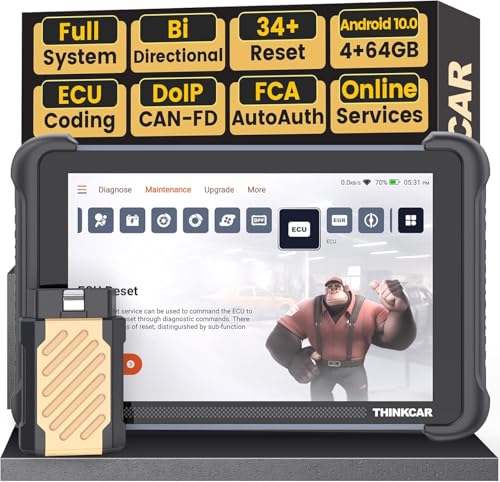
- [Notice] When you receive a used device, it may be a customer return resold by Amazon without inspection. You can exchange it for a new one through Amazon. As this situation is unavoidable, we sincerely apologize. For any issues, contacting us via Amazon's "Messages" is the best way. THINKSCAN 689BT Bidirectional Scan Tool Can Be Used Immediately After It is Turned On, Without Complicated Registration Process, Which is More Convenient & Quick.
- Full Bi-Directional Control & 3000+ Active Tests: Take control and test components like actuators, fuel injectors, relays, and cooling fans in real time. You’ll quickly see if the problem is in the part itself or the control module — saving you hours of guesswork and frustrating trial-and-error.
- Advanced ECU Coding Capabilities: Handle module matching and hidden feature activation with confidence. When you replace an ECU or want to customize settings, this obd2 scanner diagnostic bi directional tool gives you the professional-level capabilities you need without the dealership price tag.
- 34+ Useful Reset and Maintenance Functions: Complete everyday service tasks smoothly with a wide range of helpful reset and maintenance functions. Whether you’re keeping up with regular upkeep or tackling a specific job, this scanner makes maintenance simpler and less stressful for both DIYers and pros.
- Comprehensive Full System Diagnostics: Diagnose every major system — Engine, Transmission, ABS, SRS, TPMS, and more — all in one place. Finally stop wondering if you’re missing something important; get the full picture and clear codes with ease.
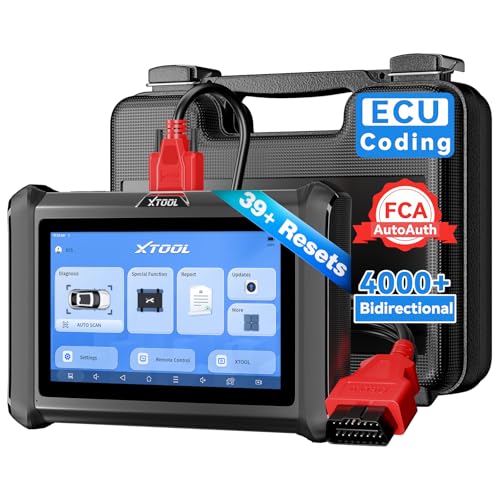
- Top Reasons to Choose the D7S OBD2 Scanner: XTOOL D7S car scan tool, an upgrade of XTOOL D7, offers comprehensive features for automotive technicians, workshops, and DIY enthusiasts 1. Upgraded Hardware: 2+64GB memory, rear camera, intuitive interface, foldable bracket 2. Complete Diagnostics: FCA
 Autoauth, OE-level all system scan, 39+ maintenance services, 4K+ bidirectional, CANFD/DoIP protocol 3. Advanced Capabilities: ECU c0ding, PMI functions 4. Wide Compatibility: Support 10,000+ models, covering 99% vehicle brands 5. Multi-language: Available in 22+ languages, No IP Restrictions 6. 3-Year Updates: Save 300 bucks on software updates for the latest features and optimizations
 - 2026 Upgraded D7S Car Scanner Features: The newly 2026 D7S V2.0 scanner for car brings exciting features for advanced vehicle diagnostics and enhanced user experience 1. FCA AutoAuth: Now supports FCA SGW module for Chrysler, for Jeep, for Dodge (2018+), for Fiat (2017+), enabling faster vehicle communication without gateway restrictions 2. PMI (Offline ECU Pr0gramming): Allows for Ford, for Lincoln, and for Mazda ECU pr0gramming for new modules 3. Optimized Diagnostic Report 2.0: Personalized reports with logos and customer info for auto shops. Note: Compatibility varies by cars, please check before order
- 39+ Services/Resets/Adaptations/Relearns/Calibrations: XTOOL D7S full system car scanner diagnostic tool tackles 99% of common car issues through its 36+ special functions, including Oil Reset, EPB, SAS, BMS, Throttle Reset, Injector C0ding, ABS Bleed, TPMS Reset, Power Balance, etc and also covers specific-vehicle functions like Crank Sensor Relearn, ABS Initialization, Cylinder Power Balance, Fuel Trim Reset, Idle Relearn etc. This car diagnostic scanner enhances efficiency, making repairs and maintenance hassle-free. Tip: DO NOT for All vehicles, please check compatibility first
- Cost-effective ECU C0ding Scan Tool for Specific Brands: Enhance your vehicle's performance with XTOOL D7S! This obd2 scanner all systems bidirectional offers advanced capabilities at an affordable price, supports online for BMW, for Benz and offline for BENZ, for MIT, along with PMI functions for Ford, for Mazda, and for Lincoln. Ideal for technicians and DIY enthusiasts, this automotive scanner diagnostic tool optimizes vehicle performance and enhances the driving experience. Note: Not for all cars and modules, please send car VIN to check the compatibility before purchase
- OE All System Diagnostic & 8 Pids Graphing: XTOOL D7S is a comprehensive all system bi directional obd2 scanner that delivers dealer-level diagnostics, completely controlling over your vehicle’s performance and health. This automotive scan tool can read and clear DTCs, view live data and ECU information, retrieve freeze frames, and perform active tests and full obd2 functions. This bi-directional scan tool can can identify your vehicle's make, model, and year information with just one click and show up to 8 PIDs live data with options for CSV viewing, playback, and recording for in-depth analysis. It is easy-to-use for both professionals and beginners, helping pinpoint issues efficiently
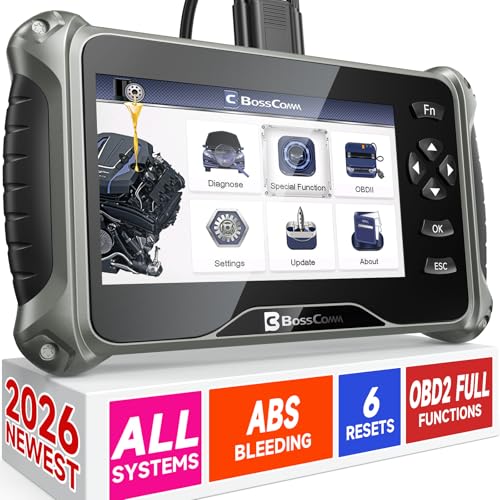
- 【✅Compared to BOSSCOMM IF742, IF745 Offers Full-System Diagnostics】The BOSSCOMM IF745 car diagnostic scanner is an upgraded model of IF742. In addition to supporting all OBD2 Code Reader functions and 6 reset options (ABS/EPB/SAS/BMS/Oil/Throttle), it expands diagnostics from 4 systems (Check Engine/ABS/SRS/Transmission) to vehicle All systems, including Steering, Suspension, and Body Electronics. This provides deeper, more comprehensive diagnostic capabilities.
- 【✨10 OBD2 Functions】The BOSSCOMM IF745 scan tool’s DTC Lookup instantly translates fault codes into user-friendly explanations, its I/M Readiness feature streamlines emissions testing with a single tap, and Freeze Frame lets you pinpoint the exact moment of a fault for in-depth root-cause diagnosis. Combined with a live data dashboard and advanced diagnostics (O2S, OBMon, EVAP), it delivers comprehensive insights for confident troubleshooting.
- 【✨Deep Diagnostics for All Vehicle System Modules】Beyond code reading/clearing and ECU information retrieval, our all-in-one data stream feature lets you inspect all current fault codes and their locations across the vehicle’s systems. This vehicle code reader helps you turn off dashboard warning lights and perform a comprehensive self-check of your car at home—no more back-and-forth trips to the repair shop or hefty inspection fees.
- 【✨6 Essential Resets: ABS Bleeding, Oil, EPB, SAS, Throttle, BMS】The BOSSCOMM IF745 obd2 scanner diagnostic tool swiftly purges air from brake lines to restore braking sensitivity, fine-tunes maintenance cycles to eliminate false alerts, resolves parking brake issues with one-click control, recalibrates steering sensors for stability, optimizes engine idling/acceleration for smoother performance, and deeply resets battery systems to extend lifespan and range via precise parameter adjustments.❗NOTE: Does NOT support bidirectional control, coding, or programming.
- 【✨10,000+ Car Models, AutoVIN, 13 Languages】The BOSSCOMM IF745 vehicle scanner diagnostic tool covers 73+ global car brands and offers support in 13 languages, making it perfect for DIYers, auto mechanics, or as a thoughtful gift. With a single-click AutoVIN feature, it instantly retrieves vehicle serial numbers, streamlining diagnostics for users globally. This adaptable tool balances user-friendliness with precision, catering to both personal and professional requirements.✅Unsure about compatibility? Compatibility will vary on vehicles' model and year, pls reach us via 📧 [email protected] 📧 before purchase.

This product presentation was made with AAWP plugin.