
NHTSA ID Number: 11005737
Manufacturer Communication Number: 2024.20.200_0724.pdf
TSB/Document Date: 2024-08-06
Summary
Tesla does not provide physical owner's manual copies. Instead, all available owner’s manual content is integrated into the vehicle software, and only the content relevant for a given vehicle, based on vehicle configuration and software version installed, is displayed on its touchscreen. This file contains all available owner’s manual content for the vehicle converted to PDF format, and given the distribution method and NHTSA’s submission format requirements, it is the best available representative copy of owner’s manual content. However, a customer who accesses the owner’s manual via their vehicle’s touchscreen would only see the parts of this PDF file that are relevant to their vehicle.
Before Using
Before using Traffic Light and Stop Sign Control, you must:
• Ensure that forward-facing cameras are unobstructed (see Cleaning a Camera on page 779Cleaning a Camera on page
779Cleaning a Camera on page 779Cleaning a Camera on page 780Cleaning a Camera on page 1140) and calibrated (see
Drive to Calibrate Cameras on page 108Drive to Calibrate Cameras on page 1140). Traffic Light and Stop Sign Control
depends on the ability of the cameras to detect traffic lights, stop signs, and road markings.
• Ensure that the latest version of maps has been downloaded to CybertruckModel SModel XModel 3Model Y. Although
Traffic Light and Stop Sign Control primarily uses visual data received from the vehicle's cameras, greater accuracy is
achieved when using the most recent map data. To check which version of maps is currently downloaded, touch Controls >
Software. You must connect to a Wi-Fi network to receive updated maps (see Map Updates on page 706).
• Enable the feature. With the vehicle in Park, touch Controls > Autopilot > Traffic Light and Stop Sign Control. Once enabled,
Traffic Light and Stop Sign Control operates whenever Traffic-Aware Cruise Control or Autosteer is active.
How it Works
When Traffic Light and Stop Sign Control is enabled and you are using Autosteer, Traffic-Aware Cruise Control, or Full SelfDriving (Supervised), the instrument clustertouchscreen displays a popup message to inform you that an upcoming traffic
light, stop sign, or road marking has been detected. As it approaches the stop location, even at an intersection where the traffic
light is green, CybertruckModel SModel XModel 3Model Y slows down and displays a red line to indicate where
CybertruckModel SModel XModel 3Model Y will stop. To continue through the intersection—even if the traffic light is green —
you must pull the Autopilot stalk toward you orpress down on the drive stalk orpress down on the drive stalk or briefly press
the accelerator pedal to give the vehicle permission to proceed. When you've confirmed that you want to proceed, the red
stop line turns gray and CybertruckModel SModel XModel 3Model Y continues through the intersection and resumes your set
cruising speed.
NOTE: If CybertruckModel SModel XModel 3Model Y is approaching a green light and detects that a vehicle in front of you is
continuing through the intersection, CybertruckModel SModel XModel 3Model Y continues through the intersection without
requiring your confirmation, provided you are not in a turning lane and the vehicle can detect that your hands are on the
steering wheelsteering yoke (or steering wheel).
NOTE: If, after you pull the Autopilot stalk toward you or press down on the drive stalk or press down on the drive stalk or
briefly press the accelerator pedal to confirm that you want to continue through the intersection, the traffic signal changes
before you enter the intersection (for example, the light changes from green to yellow or from yellow to red),
CybertruckModel SModel XModel 3Model Y may determine that it is not appropriate to proceed. Therefore,
CybertruckModel SModel XModel 3Model Y stops and you must press the accelerator to proceed. At all times, it is your
responsibility to ensure the vehicle stops or accelerates appropriately and safely.
598
Owner's Manual
Owners Manual
WARNING: Traffic Light and Stop Sign Control DOES NOT turn CybertruckModel SModel XModel 3Model Y through an
intersection unless Full Self-Driving (Supervised) is engaged. When in a turning lane, CybertruckModel SModel XModel
3Model Y stops at the red stop line. To proceed, pull the Autopilot stalk toward you or press down on the drive stalk or
press down on the drive stalk or briefly press the accelerator pedal—CybertruckModel SModel XModel 3Model Y
continues straight through the intersection (even when in a turning lane), so you MUST manually steer
CybertruckModel SModel XModel 3Model Y through the intersection (which cancels Autosteer).
Traffic Light and Stop Sign Control is designed to operate as described only when the following conditions are met:
• Autosteer, Full Self-Driving (Supervised), or Traffic-Aware Cruise Control is engaged.
• The cameras can detect an upcoming traffic light, stop sign or road marking (for example, cameras are unobstructed and
have a clear line-of-sight to the traffic light, stop sign, or road marking).
• The instrument clustertouchscreen on CybertruckModel SModel XModel 3Model Y is displaying an upcoming traffic light
in "bold" format. CybertruckModel SModel XModel 3Model Y does not acknowledge traffic lights that the instrument
clustertouchscreen shows as faded. If a traffic light is not directly ahead of the camera (for example, it is located at an
angle of the camera's view, or located in an adjacent lane) the instrument clustertouchscreen displays it as faded and
CybertruckModel SModel XModel 3Model Y does not slow down and stop for it.
WARNING: If the instrument clustertouchscreen is not displaying a red stop line at an upcoming intersection,
CybertruckModel SModel XModel 3Model Y does not slow down or stop. It is the driver's responsibility to pay attention
to upcoming intersections and monitor traffic conditions to determine when and if the vehicle should stop and then to
take appropriate action as needed.
WARNING: Never depend on Traffic Light and Stop Sign Control to determine whether to stop at, or proceed through, an
intersection. Drive attentively by watching the road and paying attention to the roadway, upcoming intersections, traffic
conditions, crosswalks, and other road users. It is always the driver's responsibility to determine whether to stop or
proceed. Be prepared to take immediate action. Failure to do so can result in injury or death.
WARNING: In some situations, Traffic Light and Stop Sign Control may inaccurately detect a traffic light or stop sign,
causing CybertruckModel SModel XModel 3Model Y to slow down unexpectedly. Be prepared to take immediate action
at all times.
WARNING: You must pull the Autopilot stalk toward you or press down on the drive stalk or press down on the drive stalk
or briefly press the accelerator pedal to confirm that you want to proceed through an intersection, regardless of the
status of the traffic light. If you do not confirm, CybertruckModel SModel XModel 3Model Y stops at the red stop line
displayed on the instrument clustertouchscreen, even if stopping may be inappropriate. Stopping at a green light may
confuse other drivers and may result in a collision, injury or death. Therefore, always pay attention to upcoming
intersections and be prepared to manually brake or accelerate in response to surroundings.
WARNING: Never assume that your ability to see a traffic light, stop sign, or road marking (especially at a complex
intersection, or an intersection in which a traffic light or sign is partially obstructed, etc.) means that
CybertruckModel SModel XModel 3Model Y can also see it and respond appropriately.
WARNING: Even the most recent map data does not include all traffic lights and stop signs. Therefore, Traffic Light and
Stop Sign Control relies heavily on the ability of the cameras to detect traffic lights, stop signs, road markings, etc. As a
result, CybertruckModel SModel XModel 3Model Y may ignore an intersection that is blocked from the camera's view
(for example, obstructed by a tree or a large vehicle or object, or located near a steep hill or sharp curve).
WARNING: Traffic Light and Stop Sign Control is not a substitute for attentive driving and sound judgment.
Owner's Manual
599
Owners Manual
Traffic Lights
When driving with Autosteer or Traffic-Aware Cruise Control engaged, and Traffic Light and Stop Sign Control enabled,
CybertruckModel SModel XModel 3Model Y is designed to respond as follows when approaching intersections controlled by
a traffic light:
Type of Traffic Light
Vehicle Intended Response
At a solid green traffic light, or at a traffic light that is currently off (not illuminated),
CybertruckModel SModel XModel 3Model Y slows down.
If you are following a car in front of you that continues through the intersection, the
instrument clustertouchscreen displays a green stop line and provided your hands are
detected on the steering wheelsteering yoke (or steering wheel),
CybertruckModel SModel XModel 3Model Y also continues. If a car is not in front of you,
the instrument clustertouchscreen displays a red stop line and you must confirm that you
want to continue through the intersection by pulling the Autopilot stalk toward you or
press down on the drive stalk or press down on the drive stalk or briefly pressing the
accelerator pedal. If you don’t confirm, CybertruckModel SModel XModel 3Model Y
stops at the red stop line.
NOTE: CybertruckModel SModel XModel 3Model Y resumes the set cruising speed when
it continues through the intersection, taking into consideration the speed of a vehicle in
front of you.
CybertruckModel SModel XModel 3Model Y slows down and comes to a complete stop at
the red stop line displayed on the instrument clustertouchscreen. When you want to
continue through the intersection (for example, the light turns green again, or once
CybertruckModel SModel XModel 3Model Y has come to a complete stop), you must pull
the Autopilot stalk toward you or press down on the drive stalk or press down on the drive
stalk or briefly press the accelerator pedal.
CybertruckModel SModel XModel 3Model Y slows down and comes to a complete stop at
the red stop line displayed on the instrument clustertouchscreen. When you want to
proceed through the intersection (for example, the light turns green again), you must pull
the Autopilot stalk toward you or press down on the drive stalk or press down on the drive
stalk or briefly press the accelerator pedal.
NOTE: If the traffic light changes after you've confirmed that you want to proceed (for
example, a green traffic light turns yellow), CybertruckModel SModel XModel 3Model Y
may stop instead of continuing, especially if CybertruckModel SModel XModel 3Model Y
determines that it can safely stop before entering the intersection.
NOTE: CybertruckModel SModel XModel 3Model Y is not designed to proceed through
an intersection when the traffic light is red or if the light turns yellow in situations when
there is adequate distance to safely stop before entering the intersection.
NOTE: You can take over driving at any time by manually braking to cancel Autosteer or
Traffic-Aware Cruise Control.
600
Owner's Manual
Owners Manual
Type of Traffic Light
Vehicle Intended Response
CybertruckModel SModel XModel 3Model Y slows down. To proceed, you must pull the
Autopilot stalk toward you or press down on the drive stalk or press down on the drive
stalk or briefly press the accelerator pedal. If you don’t,
CybertruckModel SModel XModel 3Model Y stops at the red stop line displayed on the
instrument clustertouchscreen.
NOTE: To prevent CybertruckModel SModel XModel 3Model Y from stopping, and to
minimize how much it slows down as it approaches, you can confirm that you want to
proceed by pulling the Autopilot stalk toward you or press down on the drive stalk or
press down on the drive stalk or briefly pressing the accelerator pedal at any time after
the instrument clustertouchscreen displays the red stop line.
CybertruckModel SModel XModel 3Model Y resumes your set cruising speed
immediately after you confirm (taking into consideration the speed of a vehicle in front of
you).
WARNING: Approach attentively and be prepared to press the brake pedal to slow
down or stop.
CybertruckModel SModel XModel 3Model Y slows down and comes to a complete stop at
the red stop line displayed on the instrument clustertouchscreen. When you want to
proceed through the intersection (for example, traffic laws and conditions indicate it is
safe and legal to proceed), you must pull the Autopilot stalk toward you or press down on
the drive stalk or press down on the drive stalk or briefly press the accelerator pedal.
Owner's Manual
601
Owners Manual
Stop Signs and Road Markings
When driving with Autosteer or Traffic-Aware Cruise Control engaged, and Traffic Light and Stop Sign Control enabled,
CybertruckModel SModel XModel 3Model Y is designed to respond as follows when approaching intersections controlled by
stop signs, stop lines, or road markings:
Type of Intersection
Vehicle Intended Response
CybertruckModel SModel XModel 3Model Y assumes the right of way and continues straight
without slowing down or stopping.
No Traffic Control
Arm of T-junction
If CybertruckModel SModel XModel 3Model Y detects a T-junction based on the map data,
CybertruckModel SModel XModel 3Model Y slows down and comes to a complete stop at the
red stop line displayed on the instrument clustertouchscreen. When you want to proceed, you
must take over steering and acceleration.
WARNING: CybertruckModel SModel XModel 3Model Y may not stop at a T-junction
that does not have a stop sign or stop line, or if the T-junction is not included in the map
data. Drive attentively and be prepared to stop (when necessary and/or appropriate).
End of T-junction
CybertruckModel SModel XModel 3Model Y slows down and comes to a complete stop at the
red stop line displayed on the instrument clustertouchscreen. When you want to proceed
through the intersection, you must pull the Autopilot stalk toward you or press down on the
drive stalk or press down on the drive stalk or briefly press the accelerator pedal.
NOTE: If you confirm that you want to proceed through an intersection controlled by a stop
sign by pulling the Autopilot stalk toward you or press down on the drive stalk or press down
on the drive stalk or briefly pressing the accelerator pedal before
CybertruckModel SModel XModel 3Model Y has stopped, your confirmation is ignored.
CybertruckModel SModel XModel 3Model Y is not designed to proceed through a stop sign
without stopping.
Stop Sign
602
NOTE: Even when using Autosteer, and even if you have engaged a turn signal, you must turn
the steering wheelsteering yoke (or steering wheel) yourself (which cancels Autosteer) to
complete a turn at an intersection.
Owner's Manual
Owners Manual
Type of Intersection
Vehicle Intended Response
Stop Sign and Road Marking
Road Marking
WARNING: CybertruckModel SModel XModel 3Model Y also slows down and stops at a roundabout. You must take over
steering (which cancels Autosteer) and pull the Autopilot stalk toward you or press down on the drive stalk or press
down on the drive stalk or briefly press the accelerator pedal to confirm that you want to continue through the
roundabout.
WARNING: At crosswalks, CybertruckModel SModel XModel 3Model Y may slow down and may stop, depending on
whether the crosswalk is controlled by a traffic light and whether the cameras detect pedestrians, bicyclists, etc. in the
crosswalk. Pay particular attention at crosswalks and be prepared to take over at any time. Failure to do so can result in
injury or death.
Limitations
Depending on many different circumstances and environmental conditions, Traffic Light and Stop Sign Control may or may not
stop at:
• Railroad crossings.
• Keep-out zones.
• Toll booths.
• Crosswalk systems.
• Yield signs or temporary traffic lights and stop signs (such as at construction areas).
• Miscellaneous traffic U-turn lights, bicycle and pedestrian crossing lights, lane availability lights, etc.
In addition, Traffic Light and Stop Sign Control is particularly unlikely to operate as intended, can disengage, or may not
operate, when one or more of the following conditions are present:
• Driving through consecutive light-controlled intersections that are very close to each other.
• Visibility is poor (heavy rain, snow, fog, etc.) or weather conditions are interfering with camera or sensor operation.
• Bright light (such as direct sunlight) is interfering with the view of the camera(s).
Owner's Manual
603
Owners Manual
• A camera is obstructed, covered, damaged, or not properly calibrated.
• Driving on a hill or on a road that has sharp curves on which the cameras are unable to see upcoming traffic lights or stop
signs.
• A traffic light, stop sign, or road marking is obstructed (for example, a tree, a large vehicle, etc.).
• CybertruckModel SModel XModel 3Model Y is being driven very close to a vehicle in front of it, which is blocking the view
of a camera.
WARNING: The limitations listed above are not an exhaustive list of reasons why CybertruckModel SModel XModel
3Model Y may not operate as expected. Many unforeseen circumstances can adversely impact the accurate operation
of Traffic Light and Stop Sign Control. Using this feature does not reduce or eliminate the need to drive attentively and
responsibly. You must be prepared to take appropriate and immediate action at all times.
Full Self-Driving (Supervised)
When Full Self-Driving (Supervised) (also referred to as Autosteer on City Streets) is engaged,
CybertruckModel SModel XModel 3Model Y attempts to drive to your destination by following curves in the road, stopping at
and negotiating intersections, making left and right turns, navigating roundabouts, and entering/exiting highways.
Unlike Traffic-Aware Cruise Control, Autosteer, and Navigate on Autopilot, which are intended for use on multi-lane roadways
with clear lane markings, Full Self-Driving (Supervised) is meant to work in a variety of driving scenarios. You can use Full SelfDriving (Supervised) on any type of roadway, including residential and city streets.
Always remember that Full Self-Driving (Supervised) does not make CybertruckModel SModel XModel 3Model Y
autonomous and requires a fully attentive driver who is ready to take immediate action at all times. While Full Self-Driving
(Supervised) is engaged, you must monitor your surroundings and other road users at all times.
Driver intervention may be required in certain situations, such as on narrow roads with oncoming cars, in construction zones,
or while going through complex intersections. For more examples of scenarios in which driver intervention might be required,
see Limitations and Warnings on page 630.
Full Self-Driving (Supervised) uses inputs from cameras mounted at the front, rear, left, and right of
CybertruckModel SModel XModel 3Model Y to build a model of the area surrounding CybertruckModel SModel XModel
3Model Y (see Cameras on page 101). The Full Self-Driving computer installed in CybertruckModel SModel XModel 3Model Y
is designed to use this input, rapidly process neural networks, and make decisions to safely guide you to your destination.
NOTE: As Tesla’s Full Self-Driving (Supervised) capabilities evolve, CybertruckModel SModel XModel 3Model Y is upgraded
through over-the-air software updates. Download updates as soon as they become available.
NOTE: Full Self-Driving (Supervised) uses Tesla's vision-based system and therefore radar (if equipped) is disabled.
Like other Autopilot features, Full Self-Driving (Supervised) requires a fully attentive driver and will display a series of
escalating warnings requiring driver response. You must keep your hands on the steering wheelsteering yoke (or steering
wheel) while Full Self-Driving (Supervised) is engaged. In addition, the cabin camera monitors driver attentiveness (see
Cabin Camera on page 106).
CAUTION: Use of Full Self-Driving (Supervised) will be suspended if improper usage is detected. For more information,
see Full Self-Driving (Supervised) Suspension on page 609.
Use Full Self-Driving (Supervised) only if you will pay constant attention to the road and be prepared to act immediately,
especially around blind corners, crossing intersections, and in narrow driving situations. For more information, see Limitations
and Warnings on page 630.
CAUTION: As Full Self-Driving (Supervised) deployment expands, Tesla will gradually make it available to eligible
customers in select countries outside of the United States and Canada. Because every country contains unique
infrastructure, driving behaviors, and traffic patterns that Full Self-Driving (Supervised) must adapt to over time, it is
essential for drivers using Full Self-Driving (Supervised) in newly eligible countries to be extra attentive and overly
cautious. You must be ready to take over safely at any time.
604
Owner's Manual
Owners Manual
WARNING: Full Self-Driving (Supervised) is a hands-on feature that requires you to pay attention to the road at all times.
Keep your hands on the steering wheelsteering yoke (or steering wheel) at all times, be mindful of road conditions and
surrounding traffic, pay attention to pedestrians and cyclists, and always be prepared to take immediate action. Failure
to follow these instructions could cause damage, serious injury or death. It is your responsibility to familiarize yourself
with the limitations of Full Self-Driving (Supervised) and the situations in which it may not work as expected. For more
information, see Limitations and Warnings on page 630.
Before Using Full Self-Driving (Supervised)
Before using Full Self-Driving (Supervised), you must:
• Ensure that the cameras on CybertruckModel SModel XModel 3Model Y are unobstructed and calibrated (see Cameras on
page 101). Full Self-Driving (Supervised) depends on the ability of the cameras to detect traffic lights, stop signs, and road
markings.
• Ensure that the latest version of maps has been downloaded to CybertruckModel SModel XModel 3Model Y. Although Full
Self-Driving (Supervised) primarily uses visual data received from the vehicle's cameras, greater accuracy is achieved
when using the most recent map data. To check which version of maps is currently downloaded, touch Controls > Software.
You must connect to a Wi-Fi network to receive updated maps (see Map Updates on page 706).
In addition, you must enable Full Self-Driving (Supervised) before you can use it. To enable Full Self-Driving (Supervised),
touch Controls > Autopilot > Full Self-Driving (Supervised) and then, after carefully reading and understanding the popup
window, touch Yes.
NOTE: When Full Self-Driving (Supervised) is enabled, the setting for Autopilot Activation is set to Single Click and TrafficAware Cruise Control and Autosteer are unavailable.
NOTE: When Full Self-Driving (Supervised) is enabled, the setting for Autopilot Activation is set to Single Click and TrafficAware Cruise Control and Autosteer are unavailable.
NOTE: When Full Self-Driving (Supervised) is enabled, the setting for Autopilot Activation is set to Single Pull and TrafficAware Cruise Control and Autosteer are unavailable.
NOTE: When Full Self-Driving (Supervised) is enabled, the setting for Autopilot Activation is set to Single Pull and TrafficAware Cruise Control and Autosteer are unavailable.
Customize Full Self-Driving (Supervised) settings by touching Controls > Autopilot.
• Full Self-Driving (Supervised): If desired, change the default setting of Average to Chill or Assertive. Chill provides a more
relaxed driving style and Assertive drives with more urgency.
• Minimal Lane Changes for the Current Drive: When selected, Full Self-Driving (Supervised) makes fewer lane changes on
the current drive. CybertruckModel SModel XModel 3Model Y will still make lane changes as necessary to follow the
navigation route.
NOTE: While Full Self-Driving (Supervised) is selected, tilting the right steering wheelsteering yoke (or steering wheel)
button to the right or left also allows you to change the Full Self-Driving (Supervised) profile and enable or disable Minimal
Lane Changes.
• Automatic Set Speed Offset: When enabled, CybertruckModel SModel XModel 3Model Y drives at the speed that Autopilot
determines to be the most natural. This considers factors like road type, traffic flow, environmental conditions, the
detected speed limit, and the selected Full Self-Driving (Supervised) profile setting.
WARNING: You are responsible for the speed of the vehicle at all times, whether Autopilot is engaged or not.
To Use Full Self-Driving (Supervised)
Once Full Self-Driving (Supervised) is enabled, activate it the same way you would Autosteer (see Autosteer on page
557Autosteer on page 588).
1. Enter a destination. If you do not choose a destination, CybertruckModel SModel XModel 3Model Y chooses the most
probable driving path or suggests a destination based on your driving.
2. When the instrument clustertouchscreen displays the gray steering wheelsteering yoke (or steering wheel) icon, press the
right scroll wheelpress the right scroll wheelpull the drive stalk down once fullypull the drive stalk once fullypull the
Autopilot stalk toward you.
Owner's Manual
605
Owners Manual
You can engage Full Self-Driving (Supervised) at any speed less than 85 mph (150 km/h), including when
CybertruckModel SModel XModel 3Model Y is at a standstill.
The instrument clustertouchscreen displays the maximum speed in blue. When you engage Full Self-Driving (Supervised), the
set cruising speed defaults to the speed limit, plus any offset you’ve specified. If Autopilot is unable to determine the speed
limit, the cruising speed is your current speed, in addition to any specified offset.
606
Owner's Manual
Owners Manual
To indicate that Full Self-Driving (Supervised) is available but not engaged, the top corner of the
touchscreen displays a gray steering wheelsteering yoke (or steering wheel) icon next to the
driving gear.
When Full Self-Driving (Supervised) is engaged, the steering wheelsteering yoke (or steering
wheel) icon is blue and a blue line represents your driving path.
When Full Self-Driving (Supervised) is engaged, the instrument clustertouchscreen displays a visualization of the environment
surrounding CybertruckModel SModel XModel 3Model Y, including the roadway and detected objects such as vehicles,
pedestrians, curbs, bicyclists, and more. Objects that are highlighted on the visualization represent priorities that Full SelfDriving (Supervised) is actively controlling for at a given time.
NOTE: The Full Self-Driving (Supervised) visualization may not be a holistic representation of the objects, road markings, road
signals, and other variables that Full Self-Driving (Supervised) takes into account as it attempts to drive to your destination.
While Full Self-Driving (Supervised) is engaged, it uses data from the cameras on CybertruckModel SModel XModel 3Model Y
that may not be represented in the visualization (see Cameras on page 101).
NOTE: Full Self-Driving (Supervised) uses Tesla’s vision-based system and therefore radar (if equipped) is disabled.
The visualization will also inform you of the system’s intended action by displaying a message on the instrument
clustertouchscreen, such as when the vehicle is slowly creeping for visibility to take a turn at an intersection.
You can widen the visualization area to fullscreen. Enable the setting by touching Controls > Autopilot > Full Self-Driving
(Supervised) > Expanded Full Self-Driving Visualization. Then on the touchscreen, swipe the visualization window handle to fill
the entire screen.
NOTE: You can override Full Self-Driving (Supervised) at any time if you are uncomfortable or uncertain about the system’s
intended course of action. You are driving CybertruckModel SModel XModel 3Model Y at all times.
Making Turns, Changing Lanes, and Negotiating Intersections
Full Self-Driving (Supervised) changes lanes, makes left and right turns, follows on- and off-ramps, and takes forks in the road
as necessary to reach the destination. When Full Self-Driving (Supervised) makes any such maneuver, the instrument
clustertouchscreen displays a message to inform you of the action being taken.
Like Autosteer and Traffic-Aware Cruise Control, Full Self-Driving (Supervised) maintains your speed and following distance
from the vehicle ahead of CybertruckModel SModel XModel 3Model Y, if there is one. Full Self-Driving (Supervised) also
slows down and stops at traffic lights and stop signs as necessary, and reacts to pedestrians, cyclists, and other vehicles on
the road.
Owner's Manual
607
Owners Manual
WARNING: NEVER make assumptions and predict when and where Full Self-Driving (Supervised) will stop or continue
through an intersection or road marking. From a driver's perspective, the behavior of Full Self-Driving (Supervised) may
appear inconsistent. Always pay attention to the roadway and be prepared to take immediate action. It is the driver's
responsibility to determine whether to stop or continue through an intersection. Never depend on Full Self-Driving
(Supervised) to determine when it is safe and/or appropriate to stop or continue through an intersection.
For example, if you are driving on a residential street and another vehicle backs out of a driveway ahead of
CybertruckModel SModel XModel 3Model Y, Full Self-Driving (Supervised) slows down or stops as appropriate. If the other
vehicle stops backing out while partially blocking the driving lane, Full Self-Driving (Supervised) slows down and maneuvers
around the other vehicle if the width of the lane allows it.
To tell Full Self-Driving (Supervised) to change lanes while on a multi-lane roadway, engage the right or left turn signal. On city
or residential streets, engaging the right or left turn signal tells Full Self-Driving (Supervised) to make a right or left turn,
respectively.
Full Self-Driving (Supervised) notifies you at the top of the visualization as it takes actions. For example, if Full Self-Driving
(Supervised) is moving CybertruckModel SModel XModel 3Model Y into a faster lane, it displays the message Changing lanes
into faster lane / Use turn signal to cancel.
Or, if Full Self-Driving (Supervised) is changing lanes to follow the navigation route, Changing lanes to follow route / Use turn
signal to cancel.
Unlike Navigate on Autopilot, Full Self-Driving (Supervised) does not require confirmation before a lane change. To cancel a
lane change or turn, cancel the turn signal or intervene with the steering wheelsteering yoke (or steering wheel) or other
vehicle controls.
To be notified by a Chime, Vibration, or Both of upcoming lane changes (in addition to the notification on the instrument
clustertouchscreen), touch Controls > Autopilot > Full Self-Driving (Supervised) and then select a Lane Change Notification.
Full Self-Driving (Supervised) also notifies you when it is slowing down for a stop sign or a traffic light. When the traffic in
front of you is slowing down, Full Self-Driving (Supervised) shows blue arrows in the driving lane and slows down to maintain
an appropriate following distance from the vehicle ahead of you.
WARNING: In rare cases, Full Self-Driving (Supervised) may not appropriately slow down, come to a stop, or resume
control for a stop sign or traffic light. You may assist the system by lightly applying the accelerator, or can override Full
Self-Driving (Supervised) at any time.
Once you’ve arrived at your destination, Full Self-Driving (Supervised) stops CybertruckModel SModel XModel 3Model Y and
displays a message indicating that navigation is complete.
Changing the Set Speed
While Full Self-Driving (Supervised) is active, move the Autopilot stalk up to increase, or down to decrease, the set speed until
the instrument panel displays your desired cruising speed.
While Full Self-Driving (Supervised) is active, roll the right scroll wheel up to increase, or down to decrease, the set speed.
NOTE: In some cases, your speed is limited by the speed limit, the type of roadway, or the flow of traffic. If this is the case, Full
Self-Driving (Supervised) displays a message at the top of the visualization.
Driver Attentiveness
Like other Autopilot features, Full Self-Driving (Supervised) requires driver attentiveness. Your hands must be on the steering
wheel at all times while Full Self-Driving (Supervised) is engaged, and you must monitor your surroundings, the road, and other
road users.
WARNING: The use of devices designed to circumvent driver attentiveness is a violation of the terms of use for Full SelfDriving (Supervised) and may result in the feature being permanently disabled on your vehicle and a ban on future use of
the feature.
Full Self-Driving (Supervised) periodically displays a message reminding the driver to apply slight force to the steering wheel:
608
Owner's Manual
Owners Manual
Apply slight turning force to steering wheel
If CybertruckModel SModel XModel 3Model Y does not detect slight turning force on the steering wheel, the instrument
clustertouchscreen flashes and eventually chimes repeatedly. Do not use handheld devices while using Full Self-Driving
(Supervised). If the cabin camera detects a handheld device while Full Self-Driving (Supervised) is engaged, the instrument
clustertouchscreen displays a message reminding you to keep your hands on the wheel.
Similarly, the cabin camera monitors your continued attentiveness when using Full Self-Driving (Supervised). This system
cannot be disabled. The instrument clustertouchscreen displays a message reminding you to pay attention if you repeatedly
look away from the road, obstruct the camera, or prevent the system from identifying your gaze.
If you repeatedly ignore prompts to apply slight force to the steering wheel or to pay attention, Full Self-Driving (Supervised)
disables for the rest of the drive and displays the following message requesting you to drive manually. If you don't resume
manual steering, Full Self-Driving (Supervised) sounds a continuous chime, turns on the warning flashers, and slows the
vehicle to a complete stop.
Full Self-Driving (Supervised) Suspension
Use of Full Self-Driving (Supervised) will be suspended if improper usage is detected.
When you or another driver of your vehicle receives fivethree forced Autopilot disengagements, use of Full Self-Driving
(Supervised) is suspended for a week. A forced disengagement is when the Autopilot system disengages for the remainder of
a trip after the driver receives several audio and visual warnings for inattentiveness.
You can see how many disengagements are remaining before Full Self-Driving (Supervised) access is suspended by touching
Controls > Autopilot.
A disengagement is forgiven after 7 days, as long as you don't receive another forced disengagement in that time.
NOTE: If your access to Full Self-Driving (Supervised) is suspended, your access to Autosteer is suspended as well. You can
still use Traffic-Aware Cruise Control, and all active safety features are still enabled.
There may be occasions where driver intervention is required and you must take over immediately to maintain safe driving.
Driver-initiated disengagements do not count as improper usage and are expected from the driver.
Canceling Full Self-Driving (Supervised)
To disengage Full Self-Driving (Supervised), do any of the following:
• Press the brake pedal.
• Move the drive stalk upward.
◦ CAUTION: If you move the drive stalk upward and hold it up for more than one second,
CybertruckModel SModel XModel 3Model Y shifts into Neutral after canceling Autosteer.
• Move the drive stalk upward.
◦ CAUTION: If you move the drive stalk upward and hold it up for more than one second,
CybertruckModel SModel XModel 3Model Y shifts into Neutral after canceling Autosteer.
• Press the right scroll wheel on the steering yoke (or steering wheel).
• Press the right scroll wheel on the steering wheelsteering yoke (or steering wheel)
• Push the Autopilot stalk away from you once.
• Take over and steer manually.
When you disengage Full Self-Driving (Supervised) by steering manually, Traffic-Aware Cruise Control remains active.
In addition, Full Self-Driving (Supervised) will disengage if any of the following occurs:
• You shift out of Drive.
Owner's Manual
609
Owners Manual
• A door or trunk is opened.
• There is an Automatic Emergency Braking event (see Collision Avoidance Assist on page 644).
• The driver's seatbelt is released, and/or the driver gets out of their seat.
• You do not respond to repeated reminders to keep your hands on the wheel and subsequent messages on the instrument
clustertouchscreen.
• Full Self-Driving (Supervised) becomes unavailable. This can happen for a number of reasons (for example, if a camera
becomes obscured). If Full Self-Driving (Supervised) disengages, an alert will appear on the instrument clustertouchscreen
to notify you and a chime will sound. If this happens, take control of steering immediately.
When driver intervention is required, it is best to safely disengage as soon as possible. It is recommended to practice
disengaging from Full Self-Driving (Supervised) in safe environment without other road users so you may become familiar with
the process.
610
Owner's Manual
Owners Manual
Autopark
Autopark uses data to simplify parking on public roads by maneuvering CybertruckModel SModel XModel 3Model Y into
parallel and perpendicular parking spaces.
CAUTION: Ensure all cameras and sensors (if equipped) are clean. Dirty cameras and sensors, as well as environmental
conditions such as rain and faded lane markings, can affect Autopilot performance.
WARNING: Autopark's performance depends on the ability of the cameras and sensors (if equipped) to determine the
vehicle's proximity to curbs, objects, and other vehicles.
WARNING: Do not use Autopark if anything, such as a ball hitch, bike rack, or trailer, is attached to the tow hitch.
Autopark may not stop for hitches when parking between or in front of other vehicles.
Parameters
Autopark detects potential parking spaces based on the following parameters:
Perpendicular Parking
• Your driving speed must be below 8 mph (13 km/h). If driving too fast, Autopark may not be able to accurately detect your
desired parking space.
• The parking space must be at least 7.2 feet (2.2 meters) wide.
• The parking space must have at least three visible lines for the vehicle to park into, such as parking lines, road markings, or
distinct curbs. Autopark may not work in a garage, for example, without three visible parking lines.
• Autopark may not work with textured road surfaces such as cobblestone or brick.
Parallel Parking
• Your driving speed must be below 13 mph (21 km/h). If driving too fast, Autopark may not be able to accurately detect your
desired parking space.
• There must be a vehicle in front of the space you want to park in.
• A distinct curb or edge must be visible. Autopark may not correctly identify the parking space if the curb is not distinct,
such as grass or dirt.
NOTE: Autopark does not operate on angled parking spaces.
Parameters
Autopark detects potential perpendicular parking spaces that are at least wide with a vehicle parked on each side.
Your vehicle speed must be below 13 mph (21 km/h) for parallel parking spaces, and 8 mph (13 km/h) for perpendicular parking
spaces. If driving too fast, Autopark may not be able to accurately detect your desired parking space.
NOTE: Autopark does not operate on angled parking spaces.
To Use Autopark
When driving, follow these steps to allow Autopark to maneuver CybertruckModel SModel XModel 3Model Y into a parking
space:
1. While driving slowly on a public road, monitor the instrument panel to determine when Autopark has detected a parking
space. The instrument panel will display a parking icon if the vehicle detects a potential parking spot.
Owner's Manual
611
Owners Manual
NOTE: The parking icon appears only if the vehicle's position and/or the circumstances of the surrounding area are such
that Autopark can determine an appropriate driving path. If Autopark cannot determine an appropriate path (for example,
when driving on a narrow street where moving into the parking space causes the front of the vehicle to extend into the
adjacent lane), you can either reposition the vehicle, find a different parking space, or park manually.
NOTE: If the Autopark icon does not appear for potential parking spaces when driving at the indicated speed, it is possible
that Autopark is calibrating. Autopark requires a calibration process when CybertruckModel SModel XModel 3Model Y is
new, or when tires have recently been changed (see Calibration on page 613).
2. Choose a spot, check to determine if it is appropriate and safe, then pull forward and stop approximately one car length
ahead of the parking space (as you normally would when parallel parking or when backing into a perpendicular parking
space).
3. Release the steering wheel, shift CybertruckModel SModel XModel 3Model Y into Reverse, then touch Start Autopark on
the touchscreen.
4. Autopark displays a message when parking is complete.
NOTE: If you press the brake pedal when Autopark is actively parking CybertruckModel SModel XModel 3Model Y, the
parking process pauses until you touch Resume on the touchscreen.
WARNING: Never depend on Autopark to find a parking space that is legal, suitable, and safe. Autopark may not always
detect objects in the parking space. Always perform visual checks to confirm that a parking space is appropriate and
safe.
WARNING: When Autopark is actively steering CybertruckModel SModel XModel 3Model Y:
• Do not interfere with the movement of the steering wheelsteering yoke (or steering wheel). Doing so cancels
Autopark.
• Continually check your surroundings. Be prepared to apply the brakes to avoid vehicles, pedestrians, or objects.
• Monitor the touchscreen and instrument panel to ensure that you are aware of the instructions that Autopark is
providing.
612
Owner's Manual
Owners Manual
Calibration
During a parking sequence, Autopark must maneuver CybertruckModel SModel XModel 3Model Y with a great deal of
precision. Therefore, before it can be used, Autopark must complete a calibration process. Calibration can take anywhere from
30 minutes to several days, depending on driving behavior. When Autopark is calibrating, a note displays on the Autopilot
settings screen indicating that calibration is in progress. When calibration is complete, this note no longer displays and
Autopark is available for use.
NOTE: Autopark repeats the calibration process whenever tires are changed.
To Pause Parking
To pause Autopark, press the brake pedal once. CybertruckModel SModel XModel 3Model Y stops and remains stopped until
you touch Resume on the touchscreen.
To Cancel Parking
Autopark cancels the parking sequence when you manually move the steering wheelsteering yoke (or steering wheel), shift, or
touch Cancel on the touchscreen. Autopark also cancels parking when:
• The parking sequence exceeds seven moves.
• CybertruckModel SModel XModel 3Model Y detects that the driver is exiting the vehicle.
• A door is opened.
• You press the accelerator pedal.
• You press the brake pedal while Autopark is paused.
• An Automatic Emergency Braking event occurs (see Collision Avoidance Assist on page 644).
Limitations
Autopark is particularly unlikely to operate as intended in these situations:
• The road is sloped. Autopark is designed to operate on flat roads only.
• Visibility is poor (due to heavy rain, snow, fog, etc.).
If the PDF is very large, it may not load in the preview below.
Some older TSBs had multiple PDFs — visit the NHTSA Website to view all PDFs.
If the TSB PDF does not show, download or view it on the NHTSA Website.
Click on the (+) Plus Sign
Then Click on Associated Document(s)
Search NHTSA Database for Recalls
Search NHTSA Database for Vehicle Investigations
View Latest Vehicle Investigations
Search NHTSA Database for Vehicle Complaints
View Latest Vehicle Complaints
TSB/Document ID: 2024.20.200_0724.pdf
Replacement Service Bulletin Number:
MFR Communication Date: 2024-07-31
MFR Internal Campaign ID/Software Version: 2024.20.200
Communication Type: Over The Air
NHTSA Components: UNKNOWN OR OTHER
MFR Component System:
MFR Component Subsystem:
Previous TSB | Next TSB |
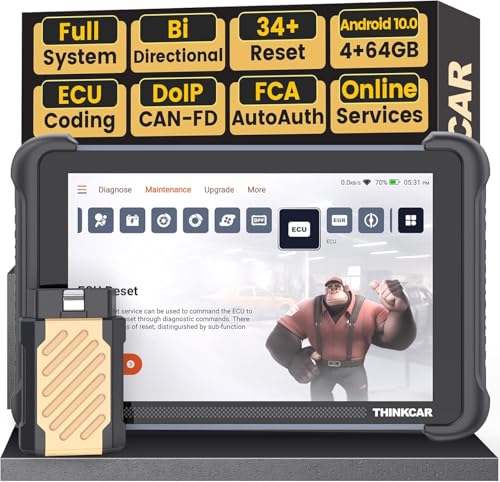
- [Notice] When you receive a used device, it may be a customer return resold by Amazon without inspection. You can exchange it for a new one through Amazon. As this situation is unavoidable, we sincerely apologize. For any issues, contacting us via Amazon's "Messages" is the best way. THINKSCAN 689BT Bidirectional Scan Tool Can Be Used Immediately After It is Turned On, Without Complicated Registration Process, Which is More Convenient & Quick.
- Full Bi-Directional Control & 3000+ Active Tests: Take control and test components like actuators, fuel injectors, relays, and cooling fans in real time. You’ll quickly see if the problem is in the part itself or the control module — saving you hours of guesswork and frustrating trial-and-error.
- Advanced ECU Coding Capabilities: Handle module matching and hidden feature activation with confidence. When you replace an ECU or want to customize settings, this obd2 scanner diagnostic bi directional tool gives you the professional-level capabilities you need without the dealership price tag.
- 34+ Useful Reset and Maintenance Functions: Complete everyday service tasks smoothly with a wide range of helpful reset and maintenance functions. Whether you’re keeping up with regular upkeep or tackling a specific job, this scanner makes maintenance simpler and less stressful for both DIYers and pros.
- Comprehensive Full System Diagnostics: Diagnose every major system — Engine, Transmission, ABS, SRS, TPMS, and more — all in one place. Finally stop wondering if you’re missing something important; get the full picture and clear codes with ease.
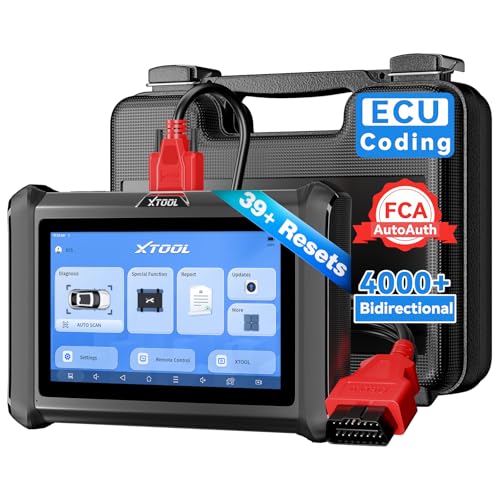
- Top Reasons to Choose the D7S OBD2 Scanner: XTOOL D7S car scan tool, an upgrade of XTOOL D7, offers comprehensive features for automotive technicians, workshops, and DIY enthusiasts 1. Upgraded Hardware: 2+64GB memory, rear camera, intuitive interface, foldable bracket 2. Complete Diagnostics: FCA
 Autoauth, OE-level all system scan, 39+ maintenance services, 4K+ bidirectional, CANFD/DoIP protocol 3. Advanced Capabilities: ECU c0ding, PMI functions 4. Wide Compatibility: Support 10,000+ models, covering 99% vehicle brands 5. Multi-language: Available in 22+ languages, No IP Restrictions 6. 3-Year Updates: Save 300 bucks on software updates for the latest features and optimizations
 - 2026 Upgraded D7S Car Scanner Features: The newly 2026 D7S V2.0 scanner for car brings exciting features for advanced vehicle diagnostics and enhanced user experience 1. FCA AutoAuth: Now supports FCA SGW module for Chrysler, for Jeep, for Dodge (2018+), for Fiat (2017+), enabling faster vehicle communication without gateway restrictions 2. PMI (Offline ECU Pr0gramming): Allows for Ford, for Lincoln, and for Mazda ECU pr0gramming for new modules 3. Optimized Diagnostic Report 2.0: Personalized reports with logos and customer info for auto shops. Note: Compatibility varies by cars, please check before order
- 39+ Services/Resets/Adaptations/Relearns/Calibrations: XTOOL D7S full system car scanner diagnostic tool tackles 99% of common car issues through its 36+ special functions, including Oil Reset, EPB, SAS, BMS, Throttle Reset, Injector C0ding, ABS Bleed, TPMS Reset, Power Balance, etc and also covers specific-vehicle functions like Crank Sensor Relearn, ABS Initialization, Cylinder Power Balance, Fuel Trim Reset, Idle Relearn etc. This car diagnostic scanner enhances efficiency, making repairs and maintenance hassle-free. Tip: DO NOT for All vehicles, please check compatibility first
- Cost-effective ECU C0ding Scan Tool for Specific Brands: Enhance your vehicle's performance with XTOOL D7S! This obd2 scanner all systems bidirectional offers advanced capabilities at an affordable price, supports online for BMW, for Benz and offline for BENZ, for MIT, along with PMI functions for Ford, for Mazda, and for Lincoln. Ideal for technicians and DIY enthusiasts, this automotive scanner diagnostic tool optimizes vehicle performance and enhances the driving experience. Note: Not for all cars and modules, please send car VIN to check the compatibility before purchase
- OE All System Diagnostic & 8 Pids Graphing: XTOOL D7S is a comprehensive all system bi directional obd2 scanner that delivers dealer-level diagnostics, completely controlling over your vehicle’s performance and health. This automotive scan tool can read and clear DTCs, view live data and ECU information, retrieve freeze frames, and perform active tests and full obd2 functions. This bi-directional scan tool can can identify your vehicle's make, model, and year information with just one click and show up to 8 PIDs live data with options for CSV viewing, playback, and recording for in-depth analysis. It is easy-to-use for both professionals and beginners, helping pinpoint issues efficiently
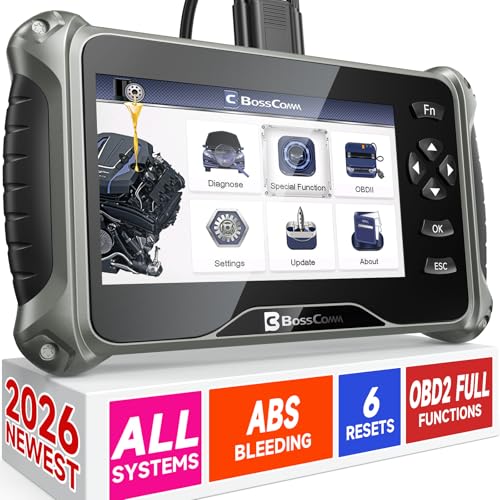
- 【✅Compared to BOSSCOMM IF742, IF745 Offers Full-System Diagnostics】The BOSSCOMM IF745 car diagnostic scanner is an upgraded model of IF742. In addition to supporting all OBD2 Code Reader functions and 6 reset options (ABS/EPB/SAS/BMS/Oil/Throttle), it expands diagnostics from 4 systems (Check Engine/ABS/SRS/Transmission) to vehicle All systems, including Steering, Suspension, and Body Electronics. This provides deeper, more comprehensive diagnostic capabilities.
- 【✨10 OBD2 Functions】The BOSSCOMM IF745 scan tool’s DTC Lookup instantly translates fault codes into user-friendly explanations, its I/M Readiness feature streamlines emissions testing with a single tap, and Freeze Frame lets you pinpoint the exact moment of a fault for in-depth root-cause diagnosis. Combined with a live data dashboard and advanced diagnostics (O2S, OBMon, EVAP), it delivers comprehensive insights for confident troubleshooting.
- 【✨Deep Diagnostics for All Vehicle System Modules】Beyond code reading/clearing and ECU information retrieval, our all-in-one data stream feature lets you inspect all current fault codes and their locations across the vehicle’s systems. This vehicle code reader helps you turn off dashboard warning lights and perform a comprehensive self-check of your car at home—no more back-and-forth trips to the repair shop or hefty inspection fees.
- 【✨6 Essential Resets: ABS Bleeding, Oil, EPB, SAS, Throttle, BMS】The BOSSCOMM IF745 obd2 scanner diagnostic tool swiftly purges air from brake lines to restore braking sensitivity, fine-tunes maintenance cycles to eliminate false alerts, resolves parking brake issues with one-click control, recalibrates steering sensors for stability, optimizes engine idling/acceleration for smoother performance, and deeply resets battery systems to extend lifespan and range via precise parameter adjustments.❗NOTE: Does NOT support bidirectional control, coding, or programming.
- 【✨10,000+ Car Models, AutoVIN, 13 Languages】The BOSSCOMM IF745 vehicle scanner diagnostic tool covers 73+ global car brands and offers support in 13 languages, making it perfect for DIYers, auto mechanics, or as a thoughtful gift. With a single-click AutoVIN feature, it instantly retrieves vehicle serial numbers, streamlining diagnostics for users globally. This adaptable tool balances user-friendliness with precision, catering to both personal and professional requirements.✅Unsure about compatibility? Compatibility will vary on vehicles' model and year, pls reach us via 📧 [email protected] 📧 before purchase.

This product presentation was made with AAWP plugin.