NHTSA ID Number: 11001931
Manufacturer Communication Number: fsd-12-4_0524.pdf
TSB/Document Date: 2024-06-20
Summary
Tesla does not provide physical owner's manual copies. Instead, all available owner’s manual content is integrated into the vehicle software, and only the content relevant for a given vehicle, based on vehicle configuration and software version installed, is displayed on its touchscreen. This file contains all available owner’s manual content for the vehicle converted to PDF format, and given the distribution method and NHTSA’s submission format requirements, it is the best available representative copy of owner’s manual content. However, a customer who accesses the owner’s manual via their vehicle’s touchscreen would only see the parts of this PDF file that are relevant to their vehicle.
in purple.
2. Powershare rate: The amount of power currently being provided by the high voltage Battery.
3. Powershare discharge limit: The level of energy remaining at which at the high voltage Battery stops providing power.
Maximum Draw
CybertruckModel SModel XModel 3Model Y provides a maximum draw of 11.5 kW.
NOTE: The maximum draw may be limited by the charger installed in your home. Tesla strongly recommends that the charger
(such as a Tesla Wall Connector) that you use for Powershare Home Backup is connected to a 240V circuit.
Setting the Discharge Limit
You can set the discharge limit from the Tesla mobile app by adjusting the slider.
When Powershare Home Backup is active, you can see how much energy is remaining in the high voltage Battery above the
discharge limit in the vehicle status area of the touchscreen, or by touching Controls > Charging.
Owner's Manual
1373
Charging and Energy Consumption
To Stop Powershare Home Backup
To stop CybertruckModel SModel XModel 3Model Y from providing power to your home, touch Controls > Charging > Stop
Powershare
To restart Powershare, touch Controls > Charging > Start Powershare.
Powershare Home Backup also stops providing power when:
• The high voltage Battery discharges past the Powershare discharge limit.
• The electric grid starts supplying power (the power outage ends).
When the grid is about to start providing power again, you receive a notification from the Tesla mobile app and on the vehicle
touchscreen.
CAUTION: When the grid begins providing power to your home again, your home may lose power for several seconds as
CybertruckModel SModel XModel 3Model Y stops providing power.
Limitations
Be aware of the following limitations when using Powershare Home Backup.
• While CybertruckModel SModel XModel 3Model Y is actively providing power to your home, the AC outlets in the cabin
and in the cargo bed are disabled (see Interior Electronics on page 1116 and Cargo Bed Outlets on page 1120).
If Powershare Home Backup stops providing power, you receive a notification on the vehicle touchscreen and through the
Tesla mobile app. This may happen for one of the following reasons.
• Your home is drawing more power than Powershare Home Backup can provide. In this case, reduce the load as much as
possible (for example, by turning off large appliances).
• The high voltage Battery is cold. This is more likely in low ambient temperatures (for example, if
CybertruckModel SModel XModel 3Model Y is parked in a cold garage) or if CybertruckModel SModel XModel 3Model Y
has not been driven recently.
• There is an issue with the Universal Wall Connector, with your vehicle's charge port, or with your vehicle's high voltage
Battery. Check the touchscreen for an alert with more information.
1374
Owner's Manual
Charging and Energy Consumption
Backup Troubleshooting
• If a brownout or blackout is experienced during backup operation, reduce the loads and check that the load breakers have
not opened.
NOTE: See tesla.com/support/energy/powerwall/own/best-practices-during-power-outages for best practices to extend
the backup duration of your system during an outage.
• If it is necessary to restart the Powershare Gateway, Tesla support may direct you to press the Reset button on the device.
1. Powershare Gateway RESET button
2. Powershare Gateway circuit breaker (in most whole-home backup systems)
Technical Support
If you need further assistance, contact the Tesla Support team via the Contact Us page:
tesla.com/support/energy/more/additional-support/contact-us
Have the following information available when contacting Tesla:
• Owner name
• Best way for Tesla to contact you (name, phone number, email)
• Powershare Gateway serial number
• Brief description of the issue
Find the serial number on a sticker on the panel cover of Powershare Gateway.
Owner's Manual
1375
Charging and Energy Consumption
1376
Owner's Manual
Maintenance
Software Updates
Loading New Software
Tesla updates your vehicle's software wirelessly, constantly providing new features. Tesla recommends you install software
updates at the earliest opportunity on your vehicle. To ensure the fastest and most reliable delivery of software updates, leave
Wi-Fi turned on and connected whenever possible. In most cases, your vehicle must be connected to Wi-Fi to download the
software update (see Wi-Fi on page 359).
Downloading vs. Installing New Software
There are two steps to receiving a new update: downloading the software (which requires Wi-Fi), and installing it. For your
convenience, you can start downloads and installations using the Tesla mobile app.
Download
When a software update is available for download, the download occurs automatically, showing a green arrow at the top of the
touchscreen. If the vehicle is not connected to Wi-Fi, a yellow download icon appears. Although you can drive while the
software update is being downloaded, doing so can interrupt the download if your vehicle loses the Wi-Fi connection. When
the software update is fully downloaded and ready to install, a clock icon displays at the top of the touchscreen.
NOTE: To ensure the fastest and most reliable download of software updates, leave the Wi-Fi turned on and connected
whenever possible (see Wi-Fi on page 359).
Install
You CANNOT drive while software is being installed. If plugged in, your vehicle will stop charging until the installation is
complete. To start the installation, touch the yellow clock icon at the top of the touchscreen. Touch Install Now to begin the
installation immediately or touch Set For This Time to choose a different start time. At any time before the update installs, you
can touch this clock icon to reschedule. If you are driving CybertruckModel SModel XModel 3Model Y at the scheduled
update time, the update is canceled and must be rescheduled. You can also view, download, and install software updates by
navigating to Controls > Software. If available, connect to Wi-FI to download the update.
Software updates are not performed when the following features are active:
• Smart Preconditioning
• Keep Climate On, Dog Mode, or Camp Mode
• Sentry Mode
NOTE: Software updates will not install if Keep, Dog, or Camp mode are enabled (see Keep Climate On, Dog, and Camp on
page 671Keep Climate On, Dog, and Camp on page 1330).
NOTE: On an as-needed basis, Tesla also sends software updates using a cellular connection.
NOTE: Some software updates take approximately 30 minutes to complete (some may take longer).
CybertruckModel SModel XModel 3Model Y must be in Park while the software is being updated.
WARNING: Do not attempt to use the vehicle while the software is being installed. Vehicle functions, including some
safety systems and opening or closing the doors or windows, may be limited or disabled when installation is in progress
and you could damage the vehicle.
Software Update Preferences
Tesla determines how, when, and where to send updates to vehicles based on various factors unique to each release. In
Controls > Software, you can choose how quickly you want to receive updates that are ready for your vehicle. Be an early
adopter by selecting Advanced (which will have additional releases), or wait until others have installed (which will result in
fewer releases) by selecting Standard. Choosing Advanced does not enroll your vehicle in Tesla's early access program.
Tesla does not update your software upon request for those wanting to receive the latest features and improvements.
Selecting Advanced and consistently connecting to Wi-Fi (see Wi-Fi on page 359) is the best way to quickly receive the latest
software updates.
Owner's Manual
1377
Maintenance
If the touchscreen displays a message indicating that a software update was not successfully completed, wait for the next
software update to deploy to your vehicle.
NOTE: The software update screen persists until you install the update. Install a software update as soon as possible. Any
harm resulting from failure to install a software update is not covered by the vehicle’s warranty. Failure or refusal to install
updates can cause some vehicle features to become inaccessible or digital media devices may become incompatible.
NOTE: Tesla may update or reinstall your vehicle's software as part of the normal diagnostic, repair, and maintenance process
within Tesla Service.
NOTE: Reverting to a previous software version is not possible.
Charging
If CybertruckModel SModel XModel 3Model Y is charging when the software update begins, charging stops. Charging
resumes automatically when the software update is complete.
Viewing Release Notes
When a software update is complete, read the release notes displayed on the touchscreen to learn about changes or new
features. To display release notes about the current version of your vehicle's software at any time, touch Controls > Software >
Release Notes.
Tesla strongly recommends reading all release notes. They may contain important safety information or operating instructions
for your CybertruckModel SModel XModel 3Model Y.
Maintenance Service Intervals
Service Intervals
Tesla recommends the following maintenance items and intervals, as applicable to your vehicle, to ensure continued reliability
and efficiency of your CybertruckModel SModel XModel 3Model Y.
For additional information on vehicle alerts, see Troubleshooting Alerts on page 944Troubleshooting Alerts on page
944Troubleshooting Alerts on page 1000.
• Brake fluid health check every 4 years (replace if necessary)*.
• A/C desiccant bag replacement every 24 years.
• Cabin air filter replacement every 2 years.
• HEPA filters and replacement every 3 years.
• HEPA filters and carbon filters replacement every 3 years.
• Clean and lubricate brake calipers every year or 12,500 miles (20,000 km) if in an area where roads are salted during
winter.
• Rotate tires every 6,250 miles (10,000 km) or if tread depth difference is 2/32 in (1.5 mm) or greater, whichever comes
first.
• Brake fluid health check every 4 years (replace if necessary)*.
• A/C desiccant bag replacement every 3 years.
• Cabin air filter replacement every 3 years.
• HEPA filters replacement every 3 years.
• HEPA filters and carbon filters replacement every 3 years.
• Clean and lubricate brake calipers every year or 12,500 miles (20,000 km) if in an area where roads are salted during
winter.
• Rotate tires every 6,250 miles (10,000 km) or if tread depth difference is 2/32 in (1.5 mm) or greater, whichever comes
first.
• Brake fluid health check every 4 years (replace if necessary)*.
1378
Owner's Manual
Maintenance
• A/C desiccant bag replacement every 4** years.
• Cabin air filter replacement every 2 years.
• HEPA filter (x2) and carbon filter (x2) replacement every 3 years.
• Clean and lubricate brake calipers every year or 12,500 miles (20,000 km) if in an area where roads are salted during
winter.
• Rotate tires every 6,250 miles (10,000 km) or if tread depth difference is 2/32 in (1.5 mm) or greater, whichever comes
first.
**A/C desiccant bag replacement can be extended to 6 years on vehicles manufactured between approximately 2017-2021.
• Brake fluid health check every 4 years (replace if necessary)*.
• A/C desiccant bag replacement every 8 years.
• HEPA filter replacement every 2 years, or every year in cases of off-road/dirt road driving.
• Clean and lubricate brake calipers every year or 12,500 miles (20,000 km) if in an area where roads are salted during
winter.
• Rotate tires every 6,250 miles (10,000 km) or if tread depth difference is 2/32 in (1.5 mm) or greater, whichever comes
first.
*Heavy brake usage due to towing, mountain descents, or performance driving -- especially for vehicles in hot and humid
environments -- may necessitate more frequent brake fluid checks and replacements.
NOTE: Any damage caused by opening the Battery coolant reservoir is excluded from the warranty.
NOTE: The above intervals are based on typical driving behaviors and scenarios. Depending on various circumstances such as
driving behavior, usage, environmental conditions, etc., the above maintenance items may need to be performed more or less
frequently than specified. Additionally, the above list should not be considered comprehensive and does not include
consumable parts such as windshield wipersthe windshield wiper, brake pads, low voltage battery (if applicable), etc.
NOTE: Damages or failures caused by maintenance or repairs performed by non-Tesla certified technicians are not covered by
the warranty.
For more do-it-yourself maintenance procedures and information, see https://www.tesla.com/support/do-it-yourself-guides.
Schedule Service
Scheduling a service visit through the mobile app is easy. After touching Service, select the type of service needed and follow
the directions in the mobile app. Provide as much detail as possible to better help the Service team identify the cause of
concern, such as:
• Photos, sound recordings, or videos.
• Date(s), time(s), and time zone when the issue occurred.
• Country of use and location.
• Approximate speed the vehicle was traveling (if applicable).
• Environmental conditions (rain, snow, cold, etc.).
• Road name and type of road (if applicable).
• Quality of lane markings (if applicable).
• Applicable vehicle settings.
• Identifiable symptoms.
Visit https://www.tesla.com/support/service-visits for more information on scheduling service.
Daily Checks
• Check the Battery’s charge level, displayed on the instrument paneltouchscreen or mobile app.
• Check the condition and pressure of each tire (see Tire Care and Maintenance on page 748Tire Pressures on page 1389).
Owner's Manual
1379
Maintenance
• Check that all exterior lights, horn, turn signals, and wipersthe wiper and washers are working.
• Check for any unexpected indicator lights or vehicle alerts on the touchscreen or instrument panel.
• Check the operation of the brakes, including the parking brake.
NOTE: Because CybertruckModel SModel XModel 3Model Y uses regenerative braking (see Regenerative Braking on page
461Regenerative Braking on page 1227), the brake pads are typically used less frequently than those in traditional braking
systems. To avoid the accumulation of rust and corrosion, Tesla recommends frequently pressing the brake pedal to apply
the mechanical brakes, which dries the brake pads and rotors.
• Check the operation of the seat belts (see Seat Belts on page 254Seat Belts on page 1148).
• Look for abnormal fluid deposits underneath CybertruckModel SModel XModel 3Model Y that might indicate a leak. It is
normal for a small pool of water to form (caused by the air conditioning system’s dehumidifying process).
• Look around the exterior of CybertruckModel SModel XModel 3Model Y and immediately remove any corrosive
substances (such as bird droppings, tree resin, tar spots, dead insects, industrial fallout, etc.) to prevent damage to the
exterior (see Cleaning on page 771).
Weekly Checks
• During wet weather, clean Autopilot cameras weekly (see Cleaning a Camera on page 773Cleaning a Camera on page
773Cleaning a Camera on page 774Cleaning a Camera on page 1131). Otherwise, clean them monthly during dry weather.
Monthly Checks
• Check windshield washer fluid level and top up if necessary (see Topping Up Windshield Washer Fluid on page 778Topping
Up Windshield Washer Fluid on page 1404).
• Check that the air conditioning system is operating correctly (see Operating Climate Controls on page 663Operating
Climate Controls on page 1328).
NOTE: In addition to cooling the interior, the air conditioning compressor also cools the Battery. Therefore, in hot weather, the
air conditioning compressor can turn on even if you turned it off. This is normal because the system’s priority is to cool the
Battery to ensure it stays within an optimum temperature range to support longevity and optimum performance. Also, even
when not in use, you may hear CybertruckModel SModel XModel 3Model Y emit a whining noise or the sound of water
circulating. These sounds are normal and occur when the internal cooling systems turn on to support various vehicle
functions, such as maintaining the low voltage battery and balancing the temperature of the high voltage Battery.
Fluid Replacement Intervals
Battery coolant and brake fluid levels should only be checked by Tesla or a professional automotive repair shop. Specific
service information is available in the Service Manual.
• Battery coolant: Your Battery coolant does not need to be replaced for the life of your vehicle under most circumstances.
NOTE: Any damage caused by opening the Battery coolant reservoir is excluded from the warranty.
• Brake fluid: Do not top up your brake fluid.
Software
Updating software is important to ensure proper operation and longevity of your vehicle's components. You must install a
software update at the earliest opportunity. See Software Updates on page 743.
Tesla may update or reinstall your vehicle's software as part of the normal diagnostic, repair, and maintenance process within
Service.
High Voltage Safety
Your CybertruckModel SModel XModel 3Model Y has been designed and built with safety as a priority. However, be aware of
these precautions to protect yourself from the risk of injury inherent in all high-voltage systems:
1380
Owner's Manual
Maintenance
• Read and follow all instructions provided on the labels that are attached to CybertruckModel SModel XModel 3Model Y.
These labels are there for your safety.
• The high voltage system has no user-serviceable parts. Do not disassemble, remove or replace high voltage components,
cables or connectors. High voltage cables are colored orange for easy identification.
• If a collision occurs, do not touch any high voltage wiring, connectors, or components connected to the wiring.
• In the unlikely event that a fire occurs, immediately contact your local fire emergency responders.
WARNING: Assume that the low voltage components of CybertruckModel SModel XModel 3Model Y, including all
cables and connectors, are always energized. 48V low voltage connectors are colored blue for easy identification, and
wires that operate at 48V are marked with blue tape.
Do not handle low voltage cables or connect/disconnect connectors when the low voltage system is powered. Because
the 48V low voltage system operates at a higher voltage than a typical low voltage system, there is an increased risk of
personal injury, arcing, or component damage if the low voltage components of CybertruckModel SModel XModel
3Model Y are handled improperly.
WARNING: Always disconnect the charge cable before working underneath CybertruckModel SModel XModel 3Model
Y, even if charging is not in progress.
WARNING: Keep your hands and clothing away from cooling fans. Some fans operate even when
CybertruckModel SModel XModel 3Model Y is powered off.
WARNING: Some fluids (Battery acid, Battery coolant, brake fluid, windshield washer additives, etc.) used in vehicles are
poisonous and should not be inhaled, swallowed, or brought into contact with open wounds. For your safety, always read
and follow instructions printed on fluid containers.
Replacing the Low Voltage Battery
You can replace the low voltage battery yourself on some vehicles. See Replacing the Low Voltage Lead-Acid Battery on page
Replacing the Low Voltage Lead-Acid Battery on page for more information and procedure instructions.
Replacing the Low Voltage Battery
You can replace the low voltage battery yourself on some vehicles. See Replacing the Low Voltage Lead-Acid Battery on page
Replacing the Low Voltage Lead-Acid Battery on page for more information and procedure instructions.
Owner's Manual
1381
Maintenance
Cleaning
Cleaning the Exterior
To prevent damage to the exterior, immediately remove corrosive substances (such as grease, oil, bird droppings, tree resin,
dead insects, tar spots, road salt, industrial fallout, etc.). Do not wait until CybertruckModel SModel XModel 3Model Y is due
for a complete wash. If necessary, use denatured alcohol to remove tar spots and stubborn grease stains, then immediately
wash the area with water and a mild, non-detergent soap to remove the alcohol.
NOTE: It is normal for the stainless steel exterior to mature over time, resulting in minor changes to the reflective properties
and color of the metal.
Dents and Scratches
The stainless steel exterior of CybertruckModel SModel XModel 3Model Y is more resistant to dents and dings than most
other vehicles. However, CybertruckModel SModel XModel 3Model Y does not have a clear coat on the surface of the exterior
body panels, meaning any scratches that appear are in the stainless steel panels themselves. Anyone performing scratch
repair should refer to the applicable "Exterior Stainless Steel Panel Refinishing" procedure within the Collision Repair Manual
on service.tesla.com. In addition, do not use, and/or immediately remove, chemical, corrosive, or non-pH neutral substances
(including but not limited to: acidic liquids or materials, grease, oil, tree resin, dead insects, tar spots, road salt, industrial
fallout, etc.) as they can cause corrosion on the vehicle's exterior.
CAUTION: Tesla is not liable for any damage caused by failing to refer to official guidance.
To prevent damage to the paint, immediately remove corrosive substances (grease, oil, bird droppings, tree resin, dead
insects, tar spots, road salt, industrial fallout, etc.). Do not wait until CybertruckModel SModel XModel 3Model Y is due for a
complete wash. If necessary, use denatured alcohol to remove tar spots and stubborn grease stains, then immediately wash
the area with water and a mild, non-detergent soap to remove the alcohol.
Surface Contamination
Over time, you may notice contamination on the surface of the stainless steel body panels. These spots may appear as orange
or brown rust. However, it is important to note that your Cybertruck is not rusting. Refer to the DIY Guide for more
information.
Keep the exterior cameras free of dirt, condensation, or obstructions. These substances can cause unclear pictures or
Autopilot and safety features to stop working (see Cleaning a Camera on page 773Cleaning a Camera on page 773Cleaning a
Camera on page 773Cleaning a Camera on page 774Cleaning a Camera on page 1131).
Follow these steps when washing the exterior of CybertruckModel SModel XModel 3Model Y:
1. Before washing, flush grime and grit from the vehicle using a hose. Flush away accumulations of mud in areas where debris
easily collects (such as wheel wells and panel seams). If salt has been used on the highways (such as during winter
months), thoroughly rinse all traces of road salt from the underside of the vehicle, wheel wells, and brakes.
2. Mix a mild, pH-neutral soap (such as car shampoo) with water until it gets soapy.
3. Soak a soft cleaning sponge in the soap mixture and hand wash CybertruckModel SModel XModel 3Model Y.
CAUTION: Some cleaners and car shampoos contain chemicals that can cause damage or discoloration, especially
for plastic trim pieces, exterior lights, or camera lenses. For example, some car cleaning formulas contain hydroxide
or other highly alkaline or caustic ingredients that can damage exterior components. Do not use acidic products
either. Damage or discoloration resulting from cleaning products is not covered by the warranty.
4. Hand wash CybertruckModel SModel XModel 3Model Y using a clean soft cloth and cold or lukewarm water and a dish
soap with mild degreasing properties. Mix the dish soap and water until it resembles water you would wash your dishes
in.mild, high-quality car shampoo.
CAUTION: Some cleaners and car shampoos contain chemicals that can cause damage or discoloration, especially
for plastic trim pieces, exterior lights, or camera lenses. For example, some car cleaning formulas contain hydroxide
or other highly alkaline or caustic ingredients that can damage exterior components. Do not use acidic products
either. Damage or discoloration resulting from cleaning products is not covered by the warranty.
5. After washing, rinse with clean water to prevent soap from drying on the surfaces.
1382
Owner's Manual
Maintenance
6. Dry thoroughly with microfiber cloths (ensure the cloths are clean of sand, dirt, rocks, etc.), one in each hand, rotating in
circular motions until the surface is dry.
7. Dry thoroughly with a chamois. If necessary, dry the brakes by going on a short drive and applying the brakes multiple
times.
For a waterless wash:
1. Hand wash using a non-ionic pH-neutral waterless wash with a high quality microfiber towel.
2. Dry any streaks thoroughly with a chamois.
3. Remove oil and grease with an organic solvent, such as alcohol or ethyl alcohol.
NOTE: Do not use alcohol or ethyl alcohol on the head or tail lights.
For spot cleaning: Use a glass cleaner and microfiber cloth. Spray glass cleaner and wipe in a zig-zag motion when cleaning
large areas, such as entire panels.
Use isopropyl alcohol wipes (such as those used to clean glasses or screens) to clean away small stains.
NOTE: Tesla does not recommend taking Cybertruck through an automatic car wash.
Cleaning Mud
If your vehicle is covered in mud, such as after off-roading, rinse the entire exterior of the vehicle with water. It is important to
regularly clean the exterior of Cybertruck after off-roading because mud and debris can quickly build up and limit some
vehicle functions.
For certain components, such as the underside, wheel wells, panel seams, and radiator, use a power washer to remove stuckon mud or debris. Then follow the rest of the regular cleaning on page 771 steps, as explained above. Wipe away mud from the
headlights, tail lights, and cameras, as it may affect your vehicle’s ability to drive safely.
CAUTION: Damage to the vehicle as a result of debris or mud buildup is not covered by the warranty.
Window Cleaning and Treatments
Clean windows and mirrors using an automotive glass cleaner. Do not scrape or use any abrasive cleaning fluid on glass or
mirrored surfaces. Follow the directions in Cleaning the Exterior on page 771 for best practices in cleaning the exterior glass.
To add a hydrophobic coating to your vehicle's windows, apply the coating only to the side and rear windows, not the front
windshield—doing so may affect the visibility of the autopilot cameras. Follow the hydrophobic coating manufacturer’s
instructions for application details.
NOTE: Tesla is not responsible for any damage associated with applying window treatments on your vehicle.
Car Wash Mode
When taking CybertruckModel SModel XModel 3Model Y to a car wash, Car Wash Mode closes all windows, locks the charge
port, and disables windshield wipers, Sentry Mode, walk-away door locking, and parking sensor chimes. To enable, touch
Controls > Service > Car Wash Mode. Your vehicle must be stationary and not actively charging.
If using an automatic car wash, Enable Free Roll keeps your vehicle in Neutral and activates free roll for the duration of the
wash, while preventing CybertruckModel SModel XModel 3Model Y from applying the Parking brake if you leave the driver's
seat. To enable, press on the brake pedal and touch Enable Free Roll; or shift into Neutral.
Car Wash Mode disables if the vehicle's speed exceeds 9 mph (15 km/h) or by touching Exit on the touchscreen.
CAUTION: Failure to put CybertruckModel SModel XModel 3Model Y in Car Wash Mode may result in damage (for
example, to the charge port or windshield wipers). Damage caused by car washes is not covered by the warranty.
Owner's Manual
1383
Maintenance
Car Wash
If taking CybertruckModel SModel XModel 3Model Y to an automatic car wash is necessary, Car Wash Mode closes all
windows, locks the charge port, and disables windshield wipers, Sentry Mode, and walk-away door locking. To enable, touch
Controls > Car Wash. Your vehicle must be stationary and not actively charging.
If using an automatic car wash, Enable Free Roll keeps your vehicle in Neutral and activates free roll for the duration of the
wash, while preventing CybertruckModel SModel XModel 3Model Y from applying the Parking brake if you leave the driver's
seat. To enable, press on the brake pedal and touch Enable Free Roll; or shift into Neutral.
Car Wash Mode disables if the vehicle's speed exceeds 9 mph (15 km/h) or by touching Exit on the touchscreen.
CAUTION: Failure to put CybertruckModel SModel XModel 3Model Y in Car Wash Mode may result in damage (for
example, to the charge port or windshield wipers). Damage caused by car washes is not covered by the warranty.
Cleaning a Camera
To ensure a clear picture, the camera lens must be clean and free of obstructions. There are two different methods to clean a
camera, depending on when your vehicle was built.
For vehicles built prior to approximately January 12, 2023: Remove any build-up of dirt or debris by spraying water onto the
camera lens with a spray bottle. Do not attempt to remove dirt or debris by wiping an exposed lens with your hands or a cloth.
This debris can damage the surface of the lens when rubbed against it during wiping.
For vehicles built as of approximately January 12, 2023: Remove any build-up of dirt or debris by spraying water onto the
camera lens and drying it with a microfiber cloth. Clean the camera lens every week during wet weather (snow, rain, sleet) and
every month during dry weather.
CAUTION: Do not use chemical-based or abrasive cleaners. Doing so can damage the surface of the lens.
CAUTION: Do not clean an ultrasonic sensor (if equipped) or camera lens with a sharp or abrasive object that can
scratch or damage its surface.
Cleaning a Camera
To ensure a clear picture, the camera lens must be clean and free of obstructions. There are two different methods to clean a
camera, depending on when your vehicle was built.
For vehicles built prior to approximately January 12, 2023: Remove any build-up of dirt or debris by spraying water onto the
camera lens with a spray bottle. Do not attempt to remove dirt or debris by wiping an exposed lens with your hands or a cloth.
This debris can damage the surface of the lens when rubbed against it during wiping.
For vehicles built as of approximately January 12, 2023: Remove any build-up of dirt or debris by spraying water onto the
camera lens and drying it with a microfiber cloth. Clean the camera lens every week during wet weather (snow, rain, sleet) and
every month during dry weather.
CAUTION: Do not use chemical-based or abrasive cleaners. Doing so can damage the surface of the lens.
CAUTION: Do not clean an ultrasonic sensor (if equipped) or camera lens with a sharp or abrasive object that can
scratch or damage its surface.
Cleaning a Camera
To ensure a clear picture, the camera lens must be clean and free of obstructions. There are different methods to clean a
camera, depending on when your vehicle was built.
For vehicles built from Fremont and Gigafactory Austin prior to approximately late May 2023: Remove any build-up of dirt or
debris by spraying water onto the camera lens with a spray bottle. Do not attempt to remove dirt or debris by wiping an
exposed lens with your hands or a cloth. This debris can damage the surface of the lens when rubbed against it during wiping.
For vehicles built from Fremont and Gigafactory Austin as of approximately late May 2023: Remove any build-up of dirt or debris
by spraying water onto the camera lens and drying it with a microfiber cloth. Clean the camera lens every week during wet
weather (snow, rain, sleet) and every month during dry weather.
1384
Owner's Manual
Maintenance
Remove any build-up of dirt or debris by spraying water onto the camera lens with a spray bottle. Do not attempt to remove
dirt or debris by wiping an exposed lens with your hands or a cloth. This debris can damage the surface of the lens when
rubbed against it during wiping.
CAUTION: Do not use chemical-based or abrasive cleaners. Doing so can damage the surface of the lens.
CAUTION: Do not clean an ultrasonic sensor (if equipped) or camera lens with a sharp or abrasive object that can
scratch or damage its surface.
Cleaning a Camera
To ensure a clear picture, the camera lens must be clean and free of obstructions.
Remove any build-up of dirt or debris by spraying water onto the camera lens and drying it with a microfiber cloth. Clean the
camera lens every week during wet weather (snow, rain, sleet) and every month during dry weather.
CAUTION: Do not use chemical-based or abrasive cleaners. Doing so can damage the surface of the lens.
CAUTION: Do not clean an ultrasonic sensor (if equipped) or camera lens with a sharp or abrasive object that can
scratch or damage its surface.
Cautions for Exterior Cleaning
CAUTION: Do not wash in direct sunlight.
CAUTION: Do not use windshield treatment fluids. Doing so can interfere with wiper friction and cause a chattering
sound.
CAUTION: Do not use hot water, detergents, highly alkaline or caustic cleaning ingredients or solvents, specifically
those containing hydroxide.
CAUTION: If using a pressure washer, maintain a distance of at least 12" (30 cm) between the nozzle and the surface of
CybertruckModel SModel XModel 3Model Y. Avoid aiming the water jet directly at parking sensors. Keep the nozzle
moving and do not concentrate the water jet on any one area.
CAUTION: Do not aim water hoses directly at windows, door, or hood seals or at electronic modules or exposed cabling.
CAUTION: To avoid corrosive damage that may not be covered by the warranty, rinse away any road salt from the
underside of the vehicle, wheel wells, and brakes. After cleaning the vehicle, dry the brakes by going on a short drive
and applying the brakes multiple times.
CAUTION: Avoid using tight-napped or rough cloths, such as washing mitts. A high-quality microfiber cleaning cloth is
recommended.
CAUTION: If washing in an automatic car wash, use touchless car washes only. These car washes have no parts (brushes,
etc.) that touch the surfaces of CybertruckModel SModel XModel 3Model Y. Some touchless car washes use caustic
solutions that, over time, can cause discoloration of decorative exterior trim. Avoid exposure to soaps and chemicals
above pH 13. If unsure, check the product label or ask the staff at the car wash. Damage caused by improper washing is
not covered by the warranty.
CAUTION: If washing in an automatic car wash, make sure the vehicle is locked. In addition, avoid using controls on the
touchscreen that can result in accidentally opening doors or trunks while the vehicle is being washed. Any damage
caused is not covered by the warranty.
CAUTION: Ensure the wipers are off before washing CybertruckModel SModel XModel 3Model Y to avoid the risk of
damaging the wipers.
CAUTION: Do not use chemical based wheel cleaners or pre-wash products. These can damage the finish on the wheels.
WARNING: Never spray liquid at a high velocity (for example, if using a pressure washer) towards the charge port while
CybertruckModel SModel XModel 3Model Y is charging. Failure to follow these instructions can result in serious injury
or damage to the vehicle, charging equipment, or property.
Cleaning the Interior
Frequently inspect and clean the interior to maintain its appearance and to prevent premature wear. If possible, immediately
wipe up spills and remove marks. For general cleaning, wipe interior surfaces using a soft cloth (such as microfiber) dampened
with a mixture of warm water and mild non-detergent cleaner (test all cleaners on a concealed area before use). To avoid
streaks, dry immediately with a soft lint-free cloth.
Owner's Manual
1385
Maintenance
Interior Glass
Do not scrape, or use any abrasive cleaning fluid on glass or mirrored surfaces. This can damage the reflective surface of the
mirror and the heating elements in the rear window.
Airbags
Do not allow any substance to enter an airbag cover. This could affect correct operation.
Dashboard and Plastic Surfaces
Do not polish the upper surfaces of the dashboard. Polished surfaces are reflective and could interfere with your driving view.
Seats
Wipe spills and chemical residues from interior surfaces as soon as possible using a soft cloth moistened with warm water and
non-detergent soap. Wipe gently in a circular motion. Then wipe dry using a soft, lint-free cloth.
Although seating surfaces are designed to repel stains, Tesla recommends regular cleaning to maintain performance and an
as-new appearance. Promptly treat dye transfer from clothing, such as indigo-dyed denim. Avoid contact with harsh
chemicals, including certain cosmetics. Never use cleaners containing alcohol or bleach. Spot-test cleaners on an
inconspicuous area before applying to visible surfaces.
If equipped with leather seats, note that leather is prone to dye-transfer which can cause discoloration, particularly on light
colored leather. White and tan leather is coated with an anti-soiling treatment. Using detergents or commercially available
leather cleaners and conditioners is not recommended because they can discolor or dry out the leather.
Vacuum seats as needed to remove any loose dirt.
CAUTION: Aftermarket, non-Tesla seat covers may inhibit the sensitivity of a seat's occupancy sensors and may cause
staining or damage.
CAUTION: The front seats are equipped with microphones (see Active Road Noise Reduction on page 61) that must not
be exposed to liquids. To prevent damage to these microphones when cleaning, do not over-saturate the area of the
seats where these microphones are located.
Carpets
Avoid over-wetting carpets. For heavily soiled areas, use a diluted upholstery cleaner.
Seat Belts
Extend the belts to wipe. Do not use any type of detergent or chemical cleaning agent. Allow the belts to dry naturally while
extended, preferably away from direct sunlight.
Door Seals
Wipe door seals with a damp cloth to remove any debris. Excessive debris on the door seals can cause damage when
contacting surrounding surfaces. Avoid using alcohol wipes or any chemical products that can potentially deteriorate the
coating on the door seals.
Tesla Built-In Rear Facing Child Seats
Vacuum the seats to remove any loose dirt. Wipe the seats with a soft cloth dampened with warm water. You can also use an
upholstery cleaner designed for automotive use. Extend the belts to wipe. Allow the belts to dry naturally, preferably away
from direct sunlight.
TouchscreenTouchscreenFront and Rear TouchscreensFront and Rear TouchscreensTouchscreen, Rear Touchscreen, and
Instrument PanelTouchscreen and Instrument Panel
Clean the touchscreen(s) and instrument panel using a soft lint-free cloth specifically designed to clean monitors and
displays. Do not use cleaners (such as a glass cleaner) or alcohol-based gel products (such as hand sanitizer) and do not use a
wet wipe or a dry statically-charged cloth (such as a recently washed microfiber). To wipe the front touchscreen without
activating buttons and changing settings, you can enable Screen Clean Mode. Touch Controls > Display > Screen Clean Mode.
The display darkens to make it easy to see dust and smudges. To exit Screen Clean Mode, press and hold HOLD TO EXIT.
1386
Owner's Manual
Maintenance
Chrome and Metal Surfaces
Polish, abrasive cleaners, alcohol-based gel products (such as hand sanitizer), and hard cloths can damage the finish on
chrome and metal surfaces.
Cautions for Interior Cleaning
CAUTION: Using solvents (including alcohol), alcohol-based gel products (such as hand sanitizer), bleach, citrus,
naphtha, or silicone-based products or additives on interior components can cause damage.
CAUTION: Statically-charged materials can cause damage to the touchscreen or instrument panel.
WARNING: If you notice any damage on an airbag or seat belt, contact Tesla immediately.
WARNING: Do not allow any water, cleaners, or fabric to enter a seat belt mechanism.
WARNING: Exposure to chemical cleaners can be hazardous and can irritate eyes and skin. Read and observe the
instructions provided by the manufacturer of the chemical cleaner.
Polishing, Touch Up, and Body Repair
To preserve the cosmetic appearance of the body, you can occasionally treat the paint surfaces with an approved polish
containing:
• Very mild abrasive to remove surface contamination without removing or damaging the paint.
• Filling compounds that fill scratches and reduce their visibility.
• Wax to provide a protective coating between the paint and environmental elements.
Regularly inspect the exterior paint for damage. Treat minor chips and scratches using a paint touch-up pen (available for
purchase from Tesla, depending on market region). Use the touch-up pen after washing but before polishing or waxing.
Repair rock chips, fractures or scratches. Refer to https://www.tesla.com/support/body-shop-support for more information
on repair locations and available services.
CAUTION: Do not use cutting pastes, color restoration compounds, or polishes containing harsh abrasives. These can
scour the surface and permanently damage the paint.
CAUTION: Do not use chrome polish or other abrasive cleaners.
Using a Car Cover
To preserve the cosmetic appearance of the body when CybertruckModel SModel XModel 3Model Y is not being used, use a
genuine Tesla car cover. Car covers can be purchased online from the Tesla Shop.
Owner's Manual
1387
If the PDF is very large, it may not load in the preview below.
Some older TSBs had multiple PDFs — visit the NHTSA Website to view all PDFs.
If the TSB PDF does not show, download or view it on the NHTSA Website.
Click on the (+) Plus Sign
Then Click on Associated Document(s)
Search NHTSA Database for Recalls
Search NHTSA Database for Vehicle Investigations
View Latest Vehicle Investigations
Search NHTSA Database for Vehicle Complaints
View Latest Vehicle Complaints
TSB/Document ID: fsd-12-4_0524.pdf
Replacement Service Bulletin Number:
MFR Communication Date: 2024-04-30
MFR Internal Campaign ID/Software Version: fsd-12-4
Communication Type: Over The Air
NHTSA Components: UNKNOWN OR OTHER
MFR Component System:
MFR Component Subsystem:
Previous TSB | Next TSB |
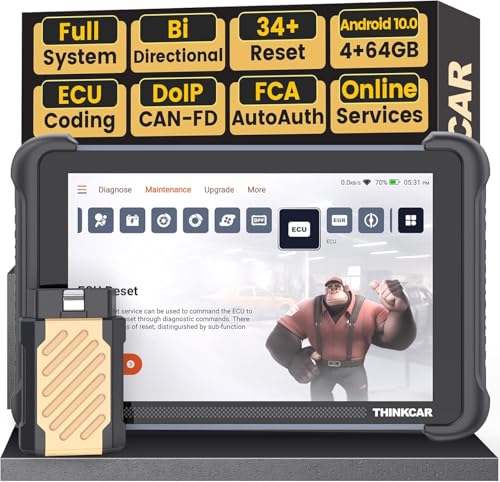
- [Notice] When you receive a used device, it may be a customer return resold by Amazon without inspection. You can exchange it for a new one through Amazon. As this situation is unavoidable, we sincerely apologize. For any issues, contacting us via Amazon's "Messages" is the best way. THINKSCAN 689BT Bidirectional Scan Tool Can Be Used Immediately After It is Turned On, Without Complicated Registration Process, Which is More Convenient & Quick.
- Full Bi-Directional Control & 3000+ Active Tests: Take control and test components like actuators, fuel injectors, relays, and cooling fans in real time. You’ll quickly see if the problem is in the part itself or the control module — saving you hours of guesswork and frustrating trial-and-error.
- Advanced ECU Coding Capabilities: Handle module matching and hidden feature activation with confidence. When you replace an ECU or want to customize settings, this obd2 scanner diagnostic bi directional tool gives you the professional-level capabilities you need without the dealership price tag.
- 34+ Useful Reset and Maintenance Functions: Complete everyday service tasks smoothly with a wide range of helpful reset and maintenance functions. Whether you’re keeping up with regular upkeep or tackling a specific job, this scanner makes maintenance simpler and less stressful for both DIYers and pros.
- Comprehensive Full System Diagnostics: Diagnose every major system — Engine, Transmission, ABS, SRS, TPMS, and more — all in one place. Finally stop wondering if you’re missing something important; get the full picture and clear codes with ease.
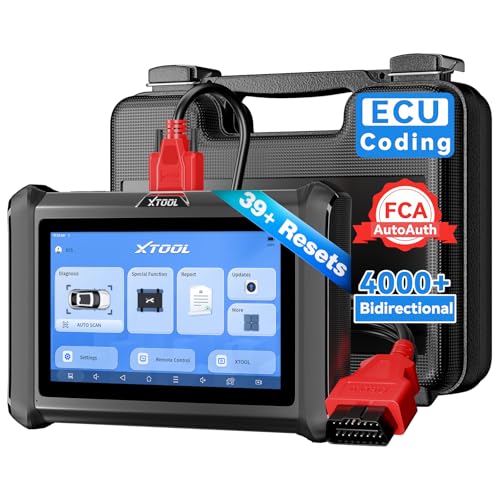
- Top Reasons to Choose the D7S OBD2 Scanner: XTOOL D7S car scan tool, an upgrade of XTOOL D7, offers comprehensive features for automotive technicians, workshops, and DIY enthusiasts 1. Upgraded Hardware: 2+64GB memory, rear camera, intuitive interface, foldable bracket 2. Complete Diagnostics: FCA
 Autoauth, OE-level all system scan, 39+ maintenance services, 4K+ bidirectional, CANFD/DoIP protocol 3. Advanced Capabilities: ECU c0ding, PMI functions 4. Wide Compatibility: Support 10,000+ models, covering 99% vehicle brands 5. Multi-language: Available in 22+ languages, No IP Restrictions 6. 3-Year Updates: Save 300 bucks on software updates for the latest features and optimizations
 - 2026 Upgraded D7S Car Scanner Features: The newly 2026 D7S V2.0 scanner for car brings exciting features for advanced vehicle diagnostics and enhanced user experience 1. FCA AutoAuth: Now supports FCA SGW module for Chrysler, for Jeep, for Dodge (2018+), for Fiat (2017+), enabling faster vehicle communication without gateway restrictions 2. PMI (Offline ECU Pr0gramming): Allows for Ford, for Lincoln, and for Mazda ECU pr0gramming for new modules 3. Optimized Diagnostic Report 2.0: Personalized reports with logos and customer info for auto shops. Note: Compatibility varies by cars, please check before order
- 39+ Services/Resets/Adaptations/Relearns/Calibrations: XTOOL D7S full system car scanner diagnostic tool tackles 99% of common car issues through its 36+ special functions, including Oil Reset, EPB, SAS, BMS, Throttle Reset, Injector C0ding, ABS Bleed, TPMS Reset, Power Balance, etc and also covers specific-vehicle functions like Crank Sensor Relearn, ABS Initialization, Cylinder Power Balance, Fuel Trim Reset, Idle Relearn etc. This car diagnostic scanner enhances efficiency, making repairs and maintenance hassle-free. Tip: DO NOT for All vehicles, please check compatibility first
- Cost-effective ECU C0ding Scan Tool for Specific Brands: Enhance your vehicle's performance with XTOOL D7S! This obd2 scanner all systems bidirectional offers advanced capabilities at an affordable price, supports online for BMW, for Benz and offline for BENZ, for MIT, along with PMI functions for Ford, for Mazda, and for Lincoln. Ideal for technicians and DIY enthusiasts, this automotive scanner diagnostic tool optimizes vehicle performance and enhances the driving experience. Note: Not for all cars and modules, please send car VIN to check the compatibility before purchase
- OE All System Diagnostic & 8 Pids Graphing: XTOOL D7S is a comprehensive all system bi directional obd2 scanner that delivers dealer-level diagnostics, completely controlling over your vehicle’s performance and health. This automotive scan tool can read and clear DTCs, view live data and ECU information, retrieve freeze frames, and perform active tests and full obd2 functions. This bi-directional scan tool can can identify your vehicle's make, model, and year information with just one click and show up to 8 PIDs live data with options for CSV viewing, playback, and recording for in-depth analysis. It is easy-to-use for both professionals and beginners, helping pinpoint issues efficiently
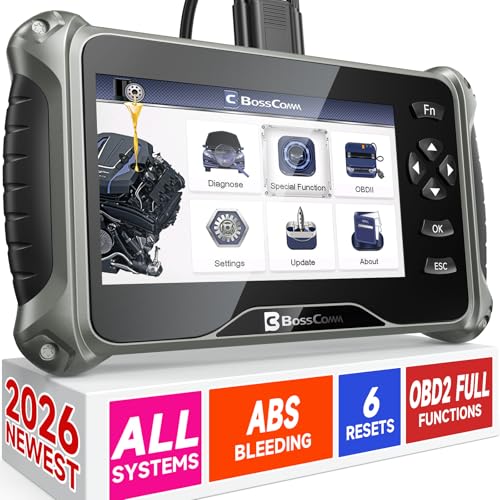
- 【✅Compared to BOSSCOMM IF742, IF745 Offers Full-System Diagnostics】The BOSSCOMM IF745 car diagnostic scanner is an upgraded model of IF742. In addition to supporting all OBD2 Code Reader functions and 6 reset options (ABS/EPB/SAS/BMS/Oil/Throttle), it expands diagnostics from 4 systems (Check Engine/ABS/SRS/Transmission) to vehicle All systems, including Steering, Suspension, and Body Electronics. This provides deeper, more comprehensive diagnostic capabilities.
- 【✨10 OBD2 Functions】The BOSSCOMM IF745 scan tool’s DTC Lookup instantly translates fault codes into user-friendly explanations, its I/M Readiness feature streamlines emissions testing with a single tap, and Freeze Frame lets you pinpoint the exact moment of a fault for in-depth root-cause diagnosis. Combined with a live data dashboard and advanced diagnostics (O2S, OBMon, EVAP), it delivers comprehensive insights for confident troubleshooting.
- 【✨Deep Diagnostics for All Vehicle System Modules】Beyond code reading/clearing and ECU information retrieval, our all-in-one data stream feature lets you inspect all current fault codes and their locations across the vehicle’s systems. This vehicle code reader helps you turn off dashboard warning lights and perform a comprehensive self-check of your car at home—no more back-and-forth trips to the repair shop or hefty inspection fees.
- 【✨6 Essential Resets: ABS Bleeding, Oil, EPB, SAS, Throttle, BMS】The BOSSCOMM IF745 obd2 scanner diagnostic tool swiftly purges air from brake lines to restore braking sensitivity, fine-tunes maintenance cycles to eliminate false alerts, resolves parking brake issues with one-click control, recalibrates steering sensors for stability, optimizes engine idling/acceleration for smoother performance, and deeply resets battery systems to extend lifespan and range via precise parameter adjustments.❗NOTE: Does NOT support bidirectional control, coding, or programming.
- 【✨10,000+ Car Models, AutoVIN, 13 Languages】The BOSSCOMM IF745 vehicle scanner diagnostic tool covers 73+ global car brands and offers support in 13 languages, making it perfect for DIYers, auto mechanics, or as a thoughtful gift. With a single-click AutoVIN feature, it instantly retrieves vehicle serial numbers, streamlining diagnostics for users globally. This adaptable tool balances user-friendliness with precision, catering to both personal and professional requirements.✅Unsure about compatibility? Compatibility will vary on vehicles' model and year, pls reach us via 📧 [email protected] 📧 before purchase.

This product presentation was made with AAWP plugin.