
NHTSA ID Number: 10253663
Manufacturer Communication Number: OwnersB
TSB/Document Date: 2024-04-29
Summary
Tesla does not provide physical owner's manual copies. Instead, all available owner?s manual content is integrated into the vehicle software, and only the content relevant for a given vehicle, based on vehicle configuration and software version installed, is displayed on its touchscreen. This file contains all available owner?s manual content for 2015-2020 Model X vehicles converted to PDF format, and given the distribution method and NHTSA?s submission format requirements, it is the best available representative copy of owner?s manual content. However, a customer who accesses the owner?s manual via their vehicle?s touchscreen would only see the parts of this PDF file that are relevant to their vehicle.
Feature Availability
Some features are available only on some vehicle configurations and/or only in specific market regions. Options or
features mentioned in the Owner's Manual does not guarantee they are available on your specific vehicle. See
Feature Availability Statement on page 355 for more information.
Errors or Inaccuracies
All specifications and descriptions are known to be accurate at time of publishing. However, because continuous
improvement is a goal at Tesla, we reserve the right to make product modifications at any time. To communicate any
inaccuracies or omissions, or to provide general feedback or suggestions regarding the quality of the Owner's
Manual, send an email to ownersmanualfeedback@tesla.com.
Location of Components
Owner information may specify the location of a component as being on the left or right side of the vehicle. As
shown, left (1) and right (2) represent the side of the vehicle when sitting inside.
353
Owners Manual
Copyrights and Trademarks
© 2012-2024 Tesla, Inc. All information in this document and all vehicle software is subject to copyright and other
intellectual property rights of Tesla, Inc. and its licensors. This material may not be modified, reproduced or copied,
in whole or in part, without the prior written permission of Tesla, Inc. and its licensors. Additional information is
available upon request. Tesla uses software created by the Open Source community. Please visit Tesla’s Open Source
software website at http://www.tesla.com/opensource. HD Radio is a registered trademark of iBiquity Digital
Corporation. The following are trademarks or registered trademarks of Tesla, Inc. in the United States and other
countries:
All other trademarks contained in this document are the property of their respective owners and their use herein
does not imply sponsorship or endorsement of their products or services. The unauthorized use of any trademark
displayed in this document or on the vehicle is strictly prohibited.
354
Owners Manual
Feature Availability Statement
Your Tesla is constantly changing, with new features being added and improved upon with every software update.
However, depending on the firmware release operating on your vehicle, your vehicle may not be equipped with all
features or may not operate exactly as described in this Owner’s Manual. The features on your vehicle vary
depending on market region, vehicle configuration, options purchased, software updates, and more.
Referencing options or features mentioned in this Owner’s Manual does not guarantee they are available on your
specific vehicle. The best way to ensure you are getting the latest and greatest features is update your vehicle’s
software as soon as you receive the notification to do so. You can also set your preferences to Controls > Software >
Software Preferences > Advanced. See Software Updates on page 253 for more information. For the features
available on your vehicle, always comply with local laws and limits to ensure the safety of you, your passengers, and
those around you.
355
Owners Manual
Disclaimers
Event Data Recorder (EDR)
Model X is equipped with an event data recorder (EDR). The main purpose of an EDR is to record, in certain crash or
near crash-like situations, data such as an airbag deployment or hitting a road obstacle, to better understand how
the vehicle's systems performed. The EDR is designed to record data related to vehicle dynamics and safety systems
for a short period of time, typically 30 seconds or less. The EDR in Model X is designed to record data such as:
• How various systems in your vehicle were operating;
• Whether or not the driver and passenger safety belts were buckled/fastened;
• How far (if at all) the driver was pressing the accelerator and/or brake pedal; and,
• How fast the vehicle was traveling.
The data can help provide a better understanding of the circumstances in which crashes and injuries occur.
NOTE: EDR data is recorded by your vehicle only if a non-trivial crash situation occurs; no data is recorded by the
EDR under normal driving conditions and no personal data (for example, name, gender, age, and crash location) is
recorded. However, other parties, such as law enforcement, could combine the EDR data with person identifying
data they routinely acquire during a crash investigation.
To read data recorded by an EDR, special equipment is required, and access to the vehicle or the EDR is needed. In
addition to the vehicle manufacturer, other parties, such as law enforcement, that have this special equipment, can
read the information if they have access to the vehicle or the EDR. Tesla may also access the EDR remotely in some
crash circumstances.
Vehicle Telematics
Model X is equipped with electronic modules that monitor and record data from various vehicle systems, including
the motor, Autopilot components, Battery, braking and electrical systems. The electronic modules record information
about various driving and vehicle conditions, including braking, acceleration, trip and other related information
regarding your vehicle. These modules also record information about the vehicle’s features such as charging events
and status, the enabling/disabling of various systems, diagnostic trouble codes, VIN, speed, direction and location.
The data is stored by the vehicle and may be accessed, used and stored by Tesla service technicians during vehicle
servicing or periodically transmitted to Tesla wirelessly through the vehicle’s telematics system. This data may be
used by Tesla for various purposes, including, but not limited to: providing you with Tesla telematics services;
troubleshooting; evaluation of your vehicle’s quality, functionality and performance; analysis and research by Tesla
and its partners for the improvement and design of our vehicles and systems; to defend Tesla; and as otherwise may
be required by law. In servicing your vehicle, Tesla can potentially resolve issues remotely simply by reviewing your
vehicle’s data log.
Tesla’s telematics system wirelessly transmits vehicle information to Tesla on a periodic basis. The data is used as
previously described and helps ensure the proper maintenance of your vehicle. Additional Model X features may use
your vehicle’s telematics system and the information provided, including features such as charging reminders,
software updates, and remote access to, and control of, various systems of your vehicle.
Tesla does not disclose the data recorded in your vehicle to any third party except when:
• An agreement or consent from the vehicle’s owner (or the leasing company for a leased vehicle) is obtained.
• Officially requested by the police or other authorities.
• Used as a defense for Tesla.
• Ordered by a court of law.
• Used for research purposes without disclosing details of the vehicle owner or identification information.
• Disclosed to a Tesla affiliated company, including their successors or assigns, or our information systems and data
management providers.
For additional information regarding how Tesla processes data collected from your vehicle, please review Tesla's
Privacy Notice at http://www.tesla.com/about/legal.
356
Owners Manual
Data Sharing
For quality assurance and to support the continuous improvement of advanced features such as Autopilot, your
Model X may collect analytics, road segment, diagnostic, and vehicle usage data and send to Tesla for analysis. This
analysis helps Tesla improve products and services by learning from the experience of billions of miles that Tesla
vehicles have driven. Although Tesla shares this data with partners that contribute similar data, the collected
information does not identify you personally and can be sent to Tesla only with your explicit consent. In order to
protect your privacy, personal information is either not logged at all, is subject to privacy preserving techniques, or is
removed from any reports before being sent to Tesla. You have control over what data you share by touching
Controls > Software > Data Sharing.
For additional information regarding how Tesla processes data collected from your vehicle, please review Tesla's
Privacy Notice at http://www.tesla.com/about/legal.
NOTE: Although Model X uses GPS in connection with driving and operation, as discussed in this document, Tesla
does not record or store vehicle-specific GPS information, except the location where a crash occurred. Consequently,
Tesla is unable to provide historical information about a vehicle's location (for example, Tesla is unable to tell you
where Model X was parked/traveling at a particular date/time).
Quality Control
You might notice a few miles/km on the odometer when you take delivery of your Model X. This is a result of a
comprehensive testing process that ensures the quality of your Model X.
The testing process includes extensive inspections during and after production. The final inspection takes place at
Tesla and includes a road test conducted by a technician.
Sound Library
"Free Sounds Library" (if equipped).
Free Sound Effects Site.
License: Attribution 4.0 International (CC BY 4.0). You are allowed to use sound effects free of charge and royalty
free in your multimedia projects for commercial or non-commercial purposes.
http://www.freesoundslibrary.com
California Proposition 65
WARNING: Operating, servicing and maintaining a passenger vehicle or off-highway motor vehicle can expose
you to chemicals including phthalates and lead, which are known to the State of California to cause cancer and
birth defects or other reproductive harm. To minimize exposure, wear gloves or wash your hands frequently
when servicing your vehicle. For more information go to: www.P65Warnings.ca.gov/passenger-vehicle.
WARNING: Certain components of this vehicle such as airbag modules and seat belt pre-tensioners may
contain Perchlorate Material. Special handling may be required for service or vehicle end of life disposal. See
www.dtsc.ca.gov/hazardouswaste/perchlorate.
WARNING: Battery posts, terminals, and related accessories contain lead and lead compounds. Wash hands
after handling.
357
Owners Manual
Reporting Safety Defects
Contacting Tesla
For detailed information about your Model X, go to http://www.tesla.com and log on to your Tesla account or sign
up to get an account.
If you have any questions or concerns about your Model X, in the United States, Canada or Puerto Rico, call
1-877-79TESLA (1-877‑798-3752) and in Mexico, call 1-800-228-8145.
NOTE: You can also use voice commands to provide feedback to Tesla. Say "Report", "Feedback", or "Bug report"
followed by brief comments. Model X takes a snapshot of its systems, including your current location, vehicle
diagnostic data, and screen captures of the touchscreen and instrument panel. Tesla periodically reviews these notes
and uses them to continue improving Model X.
Reporting Safety Defects - US
If you believe that Model X has a defect which could cause a crash or could cause injury or death, you should
immediately inform the National Highway Traffic Safety Administration (NHTSA) in addition to notifying Tesla.
If NHTSA receives similar complaints, it may open an investigation. If it finds that a safety defect exists in a group of
vehicles, it may order a recall and remedy campaign. However, NHTSA cannot become involved in individual
problems between you, your dealer, or Tesla.
To contact NHTSA, you may call the Vehicle Safety Hotline toll-free at 1-888-327-4236 (TTY: 1-800-424-9153); go to
www.safercar.gov; or write to: Administrator, National Highway Traffic Safety, 1200 New Jersey Avenue SE.,
Washington, DC 20590. You can also obtain other information about motor vehicle safety from www.safercar.gov.
Reporting Safety Defects - Canada
If you believe that your Model X has a defect which could cause a crash or could cause injury or death, you should
immediately inform Transport Canada, in addition to notifying Tesla. To contact Transport Canada, call their toll-free
number: 1-800-333-0510.
Certification Conformity
Key and Passive Unlocking System
FCC Certification
Model Number
Mfr
Frequency
Key fob 1048598
2.4 GHz
WC1
127.7KHz
Tested For
USA
Canada
Mexico
Taiwan
Global
The devices listed above comply with Part 15 of the FCC rules, Industry Canada's license-exempt RSS Standard(s)
and EU Directive 2014/53/EU.
1. This device may not cause harmful interference, and
2. This device must accept any interference received, including interference that may cause undesired operation.
Changes or modifications not expressly approved by Tesla could void your authority to operate the equipment.
La Operación de Este Equipo no está Sujeta a las dos following conditions:
1. Es Posible Que Este Equipo o Dispositivo no causar interferencia perjudicial.
358
Owners Manual
2. Este Equipo o Dispositivo debe Aceptar Cualquier interferencia. Incluyendo La Que Pueda causar do Operación
no Deseada.
Radiation Exposure Statement
The product complies with FCC/IC RF Exposure for Low Power Consumer Wireless Power Transfer. The RF exposure
limit set forth for an uncontrolled environment is safe for the operations intended, as described in this manual.
Compliance was demonstrated at a distance of 20 cm or greater between the human body and the device. If the
function is available, the device's output power could be lowered.
IC Certification
The following device is used in vehicles in Canada:
• Key fob Model Number: 1048598 (2.4 GHz)
• Key fob Manufacturer: Tesla
Per IC 20098-1048598, this device complies with Industry Canada license-exempt RSS standard(s). Operation is
subject to the following two conditions:
1. This device may not cause harmful interference, and
2. This device must accept any interference received, including interference that may cause undesired operation.
Le présent appareil est conforme aux CNR d'Industrie Canada applicables aux appareils radioexempts de licence.
L'exploitation est autorisée aux deux conditions suivantes :
1. l'Appareilne doit pas produire de brouillage, et
2. l'Utilisateur de l'appareil doit accepter tout brouillage radioélectrique subi, même si le brouillage est susceptible
d'en compromettre lefonctionnement.
Cet équipement est conforme aux limites d’exposition aux rayonnements IC établies pour unenvironnement non
contrôlé.
Déclaration d'exposition aux radiations:
Le produit est conforme à l'exposition RF IC pour le transfert de puissance sans fil de consommateurs de faible
puissance. La limite d'exposition RF fixée pour un environnement non contrôlé est sans danger pour le
fonctionnement prévu tel que décrit dans ce manuel. L'exposition RF supplémentaire que la conformité a été
démontrée à 20cm et plus de séparation du corps de l'utilisateur ou de mettre l'appareil à la puissance de sortie
inférieure si une telle fonction est disponible.
IC Certification
La Operación de Este Equipo no está Sujeta a las dos condiciones siguientes:
1. Es Posible Que Este Equipo o Dispositivo no causar interferenciaperjudicial.
2. Este Equipo o Dispositivo debe Aceptar Cualquier interferencia. Incluyendo La Que Pueda causar do Operación
no Deseada.
Central Body Controller
FCC Certification
Model Number
Central Body Controller 1031503
Mfr
MHz / GHz
315 / 2.4
Tested For
USA
Canada
359
Owners Manual
Per FCC ID 2AEIM-1031503, the devices listed above comply with Part 15 of the FCC rules. Operation is subject to the
following two conditions:
1. This device may not cause harmful interference, and
2. This device must accept any interference received, including interference that may cause undesired operation.
Changes or modifications not expressly approved by Tesla could void your authority to operate the equipment.
IC Certification
The following device is used in vehicles in Canada:
• Central Body Controller Model Number: 1031503 (315 MHz / 2.4 GHz)
• Central Body Controller Manufacturer: Tesla
Per IC 20098-1031503, this device complies with Industry Canada license-exempt RSS standard(s). Operation is
subject to the following two conditions:
1. This device may not cause harmful interference, and
2. This device must accept any interference received, including interference that may cause undesired operation.
Integral Component Only
The Central Body Controller is an integral part of the vehicle that is installed and secured around other interior trim
components. The Central Body Controller is designed and intended for use only as an integral component and
cannot be sold and/or marketed separately.
Tire Pressure Monitoring System
FCC IDs: TZSTPMS201, Z9F-201FS43X
IC ID: 11852A-201FS4X
The tire pressure monitoring system (TPMS) complies with Part 15 of the FCC rules and RSS-210 of Innovation,
Science and Economic Development Canada. Operation is subject to the following two conditions:
1. This device may not cause harmful interference, and
2. This device must accept any interference received, including interference that may cause undesired operation.
Changes or modifications not expressly approved by Tesla could void your authority to operate the equipment.
HomeLink
This device complies with Part 15 of the FCC rules, RSS-210 Industry Canada, and with EU Directive 2014/53/EU.
Operation is subject to the following conditions:
• This device may not cause harmful interference.
• This device must accept any interference received, including interference that may cause undesired operation.
Any changes or modifications to the device not expressly approved by the manufacturer or Tesla could void your
authority to operate the equipment.
360
Owners Manual
Radio Frequency Information
This equipment has been tested and found to comply with the limits for a Class B digital device, pursuant to Part 15
of the FCC Rules. These limits are designed to provide reasonable protection against harmful interference in a
residential installation. This equipment generates, uses and can radiate radio frequency energy and, if not installed
and used in accordance with the instructions, may cause harmful interference to radio communications. However,
there is no guarantee that interference will not occur in a particular installation. If this equipment does cause harmful
interference to radio or television reception, which can be determined by turning the equipment off and on, try to
correct the interference by one or more of the following measures:
• Reorient or relocate the receiving antenna.
• Increase the separation between the equipment and receiver.
• Connect the equipment into an outlet on a circuit different from that to which the receiver is connected.
• Consult the dealer or an experienced radio/TV technician for help.
361
Mobile Connector
Gen 1
Safety Information
Save These Important Safety Instructions
This document contains important instructions and warnings that must be followed when using your Mobile
Connector.
Warnings
WARNING:
• For use with electric vehicles.
• Automatic CCID reset provided.
• Do not use this product if there is any damage to the unit.
• Do not use this product if the electric vehicle cable is damaged.
• Read this manual before using.
• Enclosure: Type 4X
WARNING: Risk of explosion. This equipment has internal arcing or sparking parts that should not be exposed
to flammable vapors. This equipment should be located at least 18 inches (46 cm) above the floor.
WARNING: This device is intended only for charging vehicles not requiring ventilation during charging.
WARNING: Risk of electric shock. Do not remove cover or attempt to open the enclosure. No user-serviceable
parts inside.
WARNING: Read this entire document before using the Mobile Connector. Failure to do so or to follow any of
the instructions or warnings in this document can result in fire, electrical shock, serious injury or death.
WARNING: Use the Mobile Connector only within the specified operating parameters.
WARNING: The Mobile Connector is designed only for charging a battery electric vehicle that uses the North
American Charging Standard (NACS), including Tesla vehicles (with the exception of the Tesla Roadster). Do
not use it for any other purpose or with any other vehicle or object.
WARNING: Do not use the Mobile Connector’s adapters in any outlet for which they are not designed.
WARNING: Do not use (or discontinue using) the Mobile Connector if it is defective, appears cracked, frayed,
broken or otherwise damaged, or fails to operate.
WARNING: Do not attempt to open, disassemble, repair, tamper with, or modify the Mobile Connector. Contact
Tesla for any repairs.
WARNING: Do not use an extension cord, a multi-outlet adapter, a multi-plug, a conversion plug, or a power
strip to plug in the Mobile Connector.
WARNING: Do not disconnect the Mobile Connector from the wall outlet when the vehicle is charging.
WARNING: Do not plug the Mobile Connector into a damaged, loose or worn power outlet. Ensure that the
prongs on the Mobile Connector fit snugly into the wall outlet.
WARNING: Do not connect the Mobile Connector into a power outlet that is not properly grounded.
WARNING: Do not use or store the Mobile Connector in a recessed area or below floor level.
WARNING: Do not use the Mobile Connector when either you, the vehicle or the Mobile Connector is exposed
to severe rain, snow, electrical storm or other inclement weather.
WARNING: When transporting the Mobile Connector, handle with care to prevent damage to any of its
components. Do not subject the Mobile Connector to strong force or impact. Do not pull, twist, tangle, drag or
step on the Mobile Connector or any of its components.
362
Mobile Connector
WARNING: Protect the Mobile Connector from moisture, water and foreign objects at all times. If any exist or
appear to have corroded or damaged the Mobile Connector, do not use the Mobile Connector.
WARNING: If rain falls during charging, do not allow rain water to run along the length of charge cable, causing
the electrical outlet or charging port to become wet.
WARNING: Do not plug the Mobile Connector into an electrical outlet that is submerged in water or covered in
snow. If, in this situation, the Mobile Connector is already plugged in and needs to be unplugged, turn off the
breaker before unplugging the Mobile Connector.
WARNING: Do not touch the Mobile Connector’s end terminals with sharp metallic objects, such as wire, tools
or needles. Do not forcefully fold any part of the Mobile Connector or damage it with sharp objects. Do not
insert foreign objects into any part of the Mobile Connector.
WARNING: Ensure that the Mobile Connector’s charging cable does not obstruct pedestrians or other vehicles
or objects.
WARNING: Use of the Mobile Connector may affect or impair the operation of medical or implantable
electronic devices, such as an implantable cardiac pacemaker or an implantable cardioverter defibrillator.
Before using the Mobile Connector, check with the electronic device manufacturer concerning the effects that
charging may have on any such electronic device.
WARNING: Do not use cleaning solvents to clean the Mobile Connector.
Cautions
CAUTION: Do not use private power generators as a power source for charging.
CAUTION: Do not operate the Mobile Connector in temperatures outside its operating range of -22°F to +122°F
(-30°C to +50°C).
CAUTION: Store the Mobile Connector in a clean dry place in temperatures between -40°F and +185°F (-40°C
and +85°C).
General Information
Specifications
Use only a 120 volt, 208 volt or 240 volt AC supply, 50/60 hertz wall outlet that has a dedicated and properly
grounded circuit, and is rated for at least 15 amps.
If possible, use a dedicated receptacle with a single socket. If the receptacle has two sockets, do not plug any other
items into the other socket.
The Mobile Connector is 20 feet (6 meters) long. Use an existing outlet or install a new outlet within approximately
13 feet (4 meters) of the vehicle's charge port and at least 18 inches (45 cm) above the ground. The charge port is
located on the left side of the vehicle, behind a door that is part of the rear tail light assembly.
WARNING: Do not use an extension cord, a multi-outlet adapter, a multi-plug, a conversion plug, or a power
strip to plug in the Mobile Connector.
Charging Time
Charging times vary based on the voltage and current available from the power outlet, subject to various conditions.
Charge time also depends on ambient temperature and the vehicle’s Battery temperature. If the Battery is not within
the optimal temperature range for charging, the vehicle heats or cools the Battery before or during charging.
To estimate the total time it takes to recharge the Battery in hours (from near empty to near 100%), divide the
battery size (kWh) by power (kW). Note that different adapters provide different current and power outputs.
If you are charging a Tesla, you can also touch the Charging icon to review the charging status information; it
displays the time remaining until fully charged at the currently selected charge level.
For more information on how long it takes to charge your Tesla vehicle, go to www.tesla.com.
363
Mobile Connector
Adapters
The Mobile Connector includes two outlet adapters: one for a standard 120 volt household outlet and a second
adapter for a 240 volt outlet. For faster charging, use a 240 volt outlet. Consult an electrician to install a 240 volt
outlet where you plan to park your Tesla vehicle.
NEMA 5-15 Adapter
NEMA 14-50 Adapter
364
Mobile Connector
Additional adapters are available for purchase. For details, go to: shop.tesla.com.
NOTE: Images in this document are for demonstration purposes only.
Removing the Adapter
To remove an adapter, push the button on the Mobile Connector’s charge cable and pull the adapter from its socket.
Attaching the Adapter
To attach an adapter, line up the adapter with the Mobile Connector’s charge cable and push until it snaps into place.
365
Mobile Connector
How to Charge
Plugging In
CAUTION: Always inspect the Mobile Connector and adapter for damage prior to each use.
NOTE: Illustrations are provided for conceptual understanding only. Your specific vehicle and mobile connector may
appear slightly different.
NOTE: If you are charging a Tesla vehicle, find more information about how to charge your vehicle (how to adjust
charge settings, view charging status, etc.) in the Charging Instructions topic in the Owner's Manual. To display the
Owner's Manual on your vehicle’s touchscreen, touch the app launcher and select the Manual app.
1. Ensure that the Mobile Connector’s adapter matches the outlet you want to use.
2. Plug the Mobile Connector’s adapter into the power outlet. The adapter should be inserted completely into the
power outlet.
3. Open the charge port door. If you are charging a Tesla vehicle, press the button on the top of the Mobile
Connector handle with your vehicle unlocked and in Park to open the charge port door.
366
Mobile Connector
NOTE: If you are charging a Tesla vehicle, your vehicle is unlocked when the key is nearby and automatic
unlocking is enabled. You can also open the charge port door using any of these methods:
◦ Display the charging screen on your vehicle's touchscreen and touch Open Charge Port.
◦ On the key fob (if equipped), hold down the rear trunk button for 1-2 seconds.
◦ Press the charge port door when the vehicle is unlocked.
◦ Use a voice command (you can also use a voice command to close the charge port door, and to start or stop
charging).
4. Plug the Mobile Connector handle into your vehicle's charge port.
5. When you plug the Mobile Connector into a Tesla vehicle, the charge port indicator light pulses green during
charging, and the vehicle displays charging information. The display turns off after you close all doors, and the
charge port indicator light stops pulsing shortly after you lock the vehicle.
Unplugging
When charging is complete on a Tesla vehicle, the charge port indicator light stops pulsing and turns solid green.
1. With the vehicle unlocked, press and hold the button on the Mobile Connector handle, wait for the charge port
indicator light to turn white, and then pull the Mobile Connector out of the charge port.
NOTE: To prevent unauthorized unplugging of the charge cable, the vehicle must be unlocked or able to
recognize a key nearby before you can disconnect the charge cable.
NOTE: When the latch in the charge port retracts, the Mobile Connector stops supplying power and you can
safely unplug it from the vehicle.
2. The charge port door automatically closes after you remove the charge cable from a Tesla vehicle.
NOTE: If your vehicle is not equipped with a motorized charge port door, you may need to push the charge port
door closed.
Tesla recommends leaving the Mobile Connector plugged into the wall outlet to reduce wear and tear from dayto-day use. If you do not plan to use the Mobile Connector for a while (such as when you leave for vacation),
unplug it and store it in an appropriate location.
Troubleshooting
Gen 1 Mobile Connector Status Lights
Under normal conditions, when charging is in progress, the Mobile Connector’s lights illuminate sequentially, and the
red light is off. Identify problems by paying attention to these lights.
NOTE: In some cases, you may need to reset the device by pressing the RESET button located on the back.
367
Mobile Connector
Front
Back
Green Lights
Red Light
What it means
What to do
All lights
streaming
Off
Charging is in progress
Nothing. The Mobile Connector is successfully charging.
All on
Off
Power on. Mobile
Connector is powered,
but not charging, or
scheduled charging is
enabled
Make sure the Mobile Connector is plugged into the
vehicle.
Off
1 flash
Ground fault. Electrical
current is leaking
through a potentially
unsafe path
This should automatically reset in 15 minutes. If not, ensure
no one is touching or inside the vehicle, then press the
RESET button.
Off
2 flashes
Self check failed
Unplug the Mobile Connector from the vehicle and press
the RESET button. Plug the Mobile Connector back into the
vehicle. If the error persists, unplug the Mobile Connector
from both the vehicle and the power outlet, then plug it
back in. When plugging back in, always plug it into the
outlet first.
Off
3 flashes
Contactor failed
Unplug the Mobile Connector from the vehicle and wait
10 seconds. If the error persists, contact your closest
Service Center (https://www.tesla.com/findus).
Off
4 flashes
The ground assurance
monitoring circuit has
detected loss of ground
Make sure the power outlet is properly grounded. Consider
connecting to a different outlet. If uncertain, ask your
electrician.
Off
5 flashes
Sense circuit fault
Make sure the Mobile Connector’s adapter is attached
properly.
Off
6 flashes
Thermal fault
Consider charging in a cooler area, such as indoors or in
the shade.
Off
More than
6 flashes
The Mobile Connector
may need repair
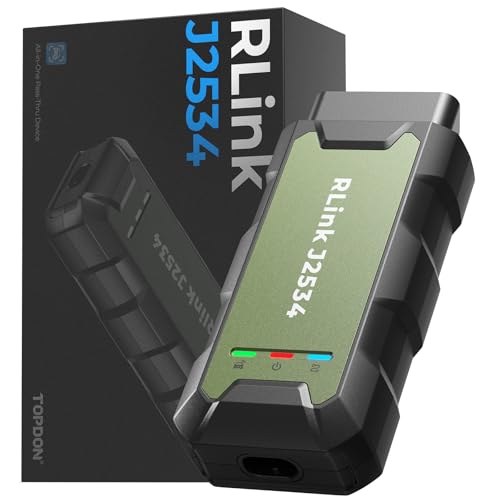
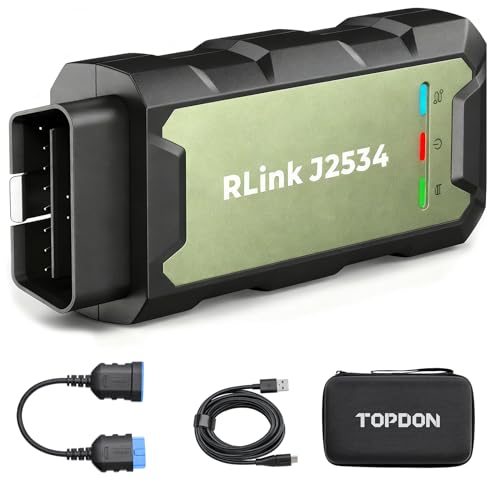
- Advanced VCI Box, Industry-leading J2534 Pass-Thru...
- High-Speed OEM-Level Diagnostics & Programming: Unlock true...
- Coverage for 17 Car Brands & Ultra Reliability: Works...
- User-Friendly RLink Platform & Expert Support: TOPDON’s...
- 6.6 ft USB-C Cable & Portable Storage Case: The RLink J...
Last update on 2026-06-23 / Affiliate links / Images from Amazon Product Advertising API
If the PDF is very large, it may not load in the preview below.
Some older TSBs had multiple PDFs — visit the NHTSA Website to view all PDFs.
If the TSB PDF does not show, download or view it on the NHTSA Website.
Click on the (+) Plus Sign
Then Click on Associated Document(s)
Search NHTSA Database for Recalls
Search NHTSA Database for Vehicle Investigations
View Latest Vehicle Investigations
Search NHTSA Database for Vehicle Complaints
View Latest Vehicle Complaints
TSB/Document ID: OwnersB
Replacement Service Bulletin Number:
MFR Communication Date: 2024-03-27
MFR Internal Campaign ID/Software Version:
Communication Type: Service Bulletin/Repair Instructions
NHTSA Components: EQUIPMENT:ELECTRICAL:INFOTAINMENT:VIDEO (TOUCH)SCREEN/MONITOR/UNIT
MFR Component System:
MFR Component Subsystem:
Previous TSB | Next TSB |
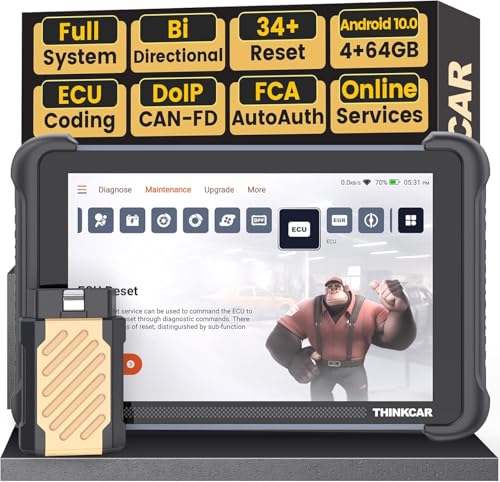
- [Notice] When you receive a used device, it may be a customer return resold by Amazon without inspection. You can exchange it for a new one through Amazon. As this situation is unavoidable, we sincerely apologize. For any issues, contacting us via Amazon's "Messages" is the best way. THINKSCAN 689BT Bidirectional Scan Tool Can Be Used Immediately After It is Turned On, Without Complicated Registration Process, Which is More Convenient & Quick.
- Full Bi-Directional Control & 3000+ Active Tests: Take control and test components like actuators, fuel injectors, relays, and cooling fans in real time. You’ll quickly see if the problem is in the part itself or the control module — saving you hours of guesswork and frustrating trial-and-error.
- Advanced ECU Coding Capabilities: Handle module matching and hidden feature activation with confidence. When you replace an ECU or want to customize settings, this obd2 scanner diagnostic bi directional tool gives you the professional-level capabilities you need without the dealership price tag.
- 34+ Useful Reset and Maintenance Functions: Complete everyday service tasks smoothly with a wide range of helpful reset and maintenance functions. Whether you’re keeping up with regular upkeep or tackling a specific job, this scanner makes maintenance simpler and less stressful for both DIYers and pros.
- Comprehensive Full System Diagnostics: Diagnose every major system — Engine, Transmission, ABS
 , SRS, TPMS, and more — all in one place. Finally stop wondering if you’re missing something important; get the full picture and clear codes with ease.
Last update on 2026-07-02 / Affiliate links / Images from Amazon Product Advertising API
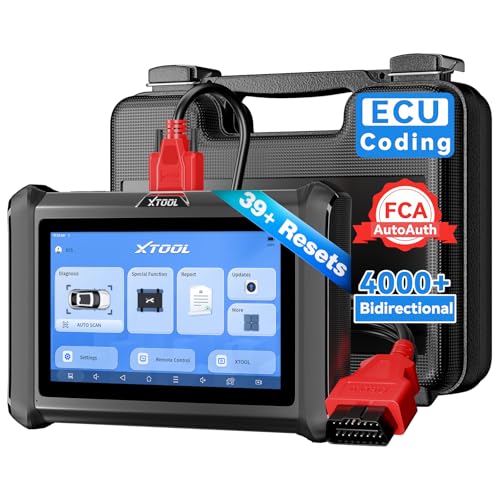
- Top Reasons to Choose the D7S OBD2 Scanner: XTOOL D7S car scan tool, an upgrade of XTOOL D7, offers comprehensive features for automotive technicians, workshops, and DIY enthusiasts 1. Upgraded Hardware: 2+64GB memory, rear camera, intuitive interface, foldable bracket 2. Complete Diagnostics: FCA Autoauth, OE-level all system scan, 39+ maintenance services, 4K+ bidirectional, CANFD/DoIP protocol 3. Advanced Capabilities: ECU c0ding, PMI functions 4. Wide Compatibility: Support 10,000+ models, covering 99% vehicle brands 5. Multi-language: Available in 22+ languages, No IP Restrictions 6. 3-Year Updates: Save 300 bucks on software updates for the latest features and optimizations
- 2026 Upgraded D7S Car Scanner Features: The newly 2026 D7S V2.0 scanner for car brings exciting features for advanced vehicle diagnostics and enhanced user experience 1. FCA AutoAuth: Now supports FCA SGW module for Chrysler, for Jeep, for Dodge (2018+), for Fiat (2017+), enabling faster vehicle communication without gateway restrictions 2. PMI (Offline ECU Pr0gramming): Allows for Ford, for Lincoln, and for Mazda ECU pr0gramming for new modules 3. Optimized Diagnostic Report 2.0: Personalized reports with logos and customer info for auto shops. Note: Compatibility varies by cars, please check before order
- 39+ Services/Resets/Adaptations/Relearns/Calibrations: XTOOL D7S full system car scanner diagnostic tool tackles 99% of common car issues through its 36+ special functions, including Oil Reset, EPB, SAS, BMS, Throttle Reset, Injector C0ding, ABS Bleed, TPMS Reset, Power Balance, etc and also covers specific-vehicle functions like Crank Sensor Relearn, ABS Initialization, Cylinder Power Balance, Fuel Trim Reset, Idle Relearn etc. This car diagnostic scanner enhances efficiency, making repairs and maintenance hassle-free. Tip: DO NOT for All vehicles, please check compatibility first
- Cost-effective ECU C0ding Scan Tool for Specific Brands: Enhance your vehicle's performance with XTOOL D7S! This obd2 scanner all systems bidirectional offers advanced capabilities at an affordable price, supports online for BMW, for Benz and offline for BENZ, for MIT, along with PMI functions for Ford, for Mazda, and for Lincoln. Ideal for technicians and DIY enthusiasts, this automotive scanner diagnostic tool optimizes vehicle performance and enhances the driving experience. Note: Not for all cars and modules, please send car VIN to check the compatibility before purchase
- OE All System Diagnostic & 8 Pids Graphing: XTOOL D7S is a comprehensive all system bi directional obd2 scanner that delivers dealer-level diagnostics, completely controlling over your vehicle’s performance and health. This automotive scan tool can read and clear DTCs, view live data and ECU information, retrieve freeze frames, and perform active tests and full obd2 functions. This bi-directional scan tool can can identify your vehicle's make, model, and year information with just one click and show up to 8 PIDs live data with options for CSV viewing, playback, and recording for in-depth analysis. It is easy-to-use for both professionals and beginners, helping pinpoint issues efficiently
Last update on 2026-06-30 / Affiliate links / Images from Amazon Product Advertising API
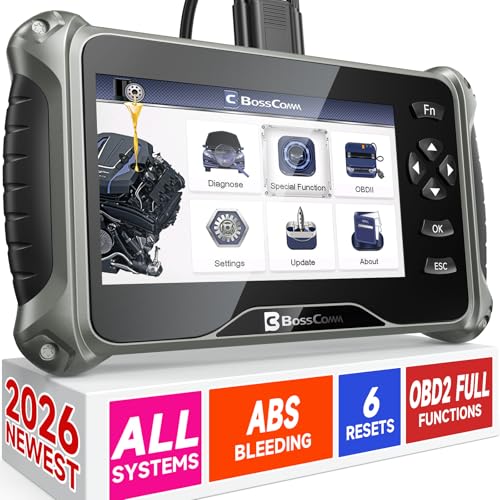
- 【✅Compared to BOSSCOMM IF742, IF745 Offers Full-System Diagnostics】The BOSSCOMM IF745 car diagnostic scanner is an upgraded model of IF742. In addition to supporting all OBD2 Code Reader functions and 6 reset options (ABS/EPB/SAS/BMS/Oil/Throttle), it expands diagnostics from 4 systems (Check Engine/ABS/SRS/Transmission) to vehicle All systems, including Steering, Suspension, and Body Electronics. This provides deeper, more comprehensive diagnostic capabilities.
- 【✨10 OBD2 Functions】The BOSSCOMM IF745 scan tool’s DTC Lookup instantly translates fault codes into user-friendly explanations, its I/M Readiness feature streamlines emissions testing with a single tap, and Freeze Frame lets you pinpoint the exact moment of a fault for in-depth root-cause diagnosis. Combined with a live data dashboard and advanced diagnostics (O2S, OBMon, EVAP), it delivers comprehensive insights for confident troubleshooting.
- 【✨Deep Diagnostics for All Vehicle System Modules】Beyond code reading/clearing and ECU information retrieval, our all-in-one data stream feature lets you inspect all current fault codes and their locations across the vehicle’s systems. This vehicle code reader helps you turn off dashboard warning lights and perform a comprehensive self-check of your car at home—no more back-and-forth trips to the repair shop or hefty inspection fees.
- 【✨6 Essential Resets: ABS Bleeding, Oil, EPB, SAS, Throttle, BMS】The BOSSCOMM IF745 obd2 scanner diagnostic tool swiftly purges air from brake lines to restore braking sensitivity, fine-tunes maintenance cycles to eliminate false alerts, resolves parking brake issues with one-click control, recalibrates steering sensors for stability, optimizes engine idling/acceleration for smoother performance, and deeply resets battery systems to extend lifespan and range via precise parameter adjustments.❗NOTE: Does NOT support bidirectional control, coding, or programming.
- 【✨10,000+ Car Models, AutoVIN, 13 Languages】The BOSSCOMM IF745 vehicle scanner diagnostic tool covers 73+ global car brands and offers support in 13 languages, making it perfect for DIYers, auto mechanics, or as a thoughtful gift. With a single-click AutoVIN feature, it instantly retrieves vehicle serial numbers, streamlining diagnostics for users globally. This adaptable tool balances user-friendliness with precision, catering to both personal and professional requirements.✅Unsure about compatibility? Compatibility will vary on vehicles' model and year, pls reach us via 📧 [email protected] 📧 before purchase.
Last update on 2026-07-02 / Affiliate links / Images from Amazon Product Advertising API
This product presentation was made with AAWP plugin.