
NHTSA ID Number: 10250485
Manufacturer Communication Number: ManualE
TSB/Document Date: 2024-02-20
Summary
Tesla does not provide physical owner's manual copies. Instead, all available owner?s manual content is integrated into the vehicle software, and only the content relevant for a given vehicle, based on vehicle configuration and software version installed, is displayed on its touchscreen. This file contains all available owner?s manual content for Model Y vehicles converted to PDF format, and given the distribution method and NHTSA?s submission format requirements, it is the best available representative copy of owner?s manual content. However, a customer who accesses the owner?s manual via their vehicle?s touchscreen would only see the parts of this PDF file that are relevant to their vehicle.
88
Owners Manual
NOTE: When in Drive, push the drive stalk all the way down and release to enable cruise control (see Cruise Control
on page 102).When in Drive, push the drive stalk all the way down once to engage Traffic-Aware Cruise Control, or
twice in quick succession to engage Autosteer (see Autopilot Features on page 128)If Autosteer Activation is set to
Single Pull, pulling the drive stalk down once activates Autosteer (which includes Traffic-Aware Cruise Control).
Touch Controls > Autopilot > Autosteer Activation and choose Double Pull to use Traffic-Aware Cruise Control
independently of Autosteer when you pull the drive stalk down once. For more information, see Autopilot Settings
on page 128.
Park
Press the end of the drive stalk while Model Y is stopped.
Model Y automatically shifts into Park to prevent roll-away while driving in low speeds. This happens whenever you
connect a charge cable, unbuckle your seat belt, or open the door while in Drive or Neutral. Ensure the charge cable
is removed, buckle your seat belt, and close the door before shifting out of Park.
Attempting to engage the parking brake above 5 mph (8 km/h) will result in emergency braking (see Emergency
Braking on page 97).
To make it convenient to pick up passengers, you can also unlock all doors at any time by shifting into Park then
pressing the Park button a second time.
NOTE: You must press the brake pedal to shift out of Park.
NOTE: The above conditions do not reflect a comprehensive list of reasons why Model Y may or may not
automatically shift into Park and, in certain scenarios, it is possible for your vehicle to shift into Park when only one
of the above conditions is true.
CAUTION: Model Y will not shift out of Park if the front trunk is not securely shut or if the charge port is unable
to determine whether a charging cable is plugged in. Ensure the front trunk is closed and any charging cables
are unplugged, and follow the directions on the touchscreen to proceed.
CAUTION: In emergency situations, if the brakes are not functioning properly, press and hold the Park button
on the drive stalk to bring Model Y to a stop. Do not use this method to stop the vehicle unless absolutely
necessary.
WARNING: It is the driver's responsibility to always ensure the vehicle is in Park before exiting. Never rely on
Model Y to automatically shift into Park for you; it might not work in all circumstances (for example, if Creep or
a slope causes the vehicle to travel greater than approximately 1.5 mph (2 km/h)).
89
Owners Manual
Lights
Controlling Lights
Touch Controls > Lights on the touchscreen to access all light controls, both interior and exterior.
You can also pull the turn signal stalk toward you to display a popup that provides quick access to exterior lights. For
example, you can turn the headlights on or off continuously (overriding the default Auto High Beam setting). The
lights popup allows you to adjust all exterior light settings, including parking lights, fog lights (if equipped), etc. The
setting you choose is retained for the current drive only.
NOTE: If the touchscreen is already displaying the full Controls screen for lights, pulling the turn signal stalk does not
display the quick access popup.
In addition to the lights you can control from the touchscreen, Model Y has convenience lights that operate
automatically based on what you are doing. For example, in low ambient lighting conditions, the interior lights,
marker lights, tail lights, and puddle lights turn on when you unlock Model Y, when you open a door, and when you
shift into Park. They turn off after a minute or two, when you shift or lock Model Y. Use these settings to control your
vehicle's interior and exterior lights:
Headlights
Exterior lights (headlights, tail lights, side marker lights, parking lights, and license plate lights) are set to Auto each
time you start Model Y. If you change to a different setting, lights always revert to Auto on your next drive.
Touch one of these options to change and retain the exterior light setting until adjusted again or the next time you
drive:
• Off: Exterior lights turn off. When driving, daytime running lights may remain on based on regulations in various
market regions.
• Parking: Parking lights, side marker lights, tail lights and license plate lights turn on.
• On: Low beam headlights, side marker lights, parking lights, tail lights, and license plate lights turn on.
NOTE: Model Y has a series of LED lights along the rim of the headlights, also referred to as "signature" lights. These
lights automatically turn on whenever Model Y is powered on and a drive mode (Drive or Reverse) is engaged.
CAUTION: The rear tail lights are off when daytime running lights are on. Be sure the rear lights are on during
low rear visibility conditions (for example, when it is dark, foggy, snowy, or the road is wet, etc.). Failure to do
so can cause damage or serious injury.
WARNING: Always ensure that headlights are on during low visibility conditions. Failure to do so may result in
a collision.
Fog Lights
A separate control is available to turn on fog lights (if equipped). When on, fog lights operate whenever low beam
headlights are on. When headlights are turned off, fog lights also turn off.
Dome Lights
Turn the interior dome (map) lights on or off. If set to AUTO, the interior dome lights turn on when you unlock Model
Y, open a door upon exiting, or shift into Park.
90
Owners Manual
You can also manually turn an individual dome light on or off by pressing its lens. If you manually turn a dome light
on, it turns off when Model Y powers off. If Model Y was already powered off when you manually turned the light on,
it eventually turns off.
NOTE: To control the backlighting on the steering wheel buttons, touch Controls > Lights > Steering Wheel Lights. If
on, they turn on whenever headlights are on.
Ambient Lights
When enabled, interior ambient lights turn on whenever the headlights are on.
Steering Wheel Lights
If you turn on Steering Wheel Lights, the arrows associated with the scroll buttons are backlit in low ambient
lighting conditions.
Reading Lights
There are two reading lights in the second row seating area, both above the door and next to the coat hangers (see
Coat Hangers on page 49). Turn an individual reading light on or off by pressing its lens. The reading light will
automatically turn off when Model Y powers off.
High Beam Headlights
By default, Auto High Beam is enabled to allow high beam headlights to automatically switch to low beam when
there is light detected in front of Model Y (for example, from an oncoming vehicle). To control this feature, touch
Controls > Lights > Auto High Beam or touch Auto on the lights popup that displays on the touchscreen when you
pull the turn signal stalk toward you.
NOTE: Auto High Beam is automatically enabled when Autosteer is engaged. To switch to low beam headlights,
push the turn signal stalk forward and release. Auto High Beam is re-enabled every time Autosteer is activated.
In situations where high beam headlights are off (for example, lights are turned off, or Auto High Beam is active and
light is detected in front of Model Y) or you are driving in daylight, you can temporarily turn on high beams by
pulling the turn signal stalk toward you. When you release, high beam headlights turn off (unless of course, Auto
High Beam is engaged and light is not detected in front of you). To briefly flash the high beam headlights, pull the
turn signal stalk towards you and immediately release.
91
Owners Manual
NOTE: Your chosen setting is retained until you manually change it.
The following indicator lights are visible on the touchscreen to show the status of the headlights:
Low beam headlights are on.
High beam headlights are on and Auto High Beam is disabled or currently unavailable.
Auto High Beam is enabled and high beams are on. Model Y is ready to turn off the high beams if light
is detected.
Auto High Beam is enabled but high beams are not on because light is detected in front of Model Y.
When light is no longer detected, high beams automatically turn back on.
WARNING: Auto High Beam is an aid only and is subject to limitations. It is the driver's responsibility to make
sure that the headlights are appropriately adjusted for weather conditions and driving circumstances.
Headlights After Exit
When Headlights after Exit is on, the exterior headlights remain on when you stop driving and park Model Y in low
lighting conditions. They automatically turn off after one minute or when Model Y locks. When off, headlights turn
off when you engage Park and open a door.
NOTE: If you lock Model Y using the Tesla mobile app or key card, the headlights immediately turn off. However, if
the vehicle locks because Walk-Away Door Lock is enabled (see Walk-Away Door Lock on page 36), the headlights
automatically turn off after one minute.
To turn this feature on or off, touch Controls > Lights > Headlights after Exit.
Headlight Adjustments
To adjust the angle of the headlights, touch Controls > Service > Adjust Headlights, then follow the onscreen
instructions. You can choose which headlight you would like to adjust by selecting it on the touchscreen.
92
Owners Manual
NOTE: Headlights do not require adjustments when temporarily driving into a region where the traffic direction is
different (for example, driving in right-hand traffic region, and then driving into a region with left-hand traffic).
WARNING: Proceed with caution when adjusting headlights. Tesla has carefully calibrated the position of the
headlights to be in an optimum position for most driving scenarios. Tesla recommends that you do not adjust
headlights unless you are familiar with how headlights should be adjusted. Once adjusted, you will be unable to
automatically restore them to their originally calibrated position. Contact Tesla for assistance when adjusting
headlights.
Turn Signals
The turn signals flash three times or continuously, depending on how far up or down you move the stalk. Lightly
push the turn signal stalk up or down for a three-flash sequence. For a continuous signal, push the stalk fully up or
down.
The turn signals stop operating when canceled by the steering wheel, by moving the stalk in the opposite direction,
or lightly pushing the stalk in the same direction once more.
If Controls > Lights > Automatic Turn Signals is set to Auto Cancel, turn signals cancel automatically when Model Y
detects completion of a maneuver such as a merge, lane change, or a fork in the roadway. If Automatic Turn Signals
is set to Off, you must cancel the turn signal manually by using the turn stalk.
The corresponding turn signal indicator lights up on the touchscreen when a turn signal is operating.
Model Y also emits a clicking sound.
The corresponding turn signal indicator lights up on the touchscreen when a turn signal is operating.
Model Y also emits a clicking sound.
WARNING: When actively using Traffic-Aware Cruise Control, engaging a turn signal can cause Model Y to
accelerate in specific situations (see Overtake Acceleration on page 138).
WARNING: When actively using Autosteer, engaging a turn signal can cause Model Y to change lanes (see
#unique_233__unique_233_Connect_42_GUID-BDFD71E2-267F-48A6-A4A0-D5CBEA547ABD on page ).
93
Owners Manual
Hazard Warning Flashers
To turn on the hazard warning flashers, press the button located above the rear view mirror. All turn signals flash.
Press the button again to turn off the hazard warning flashers.
NOTE: Hazard warning flashers operate even when Model Y cannot detect a key.
NOTE: The hazard warning light button is illuminated whenever Model Y is powered on.
Condensation in Head or Tail Lights
Due to weather changes, humidity levels, or recent exposure to water (such as a car wash), condensation may
occasionally accumulate in your vehicle’s head or tail lights. This is normal— as the weather gets warmer and
humidity decreases, condensation often disappears on its own. If you notice water buildup within the exterior lenses,
or if the condensation affects the visibility of the exterior lights, contact Tesla Service.
94
Owners Manual
Wipers and Washers
Wipers
There are several ways to access wiper settings:
• Press the button on the end of the turn signal stalk.
• Touch Controls > Wipers.
• Add wipers to the bottom bar. See Customizing My Apps on page 8.
To adjust the wiper settings, press the left scroll wheel on the steering wheel left or right, use the touchscreen or use
voice commands (see Voice Commands on page 22).
The button at the end of turn signal stalk has two levels. Press partially for a single wipe without any washer fluid.
Press fully for both wipe and wash.
I - Intermittent, slow
II - Intermittent, fast
III - Continuous, slow
IIII - Continuous, fast
Auto: Model Y detects whether or not it is raining. When wipers are set to Auto and liquid is detected on the
windshield, Model Y determines the optimal frequency at which they should wipe. If Model Y does not detect liquid
on the windshield, the wipers do not wipe.
NOTE: Autopilot requires wipers to be set to Auto. This setting is automatic and you cannot change it.
NOTE: The Auto setting is currently in BETA. If uncertain about using the Auto setting while in the BETA phase, Tesla
recommends operating the wipers manually, as necessary.
CAUTION: Ensure the wipers are off before washing Model Y to avoid the risk of damaging the wipers.
Periodically check and clean the edge of the wiper blades. If a blade is damaged, replace it immediately. For details
on checking and replacing wiper blades, see Windshield Wiper Blades, Jets and Fluid on page 247.
CAUTION: To avoid damaging the hood, ensure that the hood is fully closed before using the windshield
wipers.
CAUTION: In harsh climates, ensure that the wiper blades are not frozen or adhered to the windshield. Remove
ice from the windshield before using the wipers. Ice has sharp edges that can damage the rubber on the
blades.
Windshield Washers
Press the button on the end of the turn signal stalk to spray washer fluid onto the windshield. This button has two
levels. Press partially for a single wipe without any washer fluid. Press fully for both wipe and wash. When washing
the windshield, the wipers turn on. While spraying the windshield, the wipers turn on. After releasing the button, the
wipers perform two additional wipes then, depending on vehicle and environmental conditions, a third wipe a few
seconds later.
95
Owners Manual
Periodically top up washer fluid (see Topping Up Windshield Washer Fluid on page 247).
96
Owners Manual
Braking and Stopping
Braking Systems
WARNING: Properly functioning braking systems are critical to ensure safety. If you experience a problem with
the brake pedal, brake calipers, or any component of a Model Y braking system, contact Tesla immediately.
Model Y has an anti-lock braking system (ABS) that prevents the wheels from locking when you apply maximum
brake pressure. This improves steering control during heavy braking in most road conditions.
During emergency braking conditions, the ABS constantly monitors the speed of each wheel and varies the brake
pressure according to the grip available.
The alteration of brake pressure can be felt as a pulsing sensation through the brake pedal. This demonstrates that
the ABS is operating and is not a cause for concern. Keep firm and steady pressure on the brake pedal while
experiencing the pulsing.
The ABS indicator briefly flashes amber on the touchscreen when you first start Model Y. If this
indicator lights up at any other time, an ABS fault has occurred and the ABS is not operating. Contact
Tesla. The braking system remains fully operational and is not affected by an ABS failure. However,
braking distances may increase. Drive cautiously and avoid heavy braking.
If the touchscreen displays this red brake indicator at any time other than briefly when you first start
Model Y, a brake system fault is detected, or the level of the brake fluid is low. Contact Tesla
immediately. Apply steady pressure and keep the brakes firm to bring the vehicle to a stop when safe
to do so.
The touchscreen displays this amber brake indicator if a brake booster fault is detected. Apply steady
pressure and keep the brakes firm to stop the vehicle when safety permits. Hydraulic Boost
Compensation will be active (see Hydraulic Boost Compensation on page 98).
Emergency Braking
In an emergency, fully press the brake pedal and maintain firm pressure, even on low traction surfaces. The ABS
varies the braking pressure to each wheel according to the amount of traction available. This prevents wheels from
locking and ensures that you stop as safely as possible.
If an alternative method is needed to bring the vehicle to a stop, press and hold the Park button on the drive stalk to
apply the brakes and remove drive torque while the button is held.
WARNING: Do not pump the brake pedal. Doing so interrupts operation of the ABS and can increase braking
distance.
WARNING: Always maintain a safe distance from the vehicle in front of you and be aware of hazardous driving
conditions. While the ABS can improve stopping distance, it cannot overcome the laws of physics. It also does
not prevent the danger of hydroplaning (where a layer of water prevents direct contact between the tires and
the road).
CAUTION: Automatic Emergency Braking (see Automatic Emergency Braking on page 170) may intervene to
automatically brake in situations where a collision is considered imminent. Automatic Emergency Braking is not
designed to prevent a collision. At best, it can minimize the impact of a frontal collision by attempting to
reduce your driving speed. Depending on Automatic Emergency Braking to avoid a collision can result in
serious injury or death.
CAUTION: In emergency situations, if the brakes are not functioning properly, press and hold the Park button
on the drive stalk to bring Model Y to a stop. Do not use this method to stop the vehicle unless absolutely
necessary.
97
Owners Manual
Dynamic Brake Lights (if equipped)
If you are driving over 30 mph (50 km/h) and brake forcefully (or if Automatic Emergency Braking engages), the
brake lights flash quickly to warn other drivers that Model Y is rapidly slowing down. If Model Y stops completely, the
hazard warning lights flash. Flashing continues until you press the accelerator or manually press the hazard lights
button to turn them off (see Hazard Warning Flashers on page 94).
NOTE: Dynamic brake lights will not flash while Track Mode is enabled (see Track Mode on page 108).
NOTE: When towing a trailer (if applicable), the brake lights on the trailer also operate as described above, even
when the trailer is not equipped with a separate braking system.
WARNING: When towing a trailer (if applicable), always increase your following distance. Sudden braking may
result in skidding, jack-knifing, and loss of control.
Brake Disc Wiping
To ensure brakes remain responsive in cold and wet weather, Model Y is equipped with brake disc wiping. When cold
and wet weather is detected, this feature repeatedly applies an imperceptible amount of brake force to remove
water from the surface of the brake discs.
Hydraulic Fade Compensation
Model Y is equipped with hydraulic fade compensation. This assists in monitoring brake system pressure and ABS
activity for instances of reduced brake performance. If reduced brake performance is detected (for example, as a
result of brake fade, or cold or wet conditions), you may hear a sound, feel the brake pedal pull away from your foot,
and notice a strong increase in braking. Brake as you normally would and continue to press the brake pedal without
releasing or pumping the brakes.
CAUTION: In emergency situations, if the brakes are not functioning properly, press and hold the Park button
on the drive stalk to bring Model Y to a stop. Do not use this method to stop the vehicle unless absolutely
necessary.
WARNING: Always maintain a safe driving distance from the vehicle in front of you and exercise caution when
driving conditions are hazardous. Brake disc wiping and hydraulic fade compensation is not a substitute for
adequately applying the brakes.
Hydraulic Boost Compensation
Model Y is equipped with a brake booster that activates the brakes when the brake pedal is pressed. Hydraulic boost
compensation provides mechanical assistance if the brake booster fails. If a brake booster failure is detected, the
brake pedal feels stiffer to press and you may hear a sound when you press the brake pedal. To stop Model Y, apply
steady force to the brake pedal without releasing or pumping. Drive cautiously and maintain a safe distance from
other road users—brake pedal responsiveness and braking performance may be degraded.
Regenerative Braking
Whenever Model Y is moving and your foot is off the accelerator, regenerative braking slows down the vehicle and
feeds any surplus power back to the Battery. By anticipating your stops and reducing or removing pressure from the
accelerator pedal to slow down, you can take advantage of regenerative braking to increase driving range.
Vehicle deceleration due to regenerative braking may vary depending on the current state of the Battery. For
example, regenerative braking may be limited if the Battery is cold or is already fully charged.
To experience the same amount of deceleration whenever you release the accelerator pedal, regardless of the state
of the Battery, you can choose to have the regular braking system automatically engage whenever regenerative
braking is limited. Touch Controls > Pedals & Steering > Apply Brakes When Regenerative Braking is Limited.
WARNING: Apply Brakes When Regenerative Braking is Limited may not operate if the brakes are extremely
hot.
NOTE: If Apply Brakes When Regenerative Braking is Limited is enabled and applying the brakes, the brake pedal
may move and it may feel stiffer when pressed. This is expected and does not change your ability to slow down
Model Y.
The power meter (a thin horizontal line centered at the top of the touchscreen's car status area) displays real-time
power usage:
98
Owners Manual
1. The left side of the power meter represents power generated from regenerative braking, or power that is used to
slow down the vehicle. Power being fed back to the Battery displays in green whereas power used by the regular
braking system displays in gray.
2. The right side of the power meter shows power being output by the Battery, such as that used to accelerate the
vehicle or to cool the cabin. When you press the accelerator pedal, the power meter fills to the right with black
(or white if the display is dark).
NOTE: To ensure visibility when the display is dark, power represented by the gray color displays as white.
NOTE: Installing winter tires with aggressive compound and tread design may result in temporarily-reduced
regenerative braking power. However, your vehicle is designed to continuously recalibrate itself, and after changing
tires it will increasingly restore regenerative braking power after some straight-line accelerations. For most drivers
this occurs after a short period of normal driving, but drivers who normally accelerate lightly may need to use
slightly harder accelerations while the recalibration is in progress. Touch Service > Wheel & Tire > Tires to select
winter tires and quicken this process.
NOTE: If regenerative braking is aggressively slowing Model Y (such as when your foot is completely off the
accelerator pedal at highway speeds), the brake lights turn on to alert others that you are slowing down.
WARNING: In snowy or icy conditions, Model Y may experience loss of traction during regenerative braking.
Stopping Mode
Regenerative braking decelerates Model Y whenever you release the accelerator pedal when driving. You can choose
what you want Model Y to do once the driving speed has been reduced to a very low speed (almost at a stop) and
both the accelerator pedal and brake pedal are released. While in Park, touch Controls > Pedals & Steering >
Stopping Mode and choose from these options:
• Creep: When close to, or at, a complete stop, the motor continues to apply torque, moving Model Y slowly
forward (in Drive) or backwards (in Reverse), similar to a conventional vehicle with an automatic transmission. In
some situations, such as on a steep hill or driveway, you may need to press the accelerator pedal to continue
moving or to prevent Model Y from moving in the opposite direction.
WARNING: Never rely on Creep to apply enough torque to prevent your vehicle from rolling down a hill.
Always press the brake pedal to remain stopped or the accelerator pedal to proceed up the hill. Failure to
do so can result in property damage and/or a collision.
• Hold: Maximizes range and reduces brake wear by continuing to provide regenerative braking at speeds lower
than with the Creep and Roll settings. When Model Y stops, the brakes are automatically applied without you
having to put your foot on the brake pedal. Whether stopped on a flat surface or a hill, Vehicle Hold keeps the
brake applied, provided your foot remains off the accelerator and brake pedals. See Vehicle Hold on page 105.
WARNING: Never rely on Hold to adequately decelerate or fully stop your vehicle. Many factors can
contribute to a longer stopping distance, including downward slopes, and reduced or limited regenerative
braking (see Regenerative Braking on page 98). Always be prepared to use the brake pedal to adequately
decelerate or stop.
• Roll: When close to, or at, a complete stop, Model Y becomes free rolling like a vehicle in Neutral. Therefore, if
stopped on a slope, Model Y will roll downward. The brake does not engage, and the motor does not apply torque
(until the accelerator pedal is pressed).
NOTE: If you choose Creep or Roll, you can still use Vehicle Hold to apply the brakes. However, you will need to
briefly press the brake pedal when the vehicle is stopped. See Vehicle Hold on page 105.
NOTE: When Model Y is in Track Mode (see Track Mode on page 108), Roll is automatically enabled, regardless of
your chosen setting. When no longer in Track Mode, Model Y reverts to your chosen setting.
WARNING: Press the brake pedal if Model Y moves when unsafe to do so. It is your responsibility to stay alert
and be in control of the vehicle at all times. Failure to do so can result in serious damage, injury, or death.
99
Owners Manual
WARNING: Do not rely on regenerative braking and your chosen Stopping Mode to keep you and your vehicle
safe. Various factors such as driving with a heavy vehicle load, on a steep hill, or on wet or icy roads affect
deceleration rate and the distance at which Model Y will come to a stop. Drive attentively and always stay
prepared to use the brake pedal to stop as appropriate based on traffic and road conditions.
WARNING: Forward Collision Warning and Automatic Emergency Braking do not operate when driving at very
low speeds (see Collision Avoidance Assist on page 168). Do not rely on these features to warn you, or to
prevent or reduce the impact of a collision.
Parking Brake
To engage the parking brake, touch Controls > Safety > Parking Brake. Follow the onscreen instructions. You can
also engage the parking brake by pressing and holding the button on the end of the drive stalk while in Park.
Use the touchscreen to manually release the parking brake (which also shifts Model Y into Neutral):
1. Touch Controls > Safety.
2. Press the brake pedal, then touch Parking Brake. If Model Y was previously in Park, it shifts into Neutral.
When you manually apply the parking brake using the touchscreen, or by pressing and holding the
button on the end of the drive stalk when in Park, the red parking brake indicator lights up on the
touchscreen.
If the parking brake experiences an electrical issue, the amber parking brake indicator lights up and a
fault message displays on the touchscreen.
NOTE: The parking brake operates on the rear wheels only, and is independent of the pedal-operated brake system.
CAUTION: In the unlikely event that Model Y loses electrical power, you cannot access the touchscreen and are
therefore unable to release the parking brake without first jump starting (see Jump Starting on page 290).
WARNING: In snowy or icy conditions the rear wheels may not have sufficient traction to prevent Model Y from
sliding down a slope, particularly if not using winter tires. Avoid parking on hills in snowy or icy conditions. You
are always responsible for parking safely.
WARNING: Your Model Y may display an alert if the road is too steep to safely park on, or if the parking brakes
are not properly engaged. These alerts are for guidance purposes only and are not a substitute for the driver’s
judgment of safe parking conditions, including specific road or weather conditions. Do not depend on these
alerts to determine whether or not it is safe to park at any location. You are always responsible for parking
safely.
Brake Wear
Model Y brake pads are equipped with wear indicators. A wear indicator is a thin metal strip attached to the brake
pad that squeals as it rubs against the rotor when the pad wears down. This squealing sound indicates that the brake
pads have reached the end of their service life and require replacement. To replace the brake pads, contact Tesla
Service.
100
Owners Manual
Brakes must be periodically inspected visually by removing the tire and wheel. For detailed specifications and
service limits for rotors and brake pads, see Subsystems on page 273. Additionally, Tesla recommends cleaning and
lubricating the brake calipers every year or 12,500 miles (20,000 km) if in an area where roads are salted during
winter months.
WARNING: Neglecting to replace worn brake pads damages the braking system and can result in a braking
hazard.
101
Owners Manual
Cruise Control
Cruise control makes it easy to maintain a consistent driving speed. Cruise control is primarily intended for driving
on dry, straight roads, such as highways. It should not be used on city streets and in heavy traffic.
Operating Cruise Control
WARNING: Do not use cruise control on winding or slippery road surfaces, or when traffic conditions make it
unsafe to drive at a consistent speed.
Cruise control is now active.
The displays a gray speedometer icon to show your set speed.
You can manually accelerate past the set speed at any time when cruise control is active. However, when you release
the accelerator, Model Y slows down to the set speed.
WARNING: Driving downhill can increase driving speed, causing Model Y to exceed your cruising speed.
102
Owners Manual
Park Assist
How Park Assist Works
This feature may be temporarily limited or inactive until it is enabled with a future software update for vehicles
manufactured as of approximately October 2022.This feature may be temporarily limited or inactive until it is
enabled with a future software update for vehicles manufactured as of approximately late May 2023.
Model Y is designed to detect the presence of objects. When driving slowly in Drive or Reverse (for example, when
parking), the vehicle alerts you if an object is detected in close proximity of your Model Y. Objects are only detected
in your chosen direction; front objects in Drive, rear objects in Reverse.
WARNING: You may not be alerted if Model Y rolls freely in the opposite direction (for example, Park Assist
does not display an alert if Model Y rolls backwards down a hill while in Drive).
Park Assist is activated when driving slower than 5 mph (8 km/h).
NOTE: Park Assist may be disabled when a bicycle is detected or Model Y is in trailer mode.
WARNING: Never depend on Park Assist to inform you if an area you are approaching is free of objects and/or
people. Several external factors can reduce the performance of Park Assist, causing either no readings or false
readings (see Limitations and False Warnings on page 103). Therefore, depending on Park Assist to determine
if Model Y is approaching an obstruction can result in damage to the vehicle and/or objects, and can
potentially cause serious injury. Always inspect the area with your own eyes. When reversing, perform shoulder
checks and use all mirrors. Park assist does not detect children, pedestrians, bicyclists, animals, or objects that
are moving, protruding, located too far above or below the sensors (if equipped) or cameras, or too close or
too far from the sensors or cameras. Park Assist is for guidance purposes only and is not intended to replace
your own direct visual checks. It is not a substitute for careful driving.
Visual and Audio Feedback
When you shift to Reverse, the Park Assist view displays on the touchscreen, showing objects that are in close
proximity to the front and rear of Model Y. This view closes when you shift into Drive unless an object is detected
close to the front of Model Y, in which case the Park Assist view closes automatically when your driving speed
exceeds 5 mph (8 km/h). When reversing, visual feedback also displays on the touchscreen (see Rear Facing
Camera(s) on page 115). You can manually close the park assist view on the touchscreen by touching the X.
When driving with the Camera app displayed on the touchscreen, you can switch to the Park Assist view when
driving at speeds below 5 mph (8 km/h). Touch the button located in the upper left corner of the Camera app
screen. This is useful if you need assistance with parallel parking.
If chimes are turned on (see Controlling Audible Feedback on page 103), an audible beep sounds as you approach
an object.
NOTE: If Park Assist is unable to provide feedback, the touchscreen displays an alert message.
CAUTION: Keep sensors (if equipped) and cameras clean from dirt, debris, snow, and ice. Avoid using a high
pressure power washer on the sensors and cameras, and do not clean a sensor or camera with a sharp or
abrasive object that can scratch or damage its surface.
CAUTION: Do not install accessories or stickers on or near the sensors (if equipped) or cameras.
Controlling Audible Feedback
You can use Park Assist with or without audible feedback. To turn chimes on or off, touch Controls > Safety > Park
Assist Chimes.
Limitations and False Warnings
Park Assist may not function correctly in these situations:
• One or more of the sensors (if equipped) or cameras is damaged, dirty, or obstructed (such as by mud, ice, or
snow, or by a vehicle bra, excessive paint, or adhesive products such as wraps, stickers, rubber coating, etc.).
• The object is located below approximately 8 inches (20 cm) (such as a curb or low barrier).
103
Owners Manual
CAUTION: Shorter objects that are detected (such as curbs or low barriers) can move into a blind spot.
Model Y cannot alert you about an object while it is in a blind spot.
• Weather conditions (heavy rain, snow, or fog).
• The object is thin (such as a sign post).
• Park Assist’s operating range has been exceeded.
• The object is sound-absorbing or soft (such as powder snow).
• The object is sloped (such as a sloped embankment).
• Model Y has been parked in, or being driven in, extremely hot or cold temperatures.
• The sensors (if equipped) are affected by other electrical equipment or devices that generate ultrasonic waves.
• You are driving in a location where the sensors' (if equipped) waves are deflected away from the vehicle (such as
driving next to a wall or pillar).
• The object is located too close to the bumper.
• A bumper is misaligned or damaged.
• An object that is mounted to Model Y is interfering with and/or obstructing Park Assist (such as a bike rack or
bumper sticker).
• Model Y rolls freely in the opposite direction you selected (for example, Park Assist does not display an alert if
Model Y rolls backwards down a hill while in Drive).
Other Parking Aids
In addition to Park Assist, when shifted into Reverse, the backup camera displays a view of the area behind Model Y
(see Rear Facing Camera(s) on page 115).
104
Owners Manual
Vehicle Hold
When Model Y is stopped, Vehicle Hold can continue to apply the brakes even after you remove your foot from the
brake pedal.
Vehicle Hold will activate in two ways:
• When the vehicle's stopping mode is set to Hold: Vehicle Hold is automatically enabled any time the vehicle
comes to a complete stop.
• When the vehicle's stopping mode is set to Creep or Roll: Vehicle Hold is enabled automatically anytime the
vehicle is at a standstill and the brake is pressed.
This indicator displays on the touchscreen whenever Vehicle Hold is actively braking Model Y.
To disengage Vehicle Hold, press the accelerator pedal or press and release the brake pedal.
NOTE: Shifting into Neutral also disengages Vehicle Hold.
NOTE: After actively braking Model Y for approximately ten minutes, Model Y shifts into Park and Vehicle Hold
cancels. Model Y also shifts into Park if it detects that the driver has left the vehicle.
105
Owners Manual
Traction Control
How It Works
The traction control system constantly monitors the speed of the front and rear wheels. If Model Y experiences a loss
of traction, the system minimizes wheel spin by controlling brake pressure and motor power. By default, the traction
control system is on. Under normal conditions, it should remain on to ensure maximum safety.
This yellow indicator flashes on the touchscreen whenever the traction control system is actively
controlling brake pressure and motor power to minimize wheel spin. If the indicator stays on, a fault is
detected with the traction control system. Contact Tesla Service.
WARNING: Traction control cannot prevent collisions caused by driving dangerously or turning too sharply at
high speeds.
Disabling Traction Control
Under normal conditions, the traction control system should remain on. Turn it off only in circumstances where you
deliberately want the wheels to spin, such as:
• Starting on a loose surface, such as gravel or snow.
• Driving in deep snow, sand or mud.
• Rocking out of a hole or deep rut.
• Driving off-road.
On Rear-Wheel Drive vehicles, turn off traction control and allow the wheels to spin by touching Controls > Pedals &
Steering > Slip Start.
On All-Wheel Drive vehicles, you can choose one of these options, depending on the circumstances:
• Slip Start is designed to make it easier to dislodge Model Y when stuck in mud, snow, ice, etc. Turning on Slip
Start allows the wheels to spin, making it possible to rock Model Y out of a situation in which the wheels are
stuck.
• Off-Road Assist is designed to provide overall improvements when driving off-road. In addition to allowing the
wheels to spin, Off-Road Assist balances the torque between the front and rear motors to optimize traction. OffRoad Assist improves traction on rough and soft surfaces where one side of the vehicle may lose traction while
the other side still has traction. When Off-Road Assist is on, the accelerator pedal provides more gradual torque,
which is useful for crawling at low speeds (for example, over rocky surfaces). When enabled, OFF-ROAD displays
on the touchscreen above the driving speed.
After the circumstances that required you to turn on Slip Start or Off-Road Assist have passed, it is strongly
recommended that you turn the setting off to re-enable traction control. If you leave these settings on, Traction
Control automatically re-enables on your next drive.
When you turn on Slip Start or Off-Road Assist, the touchscreen displays an indicator light to indicate
that the traction control system is no longer preventing wheel slip.
NOTE: Although you can use Slip Start and Off-Road Assist at any speed, it is less effective at higher speeds.
NOTE: Slip Start and Off-Road Assist are not available when you are actively using Autopilot.
NOTE: Engaging cruise control when Slip Start or Off-Road Assist is on causes the feature to turn off and traction
control to be re-enabled.
NOTE: Automatic Emergency Braking and Lane Departure Avoidance do not operate when Off-Road Assist is turned
on.
106
If the PDF is very large, it may not load in the preview below.
Some older TSBs had multiple PDFs — visit the NHTSA Website to view all PDFs.
If the TSB PDF does not show, download or view it on the NHTSA Website.
Click on the (+) Plus Sign
Then Click on Associated Document(s)
Search NHTSA Database for Recalls
Search NHTSA Database for Vehicle Investigations
View Latest Vehicle Investigations
Search NHTSA Database for Vehicle Complaints
View Latest Vehicle Complaints
TSB/Document ID: ManualE
Replacement Service Bulletin Number:
MFR Communication Date: 2023-12-01
MFR Internal Campaign ID/Software Version:
Communication Type: Service Bulletin/Repair Instructions
NHTSA Components: EQUIPMENT
MFR Component System:
MFR Component Subsystem:
Previous TSB | Next TSB |
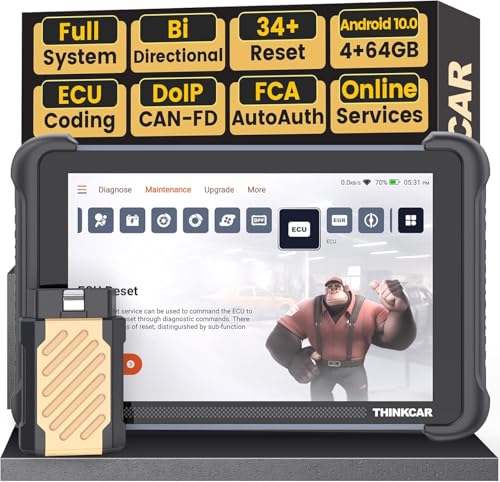
- [Notice] When you receive a used device, it may be a customer return resold by Amazon without inspection. You can exchange it for a new one through Amazon. As this situation is unavoidable, we sincerely apologize. For any issues, contacting us via Amazon's "Messages" is the best way. THINKSCAN 689BT Bidirectional Scan Tool Can Be Used Immediately After It is Turned On, Without Complicated Registration Process, Which is More Convenient & Quick.
- Full Bi-Directional Control & 3000+ Active Tests: Take control and test components like actuators, fuel injectors, relays, and cooling fans in real time. You’ll quickly see if the problem is in the part itself or the control module — saving you hours of guesswork and frustrating trial-and-error.
- Advanced ECU Coding Capabilities: Handle module matching and hidden feature activation with confidence. When you replace an ECU or want to customize settings, this obd2 scanner diagnostic bi directional tool gives you the professional-level capabilities you need without the dealership price tag.
- 34+ Useful Reset and Maintenance Functions: Complete everyday service tasks smoothly with a wide range of helpful reset and maintenance functions. Whether you’re keeping up with regular upkeep or tackling a specific job, this scanner makes maintenance simpler and less stressful for both DIYers and pros.
- Comprehensive Full System Diagnostics: Diagnose every major system — Engine, Transmission, ABS, SRS, TPMS, and more — all in one place. Finally stop wondering if you’re missing something important; get the full picture and clear codes with ease.
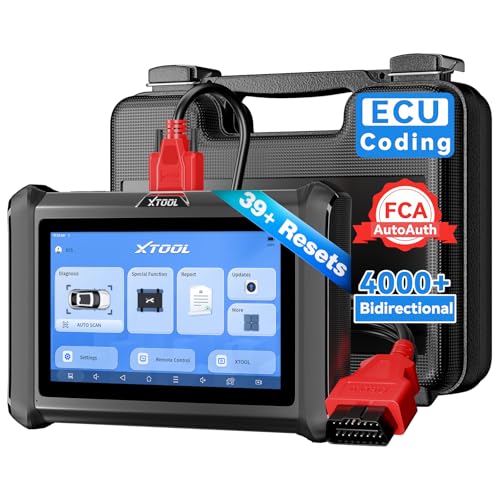
- Top Reasons to Choose the D7S OBD2 Scanner: XTOOL D7S car scan tool, an upgrade of XTOOL D7, offers comprehensive features for automotive technicians, workshops, and DIY enthusiasts 1. Upgraded Hardware: 2+64GB memory, rear camera, intuitive interface, foldable bracket 2. Complete Diagnostics: FCA Autoauth, OE-level all system scan, 39+ maintenance services, 4K+ bidirectional, CANFD/DoIP protocol 3. Advanced Capabilities: ECU c0ding, PMI functions 4. Wide Compatibility: Support 10,000+ models, covering 99% vehicle brands 5. Multi-language: Available in 22+ languages, No IP Restrictions 6. 3-Year Updates: Save 300 bucks on software updates for the latest features and optimizations
- 2026 Upgraded D7S Car Scanner Features: The newly 2026 D7S V2.0 scanner for car brings exciting features for advanced vehicle diagnostics and enhanced user experience 1. FCA AutoAuth: Now supports FCA SGW module for Chrysler
 , for Jeep, for Dodge (2018+), for Fiat (2017+), enabling faster vehicle communication without gateway restrictions 2. PMI (Offline ECU Pr0gramming): Allows for Ford, for Lincoln, and for Mazda ECU pr0gramming for new modules 3. Optimized Diagnostic Report 2.0: Personalized reports with logos and customer info for auto shops. Note: Compatibility varies by cars, please check before order
 - 39+ Services/Resets/Adaptations/Relearns/Calibrations: XTOOL D7S full system car scanner diagnostic tool tackles 99% of common car issues through its 36+ special functions, including Oil Reset, EPB, SAS, BMS, Throttle Reset, Injector C0ding, ABS Bleed, TPMS Reset, Power Balance, etc and also covers specific-vehicle functions like Crank Sensor Relearn, ABS Initialization, Cylinder Power Balance, Fuel Trim Reset, Idle Relearn etc. This car diagnostic scanner enhances efficiency, making repairs and maintenance hassle-free. Tip: DO NOT for All vehicles, please check compatibility first
- Cost-effective ECU C0ding Scan Tool for Specific Brands: Enhance your vehicle's performance with XTOOL D7S! This obd2 scanner all systems bidirectional offers advanced capabilities at an affordable price, supports online for BMW, for Benz and offline for BENZ, for MIT, along with PMI functions for Ford, for Mazda, and for Lincoln. Ideal for technicians and DIY enthusiasts, this automotive scanner diagnostic tool optimizes vehicle performance and enhances the driving experience. Note: Not for all cars and modules, please send car VIN to check the compatibility before purchase
- OE All System Diagnostic & 8 Pids Graphing: XTOOL D7S is a comprehensive all system bi directional obd2 scanner that delivers dealer-level diagnostics, completely controlling over your vehicle’s performance and health. This automotive scan tool can read and clear DTCs, view live data and ECU information, retrieve freeze frames, and perform active tests and full obd2 functions. This bi-directional scan tool can can identify your vehicle's make, model, and year information with just one click and show up to 8 PIDs live data with options for CSV viewing, playback, and recording for in-depth analysis. It is easy-to-use for both professionals and beginners, helping pinpoint issues efficiently
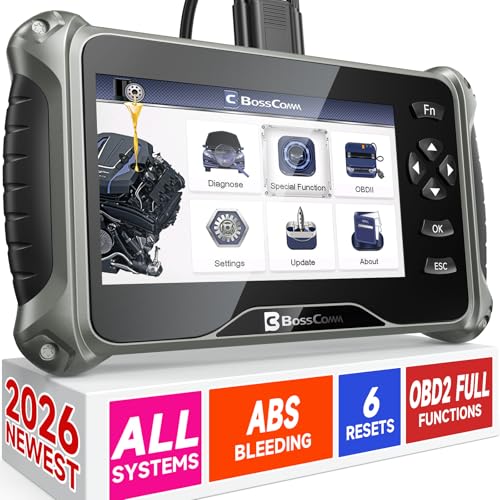
- 【✅Compared to BOSSCOMM IF742, IF745 Offers Full-System Diagnostics】The BOSSCOMM IF745 car diagnostic scanner is an upgraded model of IF742. In addition to supporting all OBD2 Code Reader functions and 6 reset options (ABS/EPB/SAS/BMS/Oil/Throttle), it expands diagnostics from 4 systems (Check Engine/ABS/SRS/Transmission) to vehicle All systems, including Steering, Suspension, and Body Electronics. This provides deeper, more comprehensive diagnostic capabilities.
- 【✨10 OBD2 Functions】The BOSSCOMM IF745 scan tool’s DTC Lookup instantly translates fault codes into user-friendly explanations, its I/M Readiness feature streamlines emissions testing with a single tap, and Freeze Frame lets you pinpoint the exact moment of a fault for in-depth root-cause diagnosis. Combined with a live data dashboard and advanced diagnostics (O2S, OBMon, EVAP), it delivers comprehensive insights for confident troubleshooting.
- 【✨Deep Diagnostics for All Vehicle System Modules】Beyond code reading/clearing and ECU information retrieval, our all-in-one data stream feature lets you inspect all current fault codes and their locations across the vehicle’s systems. This vehicle code reader helps you turn off dashboard warning lights and perform a comprehensive self-check of your car at home—no more back-and-forth trips to the repair shop or hefty inspection fees.
- 【✨6 Essential Resets: ABS Bleeding, Oil, EPB, SAS, Throttle, BMS】The BOSSCOMM IF745 obd2 scanner diagnostic tool swiftly purges air from brake lines to restore braking sensitivity, fine-tunes maintenance cycles to eliminate false alerts, resolves parking brake issues with one-click control, recalibrates steering sensors for stability, optimizes engine idling/acceleration for smoother performance, and deeply resets battery systems to extend lifespan and range via precise parameter adjustments.❗NOTE: Does NOT support bidirectional control, coding, or programming.
- 【✨10,000+ Car Models, AutoVIN, 13 Languages】The BOSSCOMM IF745 vehicle scanner diagnostic tool covers 73+ global car brands and offers support in 13 languages, making it perfect for DIYers, auto mechanics, or as a thoughtful gift. With a single-click AutoVIN feature, it instantly retrieves vehicle serial numbers, streamlining diagnostics for users globally. This adaptable tool balances user-friendliness with precision, catering to both personal and professional requirements.✅Unsure about compatibility? Compatibility will vary on vehicles' model and year, pls reach us via 📧 [email protected] 📧 before purchase.

This product presentation was made with AAWP plugin.