NHTSA ID Number: 10235486
Manufacturer Communication Number: M-170-002
TSB/Document Date: 2023-05-03
Summary
TSB: New Vehicle Safety Certification Requirements for Vehicles, U.S. and Canada
New Vehicle Safety Certification Requirements for Vehicles, U.S. and
Canada
M-170-002
(Jan 2007)
Valid for
All Mack CXU,CHU,GU,MRU,LEU
Case description
Changes to the U.S. Federal regulations concerning new vehicle safety certification have been made by the U.S.
Department of Transportation’s National Highway Traffic Safety Administration (NHTSA). These changes, which are
effective February 13, 2003, require revised vehicle certification labeling, documentation and procedures. Compliance
with the new requirements before the effective date is permitted. The following reviews both the newU.S. requirements
and the current Canadian requirements.
Certification Requirements
IT IS MANDATORY THAT ALL BRANCH, DISTRIBUTOR AND SUBSIDIARY PERSONNEL INVOLVED IN THE
PREPARATION AND SALE OF NEW VEHICLES BE ADVISED OF THE NEW VEHICLE SAFETY CERTIFICATION
PROCEDURES OUTLINED HEREIN. PENALTIES FOR NONCOMPLIANCE WITH APPLICABLE REGULATIONS
ARE SEVERE (AS HIGH AS $1,000,000).
The purpose of this bulletin is to provide guidance concerning the current U.S. and Canadian Federal requirements for
certifying and labeling a new motor vehicle relative to its compliance with applicable U.S. Federal Motor Vehicle Safety
Standards (FMVSS) or Canada Motor Vehicle Safety Standards (CMVSS). This information is relevant to a new
vehicle on which further work (manufacturing) is to be performed or a new vehicle that is “altered” between the time it
is certified as a completed vehicle and the time that it is delivered to the customer. These regulations are applicable to
a new vehicle intended for sale in Canada, OR a new vehicle intended for sale in the U.S. or its territories, which
include the District of Columbia, Puerto Rico, the Northern Mariana Islands, Guam, the Virgin Islands and American
Samoa. U.S. new vehicle safety certification requirements are found in Title 49, Code of Federal Regulations (CFR),
Part 567, “Certification”, and Part 568, “Vehicles Manufactured in Two or More Stages — All Incomplete, Intermediate
and Final- Stage Manufacturers of Vehicles Manufactured in Two or More Stages.” Many public libraries keep a
complete, up-to-date set of the CFR on file. The CFR are also available on the internet at the NHTSA website
(www.nhtsa.dot.gov). Canadian vehicle certification requirements are found in Sections 6 through 9 of the Motor
Vehicle Safety Regulations (MVSR). The MVSR may be found at Federal government bookstores and many law
libraries. They are also available on the internet at the Transport Canada website (www.tc.gc.ca). IT IS STRONGLY
RECOMMENDED THAT PERSONNEL OBTAIN AN OFFICIAL COPY OF THE APPROPRIATE REGULATIONS AND
BECOME FAMILIAR WITH THEM.
Effective on and after September 1, 2006, each manufacturer of a new vehicle manufactured in two or more stages,
and intended for sale in the U.S. or its territories (see following definitions of “incomplete vehicle,” “incomplete vehicle
manufacturer,” “intermediate manufacturer” and “final-stage manufacturer”) must comply with new requirements for
new vehicle safety certification/labeling established by NHTSA. An “incomplete vehicle manufacturer” such as Mack
Trucks, Inc. must affix a new “INFORMATION LABEL” to each incomplete vehicle it manufactures (a “chassis-cab
label” is no longer required by the NHTSA). An “intermediate manufacturer” must also affix a new “INFORMATION
LABEL” to each incomplete vehicle on which it performs manufacturing. These new labels basically list the
manufacturer's name, the manufacturing date, the gross vehicle weight rating (GVWR) and the gross axle weight
rating (GAWR) of the incomplete vehicle. In addition, depending on the actual manufacturing performed, an
“intermediate manufacturer” may have to add an “addendum” to the “incomplete vehicle document (IVD).”
Mack Trucks, Inc. will continue to offer distributors and branches a partially printed version of the U.S. “Final-Stage
Manufacturer’s” vehicle safety certification label and the U.S. “Alterer’s” vehicle safety certification label, as well as the
new U.S. “INFORMATION LABEL” for “Intermediate Manufacturers,” through the MACK Parts System.
National Safety Mark (NSM) Reminder — Vehicles Destined for Sale
in Canada
ALL DISTRIBUTORS AND BRANCHES THAT PERFORM MANUFACTURING ON AN “INCOMPLETE VEHICLE”
DESTINED FOR SALE IN CANADA ARE REMINDED THAT THEY MUST, IF THEY HAVE NOT ALREADY, APPLY TO
TRANSPORT CANADA TO OBTAIN AUTHORIZATION (i.e., obtain an authorization number that is incorporated into a
separate national safety mark label) TO AFFIX A NATIONAL SAFETY MARK (NSM) CONTAINING LABEL
SIGNIFYING THAT THE WORK WAS PERFORMED BY AN AUTHORIZED MANUFACTURER. IT IS THE
RESPONSIBILITY OF EACH INDIVIDUAL DISTRIBUTOR AND BRANCH TO OBTAIN ITS OWN SPECIFIC
AUTHORIZATION NUMBER AND NSM LABEL, IF THEY HAVE NOT ALREADY DONE SO.
The figure, similar to the one shown in the illustration below, must be at least 13 mm in diameter depicting the NSM,
and showing in its center, in figures at least 2 mm in height, the authorization number assigned to the manufacturer by
Transport Canada.
Typical Canadian National Safety Mark Label
The authorization number may be obtained by writing to Transport Canada at the following address:
Director, Road Safety & Motor Vehicle Regulation Transport Canada 330 Sparks Street Tower C, 8th Floor Ottawa,
Ontario K1A 0N5
Include your company's name and address (and the address[es] of your “manufacturing facility[ies]” if it [they] differs
from the company address).
The label containing the NSM must be permanently attached to the vehicle (i.e., using permanent adhesive), be
resistant to or protected against any weather condition to which the label may be exposed and have lettering that is
clear and indelible, indented, embossed or in a color that contrasts with the background color of the label and in block
capital letters and numerals not less than 2 mm in height.
In the past, when a vehicle intended for sale in Canada was manufactured as a “completed vehicle” in a MACK
assembly plant in the U.S., it was considered an “imported vehicle” within the Canadian regulations, and in place of
the NSM, MACK utilized a VEHICLE SAFETY CERTIFICATION LABEL with the certification statement “THIS
VEHICLE CONFORMS TO ALL APPLICABLE STANDARDS PRESCRIBED UNDER THE CANADIAN MOTOR
VEHICLE SAFETY REGULATIONS IN EFFECT ON THE DATE OF MANUFACTURE,” in BOTH English and French.
However, Transport Canada recently advised MACK that an NSM can be used in place of the certification statement.
Appropriate MACK labels now include the MACK NSM.
PENALTIES FOR VIOLATIONS
The National Traffic and Motor Vehicle Safety Act of 1966 and its amendments (codified as Title 49, United States
Code [49 U.S.C.], Chapter 301, Motor Vehicle Safety; available on the internet at the NHTSA website
[www.nhtsa.dot.gov]) authorize the establishment of the U.S. Federal Motor Vehicle Safety Standards and new vehicle
safety certification requirements (reference Title 49, Code of Federal Regulations [49 CFR], Parts 567, 568 and 571),
as well as other related regulations. Penalties for noncompliance are severe. A single violation of the requirements
may result in a fine of up to $6,000. For a series of related violations, the maximum possible fine is $16,375,000.
The Canada Motor Vehicle Safety Act and its amendments (codified as Statutes of Canada, 1993 Chapter 16;
available on the internet at the Transport Canada website [www.tc.gc.ca]) authorize the establishment of the Canada
Motor Vehicle Safety Standards and new vehicle safety certification requirements (reference Motor Vehicle Safety
Regulations Sections 1 through 9 and 100 through 1106), as well as other related regulations. The penalties for
noncompliance are severe. Any company that violates these requirements may be fined up to $1,000,000.
These penalties are applicable to any company that:
1. Manufactures a vehicle for sale that does not comply with all applicable Motor Vehicle Safety Standards in
effect at the time the vehicle was manufactured; or
2. Offers a vehicle for sale that does not comply with all applicable Motor Vehicle Safety Standards in effect at the
time the vehicle was manufactured; or
3. Sells a vehicle that does not comply with all applicable Motor Vehicle Safety Standards in effect at the time the
vehicle was manufactured; or
4. Fails to provide the proper certification labels and documents for a vehicle, in the manner required; or
5. Provides the required certification labels and documents in spite of knowing that the vehicle does not comply
with all applicable Motor Vehicle Safety Standards.
VEHICLE SAFETY CERTIFICATION COMPLIANCE IS AN ABSOLUTE
NECESSITY
DEFINITIONS
ADDENDUM, for the purposes of U.S. regulations, means a document that contains the INTERMEDIATE
MANUFACTURER’s name and mailing address and an indication of all changes that should be made to the
INCOMPLETE VEHICLE DOCUMENT to reflect changes that the INTERMEDIATE MANUFACTURER made to the
INCOMPLETE VEHICLE. The ADDENDUM shall also contain a certification by the INTERMEDIATE
MANUFACTURER that the statements contained in the ADDENDUM are accurate as of the date of manufacture by
the INTERMEDIATE MANUFACTURER and can be used and relied on by any subsequent INTERMEDIATE
MANUFACTURER(S) and the FINAL-STAGE MANUFACTURER as a basis for certification.
ALTERED VEHICLE, for the purposes of U.S. regulations, means a COMPLETED VEHICLE previously certified that
has been altered other than by the addition, substitution or removal of readily attachable components, such as mirrors
or tire assemblies, or by minor finishing operations such as painting, before the first purchase of the vehicle other than
for resale, in such a manner as may affect the conformity of the vehicle with one or more Federal Motor Vehicle Safety
Standard(s) or the validity of the vehicle’s stated weight ratings or VEHICLE TYPE classification.
ALTERER, for the proposes of U.S. regulations, means a person who alters by addition, substitution or removal of
components (other than readily attachable components) a certified vehicle before the first sale of the vehicle other
than for resale. (Also see ALTERED VEHICLE.)
COMPETITION VEHICLE, for the purposes of Canadian regulations, means a vehicle that is designed for use
exclusively in closed-course competition and (a) bears a label affixed by the manufacturer stating, in both official
languages, that the vehicle is a competition vehicle and is for use in closed-course competition, or (b) is accompanied
by a signed declaration clearly indicating that the vehicle is a competition vehicle and is for use exclusively in closedcourse competition.
COMPLETED VEHICLE, for the purposes of U.S. regulations, means a vehicle that requires no further manufacturing
operations to perform its intended function. COMPLETED VEHICLE, for the purposes of Canadian regulations, means
a vehicle that needs no further manufacturing operations to perform its intended function, other than the addition of
readily attachable components such as mirrors or tire and rim assemblies, or minor finishing operations such as
painting. (At the present time, only a TRUCK TRACTOR with a MACK assembly plant-installed fifth wheel is certified
by Mack Trucks, Inc. as a COMPLETED VEHICLE.)
EXPORT VEHICLE, means a vehicle that is destined for sale in a country other than the U.S. and its territories, or
Canada. Although MACK assembly plants in the U.S. do “export” vehicles to Canada, these Canadian vehicles are not
grouped into the general EXPORT VEHICLE category because they must comply with standards and regulations
which are very similar to the FMVSS, i.e., the CMVSS.
FINAL-STAGE MANUFACTURER, for the purposes of U.S. regulations, means a person who performs the
manufacturing operations on an INCOMPLETE VEHICLE that it becomes a COMPLETED VEHICLE. FINAL-STAGE
MANUFACTURER, for the purposes of Canadian regulations, means a company that performs the manufacturing
operations on an INCOMPLETE VEHICLE that turn the INCOMPLETE VEHICLE into a COMPLETED VEHICLE.
FIREFIGHTING VEHICLE, for the purposes of U.S. regulations, means a vehicle designed exclusively for the
purposes of fighting fires.
GROSS AXLE WEIGHT RATING (GAWR) means the value specified by a vehicle manufacturer as the load-carrying
capacity of a single axle system (comprised of the axle, suspension, tires, rims/wheels and other components, such
as the frame rails, as applicable), as measured at the tire-ground interface.
GROSS VEHICLE WEIGHT RATING (GVWR) means the value (usually the sum of the GAWRs, but not necessarily)
specified by a vehicle manufacturer as the loaded weight of a single vehicle, as measured at the tire-ground interface.
INCOMPLETE VEHICLE, for the purposes of U.S. regulations, means (1) An assemblage consisting, at a minimum, of
chassis (including the frame) structure, powertrain, steering system, suspension system, and braking system, in the
state that those systems are to be part of the COMPLETED VEHICLE, but requires further manufacturing operations
to become a COMPLETED VEHICLE; or (2) An incomplete trailer. INCOMPLETE VEHICLE, for the purposes of
Canadian regulations, means a vehicle (a) other than a VEHICLE IMPORTED TEMPORARILY FOR SPECIAL
PURPOSES that is capable of being driven and that consists, at a minimum, of chassis structure, powertrain, steering
system, suspension system and braking system in the state in which those systems are to be part of the
COMPLETED VEHICLE, but that requires further manufacturing operations to become a COMPLETED VEHICLE, or
(b) that is an incomplete trailer.
INCOMPLETE VEHICLE DOCUMENT (IVD) means a multiple-page document supplied by the INCOMPLETE
VEHICLE MANUFACTURER that contains specific statements with regard to the vehicle safety certification status of
the INCOMPLETE VEHICLE as it left the control of the INCOMPLETE VEHICLE MANUFACTURER. The IVD is used
by INTERMEDIATE and/or FINAL-STAGE MANUFACTURERS during the completion of further certification
procedures. The IVD should not be removed from the INCOMPLETE VEHICLE until final certification as a
COMPLETED VEHICLE takes place, i.e., the FINAL-STAGE MANUFACTURER should keep the IVD.
INCOMPLETE VEHICLE MANUFACTURER, for the purposes of U.S. regulations, means a person who manufactures
an INCOMPLETE VEHICLE by assembling components, none of which, taken separately, constitute an
INCOMPLETE VEHICLE. An INCOMPLETE VEHICLE, for the purposes of Canadian regulations, means a company
that manufactures an INCOMPLETE VEHICLE by assembling components, none of which, taken separately,
constitute an INCOMPLETE VEHICLE.
INFORMATION LABEL means a label required by U.S. Code of Federal Regulations Section 49 DFR 567.5, or
Section 6 of the Canadian Motor Vehicle Safety Regulations. Such labels must be permanently affixed to the cab of
applicable vehicles in specific locations (listed later in this bulletin), and must contain specific information, in the
English language (some English and French in Canada), lettered in block capital letters and numerals not less than
2.4 millimeters (3/32 of an inch) high (not less than 2 millimeters high for Canada), in a color that contrasts with the
label background. The labels, unless of a riveted metal configuration, must be of such construction that they cannot be
removed without destroying or defacing them.
INTERMEDIATE MANUFACTURER, for the purposes of U.S. regulations, means a person, other than the
INCOMPLETE VEHICLE MANUFACTURER or FINAL-STAGE MANUFACTURER, who performs manufacturing
operations on a vehicle manufactured in two or more stages. INTERMEDIATE MANUFACTURER, for the purposes of
Canadian regulations, means a company, other than an INCOMPLETE VEHICLE MANUFACTURER or FINALSTAGE MANUFACTURER that performs manufacturing operations on an INCOMPLETE VEHICLE.
SPECIAL APPLICATION VEHICLE means a vehicle that is not registered and licensed for use on the public streets,
roads and highways of the U.S. and its territories or Canada, i.e., it will be used in an “off-highway” operation on
private roads.
TRUCK, for the purposes of U.S. regulations, means a motor vehicle with motive power, except a trailer, designed
primarily for the transportation of property or special-purpose equipment. TRUCK, for the purposes of Canadian
regulations, means a vehicle designed primarily for the transportation of property or special-purpose equipment, but
does not include a COMPETITION VEHICLE, a crawler-mounted vehicle, a trailer, a WORK VEHICLE, a VEHICLE
IMPORTED TEMPORARILY FOR SPECIAL PURPOSES or a vehicle designed for operation exclusively off-road.
TRUCK TRACTOR, for the purposes of U.S. regulations, means a TRUCK designed primarily for drawing other motor
vehicles and not so constructed as to carry a load other than a part of the weight of the vehicle and the load so drawn.
TRUCK TRACTOR, for the purposes of Canadian regulations, means a TRUCK designed primarily for drawing other
vehicles and not constructed for carrying any load other than a part of the weight of the vehicle and load drawn, and
includes a vehicle designed to accept a fifth-wheel coupling, but does not include a crane-equipped breakdown
vehicle.
VEHICLE IMPORTED TEMPORARILY FOR SPECIAL PURPOSES, for the purposes of Canadian regulations, means
a vehicle imported into Canada for a period not longer than one year solely for the purpose of (a) undergoing further
manufacturing prior to export, or (b) conducting works or operations that require a specially designed vehicle for
entertainment industry productions, civil engineering projects or similar works or operations.
VEHICLE SAFETY CERTIFICATION LABEL means the general term given to all labels used to signify vehicle
compliance with the various safety certification requirements of Title 49, Code of Federal Regulations, Parts 567 and
568, in the U.S., and Sections 6 through 9 of the Canadian Motor Vehicle Safety Regulations. Such labels must be
permanently affixed to the cab of applicable vehicles in specific locations (listed later in this bulletin), and must contain
explicit statements, in the English language (some in English and French in Canada), lettered in block capital letters
and numerals not less than 2.4 millimeters (3/32 of an inch) high (not less than 2 millimeters high for Canada), in a
color that contrasts with the label background. The labels, unless of a riveted metal configuration, must be of such
construction that they cannot be removed without destroying or defacing them.
VEHICLE TYPE means one of a number of classifications of motor vehicles which includes “bus,” “FIREFIGHTING
VEHICLE” (U.S. only), “multipurpose passenger vehicle,” “school bus,” “trailer,” “TRUCK” and “TRUCK TRACTOR.” In
U.S. regulations, the definitions of the various VEHICLE TYPES are found in Title 49, Code of Federal Regulations,
Section 571.3; in Canadian regulations, VEHICLE TYPES are found in Section 6 of the Motor Vehicle Safety
Regulations.
WORK VEHICLE, for the purposes of Canadian regulations, means a vehicle designed primarily for the performance
of work in the construction of works of civil engineering and in maintenance, that is not constructed on a truck-chassis
or a truck-type chassis, but does not include a tractor or any vehicle designed primarily to be drawn behind another
vehicle.
LOCATIONS FOR REGULATION-REQUIRED LABELS
Each label required by vehicle safety certification regulations must be located on either the hinge pillar, door latch
post, or the door edge that meets the door latch post, next to the driver's seating position, or if none of these locations
is practicable, to the left side of the instrument panel. If that location is also not practicable, the label(s) shall be affixed
to the inward-facing surface of the door, next to the driver's seating position.
For U.S. regulations, if none of the preceding locations are practicable, the party intending to affix the label must
submit notification of the fact, along with drawings or photographs showing a suggested alternate location in the same
general area, to Administrator, National Highway Traffic Safety Administration, Washington, DC 20590. The location of
the label shall be such that it is easily readable without moving any part of the vehicle except an outer door.
For Canadian regulations, if the preceding locations are impracticable, then the label may be affixed to a conspicuous
and readily accessible position.
VEHICLE SAFETY CERTIFICATION RESPONSIBILITIES
Vehicles as Received from a MACK Assembly Plant
Each new MACK vehicle as released by its assembly plant is certified as to the extent of its compliance with
applicable FMVSS or CMVSS, either as a COMPLETED VEHICLE, an INCOMPLETE VEHICLE/CHASSIS-CAB, an
EXPORT VEHICLE or a SPECIAL APPLICATION VEHICLE.
Affixed to each COMPLETED VEHICLE is a COMPLETED VEHICLE SAFETY CERTIFICATION LABEL. The label
used for vehicles intended for sale in the U.S. and its territories is similar to the label shown in Figure 2, while the label
used for vehicles intended for sale in Canada is similar to the label shown in Figure 3. The label lists the manufacturer,
month and year of manufacture, the vehicle identification number (VIN), the VEHICLE TYPE (for Canada, in BOTH
English and French), i.e., TRUCK (CAMION, in French) or TRUCK TRACTOR (CAMION TRACTEUR, in French), the
GAWR (PNBE, in French) for each axle system and the GVWR (PNBV, in French) at the time the vehicle left the
assembly plant (Canada requires both English and French for the abbreviations, with metric units of weight; the U.S.
requires both metric and English units of weight; for reference, 1 lb = 0.4536 kg and 1 psi = 6.895 kPa). The label also
includes tire size, rim size and tire inflation pressure, as required by MVSS 120, Tire Selection and Rims for Motor
Vehicles With a GVWR of More Than 4 536 kilograms (10,000 pounds), as well as a “certification statement” that the
vehicle conforms to all applicable MVSS in effect on the date of the vehicle's manufacture. The U.S. requires both
metric and English units of pressure. Canada requires only metric units of pressure, but requires the “certification
statement” in BOTH English and French for imported vehicles (the National Safety Mark typically serves as a
“certification statement” for other vehicles). Unless such a vehicle is “altered” (see definition of ALTERED VEHICLE)
prior to its being offered for sale, no further certification is required.
Typical U.S. Completed Vehicle Safety Certification Label
Typical Canadian Completed Vehicle Safety Certification Label
Note: In order to comply with 49 U.S.C. CHAPTER 301, COMPLETED VEHICLES and INCOMPLETE
VEHICLES/CHASSIS-CABS manufactured in the U.S. and destined for sale in Canada have, in addition to the
COMPLETED VEHICLE SAFETY CERTIFICATION LABEL, EXPORT VEHICLE LABELS, similar to the labels shown
in Figure 4, affixed to the cab.
Note: A VEHICLE WHICH CONFORMS TO ALL APPLICABLE U.S. FEDERAL MOTOR VEHICLE SAFETY
STANDARDS DOES NOT NECESSARILY CONFORM TO ALL APPLICABLE CANADA MOTOR VEHICLE SAFETY
STANDARDS. LIKEWISE, A VEHICLE WHICH CONFORMS TO ALL APPLICABLE CANADA MOTOR VEHICLE
SAFETY STANDARDS DOES NOT NECESSARILY CONFORM TO ALL U.S. FEDERAL MOTOR VEHICLE SAFETY
STANDARDS.
Typical Export Labels
Many MACK vehicles leave the assembly plant as INCOMPLETE VEHICLES. Each INCOMPLETE VEHICLE is
supplied from the assembly plant with an INCOMPLETE VEHICLE DOCUMENT (IVD), similar to the document shown
in Figure 5, which specifies the safety standards that are applicable to that INCOMPLETE VEHICLE and to what
extent the INCOMPLETE VEHICLE complies with each of those standards. The IVD lists the VIN, the applicable
GVWR and GAWRs, and corresponding tire and rim information (which must be entered on the INTERMEDIATE
MANUFACTURER’S INFORMATION LABEL [if applicable] and the FINAL-STAGE MANUFACTURER'S VEHICLE
SAFETY CERTIFICATION LABEL when the vehicle is completed, assuming that there have been no changes to the
applicable components or additions to the vehicle that changed any GAWR or GVWR). The IVD also specifies
whether the INCOMPLETE VEHICLE has been built to conform with U.S. or Canadian regulations. All of this
information applies only to the INCOMPLETE VEHICLE as it left the MACK assembly plant. The IVD must remain with
the INCOMPLETE VEHICLE (so that it is available to subsequent manufacturers) until the FINAL-STAGE
MANUFACTURER affixes an appropriate VEHICLE SAFETY CERTIFICATION LABEL. The FINAL-STAGE
MANUFACTURER should keep the IVD in its files. An INTERMEDIATE MANUFACTURER should make and keep a
copy of the IVD for their files.
Typical Incomplete Vehicle Document
In addition to the IVD, INCOMPLETE VEHICLES have an INCOMPLETE VEHICLE INFORMATION LABEL, similar to
the label shown in Figure 6 or 7, affixed to the cab. These labels list the name of the INCOMPLETE VEHICLE
MANUFACTURER, the date of manufacture, the VIN and the GVWR and GAWRs of the INCOMPLETE VEHICLE.
This label MUST NOT be removed or covered up at any time during the vehicle safety certification process.
Typical U.S. Incomplete Vehicle Manufacturer’s Information Label
Typical Canadian Incomplete Vehicle Manufacturer’s Information Label
Vehicles destined for sale in the State of Hawaii, Puerto Rico, Guam, the Virgin Islands, the Northern Mariana Islands
and American Samoa, while they must conform to applicable FMVSS, do not have to have a windshield defroster as
required by FMVSS 103, Windshield Defrosting and Defogging Systems. If a vehicle destined for one of these areas is
not MACK assembly plant-equipped with a defroster, a label similar to the label shown in Figure 8 is affixed to the cab
near the VEHICLE SAFETY CERTIFICATION LABEL.
Typical Omission of Heater/Defroster Label
An EXPORT VEHICLE from the MACK assembly plant is not necessarily designed to conform to applicable FMVSS or
CMVSS and has the previously noted EXPORT LABELS and an EXPORT/SPECIAL APPLICATION VEHICLE LABEL,
similar to the label shown in Figure 9, affixed to the cab.
Typical Export/Special Application Vehicle Label
A SPECIAL APPLICATION VEHICLE from the MACK assembly plants is not necessarily designed to conform to
applicable FMVSS or CMVSS and has the previously noted EXPORT/SPECIAL APPLICATION VEHICLE LABEL and
an OFF-HIGHWAY VEHICLE IDENTIFICATION LABEL, similar to the label shown in Figure 10, affixed to the cab.
Typical Off-Highway Vehicle Identification Label
THE USE OF AN EXPORT VEHICLE OR SPECIAL APPLICATION VEHICLE ON PUBLIC HIGHWAYS, UNLESS THE
VEHICLE HAS BEEN MODIFIED TO CONFORM TO ALL APPLICABLE FEDERAL STANDARDS AND
REGULATIONS, IS ILLEGAL.
GENERAL REQUIREMENTS FOR FILLING OUT VEHICLE SAFETY
CERTIFICATION OR INFORMATION LABELS
Each label must be filled out completely (use of a typewriter to fill out each label is suggested).
Each label must be affixed in one of the previously noted locations.
A label must not be affixed over top of any other label.
A clear overlay is not required with the partially printed labels (white in color) available through the MACK Parts
System.
INTERMEDIATE MANUFACTURER REQUIREMENTS — U.S.
In certain instances, it is possible for there to be more than one INTERMEDIATE MANUFACTURER (see previous
definition of INTERMEDIATE MANUFACTURER) for a single INCOMPLETE VEHICLE. On and after September 1,
2006, an INTERMEDIATE MANUFACTURER must affix to the cab an INTERMEDIATE MANUFACTURER’S
INFORMATION LABEL, similar to the label shown in Figure 11. The INTERMEDIATE MANUFACTURER’S
INFORMATION LABEL list the name of the INTERMEDIATE MANUFACTURER, the date of intermediate
manufacture, the VIN and the GVWR and the GAWRs of the INCOMPLETE VEHICLE after intermediate manufacture
is complete. The label MUST NOT cover up any other label required by Federal regulations. The label MUST NOT be
removed or covered up at any time during the vehicle safety certification process.
An INTERMEDIATE MANUFACTURER must ensure that the next manufacturer in the manufacturing chain is
provided the IVD. If any of the changes made by the INTERMEDIATE MANUFACTURER affect the validity of the
statements in the IVD, the INTERMEDIATE MANUFACTURER must attach an ADDENDUM to the IVD containing its
name and mailing address and an indication of all changes that should be made in the IVD to reflect the changes it
made to the INCOMPLETE VEHICLE. The INTERMEDIATE MANUFACTURER’S ADDENDUM must also contain a
certification by the INTERMEDIATE MANUFACTURER that the statements contained in the ADDENDUM are accurate
as of the date of manufacture by the INTERMEDIATE MANUFACTURER and can be used and relied on by any
subsequent INTERMEDIATE MANUFACTURER(S) and the FINAL-STAGE MANUFACTURER as a basis for
certification.
Note: It is recommended that each INTERMEDIATE MANUFACTURER make and retain a photocopy of the IVD, and
ADDENDUM(s) if applicable, for its own files.
Typical U.S. Intermediate Manufacturer’s Information Label
FILLING OUT THE U.S. INTERMEDIATE MANUFACTURER’S
INFORMATION LABEL
The U.S. INTERMEDIATE MANUFACTURER'S INFORMATION LABEL, similar to Figure 11, must be used and
completed as follows: In space (1), insert the INTERMEDIATE MANUFACTURER'S full name (e.g., XYZ Mack Sales
and Service, Inc.). In space (2), insert the month and year in which the INTERMEDIATE MANUFACTURER performed
the last manufacturing operation on the INCOMPLETE VEHICLE. In space (3), insert the 17- character Vehicle
Identification Number (VIN) shown on the INCOMPLETE VEHICLE MANUFACTURER’S INFORMATION LABEL or
the IVD. It is recommended that the VIN shown on the VIN label affixed to the cab AND the VIN stamped on the
vehicle’s frame also be examined to ensure that they are identical. If the INTERMEDIATE MANUFACTURER made
any change(s) to the INCOMPLETE VEHICLE which affects its GVWR (e.g., a tire, rim, axle or suspension change[s]
or addition[s], the new GVWR in kilograms (KG) should be inserted in space (4), AND the new GVWR in pounds (LB)
would be inserted in space (5). If the INTERMEDIATE MANUFACTURER did not make any change(s) to the
INCOMPLETE VEHICLE which affects the GVWR of the INCOMPLETE VEHICLE, the GVWR values listed on the
INFORMATION LABEL affixed by the previous manufacturer should be inserted in spaces (4) and (5). If the
INTERMEDIATE MANUFACTURER made any change(s) to the INCOMPLETE VEHICLE which affects any of the
GAWRs of the INCOMPLETE VEHICLE, the new GAWR(s) should be inserted in space (6). If the INTERMEDIATE
MANUFACTURER did not make any change(s) to the INCOMPLETE VEHICLE which affects any of the GAWRs of
the INCOMPLETE VEHICLE, the GAWR values listed on the INFORMATION LABEL provided by the previous
manufacturer should be inserted in space (6).
INTERMEDIATE MANUFACTURER REQUIREMENTS — CANADA
In certain instances, it is possible for there to be more than one INTERMEDIATE MANUFACTURER (see previous
definition of INTERMEDIATE MANUFACTURER) for a single INCOMPLETE VEHICLE. An INTERMEDIATE
MANUFACTURER must attach an ADDENDUM to the IVD, containing its name and mailing address, a clear and
precise description of ALL the changes it has made to the INCOMPLETE VEHICLE, and if any of the changes affect
the validity of a statement made by the INCOMPLETE VEHICLE MANUFACTURER in the IVD, an indication of the
amendments that must be made to those statements to reflect the changes made by the INTERMEDIATE
MANUFACTURER. An INTERMEDIATE MANUFACTURER must ensure that the IVD, with its ADDENDUM(s), is
provided to the next manufacturer in the manufacturing chain.
In addition to the ADDENDUM to the IVD, an INTERMEDIATE MANUFACTURER must affix to the cab an
INTERMEDIATE MANUFACTURER'S INFORMATION LABEL, similar to the label shown in Figure 12, AND a
NATIONAL SAFETY MARK LABEL, similar to the label shown in Figure 1 (the labels may be combined into a single
label). The NATIONAL SAFETY MARK LABEL must bear the unique authorization number assigned to the
INTERMEDIATE MANUFACTURER by Transport Canada. The INTERMEDIATE MANUFACTURER'S INFORMATION
LABEL lists the name of the INTERMEDIATE MANUFACTURER, the date of intermediate manufacture, and the
GVWR and the GAWRs of the INCOMPLETE VEHICLE after intermediate manufacture is complete. The label MUST
NOT be removed or covered up at any time during the vehicle safety certification process.
Typical Canadian Intermediate Manufacturer’s Information Label
FILLING OUT THE CANADIAN INTERMEDIATE MANUFACTURER’S
INFORMATION LABEL
A Canadian INTERMEDIATE MANUFACTURER'S INFORMATION LABEL, similar to Figure 12, must be used and
completed as follows: In space (1), insert the month and year in which the INTERMEDIATE MANUFACTURER
performed its last manufacturing operation on the INCOMPLETE VEHICLE. In space (2), insert the full name of the
INTERMEDIATE MANUFACTURER (e.g., XYZ Mack Sales and Service, Inc.). If the INTERMEDIATE
MANUFACTURER made any change(s) to the INCOMPLETE VEHICLE which affects its GVWR (e.g., a tire, rim, axle
or suspension change[s] or addition[s]), the new GVWR should be inserted in space (3). If the INTERMEDIATE
MANUFACTURER did not make any change(s) to the INCOMPLETE VEHICLE which affects the GVWR of the
INCOMPLETE VEHICLE, the GVWR value listed on the INFORMATION LABEL affixed by the previous manufacturer
should be inserted in space (3). If the INTERMEDIATE MANUFACTURER made any change(s) to the INCOMPLETE
VEHICLE which affects any of the GAWRs of the INCOMPLETE VEHICLE, the new GAWR(s) should be inserted in
space (4). If the INTERMEDIATE MANUFACTURER did not make any change(s) to the INCOMPLETE VEHICLE
which affects any of the GAWRs of the INCOMPLETE VEHICLE, the GAWR values listed on the INFORMATION
LABEL provided by the previous manufacturer should be inserted in space (4).
FINAL-STAGE MANUFACTURER REQUIREMENTS
When an INCOMPLETE VEHICLE/CHASSIS-CAB is completed, the FINAL-STAGE MANUFACTURER MUST certify
that the COMPLETED VEHICLE conforms to all applicable safety standards BEFORE THE VEHICLE CAN BE
DELIVERED TO THE CUSTOMER. Certification to U.S. FMVSS is accomplished by affixing to the cab a FINALSTAGE MANUFACTURER’S VEHICLE SAFETY CERTIFICATION LABEL similar to the label shown in Figure 13.
Certification to Canada MVSS is accomplished by affixing to the cab, BOTH a FINAL-STAGE MANUFACTURER'S
VEHICLE SAFETY CERTIFICATION LABEL similar to the label shown in Figure 14, AND a NATIONAL SAFETY
MARK LABEL, similar to the label shown in Figure 1 (the labels may be combined into a single label). The NATIONAL
SAFETY MARK LABEL must bear the unique authorization number assigned to the INTERMEDIATE
MANUFACTURER by Transport Canada.
All other VEHICLE SAFETY CERTIFICATION LABELS and INFORMATION LABELS previously affixed by other
manufacturers MUST NOT be obscured by another label or removed from the cab.
For a vehicle destined for sale in the U.S. or any of its territories, the FINAL-STAGE MANUFACTURER should
remove the IVD and any ADDENDUM(s) (if applicable) from the vehicle and keep them. For a vehicle destined for
sale in Canada, a FINAL-STAGE MANUFACTURER must make an ADDENDUM to the IVD that contains its name
and mailing address, a clear and precise description of ALL the changes that it made to the INCOMPLETE VEHICLE,
and must keep the IVD, with its ADDENDUM(s), for not less than 5 years after it completed manufacturing of the
vehicle.
Typical U.S. Final-Stage Manufacturer’s Vehicle Safety Certification Label
Note: U.S. regulations permit the optional use of specific statements in addition to those shown on the label in Figure
13. Distributors are advised to seek legal counsel in order to determine if the use of these optional statements is
desirable (reference 49 CFR Part 567).
FILLING OUT THE U.S. FINAL-STAGE MANUFACTURER’S VEHICLE
SAFETY CERTIFICATION LABEL
A U.S. FINAL-STAGE MANUFACTURER'S VEHICLE SAFETY CERTIFICATION LABEL, similar to Figure 13, must be
used and completed as follows: In space (1), insert the full name of the FINAL-STAGE MANUFACTURER (e.g., XYZ
Mack Sales and Service, Inc.). In space (2), insert the month and year in which final-stage manufacture was
completed. In space (3), insert the full name of the INCOMPLETE VEHICLE MANUFACTURER taken from the IVD or
INCOMPLETE VEHICLE MANUFACTURER’S INFORMATION LABEL.
In space (4), insert the month and year of manufacture of the INCOMPLETE VEHICLE shown on the IVD or
INCOMPLETE VEHICLE MANUFACTURER’S INFORMATION LABEL. In space (5), insert the VEHICLE TYPE, e.g.,
TRUCK, TRUCK TRACTOR, FIREFIGHTING VEHICLE. If no changes which affect the GVWR have been made by
the FINAL-STAGE MANUFACTURER, the information for spaces (6) and (7) is taken from the IVD or its most recent
ADDENDUM, as applicable. If the FINAL-STAGE MANUFACTURER made changes that affects the GVWR listed by
the previous manufacturer, new values must be used. In spaces (6) and (7), insert the GVWR in kilograms (KG) AND
in pounds (LB), respectively, applicable to the COMPLETED VEHICLE as it will be sold.
In space (8), insert the 17-character Vehicle Identification Number (VIN) shown on the INCOMPLETE VEHICLE
MANUFACTURER’S INFORMATION LABEL or the IVD. It is recommended that the VIN shown on the vehicle's VIN
label affixed to the cab AND the VIN stamped in the vehicle's frame also be examined to ensure that they are
identical. In space (10), insert the month and year previously listed in space (2) OR the month and year previously
listed in space (4), OR any month and year in between those two dates. However, since you are certifying that the
ENTIRE COMPLETED VEHICLE conforms to ALL APPLICABLE FMVSSs in effect in that month and year, it is
recommended that the month and year in which the INCOMPLETE VEHICLE/CHASSIS-CAB was originally
manufactured be used, i.e., the date previously listed in space (4). If no changes which affect a GAWR(s) or tire/rim
information have been made by the FINAL-STAGE MANUFACTURER, the information for space (9) is taken from the
IVD or its most recent ADDENDUM, as applicable. If the FINAL-STAGE MANUFACTURER made changes that
affected a GAWR(s) or tire/rim information, new values must be used. In space (9), insert the GAWRs (in BOTH
kilograms AND pounds) and associated tire/rim information (tire air pressures in BOTH kilopascals AND pounds per
square inch) applicable to the COMPLETED VEHICLE as it will be sold.
Typical Canadian Final-Stage Manufacturer’s Vehicle Safety Certification Label
FILLING OUT THE CANADIAN FINAL-STAGE MANUFACTURER’S
VEHICLE SAFETY CERTIFICATION LABEL
A Canadian FINAL-STAGE MANUFACTURER'S VEHICLE SAFETY CERTIFICATION LABEL, similar to the label
shown in Figure 14, must be used and completed as follows: In space (1), insert the full name of the FINAL-STAGE
MANUFACTURER (e.g., XYZ Mack Sales and Service, Inc.). In space (2), insert the month and year in which the
final-stage manufacture was completed. In space (3), insert the full name of the INCOMPLETE VEHICLE
MANUFACTURER taken from the INCOMPLETE VEHICLE MANUFACTURER'S INFORMATION LABEL or the IVD.
In space (4), insert the month and year of manufacture of the INCOMPLETE VEHICLE shown on the INCOMPLETE
VEHICLE MANUFACTURER'S INFORMATION LABEL or the IVD. In space (5), insert the VEHICLE TYPE in BOTH
English and French, i.e., “TRUCK/ CAMION” or “TRU/CAM” in the case of a TRUCK, or “TRUCK TRACTOR/CAMION
TRACTEUR” or “TT/CT” in the case of a TRUCK TRACTOR. If no changes which affect the GVWR have been made
by the FINAL-STAGE MANUFACTURER, the information for space (6) is taken from the IVD or its most recent
ADDENDUM, as applicable. If the FINAL-STAGE MANUFACTURER made changes that affected the GVWR listed by
the previous manufacturer, new values must be used. In space (6), insert the GVWR applicable to the COMPLETED
VEHICLE as it will be sold. If no tire/rim/axle/suspension changes have been made by the FINAL-STAGE
MANUFACTURER, this information is taken from the IVD; however, the actual components should be checked to
verify that no changes have been made after the INCOMPLETE VEHICLE left the control of the INCOMPLETE
VEHICLE MANUFACTURER. In space (7), insert the 17-character VIN shown on the IVD. It is recommended that the
VIN shown on the vehicle's VIN label affixed to the cab AND the VIN stamped in the vehicle's frame also be examined
to ensure that they are identical. If no changes which affect a GAWR(s) or related tire/rim information have been made
by the FINAL-STAGE MANUFACTURER, the information for space (8) is taken from the IVD or its most recent
ADDENDUM, as applicable. If the FINAL-STAGE MANUFACTURER made changes that affected a GAWR(s) or
tire/rim information, new values must be used. In space (8), insert the GAWRs and tire/rim information applicable to
the COMPLETED VEHICLE as it will be sold.
VEHICLE ALTERER REQUIREMENTS
It is the responsibility of an ALTERER to ensure that the ALTERED VEHICLE still FULLY complies with ALL applicable
safety standards and regulations, and that any changes that affect the GVWR or any GAWR(s) are reflected in revised
ratings as necessary. The ALTERER must affix to the cab an ALTERER'S VEHICLE SAFETY CERTIFICATION
LABEL, similar to the label shown in Figure 15, in order to comply with U.S. regulations. In order to comply with
Canadian regulations, the ALTERER must affix to the cab BOTH an ALTERER'S VEHICLE SAFETY CERTIFICATION
LABEL, similar the label shown in Figure 16, AND a NATIONAL SAFETY MARK LABEL, similar to the label shown in
Figure 1 (however, the labels may be combined into a single label). The NATIONAL SAFETY MARK LABEL must bear
the unique authorization number assigned to the ALTERER by Transport Canada.
None of the previously applied VEHICLE SAFETY CERTIFICATION LABELS or INFORMATION LABELS may be
removed since the ALTERER'S VEHICLE SAFETY CERTIFICATION LABEL is an ADDITIONAL label, NOT a
replacement label. Also, this label must NOT be installed over any existing VEHICLE SAFETY CERTIFICATION
LABEL or INFORMATION LABEL.
Typical U.S. Alterer’s Vehicle Safety Certification Label
FILLING OUT THE U.S. ALTERER’S VEHICLE SAFETY
CERTIFICATION LABEL
A U.S. ALTERER'S VEHICLE SAFETY CERTIFICATION LABEL, similar to the label shown in Figure 15, must be
used and completed as follows: In space (1), insert the full name of the ALTERER (e.g., XYZ Mack Sales and Service,
Inc.). In space (2), insert the month and year in which the alterations were completed. In spaces (3) and (4), if the
ALTERER made a change(s) which affected the GVWR, the new GVWR in kilograms (KG) AND in pounds (LB),
respectively, must be inserted. If the change(s) to the vehicle did NOT affect the GVWR, e.g., if only the VEHICLE
TYPE was changed from TRUCK TRACTOR to TRUCK, then the GVWR from the previous VEHICLE SAFETY
CERTIFICATION LABEL should be inserted. In space (5), insert the 17-character VIN shown on the previous
VEHICLE SAFETY CERTIFICATION LABEL. It is recommended that the VIN shown on the vehicle's VIN label affixed
to the cab AND the VIN stamped in the vehicle's frame also be examined to ensure that they are identical. In space
(6), if the ALTERER has changed the VEHICLE TYPE, e.g., making a fully vehicle safety certified TRUCK TRACTOR
into a TRUCK, then the new VEHICLE TYPE should be inserted. However, if the changes did NOT affect the
VEHICLE TYPE, then the VEHICLE TYPE from the previous VEHICLE SAFETY CERTIFICATION LABEL should be
inserted.
In space (8), insert a month and year which is no earlier than the month and year in which the vehicle was originally
manufactured, and no later than the month and year in which the alterations were completed, i.e., the date listed in
space (2). However, since you are certifying that the ENTIRE ALTERED VEHICLE conforms to ALL applicable
FMVSSs in effect in that month and year, it is recommended that the month and year in which the COMPLETED
VEHICLE was manufactured be used. If an ALTERER made no changes that affected a GAWR(s) or related tire/rim
information, information for space (7) is taken from the COMPLETED VEHICLE SAFETY CERTIFICATION LABEL or
the FINAL-STAGE MANUFACTURER’S VEHICLE SAFETY CERTIFICATION LABEL, as applicable. If the ALTERER
made changes that affected a GAWR(s) or related tire/rim information, new values must be used. In space (7), insert
the GAWRs (in BOTH kilograms AND pounds) and tire/rim information (tire air pressure in BOTH kilopascals AND
pounds per square inch) applicable to the altered vehicle as it will be sold.
Typical Canadian Alterer’s Vehicle Safety Certification Label
FILLING OUT THE CANADIAN ALTERER’S VEHICLE SAFETY
CERTIFICATION LABEL
A Canadian ALTERER'S VEHICLE SAFETY CERTIFICATION LABEL, similar to the label shown in Figure 16, must be
used and completed as follows: In space (1), insert the full name of the VEHICLE ALTERER (e.g., XYZ Mack Sales
and Service, Inc.). In space (2), insert the month and year in which the alterations were completed. In space (3), if the
ALTERER made a change(s) which affected the GVWR, the new GVWR in kilograms (KG), must be inserted. If the
change(s) to the vehicle did NOT affect the GVWR, e.g., if only the VEHICLE TYPE was changed from TRUCK
TRACTOR to TRUCK, then the GVWR from the previous VEHICLE SAFETY CERTIFICATION LABEL should be
inserted. In space (4), insert the 17-character VIN shown on the previous VEHICLE SAFETY CERTIFICATION
LABEL. It is recommended that the VIN shown on the VIN label affixed to the cab AND the VIN stamped in the
vehicle's frame also be examined to ensure that they are identical.
In space (5), if the ALTERER has changed the VEHICLE TYPE, e.g., making a fully vehicle safety certified TRUCK
TRACTOR into a TRUCK, then the new VEHICLE TYPE in BOTH English and French (“TRUCK/CAMION” or
“TRU/CAM” in the case of a TRUCK, or “TRUCK TRACTOR/CAMION TRACTEUR” or “TT/CT” in the case of a
TRUCK TRACTOR) should be inserted. However, if the change(s) did NOT affect the VEHICLE TYPE, then the
VEHICLE TYPE from the previous VEHICLE SAFETY CERTIFICATION LABEL should be inserted. If an ALTERER
made no changes that affected a GAWR(s) or related tire/rim information, information for spaces (6) is taken from the
COMPLETED VEHICLE SAFETY CERTIFICATION LABEL or the FINAL-STAGE MANUFACTURER’S VEHICLE
SAFETY CERTIFICATION LABEL, as applicable. If the ALTERER made changes that affected a GAWR(s) or related
tire/rim information, new values must be used. In space (6), insert the GAWRs (in kilograms) and tire/rim information
(tire air pressure in kilopascals) applicable to the altered vehicle as it will be sold.
Issued by
Technical Service
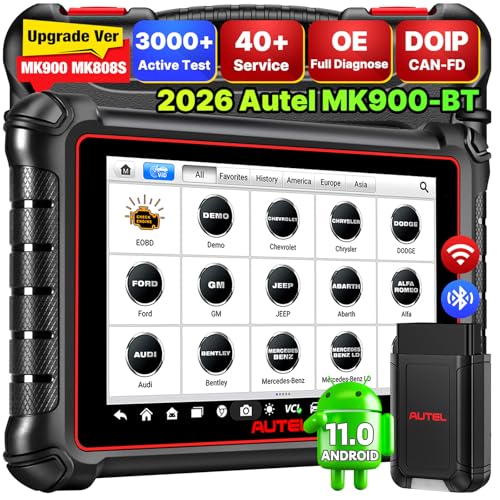
- 💯【Conta.ct us for Support Directly】If you met any...
- 🔥🔥🔥【2026 AUTEL FLAGSHIP MK900BT MK900-BT, NEW...
- 🚗【3000+ ACTIVE TESTS (50➡3000+), SAME AS MS...
- 🚗【40+ HOT SERVICES FOR 150 MAKES (28+➡40+)】Full...
- 🚗【OE ALL SYSTEM DIAGNOSE, AUTO SCAN 2.0: SCAN LICENSE...

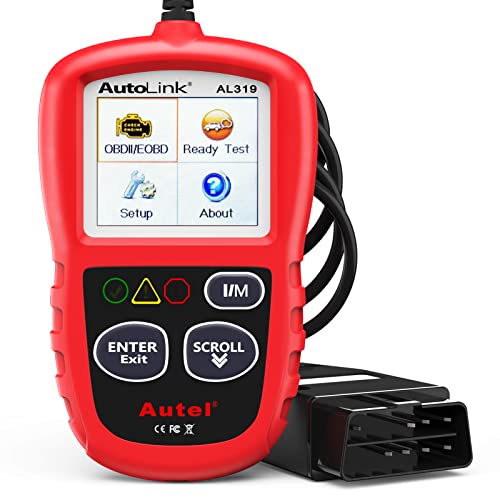
- 【TURN OFF CEL】 This AL319 car scanner diagnostic tool...
- 【EXTENSIVE APPLICATION】 Autel AL319 Compatible with...
- 【FOR END USER & DIYERS】 This error code reader AL319 is...
- 【USER-FRIENDLY DESIGN】 This OBD2 scanner and check...
- 【HIGH-QUALITY SERVICES】 12 months war.ranty from the...
If the PDF is very large, it may not load in the preview below.
Some older TSBs had multiple PDFs — visit the NHTSA Website to view all PDFs.
If the TSB PDF does not show, download or view it on the NHTSA Website.
Click on the (+) Plus Sign
Then Click on Associated Document(s)
Search NHTSA Database for Recalls
Search NHTSA Database for Vehicle Investigations
View Latest Vehicle Investigations
Search NHTSA Database for Vehicle Complaints
View Latest Vehicle Complaints
TSB/Document ID: M-170-002
Replacement Service Bulletin Number:
MFR Communication Date: 2023-04-18
MFR Internal Campaign ID/Software Version:
Communication Type: Service Bulletin/Repair Instructions
NHTSA Components: EQUIPMENT:OTHER:OWNERS/SERVICE/OTHER MANUAL
MFR Component System:
MFR Component Subsystem:
Previous TSB | Next TSB |
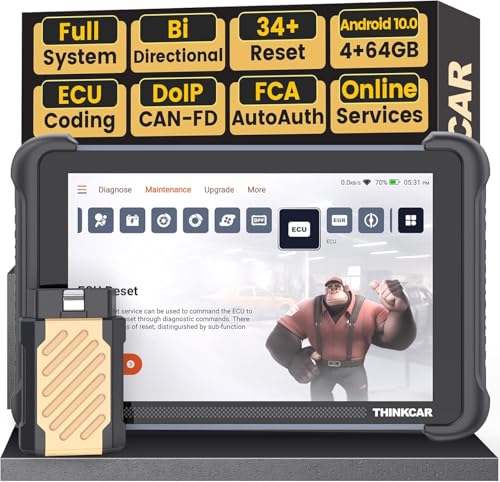
- [Notice] When you receive a used device, it may be a customer return resold by Amazon without inspection. You can exchange it for a new one through Amazon. As this situation is unavoidable, we sincerely apologize. For any issues, contacting us via Amazon's "Messages" is the best way. THINKSCAN 689BT Bidirectional Scan Tool Can Be Used Immediately After It is Turned On, Without Complicated Registration Process, Which is More Convenient & Quick.
- Full Bi-Directional Control & 3000+ Active Tests: Take control and test components like actuators, fuel injectors, relays, and cooling fans in real time. You’ll quickly see if the problem is in the part itself or the control module — saving you hours of guesswork and frustrating trial-and-error.
- Advanced ECU Coding Capabilities: Handle module matching and hidden feature activation with confidence. When you replace an ECU or want to customize settings, this obd2 scanner diagnostic bi directional tool gives you the professional-level capabilities you need without the dealership price tag.
- 34+ Useful Reset and Maintenance Functions: Complete everyday service tasks smoothly with a wide range of helpful reset and maintenance functions. Whether you’re keeping up with regular upkeep or tackling a specific job, this scanner makes maintenance simpler and less stressful for both DIYers and pros.
- Comprehensive Full System Diagnostics: Diagnose every major system — Engine, Transmission, ABS, SRS, TPMS, and more — all in one place. Finally stop wondering if you’re missing something important; get the full picture and clear codes with ease.
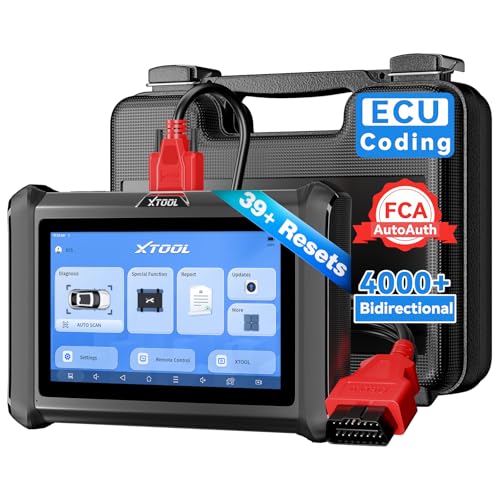
- Top Reasons to Choose the D7S OBD2 Scanner: XTOOL D7S car scan tool, an upgrade of XTOOL D7, offers comprehensive features for automotive technicians, workshops, and DIY enthusiasts 1. Upgraded Hardware: 2+64GB memory, rear camera, intuitive interface, foldable bracket 2. Complete Diagnostics: FCA
 Autoauth, OE-level all system scan, 39+ maintenance services, 4K+ bidirectional, CANFD/DoIP protocol 3. Advanced Capabilities: ECU c0ding, PMI functions 4. Wide Compatibility: Support 10,000+ models, covering 99% vehicle brands 5. Multi-language: Available in 22+ languages, No IP Restrictions 6. 3-Year Updates: Save 300 bucks on software updates for the latest features and optimizations
 - 2026 Upgraded D7S Car Scanner Features: The newly 2026 D7S V2.0 scanner for car brings exciting features for advanced vehicle diagnostics and enhanced user experience 1. FCA AutoAuth: Now supports FCA SGW module for Chrysler, for Jeep, for Dodge (2018+), for Fiat (2017+), enabling faster vehicle communication without gateway restrictions 2. PMI (Offline ECU Pr0gramming): Allows for Ford, for Lincoln, and for Mazda ECU pr0gramming for new modules 3. Optimized Diagnostic Report 2.0: Personalized reports with logos and customer info for auto shops. Note: Compatibility varies by cars, please check before order
- 39+ Services/Resets/Adaptations/Relearns/Calibrations: XTOOL D7S full system car scanner diagnostic tool tackles 99% of common car issues through its 36+ special functions, including Oil Reset, EPB, SAS, BMS, Throttle Reset, Injector C0ding, ABS Bleed, TPMS Reset, Power Balance, etc and also covers specific-vehicle functions like Crank Sensor Relearn, ABS Initialization, Cylinder Power Balance, Fuel Trim Reset, Idle Relearn etc. This car diagnostic scanner enhances efficiency, making repairs and maintenance hassle-free. Tip: DO NOT for All vehicles, please check compatibility first
- Cost-effective ECU C0ding Scan Tool for Specific Brands: Enhance your vehicle's performance with XTOOL D7S! This obd2 scanner all systems bidirectional offers advanced capabilities at an affordable price, supports online for BMW, for Benz and offline for BENZ, for MIT, along with PMI functions for Ford, for Mazda, and for Lincoln. Ideal for technicians and DIY enthusiasts, this automotive scanner diagnostic tool optimizes vehicle performance and enhances the driving experience. Note: Not for all cars and modules, please send car VIN to check the compatibility before purchase
- OE All System Diagnostic & 8 Pids Graphing: XTOOL D7S is a comprehensive all system bi directional obd2 scanner that delivers dealer-level diagnostics, completely controlling over your vehicle’s performance and health. This automotive scan tool can read and clear DTCs, view live data and ECU information, retrieve freeze frames, and perform active tests and full obd2 functions. This bi-directional scan tool can can identify your vehicle's make, model, and year information with just one click and show up to 8 PIDs live data with options for CSV viewing, playback, and recording for in-depth analysis. It is easy-to-use for both professionals and beginners, helping pinpoint issues efficiently
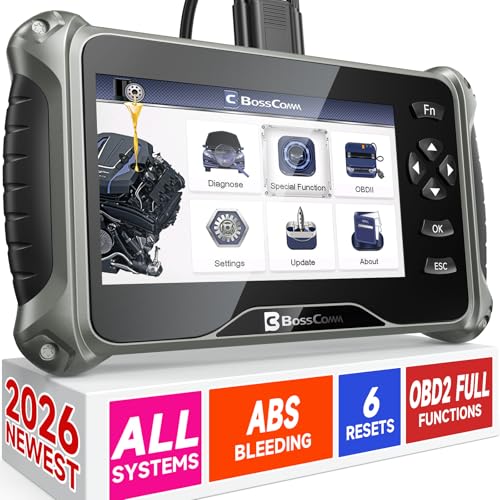
- 【✅Compared to BOSSCOMM IF742, IF745 Offers Full-System Diagnostics】The BOSSCOMM IF745 car diagnostic scanner is an upgraded model of IF742. In addition to supporting all OBD2 Code Reader functions and 6 reset options (ABS/EPB/SAS/BMS/Oil/Throttle), it expands diagnostics from 4 systems (Check Engine/ABS/SRS/Transmission) to vehicle All systems, including Steering, Suspension, and Body Electronics. This provides deeper, more comprehensive diagnostic capabilities.
- 【✨10 OBD2 Functions】The BOSSCOMM IF745 scan tool’s DTC Lookup instantly translates fault codes into user-friendly explanations, its I/M Readiness feature streamlines emissions testing with a single tap, and Freeze Frame lets you pinpoint the exact moment of a fault for in-depth root-cause diagnosis. Combined with a live data dashboard and advanced diagnostics (O2S, OBMon, EVAP), it delivers comprehensive insights for confident troubleshooting.
- 【✨Deep Diagnostics for All Vehicle System Modules】Beyond code reading/clearing and ECU information retrieval, our all-in-one data stream feature lets you inspect all current fault codes and their locations across the vehicle’s systems. This vehicle code reader helps you turn off dashboard warning lights and perform a comprehensive self-check of your car at home—no more back-and-forth trips to the repair shop or hefty inspection fees.
- 【✨6 Essential Resets: ABS Bleeding, Oil, EPB, SAS, Throttle, BMS】The BOSSCOMM IF745 obd2 scanner diagnostic tool swiftly purges air from brake lines to restore braking sensitivity, fine-tunes maintenance cycles to eliminate false alerts, resolves parking brake issues with one-click control, recalibrates steering sensors for stability, optimizes engine idling/acceleration for smoother performance, and deeply resets battery systems to extend lifespan and range via precise parameter adjustments.❗NOTE: Does NOT support bidirectional control, coding, or programming.
- 【✨10,000+ Car Models, AutoVIN, 13 Languages】The BOSSCOMM IF745 vehicle scanner diagnostic tool covers 73+ global car brands and offers support in 13 languages, making it perfect for DIYers, auto mechanics, or as a thoughtful gift. With a single-click AutoVIN feature, it instantly retrieves vehicle serial numbers, streamlining diagnostics for users globally. This adaptable tool balances user-friendliness with precision, catering to both personal and professional requirements.✅Unsure about compatibility? Compatibility will vary on vehicles' model and year, pls reach us via 📧 [email protected] 📧 before purchase.
This product presentation was made with AAWP plugin.