
NHTSA ID Number: 10200142
Manufacturer Communication Number: 21NA141
TSB/Document Date: 2021-08-09
Summary
This service bulletin provides information to help Service and Sales Personnel become familiar with the redesigned 2022 Bolt EV and the all NEW 2022 Bolt EUV electric vehicles.
Service Bulletin
Bulletin No.:
21-NA-141
Date:
July, 2021
INFORMATION
Subject:
2022 Bolt EV and Bolt EUV New Model Features
Brand:
Model:
Model Year:
from
VIN:
to
from
to
Bolt EUV
2022
—
—
PermanentMagnetic
Synchronous AC
Electric Motor and
65kWh NickelLithium-Ion Battery
Fully Automatic,
Front Wheel Drive
Transaxle,
Variable Speed
1ET25 –
RPO MMF
Involved Region or Country
Bolt EV: U.S., Canada, GM Korea Company, Brazil
Bolt EUV: North America, Middle East, GM Korea Company
Bulletin Purpose:
The purpose of this bulletin is to help the Service and Sales Personnel become familiar
with the redesigned 2022 Bolt EV and the all NEW 2022 Bolt EUV electric vehicles.
5867216
2022 Bolt EV and EUV Highlights
The 2022 Bolt EV continues the success of the original
Bolt EV but gets new front and rear fascia’s, an all-new
interior and many more upgrades. The 2022 Bolt EUV
is completely new. The EUV is approximately 6 inches
(15.2 cm) longer and has a completely unique exterior.
The interior design is shared with the Bolt EV. Both
vehicles share a common propulsion system that is
mostly carryover from the 2021 Bolt EV.
The Bolt EV is available in two Trim Levels, the 1LT and
2LT (U.S. only). The Bolt EUV is available in three trim
levels, the LT, Premier, and a special limited Launch
Edition model. Both cars share an all-electric
Copyright 2021 General Motors LLC. All Rights Reserved.
front-motor, front-wheel-drive, 5-passenger, 4-door
hatchback design. The Bolt EV offers an EPA estimated
259 miles (417 km) of range per full battery charge and
the Bolt EUV offers an EPA estimated 247 miles (397
km) of range per full battery charge.
The vehicle range can be optimized through a
regenerative process known as the REGEN effect,
which automatically helps the battery restore more
electricity while driving. Using an innovative battery cell
arrangement, the Bolt EV offers a low-profile
underbody. This maximizes interior space for
passengers and cargo providing a maximum cargo
space of 57 cu. ft. (1.614 cu. Meter) for the Bolt EV and
56.9 cu. ft. (1.611 cu. Meter) for the Bolt EUV.
Both vehicles utilize an Advanced High-Strength Steel
Frame and aluminum enclosures on the front fender,
hood, door and liftgate for increased efficiency. The
cabin has a 10.2-inch (259 mm) color touchscreen
mounted in the center stack and a driver-facing 8.0-inch
(203 mm) color digital gauge cluster, displaying
pertinent information such as battery levels, range
estimation, charge settings and climate controls. It also
features advanced connectivity technologies designed
to enhance and personalize the driving experience.
Both vehicles are equipped with Wireless Apple®
CarPlay™, and Wireless Android™ Auto, and 4G LTE
Wi-Fi are available.
The Bolt EV and EUV are assembled at Orion
Assembly in Orion Township, Michigan.
Flat Floor — Flat Underbody
Battery positioning allows for a flat floor, providing
increased spaciousness with easy entrance and exit for
the driver and passengers. Because batteries do not
Page 2
July, 2021
require air as does an internal combustion engine, an
enclosed, flat underbody streamlines airflow and
improves aerodynamic performance.
Bulletin No.: 21-NA-141
The range can vary based on several factors such as,
but not limited to the following:
– Technique: Driving techniques such as speed and
acceleration. The exponential effects of aerodynamic
drag which affects all vehicles, means that the faster
the Bolt EV and EUV are driven, the faster the battery
will drain. Use of OPD (one pedal driving) helps by
charging the HV battery during deceleration.
– Terrain: The terrain the vehicle encounters such as
hilly areas or long steep grades in mountainous
areas.
– Climate: Use of the HVAC system for heating and air
conditioning in order to maintain cabin temperature
and passenger comfort.
– Outside Temperature: When the outside temperature
is cooler, the vehicle uses battery energy to
precondition the HV battery. The vehicle will also use
energy from the HV battery to precondition the
interior cabin on cooler mornings when you use
auto-start from the key fob or myChevrolet App.
Drive Motor Battery System Description
and Operation
5867217
Propulsion
The propulsion of the vehicle is achieved by an electric
drive transmission. The transmission is a fully
automatic, front wheel drive transaxle, variable-speed
and electronically controlled. It consists primarily of a
200 hp (150kW) drive motor and 1 Differential/Offset
gear set and 2 axles. The Bolt EUV retains drive unit
cooling using the power electronics coolant loop. The
Bolt EV eliminated the drive unit cooler and hoses. The
permanent-magnet synchronous AC electric motor
provides 200 hp (150 kW) and 266 lb-ft (361 Nm) of
torque. The electric motor draws power from the
floor-mounted 65-kWh nickel-lithium-ion battery pack is
capable of launching the car from 0 to 60 mph (97 km/
h) in approximately 6.5 seconds (GM Testing). The
centrally located battery pack provides an optimal
center of gravity for excellent ride and handling.
With capability at home, at work and throughout the
U.S., our approach to EV charging targets the entire
mobility ecosystem. GM and EVgo plan to triple the
size of the largest public fast charging network in the
U.S., by adding more than 2,700 new fast chargers
over the next five years. These stations will be
completely powered by renewable energy.
Vehicle Range
The Bolt EV and EUV display three range numbers in
its digital instrument panel: a maximum, a minimum,
and a more prominent best estimate based on the
individual’s driving style , accessory usage such as
climate control, heated seats and steering wheel,
headlights and audio system. Cooler outside ambient
conditions also have a large effect of overall range.
Hybrid/EV High Voltage Battery Assembly
5867218
Drive Motor Battery
1. Battery Cell Sections (Rows)
2. Battery Contactor Assembly
3. High Voltage Bus Bars
4. Manual Service Disconnect
5. Battery Energy Control Module
Bulletin No.: 21-NA-141
July, 2021
Page 3
Note: Typical View of the EV High Voltage Battery
Assembly (Cover Removed).
•
•
The EV high voltage battery pack will be on
TAC Restriction and Exchange during the
vehicle launch period, however, the individual
sections are not on exchange. Batteries will be
distributed by the Battery Service Center in the
US or York ESC in Canada. The failed battery
replaced under warranty MUST be returned for
analysis as part of the exchange process.
Only trained Service Technicians with the
proper knowledge, tools and personal
protective equipment (PPE), should inspect,
test and/or replace the EV high voltage battery.
All PPE should be safely designed and
constructed, and should be maintained in a
clean and reliable fashion.
General Overview
The Bolt EV is equipped with a 65-kWh nickel-rich,
lithium-ion high voltage battery and using this type of
battery chemistry enhances its heat resistance. It
weighs approximately 946 pounds (429 kg) and is an
integral member of the car’s BEV II chassis, improving
torsional rigidity by nearly 30 percent. GM designed the
battery pack to last for the life of the car and it is
covered by an eight-year/100,000-mile (160,000 km)
warranty. The battery pack will be serviceable by
Certified GM Dealers when necessary. Some of the
battery pack’s accessory components have even been
fitted under the front hood for easier access and
maximum space efficiency. Because the underfloor
battery was engineered specifically for the Bolt’s
arduous duty cycle, its 288 prismatic cells have greater
nickel content and therefore will run slightly warmer
than those in the Chevrolet Volt or the Chevrolet Spark
EV. An integrated, liquid-cooling tray circulating 1.82
gallons (6.9 liters) of DEXCOOL™ coolant handles the
cooling chores. The battery pack also has a separate
heating element for warm-ups in colder climates, as
well as an automatic shut-off relay integrated into its
wiring for emergencies.
5867219
Battery Cell Groups
Three cells are welded together in parallel to form 96
cell groups. These cell groups are clamped together in
series to form 10 cell modules. Battery modules 5 and 7
have eight cell groups while the others contain 10. Two
modules are physically assembled together to form a
section, or row as they are sometimes called.
The modules are numbered starting with the right
forward-most module as 1 and working rearward to 5.
Then, module 6 is in the rearward-most position on the
left side, working forward to module 10. The cell groups
increment in series, starting at the negative-most group
1 in module 1 and ending at cell group 96 in module 10.
This is the typical numbering logic GM has adopted for
most of their high voltage batteries, starting at the
negative-most post and numbering the module to
follow.
Technical Overview
The drive motor battery contains 288 individual
lithium-ion battery cells rated at approximately 3.65
volts each. A protective polymer-coated aluminum
cover encases each cell to help prevent gas
permeation and improve battery cooling efficiency. The
system’s nominal voltage is 350 volts.
An individual cell is configured horizontally with the
negative tab on one end and the positive tab on the
other. Each cell measures approximately 338 x 100
millimeters (mm), or 13.3 in x 3.9 inches (in), and
weighs nearly 0.5 kilograms (kg) or 1 pound (lb.). Each
battery cell contains a carbon anode (negative
electrode), a nickel-rich lithium-ion chemistry cathode
(positive electrode), and a safety-reinforced separator.
The safety-reinforced separator provides the medium to
transfer electrically charged ions between the anode
and the cathode inside the battery cell.
5867220
1. Battery Cell Module 1
2. Battery Cell Module 2
Page 4
3.
4.
5.
6.
7.
8.
9.
10.
July, 2021
Bulletin No.: 21-NA-141
High Voltage Battery Disconnect and Relay
Assembly
Battery Cell Module 3
Battery Cell Module 4
Battery Cell Module 5
Battery Cell Module 6
Battery Cell Module 7
Battery Cell Module 8
Battery Cell Module 9
Battery Cell Module 10
Battery Cell Sections
There are five sections, or rows as they are sometimes
called. The sections are numbered starting at the front
with section 1 and ending with the upper-most section
at the rear as number 5. The sections physically
contain two modules each, but are not electrically
connected. Modules 5 and 6, however, are electrically
connected through the manual service disconnect.
Battery cell sections are arranged as follows:
• Section contains modules 1 and 10
• Section contains modules 2 and 9
• Section contains modules 3 and 8
• Section contains modules 4 and 7
• Section contains modules 5 and 6
The high voltage battery disconnect and relay
assembly mounts to the battery tray in front of the
battery sections. This assembly contains four high
voltage contactors, a current limiting resistor, a current
sensor, and fuses. The high voltage contactors allow
the high voltage batteries to be connected to the
vehicle or contain the high voltage within the battery
assembly. The four high voltage contactors consist of:
• main positive high voltage contactor
• main negative high voltage contactor
• charge positive high voltage contactor
• pre-charge negative high voltage contactor
5867222
High Voltage Contactor Operation
5867221
1.
2.
3.
4.
5.
Battery Cell Section (Row) 1
Battery Cell Section (Row) 2
Battery Cell Section (Row) 3
Battery Cell Section (Row) 4
Battery Cell Section (Row) 5
The high voltage electrical system is active when the
drive motor battery contactors are closed. During
vehicle operation, the main positive, main negative,
charge positive, and the pre-charge negative
contactors work together to complete the current path
to the high voltage system. Contactors must be closed
in a particular order to prevent damage to the contacts
from electrical arcing and to prevent the large in-rush of
current to the capacitors. The contactor closing
sequence for Precharge:
1. The Plug-In Charge Positive Contactor closes.
2. Then, the Main Positive Contactor closes.
3. After that, the Precharge Negative Contactor
closes, after the high voltage bus attains almost
the same level as the High Voltage battery.
4. Then, the Main Negative Contactor closes.
5. Lastly, the Precharge Contactor opens.
Bulletin No.: 21-NA-141
July, 2021
Page 5
High Voltage Interlock Circuit
The high voltage interlock circuit is a wire loop that
passes through certain high voltage components. The
high voltage interlock circuit signal is generated by the
Hybrid/EV Powertrain Control Module 2. The high
voltage interlock circuit status is monitored by these
modules:
• the Hybrid/EV Powertrain Control Module 2
• the Hybrid/EV Powertrain Control Module 1
• the Drive Motor Control Module
The hybrid/EV system may react to the loss of high
voltage interlock circuit continuity by opening the high
voltage contactor relays and discharging the high
voltage capacitors.
5867223
Main Positive Contactor Operation
1. 300V Positive to DC Charger
2. Charging Fuse
3. Charging Positive Contactor
4. To Positive Terminal – Module 10
5. Main Positive Contactor
5867225
High Voltage Interlock Circuit Schematic
1. Hybrid/EV Powertrain Control Module 2
2. Drive Motor/Generator Power Inverter Module
3. Battery Charger – DC
4. High Voltage Battery Pack
5. Manual Service Disconnect
Bus Bars and Cables
5867224
Main Negative Contactor Operation
1. 300V Negative to DC Charger
2. Pre-charge Contactor
3. Main Negative Contactor
4. Current Sensor
5. To Negative Terminal – Module 1
6. Pre-charge Resistor
Flexible, high current, copper positive and negative bus
bars connect each battery section together in series.
Between sections 5 and 6, the external manual service
disconnect completes the circuit through a 400-amp
fuse. Manual service disconnect removal physically
interrupts the series circuit within the battery assembly.
Terminal torque is critical to the proper flow of current
through the cable connections. If removing a high
voltage cable from any component or device, a torque
wrench must be used to ensure proper electrical
connection.
During high voltage battery service, be sure to identify
the correct location for each bus bar prior to
disassembly. It is possible to install some of the bus
bars improperly, which can result in a short circuit.
Refer to Service Information (SI) for the correct
procedure and warnings.
Page 6
July, 2021
Warning: The separated battery sections are live
after system disabling. When servicing the internal
battery components, high voltage is exposed.
Always take the proper precautions and wear
Personal Protective Equipment (PPE) when
working in or around the high voltage battery.
Bulletin No.: 21-NA-141
Drive Motor Battery Tray Drain
1. Drain Hole
Drive Motor/Generator Power Inverter Module
The Drive Motor/Generator Power Inverter Module
converts high voltage DC electrical energy to
three-phase Alternating Current (AC) electrical energy.
This module assembly contains the Drive Motor Control
Module and the Hybrid/EV Powertrain Control Module
1. Both modules are flash-programmable
micro-processors.
5867226
High Voltage Battery Tray
The high voltage battery tray provides the structure for
mounting the battery components. When reinstalling
the high voltage battery, snugly tighten the outside
mounting fasteners before lowering the lift table. Then,
torque all of the fasteners to specifications. A drain hole
is provided to inspect for possible coolant leaks. The
battery tray itself is not serviceable. If damage is
encountered from road debris, the complete battery
pack must be replaced.
5867227
5867228
Hybrid/EV Powertrain Control Modules
Drive Motor Control Module
The non-serviceable, flash programmable Drive Motor
Control Module, contained within the Drive Motor/
Generator Power Inverter Module, controls its motor
based on commands from the Hybrid/EV Powertrain
Control Module 1. The Drive Motor Control Module
controls the speed, direction, and output torque of the
drive motor through the sequencing actuation of the
high current switching IGBTs. The scan tool can
communicate directly with the Drive Motor Control
Module in order to retrieve data parameters only.
Associated Diagnostic Trouble Codes (DTCs) are
retrieved from the Hybrid/EV Powertrain Control
Module 1.
Hybrid/EV Powertrain Control Module 1
The Hybrid/EV Powertrain Control Module 1 is the main
controller of powertrain and also resides within the
Power Inverter Module. The Hybrid/EV Powertrain
Control Module 1 determines when to perform normal
operating modes and regenerative braking. The Hybrid/
EV Powertrain Control Module 1 also operates in
conjunction with the Hybrid/EV Powertrain Control
Module 2 to determine when to enable and disable the
DC high voltage circuits. The Hybrid/EV Powertrain
Control Module 1 sends commands to the Drive Motor
Control Module to operate the applicable motor.
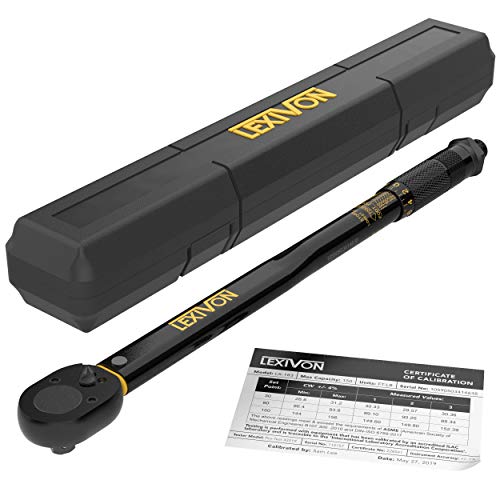
- PRECISE & HIGH QUALITY - Manufactured in Taiwan, our torque...
- DURABLE - Built to last, featuring a reinforced ratchet gear...
- LONGEVITY - Protect your investment with our proprietary...
- PERFORMANCE - Easily read and set torque levels with our...
- OMFORT - Equipped with a reversible ratchet head that drives...

- 【9-in-1 Torque Solution】Complete set includes...
- 【High Precision & Dual Scales】Factory-calibrated to...
- 【Clear & Safe Audible Click】Upgraded loud "Click" sound...
- 【Smooth 72-Tooth Ratchet & Quick Release】Reversible...
- 【Durable Construction & Wide Use】Hardened Cr-V steel...
If the PDF is very large, it may not load in the preview below.
Some older TSBs had multiple PDFs — visit the NHTSA Website to view all PDFs.
If the TSB PDF does not show, download or view it on the NHTSA Website.
Click on the (+) Plus Sign
Then Click on Associated Document(s)
Search NHTSA Database for Recalls
Search NHTSA Database for Vehicle Investigations
View Latest Vehicle Investigations
Search NHTSA Database for Vehicle Complaints
View Latest Vehicle Complaints
TSB/Document ID: 21NA141
Replacement Service Bulletin Number:
MFR Communication Date: 2021-06-28
MFR Internal Campaign ID/Software Version:
Communication Type: Service Bulletin/Repair Instructions
NHTSA Components: EQUIPMENT:OTHER:OWNERS/SERVICE/OTHER MANUAL
MFR Component System:
MFR Component Subsystem:
Previous TSB | Next TSB |
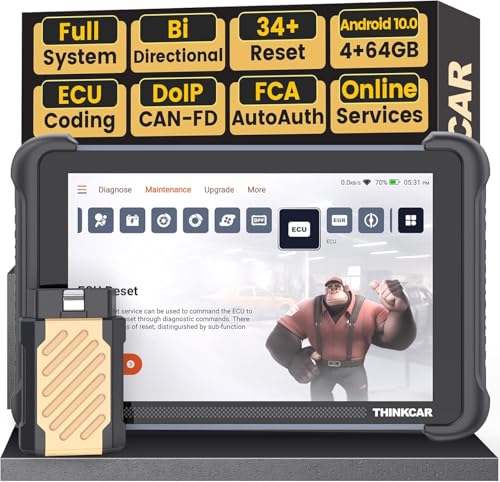
- [Notice] When you receive a used device, it may be a customer return resold by Amazon without inspection. You can exchange it for a new one through Amazon. As this situation is unavoidable, we sincerely apologize. For any issues, contacting us via Amazon's "Messages" is the best way. THINKSCAN 689BT Bidirectional Scan Tool Can Be Used Immediately After It is Turned On, Without Complicated Registration Process, Which is More Convenient & Quick.
- Full Bi-Directional Control & 3000+ Active Tests: Take control and test components like actuators, fuel injectors, relays, and cooling fans in real time. You’ll quickly see if the problem is in the part itself or the control module — saving you hours of guesswork and frustrating trial-and-error.
- Advanced ECU Coding Capabilities: Handle module matching and hidden feature activation with confidence. When you replace an ECU or want to customize settings, this obd2 scanner diagnostic bi directional tool gives you the professional-level capabilities you need without the dealership price tag.
- 34+ Useful Reset and Maintenance Functions: Complete everyday service tasks smoothly with a wide range of helpful reset and maintenance functions. Whether you’re keeping up with regular upkeep or tackling a specific job, this scanner makes maintenance simpler and less stressful for both DIYers and pros.
- Comprehensive Full System Diagnostics: Diagnose every major system — Engine, Transmission, ABS, SRS, TPMS, and more — all in one place. Finally stop wondering if you’re missing something important; get the full picture and clear codes with ease.
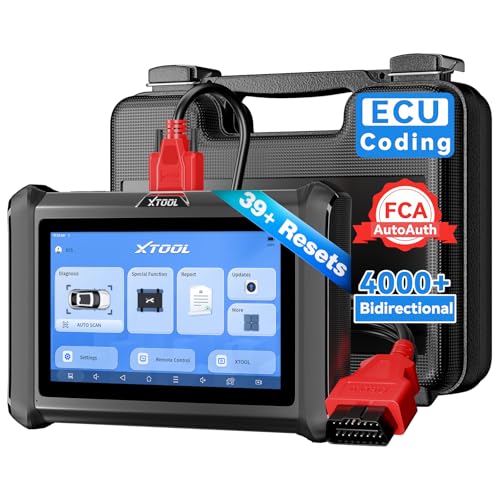
- Top Reasons to Choose the D7S OBD2 Scanner: XTOOL D7S car scan tool, an upgrade of XTOOL D7, offers comprehensive features for automotive technicians, workshops, and DIY enthusiasts 1. Upgraded Hardware: 2+64GB memory, rear camera, intuitive interface, foldable bracket 2. Complete Diagnostics: FCA
 Autoauth, OE-level all system scan, 39+ maintenance services, 4K+ bidirectional, CANFD/DoIP protocol 3. Advanced Capabilities: ECU c0ding, PMI functions 4. Wide Compatibility: Support 10,000+ models, covering 99% vehicle brands 5. Multi-language: Available in 22+ languages, No IP Restrictions 6. 3-Year Updates: Save 300 bucks on software updates for the latest features and optimizations
 - 2026 Upgraded D7S Car Scanner Features: The newly 2026 D7S V2.0 scanner for car brings exciting features for advanced vehicle diagnostics and enhanced user experience 1. FCA AutoAuth: Now supports FCA SGW module for Chrysler, for Jeep, for Dodge (2018+), for Fiat (2017+), enabling faster vehicle communication without gateway restrictions 2. PMI (Offline ECU Pr0gramming): Allows for Ford, for Lincoln, and for Mazda ECU pr0gramming for new modules 3. Optimized Diagnostic Report 2.0: Personalized reports with logos and customer info for auto shops. Note: Compatibility varies by cars, please check before order
- 39+ Services/Resets/Adaptations/Relearns/Calibrations: XTOOL D7S full system car scanner diagnostic tool tackles 99% of common car issues through its 36+ special functions, including Oil Reset, EPB, SAS, BMS, Throttle Reset, Injector C0ding, ABS Bleed, TPMS Reset, Power Balance, etc and also covers specific-vehicle functions like Crank Sensor Relearn, ABS Initialization, Cylinder Power Balance, Fuel Trim Reset, Idle Relearn etc. This car diagnostic scanner enhances efficiency, making repairs and maintenance hassle-free. Tip: DO NOT for All vehicles, please check compatibility first
- Cost-effective ECU C0ding Scan Tool for Specific Brands: Enhance your vehicle's performance with XTOOL D7S! This obd2 scanner all systems bidirectional offers advanced capabilities at an affordable price, supports online for BMW, for Benz and offline for BENZ, for MIT, along with PMI functions for Ford, for Mazda, and for Lincoln. Ideal for technicians and DIY enthusiasts, this automotive scanner diagnostic tool optimizes vehicle performance and enhances the driving experience. Note: Not for all cars and modules, please send car VIN to check the compatibility before purchase
- OE All System Diagnostic & 8 Pids Graphing: XTOOL D7S is a comprehensive all system bi directional obd2 scanner that delivers dealer-level diagnostics, completely controlling over your vehicle’s performance and health. This automotive scan tool can read and clear DTCs, view live data and ECU information, retrieve freeze frames, and perform active tests and full obd2 functions. This bi-directional scan tool can can identify your vehicle's make, model, and year information with just one click and show up to 8 PIDs live data with options for CSV viewing, playback, and recording for in-depth analysis. It is easy-to-use for both professionals and beginners, helping pinpoint issues efficiently
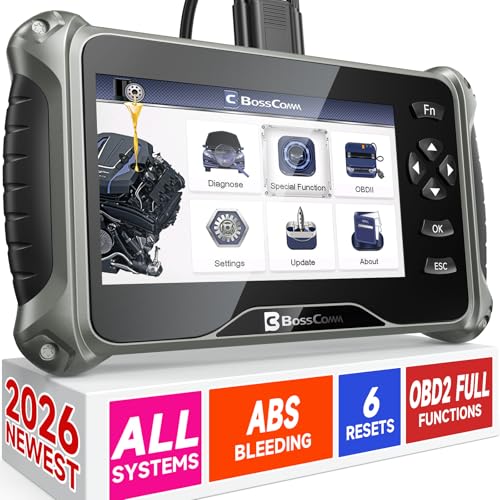
- 【✅Compared to BOSSCOMM IF742, IF745 Offers Full-System Diagnostics】The BOSSCOMM IF745 car diagnostic scanner is an upgraded model of IF742. In addition to supporting all OBD2 Code Reader functions and 6 reset options (ABS/EPB/SAS/BMS/Oil/Throttle), it expands diagnostics from 4 systems (Check Engine/ABS/SRS/Transmission) to vehicle All systems, including Steering, Suspension, and Body Electronics. This provides deeper, more comprehensive diagnostic capabilities.
- 【✨10 OBD2 Functions】The BOSSCOMM IF745 scan tool’s DTC Lookup instantly translates fault codes into user-friendly explanations, its I/M Readiness feature streamlines emissions testing with a single tap, and Freeze Frame lets you pinpoint the exact moment of a fault for in-depth root-cause diagnosis. Combined with a live data dashboard and advanced diagnostics (O2S, OBMon, EVAP), it delivers comprehensive insights for confident troubleshooting.
- 【✨Deep Diagnostics for All Vehicle System Modules】Beyond code reading/clearing and ECU information retrieval, our all-in-one data stream feature lets you inspect all current fault codes and their locations across the vehicle’s systems. This vehicle code reader helps you turn off dashboard warning lights and perform a comprehensive self-check of your car at home—no more back-and-forth trips to the repair shop or hefty inspection fees.
- 【✨6 Essential Resets: ABS Bleeding, Oil, EPB, SAS, Throttle, BMS】The BOSSCOMM IF745 obd2 scanner diagnostic tool swiftly purges air from brake lines to restore braking sensitivity, fine-tunes maintenance cycles to eliminate false alerts, resolves parking brake issues with one-click control, recalibrates steering sensors for stability, optimizes engine idling/acceleration for smoother performance, and deeply resets battery systems to extend lifespan and range via precise parameter adjustments.❗NOTE: Does NOT support bidirectional control, coding, or programming.
- 【✨10,000+ Car Models, AutoVIN, 13 Languages】The BOSSCOMM IF745 vehicle scanner diagnostic tool covers 73+ global car brands and offers support in 13 languages, making it perfect for DIYers, auto mechanics, or as a thoughtful gift. With a single-click AutoVIN feature, it instantly retrieves vehicle serial numbers, streamlining diagnostics for users globally. This adaptable tool balances user-friendliness with precision, catering to both personal and professional requirements.✅Unsure about compatibility? Compatibility will vary on vehicles' model and year, pls reach us via 📧 [email protected] 📧 before purchase.

This product presentation was made with AAWP plugin.