
NHTSA ID Number: 10199554
Manufacturer Communication Number: MAS002623
TSB/Document Date: 2021-08-02
Summary
Guidelines for Battery Maintenance, Charging and Replacement under Warranty
AfterSales TSO – Circular Letter
MAS002623
(MCL 21-17)
From: Aftersales – TSO
To: Maserati Network
Auburn Hills, MI | June 16, 2021
MODELS: All Maserati Models
SUBJECT: Guidelines for Battery Maintenance, Charging and Replacement under Warranty
NOTE: This Bulletin supersedes and replaces Bulletin numbers MAS000663,
MAS000663/A, MAS000663/B, and MAS000663C.
To help preserve a vehicle’s battery life, it is important to maintain and recharge the
battery when necessary. Please see the suggested guidelines in this bulletin for battery
maintenance and charging.
NOTE: On Dealer owned vehicles, all battery test results together with PDI
checklists must be kept in the vehicle file at your dealer for future reference.
Warranty Claim
If submitting a warranty claim for battery replacement or recharging, the following documents
must be attached to the Service Entry and the warranty claim:
• Results of the test (refers to Diagnosis activity) carried out with PicoDiagnostics upon
vehicle arrival at the workshop (name the file as Starting_test). If the battery is too
dead to test with the Pico scope, another battery tester that offers printed results may
be used. The test results must show the following: chassis number, vehicle mileage,
CCA, voltage, battery condition and a bad cell, yes or no.
If the alternate tester doesn’t have a print option, a picture with the test results and
hand written vin number along with a signature of the service manager must be attached
to the warranty claim.
• Results of the test (refers to Diagnosis activity) carried out with PicoDiagnostics after
having fully charged the battery (refers to Charging Process) and having left it in open
circuit for at least 4 hrs.(name this file as Final_test)
• Photos of the battery label showing the P/N and CCA rating along with a sticky note
showing time and date.
IMPORTANT: Any Warranty claim submitted without any of the above information is subject
to being rejected.
Repair Procedures:
Follow the instructions below in order to produce the necessary documentation:
A. DIAGNOSIS PROCESS
• Step 1 - Pre Diagnosis
• Step 2 - Visual Assessment
• Step 3 - Checking Battery Charge – Examples of abnormal
results
B. RECHARGE PROCESS
C. ANNEX I – Battery Types
A. DIAGNOSIS PROCESS
Step 1 - Pre Diagnosis
First entry for a dead battery
1. Make sure there are no aftermarket components installed on the vehicle
2. Check the charging system for proper operation
3. Carry out a no load absorption test to exclude any abnormal absorption
- If charging is not correct, continue the diagnosis
4. Make a vehicle scan report after having deleted any low voltage errors
5. If DTCs are present or the customer complains of other faults, start by checking the
component or function that’s causing the error / fault by checking the condition of the
connections, wiring and fuses related to that component.
Step 2 – Visual assessment
Visual assessment
Visually inspect the battery. Check the terminals for damage or corrosion and ensure they
are properly secured. Poor contacts may prevent proper operation and adversely affect
battery life. Make sure that the battery housing is not damaged, and that the battery is
properly secured in the battery compartment. For lead acid batteries, if the cover
includes an optical hydrometer, ensure that the acid level is correct.
Always avoid operating the battery at low state of charge. Allowing a battery to go below
50% of charge level for a long period of time could lead to a sulfated battery and reduce
the battery's capacity and starting current. Also, the battery could become prone to
freezing. Use a digital multi-meter to measure the battery voltage, if lower than 12.4Volts,
recharge the battery.
It is recommended to regularly check the battery state of charge and increase the
frequency of the checks when the car is held in stock or primarily used for short-distancetrips.
Step 3 - Checking the Battery State of Charge
Battery condition, along with the starting and recharging circuits can be checked using the
Picoscope application on the Maserati Diagnosi. Select the proper battery specifications
according to the information printed on the battery label (type, rated voltage, starting
current and test temperature) before beginning the tests.
The battery must be installed in the car and charged sufficiently to start the engine.
The check sequence is as follows:
1. Connect MDVMM to the diagnosis computer, run the PicoDiagnostics software and
select "Test battery".
2. Connect a standard test cable with BNC connector to channel A of MDVMM; use
two crocodile clamps to connect test cable to the battery positive and negative
poles. (Fig.1)
3. Connect the 200/2000A ammeter clamp to channel B of MDVMM and clamp it
around the battery positive or negative cable (Fig.1) to measure the starting and
recharging amperage.
Fig.1
4. Select the correct battery specifications: lead acid-type battery (option “Lead acid”),
AGM or EFB.
The type of battery is normally indicated on the adhesive labels applied on the battery.
5. Input the remaining data: nominal voltage drop, CCA nominal value (EN or SAE
value), battery temperature.
The following table shows, as an example, the technical specifications related to the
batteries installed by Maserati on the most recent models:
Spare
Maserati Spare
PN
PN Co.De.P
TYPE
Specification
Standard
673000080
670008110
670002027
670005523
670037337
EFB
100AH‐800A
EN
AGM
EFB
95AH‐850A
95AH‐800A
EN
EN
673001440
673005577
NOTE: In case of incorrect entered battery specification values, the outcome of the
Battery test must be considered unreliable, resulting in the rejection of the related
warranty.
6. Make sure that the KIN of the Vehicle is in OFF position and that the Vehicle is in
sleep mode (i.e. the IPC central display is off) before clicking the “Start” button of the
application and proceeding with the engine cranking.
7. Click Start on the screen and crank the engine.
The program will analyze voltage and current data from the battery, both during starting and
during recharging. This data provides useful information on battery status and the starting and
recharging circuits. Results are shown on the display. Voltage and current are also displayed
in a chart as shown below.
In the battery test outcome report, only “Condition” must be evaluated according to
indications provided below.
If State of Charge is correct but the Cold Start Current (CCA, Cold Cranking
Amps) is low, check battery connections. A loose, dirty or oxidized connection
could create additional resistance in the circuit. In such cases, first restore the
normal status of the connections before beginning the test.
If the State of Charge is low, run a complete recharging cycle and repeat the test
after waiting at least 4 hours. Should it be necessary to recharge the battery, use
a battery charger suitable for the various types of batteries installed in Maserati
vehicles. Even in this case, select the correct battery specifications and comply
with recharging time and methods as indicated by the charger.
Recommendations: in order to achieve the correct results from the Battery Test
please observe the following:
•
Make sure that the current clamp is not “Off”, after a period of time this
might happen as a result of the auto-off settings of the tool.
•
Do not connect a battery maintainer or battery booster or similar devices. If
they are connected to the battery this might alter the value of the maximum
current reading. This alteration is due to the fact that part of the current would
be supplied by the external device.
•
If the current clamp is not “ON” or connected correctly, it might happen that
the value of the “maximum current” measured by the tool is too low or null, this
could affect the results of the Battery Test, which then could recommend a
battery replacement.
•
Following a battery charge cycle and before carrying out a new Battery Test, it
isnecessary to wait at least 4 hours in order to obtain a reliable result.
Please follow the above recommendations if not, this might result in implausible
outcomes of the test which might erroneously suggest that a battery replacement is
required.
Furthermore, it is important to specify that the State of Charge (SOC) resulting from the
test should NOT be used to estimate the residual charge after a number of rest and
recharge cycles of the battery.
NOTES ABOUT STEP 3 - ABNORMAL RESULTS- EXAMPLES
The below examples are tests that were carried out wrong resulting in incorrect
results.
CURRENT CLAMP NOT CONNECTED OR OFF
BATTERY MAINTAINER/BOOSTER CONNECTED TO THE VEHICLE
NOTE: Warranty Claims related to incorrect / implausible test reports can be subject to
rejection.
B. RECHARGE PROCESS
BATTERY CHARGE – Recommendations
Please remember that the recharging process generates hydrogen, a potentially
hazardous gas. Please wear the appropriate Personal Protective Equipment.
Always follow these precautions when recharging a battery:
•
Recharge the battery in a well-ventilated environment.
•
Never recharge a battery that has been frozen.
•
Ensure that the area is well away from sparks and/or open flames.
•
Do not interrupt battery charging until the charger confirms charge
complete.
BATTERY CHARGING – Procedures
When charging the vehicle’s battery using an external battery charger, make sure
to connect the charger clamps correctly so that the IBS can monitor the negative
charger clamp (see arrows). Any point on the chassis and IBS is acceptable with
the only exception of the clamp only being on the negative battery post.
Refer to the below picture.
RECHARGING THE BATTERY
WARNING: The recharging process generates hydrogen, a potentially hazardous gas.
Always be sure to follow these precautions when recharging a battery:
• Recharge the battery in a well-ventilated environment.
• Never attempt to recharge a battery that has been frozen.
• Ensure that the charging area is away from any sparks and/or open flames.
When recharging a battery, use a charger suitable for the various types of batteries currently
in Maserati vehicles. Always select the correct battery specifications and comply with
recharging times and methods recommended by the manufacturer of the charger being used.
Ensure the battery charger being used meets or exceeds the minimum requirements listed
below.
Parameter/Condition
Minimum Requirement
Operating condition
The charger must be capable to operate outdoors
and be weather resistant
Operating Temperature
0ºC to +50ºC (32ºF to +150ºF)
Storage Temperature
-20ºC to +70ºC (-5ºF to +155ºF)
Power supply voltage
120V AC – 60Hz /15A
Type of batteries to recharge
Lead Acid, AGM Spiral, AGM
Charging Mode
Automatic / Manual
Test Standard
IEC, EN1, EN2, SAE, DIN
Charger must NOT work if:
- Not connected to a battery
- Not properly connected to a battery
(reversed polarity)
Safety Features / Protection
Cable length
Over 1.5 metres (4 feet or longer)
Compliance to
- CEN/CENELEC EN 45014
- ISO/IEC, UL
Information on ID label
- Trademark
- Voltage (V)
- Charging current (A)
User documents
Recharge instructions and relevant warnings
Note: When recharging a battery, using a battery charger that fails to meet or exceed the
above minimum requirements may result in incorrect battery recharging. Damage to
the vehicle’s electric/electronic components could occur, and a subsequent repair to
correct said damage is not warrantable item.
For more information on battery chargers and recharging AGM batteries, refer to Maserati
Tech Tips 27 sent 9/24/2012.
C. ANNEX I: BATTERY TYPES
Battery types
The 2 types of Batteries used in Maserati vehicles (depending on the year and model type)
can be:
• A –Lead acid
• B –AGM (Absorbed Glass Mat).
Lead acid batteries can be broken down into:
• A1 – Pb for standard applications.
• A2 – Pb Heavy Duty for Start&Stop applications.
If you have any questions contact your RAM or Maserati Technical Support.
Thank you for your continued support and cooperation.
Maserati North America, Inc.
Aftersales Department
© 2021 Maserati North America, Inc.
Aftersales
www.maserati.com
All rights reserved. Reproduction or translation
in whole or in part is not permitted without
authorization from the publisher. Printed in USA
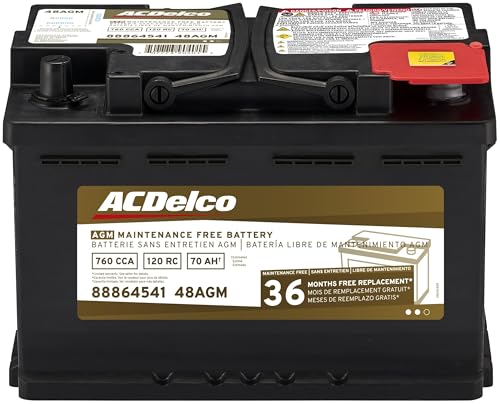
- High density negative paste, improves performance and...
- Enhanced life alloy or Silver Calcium stamped alloy...
- Calcium lead positive grid, maximizes conductivity and...
- Robust envelope separator with puncture resistant back...
- Vent cap design that resists acid leakage

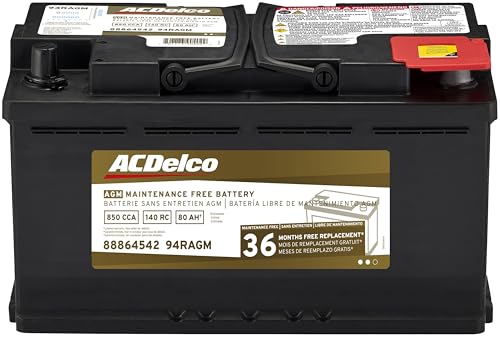
- High density negative paste, improves performance and...
- Enhanced life alloy or Silver Calcium stamped alloy...
- Calcium Lead positive grid, maximizes conductivity and...
- Robust Envelope Separator with puncture-resistant back...
- Vent cap design that resists acid leakage
Last update on 2026-05-30 / Affiliate links / Images from Amazon Product Advertising API
If the PDF is very large, it may not load in the preview below.
Some older TSBs had multiple PDFs — visit the NHTSA Website to view all PDFs.
If the TSB PDF does not show, download or view it on the NHTSA Website.
Click on the (+) Plus Sign
Then Click on Associated Document(s)
Search NHTSA Database for Recalls
Search NHTSA Database for Vehicle Investigations
View Latest Vehicle Investigations
Search NHTSA Database for Vehicle Complaints
View Latest Vehicle Complaints
TSB/Document ID: MAS002623
Replacement Service Bulletin Number:
MFR Communication Date: 2021-06-16
MFR Internal Campaign ID/Software Version:
Communication Type: Service Bulletin/Repair Instructions
NHTSA Components: EQUIPMENT
MFR Component System:
MFR Component Subsystem:
Previous TSB | Next TSB |

- 2026 ALL-IN-ONE HEAVY DUTY TRUCK SCANNER – BUILT FOR DIESEL DIAGNOSTICS:The ANCEL X7HD PRO combines full-system diagnostics, bi-directional control, ECU coding, HDOBD/OBD2 functions, and 42+ reset services in one powerful heavy duty truck scanner. This diesel scan tool helps technicians, fleet owners, and repair shops diagnose problems faster, reduce downtime, and complete more repairs without switching between multiple truck diagnostic tools. Features a 10.1" Android tablet, Bluetooth & Wi-Fi, live data graphing, and 2 years of f-ree updates
- 42+ RESET FUNCTIONS – MORE THAN A BASIC TRUCK CODE READER:Perform essential service functions including forced DPF regeneration, injector coding, speed limiter adjustment, idle adjustment, oil reset, ABS reset, SRS reset, EPB reset, throttle reset, and suspension calibration. Designed for real truck maintenance and fleet service, this commercial truck diagnostic scanner helps reduce dealer visits, avoid unnecessary downtime, and handle more repair jobs with one diesel diagnostic tool
- ACTIVE TEST & ECU CODING – ADVANCED BIDIRECTIONAL SCAN TOOL FOR TRUCKS:Quickly locate faults by activating components and sending commands directly to vehicle systems. Test injectors, ABS, throttle, cooling systems, and other modules in real time without unnecessary disassembly. ECU coding and module matching help adapt replacement parts, restore factory settings, and reduce repeat repairs, making this semi truck scan tool ideal for advanced troubleshooting and daily shop work
- FULL-SYSTEM HDOBD/OBD2 DIAGNOSTICS – WIDE TRUCK & ENGINE COVERAGE:Read and clear codes, monitor live data, freeze frame, and diagnose engine, transmission, ABS, body, and other major systems. Compatible with Freightliner
 , Kenworth, Peterbilt, Volvo, Mack, International, and other commercial truck brands, plus Cummins, Caterpillar, Detroit, Paccar, and Navistar diesel engines. Also supports full OBD2/EOBD diagnostics for standard vehicles, making it a versatile truck obd2 scanner for mixed fleets and repair shops
 - PROFESSIONAL HARDWARE + RELIABLE SUPPORT – BUILT FOR DAILY SHOP USE:This professional diesel diagnostic computer features a 10.1" touchscreen, Android 10.0 system, 6000mAh battery, Bluetooth/Wi-Fi connectivity, and built-in front & rear cameras for documenting repairs and remote troubleshooting. Includes 2 years of fr-ee updates, 1-year w-arranty, and responsive technical support. Contact [email protected] before purchase to confirm compatibility and supported functions for your truck or diesel engine

- 【Built for Heavy Duty Diesel Diagnostics】Designed for SAE J1939 and J1708 compliant trucks, buses, and diesel-powered commercial vehicles. HD601 truck scanner diagnostic tool helps owner-operators, small fleets, mobile technicians, and independent repair shops quickly identify fault codes, view live data, and make informed repair decisions—saving time, reducing downtime, and avoiding unnecessary shop visits
- 【Full System Diagnostics+All HD OBD Modes】The New HD601 heavy duty truck scanner delivers full-system diagnostics on SAE J1939 and J1708-compliant commercial vehicles—digging into engine, transmission, ABS, fuel, every system that keeps your rig rolling. It supports all HD OBD modes, giving you live data, freeze frame, ECU info, vehicle info, emissions data tracking, plus code reading and clearing. Not just what broke, but why—so you fix it right the first time. Pinpoint issues faster, cut repair costs, and spend less time on the shoulder
- 【Wide Heavy-Duty Vehicle Coverage】Supports a wide range of heavy-duty vehicle manufacturers and systems, including Freightliner, Kenworth, Peterbilt, Volvo, International, Detroit, Cummins, Paccar, Allison, Eaton, Bendix, Wabco, and more. Coverage varies by vehicle make, model, year, and system configuration. Contact our support team before purchase if compatibility verification is needed
- 【Speaks Major Truck Protocol】The New HD601 diesel truck scanner is built for American-made trucks—and supports the heavy‑duty protocols you' re most likely to run into on the road: SAE J1939, J1708/J1587, ISO 15765‑4, ISO 14230‑4, ISO 9141‑2, J1850 PWM/VPW, ISO 27145‑4, and EURO‑6. For most trucks, model years, and systems, it speaks the language your vehicle understands. Just plug it in and start diagnosing—no guesswork, no gatekeeping. Note: vehicle functions and module availability may vary by manufacturer and model year
- 【Save Hundreds on Diagnostic Fees】Why pay $150–300 for someone to read your codes? With the New ANCEL heavy duty truck scanner, you can pull fault codes yourself—in minutes, without leaving the truck. One or two uses pays for the tool. After that, every diagnostic is money back in your pocket. Smart investment for owner-operators, techs, and small fleets. Read and clear stored fault codes in minutes. Active fault codes may require repairs before they can be cleared

- 【One Tool, Total Fleet Coverage: 6/9/16 Pin Ready】Featuring an integrated 16-pin OBD2 connector and professional-grade 6-pin & 9-pin adapters, this heavy duty truck scanner provides extensive support for J1939, J1708, J1587, ISO 14230-4, ISO 15765-4 and ISO 9141-2, ISO 27145-4 protocols. It offers reliable diagnostic coverage for major American diesel brands—including Cummins, Paccar, Caterpillar, Detroit, and Freightliner—making it a versatile semi truck scanner for managing any diverse fleet.
- 【2 in 1 Diesel Code Reader & Advanced HD OBDII】Equipped with professional-grade diesel scanner capabilities, the HD301 features intuitive Read/Erase codes and turn off the "Check Engine" light. With the built-in DTC Lookup library, you can instantly access fault code definitions on-device without searching the internet. It also retrieves hundreds of essential live sensor data—such as coolant temperature, fuel pressure, and engine RPM—in a stable text format for precise and rapid troubleshooting. (Please note that the HD301 can not support DPF Regen.)
- 【Full System Truck Diagnostic】The FOXWELL HD301 heavy duty scan tool is engineered to deeply access and scan all available electronic control modules specifically for truck, including Engine, Transmission, ABS, SRS, Chassis, and Body Control. This professional truck scanner diagnostic tool allows you to identify issues across the entire vehicle, ensuring your rig stays in peak condition for the long haul.
- 【Versatile for most big Rigs: Commercial, Passenger & Beyond】Engineered for more than just trucks, this heavy duty scan tool offers extensive coverage for pickups, buses, trailers, and even marine vessels. From construction machinery (excavators, loaders) to agricultural equipment (tractors, harvesters), it provides a true all-in-one diagnostic solution.
- 【Plug-and-Play & No Subscription】Designed for the road! No WiFi, no batteries, and no complex App setup required. Simply plug it into your vehicle’s diagnostic port to start scanning immediately. Enjoy lifetime free software updates to keep your HD301 diesel truck scanner current with the latest vehicle models and features—without any hidden subscription fees—While overcoming language barriers with support for Spanish and English.
Last update on 2026-06-23 / Affiliate links / Images from Amazon Product Advertising API
This product presentation was made with AAWP plugin.