
NHTSA ID Number: 10183209
Manufacturer Communication Number: 20NA211
TSB/Document Date: 2020-11-30
Summary
2021 Cadillac Escalade New Model Features
the following provisions:
• The vehicle must be in PARK (P).
Once the download is accepted the following will occur:
• The download will occur while the vehicle is being
driven.
• Once the vehicle is stopped and in PARK (P), the
driver must accept or decline the programming
event.
• If accepted, programming will begin automatically
after the driver exits the vehicle.
• The vehicle may not be used, operated, or locked
while programming is in progress.
Multiple Diagnostics Interface 2
5619571
Next generation electrical architecture in the 2021
Cadillac Escalade requires the GDS 2 scan tool and
MDI 2 for diagnostics. MDI 1 will not work for
diagnostics.
When a scan tool is installed, it will attempt to
communicate with every control module that could be
optioned into the vehicle. If an option is not installed,
the tool will display NO COMMUNICATION for that
control module. In order to avoid misdiagnosis of a NO
COMMUNICATION message, refer to Data Link
References for a list of control modules and the buses
with which the modules communicate. Use schematics
and specific vehicle build RPO codes to determine
optional control modules.
Page 48
October, 2020
Bulletin No.: 20-NA-211
X84 Data Link Connector
The X84 DLC is a standardized 16-cavity connector.
Connector design and location are dictated by an
industry-wide standard and are required to provide the
following:
• Terminal 1: CAN 7 Serial Data (+)
• Terminal 2: Private Presentation 1 CAN Serial
Data (+)
• Terminal 3: Ethernet Bus 1R (+)
• Terminal 4: Scan tool power ground
• Terminal 5: Common signal ground
• Terminal 6: CAN 6 Serial Data (+)
• Terminal 7: Private Presentation 2 CAN Serial
Data (+)
• Terminal 8: Ethernet Bus 1 Enable
• Terminal 9: CAN 7 Serial Data (-)
• Terminal 10: Private Presentation 1 CAN Serial
Data (-)
• Terminal 11: Ethernet Bus 1R (-)
• Terminal 12: Ethernet Bus 1T (+)
• Terminal 13: Ethernet Bus 1T (-)
• Terminal 14: CAN 6 Serial Data (-)
• Terminal 15: Private Presentation 2 CAN Serial
Data (-)
• Terminal 16: Scan tool power, B+
Industry standards require the following, and all others
are at the discretion of the OE:
• Terminal 4: Scan tool power ground
• Terminal 5: Common signal ground
• Terminal 6: CAN 6 Serial Data (+)
• Terminal 14: CAN 6 Serial Data (-)
• Terminal 16: Scan tool power, B+
5619572
1. Type C USB Port
2. Type A USB Port
3. 12 Volt DC Outlet
Instrument Panel Accessory Power
Receptacles
Power Receptacles
The 2021 Cadillac Escalade may be equipped with
multiple 12 volt accessory power receptacles and two
110/230 volt accessory power receptacles. The 12 volt
accessory power receptacles receive their power
through the accessory relay.
5619573
1. SD Card Slot
2. Type C USB Port
3. Type A USB Port
Center Console SD and USB Ports
Rear Receptacles
The accessory DC/AC power inverter module requires
a supply voltage between 11 and 16.5V and shuts down
if the voltage is not within these limits. The module also
shuts down when its internal temperature exceeds 85°
C (185°F).
Bulletin No.: 20-NA-211
October, 2020
Page 49
Auxiliary Battery
The BCM monitors battery positive voltage to
determine the battery state of charge. If one or more of
the BCM battery positive voltage terminals measure
less than about 11.6V compared to the BCM ground
circuits, the BATTERY LOW START VEHICLE
message displays and chimes may sound.
Start the vehicle immediately. If the vehicle is not
started and the battery continues to discharge, the
climate controls, heated seats, and audio systems will
shut off and the vehicle may require a jump start. These
systems will function again after the vehicle is started.
Safety and Security
5619574
1. Type C USB Port
2. Type A USB Port
3. 110 Volt AC Outlet (United States)
Rear Compartment Accessory Power
Receptacle
The 110/230V (depending on region) AC outlet is
located next to the rear USB ports. The rated output is
150 watts.
5619575
The receptacle has an internal switch that detects when
a device is plugged into the outlet. When the ignition is
on or retained accessory power is active and a device
is detected, the DC/AC power inverter module provides
power after a 1.5-second delay. The module has built-in
protection against over-current. If the module detects
over 3.8 amps for 1 second or over 2.5 amps for 10
seconds it turns off the outlet.
Once the protection turns off the outlet, the device
needs to be disconnected and then reconnected before
the module restores power after a 3-second delay.
Overview
The 2021 Cadillac Escalade are available with
segment-leading safety and security technologies such
as the surround camera system, pedestrian mitigation
braking, and the safety alert seat.
Supplemental Inflatable Restraint System
A solid vehicle structure, coupled with SIR system
components, helps maximize protection for vehicle
occupants in the event of a collision. The SIR system
supplements the protection offered by the seat belts
and includes up to ten frontal and side impact air bags,
as well as the restraint control module, seat belt
pretensioners (anchor and retractor), and impact
sensors.
Up to ten air bags may be in the following locations:
• steering wheel
• instrument panel – passenger side
• driver and passenger side knee bolster
• driver and passenger side roof rail
• front driver inboard and outboard seat side
• front passenger outboard seat side
• second row seating outboard left and right
seat side
Restraint Control Module
The restraint control module is the control center for the
SIR system and contains both internal and external
impact sensors. In the event of a collision, the module
compares the signals from these sensors to a value
stored in its memory. When the generated signals
exceed the stored value, the control module applies
current to the appropriate deployment loops in order to
deploy the air bags.
Deployment Operation
Page 50
October, 2020
When a deployment occurs, the restraint control
module performs the following steps:
1. The module records the SIR system status and
illuminates the SIR system AIR BAG indicator
located on the instrument cluster.
2. The module performs continuous diagnostic
monitoring of the SIR system’s electrical
components and circuitry when the ignition is
turned on.
3. If a malfunction is detected, a Diagnostic Trouble
Code (DTC) will be stored and the inflatable
restraint control module requests the instrument
cluster to illuminate the SIR system AIR BAG
indicator to alert the driver of the malfunction.
In the event that ignition positive voltage is lost during a
collision, the inflatable restraint control module
maintains a limited energy reserve for deployment of
the air bags.
Note: It is important when disabling the SIR system for
servicing or rescue operations to allow the limited
energy reserve to dissipate, which could take up to 2
minutes.
Supplemental Restraint Impact Sensors
The SIR system contains a number of impact sensors,
depending on available equipment and markets. The
impact sensors are inputs to the restraint control
module. The sensors for the SIR system are in the
following locations:
• Two engine compartment acceleration-based
sensors (G-force sensors) are located on the right
and left side of the lower radiator support.
• Four pressure-based sensors are located inside
the front and rear doors to detect rapid changes in
the air pressure in side-impact crashes.
Impact sensors are not part of the deployment loop but
instead provide input to the restraint control module.
This module contains a microprocessor that performs
calculations using the measured inputs from
acceleration and pressure sensors. When the
generated calculations exceed the stored value, the
restraint control module causes current to flow through
the deployment loops to deploy the appropriate
air bags.
Dual-Stage Frontal Air Bags
The dual-stage steering wheel and passenger
instrument panel air bags vary the amount of restraint
to the occupant according to the collision severity and
passenger seat position. For moderate frontal
collisions, the air bags partially deploy (stage 1 of air
bag deployment). For more severe frontal collisions,
the air bags fully deploy (stage 2 of air bag
deployment).
As part of the frontal air bag system, the vehicle also
features driver and passenger knee bolster air bags,
which deploy to protect the occupants’ legs during a
frontal collision.
Bulletin No.: 20-NA-211
Driver and Passenger Roof Rail Air Bags
Roof rail side-curtain air bags provide head and neck
protection to front and rear seat occupants in the event
of a side impact or vehicle rollover. The air bags are
located along the roof line, above the doors.
The restraint control module monitors the side impact
sensors located in the front and rear doors and rear
compartment. If a side impact of sufficient force occurs,
the restraint control module commands the roof rail air
bags to deploy. As the air bags inflate, they deploy
downward to cover the pillars and side windows.
Restraints Occupant Classification System Module
The restraints occupant classification system module
monitors the type of occupant that is sitting in the front
passenger seat. The restraint occupant classification
module uses the information to determine whether to
enable or suppress the deployment of the passenger
instrument panel airbag.
The restraints occupant classification system module
consists of the following components:
• electronic control module
• sensor mat in the seat
• seat belt tension sensor
• wire harness
Seat Belt Tension Sensor
The passenger seat belt tension sensor is mounted on
the passenger seat belt retractor and measures the
amount of tension in a vehicle seat belt.
Passenger Air Bag Indicator
The passenger airbag indicator identifies the status of
the passenger instrument panel airbag. The restraint
control module momentarily turns on the passenger
airbag indicators after ignition is turned ON. If an
occupant is not detected in the passenger seat or the
occupant type is not appropriate for airbag deployment,
the restraints control module illuminates the passenger
airbag OFF indicator. If an occupant is detected in the
passenger seat, the restraints control module
illuminates the passenger airbag ON indicator.
Service Consideration
The restraints occupant classification module is a
calibrated unit. When replacing the assembly, all parts
in the service kit must remain together. Do not mix any
of the old parts with the new parts.
After repairing or replacing a component in the restraint
occupant classification system, perform programming
and setup.
Airbag Service Precautions
When servicing the SIR system, always wear the
required personal protection equipment, including
safety glasses and gloves. To successfully repair the
SIR safely, follow all of the warnings and cautions as
directed by Service Information.
Enhanced Safety Systems Components
The safety systems offered in the 2021 Escalade
include various technologies that use radar, camera,
and ultrasonic driving assistance.
Bulletin No.: 20-NA-211
October, 2020
Frontview Camera Module
The frontview camera is located behind the windshield
near the rearview mirror. Looking out at the road ahead,
it detects visual cues such as lane markings and
vehicles directly ahead within a distance of
approximately 60 m (197 ft).
Long-Range Front Radar Sensor Module
The long-range front radar sensor module is located
behind the front grille emblem near the vehicle logo and
is not directly visible from the exterior. The radar sensor
detects and tracks objects up to 200 m (656 ft)
immediately ahead.
Active Safety Systems
The active safety system is a comprehensive feature
set designed to help a driver avoid collisions or reduce
crash damage while driving, backing up, and parking.
The K124 Image Processing Module is the primary
controller of the 2021 Cadillac Escalades active safety
system. The active system includes various control
modules and sensors listed below:
• K124 Image Processing Module
• B174W Frontview Camera ‒ Windshield
• B233B Forward Range Radar Sensor ‒ Long
Range
• K182 Parking Assist Control Module
• K160 Brake System Control Module
The image processing module communicates via serial
data on the object detection bus with the components
listed above. The image processing module observes
an actual visual image of the area 60 m (197 ft) directly
ahead of the vehicle with the frontview camera. The
radar sensor module ‒ long range measures the
distance to objects that are up to 200 m (656 ft) in front
of the vehicle. Within 60 m (197 ft) of the vehicle, all of
these inputs are combined to create a fusion image of
the area in front of the vehicle. At up to 200 m (656 ft),
the radar sensor module ‒ long range detects and
begins tracking objects immediately in front of the
vehicle. Within 60 m (197 ft), the frontview camera
confirms objects detected by the radar sensor module ‒
long range.
Gap Switch
The gap switch allows the driver to determine how
closely the adaptive cruise control vehicle follows a
target vehicle while adaptive cruise control is engaged.
When the adaptive cruise control vehicle speed is
being limited due to a slower travelling vehicle, the
adaptive cruise control vehicle speed is automatically
controlled to the follow speed limit. The gap switch has
3 following distance selections that range from 1–2
seconds.
The gap switch following distance between the
adaptive cruise control vehicle and the target vehicle is
expressed in time as opposed to actual distance. The
distance maintained for a selected gap will vary based
on vehicle speed. The faster the vehicle speed, the
further back you will follow. The gap setting can only be
adjusted when the adaptive cruise control system is
engaged. The gap switch is hard-wired to the Body
Control Module (BCM). Based on voltage variations,
Page 51
the BCM reads the gap switch selection and
communicates the switch status to the image
processing module by Controller Area Network (CAN)
signal. The gap switch is a momentary switch.
The initial push of the gap switch recalls the current
setting and activates the display. Subsequent pushes of
the gap switch will change the gap setting.
If the system detects a possible collision, it alerts the
driver with an audible alert. If equipped with a head-up
display, a series of red dots will display on the
windshield. If equipped with a safety alert seat, the
driver will experience a series of pulses on both sides
of the seat.
Forward collision alert distance can be set to far,
medium, or near timing using a steering wheel control.
Adjusting the distance of the forward collision alert
system also changes the following distance for
adaptive cruise control ‒ advanced, if equipped.
Forward collision alert may be enabled or disabled
through the vehicle Settings menu.
Active Safety Technologies
Standard active safety technologies include:
• forward collision alert
• lane departure warning
• automatic emergency braking
• park assist
Alerts can be user set to either a haptic signal using the
driver’s haptic signal motor seat or beeps using the
audio system.
Forward Collision Alert
The forward collision alert uses the frontview camera
module to detect vehicles in the path ahead of the
vehicle and alert the driver when a collision risk is
present. When a vehicle is detected ahead, a green
icon is displayed. This indicator turns amber if the driver
is following too closely. If the system detects that the
driver is seconds away from a possible front-end
collision, an alert is displayed, which is a series of red
flashing collision alert Light Emitting Diodes (LEDs) on
the windshield. An audible alert is simultaneously
triggered. If the vehicle is equipped with a safety alert
seat (HS1), both sides of the seat will pulse. The
forward collision alert system can be set to far, medium,
or near timing using the forward collision alert switch
and can be turned off using this control or the vehicle
personalization.
Automatic Emergency Braking
Forward automatic braking uses the image processing
module, frontview camera, and the forward long range
sensor to determine and warn a driver when a front-end
collision with a vehicle ahead may be imminent.
The system works when driving in a forward gear
between 8 to 60 km/h (5 to 37 MPH), on models
equipped with adaptive cruise control. The system can
detect vehicles up to 60 m (197 ft) ahead.
Page 52
October, 2020
If the system detects a possible front-end collision, it
issues an audible alert of eight high-pitched beeps. If
equipped with a safety alert seat, the driver
experiences a series of pulses on both sides of
the seat.
If the driver does not respond quickly or the situation
happens suddenly, the system automatically applies
the brakes in an effort to mitigate the collision.
Forward automatic braking may be enabled or disabled
through the vehicle settings menu.
Enhanced Automatic Emergency Braking
Front Pedestrian Braking
Front pedestrian braking, if equipped, is a feature
subset of front impact mitigation that aims to reduce the
likelihood of collisions or reduce the impact speed with
pedestrians in the forward direction. The front
pedestrian braking system:
• determines the forward path of the vehicle
• monitors this path with respect to pedestrians in or
near the forward path
• when appropriate, provides alerts to the driver
• if certain conditions are met, provides autonomous
braking to help avoid collision or reduce the
impact speed of a collision with the pedestrian
This system is not intended to replace the driver’s
responsibility to pay careful attention for pedestrian,
vehicle, and other potential hazards. Its function is
limited to supplemental use only to assist rather than
replace the driver in responding to pedestrians while
driving.
The front pedestrian braking system can detect and
alert the driver of up to ten pedestrians in a forward
gear at speeds between 8 and 80 km/h (5 to 50 MPH).
During daytime driving, the system detects pedestrians
up to a distance of approximately 40 m (131 ft).
Pedestrians must be at least 80 cm (31.5 inches) tall for
camera detection.
Reverse Automatic Braking
The reverse automatic braking system is designed to
help drivers avoid pedestrian collisions while backing
up. If the system detects the vehicle is reversing too
fast to avoid a collision, it may automatically apply the
brakes. The reverse automatic braking system includes
the K124 Image Processing Module and the K182
Parking Assist Control Module. In conjunction with the
backing warning system, if the driver does not respond
to the audible and haptic alerts while backing up, the
system automatically applies the brakes and brings the
vehicle to a hard stop.
Rear automatic braking also prevents the vehicle from
backing into an object if the vehicle is in REVERSE. If
the system detects an object immediately behind the
vehicle while attempting to reverse from a stop, the
brakes are automatically applied.
Pressing the brake pedal after the vehicle comes to a
stop releases the rear automatic braking, in addition, it
may be also necessary to release the electronic
parking brake. When it is safe to do so, pressing the
accelerator pedal firmly at any time overrides the rear
automatic braking system feature.
Bulletin No.: 20-NA-211
If the rear automatic braking system activates with no
objects or pedestrians behind the vehicle, check to see
that snow, ice, or debris are not present on the rear
object sensors.
Rear pedestrian alert can be enabled or disabled
through the vehicle settings menu.
Pedestrian Impact Detection System
The available pedestrian impact detection provides
protection to pedestrians involved in vehicle impacts.
The pedestrian impact detection system or active
pedestrian protection system protects a pedestrian
impact by raising the hood when a pedestrian is
detected during a frontal impact. This provides vertical
deformation space under the hood.
In some regions, an active pedestrian impact detection
system is required for vehicles which do not provide the
required deformation space under the hood.
When a pedestrian impact is detected, the system
deploys the hood hinge actuators to lift the rear section
of the hood to help reduce pedestrian head injuries.
(The term “deployment” applies to the activation of the
hood via the hood actuators). The pedestrian impact
detection system is designed to sense and discriminate
road impacts such as pedestrians or cyclists from other
types of impacts to properly deploy the hood actuators.
No actions or inputs are required from the driver or
passenger to trigger this device. The pedestrian impact
detection system operates at vehicles speeds between
22 km/h (14 MPH) to 50 km/h (31 MPH).
After a deployment event, the vehicle’s hood can be
reset to its normal driving position. In addition, after
resetting the hood, the pedestrian impact detection
system is not required to be fully functional to drive the
vehicle. To restore full functionality of the system,
replacement of system component(s) is necessary.
The restraints control module detects internal and
interface malfunctions and commands the SERVICE
PEDESTRIAN PROTECTION SYSTEM message to
display in the driver information center.
Pedestrian Impact Detection Components
The pedestrian impact detection system includes the
following components:
• restraints control module
• pedestrian impact detection sensor – upper beam
front left
• pedestrian impact detection sensor – upper beam
front right
• two hood hinge actuators
Pedestrian Impact Detection Sensors
The restraints control module uses two pedestrian
impact detection sensors connected together by a tube
to receive force information needed for deployment of
the hood hinge actuators. The restraints control module
deploys the hood actuators using two deployment
loops.
The restraints control module provides a two-wire
current loop interface to the pedestrian impact
detection right and left front sensors. The control
module also provides power and ground to the sensors
using the same two-wire discrete interface. The two
Bulletin No.: 20-NA-211
October, 2020
sensors are connected together by a tube and are
serviced as an assembly. The sensors measure the
pressure in the tube. If the pressure changes, the
sensor converts the pressure into a voltage signal
which is sent to the restraints control module. The
restraints control module determines what action
to take.
During replacement of the pedestrian impact detection
sensors, visually inspect the front fascia and front
bumper fascia energy absorbers for cracks or other
damage that may interfere with proper operation of the
system. Replace damaged components as necessary.
Hood Hinge Actuators
The pedestrian hood actuators deploy only when a
valid signal triggers a deployment of the hood. The
hood actuator is not expected to deploy in low severity
events where the risk of injury is low or in high severity
events such as a car-to-car impact.
During a frontal pedestrian impact of sufficient force,
the restraints control module applies a current flow
through the deployment loops to deploy the hood hinge
actuators. The control module also monitors the system
and performs continuous diagnostic tests on the
deployment loops to verify proper circuit continuity or
for circuit malfunctions such as short-to-ground or a
short-to-voltage. To prevent unwanted deployment of
the actuator during service, the hood hinge actuator
contains two shorting bars to short both the high- and
low-circuit pins together when the harness connector is
disconnected. The restraints control module only
commands a deployment when a valid pedestrian
impact detection sensor signal or confirmation has
been generated. Inadvertent deployments will not occur
in any deployment loop due to a single-point
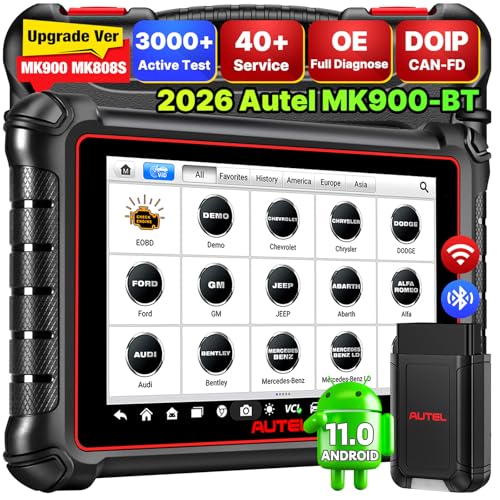
- 💯【Conta.ct us for Support Directly】If you met any...
- 🔥🔥🔥【2026 AUTEL FLAGSHIP MK900BT MK900-BT, NEW...
- 🚗【3000+ ACTIVE TESTS (50➡3000+), SAME AS MS...
- 🚗【40+ HOT SERVICES FOR 150 MAKES (28+➡40+)】Full...
- 🚗【OE ALL SYSTEM DIAGNOSE, AUTO SCAN 2.0: SCAN LICENSE...

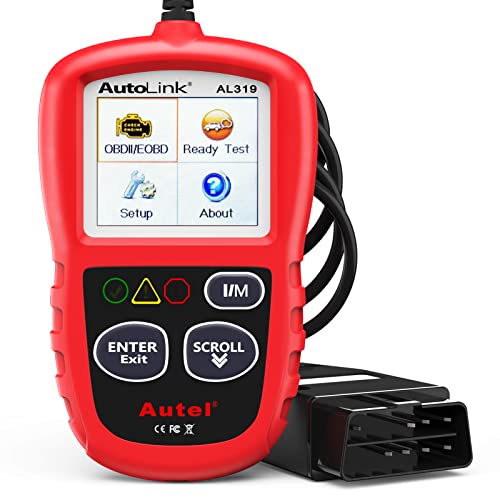
- 【TURN OFF CEL】 This AL319 car scanner diagnostic tool...
- 【EXTENSIVE APPLICATION】 Autel AL319 Compatible with...
- 【FOR END USER & DIYERS】 This error code reader AL319 is...
- 【USER-FRIENDLY DESIGN】 This OBD2 scanner and check...
- 【HIGH-QUALITY SERVICES】 12 months war.ranty from the...
If the PDF is very large, it may not load in the preview below.
Some older TSBs had multiple PDFs — visit the NHTSA Website to view all PDFs.
If the TSB PDF does not show, download or view it on the NHTSA Website.
Click on the (+) Plus Sign
Then Click on Associated Document(s)
Search NHTSA Database for Recalls
Search NHTSA Database for Vehicle Investigations
View Latest Vehicle Investigations
Search NHTSA Database for Vehicle Complaints
View Latest Vehicle Complaints
TSB/Document ID: 20NA211
Replacement Service Bulletin Number:
MFR Communication Date: 2020-10-19
MFR Internal Campaign ID/Software Version:
Communication Type: Service Bulletin/Repair Instructions
NHTSA Components: EQUIPMENT:OTHER:OWNERS/SERVICE/OTHER MANUAL
MFR Component System:
MFR Component Subsystem:
Previous TSB | Next TSB |
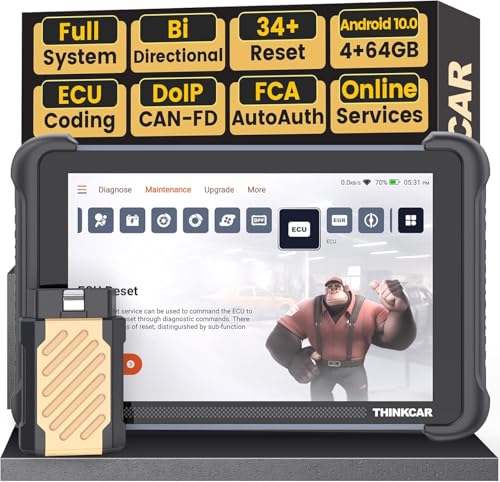
- [Notice] When you receive a used device, it may be a customer return resold by Amazon without inspection. You can exchange it for a new one through Amazon. As this situation is unavoidable, we sincerely apologize. For any issues, contacting us via Amazon's "Messages" is the best way. THINKSCAN 689BT Bidirectional Scan Tool Can Be Used Immediately After It is Turned On, Without Complicated Registration Process, Which is More Convenient & Quick.
- Full Bi-Directional Control & 3000+ Active Tests: Take control and test components like actuators, fuel injectors, relays, and cooling fans in real time. You’ll quickly see if the problem is in the part itself or the control module — saving you hours of guesswork and frustrating trial-and-error.
- Advanced ECU Coding Capabilities: Handle module matching and hidden feature activation with confidence. When you replace an ECU or want to customize settings, this obd2 scanner diagnostic bi directional tool gives you the professional-level capabilities you need without the dealership price tag.
- 34+ Useful Reset and Maintenance Functions: Complete everyday service tasks smoothly with a wide range of helpful reset and maintenance functions. Whether you’re keeping up with regular upkeep or tackling a specific job, this scanner makes maintenance simpler and less stressful for both DIYers and pros.
- Comprehensive Full System Diagnostics: Diagnose every major system — Engine, Transmission, ABS, SRS, TPMS, and more — all in one place. Finally stop wondering if you’re missing something important; get the full picture and clear codes with ease.
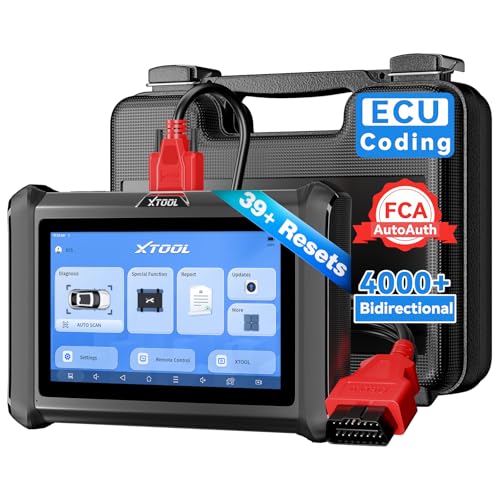
- Top Reasons to Choose the D7S OBD2 Scanner: XTOOL D7S car scan tool, an upgrade of XTOOL D7, offers comprehensive features for automotive technicians, workshops, and DIY enthusiasts 1. Upgraded Hardware: 2+64GB memory, rear camera, intuitive interface, foldable bracket 2. Complete Diagnostics: FCA
 Autoauth, OE-level all system scan, 39+ maintenance services, 4K+ bidirectional, CANFD/DoIP protocol 3. Advanced Capabilities: ECU c0ding, PMI functions 4. Wide Compatibility: Support 10,000+ models, covering 99% vehicle brands 5. Multi-language: Available in 22+ languages, No IP Restrictions 6. 3-Year Updates: Save 300 bucks on software updates for the latest features and optimizations
 - 2026 Upgraded D7S Car Scanner Features: The newly 2026 D7S V2.0 scanner for car brings exciting features for advanced vehicle diagnostics and enhanced user experience 1. FCA AutoAuth: Now supports FCA SGW module for Chrysler, for Jeep, for Dodge (2018+), for Fiat (2017+), enabling faster vehicle communication without gateway restrictions 2. PMI (Offline ECU Pr0gramming): Allows for Ford, for Lincoln, and for Mazda ECU pr0gramming for new modules 3. Optimized Diagnostic Report 2.0: Personalized reports with logos and customer info for auto shops. Note: Compatibility varies by cars, please check before order
- 39+ Services/Resets/Adaptations/Relearns/Calibrations: XTOOL D7S full system car scanner diagnostic tool tackles 99% of common car issues through its 36+ special functions, including Oil Reset, EPB, SAS, BMS, Throttle Reset, Injector C0ding, ABS Bleed, TPMS Reset, Power Balance, etc and also covers specific-vehicle functions like Crank Sensor Relearn, ABS Initialization, Cylinder Power Balance, Fuel Trim Reset, Idle Relearn etc. This car diagnostic scanner enhances efficiency, making repairs and maintenance hassle-free. Tip: DO NOT for All vehicles, please check compatibility first
- Cost-effective ECU C0ding Scan Tool for Specific Brands: Enhance your vehicle's performance with XTOOL D7S! This obd2 scanner all systems bidirectional offers advanced capabilities at an affordable price, supports online for BMW, for Benz and offline for BENZ, for MIT, along with PMI functions for Ford, for Mazda, and for Lincoln. Ideal for technicians and DIY enthusiasts, this automotive scanner diagnostic tool optimizes vehicle performance and enhances the driving experience. Note: Not for all cars and modules, please send car VIN to check the compatibility before purchase
- OE All System Diagnostic & 8 Pids Graphing: XTOOL D7S is a comprehensive all system bi directional obd2 scanner that delivers dealer-level diagnostics, completely controlling over your vehicle’s performance and health. This automotive scan tool can read and clear DTCs, view live data and ECU information, retrieve freeze frames, and perform active tests and full obd2 functions. This bi-directional scan tool can can identify your vehicle's make, model, and year information with just one click and show up to 8 PIDs live data with options for CSV viewing, playback, and recording for in-depth analysis. It is easy-to-use for both professionals and beginners, helping pinpoint issues efficiently
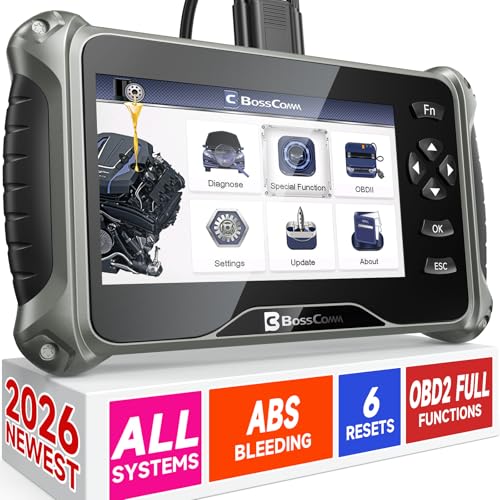
- 【✅Compared to BOSSCOMM IF742, IF745 Offers Full-System Diagnostics】The BOSSCOMM IF745 car diagnostic scanner is an upgraded model of IF742. In addition to supporting all OBD2 Code Reader functions and 6 reset options (ABS/EPB/SAS/BMS/Oil/Throttle), it expands diagnostics from 4 systems (Check Engine/ABS/SRS/Transmission) to vehicle All systems, including Steering, Suspension, and Body Electronics. This provides deeper, more comprehensive diagnostic capabilities.
- 【✨10 OBD2 Functions】The BOSSCOMM IF745 scan tool’s DTC Lookup instantly translates fault codes into user-friendly explanations, its I/M Readiness feature streamlines emissions testing with a single tap, and Freeze Frame lets you pinpoint the exact moment of a fault for in-depth root-cause diagnosis. Combined with a live data dashboard and advanced diagnostics (O2S, OBMon, EVAP), it delivers comprehensive insights for confident troubleshooting.
- 【✨Deep Diagnostics for All Vehicle System Modules】Beyond code reading/clearing and ECU information retrieval, our all-in-one data stream feature lets you inspect all current fault codes and their locations across the vehicle’s systems. This vehicle code reader helps you turn off dashboard warning lights and perform a comprehensive self-check of your car at home—no more back-and-forth trips to the repair shop or hefty inspection fees.
- 【✨6 Essential Resets: ABS Bleeding, Oil, EPB, SAS, Throttle, BMS】The BOSSCOMM IF745 obd2 scanner diagnostic tool swiftly purges air from brake lines to restore braking sensitivity, fine-tunes maintenance cycles to eliminate false alerts, resolves parking brake issues with one-click control, recalibrates steering sensors for stability, optimizes engine idling/acceleration for smoother performance, and deeply resets battery systems to extend lifespan and range via precise parameter adjustments.❗NOTE: Does NOT support bidirectional control, coding, or programming.
- 【✨10,000+ Car Models, AutoVIN, 13 Languages】The BOSSCOMM IF745 vehicle scanner diagnostic tool covers 73+ global car brands and offers support in 13 languages, making it perfect for DIYers, auto mechanics, or as a thoughtful gift. With a single-click AutoVIN feature, it instantly retrieves vehicle serial numbers, streamlining diagnostics for users globally. This adaptable tool balances user-friendliness with precision, catering to both personal and professional requirements.✅Unsure about compatibility? Compatibility will vary on vehicles' model and year, pls reach us via 📧 [email protected] 📧 before purchase.
This product presentation was made with AAWP plugin.