
NHTSA ID Number: 10176392
Manufacturer Communication Number: ENP-729
TSB/Document Date: 2020-06-15
Summary
Agility Fuel Solutions LLC (?Agility®?) defueling procedure prepared for Gillig buses equipped with Type 4 fuel cylinders and electric solenoid cylinder valves and Maniflter fuel management modules (FMMs). On compressed natural gas (CNG) cylinders equipped with electric solenoid cylinder valves, verification that cylinder pressure is fully exhausted is required before any removal, replacement, tightening or loosening is performed on any valve, pressure transducer, PRD, tubing or fitting connected to the cylinders. This verification is required to confirm the electric solenoid cylinder valves opened properly during the defueling process and allowed the cylinder to be depressurized and defueled. This procedure describes two methods to defuel the cylinders, lines, and valves. Both methods include a procedure to verify the electric solenoid cylinder valves opened properly during defueling and that the cylinder pressures are fully exhausted. Either method can be used. 1.How to remove the solenoid valve components and then fully exhaust the pressure in the cylinder if the solenoid valve did not open properly when energized during defueling. 2.How to defuel the CNG system and cylinders if no battery power is available. ENP-729 is an update of ENP-164 REV H to reflect changes in FMM design and a transition to Type 4 fuel cylinders.
and work can be done on the cylinder valves, PRDs or associated plumbing.
ENP-729 5/27/2020
(Printed and Downloaded Copies are Uncontrolled)
9 of 20
15. Before putting the bus back in service complete a leak test and solenoid function test.
16. Perform a leak test with leak detection fluid. Repair any leaks.
17. Test for proper solenoid valve function:
a. Start engine and allow engine to idle for at least two minutes.
b. Operate cylinder solenoid test switch. This will de-energize the electric solenoid
cylinder valve causing the valves to close.
c. Pressure on the HP gauge (5) should drop and within ten minutes the engine should
stall due to lack of fuel. Figure 3
d. If the engine does not stall, one or more solenoid valves are not functioning correctly.
The valve system will require additional testing to determine which valves are not
functioning correctly and require replacement.
18. Once the leak test and solenoid test are complete, the bus can be returned to service.
3.3.4. Defueling When No Battery Power is Available
If electrical power is not available to actuate the electric solenoid cylinder valves, the
recommended procedure is to restore battery power on the vehicle so the solenoid valves can
function.
This procedure requires disassembly of the solenoid valves.
1. Fully close the manual cylinder valves on all cylinders. Verify all manual valves are fully
closed by turning fully clockwise.
2. Verify FMM 1/4-turn valve is in the ON/OPEN position. Figure 3
3. Using the defueling nozzle, slowly open the defuel valve to depressurize the CNG tubing
and the fuel manifold. When the HP gauge (3) reads zero, open the bleed valve (9) on the
fuel manifold. Figures 3 and 4
4. Verify the following:
a. FMM 1/4-turn manual shut off valve (1) is in the ON/OPEN position. Figure 3
b. HP gauge (5) reads zero. Figure 3
c. Bleed valve (9) is open and no gas is being vented from the bleed valve. Figure 4
5. After the CNG system tubing has been depressurized, disassemble each solenoid valve
per Section 4.
6. After solenoid valve disassembly, reassemble solenoid valve without the plunger and
spring (refer Step 7) and defuel the cylinders using the defuel nozzle as described in
Section 3.3.1.
7. To reassemble the solenoid valve without the plunger and defuel using the defuel nozzle,
perform the following:
a. Reassemble valve stem to valve body and leave out plunger and spring. Figures 8 and
9
b. Torque valve stem to 25.8 ft-lbs (35Nm). Figure 12.
ENP-729 5/27/2020
(Printed and Downloaded Copies are Uncontrolled)
10 of 20
c. Leaving the plunger out overrides solenoid function and allows gas to flow through the
solenoid valve without electrical power.
8. Before proceeding:
a. Verify all cylinders to be defueled have the spring and plunger removed
b. Verify all stems have be reinstalled and properly torqued to 25.8 ft-lbs (35Nm).
c. Verify the pressure on the HP gauge (3) continues to read zero. Figure 3
9. Close bleed valve (9) and defuel valve (7). Figures 3 and 4
10. Verify defuel nozzle is properly connected. Figure 2
11. Verify FMM 1/4-turn valve (1) is in the ON/OPEN position. Figure 3
12. Slowly open the manual cylinder valves on all cylinders to be defueled. Listen and smell
for any signs of gas leakage. No leakage should occur. If any leakage is detected, close
the manual cylinder valves and repair the leaks.
13. When all the manual cylinder valves are open, verify the cylinder pressure reading on the
HP gauge (3). Figure 3
14. Using the defuel valve (7) to adjust the defuel flow rate, proceed to defuel the system.
Figure 3
15. Once the HP gauge (3) reads zero, slowly open the bleed valve (9) to vent any residual
pressure. Figure 3
16. When the HP gauge (3) reads zero and no gas is venting from the bleed valve (9), system
defueling is complete. Figures 3 and 4
Only cylinders with the manual valve open and the solenoid plunger removed will
be depressurized. Any cylinders with the manual cylinder valve closed or the
plunger installed in the solenoid will remain pressurized.
17. After completing all repairs before repressurizing the system, the plunger and spring must
be reinstalled.
18. When work is completed, the valve may be reassembled or replaced as needed.
19. Before putting the unit back in service, complete a leak test and a solenoid valve function
test.
20. Perform a leak test and repair any leaks. Perform the leak test in three stages:
a. Slowly pressurize the cylinders to around 100 psi (689kPa) and check for leaks at all
solenoid valves and any fuel line connections that were disconnected. Test using a leak
detection fluid.
b. Next, slowly pressurize the cylinders to approximately 1000 psi (6.89MPa) and check
for leaks especially around the solenoid valves and line connections that were
disassembled. Use a leak detection fluid.
c. Finally, fill the system to full service pressure and complete the final leak test.
21. Using the solenoid test switch check for proper solenoid valve function:
ENP-729 5/27/2020
(Printed and Downloaded Copies are Uncontrolled)
11 of 20
a. Start engine and allow the engine to idle for at least two minutes
b. Operate the cylinder solenoid test switch. This will de-energize the electric solenoid
cylinder valve causing the valves to close.
c. The pressure on the high pressure gauge should drop and within ten minutes the
engine should stall due to lack of fuel.
22. If the engine does not stall, one or more solenoid valves are not functioning correctly. The
valve system will require additional testing to determine which valves are not functioning
correctly and require replacement.
23. Once the leak test and solenoid test are complete, the bus can be returned to service.
4. Solenoid Valve Disassembly
Solenoid valve disassembly is done to either confirm the valve has functioned correctly and
allowed the cylinder to defuel or is used to allow defueling the cylinder if the solenoid has failed
closed.
The fuel cylinder may still be under pressure. To prevent serious injury, verify the manual valve
is fully closed and do NOT loosen or remove the PRD.
4.1. Remove Solenoid Valve Internal Parts
1. Before starting any work, confirm manual cylinder valve is fully closed (yellow knob).
Confirm by turning the knob clockwise until the knob stops turning. Figure 5
2. Verify pressure in the CNG system has been fully exhausted and the pressure reads zero
on the HP gauge (5). Figure 3
a. Confirm FMM 1/4-turn manual shut off valve (1) is in the ON/OPEN position. Figure 3
b. Verify HP gauge reads zero. Figure 3
c. Confirm bleed valve on Manifilter is fully opened. Figure 4
3. Disconnect wire harness from valve.
4. Visually inspect fuel lines connected to the failed valve.
5. Clean any dust from the fuel lines and end fittings using a dry rag, or with a rag with water.
Do NOT use any cleaning solvents or soap, as they can cause corrosion to the
fittings.
If any dust or debris gets into fuel lines or fittings, it may cause leaks or plug the
fuel system.
6. Disconnect fuel and PRD vent lines from the valve and save them for re-installation on
the new valve.
ENP-729 5/27/2020
(Printed and Downloaded Copies are Uncontrolled)
12 of 20
7. Using a 22mm or 7/8-in. wrench, remove the top cap from the solenoid coil. Figure 5
Figure 4. Begin valve disassembly by removing cap from coil.
8. Using a 17mm or 11/16-in. wrench, remove the brass bushing from the solenoid coil.
Holding the center stem with a slotted screwdriver will simplify the disassembly. Figure 6
Figure 5. Remove brass bushing.
9. Remove solenoid coil, it will slide off. Figure 7
10. Remove spring washer from the valve stem. Figure 7
Figure 6. Left: Coil slides off valve stem. Right: Remove spring washer.
ENP-729 5/27/2020
(Printed and Downloaded Copies are Uncontrolled)
13 of 20
The stem is a pressurized component: severe injury could result if the previous
procedures have not been properly performed. The (yellow) manual valve handle on the
valve MUST be closed.
11. Using a 24mm or 15/16-in. wrench, remove the stem of the solenoid coil. Turn very slowly
being aware of any gas leaks: if there are any gas leaks, tighten the stem and contact
Agility® (DO NOT REMOVE STEM). The stem has a thread locker on the threads. Figure
8
If the stem feels very stiff coming out (feels like cross-threading), tighten the stem
and contact Agility Fuel Solutions.
Valve stem may become a projectile without warning: take proper precautions.
Figure 7. Remove valve stem.
12. Remove solenoid internals consisting of two pieces: spring and plunger. Figure 9
Figure 8. Remove spring and plunger.
13. The valve is now ready to defuel. Figures 10 and 11
ENP-729 5/27/2020
(Printed and Downloaded Copies are Uncontrolled)
14 of 20
Figure 9. Two views of the disassembled valve.
Figure 11. Solenoid valve components.
5. Solenoid Valve Function Test and Cylinder Venting After Valve
Disassembly
With the solenoid valve disassembled, the only thing preventing gas flow is the manual
valve.
a. Secure the area around the cylinders and verify that no loose equipment is in the
area. Remove all tools, rags, etc.
b. Any objects not securely attached to the roof may cause serious injury when
defueling begins.
c. Open ports on the valve are live, and high pressure gas up to 4500 psi (31.0MPa)
may flow out of the disassembled valve when the manual cylinder valve is opened.
Do not place hands or any part of your body above or near the open ports of the
valve.
ENP-729 5/27/2020
(Printed and Downloaded Copies are Uncontrolled)
15 of 20
Use the following procedure to:
▪ Confirm the cylinder is depressurized
▪ To depressurize the cylinder if the solenoid has failed closed
1. Slowly turn (yellow) manual valve knob counterclockwise to open. If the cylinder is
pressurized, gas will vent out the open valve ports.
2. If gas DOES come out when the valve is opened the cylinder is NOT depressurized, and
the solenoid valve has failed closed. Solenoid valve replacement is required once the
cylinder is fully depressurized.
3. Monitor the rate of defueling using the cylinder valve knob. As the cylinder pressure drops,
the valve can be opened further to increase the rate of defueling.
4. Allow the gas to flow until the gas stops flowing. When the gas stops flowing, slowly open
the valve until fully open. Once the gas stops flowing with the valve fully open the cylinder
is fully depressurized.
6. Solenoid Valve Reassembly after Passing Function Test
When reassembling the valve, torque to specifications as indicated and apply thread locker as
shown in Figure 12.
Figure 10. Solenoid valve torque specifications.
ENP-729 5/27/2020
(Printed and Downloaded Copies are Uncontrolled)
16 of 20
7. Remove and Replace Solenoid Valve
Removal of the valve requires a special tool. However, standard tools may be used if special care
is taken.
1. Using a 3/4-in. wrench, remove the valve by the valve body. DO NOT USE A WRENCH
ON THE SEATING SURFACES OF THE VALVE FITTINGS (machined brass ports on
either side of valve). Figure 13
Figure 11. An adjustable wrench may be used to remove valve from cylinder.
2. To gain more leverage on the valve body, a large adjustable wrench may be used.
Figure 13
3. Turn wrench counterclockwise to remove valve. Figure 13
4. Before installing the valve, lubricate the O-ring with non-petroleum-based lubricant such
as Parker SuperLube®, Krytox® or equivalent.
5. Install new valve.
Torque valve to 100 ft-lbs to 140 ft-lbs (135.6Nm to 189.8Nm).
6. Valve orientation might not be the same as the original valve requiring the cylinder to be
turned to re-orient the valve; follow procedure in Section 8: Re-orient Cylinder.
ENP-729 5/27/2020
(Printed and Downloaded Copies are Uncontrolled)
17 of 20
8. Re-orient Cylinder
1. Disconnect PRD vent plumbing.
These PRD vent tubes are not pressurized and may be removed.
Always use two wrenches when removing fitting nuts from fittings, and do not
loosen the PRD fitting in the end of the cylinder.
2. Once all fuel tubes have been removed from both ends of the cylinder, loosen the 1/2-in.
neck block bolts on the valve end of the cylinder using a 3/4-in. wrench.
It is not necessary to touch the neck block bolts on the PRD end of the cylinder.
3. Spin the cylinder by hand to achieve the desired valve position.
4. Test-fit all fuel tubes to ensure proper alignment.
5.
Tighten the 1/2-in. neck block bolts to 85 ft-lbs to 90 ft-lbs (115.2Nm to 122.0 Nm).
6. Loosen and re-orient the (#8 JIC) elbow fitting on the PRD end of the cylinder.
7. Re-install all fuel tubes and PRD tubes.
8. Pressure test per Gillig/Agility Fuel Solutions Operation Manual, ENP-728.
9. Solenoid Valve Function Tests
Usually the first indication of a valve failed closed is reduced vehicle range. If a failed in-cylinder
solenoid valve is suspected, perform the following troubleshooting steps to isolate the problem.
System pressure should be at least 1200 psi (8.27MPa) when conducting these tests.
9.1. Test for a Failed Closed Solenoid
1. Confirm manual valves on all cylinders are open.
2. Disconnect the electrical connector to all cylinder solenoid valves.
OR
Use the cylinder valves on the rear run box.
3. Start the engine and run the engine until it stalls. If the vehicle continues to run without
significant pressure drop (as observed on the 0-5000 psi HP gauge on the FMM), then
one or more cylinders have solenoid valves may have failed open. Skip to Section 9.2.
4. Verify the fuel tubes are empty by confirming a zero reading on the HP gauge (3) on the
FMM. Figure 3
5. Open bleed valve (9) on the FMM and leave open. Figure 4
ENP-729 5/27/2020
(Printed and Downloaded Copies are Uncontrolled)
18 of 20
6. Apply 24V to a single cylinder solenoid valve. If the valve opens and fuel can be heard
rushing through the fuel tubes, disconnect the 24V power supply: The cylinder solenoid
valve is operational.
7. If no fuel is heard coming out of the cylinder, confirm there is 24V at the solenoid coil.
8. If 24V is applied, remove and replace the solenoid coil with a different coil and repeat the
process.
9. If no fuel is heard coming out of the cylinder, it is likely that the valve has failed internal
parts and should be replaced per the procedure in Section 4.
10. If fuel is heard coming out of the cylinder after the second coil is used, then the first coil
has failed and must be replaced.
11. If a valve has failed closed, the vehicle shall be removed from service and the valve
replaced.
12. After the first cylinder valve has been evaluated, repeat Steps 1 through 10 for each
cylinder.
9.2. Test for a Failed Open Solenoid
1. Shut off manual valves on all cylinders.
2. Start vehicle and run the engine until it stalls.
3. De-energize all solenoid valves.
Ignition key must be in the OFF position.
4. Slowly open the manual valve on each cylinder. If fuel can be heard rushing through the
cylinder into the fuel lines, the valve has failed open and must be replaced.
A failed open or failed closed solenoid valve must be replaced before putting the
vehicle back in service.
ENP-729 5/27/2020
(Printed and Downloaded Copies are Uncontrolled)
19 of 20
If you have any questions, contact Agility Fuel Solutions Customer Care:
+1 949 267 7745
+1 855 500 2445, toll free
[email protected]
Proprietary Statement
The information provided within this document is proprietary and confidential. All prior versions,
including updates and revisions forwarded separately, are proprietary. The information provided
by Agility® Fuel Solutions (Agility®) to its customers and clients is solely for the use of those
customers and clients. No portion of this manual may be reproduced or distributed without
express written consent of Agility®. Agility® reserves the right to utilize the intellectual property
contained within this publication as content for any other publication produced by Agility ®.
Trademark Notice
Agility® and TUFFSHELL® are registered trademarks of Agility Fuel Solutions LLC. Drop-N-Go™
is a trademark of Agility Fuel Solutions LLC. Trademarks of other manufacturers are the property
of their respective companies.
Agility Fuel Solutions
3335 Susan Street, Suite 100
Costa Mesa, CA 92626 USA
www.agilityfuelsolutions.com
--
--
C.Grasso
CCG Team
5/27/2020
ECN
REV
AUTHOR
APPROVED
DATE
ENP-729 5/27/2020
Initial release. Based upon ENP-164 REV H;
changed to reflect use of new FMM design and
Type 4 CNG cylinders.
DESCRIPTION
(Printed and Downloaded Copies are Uncontrolled)
20 of 20
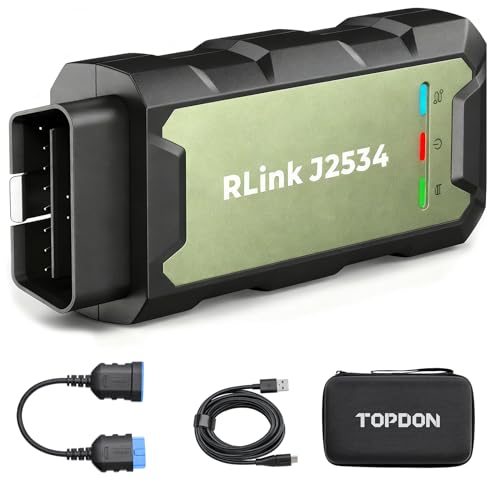
- Advanced VCI Box, Industry-leading J2534 Pass-Thru...
- High-Speed OEM-Level Diagnostics & Programming: Unlock true...
- Coverage for 17 Car Brands & Ultra Reliability: Works...
- User-Friendly RLink Platform & Expert Support: TOPDON’s...
- 6.6 ft USB-C Cable & Portable Storage Case: The RLink J...
Last update on 2026-06-12 / Affiliate links / Images from Amazon Product Advertising API
If the PDF is very large, it may not load in the preview below.
Some older TSBs had multiple PDFs — visit the NHTSA Website to view all PDFs.
If the TSB PDF does not show, download or view it on the NHTSA Website.
Click on the (+) Plus Sign
Then Click on Associated Document(s)
Search NHTSA Database for Recalls
Search NHTSA Database for Vehicle Investigations
View Latest Vehicle Investigations
Search NHTSA Database for Vehicle Complaints
View Latest Vehicle Complaints
TSB/Document ID: ENP-729
Replacement Service Bulletin Number:
MFR Communication Date: 2020-05-27
MFR Internal Campaign ID/Software Version:
Communication Type: Service Bulletin/Repair Instructions
NHTSA Components: FUEL SYSTEM, GASOLINE
MFR Component System:
MFR Component Subsystem:
Previous TSB | Next TSB |

- [2026 Top-Tier Hardware and Software Upgrade]: Topdon ArtiDiag900 Lite scanner has enhanced hardware and latest features, including Android 11.0, 5x faster CPU, 10000mAh battery for 12 hours of continuous operation, stable wireless diagnosis with Bluetooth 5.0, 8-inch touchscreen. Added bi-directional control, wireless diagnosis, battery testing (optional), and DTC repair guide
- [TOPDON Bidirectional Scan Tool]: This bidirectional obd2 scanner sends commands to the vehicle's ECU for active testing, enabling users to accurately and quickly locate faulty components such as injectors, coolant pumps, windows, wipers, headlights, mirrors, etc. The bidirectional control scanner is the ideal choice for workshops/automotive repair shops as it significantly reduces mechanic's diagnostic time.
- [Wireless Bluetooth Diagnostic Experience]: The AD900 Lite scan tool comes with a Bluetooth 5.0 VCI, supporting a wireless diagnostic range of up to 33 feet (10 meters), allowing you to diagnose without being confined to cables or tight spaces. Stable and fast wireless diagnosis provides a comfortable repair environment. It also offers VCI cables to increase connectivity options.
- [DTC Repair Guide Function]: Easily diagnose issues with your vehicle and receive guidance on repairs with the topdon scan tool's fault code definitions for all systems,maximize your diagnostic capabilities. This function is compatible with Chrysler
 /Dodge/Jeep/Fiat 2010-2014 and expanding with continual updates,the AritDiag 900 Lite car diagnostic scanner is the must-have tool for any technician or DIY enthusiast.
 - [OE-Level Full System Diagnostics]:AritDiag900 Lite full system diagnostic scanner can scan ALL available modules(Engine, Transmission, Airbag, ABS, ESP, TPMS, Gateway, Steering, Radio, Air conditioning, ect.) to✔read ECU info, ✔read/clear codes, ✔view live data stream, ✔retrieves freeze-frame, ✔perform active tests, and more. With just a simple click, it provides you with accurate and in-depth diagnostics.

- Bi-Directional Control, Quickly Locate Problems: Turn your phone into a professional diagnostic tool. You can send commands from your phone to the ECU to test injectors, cooling fans, headlights, A/C clutch, windows, wipers, and more. See which one doesn't respond. Helps you quickly locate the problem and save time. No need to tear things apart, avoid blind disassembly.
- Flexible Subscription, Choose Advanced Features as Needed: TopScan Lite provides free-for-life access to core diagnostics, including full system scan, code reading, performance tests, and repair information. After purchase, advanced features (bi-directional control, service operations, live data, code clearing, and AI functions) are free-for-the-first-year. After the first year, if you want to use advanced features, you need to subscribe on a monthly, quarterly, or yearly basis. As new models and reset functions are updated, the tool will also be continuously upgraded.
- Full System Diagnostics, No Fault Hides: Unlike basic diagnostic tools that only cover 4 systems, TopScan can scan all systems. Read and clear trouble codes, view live data streams, and generate a complete vehicle health report – all issues are clear at a glance. Covers 10,000+ vehicle models and is compatible with 99.99% of vehicles.
- AI Assistant - TopFix: Think of TopFix as your personal AI mechanic. It leverages a repair database and OEM data to deliver clear, step-by-step repair solutions. Features include AI Q&A, one-click translation, and a full repair log, making your diagnostic process simpler and more efficient.
- 8+ Hot Resets, Keep Your Car in Top Shape: One-tap resets for oil, throttle, EPB, steering angle, DPF, ABS, BMS, and airbag. It enables car owners to easily perform essential maintenance, ensuring the vehicle stays in optimal condition and extends its service life.
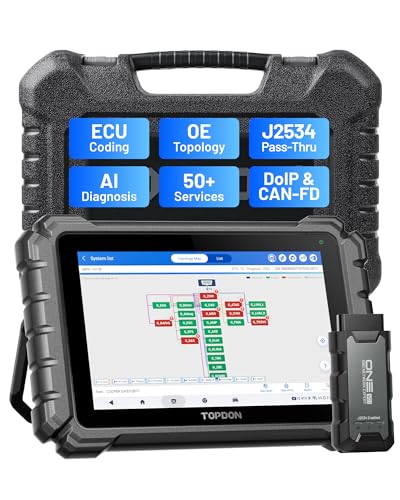
- Dual WiFi & 10.1" Touchscreen: Provides a stable, high-speed wireless link 3x faster than bluetooth, and a responsive, professional interface. Topdon ONE obd2 scanner diagnostic tool ensures smooth, non-lagging diagnostic scan, boosting mechanic efficiency
- J2534 Pass-Thru Support: The included ONE VCI supports the J2534 standard, allowing it to function as a pass-thru device when paired with OEM diagnostic software.Through TOPDON’s RLink platform, technicians can perform dealer-level coding, expanding in-house capabilities without investing in multiple factory automotive scan tools
- OE Topology Mapping: Visualize the vehicle’s ECU network exactly as it’s built.Zoom, pan, and highlight specific modules to pinpoint component issues with precision.Topology mapping displays real-time communication between modules
- 50 Plus Service Functions: Covers high-demand services like ADAS calibration, DPF regen, TPMS reset, ABS bleed, and throttle adaptation.Expands your service menu, allows you to charge premium rates, and turns away zero jobs due to lack of tooling. Vehicle-specific functionality may vary
- Advaned ECU Coding: 10 of the most serviced brands in North America, including full ECU coding and flash hidden support for BMW, VW, Au-di, Benz, Porsche, Toyota, Ni ssan and more. Enables module replacement, feature customization, and personal settings with automatic backup or restore.Lets your shop safely offer high-margin customization services, attracting more customers and boosting profit
Last update on 2026-06-12 / Affiliate links / Images from Amazon Product Advertising API
This product presentation was made with AAWP plugin.