
NHTSA ID Number: 10166284
Manufacturer Communication Number: A0019252011732_1
TSB/Document Date: 2019-10-21
Summary
00 Software Version Management (SVM), operating instructions
module are properly checked and activated.
Tip: When SVM is used during the diagnosis of a customer concern it is helpful to look at the coding
suggestions provided in the test plan. Based on the SVM action being performed, some modules are always recoded, adapted or parameterized even if no changes are actually made. This can be misinterpreted that a
coding change was made which could lead to a misdiagnosis of a customer concern. For this reason, it is helpful
to compare the actual coding changes to the suggested coding changes made at the end of the test plan. Here
you will see if a change was actually made, or if it remained the same.
SVM – communication checking
Purpose:
This function tests the communication of the VAS tester to the SVM server in Germany.
How it works: The VAS tester performs a quick check to see if the SVM server can be reached.
Additional
Information:
If an issue is found, check all connections to ensure that the tester has a sufficient internet
connection. Check with IT to make sure that the tester can reach the internet. If the issue
appears to be unrelated to the dealer IT infrastructure, call tester support.
1
Parameterization (or parameter data) is data that is written into the control module by SVM that configures the
software functionality for the specific vehicle or country of operation. To ensure proper function of the control
module, it is critical that parameterization is executed when it is suggested by SVM. Not all control modules
support parameterization by SVM. Parameter data may be referred to as “calibration data”.
Production Solution
Not applicable.
Page 8 of 16
© 2019 Audi of America, Inc.
All rights reserved. Information contained in this document is based on the latest information available at the time of printing and is subject to the copyright and other intellectual property rights of Audi of
of
America, Inc., its affiliated companies and its licensors. All rights are reserved to make changes at any time without notice. No part of this document may be reproduced, stored in a retrieval system, or transmitted
in any form or by any means, electronic, mechanical, photocopying, recording, or otherwise, nor may these materials be modified or reposted to other sites, without the prior expressed written permission of the
publisher.
Service
1.
Before beginning the SVM code update, check the system for DTCs that are not related to the update. If
there is a DTC in the system relating to “Checking Software Version Management” the control module is
not properly configured and could be related to the concern. An example would be a module that was
replaced without successfully coding and adapting the module. This could lead to customer complaints
related to missing functions or incorrect vehicle behavior.
If unrelated DTCs are found, these may need to be resolved first before proceeding. If that is not possible,
write down the DTCs (to investigate later) because they may be erased during the update. It is possible that
unrelated fault DTCs can prevent the execution of the SVM update.
Tip: Sporadic communication DTCs will be created during SVM coding or updates. These DTCs will
be automatically erased when using the FLASH function in ODIS. For this reason, any needed diag should
be done before performing SVM actions. If using GFF, it is a best practice to ensure all DTCs created
during SVM programming are cleared before exiting ODIS.
2.
Check the vehicle for evidence of a tuned ECM or TCM (A tuned control module has been modified to
perform outside of the normal parameters and specifications approved by Audi of America). See TSB
2028842: 01 Automatic detection of unauthorized chip tuning (TD1 warranty key). If evidence of tuning is
found, do not proceed with any procedure that updates ECM or TCM programming until the following are
completed:
The vehicle owner must be notified that the vehicle was found to have been tuned.
The vehicle owner must be notified that any damage caused by the tuning (including adverse emissions
consequences) will not be covered by Audi of America warranties. If tuned control modules are updated,
they may become unusable and require replacement.
The vehicle owner must provide written consent (see attached Control Module Tuning Form) for any
requested repair (whether or not it is under warranty) that requires flashing that will automatically
overwrite the tuned program.
Tip: Any programming update could overwrite any tuned ECM or TCM programming.
3.
Confirm that the TSB being used for the update applies to the customer complaint, and perform only those
operations explicitly stated in the TSB.
4.
Ensure that the person operating the VAS tester has a valid GeKo user ID and password and that no more
than one active tester session with this user ID is in progress.
5.
Verify that all of the following requirements are met:
The tester is VAS 5051B, VAS 5052A, VAS 6150(A/B/C), or VAS 6160 with the latest ODIS base and
brand updates installed.
The tester must be plugged into a 110V AC power supply at all times.
Page 9 of 16
© 2019 Audi of America, Inc.
All rights reserved. Information contained in this document is based on the latest information available at the time of printing and is subject to the copyright and other intellectual property rights of Audi of
America, Inc., its affiliated companies and its licensors. All rights are reserved to make changes at any time without notice. No part of this document may be reproduced, stored in a retrieval system, or transmitted
in any form or by any means, electronic, mechanical, photocopying, recording, or otherwise, nor may these materials be modified or reposted to other sites, without the prior expressed written permission of the
publisher.
The tester must be plugged into the local network via a LAN Ethernet cable. (It is possible to connect via
Wi-Fi with the VAS 6150 and 6160 testers, but a Wi-Fi connection is not recommended due to the
possibility of signal drop-outs).
The VAS 5054A or 6154 transmitter must be connected with a USB cable to the tester. The Bluetooth
connection must be disabled in the Windows system tray. If the Bluetooth connection is not disabled,
Windows will default to using Bluetooth even though the cable is connected.
Ensure that the Windows power-saving settings are all disabled on the VAS tester (including Bluetooth
power-saving). This requirement is especially important during an SVM software update in which the
110V AC power supply is interrupted. If power-saving settings are on, the VAS tester may shut down
during the SVM software update. (Refer to service circular AVT-12-02 VAS Diagnostic Devices Recommended Windows® Settings for more information.)
Note:
If the Windows screensaver activates during a control module software update and the hard drive shuts
down as a result of the power settings, a control module failure may result. (Refer to service circular
AVT-12-02 VAS Diagnostic Devices - Recommended Windows® Settings for more information.)
Note:
Do not use a VAS 6017B K-line adapter while using SVM. Doing so may result in complete control
module failure if an SVM code for software update is being performed.
Ensure that the battery has a minimum no-load charge of 12.5V.
Ensure that the vehicle is connected to an approved battery charger. Do not use a battery maintainer
and do not use a trickle charger, as they might not supply enough current.
The vehicle infotainment system and all other accessories should be switched off. If necessary, turn off
the LED daytime running lights (by using the MMI menu or, on older models, by applying the parking
brake).
6.
Ensure that communication can be established with the control module. If communication cannot be
established, make the appropriate repairs before attempting SVM. If the tester cannot communicate with a
module, the tester cannot flash software onto the module.
7.
If the vehicle does not have a physical ignition switch for the key, turn on the hazard lights in order to keep
the vehicle CAN bus system awake (to prevent the vehicle from automatically shutting down after 30
minutes).
Page 10 of 16
© 2019 Audi of America, Inc.
All rights reserved. Information contained in this document is based on the latest information available at the time of printing and is subject to the copyright and other intellectual property rights of Audi of
America, Inc., its affiliated companies and its licensors. All rights are reserved to make changes at any time without notice. No part of this document may be reproduced, stored in a retrieval system, or transmitted
in any form or by any means, electronic, mechanical, photocopying, recording, or otherwise, nor may these materials be modified or reposted to other sites, without the prior expressed written permission of the
publisher.
8.
If no previous diagnosis was
performed, select Flash from the
homepage of ODIS. (unless
otherwise directed by the bulletin
or by TAC) (Figure 4). This is the
quickest way to execute an SVM
code.
If GFF was already started for
diagnosis of other concerns, all
SVM functions can be access via
the special functions tab in GFF.
Figure 4. Selecting the Flash option in ODIS.
9.
Follow the SVM update procedure, and enter the SVM code when prompted.
Tip: If the latest ODIS update is not installed on the tester, the SVM code may fail and return the
following error message: “ASAM-MCD base system error”.
10. When prompted, Enter a valid GeKo ID. Data will be transmitted to the SVM server, and the server will
respond with instructions to continue (see detailed descriptions in the Response Codes table below). The
response may include one or more of the following instructions, and the instructions may apply to one or
more control modules (as specified in the bulletin):
Update a control module (flash).
Code a control module.
Parameterize a control module.
Check hardware of a control module.
Page 11 of 16
© 2019 Audi of America, Inc.
All rights reserved. Information contained in this document is based on the latest information available at the time of printing and is subject to the copyright and other intellectual property rights of Audi of
America, Inc., its affiliated companies and its licensors. All rights are reserved to make changes at any time without notice. No part of this document may be reproduced, stored in a retrieval system, or transmitted
in any form or by any means, electronic, mechanical, photocopying, recording, or otherwise, nor may these materials be modified or reposted to other sites, without the prior expressed written permission of the
publisher.
Tip: A hardware change suggestion occurs when SVM does not recognize the control module as
being valid for the vehicle (there is a conflict between the specified and actual hardware part numbers or
software versions). If there is no DTC stored for the control module:
First, ensure that the correct part number is installed.
Next, check for an applicable bulletin or ETKA note (to the right of the part number column) for an SVM
XCHG code.
Finally, if the part number is correct and an applicable SVM XCHG code bulletin cannot be found,
contact TAC (before contacting TAC, read the Technical Assistance Center Contact Requirements listed
in the Additional Information section of this bulletin).
Tip: With MMI control modules, it is possible that the SVM code for feedback documentation was not
performed after an update CD/SD card was used. Report all MMI issues to TAC before attempting repairs.
11. Continue until the following text is displayed: “Vehicle conversion/update has been successfully performed.
The changes have been stored in the system. Thank you.”
Tip: The SVM process must be completed in its entirety in order for the database to receive the
update confirmation response. If this step does not complete, there will be a fault stored showing “Checking
Software Version Management”. Warranty claims might not be reimbursed if there is no confirmation
response to support the claim or if the action was taken outside of what was stated in the TSB.
12. Verify that all steps in the TSB have been completed, then finish the test plan and exit GFF. Answer the
Warranty questions and print or save the diagnostic log when prompted.
Tip: During the flash procedure, an estimated time is shown. This value is not used for actual SRT
calculation.
Basic SVM Response Codes
SVM can provide a response code with a repair suggestion or after a successful repair. The response code will
appear in the diagnostic log.
Code
Description
ERP0031I* The SVM Code for MMI was
successfully processed but a
coding or parameterization of a
control module may still need to
be performed.
Action to be taken
Perform an SVM Specified/Actual comparison and carry out the
coding or parameterization suggestion, if not already
prompted. If the parameterization fails, check to ensure that the
part is correct for the vehicle. If the part is correct for the vehicle,
contact TAC.
Page 12 of 16
© 2019 Audi of America, Inc.
All rights reserved. Information contained in this document is based on the latest information available at the time of printing and is subject to the copyright and other intellectual property rights of Audi of
America, Inc., its affiliated companies and its licensors. All rights are reserved to make changes at any time without notice. No part of this document may be reproduced, stored in a retrieval system, or transmitted
in any form or by any means, electronic, mechanical, photocopying, recording, or otherwise, nor may these materials be modified or reposted to other sites, without the prior expressed written permission of the
publisher.
ERP0032I* The control module(s) to be
updated does not match the
requirements for the SVM code
for MMI.
The control module installed in the vehicle is not part of the
SVM code for MMI, the control module installed on the vehicle is
not talking on the CAN bus, or a replacement part is older than
the original part. Ensure that the correct SVM Code was
entered, ensure that the TSB applies to the vehicle, and check
the hardware to ensure it is correct for the vehicle. Perform a
hard reset on the module and retry the SVM code. If the
hardware/software levels of the replacement part are older than
the original part, contact TAC. A new CARPORT reference may
need to be created in the SVM system.
ERP0033I* Additional coding,
ERP0042I parameterization, or software
update may need to be carried
ERP0044I out as a result of the SVM code.
ERP0046I
Follow the software update, new coding, or parameterization
suggestion.
ERP0034I* A hardware change suggestion
ERP0045I from an SVM Code or SVM
Specified/Actual comparison.
ERP0048I
A control module installed on the vehicle is not correct for the
vehicle for one of the following reasons: the control module is
incorrect for the vehicle (compare results of ETKA FI Search
versus Part Number search) or the control module is older than
the original part installed on the vehicle (old stock service part).
Additionally, it is possible that a software update from a CD was
performed on the MMI system without the proper SVM Code
being executed after the update. If the part is confirmed to be
newer than the original part, it is possible that the part being
installed can be missing from the SVM system. If this is the
case, then a hardware change will be suggested since the part
is not known to the system. If this occurs, please contact TAC
so the SVM system can be updated.
ERP0038I The updates to the target control
module(s) were completed but
additional actions are necessary
for other control modules not
featured in the SVM code for
MMI.
Carry out the SVM suggested actions for the other control
modules that were not featured in the SVM code for MMI.
ERP0039I* The SVM Code performed
ERP0040I successfully.
All necessary actions taken by the SVM code were performed
successfully. Nothing additional is required.
ERP0050I
ERP0041I The SVM Code performed
successfully but there are still
repair suggestions to other
Perform an SVM Specified/Actual comparison and carry out the
coding or parameterization suggestion, if not already
prompted. If the parameterization fails, check to ensure that the
Page 13 of 16
© 2019 Audi of America, Inc.
All rights reserved. Information contained in this document is based on the latest information available at the time of printing and is subject to the copyright and other intellectual property rights of Audi of
America, Inc., its affiliated companies and its licensors. All rights are reserved to make changes at any time without notice. No part of this document may be reproduced, stored in a retrieval system, or transmitted
in any form or by any means, electronic, mechanical, photocopying, recording, or otherwise, nor may these materials be modified or reposted to other sites, without the prior expressed written permission of the
publisher.
Control Modules not featured in
the SVM Code update.
ERP0043I Additional coding and/or
parameterization needs to be
performed.
part is correct for the vehicle. If the part is correct for the vehicle,
then contact TAC.
Follow the new coding or parameterization suggestion.
* The response code is specific to an SVM code that affects the MMI system (i.e., when an SVM code is
performed after an MMI CD update, these response codes are returned).
Troubleshooting:
Checking for Internet Connectivity
To carry out an SVM communication test,
first, go to the main ODIS start screen and
navigate to (Figure 5): Extras >> Connection
test >> AUDI >>SVMService >> Start.
Figure 5. ODIS Connection test.
Page 14 of 16
© 2019 Audi of America, Inc.
All rights reserved. Information contained in this document is based on the latest information available at the time of printing and is subject to the copyright and other intellectual property rights of Audi of
America, Inc., its affiliated companies and its licensors. All rights are reserved to make changes at any time without notice. No part of this document may be reproduced, stored in a retrieval system, or transmitted
in any form or by any means, electronic, mechanical, photocopying, recording, or otherwise, nor may these materials be modified or reposted to other sites, without the prior expressed written permission of the
publisher.
Next, input a GeKo ID and verify the
response:
Green Checkmark = Good Connection
Red X = Bad Connection
Figure 6. SVM Service Check.
GeKo Registration and ID Check
To obtain a GeKo user ID and password:
Follow the instructions in the GeKo ID Request form found at: GeKo ID request form:
>> accessaudi.com >> Library >> Service >> GeKo ID Form.
The form is also searchable from the Accessaudi main page using keyword GEKO.
To check your GeKo ID:
Perform the following test from the tester startup screen with the tester connected to the internet:
Administration >> Network Settings >> GeKo Test.
Testing the SVM Connection
SVM Communication checking:
Enter a user ID and password. If the test fails, change the port, cord, and/or tester and run the test again.
Additional Tester Assistance
If any of the listed troubleshooting procedures and/or checks result in errors or if further assistance is required,
follow these steps:
1. Review the information contained in the Function Description button in the tester at the point of the error.
2. Report the problem to the shop network administrator for further investigation.
3. Contact the responsible support team for further assistance:
Service Department Applications (GeKo, ElsaPro, and ServiceNet): 866-892-3375.
Page 15 of 16
© 2019 Audi of America, Inc.
All rights reserved. Information contained in this document is based on the latest information available at the time of printing and is subject to the copyright and other intellectual property rights of Audi of
America, Inc., its affiliated companies and its licensors. All rights are reserved to make changes at any time without notice. No part of this document may be reproduced, stored in a retrieval system, or transmitted
in any form or by any means, electronic, mechanical, photocopying, recording, or otherwise, nor may these materials be modified or reposted to other sites, without the prior expressed written permission of the
publisher.
VAS Tester Software Subscriptions: Orders need to be placed via → www.audi.techliterature.com
VAS Tester Software Support: 888-896-1298.
Technical Assistance Center Contact Requirements
Contact TAC (via the Technical Assistance Contact system in ElsaPro) for cases in which a technical issue with
the vehicle or with the response from the SVM system exists. Include the following information in the ticket:
SVM Action Code attempted.
Control module(s) and address word(s) that are in question.
The complete diagnostic log from the GFF session.
Warranty
This TSB is informational only and not applicable to any Audi Warranty.
Additional Information
The following Technical Service Bulletin(s) will be necessary to complete this procedure:
TSB 2047812, 00 SD Creator: how to set up and use the SD Creator for obtaining vehicle software updates via
the MirrorServer.
TSB 2037809, 91 How to update MMI MIB navigation map - potential customer concerns.
TSB 2028842, 01 Automatic detection of unauthorized chip tuning (TD1 warranty key.
All part and service references provided in this TSB (2011732) are subject to change and/or removal. Always
check with your Parts Department and/or ETKA for the latest information and parts bulletins. Please check the
Repair Manual for fasteners, bolts, nuts, and screws that require replacement during the repair.
©2019 Audi of America, Inc. All rights reserved. The information contained in this document is based on the
latest information available at the time of printing and is subject to the copyright and other intellectual property
rights of Audi of America, Inc., its affiliated companies and its licensors. All rights are reserved to make changes
at any time without notice. No part of this document may be reproduced, stored in a retrieval system, or
transmitted in any form or by any means, electronic, mechanical, photocopying, recording, or otherwise, nor may
these materials be modified or reposted to other sites, without the prior expressed written permission of the
publisher.
Page 16 of 16
© 2019 Audi of America, Inc.
All rights reserved. Information contained in this document is based on the latest information available at the time of printing and is subject to the copyright and other intellectual property rights of Audi of
America, Inc., its affiliated companies and its licensors. All rights are reserved to make changes at any time without notice. No part of this document may be reproduced, stored in a retrieval system, or transmitted
in any form or by any means, electronic, mechanical, photocopying, recording, or otherwise, nor may these materials be modified or reposted to other sites, without the prior expressed written permission of the
publisher.
If the PDF is very large, it may not load in the preview below.
Some older TSBs had multiple PDFs — visit the NHTSA Website to view all PDFs.
If the TSB PDF does not show, download or view it on the NHTSA Website.
Click on the (+) Plus Sign
Then Click on Associated Document(s)
Search NHTSA Database for Recalls
Search NHTSA Database for Vehicle Investigations
View Latest Vehicle Investigations
Search NHTSA Database for Vehicle Complaints
View Latest Vehicle Complaints
TSB/Document ID: A0019252011732_1
Replacement Service Bulletin Number:
MFR Communication Date: 2019-09-17
MFR Internal Campaign ID/Software Version:
Communication Type: Service Bulletin/Repair Instructions
NHTSA Components: ELECTRICAL SYSTEM
MFR Component System:
MFR Component Subsystem:
Previous TSB | Next TSB |
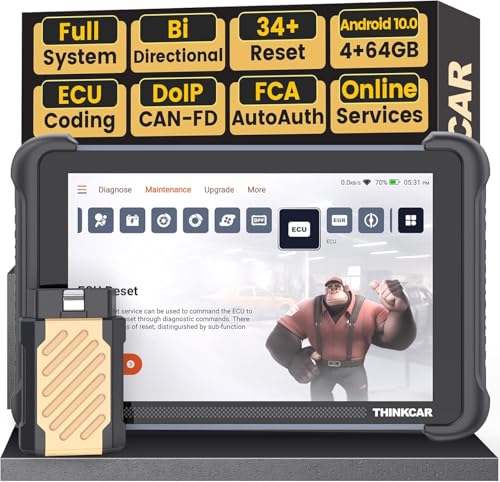
- [Notice] When you receive a used device, it may be a customer return resold by Amazon without inspection. You can exchange it for a new one through Amazon. As this situation is unavoidable, we sincerely apologize. For any issues, contacting us via Amazon's "Messages" is the best way. THINKSCAN 689BT Bidirectional Scan Tool Can Be Used Immediately After It is Turned On, Without Complicated Registration Process, Which is More Convenient & Quick.
- Full Bi-Directional Control & 3000+ Active Tests: Take control and test components like actuators, fuel injectors, relays, and cooling fans in real time. You’ll quickly see if the problem is in the part itself or the control module — saving you hours of guesswork and frustrating trial-and-error.
- Advanced ECU Coding Capabilities: Handle module matching and hidden feature activation with confidence. When you replace an ECU or want to customize settings, this obd2 scanner diagnostic bi directional tool gives you the professional-level capabilities you need without the dealership price tag.
- 34+ Useful Reset and Maintenance Functions: Complete everyday service tasks smoothly with a wide range of helpful reset and maintenance functions. Whether you’re keeping up with regular upkeep or tackling a specific job, this scanner makes maintenance simpler and less stressful for both DIYers and pros.
- Comprehensive Full System Diagnostics: Diagnose every major system — Engine, Transmission
 , ABS, SRS, TPMS, and more — all in one place. Finally stop wondering if you’re missing something important; get the full picture and clear codes with ease.
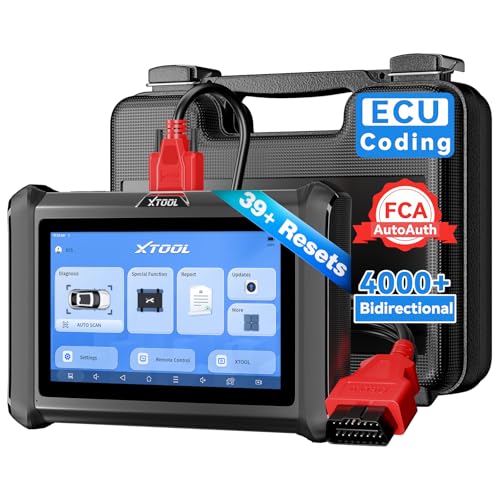
- Top Reasons to Choose the D7S OBD2 Scanner: XTOOL D7S car scan tool, an upgrade of XTOOL D7, offers comprehensive features for automotive technicians, workshops, and DIY enthusiasts 1. Upgraded Hardware: 2+64GB memory, rear camera, intuitive interface, foldable bracket 2. Complete Diagnostics: FCA Autoauth, OE-level all system scan, 39+ maintenance services, 4K+ bidirectional, CANFD/DoIP protocol 3. Advanced Capabilities: ECU coding, PMI functions 4. Wide Compatibility: Support 10,000+ models, covering 99% vehicle brands 5. Multi-language: Available in 22+ languages, No IP Restrictions 6. 3-Year Updates: Save 300 bucks on software updates for the latest features and optimizations
- 2026 Upgraded D7S Car Scanner Features: The newly 2026 D7S V2.0 scanner for car brings exciting features for advanced vehicle diagnostics and enhanced user experience 1. FCA AutoAuth: Now supports FCA SGW module for Chrysler, for Jeep, for Dodge (2018+), for Fiat (2017+), enabling faster vehicle communication without gateway restrictions 2. PMI (Offline ECU Programming): Allows for Ford, for Lincoln, and for Mazda ECU programming for new modules 3. Optimized Diagnostic Report 2.0: Personalized reports with logos and customer info for auto shops. Note: Compatibility varies by cars, please check before order
- Cost-effective ECU Coding Scan Tool for Specific Brands: Enhance your vehicle's performance with XTOOL D7S! This obd2 scanner all systems bidirectional offers advanced capabilities at an affordable price, supports online for BMW, for Benz and offline for BENZ, for MIT, along with PMI functions for Ford, for Mazda, and for Lincoln. Ideal for technicians and DIY enthusiasts, this automotive scanner diagnostic tool optimizes vehicle performance and enhances the driving experience. Note: Not for all cars and modules, please send car VIN to check the compatibility before purchase
- OE All System Diagnostic & 8 Pids Graphing: XTOOL D7S is a comprehensive all system bi directional obd2 scanner that delivers dealer-level diagnostics, completely controlling over your vehicle’s performance and health. This automotive scan tool can read and clear DTCs, view live data and ECU information, retrieve freeze frames, and perform active tests and full obd2 functions. This bi-directional scan tool can can identify your vehicle's make, model, and year information with just one click and show up to 8 PIDs live data with options for CSV viewing, playback, and recording for in-depth analysis. It is easy-to-use for both professionals and beginners, helping pinpoint issues efficiently
- 3 Years Software Update, Value for Money: With 3 years of software updates and 22+ languages(no IP restrictions), XTOOL D7S auto scanner code scanner ensures ongoing compatibility for the latest car models and improved diagnostic functions. This all system vehicle diagnostic scanner comes with a 30-day return policy and a 24-month repair for dependable performance. XTOOL are dedicated to your satisfaction, so enjoy seamless support and lifetime expert assistance. Should you encounter any issues or concerns, don’t hesitate to reach out XTOOL. D7S with newest update with 22 languages freely transfer without authorization, check details from setting-language or from XTOOL
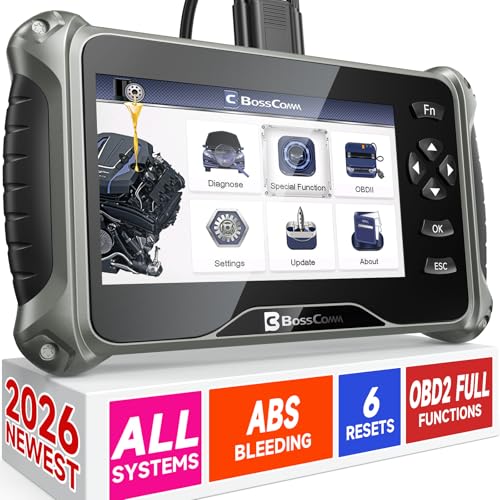
- 【✅Compared to BOSSCOMM IF742, IF745 Offers Full-System Diagnostics】The BOSSCOMM IF745 car diagnostic scanner is an upgraded model of IF742. In addition to supporting all OBD2 Code Reader functions and 6 reset options (ABS/EPB/SAS/BMS/Oil/Throttle), it expands diagnostics from 4 systems (Check Engine/ABS/SRS/Transmission) to vehicle All systems, including Steering, Suspension, and Body Electronics. This provides deeper, more comprehensive diagnostic capabilities.
- 【✨6 Essential Resets: ABS Bleeding, Oil, EPB, SAS, Throttle, BMS】The BOSSCOMM IF745 obd2 scanner diagnostic tool swiftly purges air from brake lines to restore braking sensitivity, fine-tunes maintenance cycles to eliminate false alerts, resolves parking brake issues with one-click control, recalibrates steering sensors for stability, optimizes engine idling/acceleration for smoother performance, and deeply resets battery systems to extend lifespan and range via precise parameter adjustments.❗NOTE: Does NOT support bidirectional control, coding, or programming.
- 【✨Deep Diagnostics for All Vehicle System Modules】Beyond code reading/clearing and ECU information retrieval, our all-in-one data stream feature lets you inspect all current fault codes and their locations across the vehicle’s systems. This vehicle code reader helps you turn off dashboard warning lights and perform a comprehensive self-check of your car at home—no more back-and-forth trips to the repair shop or hefty inspection fees.
- 【✨10 OBD2 Functions】The BOSSCOMM IF745 scan tool’s DTC Lookup instantly translates fault codes into user-friendly explanations, its I/M Readiness feature streamlines emissions testing with a single tap, and Freeze Frame lets you pinpoint the exact moment of a fault for in-depth root-cause diagnosis. Combined with a live data dashboard and advanced diagnostics (O2S, OBMon, EVAP), it delivers comprehensive insights for confident troubleshooting.
- 【✨10,000+ Car Models, AutoVIN, 13 Languages】The BOSSCOMM IF745 vehicle scanner diagnostic tool covers 73+ global car brands and offers support in 13 languages, making it perfect for DIYers, auto mechanics, or as a thoughtful gift. With a single-click AutoVIN feature, it instantly retrieves vehicle serial numbers, streamlining diagnostics for users globally. This adaptable tool balances user-friendliness with precision, catering to both personal and professional requirements.✅Unsure about compatibility? Compatibility will vary on vehicles' model and year, pls reach us via 📧 [email protected] 📧 before purchase.
This product presentation was made with AAWP plugin.