
NHTSA ID Number: 10153888
Manufacturer Communication Number: BJA45263
TSB/Document Date: 2019-02-26
Summary
Job Aid - Engine Oil Consumption Test
Job Aid
February 2019
Version 5
Engine Oil Consumption Test
Supersedes the Job Aid, dated September 2016; to revise the information highlighted in yellow
REVISION SUMMARY
• Under TEST PROCEDURE, Service Consultant, step 1 was revised.
• Under TEST PROCEDURE, Service Technician, step 1 was revised.
• A NOTE was revised on the Engine Oil Consumption Test.
• Under DPSM INFORMATION FOR ENGINE OIL CONSUMPTION, example models were updated.
BACKGROUND
If a client complains of oil consumption while their vehicle is under warranty, you need to do an engine oil consumption
test as outlined in this Job Aid.
If the vehicle is out of warranty, this job aid can be used to help diagnose excessive engine oil consumption.
TEST PROCEDURE
Service Consultant:
1. Make sure the oil level is at the full mark.
2. Ask the client for all of the vehicle’s oil service history (the DPSM will need this information when reviewing the case
for warranty consideration).
3. Note what caused the client to come in, for example, was the MIL was on and oil level was found to be low? Or did
the client find the oil level was low?
4. Print two copies of the attached Engine Oil Consumption Test form. Fill in the VIN and other information on the top of
one copy, and record the starting mileage of the test. Give that copy to the client, and attach the other copy to the
repair order.
5. Show the client how to check the engine oil level:
•
•
•
•
•
•
While parked on a level surface.
With the engine off.
With the engine hot.
Wait for 5 minutes after turning off the engine.
Remove and wipe off the dipstick with a clean towel.
Reinsert the dipstick fully, then remove it again to read the oil level.
6. Inform the client to check the oil as outlined in their owner’s manual every time they fill the vehicle with fuel. If the oil
level approaches the lower mark on the dipstick, return to the dealer. If it is not possible to return to the dealer, then
the client must add the recommended oil and keep proper records of the amount of oil added, the mileage, and the
before and after oil levels.
Service Technician:
1. Make sure the oil level is at the full mark.
2. Visually confirm that there are no external leaks, or any loose or disconnected breather hoses.
3. Record the starting mileage of the test, and fill in the first part of the Engine Oil Consumption Test form. Put your
copy in the client’s file.
4. If you add oil to the engine during the test period, record the total amount of oil added on the Repair Order.
CLIENT INFORMATION: The information in this bulletin is intended for use only by skilled technicians who have the proper tools, equipment, and
training to correctly and safely maintain your vehicle. These procedures should not be attempted by “do-it-yourselfers,” and you should not assume
this bulletin applies to your vehicle, or that your vehicle has the condition described. To determine whether this information applies, contact an
authorized Acura automobile dealer.
© 2019 American Honda Motor Co., Inc. – All Rights Reserved
Page 1 of 5
5. After tracking the oil consumption, do the following:
•
•
•
•
•
•
Check for and review all applicable service information on SIS before making any repairs. Select the
Search by Vehicle tab, and use the pull-down menu to select the model and year. Use keyword OIL in the
Symptom/Problem field.
Attach the completed oil consumption form to the hard copy of the repair order.
Check that there is nothing unusual about the engine, such as the engine has been replaced with a used one,
the vehicle has evidence of oil sludge, or there is no oil service history for the vehicle.
If the oil consumption rate is 1 quart or more every 1,000 miles, follow the normal troubleshooting procedures
including any applicable service bulletins. If normal troubleshooting procedures do not lead to a cause, contact
your DPSM.
If oil consumption is 1 quart every 1,000 to 3,000 miles, and the vehicle is driven and operated normally (severe
driving conditions include towing, constant idling, the vehicle is used as a shuttle, etc.) contact your DPSM for
an assessment and to determine if additional diagnostics are needed.
Always consult with your DPSM prior to making major engine repairs such as short block or cylinder head
replacement under warranty.
END
Page 2 of 5
Engine Oil Consumption Test
V.I.N.
Technician:
Dealer No.
START TEST
Starting Mileage:
/
Date
/
(Note: Do this test only when the oil is filled to the full mark.)
If someone has to add oil during the test, enter the information below:
Mileage
Date
/
/
Amount of Oil Added:
END TEST
End of Test Mileage:
/
Date
Qts.
/
TEST RESULTS
Total Miles Driven:
Total Amount Of Oil Added:
Qts.
miles per quart
CONSUMPTION RATE:
(Divide the total miles driven by the amount of oil added, in quarts.)
oil level must be checked frequently as outlined in the owner’s manual.
·IfThetheengine
oil level approaches the lower mark on the dipstick, return to the dealer. If it is not
possible to return to the dealer, add the recommended oil, and record how much oil was
added and at what mileage.
This mark indicates
the engine oil level
is full.
Return to the dealer
if the oil level is down
to this level or lower.
· Check the oil while on a level surface, with the engine off, with the engine hot, and wait
5 minutes before checking. Remove and wipe off the dipstick with a clean towel, insert
the dipstick fully, then remove it again to read the oil level.
· Return to the dealership when the oil level has reached the bottom mark on the dipstick.
© 2016 American Honda Motor Co., Inc. – All Rights Reserved
JA 03381
DPSM EVALUATION INFORMATION FOR ENGINE OIL CONSUMPTION
To help evaluate if the vehicle is experiencing a problem that is causing excessive engine oil consumption ask the
dealer the following questions:
1. Are there any service bulletins or other service information available regarding excessive engine oil consumption for
the vehicle?
2. What is the oil service history? [Consider factors such as was the oil regularly changed, where was the oil changed
(dealer or independent repair facility), was the correct oil used (viscosity), etc.]
NOTE: On some L4 models with maintenance minder, it is rare but possible to go 12,000 miles before the
Oil Life reads 0%).
3. Does the client drive the vehicle under extreme conditions (towing, constant idling, the vehicle is used as a shuttle,
etc.)?
4. What is the vehicle model, year, engine type?
5. What is the current mileage?
6. Did the dealer check for any external oil leaks that may be causing the low oil level?
Reviewing the Oil Consumption Test Results
Have the dealer provide the oil consumption test results and answers to the 6 questions above before determining a
repair direction. The interpretation information is split into two vehicle types:
• Vehicles Covered by Warranty Extensions or Service Bulletins
• Vehicles Not Covered by Warranty Extensions or Service Bulletins
Vehicles Covered by Warranty Extensions or Service Bulletins
Follow any inspection and repair procedures in the applicable Warranty Extension or Service Bulletin. Make sure the
vehicle is still covered by the extended warranty time or mileage even if it shows as eligible in the iN VIN status inquiry.
Vehicles Not Covered by Warranty Extensions or Service Bulletins
For vehicles where there are no applicable service bulletins or warranty extensions that are consuming oil at a rate of 1
quart used for every 1,000 to 3,000 miles, AHM suggests directing the technician to follow some of the troubleshooting
procedures below:
NOTE: In cases where the DPSM is not confident in the dealer’s findings or it is a newer vehicle (1 or 2 years) with low
mileage, it is a good idea to contact Tech Line so that at least the vehicle information is recorded.
• Inspect spark plugs for oil fouling (this can help narrow the inspection to focus on a specific cylinder that may
have a problem).
• Visually inspect for oily residue around intake and exhaust valves, exhaust port, or any other areas where oil
may collect. A borescope can be helpful to do this.
• For engines with center mounted spark plugs, insert a borescope into the spark plug hole to inspect for oil
washing around the edges of the piston which is normally caused by excessive oil consumption. This can help
determine if the problem is in the engine block area (missing or stuck control rings).
• Confirm PCV is working and not clogged.
• If the vehicle is a late model vehicle with low mileage, contact Tech Line so the vehicle information is recorded
and they may have some additional questions. The engine may need to be disassembled to inspect pistons,
piston rings, etc.
Page 3 of 5
Examples of Excessive Oil Consumption Cases and Handling
The following three vehicle scenarios are hypothetical examples created as a guide to help interpret oil consumption
test and engine condition results.
Also review the images of piston heads and spark plugs included at the end of this job aid.
Vehicle 1: A 2009 TSX L4 with 90,000 miles comes in with the client complaining about excessive engine oil
consumption. After checking SIS, the technician finds a warranty extension bulletin that applies to the vehicle
for excessive engine oil consumption.
1. DPSM reviewed all available service information on SIS; Go to SIS and select Service Information; Search By
Vehicle; enter the Model and Year; and use keyword “OIL” in Symptom/Problem field. A service bulletin titled
Warranty Extension: Sticking Rings Resulting in High Engine Oil Consumption appears as a search result.
NOTE: Always make sure you review the latest version of the bulletin on SIS. Do not rely on printed copies of
bulletins as they may not be current.
2. DPSM confirmed the vehicle is eligible for this Warranty Extension by doing an iN VIN status inquiry: from the
Service page; click on Vehicle Information, then select VIN Inquiry and enter the VIN.
Additionally, make sure the bulletin applies based on the bulletin warranty conditions such as time and mileage. If
the vehicle is eligible after confirming all of the eligibility information, follow the bulletin.
3. DPSM reviewed the oil service history. The oil service appeared normal.
NOTE: On some L4 models with maintenance minder, it is rare but possible to go 12,000 miles before the Oil Life
reads 0%.
4. The DPSM reviewed the vehicle information provided by the dealer and why the client came in. The client
complained about oil consumption. The DPSM also noticed the client said they had to start adding oil between oil
changes before coming in.
5. The vehicle’s current mileage is 90,000.
6. The DPSM asked if the client drives the vehicle under extreme conditions (towing, constant idling, the vehicle is
used as a shuttle, etc.)? The client indicated there is nothing unusual about their driving habits.
7. The technician did an engine oil consumption test as indicated by the bulletin using the job aid Engine Oil
Consumption Test.
8. The DPSM and technician reviewed the results of the engine oil consumption test. In this case, the test revealed
that the vehicle was burning a quart every 2400 miles. The technician followed the warranty extension to repair the
vehicle.
Vehicle 2: 2018 TLX L4 (1 year old) with 7,500 miles comes in with the client stating that “oil is coming out of
the tailpipe” and they’ve put 3 quarts of oil into the engine over 3,000 miles.
1. DPSM reviewed all available service information on SIS; Go to SIS and select Service Information; Search By
Vehicle; enter the Model and Year; and use keyword “OIL” in Symptom/Problem field. In this case, there is no
service information available.
2. Next the DPSM checked for any Engineering Requests on SIS. From the Search by vehicle screen, click the
Home tab, then click on Engineering Requests tab and check if there are any requests that fit this situation. There
were no engineering requests.
3. The DPSM had the dealer contact Tech Line. Contacting Tech Line gives the engineering staff an opportunity to be
involved in the repair, and to notify the factory of the issue. The DPSM submitted a FQR on the vehicle.
4. Tech Line asked the dealer to do several diagnostic procedures that may include:
•
•
•
•
Inspect spark plugs for oil fouling
Confirm the PCV is working and not clogged
Visually inspect for oily residue around the base of the intake and exhaust valves, or any other areas where oil
may collect
Insert a borescope into the spark plug hole to inspect for oil washing around the edges of the piston
5. Tech Line had the dealer disassemble the engine where the technician discovered an oil control ring was missing.
Page 4 of 5
Vehicle 3: 2015 MDX (3 years) with 65,000 miles comes in with the client stating they put in 2 quarts of oil over
3,000 miles.
1. DPSM reviewed all available service information on SIS; Go to SIS and select Service Information; Search By
Vehicle; enter the Model and Year; and use keyword “OIL” in Symptom/Problem field. There were no bulletins
related to oil consumption.
2. The DPSM reviewed the oil service history.
3. The DPSM reviewed the vehicle information provided by the dealer and why the client came in. The client found oil
level low.
4. The vehicle’s current mileage is 65,000.
5. DPSM asked if the client drives the vehicle under extreme conditions (constant idling, used as a shuttle vehicle,
used for towing, etc.)? The client indicates there is nothing unusual about their driving habits.
6. The DPSM asked the technician to do an engine oil consumption test using the job aid titled Engine Oil
Consumption Test.
7. The DPSM and the technician reviewed the results of the engine oil consumption test. In this case, the test revealed
that the vehicle was burning 1 quart over 1500 miles.
8. The DPSM asked the dealer to contact Tech Line. Tech Line made a recommendation about how to repair the
vehicle.
9. In cases outside of warranty and with no other service information, the dealer evaluated the vehicle on a single case
basis. After evaluating all the information available in this case for goodwill, the DPSM authorized vehicle repairs.
Items to consider when interpreting results
Consider the following information when making a decision:
• Oil Change History. Does the oil change history support a reasonable effort to maintain the vehicle? Consider this
information, but don’t use it to disqualify a client unless you see a clear case of neglect: the oil wasn’t changed
regularly, engine sludge, the engine overheated from lack of lubrication, etc. In those cases it might be reasonable
to require the client authorize teardown.
• Client Drive cycle: How does the client use the vehicle? If the client drives the vehicle under extreme conditions,
this should be a stronger factor if the vehicle was not properly maintained (questionable or no oil change history,
engine sludge etc.). This may be a reason to decline assistance.
• Actual oil consumption rate: All factors indicate the oil consumption rate is not normal.
There are many factors that affect engine oil consumption rates and the situation is different for every customer. Make
sure you consider all the information available before coming to a conclusion before proceeding with the vehicle.
Page 5 of 5
These pistons are examples of how piston tops may look when inspected with a borescope inserted through the spark plug holes. Single
overhead cam engines have the camshaft mounted directly over the center of the cylinders so the image will appear angled like the lower left
photo.
No good: Example of a 2008 2.4L L4 (port fuel injection) with
100,000 miles and is experiencing excessive oil consumption.
The piston edges are clean which may occur with stuck rings.
Good: Example of a 2013 2.4L L4 (port fuel injection) with 45,000
miles and no oil problems. Piston top is fairly clean, carbon free.
Good: A close up of a 2014 3.5L V6 (direct injection) with 60,000
miles and no oil problems. No oily deposits, just dry carbon and
clean area on piston top from direct injection spray pattern.
Good: Example of a 2015 1.5L L4 (direct injection) with 20,000 miles
and no oil problems. Piston top has a clean area.
These spark plugs are examples from a high mileage V6 VCM II engine with misfire (magnified for clarity). Spark plugs
with oil deposits and broken insulators are good indicators of trouble with the corresponding cylinder.
Good: Normal gray ash color
Good: Normal gray ash color
Good: Normal gray ash color
No good: Insulator badly broken
No good: Insulator badly broken
No good: Heavy oil deposits
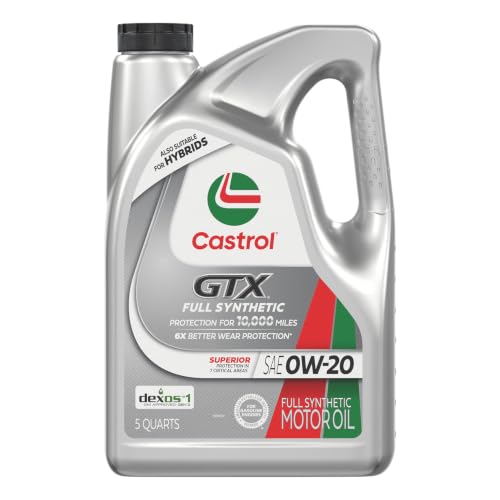

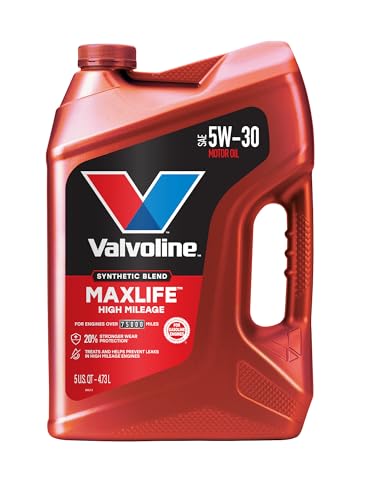
- Formulated for engines with 75,000 miles or more, Valvoline...
- Delivers 20% better wear protection and 15% better sludge...
- Extra detergents safeguard against friction, corrosion and...
- Advanced friction-fighting additives help maximize...
- Provides performance benefits for high mileage, new and...
Last update on 2026-06-23 / Affiliate links / Images from Amazon Product Advertising API
If the PDF is very large, it may not load in the preview below.
Some older TSBs had multiple PDFs — visit the NHTSA Website to view all PDFs.
If the TSB PDF does not show, download or view it on the NHTSA Website.
Click on the (+) Plus Sign
Then Click on Associated Document(s)
Search NHTSA Database for Recalls
Search NHTSA Database for Vehicle Investigations
View Latest Vehicle Investigations
Search NHTSA Database for Vehicle Complaints
View Latest Vehicle Complaints
TSB/Document ID: BJA45263
Replacement Service Bulletin Number:
MFR Communication Date: 2019-02-23
MFR Internal Campaign ID/Software Version:
Communication Type: Service Bulletin/Repair Instructions
NHTSA Components: ENGINE
MFR Component System:
MFR Component Subsystem:
Previous TSB | Next TSB |
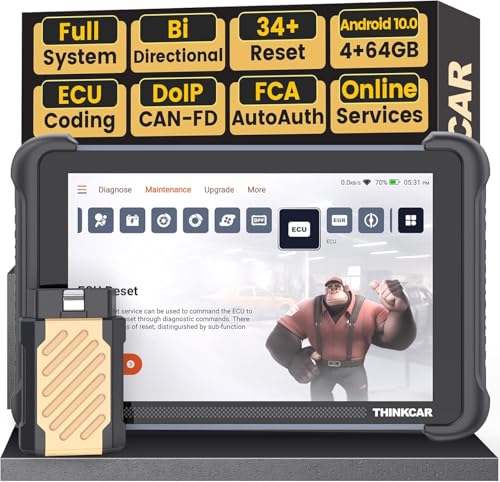
- [Notice] When you receive a used device, it may be a customer return resold by Amazon without inspection. You can exchange it for a new one through Amazon. As this situation is unavoidable, we sincerely apologize. For any issues, contacting us via Amazon's "Messages" is the best way. THINKSCAN 689BT Bidirectional Scan Tool Can Be Used Immediately After It is Turned On, Without Complicated Registration Process, Which is More Convenient & Quick.
- Full Bi-Directional Control & 3000+ Active Tests: Take control and test components like actuators, fuel injectors, relays, and cooling fans in real time. You’ll quickly see if the problem is in the part itself or the control module — saving you hours of guesswork and frustrating trial-and-error.
- Advanced ECU Coding Capabilities: Handle module matching and hidden feature activation with confidence. When you replace an ECU or want to customize settings, this obd2 scanner diagnostic bi directional tool gives you the professional-level capabilities you need without the dealership price tag.
- 34+ Useful Reset and Maintenance Functions: Complete everyday service tasks smoothly with a wide range of helpful reset and maintenance functions. Whether you’re keeping up with regular upkeep or tackling a specific job, this scanner makes maintenance simpler and less stressful for both DIYers and pros.
- Comprehensive Full System Diagnostics: Diagnose every major system — Engine, Transmission, ABS, SRS, TPMS, and more — all in one place. Finally stop wondering if you’re missing something important; get the full picture and clear codes with ease.
Last update on 2026-07-02 / Affiliate links / Images from Amazon Product Advertising API
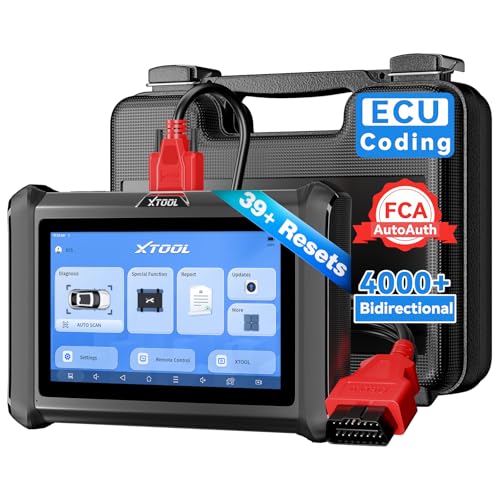
- Top Reasons to Choose the D7S OBD2 Scanner: XTOOL D7S car scan tool, an upgrade of XTOOL D7, offers comprehensive features for automotive technicians, workshops, and DIY enthusiasts 1. Upgraded Hardware: 2+64GB memory, rear camera, intuitive interface, foldable bracket 2. Complete Diagnostics: FCA
 Autoauth, OE-level all system scan, 39+ maintenance services, 4K+ bidirectional, CANFD/DoIP protocol 3. Advanced Capabilities: ECU c0ding, PMI functions 4. Wide Compatibility: Support 10,000+ models, covering 99% vehicle brands 5. Multi-language: Available in 22+ languages, No IP Restrictions 6. 3-Year Updates: Save 300 bucks on software updates for the latest features and optimizations
 - 2026 Upgraded D7S Car Scanner Features: The newly 2026 D7S V2.0 scanner for car brings exciting features for advanced vehicle diagnostics and enhanced user experience 1. FCA AutoAuth: Now supports FCA SGW module for Chrysler, for Jeep, for Dodge (2018+), for Fiat (2017+), enabling faster vehicle communication without gateway restrictions 2. PMI (Offline ECU Pr0gramming): Allows for Ford, for Lincoln, and for Mazda ECU pr0gramming for new modules 3. Optimized Diagnostic Report 2.0: Personalized reports with logos and customer info for auto shops. Note: Compatibility varies by cars, please check before order
- 39+ Services/Resets/Adaptations/Relearns/Calibrations: XTOOL D7S full system car scanner diagnostic tool tackles 99% of common car issues through its 36+ special functions, including Oil Reset, EPB, SAS, BMS, Throttle Reset, Injector C0ding, ABS Bleed, TPMS Reset, Power Balance, etc and also covers specific-vehicle functions like Crank Sensor Relearn, ABS Initialization, Cylinder Power Balance, Fuel Trim Reset, Idle Relearn etc. This car diagnostic scanner enhances efficiency, making repairs and maintenance hassle-free. Tip: DO NOT for All vehicles, please check compatibility first
- Cost-effective ECU C0ding Scan Tool for Specific Brands: Enhance your vehicle's performance with XTOOL D7S! This obd2 scanner all systems bidirectional offers advanced capabilities at an affordable price, supports online for BMW, for Benz and offline for BENZ, for MIT, along with PMI functions for Ford, for Mazda, and for Lincoln. Ideal for technicians and DIY enthusiasts, this automotive scanner diagnostic tool optimizes vehicle performance and enhances the driving experience. Note: Not for all cars and modules, please send car VIN to check the compatibility before purchase
- OE All System Diagnostic & 8 Pids Graphing: XTOOL D7S is a comprehensive all system bi directional obd2 scanner that delivers dealer-level diagnostics, completely controlling over your vehicle’s performance and health. This automotive scan tool can read and clear DTCs, view live data and ECU information, retrieve freeze frames, and perform active tests and full obd2 functions. This bi-directional scan tool can can identify your vehicle's make, model, and year information with just one click and show up to 8 PIDs live data with options for CSV viewing, playback, and recording for in-depth analysis. It is easy-to-use for both professionals and beginners, helping pinpoint issues efficiently
Last update on 2026-07-08 / Affiliate links / Images from Amazon Product Advertising API
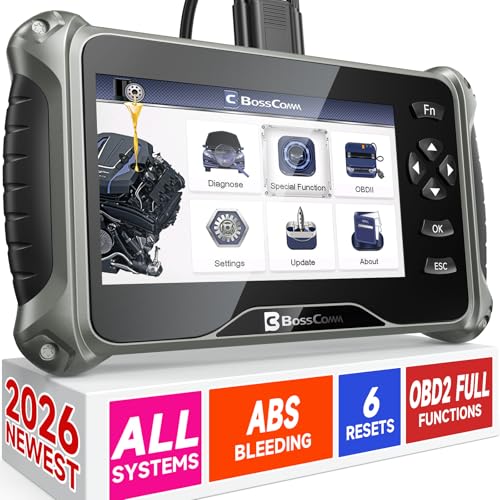
- 【✅Compared to BOSSCOMM IF742, IF745 Offers Full-System Diagnostics】The BOSSCOMM IF745 car diagnostic scanner is an upgraded model of IF742. In addition to supporting all OBD2 Code Reader functions and 6 reset options (ABS/EPB/SAS/BMS/Oil/Throttle), it expands diagnostics from 4 systems (Check Engine/ABS/SRS/Transmission) to vehicle All systems, including Steering, Suspension, and Body Electronics. This provides deeper, more comprehensive diagnostic capabilities.
- 【✨10 OBD2 Functions】The BOSSCOMM IF745 scan tool’s DTC Lookup instantly translates fault codes into user-friendly explanations, its I/M Readiness feature streamlines emissions testing with a single tap, and Freeze Frame lets you pinpoint the exact moment of a fault for in-depth root-cause diagnosis. Combined with a live data dashboard and advanced diagnostics (O2S, OBMon, EVAP), it delivers comprehensive insights for confident troubleshooting.
- 【✨Deep Diagnostics for All Vehicle System Modules】Beyond code reading/clearing and ECU information retrieval, our all-in-one data stream feature lets you inspect all current fault codes and their locations across the vehicle’s systems. This vehicle code reader helps you turn off dashboard warning lights and perform a comprehensive self-check of your car at home—no more back-and-forth trips to the repair shop or hefty inspection fees.
- 【✨6 Essential Resets: ABS Bleeding, Oil, EPB, SAS, Throttle, BMS】The BOSSCOMM IF745 obd2 scanner diagnostic tool swiftly purges air from brake lines to restore braking sensitivity, fine-tunes maintenance cycles to eliminate false alerts, resolves parking brake issues with one-click control, recalibrates steering sensors for stability, optimizes engine idling/acceleration for smoother performance, and deeply resets battery systems to extend lifespan and range via precise parameter adjustments.❗NOTE: Does NOT support bidirectional control, coding, or programming.
- 【✨10,000+ Car Models, AutoVIN, 13 Languages】The BOSSCOMM IF745 vehicle scanner diagnostic tool covers 73+ global car brands and offers support in 13 languages, making it perfect for DIYers, auto mechanics, or as a thoughtful gift. With a single-click AutoVIN feature, it instantly retrieves vehicle serial numbers, streamlining diagnostics for users globally. This adaptable tool balances user-friendliness with precision, catering to both personal and professional requirements.✅Unsure about compatibility? Compatibility will vary on vehicles' model and year, pls reach us via 📧 [email protected] 📧 before purchase.
Last update on 2026-07-02 / Affiliate links / Images from Amazon Product Advertising API
This product presentation was made with AAWP plugin.