
NHTSA ID Number: 10143659
Manufacturer Communication Number: GCI-A0339-07
TSB/Document Date: 2018-08-13
Summary
GENERAL CONSUMER INFORMATION PERTAINING TO AN OWNER'S MANUAL
X
X
X
X
X
X
X
X
X
X
X
X
NOTE: Pleasure-Way Ind. Ltd. reserves the right to make product changes at any time with out prior notice or
obligation.
* The bed area measurements may vary, due to components inside the vehicle.
44
Index / NHTSA homepage
TIRE SAFETY
Everything Rides On It
Studies of tire safety show that maintaining proper tire pressure, observing tire and vehicle load limits (not
carrying more weight in your vehicle than your tires or vehicle can safely handle), avoiding road hazards, and
inspecting tires for cuts, slashes, and other irregularities are the most important things you can do to avoid tire
failure, such as tread separation or blowout and flat tires. These actions, along with other care and maintenance
activities, can also:
Improve vehicle handling
Help protect you and others from avoidable breakdowns and accidents
Improve fuel economy
Increase the life of your tires.
This booklet presents a comprehensive overview of tire safety, including information on the following topics:
Basic tire maintenance
Uniform Tire Quality Grading System
Fundamental characteristics of tires
Tire safety tips.
Use this information to make tire safety a regular part of your vehicle maintenance routine. Recognize that the
time you spend is minimal compared with the inconvenience and safety consequences of a flat tire or other tire
failure.
Safety First–Basic Tire Maintenance
Properly maintained tires improve the steering, stopping, traction, and load-carrying capability of your vehicle.
Underinflated tires and overloaded vehicles are a major cause of tire failure. Therefore, as mentioned above, to
avoid flat tires and other types of tire failure, you should maintain proper tire pressure, observe tire and vehicle
load limits, avoid road hazards, and regularly inspect your tires.
Finding Your Vehicle's Recommended Tire Pressure and Load Limits
45
Tire information placards and vehicle certification labels contain information on tires and load limits. These
labels indicate the vehicle manufacturer's information including:
Recommended tire size
Recommended tire inflation pressure
Vehicle capacity weight (VCW–the maximum occupant and cargo weight a vehicle is designed to carry)
Front and rear gross axle weight ratings (GAWR– the maximum weight the axle systems are designed to
carry).
Both placards and certification labels are permanently attached to the vehicle door edge, door post, glove-box
door, or inside of the trunk lid. You can also find the recommended tire pressure and load limit for your vehicle
in the vehicle owner's manual.
Understanding Tire Pressure and Load Limits
Tire inflation pressure is the level of air in the tire that provides it with load-carrying capacity and affects the
overall performance of the vehicle. The tire inflation pressure is a number that indicates the amount of air
pressure– measured in pounds per square inch (psi)–a tire requires to be properly inflated. (You will also find
this number on the vehicle information placard expressed in kilopascals (kPa), which is the metric measure used
internationally.)
Manufacturers of passenger vehicles and light trucks determine this number based on the vehicle's design load
limit, that is, the greatest amount of weight a vehicle can safely carry and the vehicle's tire size.The proper tire
pressure for your vehicle is referred to as the "recommended cold inflation pressure." (As you will read below,
it is difficult to obtain the recommended tire pressure if your tires are not cold.)
Because tires are designed to be used on more than one type of vehicle, tire manufacturers list the "maximum
permissible inflation pressure" on the tire sidewall. This number is the greatest amount of air pressure that
should ever be put in the tire under normal driving conditions.
Checking Tire Pressure
It is important to check your vehicle's tire pressure at least once a month for the following reasons:
Most tires may naturally lose air over time.
46
Tires can lose air suddenly if you drive over a pothole or other object or if you strike the curb when
parking.
With radial tires, it is usually not possible to determine underinflation by visual inspection.
For convenience, purchase a tire pressure gauge to keep in your vehicle. Gauges can be purchased at tire
dealerships, auto supply stores, and other retail outlets.
The recommended tire inflation pressure that vehicle manufacturers provide reflects the proper psi when a tire is
cold. The term cold does not relate to the outside temperature. Rather, a cold tire is one that has not been driven
on for at least three hours. When you drive, your tires get warmer, causing the air pressure within them to
increase. Therefore, to get an accurate tire pressure reading, you must measure tire pressure when the tires are
cold or compensate for the extra pressure in warm tires.
Steps for Maintaining Proper Tire Pressure
Step 1: Locate the recommended tire pressure on the vehicle's tire information placard, certification
label, or in the owner's manual.
Step 2: Record the tire pressure of all tires.
Step 3: If the tire pressure is too high in any of the tires, slowly release air by gently pressing on the tire
valve stem with the edge of your tire gauge until you get to the correct pressure.
Step 4: If the tire pressure is too low, note the difference between the measured tire pressure and the
correct tire pressure. These "missing" pounds of pressure are what you will need to add.
Step 5: At a service station, add the missing pounds of air pressure to each tire that is underinflated.
Step 6: Check all the tires to make sure they have the same air pressure (except in cases in which the
front and rear tires are supposed to have different amounts of pressure).
If you have been driving your vehicle and think that a tire is underinflated, fill it to the recommended cold
inflation pressure indicated on your vehicle's tire information placard or certification label. While your tire may
still be slightly underinflated due to the extra pounds of pressure in the warm tire, it is safer to drive with air
pressure that is slightly lower than the vehicle manufacturer's recommended cold inflation pressure than to drive
with a significantly underinflated tire. Since this is a temporary fix, don't forget to recheck and adjust the tire's
pressure when you can obtain a cold reading.
Tire Size
To maintain tire safety, purchase new tires that are the same size as the vehicle's original tires or another size
recommended by the manufacturer. Look at the tire information placard, the owner's manual, or the sidewall of
47
the tire you are replacing to find this information. If you have any doubt about the correct size to choose,
consult with the tire dealer.
Tire Tread
The tire tread provides the gripping action and traction that prevent your vehicle from slipping or sliding,
especially when the road is wet or icy. In general, tires are not safe and should be replaced when the tread is
worn down to 1/16 of an inch. Tires have built-in treadwear indicators that let you know when it is time to
replace your tires. These indicators are raised sections spaced intermittently in the bottom of the tread grooves.
When they appear "even" with the outside of the tread, it is time to replace your tires. Another method for
checking tread depth is to place a penny in the tread with Lincoln 's head upside down and facing you. If you can
see the top of Lincoln's head, you are ready for new tires.
Tire Balance and Wheel Alignment
To avoid vibration or shaking of the vehicle when a tire rotates, the tire must be properly balanced. This balance
is achieved by positioning weights on the wheel to counterbalance heavy spots on the wheel-and-tire assembly.
A wheel alignment adjusts the angles of the wheels so that they are positioned correctly relative to the vehicle's
frame. This adjustment maximizes the life of your tires and prevents your car from veering to the right or left
when driving on a straight, level road. These adjustments require special equipment and should be performed by
a qualified technician.
Tire Rotation
Rotating tires from front to back and from side to side can reduce irregular wear (for vehicles that have tires that
are all the same size). Look in your owner's manual for information on how frequently the tires on your vehicle
should be rotated and the best pattern for rotation.
A Tire Rotation Example
For maximum mileage, rotate your tires every 5,000 miles. Follow correct rotation patterns.
48
Tire Repair
The proper repair of a punctured tire requires a plug for the hole and a patch for the area inside the tire that
surrounds the puncture hole. Punctures through the tread can be repaired if they are not too large, but punctures
to the sidewall should not be repaired. Tires must be removed from the rim to be properly inspected before
being plugged and patched.
Uniform Tire Quality Grading System (UTQGS)
To help consumers compare a passenger car tire's treadwear rate, traction performance, and temperature
resistance, the federal government requires tire manufacturers to grade tires in these three areas. This grading
system, known as the Uniform Tire Quality Grading System, provides guidelines for making relative
comparisons when purchasing new tires. You also can use this information to inquire about the quality of tires
placed on new vehicles.
Although this rating system is very helpful when buying new tires, it is not a safety rating or guarantee of how
well a tire will perform or how long it will last. Other factors such as personal driving style, type of car, quality
of the roads, and tire maintenance habits have a significant influence on your tire's performance and longevity.
Treadwear grades are an indication of a tire's relative wear rate. The higher the treadwear number is, the longer
it should take for the tread to wear down. For example, a tire grade of 400 should wear twice as long as a tire
grade of 200.
Traction grades are an indication of a tire's ability to stop on wet pavement. A higher graded tire should allow
you to stop your car on wet roads in a shorter distance than a tire with a lower grade. Traction is graded from
highest to lowest as "AA", "A", "B", and "C".
Temperature grades are an indication of a tire's resistance to heat. Sustained high temperature (for example,
driving long distances in hot weather), can cause a tire to deteriorate, leading to blowouts and tread separation.
From highest to lowest, a tire's resistance to heat is graded as "A", "B", or "C".
Tire Fundamentals
Federal law requires tire manufacturers to place standardized information on the sidewall of all tires. This
information identifies and describes the fundamental characteristics of the tire and also provides a tire
identification number for safety standard certification and in case of a recall.
Information on Passenger Vehicle Tires
49
Please refer to the diagram below.
d
P
The "P" indicates the tire is for passenger vehicles.
Next number
This three-digit number gives the width in millimeters of the tire from sidewall edge to sidewall edge. In
general, the larger the number, the wider the tire.
Next number
This two-digit number, known as the aspect ratio, gives the tire's ratio of height to width. Numbers of 70 or
lower indicate a short sidewall for improved steering response and better overall handling on dry pavement.
R
The "R" stands for radial. Radial ply construction of tires has been the industry standard for the past 20 years.
Next number
This two-digit number is the wheel or rim diameter in inches. If you change your wheel size, you will have to
purchase new tires to match the new wheel diameter.
Next number
This two- or three-digit number is the tire's load index. It is a measurement of how much weight each tire can
support. You may find this information in your owner's manual. If not, contact a local tire dealer. Note: You
may not find this information on all tires because it is not required by law.
M+S
The "M+S" or "M/S" indicates that the tire has some mud and snow capability. Most radial tires have these
markings; hence, they have some mud and snow capability.
Speed Rating
The speed rating denotes the speed at which a tire is designed to be driven for extended periods of time. The
50
ratings range from 99 miles per hour (mph) to 186 mph. These ratings are listed below. Note: You may not find
this information on all tires because it is not required by law.
Letter Rating
Speed Rating
Q
R
S
T
U
H
V
W
Y
99 mph
106 mph
112 mph
118 mph
124 mph
130 mph
149 mph
168* mph
186* mph
* For tires with a maximum speed capability over 149 mph, tire manufacturers sometimes use the letters ZR.
For those with a maximum speed capability over 186 mph, tire manufacturers always use the letters ZR.
U.S. DOT Tire Identification Number
This begins with the letters "DOT" and indicates that the tire meets all federal standards. The next two numbers
or letters are the plant code where it was manufactured, and the last four numbers represent the week and year
the tire was built. For example, the numbers 3197 means the 31st week of 1997. The other numbers are
marketing codes used at the manufacturer's discretion. This information is used to contact consumers if a tire
defect requires a recall.
Tire Ply Composition and Materials Used
The number of plies indicates the number of layers of rubber-coated fabric in the tire. In general, the greater the
number of plies, the more weight a tire can support. Tire manufacturers also must indicate the materials in the
tire, which include steel, nylon, polyester, and others.
Maximum Load Rating
This number indicates the maximum load in kilograms and pounds that can be carried by the tire.
Maximum Permissible Inflation Pressure
This number is the greatest amount of air pressure that should ever be put in the tire under normal driving
conditions.
UTQGS Information
Treadwear Number
This number indicates the tire's wear rate. The higher the treadwear number is, the longer it should take for the
tread to wear down. For example, a tire graded 400 should last twice as long as a tire graded 200.
Traction Letter
This letter indicates a tire's ability to stop on wet pavement. A higher graded tire should allow you to stop your
car on wet roads in a shorter distance than a tire with a lower grade. Traction is graded from highest to lowest as
"AA","A", "B", and "C".
Temperature Letter
This letter indicates a tire's resistance to heat. The temperature grade is for a tire that is inflated properly and not
overloaded. Excessive speed, underinflation or excessive loading, either separately or in combination, can cause
51
heat build-up and possible tire failure. From highest to lowest, a tire's resistance to heat is graded as "A", "B", or
"C".
Additional Information on Light Truck Tires
Please refer to diagram below.
d
Tires for light trucks have other markings besides those found on the sidewalls of passenger tires.
LT
The "LT" indicates the tire is for light trucks.
Max. Load Dual kg(lbs) at kPa(psi) Cold
This information indicates the maximum load and tire pressure when the tire is used as a dual, that is, when four
tires are put on each rear axle (a total of six or more tires on the vehicle).
Max. Load Single kg(lbs) at kPa(psi) Cold
This information indicates the maximum load and tire pressure when the tire is used as a single.
Load Range
This information identifies the tire's load-carrying capabilities and its inflation limits.
Snow Tires
In some heavy snow areas, local governments may require true snow tires, those with very deeply cut tread.
These tires should only be used in pairs or placed on all four wheels. Make sure you purchase snow tires that are
the same size and construction type as the other tires on your vehicle.
Index / NHTSA homepage
52
Index / NHTSA homepage
TIRE SAFETY
Everything Rides On It
Protection against avoidable breakdowns and crashes. Improved vehicle handling. Better fuel economy.
Increased tire life. Just a few of the reasons to take five minutes every month to check your tires. Simply use the
handy checklist below, and see the reverse side for more information on tire safety.
Safety Checklist
Check tire pressure regularly (at least once a month), including the spare.
Inspect tires for uneven wear patterns on the tread, cracks, foreign objects, or other signs of wear or
trauma. Remove bits of glass and other foreign objects wedged in the tread.
Make sure your tire valves have valve caps.
Check tire pressure before going on a long trip.
Do not overload your vehicle. Check the tire information placard or owner’s manual for the maximum
recommended load for the vehicle.
If you are towing a trailer, remember that some of the weight of the loaded trailer is transferred to the
towing vehicle.
Safety Tips
Slow down if you have to go over a pothole or other object in the road.
Do not run over curbs, and try not to strike the curb when parking.
Remember to check your tires once a month!
There’s Safety In Numbers
You can find the numbers for recommended tire pressure and vehicle load limit on the tire information placard
and in the vehicle owner’s manual. Tire placards are permanent labels attached to the vehicle door edge,
doorpost, glove-box door, or inside of the trunk lid. Once you’ve located this information, use it to check your
tire pressure and to make sure your vehicle is not overloaded—especially when you head out for vacation.
53
Checking Tire Pressure
Because tires may naturally lose air over time, it is important to check your tire pressure at least once a month.
For convenience, purchase a tire pressure gauge to keep in your vehicle. Gauges can be purchased at tire
dealerships, auto supply stores, and other r
etail outlets. Remember, the tire inflation number that vehicle manufacturers provide reflects the proper pounds
per square inch (psi) when a tire is cold. To get an accurate tire pressure reading, measure tire pressure when the
car has been unused for at least three hours.
Step 1: Locate the correct tire pressure on the tire information placard or in the owner’s manual.
Step 2: Record the tire pressure of all tires.
Step 3: If the tire pressure is too high in any of the tires, slowly release air by gently pressing on the tire valve
with the edge of your tire gauge until you get to the correct pressure.
Step 4: If the tire pressure is too low, note the difference between the measured tire pressure and the correct tire
pressure. These “missing” pounds of pressure are what you will need to add.
Step 5: At a service station, add the missing pounds of air pressure to each tire that is underinflated.
Step 6: Check all the tires to make sure they have the same air pressure (except in cases in which the front and
rear tires are supposed to have different amounts of pressure).
Checking Tire Tread
Tires have built-in treadwear indicators that let you know when it is time to replace your tires. These indicators
are raised sections spaced intermittently in the bottom of the tread grooves. When they appear even with the
outside of the tread, it is time to replace your tires. You can also test your tread with a Lincoln penny. Simply
turn the penny so Lincoln’s head is pointing down and insert it into the tread. If the tread doesn’t cover
Lincoln’s head, it’s time to replace your tires.
For a free brochure visit www.nhtsa.dot.gov or call 1-888-327-4236.
Index / NHTSA homepage
54
55
56
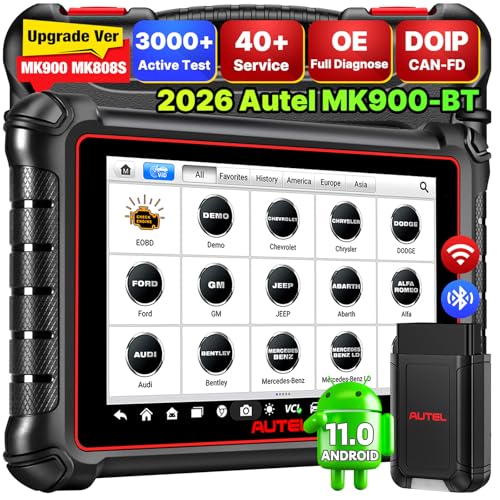
- 💯【Conta.ct us for Support Directly】If you met any...
- 🔥🔥🔥【2026 AUTEL FLAGSHIP MK900BT MK900-BT, NEW...
- 🚗【3000+ ACTIVE TESTS (50➡3000+), SAME AS MS...
- 🚗【40+ HOT SERVICES FOR 150 MAKES (28+➡40+)】Full...
- 🚗【OE ALL SYSTEM DIAGNOSE, AUTO SCAN 2.0: SCAN LICENSE...

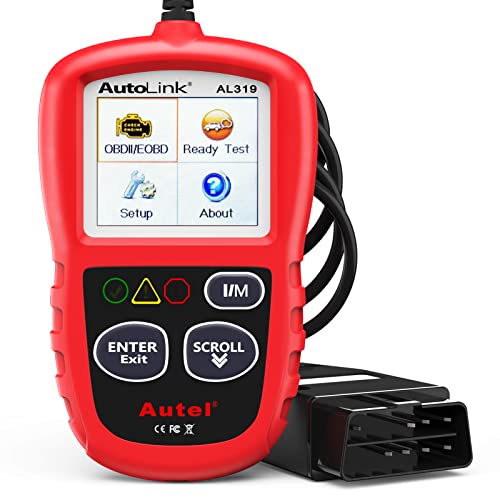
- 【TURN OFF CEL】 This AL319 car scanner diagnostic tool...
- 【EXTENSIVE APPLICATION】 Autel AL319 Compatible with...
- 【FOR END USER & DIYERS】 This error code reader AL319 is...
- 【USER-FRIENDLY DESIGN】 This OBD2 scanner and check...
- 【HIGH-QUALITY SERVICES】 12 months war.ranty from the...
If the PDF is very large, it may not load in the preview below.
Some older TSBs had multiple PDFs — visit the NHTSA Website to view all PDFs.
If the TSB PDF does not show, download or view it on the NHTSA Website.
Click on the (+) Plus Sign
Then Click on Associated Document(s)
Search NHTSA Database for Recalls
Search NHTSA Database for Vehicle Investigations
View Latest Vehicle Investigations
Search NHTSA Database for Vehicle Complaints
View Latest Vehicle Complaints
TSB/Document ID: GCI-A0339-07
Replacement Service Bulletin Number:
MFR Communication Date: 2018-07-13
MFR Internal Campaign ID/Software Version:
Communication Type: Service Bulletin/Repair Instructions
NHTSA Components: EQUIPMENT
MFR Component System:
MFR Component Subsystem:
Previous TSB | Next TSB |
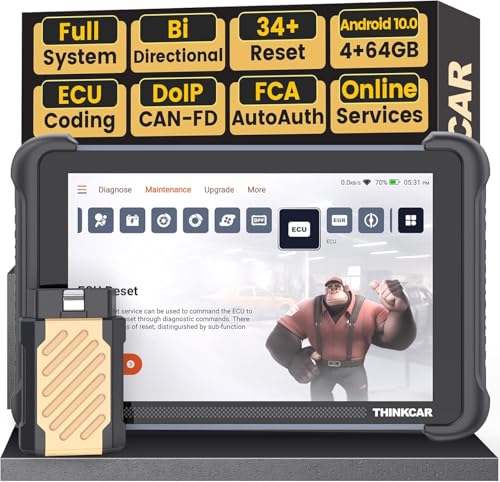
- [Notice] When you receive a used device, it may be a customer return resold by Amazon without inspection. You can exchange it for a new one through Amazon. As this situation is unavoidable, we sincerely apologize. For any issues, contacting us via Amazon's "Messages" is the best way. THINKSCAN 689BT Bidirectional Scan Tool Can Be Used Immediately After It is Turned On, Without Complicated Registration Process, Which is More Convenient & Quick.
- Full Bi-Directional Control & 3000+ Active Tests: Take control and test components like actuators, fuel injectors, relays, and cooling fans in real time. You’ll quickly see if the problem is in the part itself or the control module — saving you hours of guesswork and frustrating trial-and-error.
- Advanced ECU Coding Capabilities: Handle module matching and hidden feature activation with confidence. When you replace an ECU or want to customize settings, this obd2 scanner diagnostic bi directional tool gives you the professional-level capabilities you need without the dealership price tag.
- 34+ Useful Reset and Maintenance Functions: Complete everyday service tasks smoothly with a wide range of helpful reset and maintenance functions. Whether you’re keeping up with regular upkeep or tackling a specific job, this scanner makes maintenance simpler and less stressful for both DIYers and pros.
- Comprehensive Full System Diagnostics: Diagnose every major system — Engine, Transmission, ABS, SRS, TPMS, and more — all in one place. Finally stop wondering if you’re missing something important; get the full picture and clear codes with ease.
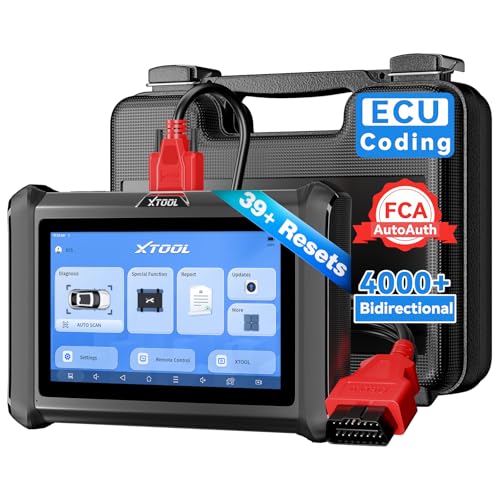
- Top Reasons to Choose the D7S OBD2 Scanner: XTOOL D7S car scan tool, an upgrade of XTOOL D7, offers comprehensive features for automotive technicians, workshops, and DIY enthusiasts 1. Upgraded Hardware: 2+64GB memory, rear camera, intuitive interface, foldable bracket 2. Complete Diagnostics: FCA
 Autoauth, OE-level all system scan, 39+ maintenance services, 4K+ bidirectional, CANFD/DoIP protocol 3. Advanced Capabilities: ECU c0ding, PMI functions 4. Wide Compatibility: Support 10,000+ models, covering 99% vehicle brands 5. Multi-language: Available in 22+ languages, No IP Restrictions 6. 3-Year Updates: Save 300 bucks on software updates for the latest features and optimizations
 - 2026 Upgraded D7S Car Scanner Features: The newly 2026 D7S V2.0 scanner for car brings exciting features for advanced vehicle diagnostics and enhanced user experience 1. FCA AutoAuth: Now supports FCA SGW module for Chrysler, for Jeep, for Dodge (2018+), for Fiat (2017+), enabling faster vehicle communication without gateway restrictions 2. PMI (Offline ECU Pr0gramming): Allows for Ford, for Lincoln, and for Mazda ECU pr0gramming for new modules 3. Optimized Diagnostic Report 2.0: Personalized reports with logos and customer info for auto shops. Note: Compatibility varies by cars, please check before order
- 39+ Services/Resets/Adaptations/Relearns/Calibrations: XTOOL D7S full system car scanner diagnostic tool tackles 99% of common car issues through its 36+ special functions, including Oil Reset, EPB, SAS, BMS, Throttle Reset, Injector C0ding, ABS Bleed, TPMS Reset, Power Balance, etc and also covers specific-vehicle functions like Crank Sensor Relearn, ABS Initialization, Cylinder Power Balance, Fuel Trim Reset, Idle Relearn etc. This car diagnostic scanner enhances efficiency, making repairs and maintenance hassle-free. Tip: DO NOT for All vehicles, please check compatibility first
- Cost-effective ECU C0ding Scan Tool for Specific Brands: Enhance your vehicle's performance with XTOOL D7S! This obd2 scanner all systems bidirectional offers advanced capabilities at an affordable price, supports online for BMW, for Benz and offline for BENZ, for MIT, along with PMI functions for Ford, for Mazda, and for Lincoln. Ideal for technicians and DIY enthusiasts, this automotive scanner diagnostic tool optimizes vehicle performance and enhances the driving experience. Note: Not for all cars and modules, please send car VIN to check the compatibility before purchase
- OE All System Diagnostic & 8 Pids Graphing: XTOOL D7S is a comprehensive all system bi directional obd2 scanner that delivers dealer-level diagnostics, completely controlling over your vehicle’s performance and health. This automotive scan tool can read and clear DTCs, view live data and ECU information, retrieve freeze frames, and perform active tests and full obd2 functions. This bi-directional scan tool can can identify your vehicle's make, model, and year information with just one click and show up to 8 PIDs live data with options for CSV viewing, playback, and recording for in-depth analysis. It is easy-to-use for both professionals and beginners, helping pinpoint issues efficiently
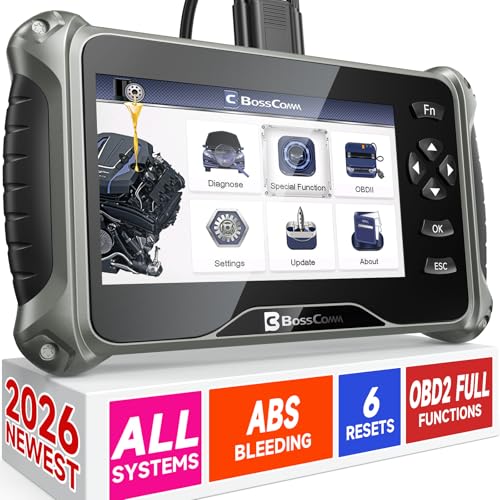
- 【✅Compared to BOSSCOMM IF742, IF745 Offers Full-System Diagnostics】The BOSSCOMM IF745 car diagnostic scanner is an upgraded model of IF742. In addition to supporting all OBD2 Code Reader functions and 6 reset options (ABS/EPB/SAS/BMS/Oil/Throttle), it expands diagnostics from 4 systems (Check Engine/ABS/SRS/Transmission) to vehicle All systems, including Steering, Suspension, and Body Electronics. This provides deeper, more comprehensive diagnostic capabilities.
- 【✨10 OBD2 Functions】The BOSSCOMM IF745 scan tool’s DTC Lookup instantly translates fault codes into user-friendly explanations, its I/M Readiness feature streamlines emissions testing with a single tap, and Freeze Frame lets you pinpoint the exact moment of a fault for in-depth root-cause diagnosis. Combined with a live data dashboard and advanced diagnostics (O2S, OBMon, EVAP), it delivers comprehensive insights for confident troubleshooting.
- 【✨Deep Diagnostics for All Vehicle System Modules】Beyond code reading/clearing and ECU information retrieval, our all-in-one data stream feature lets you inspect all current fault codes and their locations across the vehicle’s systems. This vehicle code reader helps you turn off dashboard warning lights and perform a comprehensive self-check of your car at home—no more back-and-forth trips to the repair shop or hefty inspection fees.
- 【✨6 Essential Resets: ABS Bleeding, Oil, EPB, SAS, Throttle, BMS】The BOSSCOMM IF745 obd2 scanner diagnostic tool swiftly purges air from brake lines to restore braking sensitivity, fine-tunes maintenance cycles to eliminate false alerts, resolves parking brake issues with one-click control, recalibrates steering sensors for stability, optimizes engine idling/acceleration for smoother performance, and deeply resets battery systems to extend lifespan and range via precise parameter adjustments.❗NOTE: Does NOT support bidirectional control, coding, or programming.
- 【✨10,000+ Car Models, AutoVIN, 13 Languages】The BOSSCOMM IF745 vehicle scanner diagnostic tool covers 73+ global car brands and offers support in 13 languages, making it perfect for DIYers, auto mechanics, or as a thoughtful gift. With a single-click AutoVIN feature, it instantly retrieves vehicle serial numbers, streamlining diagnostics for users globally. This adaptable tool balances user-friendliness with precision, catering to both personal and professional requirements.✅Unsure about compatibility? Compatibility will vary on vehicles' model and year, pls reach us via 📧 [email protected] 📧 before purchase.
This product presentation was made with AAWP plugin.