
NHTSA ID Number: 10133967
Manufacturer Communication Number: Sequoia CRC - C0
TSB/Document Date: 2018-04-23
Summary
Toyota is launching a Corrosion-Resistant Compound CRC Campaign for 2001-2004 model year Sequoia vehicles registered in certain cold climate states with high road salt use.
service vehicles under these CRC campaigns if there is a need to process a greater volume of
vehicles. If Toyota of Bristol elects to pursue this option, it would be provided with a second set
of Vaupel spray guns and could process vehicles simultaneously. As described below, even if
aggregated, the emissions from the two spray spaces would still be under the 5 tpy insignificant
activity or insignificant emission unit threshold. Therefore, Toyota of Bristol also requests
confirmation that its dealers in Tennessee can conduct the Sequoia and Future Campaigns in a
second spray space without jeopardizing its status as an insignificant activity or insignificant
emissions unit.
in support of Toyota of Bristol's request, this submission provides an operational description of
the Sequoia and Future Campaigns and a calculation of VOC and PM emissions associated with
a maximum CRC operating scenario. This maximum operating scenario is based on
conservative assumptions regarding a maximum amount of CRCs applied to each vehicle and a
maximum number of vehicles processed per day and per year.
I. PROCESS OVERVIEW
The Sequoia and Future Campaigns will involve a process substantially similar to the Tundra
BOD, which TAPCB previously determined to be an insignificant activity or insignificant emissions
unit. For the Sequoia and Future Campaigns, trained technicians at Toyota of Bristol will apply
two CRCs - one to the interior surfaces of the vehicle’s frame and a second to the exterior
surfaces of the vehicle's frame.
A. Materials
For the Sequoia and Future Campaigns, dealers will use the same CRCs now used for the
Tundra BOD: ¢
¢ Interior: 712AM — a paraffin wax-based product containing 0.165 lbs/gal of VOC,° and
e Exterior: Noxudol 300 S - a low-solvent, wax-based product with a VOC content of
0.09 Ibs/gal.
5 This material previously was manufactured by Parker Industries under license from Daubert Chemical
Company, Inc. under the trade name “Nox-Rust 712AM.” It now is manufactured by Parker Industries
independently under the trade name “712AM."
Neither CRC contains any federal Hazardous Air Pollutants (HAPs), SOx, NOx or lead. Both
CRCs contain trace amounts of calcium carbonate. Noxudol 300 S also contains trace amounts
of carbon black and crystalline silica, but, as explained in the MSDSs, the carbon black and
crystalline silica are bound in each sealant and will not be released as respirable particles. The
MSDSs for Noxudol 300 S and 712AM are provided as Attachment 3.
B. Equipment
As discussed in prior submissions, the CRCs cannot be applied properly using a conventional
high-volume, low-pressure (‘HVLP") spray gun. Thus, the Sequoia and Future Campaigns will
use the same Vaupel HSDR 3300 spray gun now being used by TMS dealers for the Tundra
BOD. Each dealer has been issued two guns — one gun dedicated to application of Noxudol 300
S and the other gun dedicated to application of 712AM.® If a dealer elects to set up a second
spray space, the dealers would be provided with a second set of the Vaupel spray guns so that
the CRCs can be applied to two vehicles simultaneously.
Cc. Spray Space
For the Sequoia and Future Campaigns, application of the CRCs will take place within the same
dedicated spray spaces presently used for the Tundra BOD. The spray space, located in an
existing service bay with a suitable vehicle lift and adequate ventilation, will be sectioned off by
plastic tarps that serve as temporary partitions and capture limited overspray and facilitate clean-
up. No physical alteration of the workspace or installation of new ventilation or exhaust
equipment is contemplated.
D. Waste Management
As with the Tundra BOD, the Vaupel spray guns will not require cleaning. Moreover, the CRCs do
not qualify as hazardous waste when discarded.
i. voc & PM EMISSIONS CALCULATIONS FOR SEQUOIA AND FUTURE
CAMPAIGNS
To support Toyota of Bristol's request for a determination that the Sequoia Campaign and any
Future Campaign constitutes an insignificant activity or insignificant emissions unit pursuant to
Tennessee Air Pollution Control Regulations, §1200-03-09-.04(2)(a)(3), TMS has defined a
maximum CRC operating scenario. Under this scenario, a maximum of 3 liters (0.792 gallons) of
712AM and 3 liters (0.792 gallons) of Noxudol 300 S would be applied to the interior and exterior
frame surfaces, respectively, of the eligible Toyota vehicles.’ It also is assumed that each vehicle
would be treated with the interior and exterior CRCs in a single hour — a very conservative
estimate given that the 1 hour figure does not account for the prep work required for each vehicle
and that actual spray times for application of CRCs to both the Tundra and Sequoia are well in
© Because the Tacoma LSC 90D concluded, as scheduled, on December 31, 2011, Toyota of Bristol no
longer will use the higher VOC exterior CRC "X128T," nor will it use the third spray gun that TMS provided
for application of X128T.
To date, no CRC Campaign has required more than 3 liters of any CRC. The Tacoma campaign required
2 liters of 712AM and 3 liters of X128T, Tundra BOD required 1 liter of 712 AM and 3 liters of Noxudot 300
S, and the Sequoia Campaign will require 2 liters of 712 AM and 3 liters of Noxudol 300 S. TMS does not
anticipate than any Future Campaign will require more than 3 liters of each CRC.
excess of one and one-half hours.® This scenario also assumes that each dealer would operate
the CRC campaign continuously (/.e., 24 hours per day, 365 days per year).
As discussed above, TMS may provide Toyota of Bristol a second set of Vaupel spray guns so
that it can perform CRC applications in two bays operating simultaneously. As explained below,
aggregate emissions from each service bay in a maximum operating scenario falls well below the
5 tpy threshold for insignificant activities or insignificant emissions units.* For that reason, the
addition of a second service bay should have no effect on a determination that a future CRC
campaign constitutes an insignificant activity or insignificant emissions unit.
A. VOC Emissions
1. Per Vehicle
Under the maximum CRC operating scenario, Toyota of Bristol would apply a total of 1.58 gallons
(6 liters) of anti-corrosion materials to each vehicle - 0.792 gallons (3 liters) of Noxudol 300 S and
0.792 gallons (3 liters) of 712AM. Noxudol 300 S contains 0.09 pounds of VOCs per gallon, while
712AM contains 0.165 pounds of VOCs per gallon. Assuming that all VOCs present in these
materials are emitted during their application and/or curing, the VOC emissions would be 0.202
pounds per vehicle (0.792 gallons of Noxudol per vehicle x 0.09 ibs VOCs/gal plus 0.792 gallons
of 712AM per vehicle x 0.165 Ibs/VOCs per gallon = 0.202 Ibs VOCs/vehicle).
2. Per Day
The maximum CRC processing rate, under which one vehicle would be treated per hour over a
24-hour day, would yield no more than 4.85 lbs VOCs per day (0.202 Ibs/vehicle x 24
vehicles/day = 4.85 Ibs VOCs/day) or, ifa second spray space is used, 9.70 lbs VOCs/day.
3. Tons Per Year
Assuming continuous operations at one spray space, seven days per week, 24 hours per day, a
dealer could process a maximum of 8,760 vehicles in any one year per spray space. Thus, under
the maximum CRC scenario, a dealer would emit no more than 0.88 tons of VOCs in any one
year (8,760 vehicles/year x 0.202 Ibs/vehicle, divided by 2,000 Ibs/ton = 0.88 tons VOCs/year) or,
if a second spray space is used, 1.76 tons VOCs/year.
B. PM Emissions
PM emissions from application of 712AM will be minimal due to the inherently high transfer
efficiency (/.e., low overspray) when spraying the internal surfaces of the vehicle frame. The
® Actual spray time is 101.60 minutes for Sequoia and 125.3 minutes for Tundra BOD. The actual spray
time for the Tacoma LSC $0D was 58.51 minutes. None of these times include time spent preparing the
vehicle for spraying.
° We note that each service bay could be considered a separate emission unit and, therefore, aggregating
emissions is not necessary in this context. See Tenn. Reg. §1200-03-09.04(2)(a)(1) (defining an
“emissions unit" as “any part of activity of a stationary source that emits or has the potential to emit any
regulated air pollutant” and “the smallest discrete or identifiable ... device, ... equipment, ... or group of
discrete or identifiable ... devices, ... [or] equipment ... that emit or have the potential to emit any regulated
air pollutant’).
Vaupel spray gun’s transfer efficiency when applying 712AM to the interior frame of the Sequoia
has been calculated to be at least 98.5%, very close to the transfer efficiency for the Tundra (i.e.,
99.35%). In addition, given the similar frame configurations between the vehicle models being
treated, TMS expects that the transfer efficiency when applying Noxudol 300 $ to the vehicles
exterior frame surfaces will be at least 85%, as is the case for the Tundra BOD.
Further, based on tests conducted by Concurrent Technologies Corporation evaluating the
application of Noxudol 300 S to the Tundra frame, it can be concluded that at least 90% of any
PM emitted from application of Noxudol 300 S$ will fall out of the air before reaching the ambient
outdoor air, thus reducing emissions from application of the exterior CRC by at least 90%. TMS
also expects that at least 75% of any PM emitted from application of 712AM will fall out of the air
before reaching the ambient outdoor air, thus reducing emissions from application of the exterior
CRC by at least 75%.
1. Per Vehicle
Based on these transfer efficiencies and fallout assumptions, the maximum CRC operating
scenario would produce PM emissions of no more than 0.12 pounds per vehicle ((0.94'° x 10%) +
(0.09"' x 25%) = 0.12 Ibs PM/vehicle).
2. Per Day
As explained above, under the maximum CRC operating scenario, a dealer will process no more
than 24 vehicles per day per spray space. Processing 24 vehicles per day will result in PM
emissions of up to 2.80 pounds per day (24 vehicles per day x 0.12 Ibs/vehicle = 2.80 Ibs
PM/day) or, if a second spray space is used, 5.60 pounds per day.
3. Tons Per Year
Assuming continuous operations in one spray space, seven days per week, 24 hours per day, a
dealer could process a maximum of 8,760 vehicles in any one year per spray space. Thus, under
the maximum CRC operating scenario, a dealer would emit no more than 0.51 tons of PM in one
year (8,760 vehicles/year x 0.12 Ibs/vehicle, divided by 2,000 Ibs/ton = 0.51 tons PM/year) or, if
two spray spaces are used, 1.02 tons PM/year.
*° This 0.94 Ibs PM is the calculation for Noxudol 300 S of per vehicle emissions before application of the
90% fallout factor (0.792 gals/vehicle x 7.97 Ibs/gal [Noxudol 300 S density] x 98.9% solids by weight x
(100%-85% transfer efficiency} = 0.94).
"' This 0.09 Ibs PM is the calculation for 712AM of per vehicle emissions before application of the 75%
fallout factor ((0.792 gals/vehicle x 7.895 Ibs/gal [712AM density] x 97.5% solids by weight x (100%-98.5%
transfer efficiency) = 0.091).
WV.
SUMMARY OF VOC & PM EMISSIONS CALCULATIONS
Maximum CRC Maximum CRC
Operating Scenario Operating Scenario
(One Bay) (Two Bays)
Per Vehicle (Ibs)
art ON Us)
PTE (tons/year)
a Cll ML}
Per Day (Ibs)
abd olathe)
O ATTACHMENT 2: PRIOR INSIGNIFICANT ACTIVITY DETERMINATIONS
(This page intentionally left blank.)
STATE OF TENNESSEE
DEPARTMENT OF ENVIRONMENT AND CONSERVATION
DIVISION OF AIR POLLUTION CONTROL
9TH FLOOR, L & C ANNEX
401 CHURCH STREET
NASAVILLE, TN 37243-153)
August 4, 2009
Mr. Melvin Shaffer
Toyota of Bristol
3045 West State St.
Bristol, TN 37620
Re: 82-0435-01
62959
Dear Mr. Shaffer:
This correspondence is in response to your letter dated July 24, 2009. The information which you
provided has undergone a preliminary review by the permit program,
Tt has been determined that the surface coating operation would constitute an insignificant activity or
insignificant emissions unit, as defined in part 1200-3-9-.04(2)(a)3. of the Termessee Air Pollution
Control Regulations. Specifically, the proposed opcration would result in potential emissions from the
source of less than five (5) tons per year of each air contaminant and cach regulated air pollutant that is
not 2 hazardous air pollutant, and less than 1,000 pounds per year of each hazardous air pollutant.
For new sources, subparagraph 1200-3-9-.04(4)(a) of the Tennessee Air Pollution Control Regulations
requires that the request for designation as an insignificant emissions unit be made at least thirty (30)
days prior to the estimated starting date of construction. ‘Your letter is accepted as the required
notification. All applicable air pollution regulations must still be met by your facility.
If you have any questions concerning this correspondence, please contact Olga Jacobsen at (615) 532-
0581.
Sincerely,
feta &, Tetoamen
John A. Trimmer
Chief, East Tennessee Permit Program
Division of Air Pollution Control
JAT/ODI
co: Johnson City Environmental Field Office
82-0435-01-S2
ODI
(This page intentionally left blank.)
&
SIATE OF TENNESSEE
DEPARTMENT OF ENVIRONMENT AND CONSERVATION
DIVISION OF AIR POLLU ION CON LROL
OTHE LOOR. 1. & C ANNES
40) CHURCH STREET
NASHVILLE. PN) 37243-1531
October 11,2011
Mr. Seott Ferrell
Toyota of Bristol
3045 West State St.
Bristol. (N 37620
Re: $2-0435.02
o4919
Dear Mr. Ferrell:
2 to your letter dated August 30, 2001. The mformation w hich you
ary review by the permit prozeam,
This correspondence is in respo
provided has undergone a prel
Tt has been determined that (he surface coating operation would constitwe an insignificant aervity or
insignificant emissions unit. as defined in part 1200-03-09-.04(2)(a)3. of Ue Tennessee Air Pollution
Control Regulations. Sposifically, the proposed operation would result in potential emissions Irons the
source of less than five (5) tons per year of each air contaminant and cach regulated air pollutant (hat is
not a hazardous air pollutant, and less than 1,000 pounds per year of cach hazardous air pollutant
ations
For new sources, subparagraph 1200-03-09-,04(4)(a) of the ‘Tennessee Air Pollution Control f
requires that the request for designation ag an insignificant emissions unit be made at feast Hnrty (30)
days prior lo the estimated starting date uf construction. Your letter 1s a epted as the required
notification. All applicable air pollution regulations must still be met by your facility.
32+
If you have any questions concerning this correspondence. please coutact Olga Jacobsen at (615) ae
OSSE.
Sincerely.
Abed Bustle
Jobn A. Trimmer
Chief. Fast Tennessee Permit Program,
Division of Air Pollution Contral
JAV/OD)
ec Johnson City Environmental Field Oilice
$2-0435-02-S2
ODI
areaianani£ os amen eto
peas
(This page intentionally lefi blank.)
ATTACHMENT 3: MSDSs For Sequoia COD and
Future CRC Campaigns
(This Page Intentionally Left Blank.)
MATERIAL SAFETY DATA SHEET
PARKER INDUSTRIES
16-8, NIHONBASHI 2-CHOME,
CHUO-KU, TOKYO 103-0027, JAPAN
TELEPHONE: (03) 5205-1973
inane HMIS HAZARD RATING
EMERGENCY CONTACT:
CHEMTREC (800) 424-9300 HEALTH |
FIRE 1
REACTIVITY 0
PERSONAL PROTECTION B
Date of Review: Revised: March 17, 2011
Date of Preparation: November 14, 2007 By: Y.Yamada
| SECTION 1: PRODUCT [IDENTIFICATION |
Product Name: 712AM
Chemical Family: Petroleum oil/additive blend
Material Usage: Corrosion Preventive Compound
EMERGENCY OVERVIEW: Petroleum oil-based product. When product burns it releases typical hydrocarbon products of
combustion. Refer to Section 3 for health effects and to Section 5 for fire hazard data.
| SECTION 2: HAZARDOUS INGREDIENTS |
Component W1% Recommended Exposure Limits (TWA)
Microcrystalline wax 5-10 ACGIH TLV: 2 mg/m*
CAS #64742-42-3 OSHA PEL: 2 mg/m*
Petroteum distillates, solvent dewaxed 5-15 ACGIH TLV: 5 mg/m*
heavy paraffinic
CAS #64742-65-0 OSHA PEL: 5 mg/m*
Sulfonic acids, petroleum, 5-15 ACGIH TLV: 5 me/m* {oil mist)
Calcium salts, overbased OSHA PEL: 5 mg/m" (oil mist)
CAS #68783-96-0
White mineral oil, petroleum 50-60 ACGIH TLV: 5 me/m* (oil mist)
CAS #8042-47-5 OSHA PEL: 5 mg/m’ (oil mist)
Bentonite, quaternary ammonium 0.3-1.0 Not established
compound modified
CAS# 68953-58-2
T12AM 3/17/2011 Page | of 4
Soybean oil polymer with isophthalic 0.4-4 Not established
acid and pentaerythritol
CAS# 66071 -86-1
Castor oil, dehydrated. polymerized 5-15 Not established
CAS# 68038-02-8
Calcium Carbonate 5-10 OSHA PEL: 5 mg/m’ (respirable fraction)
CAS #471-34-1 OSHA PEL: 15 mg/m’ (total dust)
ACGIH TLV: 10 mg/m’ (""! nuisance dust)
®!-This component poses a hazard only if a dust is formed, i.e.. by sawing, sanding. drilling, etc.
[ SECTION 3: HEALTH HAZARD INFORMATION |
Primary Routes of Entry: Skin absorption. eyes (splashing).
Acute Effects: May cause eye irritation and reversible skin irritation. Prolonged skin exposure may cause dermatitis
or oil acne. Breathing mists may cause dizziness or pulmonary irritation.
Chronic Overexposure:
Carcinogenicity: None of the components of this product are listed as carcinogens by NTP. IARC, or OSHA
1910(Z).
Pre-Existing Medical Conditions Aggravated by Exposure: Exposure may aggravate pre-existing respiratory or
skin problems.
[ SECTION 4: FIRST AID PROCEDURES ]
Inhalation (mist): Move victim to fresh air and call emergency medical care. If not breathing. give artificial
respiration; if breathing is difficult. give oxygen.
Eyes: In case of contact with material, immediately flush eyes with running water for at least 15 minutes. Seek
immediate medical attention.
Skin: Wash skin with soap and water. Remove and isolate contaminated clothing and shoes at the site.
Ingestion: DO NOT INDUCE VOMITING. Consult a physician. If vomiting occurs spontaneously, Keep head
below hips to prevent aspiration of liquid into the lungs.
[ SECTION 5: FIRE AND EXPLOSION HAZARD DATA ]
Flash Point: >200°C (TCC )
Explosive Limits: LEL: N/A UEL: N/A
EXTINGUISHING MEDIA: Small Fires: Dry chemical, CO2, water spray, or regular foam. Large Fires: Water
spray. fog. or regular foam. Move container from fire area if you can do it without risk. Apply cooling water to sides
of containers that are exposed to flames until well afier fire is out. Stay away from ends of tanks. For massive fire in
cargo area, use unmanned hose holder or monitor nozzles. If this is impossible. withdraw from area and let fire burn.
Withdraw immediately in case of rising sound from venting safety device or any discoloration of tank due to fire.
Special Firefighting Protcction/Emergency Action: Fire may produce irritating or poisonous gases. Positive
pressure self-contained breathing apparatus (SCBA) and structural firefighters’ protective clothing will provide
limited protection. Keep unnecessary people away; isolate hazard area and deny entry. Stay upwind; keep out of low
areas. Isolate for 1/2 mile in all directions if tank, rail car or tank truck is involved in fire. If runoff from fire control
occurs. notify the appropriate authorities.
Unusual Fire/Explosion Hazards; Combustible material; may be ignited by flames. Container may explode in heat
of fire.
Products of Combustion: Carbon monoxide, carbon dioxide, oxides of sulfur, miscellaneous hydrocarbons.
TIZAM 372011 Page 2 of 4
| SECTION 6: SPECIAL PRECAUTIONS AND SPILL/LEAK PROCEDURES l
Steps to be taken in case Material is Released or Spilled: Shut off ignition sources; no flares. smoking or flames
in hazard area. Stop leak if you can do it without risk.
Small Spills: Take up with sand or other noncombustible absorbent material and place into containers for later
disposal.
Large Spills: Dike far ahead of liquid spill for later disposal.
[ SECTION 7: SAFE HANDLING INFORMATION |
Precautions To Be Taken In Handling/Storage: Store in cool, well-ventilated area. Keep away from flames.
Never use a torch to cut or weld on or near container.
Other Precautions: Never wear contaminated clothing. Launder or dry clean before wearing. Discard oil-soaked
shoes. Wash thoroughly with soap and water (waterless hand cleaner may be helpful in removing residues) after use
and before smoking or eating. Avoid excessive skin contact.
[ SECTION 8: EXPOSURE CONTROLS |
Respiratory Protection: NIOSH-approved respirator for organic vapor and mist to control exposure where
ventilation is inadequate.
Ventilation: General and local exhaust.
Personal Protective Equipment: Protective Gloves: Impervious gloves (Viton. PVOH, etc.) Eye Protection: Safety
glasses with sideshields or chemical goggles. Other Protective Clothing or Equipment: If splashing is anticipated,
wear rubber apron and boots or other protective equipment to minimize contact.
| SECTION 9: REACTIVITY HAZARD DATA |
Stability: Stable
Incompatibility: Strong acids, oxidizing agents.
Hazardous Decomposition Products: Carbon monoxide, carbon dioxide, oxides of sulfur, miscellaneous
hydrocarbons.
Hazardous Polymerization: Will not occur.
I SECTION 10: PHYSICAL AND CHEMICAL PROPERTIES
Color: Tan
Appearance: Viscous Liquid
Odor: Oil
Boiling Point (initial): NA
* Evaporation Rate (n-Butyl Acetate=1):

- 💯【Conta.ct us for Support Directly】If you met any...
- 🔥🔥🔥【2026 AUTEL FLAGSHIP MK900BT MK900-BT, NEW...
- 🚗【3000+ ACTIVE TESTS (50➡3000+), SAME AS MS...
- 🚗【40+ HOT SERVICES FOR 150 MAKES (28+➡40+)】Full...
- 🚗【OE ALL SYSTEM DIAGNOSE, AUTO SCAN 2.0: SCAN LICENSE...

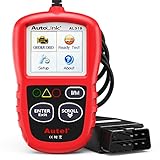
- 【TURN OFF CEL】 This AL319 car scanner diagnostic tool...
- 【EXTENSIVE APPLICATION】 Autel AL319 Compatible with...
- 【FOR END USER & DIYERS】 This error code reader AL319 is...
- 【USER-FRIENDLY DESIGN】 This OBD2 scanner and check...
- 【HIGH-QUALITY SERVICES】 12 months war.ranty from the...
Last update on 2026-06-23 / Affiliate links / Images from Amazon Product Advertising API
If the PDF is very large, it may not load in the preview below.
Some older TSBs had multiple PDFs — visit the NHTSA Website to view all PDFs.
If the TSB PDF does not show, download or view it on the NHTSA Website.
Click on the (+) Plus Sign
Then Click on Associated Document(s)
Search NHTSA Database for Recalls
Search NHTSA Database for Vehicle Investigations
View Latest Vehicle Investigations
Search NHTSA Database for Vehicle Complaints
View Latest Vehicle Complaints
TSB/Document ID: Sequoia CRC - C0
Replacement Service Bulletin Number:
MFR Communication Date: 2012-12-06
MFR Internal Campaign ID/Software Version:
Communication Type: Service Bulletin/Repair Instructions
NHTSA Components: EQUIPMENT:OTHER:OWNERS/SERVICE/OTHER MANUAL
MFR Component System:
MFR Component Subsystem:
Previous TSB | Next TSB |

- Stay Updated with Lifetime Access: This obd2 scanner includes lifetime free software updates for all app service functions. With a single payment, enjoy full access to diagnostics, reset tools, and maintenance features — zero subscription fees. A budget-friendly choice for weekend mechanics, home car owners, and DIYers, supporting vehicles from 1996 onward. Come to us with your VIN to check compatibility.
- Full Bidirectional Control/Active Tests & Stable Wireless Connectivity: This car code reader features full bidirectional control, allowing you to send commands to the vehicle's ECU for active tests on components such as fuel pumps, injectors, A/C clutches, windows, sunroofs, and more. This car scanner diagnostic tool helps DIYers quickly diagnose and test vehicle parts, cutting down troubleshooting and repair time. With BT 4.0 wireless connectivity, you can enjoy cable-free diagnostics up to 33 feet. Stand in your garage and test windows, wipers, or even engine components—all without needing to move around your car.
- Portable Car Scanner with 26 Special Functions: Scheduled vehicle maintenance with the A30M car diagnostic scanner can keep your vehicle in peak condition and save you big on dealership trips. The XTOOL A30M obd2 scanner diagnostic tool features essential reset and relearn functions, such as Oil Reset, EPB Reset (Electronic Parking Brake Release), SAS, ABS Brake Bleeding, Throttle Body Relearn, Injector Coding, Crank Sensor Relearn, Headlight Adjustment, and Tire Size Reset. Note: Service functions may vary by vehicle model – check compatibility beforehand!
- Wide Compatibility CAN FD & FCA
 Autoauth: This obd2 scanner diagnostic tool is compatible with over 85+ car brands from the U.S., Europe, and Asia, providing extensive coverage through a BT connection with your smartphone or iPad. Now upgraded to support the latest protocols, it includes FCA AutoAuth access for Chrysler, Jeep, Dodge, and Fiat (2018+), and supports CAN FD for GM (2020+) models, giving you greater access to newer vehicles and systems. Note: The FCA AutoAuth account is not included with the device. Users must register and pay separately through the official FCA AutoAuth website to access diagnostic functions for vehicles that require it.
 - Up to 8 Live Data Streams Graphing – Real-Time Graphing for Deeper Insight: This car scanner supports up to 8 live data streams simultaneously with intuitive, real-time graphing. Gain comprehensive insights into your vehicle’s performance, making it easier to spot issues, detect trends, and make informed diagnostic decisions with confidence.
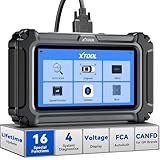
- Comprehensive OBD2 Scanner with 16 Resets: The XTOOL D5S car code reader and vehicle reset tool provides an advanced diagnostic solution with 16 commonly needed reset functions, including Electronic Parking Brake Reset (EPB Reset), SAS, BMS Reset (Battery Test), Throttle Body Relearn, TPMS Reset, ABS Bleeding, Injector Coding, Gearbox Match, Suspension Adjustment, Headlight, Window Initialization, Crank Sensor Relearn and more. Equipped with CAN FD Protocol and FAC AutoAuth, the D5S obd2 scanner diagnostic tool ensures compatibility with a broad range of modern vehicles, allowing users to address common maintenance needs quickly. NOTE: Please Check the Compatibility before ordering.
- 4 Main System Car Scanner & Full OBD2 Diagnostics: The XTOOL D5S car code reader is ideal for home mechanics, DIYers, and professionals, providing access to Transmission/Engine/ABS/SRS systems to read DTCs, Live data can be displayed in text or up to 4 PID data graphs, along with full OBD2 diagnostics to check the engine light on, other obd2 issues and routine maintenance. This car diagnostic scanner ensures you can keep your vehicles in top condition, avoiding costly repairs or unexpected breakdowns. NOTE: Some vehicles display three systems after connection because the transmission and engine of some vehicles are integrated into one.
- Check Engine Code Reader & Real-Time Engine Monitoring: Whether you're a car owner, a DIYer, or run a repair shop, the XTOOL D5S obd2 scanner diagnostic tool makes engine diagnostics fast and frustration-free, reading and explaining trouble codes in seconds—no confusion. Check live data like fuel trim, 02 sensor voltage, RPM, and coolant temp to pinpoint mis~fires, rough idle, or sensor issues. After repairs, simply use the D5S check engine code reader and reset tool to turn off the check engine light and confirm the problem’s fixed—saving time, money, and unnecessary shop visits. - Note: If the check engine light comes back on, it indicates the original problem still exists.
- Portable Car Scanner for ABS and SRS: XTOOL D5S gives you peace of mind when ABS or airbag warning lights come on. It reads and clears ABS codes to help you fix brake sensor, traction control, or wheel speed issues, and supports ABS bleeding after repairs like caliper or master cylinder replacement. For airbag systems, it scans and clears SRS codes related to airbags, seatbelt tensioners, and crash sensors. Whether you're doing repairs at home or running a small shop, the D5S is a cost-effective solution for safety diagnostics. Note: If a fault code returns after clearing, it usually means the issue hasn’t been fully resolved. Please check the compatibility before ordering.
- Transmission Warning Light ON? Here’s the Transmission Diagnostic and Reset Tool You Need: The XTOOL D5S is more than just a basic car scanner—it’s an easy-to-use transmission diagnostic tool. From rough shifts to slipping gears, the D5S lets you read and clear transmission trouble codes, monitor real-time TCM data, and perform transmission resets after fluid changes or repairs. Whether you’re a hands-on car owner or a pro running a busy shop, this OBD2 scanner with transmission functions helps you catch problems early—saving you time, money, and future headaches.. Note: Clearing fault codes is equivalent to a reset on some vehicles, but not all. For help, contact XTOOL Tech Support.
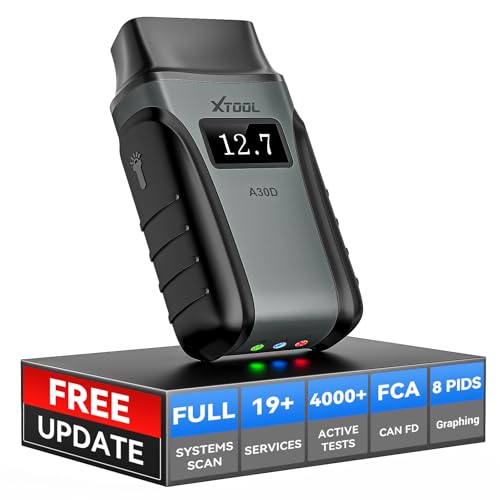
- Save $500+/Year with Pro-Level Diagnostics -No Subscriptions: The Portable XTOOL Anyscan A30D OBD2 scanner diagnostic tool includes free lifetime software updates for all app service functions, without extra cost. With a single payment, enjoy full access to diagnostics, relearn scan tools, and maintenance features. A cost-effective, smart choice for car owners and DIY enthusiasts, compatible with vehicles from 1996 onward. Please provide the car VIN and the special functions you need in advance so that we can confirm compatibility
- Bi-Directional Control for Faster Troubleshooting: Unlike a basic code reader, the A30D bi directional scan tool sends commands directly to your vehicle’s ECU to actively test components like fuel pump, valves, wipers, windows, doors, sunroof, and headlamps right from your smartphone. See component responses in real time without disassembly—perfect for brake jobs, electrical issues, and hard-to-find problems. This bidirectional obd2 scanner helps pinpoint faults faster, reduce guesswork, and avoid replacing good parts. An efficient, easy-to-use car scanner diagnostic tool built for DIYers, home garage users, and small-shop technicians who want real two-way scanner, not just codes
- 19 Reset Functions for Routine Maintenance: The A30D car diagnostic scanner provides 19 relearn functions without extra charges, including EPB Reset for parking brake replacement, TPMS Reset after tire changes, ABS Auto Bleeding, Oil Reset, SAS Reset, BMS Reset, Throttle Relearn, Injector C0ding, Gear Learning, Crank/Crankshaft/Cam/Ckp Sensor Relearn Tool, Transmission Match, Seat Calibration, Airbag Repair and more. This XTOOL A30D automotive scanner diagnostic tool supports preventive care, helping extend vehicle life and reduce costly shop visits. Functions vary by vehicle make and year—plz confirm compatibility before purchase
- Stable BT Connection & All-System & 8 Pids Live Data: The A30D wireless OBD2 scanner delivers a fast and stable wireless connection up to 33 feet, letting you move freely around the vehicle without tangled cables. Pair with with Android 9.0+ and iOS 10.0+ devices to turn your phone into a mobile auto scanner—perfect for home garages, driveways, or on-the-spot repairs. This full system scanner for cars provides real-time access to all major modules, including Engine, Gearbox, ABS, SRS, AC and more. with clear graphs, meters, and up to 8 PIDs displayed at once. This car code reader makes system monitoring visual, simple, easy to understand, and offering data logging for playback and deeper
- Wide Compatibility with CAN-FD & FCA Support: The A30D car computer diagnostic reader works with most 1996 and newer vehicles with a standard OBD2 port, including for Ford, for GM, for Toyota, for Honda, for Nissan,for Hyundai etc, with ongoing updates covering more car models and functions later. It also supports newer communication protocols like CAN-FD and FCA AutoAuth (Personal AutoAuth account and active subscription required, not included with the device!for Chrysler, for Dodge, for Jeep, for Fiat models). It is a future-ready automotive scanner diagnostic tool for households with multiple vehicles or part-time techs. Coverage vary by cars, plz check the compatibility first
Last update on 2026-06-23 / Affiliate links / Images from Amazon Product Advertising API
This product presentation was made with AAWP plugin.