
NHTSA ID Number: 10133111
Manufacturer Communication Number: PI1141
TSB/Document Date: 2018-04-16
Summary
This preliminary information bulletin explains the new model features.
Bulletin No.: PI1141
Date: Dec-2013
Subject:
2014 Cadillac ELR Coupe New Model Features
Models:
2014 Cadillac ELR Coupe Extended Range Electric Vehicle (EREV)
Equipped with EREV Technology — RPO EVB and 4 CYL, 1.4L, MFI, DOHC Gas Powered Generator —
RPO LUU
Equipped with Fully Automatic, Front Wheel Drive (FWD), Electronically Controlled, 4ET50 Variable-Speed
Transaxle — RPO MKA
Bulletin Purpose
This is a special bulletin to introduce the new 2014 Cadillac ELR Extended Range Electric Vehicle (EREV). The purpose of this bulletin is to familiarize
Dealership Sales and Service Personnel with the vehicle’s features and also describe the actions the Service Department Personnel will need to take to ensure
they are able to fully service this exciting new model.
About the Vehicle
The 2014 Cadillac ELR is a sleek luxury coupe that features the first application of Extended Range Electric Vehicle (EREV) technology by a full-line luxury
automotive brand. The ELR is an unprecedented combination of luxury, advanced engineering and progressive design that is both sporty and environmentally
friendly. The exterior establishes a new, progressive theme and proportion by utilizing an aggressive, forward-leaning profile. The overall shape is reinforced by
a prominent, sweeping body line accented by pushing 20-inch wheels to the edges of the body. Aerodynamics play a crucial role in the design of the exterior as
airflow is managed to help the vehicle slip through the air with minimal drag. A flush front fascia and grille – with active shutters behind the grille opening as well
as tapered fascia corners, enable air to move easily around the car to reduce drag. In the rear, sharp edges and a carefully designed spoiler also manage
airflow. An aggressive rake on the windshield and back glass help reduce turbulence and drag and contribute to ELR’s 0.305 coefficient of drag.
ELR uses active noise cancelling to uniquely preserve the peace and quiet. While most cars that use this type of sound-neutralizing technology aim simply to
mute exhaust boom at low engine speeds, such as when idling, ELR uses it across all engine speeds. The active noise cancelling system electronically gathers
input from the vehicle’s generator and powertrain, as well as from three ceiling-mounted microphones. The system calculates and produces the appropriate
noise-cancelling signal, which is delivered through the Bose® audio system’s speakers and subwoofer.
1
The ELR’s dramatic design is matched with an engaging driving experience, calibrated for uncompromising performance. With 295 lb-ft of torque (400 Nm),
about 12 percent more than the 3.6L V-6 in the SRX, acceleration in the city and on the highway, including merging and passing is achieved with reassuring
power on demand. Driving confidence is further enhanced by advanced suspension and damping systems, including Continuous Damping Control which
adjusts damping every two milliseconds, to maintain optimal vehicle ride control over varying road surfaces and profiles. A solid, stable foundation underpins the
ELR, featuring a body-frame-integral structure with main underbody rails running continuously from front to rear. Advanced, high-strength steels add strength
and conserve weight.
Additional vehicle highlights include:
–
Wide front and rear tracks and a low center of gravity.
–
HiPer Strut front suspension featuring lightweight forged aluminum components for reduced weight enabling more nimble response.
–
Dual-pinion, rack-mounted electric power steering system with premium ZF steering gear designed to provide excellent feedback while helping to save
fuel.
–
A semi-independent rear compound-crank suspension with Watts link that incorporates weight-optimized trailing arms to absorb lateral forces, allowing
the suspension to be tuned to handle vertical, forward and rearward motions.
–
Hydraulic ride bushings in the front and rear suspensions.
–
Standard chassis control systems include antilock brakes, traction control and StabiliTrak electronic stability control.
Additional interior highlights include:
–
Interior design featuring cut-and-sew accented leather incorporating sueded microfiber, chrome, wood and available carbon fiber finishes throughout.
–
Available Opus semi-aniline leather seating.
–
Auto-glide/power assisted covered storage/cup holder in the center console.
–
Fold-down rear seat backs accommodate longer items, including multiple sets of golf clubs.
–
LED powered accent lighting in the instrument panel and doors.
–
8-inch (203-mm) configurable instrument and driver information displays, offering four different configurations.
The industry-leading EREV technology provides an EV range of approximately 35 miles (56 km) and a full driving range of approximately 300 miles (480 km), by
combining pure electric driving and an efficient, range-extending 1.4L gas powered generator. The responsive EREV driving technology is enhanced with
exclusive Regen on Demand™ and selectable Drive Modes that enhance the driving experience and make the most of efficiency. Regen on Demand™ allows
the driver to temporarily regenerate energy from the momentum of the vehicle into electricity that can be stored in the battery pack for later use. It is engaged via
steering-wheel paddles adapted from traditional performance cars.
Vehicle Construction
The construction is single body-frame-integral (unibody) with front and rear crumple zones, galvanized steel front fenders, roof and door panels, an aluminum
hood, a one-piece body side outer panel and thermal plastic olefin (TPO) bumper fascias. The ELR is considered a compact car and is built at the DetroitHamtramck Assembly plant in Michigan. Top speed is 100 mph (160 km/h).
Unique Characteristics and Normal Operating Conditions
Drivers of the ELR may experience some operating characteristics that are unique to this vehicle. Due to the quiet nature of the propulsion system, certain
sounds that may have been masked by the engine's natural harmonics will be apparent. Among them is the electric engine cooling fan, coolant pumps, the air
conditioning compressor and the HVAC blower. In addition to those sounds, the drive motor battery cooling system may be operational during charging or when
the vehicle is powered down. This may be more evident when charging or during remote cabin conditioning. Due to the electric nature of the vehicle, the electric
motor may be heard as the vehicle moves. This is a normal operating characteristic.
Pedestrian Safety Signal — Automatic and Manual
This alert was developed in conjunction with the American Federation of the Blind. Because the ELR operates so quietly in all-electric mode, it is equipped with
an automatic sound generation feature and a manual alert. The automatic sound is generated at speeds below 20 mph (32 km/h) to indicate the vehicle’s
presence to pedestrians. The sound changes when the vehicle is speeding up or slowing down. It is activated when the vehicle is shifted into a forward gear or
R (Reverse), up to 19 mph (30 km/h).
A manual alert can be sounded while driving, such as in parking lots. Use this feature to alert people who may not hear your vehicle approaching. At speeds
less than 40 mph (64 km/h), to manually sound the pedestrian safety signal perform the following:
1.
Pull the turn signal lever all the way toward you momentarily. The high-beam headlamps and indicator light will turnON, and a soft-note alert will
momentarily sound. When the turn signal lever is released, the high-beam headlamps and indicator light will turn OFF.
2.
Repeat the action for additional activations of the pedestrian safety signal as needed.
High Voltage Lithium-Ion Drive Motor Battery System
2
The heart of the ELR's Electric Propulsion system is its advanced Lithium-Ion Drive Motor Battery System. The electric propulsion system drives the vehicle.
The hybrid battery contains 288 cells. Groups of three cells are welded together in parallel called cell groups. There are a total of 96 cell groups in the hybrid
battery assembly. These cell groups are electrically connected in series. Each individual cell group is rated at 3.7 V, for a nominal system voltage of 355 V direct
current. The battery cell groups are joined to form three distinct sections.
–
The first 30 battery cell groups make up battery Section 1. This section is adjacent to the instrument panel and contains battery cell groups 67 through
96.
–
The next 24 battery cell groups make up battery Section 2. This section is located behind section 1 and contains battery cell groups 43 through 66.
–
The transverse battery is Section 3 and it contains the remaining battery cell groups 1 through 42.
The battery energy control module monitors the voltage of the 96 battery cell groups through 4 hybrid battery interface control modules. There is one hybrid
battery interface control module for section 1 and 2, with section 3 having two modules. The voltage sense lines are attached to each individual cell group, and
these sense lines terminate at a connector located on the top surface of the battery section. A voltage sense harness joins this connector to the hybrid battery
interface control modules, located on the top surface of the battery section. The hybrid battery interface control module encodes the voltage reading and
transmits it to the battery energy control module through the battery energy control module harness.
The battery energy control module will determine when a fault condition is present. Diagnostics and system status are communicated from the battery energy
control module to the hybrid powertrain control module 2 through serial data. The hybrid powertrain control module 2 is the host controller for diagnostic trouble
code information. The battery is liquid cooled for long life and optimum performance.
The HV battery is located beneath the vehicle (shown). The battery energy control module, battery interface control modules 1-4, current sensor, and high
voltage contactors are located within the battery assembly. The powertrain control module 2 is located under the front passenger seat.
Notice:
•
PRIOR to performing service, ensure all High Voltage Safety procedures and Warnings are followed exactly as written. Personal Protection
Equipment (PPE) MUST be worn and proper procedures MUST be followed.
•
Service Technicians will perform internal battery service and drive unit service as guided by the TAC Technical Assistance E-Team.
Manual Service Disconnect (MSD) Located Under Front Floor Console Rear Trim Panel
3
The Manual Service Disconnect (MSD) is located under the front floor console rear trim panel (1) as shown. Removing the rear trim panel will expose the MSD.
Refer to Front Floor Console Rear Trim Panel Replacement in SI.
Hybrid Modes of Operation
The ELR is an electric vehicle with extended range capability. Plug it in, let it charge overnight, and it’s ready to run on a pure electric charge — gas and tailpipe
emissions free. After that, the ELR uses a range-extending 1.4L gas powered generator that produces enough energy to power it for hundreds of miles on a
single tank of gas.
Electric Mode
In Electric Mode, the ELR will not use gasoline or produce tailpipe emissions. During this primary mode, the ELR is powered by electrical energy stored in its
high voltage propulsion battery. It can operate in this mode until the battery is depleted to a predetermined level. Electric range is affected by colder outside
temperatures. During colder months, the energy needed to warm the vehicle’s cabin and high voltage propulsion battery can cause the vehicle’s electric range
to decline.
Notice: Refer to the latest version of PIC5414C: (EREV) Explanation Electric Range Variation and Driving Tips For Maximum Range
Use the Efficiency Gauge in the instrument cluster (IC) and the following driving style tips to avoid unnecessary aggressive/inefficient accelerations and
decelerations to help maximize energy efficiency and range.
–
Driving Style: Avoid aggressive/inefficient acceleration by observing the Efficiency Gauge in the IC. Agressive/inefficient acceleration is indicated when
the ring turns yellow or the leaf turns yellow and travels above the center of the gauge. The leaf indicator or green ring indicator should be kept green
and in the center of the gauge.
–
Driving Style: Avoid aggressive/inefficient braking by observing the Efficiency Gauge in the IC. Aggressive/inefficient braking is indicated when the ring
turns yellow or the leaf turns yellow and travels below the center of the gauge. Plan ahead for decelerations and coast whenever possible. For example,
4
do not rush to traffic signals.
–
Cruise Control: Use cruise control when appropriate.
–
Coasting: DO NOT shift to N (Neutral) to coast. The vehicle recovers energy while coasting and braking in D (Drive) or L (Low).
–
Electric Range: Electric range is maximized at 50 mph (80 km/h) and below. Higher speeds use more energy and can significantly reduce electric
range.
Extended Range Mode
Once the electric charge is depleted, the range-extending gas powered generator will start to generate enough power to continue driving the vehicle. Engine
operation ensures that you will not be stranded by a depleted battery. The vehicle determines when the engine needs to run. Engine speed will vary, depending
on driving conditions, to optimize efficiency. The hybrid/EV battery pack will not be recharged while in extended range mode. The vehicle must be plugged in to
recharge the hybrid/EV battery pack completely. Total vehicle range is based on the available combined electric and extended range. The displayed electric and
fuel ranges are projections based on past vehicle performance and charge/fuel level. The displayed ranges will change based on driving style, outside
temperature and climate settings.
Regenerative Braking
When the vehicle is coasting or braking the power inverter module may operate the drive motor as a generator in an Electrical Generation Mode. Operating as
an electrical generator, the drive motor exerts a driveline load that helps to slow the vehicle. The electrical energy that the drive motor creates is transferred by
the power inverter module to the hybrid/EV battery pack. Constant communication between the power inverter module and the electronic brake control module
allows the blending of regenerative braking force with hydraulic braking force.
Regen on Demand™
This feature will slow the vehicle by recapturing energy using the steering wheel paddles. It works in D (Drive) and L (Low). The accelerator pedal must be fully
released for it to work. The brake pedal must be applied at low speed, because it will not stop the car. Cruise control will turn OFF, and the brake lights may
turn ON, when this feature is activated.
To activate Regen on Demand™, pull and hold either paddle on the back of the steering wheel without pressing the brake pedal or accelerator pedal. While
pulling either paddle, the vehicle will begin to decelerate using regenerative braking. Regen on Demand™ is deactivated once the paddles are released, or the
brake pedal or accelerator pedal is pressed.
Internal Combustion Engine (ICE) Starting
This vehicle does not use a 12 V starter motor to crank the ICE. A much more powerful 300 V motor, drive motor 1, located within the transmission is utilized to
crank the ICE. Drive motor 1 can rotate the ICE to operating speed of 800 RPM within just a few hundred milliseconds. This allows near-instant starting of the
ICE.
The vehicle’s on-board computers determine when the ICE needs to run. Some of the normal vehicle conditions that force the ICE to run are:
–
The hybrid/EV battery pack has a low state of charge.
–
The hood is open or not completely latched.
–
The ICE is needed to maintain the hybrid/EV battery pack temperature.
–
The ICE needs to run for maintenance.
–
Low ambient temperatures.
–
At temperatures of 35°F (2°C) and colder, the ICE can start up to provide both electric power as well as provide heat to supplement the
electric heater. This can happen in cold ambient temperatures, dependent upon climate settings and temperature, regardless of battery
charge level.
Engine Unavailable
If the vehicle runs out of fuel, or the power inverter module has detected the ICE will not start due to a malfunction, the vehicle can continue to be driven in
5
Electric Mode.
Maintenance Modes
Engine Maintenance Mode: Engine Maintenance Mode runs the engine to keep it in good working condition when the vehicle has been operated in Electric
Mode only for a prolonged period. Engine Maintenance Mode will run the ICE, even if the hybrid/EV battery pack state of charge is sufficient to operate the
vehicle in Electric Mode.
Fuel Maintenance Mode: When only Electric Mode has been used for a prolonged period, Fuel Maintenance Mode will run the ICE to use up old fuel. The ICE
will run until enough fresh fuel is added or a low fuel level is detected. During Fuel Maintenance Mode the ICE may cycle ON and OFF.
Service Mode
Service Mode is available for service and diagnostics and to verify the proper operation of the MIL and may be required for emission inspection purposes. With
the vehicle OFF, and the brake pedal not applied, pressing and holding the POWER button for more than 5 seconds will place the vehicle in Service Mode. The
instruments and audio systems will operate as they do in ON, but the vehicle will not be able to be driven. The propulsion system will not start in Service Mode.
Gas Powered Generator
The underhood gas powered electric generator is a 1.4L DOHC inline four cylinder engine that produces 83 HP (62 kW) and combined with electric can
produce 295 lb. ft. (400 Nm) of torque. The block is cast iron with cast aluminum cylinder heads, displacement is 85.3 cu in/1398 cc. Bore and Stroke 2.89 x
3.25 in / 73.4 x 82.6 mm. The valve train system consists of overhead camshafts, four valves per cylinder, and continuously variable intake and exhaust cam
phaser. The ignition system uses individual coil-on-plug modules and sequential multi-port fuel injectors with electronic throttle control. Premium gasoline with a
posted octane rating of 91 or higher is required.
Recommended dexos1™ Oil Viscosity Grade
Notice: DO NOT use other viscosity grade oils such as SAE 10W-30, 10W-40, or 20W-50.
ACDelco dexos1™ Synthetic Blend SAE 5W-30 is the recommended viscosity grade for the 1.4L gas powered generator.
Cold Temperature Operation: In an area of extreme cold, where the temperature falls below −20°F (−29°C), an SAE 0W-30 oil may be used. An oil of this
viscosity grade will provide easier cold starting for the engine at extremely low temperatures.
Refer to this General Motors website for dexos1™ information about the different licensed brands that are currently available: http://www.gmdexos.com
Important Information About Portable Electric Vehicle Charging
Notice: Please share this important information about Portable Electric Vehicle Charging with each customer at delivery. For the customers
future reference, direct the customer to these key points that are contained in the ELR Owner Manual > Driving and Operating > Charge Cord
•
Before you plug in to any electrical outlet, have a qualified electrician inspect and verify the electrical system (electrical outlet, wiring,
junctions and protection devices) for heavy-duty service at a 12 amp continuous load.
•
Electrical outlets may wear out with normal usage or be damaged over time, making them unsuitable for electric vehicle charging.
6
•
Check the electrical outlet/plug while charging and discontinue use if the electrical outlet/plug is hot, then have the electrical outlet serviced
by a qualified electrician.
•
Mount the Charge Cord to reduce strain on the electrical outlet/plug.
•
DO NOT use extension cords, multi-outlet power strips, splitters, grounding adapters, surge protectors, or similar devices.
•
DO NOT use an electrical outlet that is on a circuit with other electrical loads.
Drive Motor Battery Charging
Battery
The ELR is powered by a lithium-ion high voltage battery pack, which holds its charge efficiently and has no memory effect, so it doesn’t have to be run down
completely before recharging. Keep the vehicle plugged in, even when fully charged, to keep the battery temperature ready for the next drive.
Charging Time
The ELR can be programmed for three charging modes: Immediately upon plug-in; Delayed based on departure time; and Delayed (Electric Rate and Departure
Time). Using a 120 volt standard outlet will take approximately 12.5 hours to charge the ELR at the 12 amp setting, or 18 hours at the 8 amp default setting.
Using a 240 volt charging station will take approximately 5 hours. Charge times will vary with outside temperature.
–
Touch the “Green Leaf” Energy “icon” on the infotainment touch screen and then touch the Charging “icon” to view the current Charge Level and
Charge Mode status.
–
Touch the green Charge Level “text” to select a different charge level.
–
Touch the green Charge Mode “text” to select a different charge mode.
Programmable Charging Modes
To change charge modes, press the Leaf button and touch the Charging tab on the center stack. There are three different charge modes:
–
Immediate: The vehicle starts charging as soon as it is plugged in.
–
Delayed Based on Departure Time: The vehicle estimates the charging start time considering the programmed departure time for the current day of
the week.
–
Delayed based on Electric Rate & Departure Time: The vehicle estimates the charging start time based on the utility rate schedule, utility rate
preference, and the programmed departure time for the current day of the week. The vehicle will charge during the least expensive rate periods to
achieve a full battery charge by the departure time.
Charging Status
Charging Status Indicators are located on the instrument panel near the windshield and in the side mirrors (if activated).
Charging Status Indicator (Instrument Panel)
–
Solid green with single horn chirp – Vehicle is plugged in; battery is charging
–
Slow (long pulse) flashing green with double horn chirp – Vehicle is plugged in; battery charging is delayed
–
Fast (short pulse) flashing green – Vehicle is plugged in; battery is fully charged
7
–
Solid yellow – Vehicle is plugged in; not charging
–
No light – Vehicle is not plugged in OR there is an issue with the charger or outlet
–
No light and repetitive horn chirps – Electricity was interrupted before charging was completed
Charging Status Indicator (Side Mirrors)
–
Solid green – Battery is charging; charging is less than half complete
–
Fast flashing green – Charging is more than half complete
–
Slow flashing green – Charging is nearly complete
–
No light – Charge is complete or not charging
Start Charging
The provided 120 V travel charge cord is located in the storage compartment under the cargo floor.
1.
Place the vehicle in P (Park).
8
2.
Select the Charging icon at the bottom of the Energy screen on the touch screen.
3.
Review the selected Charge Level and Charge Mode.
4.
Touch the Green Text if an increased Charge Level or different Charge Mode is desired.
5.
Once the Charge Level and Charge Mode are selected, turn OFF the vehicle.
Note: The Charge Level selection automatically returns to the reduced level each time the vehicle is driven.
6.
Remove the charge cord from the trunk and plug it into an electrical outlet. DO NOT PLUG INTO AN EXTENSION CORD. The charge cord indicator
should be green. Where possible, secure the charge cord to the wall.
7.
Press and release the rear edge of the charge port door, located just in front of the driver’s door, to open the door. Plug the charge cord into the charge
port.
The Charging Status Indicator on the instrument panel illuminates green and the horn chirps when properly connected. The side mirror lights illuminate
green and may flash (if activated).
⇒
If the Charge Cord Theft Alert has been enabled, it is armed automatically when the vehicle is locked with the Remote Keyless Entry transmitter.
End Charging
1.
Unlock the vehicle with the RKE transmitter to disarm the charge cord theft alert.
2.
Unplug the charge cord from the vehicle by pressing the plug release button and close the charge port door.
3.
Unplug the charge cord from the electrical outlet.
4.
Properly stow the charge cord in the trunk.
Home Charging Station
9
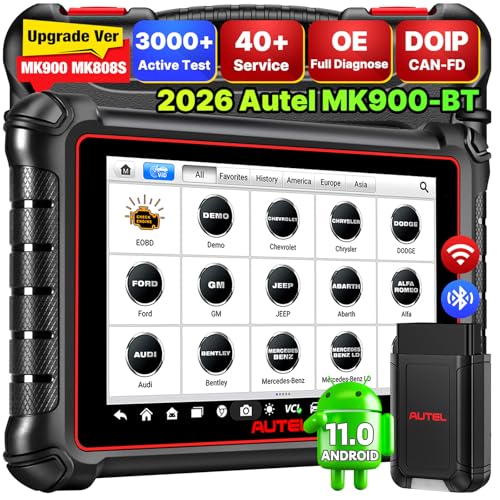
- 💯【Conta.ct us for Support Directly】If you met any...
- 🔥🔥🔥【2026 AUTEL FLAGSHIP MK900BT MK900-BT, NEW...
- 🚗【3000+ ACTIVE TESTS (50➡3000+), SAME AS MS...
- 🚗【40+ HOT SERVICES FOR 150 MAKES (28+➡40+)】Full...
- 🚗【OE ALL SYSTEM DIAGNOSE, AUTO SCAN 2.0: SCAN LICENSE...

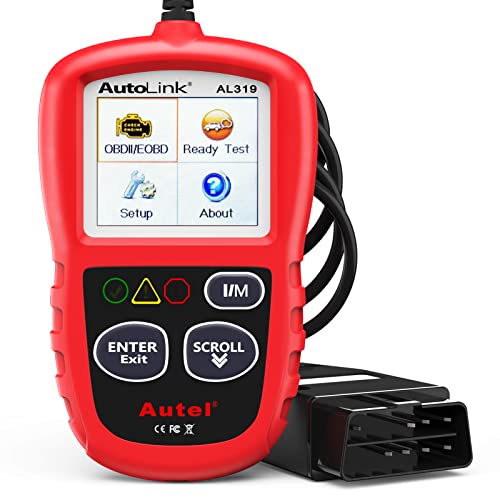
- 【TURN OFF CEL】 This AL319 car scanner diagnostic tool...
- 【EXTENSIVE APPLICATION】 Autel AL319 Compatible with...
- 【FOR END USER & DIYERS】 This error code reader AL319 is...
- 【USER-FRIENDLY DESIGN】 This OBD2 scanner and check...
- 【HIGH-QUALITY SERVICES】 12 months war.ranty from the...
If the PDF is very large, it may not load in the preview below.
Some older TSBs had multiple PDFs — visit the NHTSA Website to view all PDFs.
If the TSB PDF does not show, download or view it on the NHTSA Website.
Click on the (+) Plus Sign
Then Click on Associated Document(s)
Search NHTSA Database for Recalls
Search NHTSA Database for Vehicle Investigations
View Latest Vehicle Investigations
Search NHTSA Database for Vehicle Complaints
View Latest Vehicle Complaints
TSB/Document ID: PI1141
Replacement Service Bulletin Number:
MFR Communication Date: 2013-12-19
MFR Internal Campaign ID/Software Version:
Communication Type: Service Bulletin/Repair Instructions
NHTSA Components: EQUIPMENT:OTHER:OWNERS/SERVICE/OTHER MANUAL
MFR Component System:
MFR Component Subsystem:
Previous TSB | Next TSB |
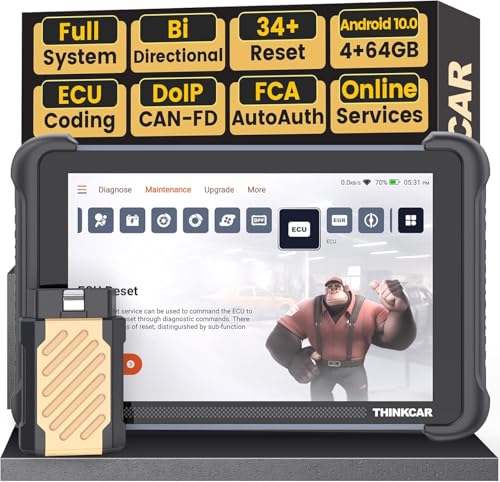
- [Notice] When you receive a used device, it may be a customer return resold by Amazon without inspection. You can exchange it for a new one through Amazon. As this situation is unavoidable, we sincerely apologize. For any issues, contacting us via Amazon's "Messages" is the best way. THINKSCAN 689BT Bidirectional Scan Tool Can Be Used Immediately After It is Turned On, Without Complicated Registration Process, Which is More Convenient & Quick.
- Full Bi-Directional Control & 3000+ Active Tests: Take control and test components like actuators, fuel injectors, relays, and cooling fans in real time. You’ll quickly see if the problem is in the part itself or the control module — saving you hours of guesswork and frustrating trial-and-error.
- Advanced ECU Coding Capabilities: Handle module matching and hidden feature activation with confidence. When you replace an ECU or want to customize settings, this obd2 scanner diagnostic bi directional tool gives you the professional-level capabilities you need without the dealership price tag.
- 34+ Useful Reset and Maintenance Functions: Complete everyday service tasks smoothly with a wide range of helpful reset and maintenance functions. Whether you’re keeping up with regular upkeep or tackling a specific job, this scanner makes maintenance simpler and less stressful for both DIYers and pros.
- Comprehensive Full System Diagnostics: Diagnose every major system — Engine, Transmission, ABS, SRS, TPMS, and more — all in one place. Finally stop wondering if you’re missing something important; get the full picture and clear codes with ease.
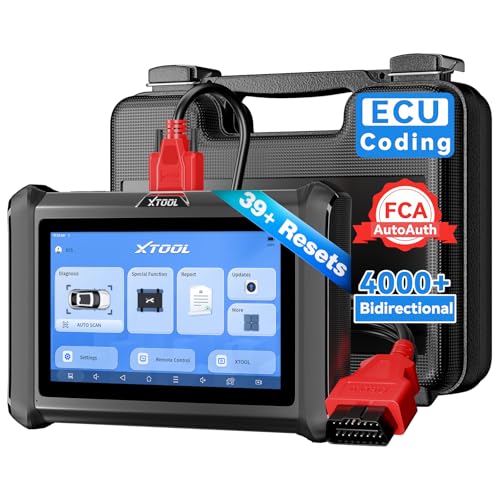
- Top Reasons to Choose the D7S OBD2 Scanner: XTOOL D7S car scan tool, an upgrade of XTOOL D7, offers comprehensive features for automotive technicians, workshops, and DIY enthusiasts 1. Upgraded Hardware: 2+64GB memory, rear camera, intuitive interface, foldable bracket 2. Complete Diagnostics: FCA
 Autoauth, OE-level all system scan, 39+ maintenance services, 4K+ bidirectional, CANFD/DoIP protocol 3. Advanced Capabilities: ECU c0ding, PMI functions 4. Wide Compatibility: Support 10,000+ models, covering 99% vehicle brands 5. Multi-language: Available in 22+ languages, No IP Restrictions 6. 3-Year Updates: Save 300 bucks on software updates for the latest features and optimizations
 - 2026 Upgraded D7S Car Scanner Features: The newly 2026 D7S V2.0 scanner for car brings exciting features for advanced vehicle diagnostics and enhanced user experience 1. FCA AutoAuth: Now supports FCA SGW module for Chrysler, for Jeep, for Dodge (2018+), for Fiat (2017+), enabling faster vehicle communication without gateway restrictions 2. PMI (Offline ECU Pr0gramming): Allows for Ford, for Lincoln, and for Mazda ECU pr0gramming for new modules 3. Optimized Diagnostic Report 2.0: Personalized reports with logos and customer info for auto shops. Note: Compatibility varies by cars, please check before order
- 39+ Services/Resets/Adaptations/Relearns/Calibrations: XTOOL D7S full system car scanner diagnostic tool tackles 99% of common car issues through its 36+ special functions, including Oil Reset, EPB, SAS, BMS, Throttle Reset, Injector C0ding, ABS Bleed, TPMS Reset, Power Balance, etc and also covers specific-vehicle functions like Crank Sensor Relearn, ABS Initialization, Cylinder Power Balance, Fuel Trim Reset, Idle Relearn etc. This car diagnostic scanner enhances efficiency, making repairs and maintenance hassle-free. Tip: DO NOT for All vehicles, please check compatibility first
- Cost-effective ECU C0ding Scan Tool for Specific Brands: Enhance your vehicle's performance with XTOOL D7S! This obd2 scanner all systems bidirectional offers advanced capabilities at an affordable price, supports online for BMW, for Benz and offline for BENZ, for MIT, along with PMI functions for Ford, for Mazda, and for Lincoln. Ideal for technicians and DIY enthusiasts, this automotive scanner diagnostic tool optimizes vehicle performance and enhances the driving experience. Note: Not for all cars and modules, please send car VIN to check the compatibility before purchase
- OE All System Diagnostic & 8 Pids Graphing: XTOOL D7S is a comprehensive all system bi directional obd2 scanner that delivers dealer-level diagnostics, completely controlling over your vehicle’s performance and health. This automotive scan tool can read and clear DTCs, view live data and ECU information, retrieve freeze frames, and perform active tests and full obd2 functions. This bi-directional scan tool can can identify your vehicle's make, model, and year information with just one click and show up to 8 PIDs live data with options for CSV viewing, playback, and recording for in-depth analysis. It is easy-to-use for both professionals and beginners, helping pinpoint issues efficiently
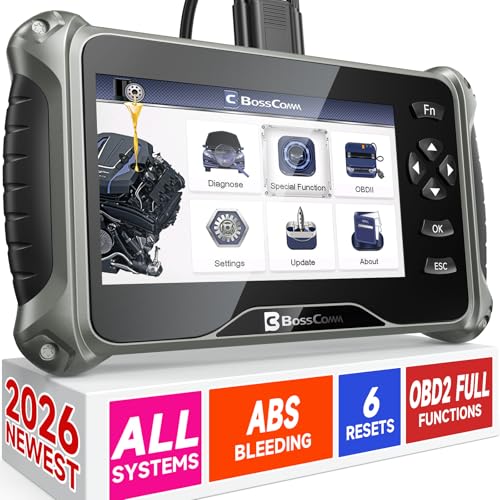
- 【✅Compared to BOSSCOMM IF742, IF745 Offers Full-System Diagnostics】The BOSSCOMM IF745 car diagnostic scanner is an upgraded model of IF742. In addition to supporting all OBD2 Code Reader functions and 6 reset options (ABS/EPB/SAS/BMS/Oil/Throttle), it expands diagnostics from 4 systems (Check Engine/ABS/SRS/Transmission) to vehicle All systems, including Steering, Suspension, and Body Electronics. This provides deeper, more comprehensive diagnostic capabilities.
- 【✨10 OBD2 Functions】The BOSSCOMM IF745 scan tool’s DTC Lookup instantly translates fault codes into user-friendly explanations, its I/M Readiness feature streamlines emissions testing with a single tap, and Freeze Frame lets you pinpoint the exact moment of a fault for in-depth root-cause diagnosis. Combined with a live data dashboard and advanced diagnostics (O2S, OBMon, EVAP), it delivers comprehensive insights for confident troubleshooting.
- 【✨Deep Diagnostics for All Vehicle System Modules】Beyond code reading/clearing and ECU information retrieval, our all-in-one data stream feature lets you inspect all current fault codes and their locations across the vehicle’s systems. This vehicle code reader helps you turn off dashboard warning lights and perform a comprehensive self-check of your car at home—no more back-and-forth trips to the repair shop or hefty inspection fees.
- 【✨6 Essential Resets: ABS Bleeding, Oil, EPB, SAS, Throttle, BMS】The BOSSCOMM IF745 obd2 scanner diagnostic tool swiftly purges air from brake lines to restore braking sensitivity, fine-tunes maintenance cycles to eliminate false alerts, resolves parking brake issues with one-click control, recalibrates steering sensors for stability, optimizes engine idling/acceleration for smoother performance, and deeply resets battery systems to extend lifespan and range via precise parameter adjustments.❗NOTE: Does NOT support bidirectional control, coding, or programming.
- 【✨10,000+ Car Models, AutoVIN, 13 Languages】The BOSSCOMM IF745 vehicle scanner diagnostic tool covers 73+ global car brands and offers support in 13 languages, making it perfect for DIYers, auto mechanics, or as a thoughtful gift. With a single-click AutoVIN feature, it instantly retrieves vehicle serial numbers, streamlining diagnostics for users globally. This adaptable tool balances user-friendliness with precision, catering to both personal and professional requirements.✅Unsure about compatibility? Compatibility will vary on vehicles' model and year, pls reach us via 📧 [email protected] 📧 before purchase.
This product presentation was made with AAWP plugin.