
NHTSA ID Number: 10131938
Manufacturer Communication Number: Info packet for
TSB/Document Date: 2018-04-02
Summary
Toyota has been offering Corrosion-Resistant Compound ("CRC") campaigns for different model year ("MY") Toyota vehicles registered in certain cold climate states with high road salt use. Toyota Motor Sales. U.S.A. Inc. ("TMS") has developed this Dealer Information Pack to apply across all current and any potential future CRC campaigns
[ SECTION 2: HAZARDOUS INGREDIENTS |
Component : Wi% R
Microcrystalline wax 5-10 ACGIH TLV: 2 mg/m*
CAS #64742-42-3 OSHA PEL: 2 mg/m?
Petroleum distillates, solvent dewaxed 5-15 ACGIH TLV: 5 mg/m?
heavy paraffinic
CAS #64742-65-0 OSHA PEL: 5 mg/m?
Sulfonic acids, petroleum, 5-15 ACGIH TLY: 5 me/m> (oil mist)
Calcium salts, overbased OSHA PEL: 5 me/m* (oil mist)
CAS #68783-96-0
White mineral oil, petroleum 50-60 ACGIH TLV: 5 mg/m? (oil mist)
CAS #8042-47-5 OSHA PEL: 5 mg/m? (oil mist)
Bentonite, quatermary ammonium 0.3-1.0 Not established
compound modified
CAS# 68953-58-2
TIZAM Page 1 of 4
Soybcan oil polymer with isophthalic 044 Not established
acid and pentaerythritol
CAS# 66071-86-1
Castor oil, dehydrated, polymerized 5-15 Not established
CAS# 68038-02-8
Calcium Carbonate 5-10 OSHA PEL: 5 mg/m (respirable fraction)
CAS #471-34-1 OSHA PEL: 15 mg/m’ (total dust)
ACGIH TLV: 10 mg/m? (?! nuisance dust)
®1 This component poses a hazard only if'a dust is formed, i.c.. by sawing. sanding, drilling, etc.
[ SECTION 3: HEALTH HAZARD INFORMATION
Primary Routes of Entry: Skin absorption, cyes (splashing).
Acute Effects: May cause eye irritation and reversible skin irritation. Prolonged skin exposure may cause dermatitis
or oil acne. Breathing mists may cause dizziness or pulmonary irritation.
Chronic Overexposure:
Carcinogenicity: None of the components of this product are listed as carcinogens by NTP. IARC, or OSHA
1910(Z).
Pre-Existing Medical Conditions Aggravated by Exposure: Exposure may aggravate pre-existing sespiratory or
skin problems.
[_ SECTION 4: FIRST AID PROCEDURES
Inhalation (mist): Move victim to fresh air and call emergency medical care. If not breathing, give artificial
respiration; if breathing is difficult, give oxygen.
Eyes: In case of contact with material, immediately flush eyes with running water for at least 15 minutes. Seek
immediate medical attention.
Skin: Wash skin with soap and water. Remove and isolate contaminated clothing and shoes at the site.
Ingestion: DO NOT INDUCE VOMITING. Consult a physician. If vomiting occurs spontancously, keep head
below hips to prevent aspiration of liquid into the lungs.
[ SECTION 5: FIRE AND EXPLOSION HAZARD DATA
Flash Point: >200°C (TCC )
Explosive Limits: LEL: N/A UEL: N/A
EXTINGUISHING MEDIA: Small Fires: Dry chemical, CO2, water spray, or regular foam. Large Fires: Water
spray, fog. or regular foam. Move container from fire area if you can do it without risk. Apply cooling water to sides
of containers that are exposed to flames until well after fire is out. Stay away from ends of tanks. For massive fire in
cargo area, use unmanned hose holder or monitor nozzles. If this is impossible, withdraw from area and let fire burn.
Withdraw immediately in case of rising sound from venting safety device or any discoloration of tank due to fire.
Spccial Firefighting Protection/Emergency Action: Fire may produce irritating or poisonous gases. Positive
pressure self-contained breathing apparatus (SCBA) and structural firefighters’ protective clothing will provide
limited protection. Keep unnecessary people away; isolate hazard arca and deny entry. Stay upwind; kecp out of low
areas. Isolate for 1/2 mile in all directions if tank, rail car or tank truck is involved in fire. If runoff from fire control
occurs, notify the appropriate authorities.
Unusual Fire/Explosion Hazards: Combustible material; may be ignited by flames. Container may explode in heat
of fire.
Products of Combustion: Carbon monoxide, carbon dioxide, oxides of sulfur, miscellaneous hydrocarbons.
TI2AM Page 2 of 4
[ SECTION 6: SPECIAL PRECAUTIONS AND SPILL/LEAK PROCEDURES ]
Steps to be taken in case Material is Released or Spilled: Shut off ignition sources; no flares, smoking or flames
in hazard area. Stop teak if you can do it without risk.
Small Spills: Take up with sand or other noncombustible absorbent material and place into containers for later
disposal.
Large Spills: Dike far ahead of liquid spill for later disposal.
[ SECTION 7: SAFE HANDLING INFORMATION |
Precautions To Be Taken In Handling/Storage: Store in cool, well-ventilated area. Keep away from flames.
Never use a torch to cut or weld on or near container.
Other Precautions: Never wear contaminated clothing. Launder or dry clean before wearing. Discard oil-soaked
shoes. Wash thoroughly with soap and water (waterless hand cleaner may be helpful in removing residues) after use
and before smoking or eating. Avoid excessive skin contact.
| SECTION 8: EXPOSURE CONTROLS |
Respiratory Protection: NIOSH-approved respirator for organic vapor and mist to control exposure where
ventilation is inadequate.
Ventilation: General and local exhaust.
Personal Protective Equipment: Protcctive Gloves: Impervious gloves (Viton, PVOH, etc.) Eye Protection: Safety
glasses with sideshields or chemical goggles. Other Protective Clothing or Equipment: If splashing is anticipated,
wear rubber apron and boots or other protective equipment to minimize contact.
[ SECTION 9; REACTIVITY HAZARD DATA |
Stability: Stable
Incompatibility: Strong acids, oxidizing agents.
Hazardous Decomposition Products: Carbon monoxide, carbon dioxide, oxides of sulfur, misccllancous
hydrocarbons.
Hazardous Polymerization: Will not occur.
| SECTION 10; PHYSICAL AND CHEMICAL PROPERTIES |
Color: Tan
Appearance: Viscous Liquid
Odor: oil
Boiling Point (initial): NA
Evaporation Rate (n-Butyl Acetate=1): 00289-TOOKT-DS — 0.792 galions (3 liters) of Noxudol 300 S and 0.264 gallons (1 liter) of
712AM
» 00289-SOOKT-DS — 0.792 gallons (3 liters) of Noxudol 300 S and 0.528 gallons (2 liters) of
712AM
> 00289-T01KT-DS — 0.528 gallons (2 liters) of Noxudol 300 S and no 712AM
TMS has developed a CRC Campaign Vehicte Production Log (VPL) that dealers can use to
document compliance with air permitting requirements by tracking vehicle processing and
calculating VOC and PM emissions from the CRC campaigns. As explained below, the VPL
incorporates an emissions calculation for each of the three kits that relies on conservative
assumptions. Thus, this calculation likely overstates emissions.
Page 1 of 5
A. VOC Emissions
The VPL emissions calculation for VOCs assumes that all of the VOCs contained in Noxudol
300 S (0.9 pounds per gallon) and 712AM (0.165 pounds per gallon)’ will be emitted to the
ambient air during the CRC application process and/or post-application curing. Accordingly, the
emission factors used in the VPL calculations account for the total quantity of VOCs in each kit
type.
The following table summarizes the VOC emissions calculations for each CRC kit type.
Kit (Part) #00289-TOOKT-DS | Kit (Part) #00289-SOOKT-DS | Kit (Part) #00289-TO1KT-DS
(3 liters Noxude!, (3 liters Noxudo!, (2 liters Noxudol,
1 liter 712AM) 2 liters 712AM) No 712AM)
0.792 gal (3 liters /kit 0.792 gal (3 liters)/kit 0.528 gal (2 liters)/kit
Noxudel3008 | % 0.09 Ibs VOC/gal x 0.09 Ibs VOC/gal x 0.09 Ibs VOC/gal
= 0.071 lbs VOCNehicle = 0,071 Ibs VOC/ivehicle = 0.048 Ibs VOC/vehicle
10.264 gal (1 literyikit 0.528 gal (2 litersy/kit
7120M x 0.165 Ibs VOC/gal x 0.165 ibs VOC/gal None
= 0.044 Ibs VOCNehicle = 0.087 Ibs VOCivehicle
Combined VOC - 2 5
emissions: = 0.12 Ibs VOC/vehicle = 0.16 tbs VOCivehicle = 0.05 Ibs VOC/vehicle
B. PM Emissions
The VPL emissions calculation for PM differs from that for VOCs. In particular, both of the
CRGs contain solids; however, not ail of the solids in the CRCs will be emitted to the ambient air
as PM. Instead, two factors will reduce the amount of the solids emitted as PM:
» Some amount of the solids in the CRCs will adhere to the vehicle frame surfaces, and
therefore, not be emitted to the ambient air. To determine this amount requires an
assessment of the transfer efficiency of the Vaupel HSDR 3300 spray gun when being
used to apply the CRCs.
* Some amount of the solids in the CRCs that do not adhere to the vehicle frame surfaces
(i.e., the “overspray”) will adhere to other surfaces (e.g., the tarp underneath the vehicle),
and therefore, not be emitted to the ambient air. To determine this amount requires an
assessment of the percentage of the overspray that will fallout (and adhere to other
surfaces) and not be emitted to the ambient air.
The analysis of these factors for each of the CRCs is summarized below.
> Noxudol 300 S: TMS retained Concurrent Technologies Corporation (CTC) to perform
two types of testing: (1) Testing to determine the Vaupel HSDR 3300 spray gun's transfer
efficiency when being used to apply Noxudol 300 S to the external frame surfaces and
(2) Testing to produce data relevant to the amount of the overspray that will fallout, which
data were used by another TMS consultant, Environ Corporation (Environ), to determine a
' The VOC cantent is provided in the manufacturer's Material Safety Data Sheets for Noxudo! 300 S and
712AM.
Page 2 of 5
“fallout factor. The CTC testing demonstrate that the Vaupel HSDR 3300 spray gun
achieves a transfer efficiency of at least 85% when being used to apply Noxudol 300 S to
the external frame surfaces. Additionally, after analyzing the results of the CTC testing,
Environ calculated a fallout factor of at least 90%, i.e., of the 15% of the Noxudol 300 S that
does not adhere to the vehicle frame surfaces (the “overspray”), 90% of that overspray will
“fallout” and adhere to other surfaces and not be emitted to the ambient air.
>» ZA2ZAM: CTC could not perform similar testing for 712AM due to its application to interior
frame surfaces and the closed frame configuration. However, Environ calculated the
transfer efficiency based on the dimensions of the limited openings in the otherwise closed
Portions of the frame. This calculation indicates that the Vaupel HSDR 3300 spray gun
achieves at least a 98.5% transfer efficiency when being used to apply 712AM to the interior
frame surfaces.” Environ also has conservatively assumed a 75% fallout factor.
The PM emissions calculation has 2 steps:
>» Step One: Use the transfer efficiency to determine the amount of solids that would not
adhere to the vehicle frame surfaces, and therefore, would be potentially available for
emission to the ambient air as PM; and
> Step Two: Use the fallout factor to reduce that amount of solids potentially available for
emission, and thereby, determine the estimated actual PM emissions.
The following table summarizes the PM emissions calculations for each CRC kit type based on
these 2 steps.
2 The 98.5% value is the lowest transfer efficiency calculated for all of vehicles subject to CRC
campaigns to date. TMS does not anticipate that the transfer efficiency will vary substantially for
vehicle models that may be subject to a subsequent CRC campaign or that the impact on the PM
emission factors will be significant. More specific information on the transfer efficiency value applicable
to any future CRC campaigns will be available at that time.
Page 3 of 5
Kit (Part) #00289-To0KT-DS | Kit (Part) #00289-SOOKT-DS | Kit (Part) #00289-T01KT-DS
(3 liters Noxudol, (3 liters Noxudol, (2 liters Noxudol,
1 liter 712AM) 2 liters 712AM) No 712AM)
(ena ease cinaeriey to determine the STConE of solids that ound not tere to the vehicle on cisfeens)
0.792 gal (3 liters )/kit 0.792 gal (3 liters)/kit 0.528 gal (2 litersykit
x 7.97 Ibs/gal x 7.97 Ibs/gal x 7.97 tbsigal
x 98.9% solids by weight x 98.9% solids by weight x 98.9% solids by weight
Noxudol x 15% (100% - 85% x. 15% (100% - 85% x 15% (100% - 85%
transfer efficiency) transfer efficiency) transfer efficiency)
= 0.94 Ibs PMvehicle = 0.94 Ibs PMNvehicle = 0.62 Ibs PMivehicle
0.264 gal (1 literykit 0.528 gal (2 liters)/kit
x 7.885 Ibs/gal x 7.885 Ibs/gal
x 97.9% solids by weight x 97.9% solids by weight
TIZAM X 1.5% (100% - 98.5% X 1.5% (100% - 98.5% None
transfer efficiency) transfer efficiency)
= 0.03 Ibs PMivehicle = 0.06 Ibs PMvehicle
faerie | 79.97 Ibs Pivehicle = 1.0 ibs PMivehicte = 0.62 Ibs PMivehicle
emissions: (solids available for emission | (solids available for emission | (solids available for emission
to ambient air as PM) to ambient air as PM) to ambient air as PM)
S1 Q
(using fallout factor to adjust Treduce) the ‘amount of solids Par ially available for emission)
Noxucol
(90% fallout 0.94 Ibs PMivehicle x 10% 0.94 Ibs PM/vehicle x 10% 0.62 lbs PMivehicle x 10%
factor)
TIZAM
(75% fallout + 0.03 Ibs PMivehicle x 25% | + 0.06 Ibs PM/vehicle x 25% -
factor)
Estimated PM | = 0.10 Ibs PMivehicle = 0.11 Ibs PMivehicle = 0.06 Ibs PMivehicle
Il.
MAXIMUM POTENTIAL EMISSIONS
TMS also has calculated maximum potential emissions resulting from the CRC campaigns
based on a conservative, worst-case operating scenario. This scenario reflects the following
assumptions:
> Ahypothetical “4™ type” of vehicle kit that contains more of each CRC than the kits actually
being used for the CRC campaigns: 0.792 gallons (3 liters) of Noxudol 300 S and 0.792
gallons (3 liters) of 712AM.
> Aone hour vehicle processing time instead of the 2 hour vehicle processing time that TMS
has advised its dealers to adhere to for all vehicles across the CRC campaigns.
> Acontinuous operation ina CRC campaign spray space, 24 hours per day, seven days per
week.
Page 4 of 5
Under these assumptions, a dealer could pracess 8,760 vehicles in any one year using a single
spray space.
Actual emissions at any dealership will not come anywhere close to this worst-case operating
scenario because dealers are using less CRCs, taking longer to process vehicles and do not
engage in 24/7 CRC campaign processing. Nor does this scenario account for state and/or
local regulatory limits or permit conditions that prevent dealerships from operating at the
maximum scenario. Thus, the emissions calculations summarized below based on this scenario
are truly “worst-case”.
1. Maximum Operating Scenario —- VOC Emissions
The processing of vehicles with this kit (assuming all VOCs contained in the CRCs are emitted
to the ambient air) will result in VOC emissions of 0.2 pounds per vehicle (0.792 gals/Noxudol
300 S per kit x 0.09 IbsVOCs per gal + 0.792 gals/712AM per kit 0.165 Ibs VOCs/gal = 0.2
lbs VOCs/vehicle).
The maximum CRC processing rate, under which one vehicle would be treated per hour over a
24-hour day, would yield no more than 4.8 Ibs VOCs per day (0.2 Ibs VOCs/vehicle x 24
vehicles/day = 4.8 lbs VOCs/day) or, in the unlikely event a second spray space is used, 9.6 Ibs
VOCsHday.
Over an annual period, under the maximum annual CRC scenario, a dealer would emit no more
than 0.88 tons of VOCs in any one year (8,760 vehicles/year x 0.2 Ibs VOCs/vehicle, divided by
2,000 Ibs/ton = 0.88 tons VOCs/year) or, if a second spray space is used, 1.76 tons VOCs/year.
2. Maximum Operating Scenario — PM Emissions
Step One: Noxudol has 0.94 pounds of solids per kit potentially available for emission to the
ambient air as PM (0.792 gals/kit x 7.97 Ibs/gal x 98.9% solids by weight x (100% - 85%
transfer efficiency) = 0.94 Ibs PM/vehicle); 712AM has 0.09 pounds per kit potentially available
(0.792 gals/kit x 7.885 Ibs/gallon x 97.9% solids by weight = (100% - 98.5% transfer efficiency)
= 0.09 Ibs PM/vehicle).
Step Two: Therefore, the hypothetical “4"” kit has 1.03 pounds of solids potentially available
for emission to the ambient air as PM. Applying the 90% fallout factor for Noxudol 300 S and
the 75% fallout factor for 712AM indicates that actual PM emissions would be no more than
0.12 pounds per vehicle (0.94 x 10% + 0.09 x 25% = 0.12 Ibs PM/vehicle).
The maximum CRC processing rate, under which one vehicle would be treated per hour over a
24-hour day, would yield no more than 2.88 lbs PM per day (0.12 Ibs/vehicte x 24 vehicles/day =
2.88 lbs PM/day) or, if a second spray space is used, 5.76 lbs PM/day.
Over an annual period, under the maximum annual CRC operating scenario, a dealer would
emit no more than 0.53 tans of PM in one year (8,760 vehicles/year x 0.12 Ibs/vehicle, divided
by 2,000 Ibs/ton = 0.53 tons PM/year) or, if two spray spaces are used, 1.06 tons PM/year.
Page 5 of 5
(This page intentionally left blank.)
SS_ea—eT
CORROSION-RESISTANT COMPOUND CAMPAIGNS
DEALER INFORMATION PACKET
PART TWO - STATE COMPLIANCE SUPPLEMENT FOR NEW
HAMPSHIRE
APPENDIX C SUMMARY OF FEDERAL, STATE AND
LOCAL REGULATIONS RELATED TO AIR EMISSIONS FOR
NEW HAMPSHIRE
L INTRODUCTION
The Corrosion Resistant Compound (“CRC”) campaigns for various models and model years of
Toyota vehicles result in emissions of Volatile Organic Compounds (“VOCs’) and Particulate
Matter ("PM"). Although Toyota Motor Sales, U.S.A. Inc. (“TMS”) has designed the CRC
campaigns to minimize such emissions, the campaigns nevertheless are subject to various
federal, state and local regulations related to air emissions. To assist you in making compliance
decisions for your dealership, TMS has prepared this summary of federal, state and local
regulations related to air emissions in New Hampshire.
W AIR PERMITTING
Both federal and New Hampshire regulations require an air permit for “major” and “minor”
sources of VOC and PM emissions as described below:
=> Major Source. Any source with a potential to emit (PTE)® at or above 100 tons per year
(‘tpy’) for PM and 50 tpy for VOCs,* except in Hillsboro, Merrimack, Rockingham and
Stafford counties, where the threshold is 25 tpy for VOCs.°
= Minor Sources. Any source that (a) does not constitute a major source and (b) has actual
emissions at or above 10 tpy for VOCs® or 15 tpy for PM.” Such sources are required to
obtain first an initial “temporary permit” and then an operating “state permit”.®
> “Potential ta emit” or “PTE” refers to the maximum capacity of a stationary source to emit air pollutants under its
physical and operational design. See N.H. Cope ADMIN. R. ANN, ENV. § 101.147. The PTE calculation generally
requires conservative assumptions, and a source's actual emissions are usually well below its PTE.
4 N.H. Cove ADMIN. R. ANN. Env. §§ 101.115(b}-(c), 609.01; 40C.F.R 70.2
® These four counties currently are classified as ‘non-attainment with the federal National Ambient Air Quality
Standard (NAAQS) for ozone; as a result, sources located in these counties are subject to a lower major source air
permitting threshold for VOCs. See /ides.nh.gav/organization/divisions/airipehb/apps/ it-Bir-emissions-na-
© NH. Cove ADsan. R. ANN. ENV. § 607,07(g).
67
TMS has calculated the PTE as well as the expected actual emissions for each prior and
ongoing CRC campaign. The PTE for each CRC campaign is just a small fraction of the major
source thresholds; actual emissions also are well below the minor source thresholds.° Thus,
the CRC campaigns will not, standing alone, cause your dealership to trigger air permitting in
New Hampshire.
However, the thresholds for air permitting must be applied across your entire dealership and not
just to the CRC campaigns. For example, if your dealership's physical plant is distributed
across multiple buildings, land parcels or physica! locations, then the emissions from your
activities at each of those buildings and locations would have to be combined to determine
whether your dealership’s total emissions fall below air permitting levels. In some cases, even
emissions from offsite locations that are not physically adjacent to a dealership (such as an
offsite body shop) must be combined with the dealership’s emissions to make this air permitting
determination.
Therefore, operations besides the CRC campaigns could cause your dealership to trigger air
permitting. It is not expected, however, that your dealership would do as long as you satisfy the
two criteria below:
1. Your dealership does not operate a very large on-site or an off-site body shop”
and/or
2. Your dealership does not otherwise engage in significant painting, coating or
other spraying operations.
TNA He COOe ADs R, ANN. ENV, #85 008,09 5607-010 see also,
slaielt Mmit-air-emissions-na-nsr-psd.him
® NLH. Cove Apmin. R. ANN, ENV. §§ 607.01 & 608.01.
° For details on this calculation, see the CRC Campaigns Air Emissions Calculation in Appendix C of the Part Two —
State Compliance Supplement for New Hampshire.
ell body shop or other operations that involve the use of spraying equipment will have a higher PTE and also higher
actual emissions than a regular vehicle service area. Thus, you cannot be certain - without further analysis ~ that
your dealership will remain exempt from air permitting if it conducts such operations in addition to the CRC
campaigns. In particular, if your dealership has an onsite body shop, then the state will require you to combine the
PTE (or the actual emissions} from that onsite body shop with the PTE (or the actual emissions) from all other
activities at the dealership. In doing so, it may not be possible for your dealership to conduct the CRC campaigns
(which would add to the air emissions already coming from your body shop) and remain exempt from air permitting.
Moreover, the state might require you to combine the PTE (or the actual emissions) from an offsite body shop — even
if the body shop is not where you will conduct the CRC campaigns — if that body shop has a sufficient interconnection
‘to the rest of the activities at your dealership.
68
I, PARTICULATE MATTER EMISSIONS LIMITS
New Hampshire regulations require sources to limit hourly emissions of PM."? Under the
regulations, an allowable PM emissions rate must be developed for each type of process using
a “process weight rate” formula.
The process weight rate for the CRC campaigns is a function of the amount of CRCs sprayed
and the time it takes to spray them during processing of a vehicle. Due to the variation in
amounts and application times between CRC campaigns, the process weight rate — and
therefore the applicable allowable PM emissions rate — will vary for each CRC campaign.
For each CRC campaign, TMS calculates both (1) the allowable PM emissions rate (using the
New Hampshire-specified process weight rate formula) and (2) the hourly PM emissions
expected if the campaign is conducted in accordance with the Technical Instructions. TMS then
compares (1) and (2) to make sure that each CRC campaign will fall below the allowable PM
emissions rate applicable to it. The calculation of hourly PM emissions for each CRC campaign
incorporates assumptions regarding how long it will take you to process a vehicle. If you were
to process a vehicle in a shorter amount of time, then your actual hourly PM emissions could be
higher and might not fall below the allowable PM emissions rate.
To assure compliance with the allowable PM emissions rate, your dealership should not
process more than one Toyota vehicle every 2 hours. The Part One — Guide for
Compliance to the CRC Campaigns Dealer Information Packet discusses the vehicle processing
limit and provides guidance in its Appendix A on how to follow the limit. Appendix B of the Part
Two — State Compliance Supplement for New Hampshire includes a “CRC Campaign Vehicle
Production Log” that your dealership should use to document its adherence to this limit.
IV. RECORDKEEPING
Your dealership should maintain records to demonstrate your compliance with the air permitting
Trequirements discussed in Part II above and your adherence to the vehicle processing limit
discussed in Part Ill above. Please refer to Appendix B to the Part Two — State Compliance
Supplement for New Hampshire for logs that you can use and for copies of documents to retain
on file.
"' See N.H. CODE ADMIN. R. ANN. ENV. §§ 1201.03(*b), 1212.
"2 NH. Cope ApMIn. R. ANN. ENV. § 2102.03.
"3 id. at § 2102.04.
69
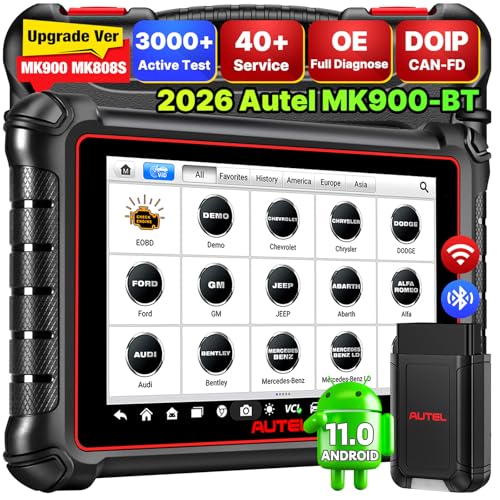
- 💯【Conta.ct us for Support Directly】If you met any...
- 🔥🔥🔥【2026 AUTEL FLAGSHIP MK900BT MK900-BT, NEW...
- 🚗【3000+ ACTIVE TESTS (50➡3000+), SAME AS MS...
- 🚗【40+ HOT SERVICES FOR 150 MAKES (28+➡40+)】Full...
- 🚗【OE ALL SYSTEM DIAGNOSE, AUTO SCAN 2.0: SCAN LICENSE...

If the PDF is very large, it may not load in the preview below.
Some older TSBs had multiple PDFs — visit the NHTSA Website to view all PDFs.
If the TSB PDF does not show, download or view it on the NHTSA Website.
Click on the (+) Plus Sign
Then Click on Associated Document(s)
Search NHTSA Database for Recalls
Search NHTSA Database for Vehicle Investigations
View Latest Vehicle Investigations
Search NHTSA Database for Vehicle Complaints
View Latest Vehicle Complaints
TSB/Document ID: Info packet for
Replacement Service Bulletin Number:
MFR Communication Date: 2014-02-27
MFR Internal Campaign ID/Software Version:
Communication Type: Service Bulletin/Repair Instructions
NHTSA Components: STRUCTURE:FRAME AND MEMBERS:UNDERBODY SHIELDS
MFR Component System:
MFR Component Subsystem:
Previous TSB | Next TSB |
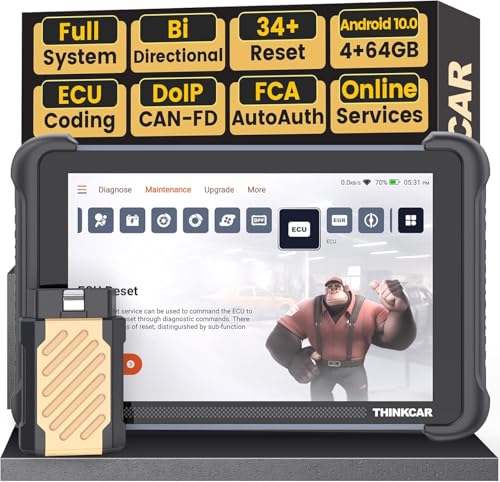
- [Notice] When you receive a used device, it may be a customer return resold by Amazon without inspection. You can exchange it for a new one through Amazon. As this situation is unavoidable, we sincerely apologize. For any issues, contacting us via Amazon's "Messages" is the best way. THINKSCAN 689BT Bidirectional Scan Tool Can Be Used Immediately After It is Turned On, Without Complicated Registration Process, Which is More Convenient & Quick.
- Full Bi-Directional Control & 3000+ Active Tests: Take control and test components like actuators, fuel injectors, relays, and cooling fans in real time. You’ll quickly see if the problem is in the part itself or the control module — saving you hours of guesswork and frustrating trial-and-error.
- Advanced ECU Coding Capabilities: Handle module matching and hidden feature activation with confidence. When you replace an ECU or want to customize settings, this obd2 scanner diagnostic bi directional tool gives you the professional-level capabilities you need without the dealership price tag.
- 34+ Useful Reset and Maintenance Functions: Complete everyday service tasks smoothly with a wide range of helpful reset and maintenance functions. Whether you’re keeping up with regular upkeep or tackling a specific job, this scanner makes maintenance simpler and less stressful for both DIYers and pros.
- Comprehensive Full System Diagnostics: Diagnose every major system — Engine, Transmission, ABS, SRS, TPMS, and more — all in one place. Finally stop wondering if you’re missing something important; get the full picture and clear codes with ease.
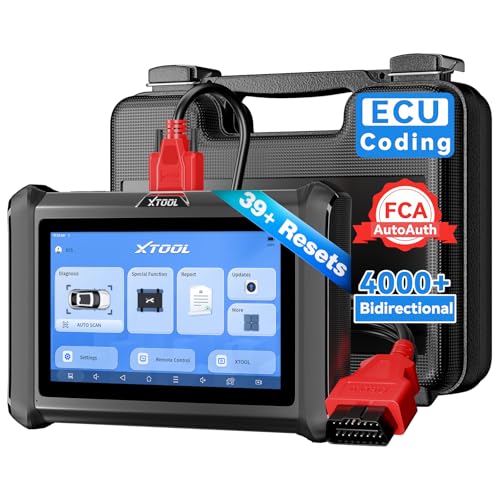
- Top Reasons to Choose the D7S OBD2 Scanner: XTOOL D7S car scan tool, an upgrade of XTOOL D7, offers comprehensive features for automotive technicians, workshops, and DIY enthusiasts 1. Upgraded Hardware: 2+64GB memory, rear camera, intuitive interface, foldable bracket 2. Complete Diagnostics: FCA
 Autoauth, OE-level all system scan, 39+ maintenance services, 4K+ bidirectional, CANFD/DoIP protocol 3. Advanced Capabilities: ECU c0ding, PMI functions 4. Wide Compatibility: Support 10,000+ models, covering 99% vehicle brands 5. Multi-language: Available in 22+ languages, No IP Restrictions 6. 3-Year Updates: Save 300 bucks on software updates for the latest features and optimizations
 - 2026 Upgraded D7S Car Scanner Features: The newly 2026 D7S V2.0 scanner for car brings exciting features for advanced vehicle diagnostics and enhanced user experience 1. FCA AutoAuth: Now supports FCA SGW module for Chrysler, for Jeep, for Dodge (2018+), for Fiat (2017+), enabling faster vehicle communication without gateway restrictions 2. PMI (Offline ECU Pr0gramming): Allows for Ford, for Lincoln, and for Mazda ECU pr0gramming for new modules 3. Optimized Diagnostic Report 2.0: Personalized reports with logos and customer info for auto shops. Note: Compatibility varies by cars, please check before order
- 39+ Services/Resets/Adaptations/Relearns/Calibrations: XTOOL D7S full system car scanner diagnostic tool tackles 99% of common car issues through its 36+ special functions, including Oil Reset, EPB, SAS, BMS, Throttle Reset, Injector C0ding, ABS Bleed, TPMS Reset, Power Balance, etc and also covers specific-vehicle functions like Crank Sensor Relearn, ABS Initialization, Cylinder Power Balance, Fuel Trim Reset, Idle Relearn etc. This car diagnostic scanner enhances efficiency, making repairs and maintenance hassle-free. Tip: DO NOT for All vehicles, please check compatibility first
- Cost-effective ECU C0ding Scan Tool for Specific Brands: Enhance your vehicle's performance with XTOOL D7S! This obd2 scanner all systems bidirectional offers advanced capabilities at an affordable price, supports online for BMW, for Benz and offline for BENZ, for MIT, along with PMI functions for Ford, for Mazda, and for Lincoln. Ideal for technicians and DIY enthusiasts, this automotive scanner diagnostic tool optimizes vehicle performance and enhances the driving experience. Note: Not for all cars and modules, please send car VIN to check the compatibility before purchase
- OE All System Diagnostic & 8 Pids Graphing: XTOOL D7S is a comprehensive all system bi directional obd2 scanner that delivers dealer-level diagnostics, completely controlling over your vehicle’s performance and health. This automotive scan tool can read and clear DTCs, view live data and ECU information, retrieve freeze frames, and perform active tests and full obd2 functions. This bi-directional scan tool can can identify your vehicle's make, model, and year information with just one click and show up to 8 PIDs live data with options for CSV viewing, playback, and recording for in-depth analysis. It is easy-to-use for both professionals and beginners, helping pinpoint issues efficiently
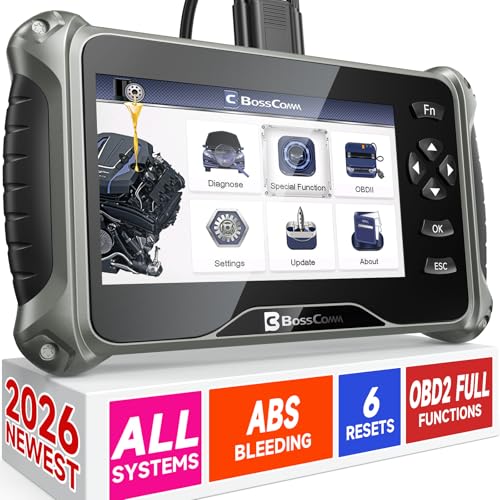
- 【✅Compared to BOSSCOMM IF742, IF745 Offers Full-System Diagnostics】The BOSSCOMM IF745 car diagnostic scanner is an upgraded model of IF742. In addition to supporting all OBD2 Code Reader functions and 6 reset options (ABS/EPB/SAS/BMS/Oil/Throttle), it expands diagnostics from 4 systems (Check Engine/ABS/SRS/Transmission) to vehicle All systems, including Steering, Suspension, and Body Electronics. This provides deeper, more comprehensive diagnostic capabilities.
- 【✨10 OBD2 Functions】The BOSSCOMM IF745 scan tool’s DTC Lookup instantly translates fault codes into user-friendly explanations, its I/M Readiness feature streamlines emissions testing with a single tap, and Freeze Frame lets you pinpoint the exact moment of a fault for in-depth root-cause diagnosis. Combined with a live data dashboard and advanced diagnostics (O2S, OBMon, EVAP), it delivers comprehensive insights for confident troubleshooting.
- 【✨Deep Diagnostics for All Vehicle System Modules】Beyond code reading/clearing and ECU information retrieval, our all-in-one data stream feature lets you inspect all current fault codes and their locations across the vehicle’s systems. This vehicle code reader helps you turn off dashboard warning lights and perform a comprehensive self-check of your car at home—no more back-and-forth trips to the repair shop or hefty inspection fees.
- 【✨6 Essential Resets: ABS Bleeding, Oil, EPB, SAS, Throttle, BMS】The BOSSCOMM IF745 obd2 scanner diagnostic tool swiftly purges air from brake lines to restore braking sensitivity, fine-tunes maintenance cycles to eliminate false alerts, resolves parking brake issues with one-click control, recalibrates steering sensors for stability, optimizes engine idling/acceleration for smoother performance, and deeply resets battery systems to extend lifespan and range via precise parameter adjustments.❗NOTE: Does NOT support bidirectional control, coding, or programming.
- 【✨10,000+ Car Models, AutoVIN, 13 Languages】The BOSSCOMM IF745 vehicle scanner diagnostic tool covers 73+ global car brands and offers support in 13 languages, making it perfect for DIYers, auto mechanics, or as a thoughtful gift. With a single-click AutoVIN feature, it instantly retrieves vehicle serial numbers, streamlining diagnostics for users globally. This adaptable tool balances user-friendliness with precision, catering to both personal and professional requirements.✅Unsure about compatibility? Compatibility will vary on vehicles' model and year, pls reach us via 📧 [email protected] 📧 before purchase.
This product presentation was made with AAWP plugin.