
NHTSA ID Number: 10122167
Manufacturer Communication Number: SSP 990143
TSB/Document Date: 2017-11-08
Summary
This document contains the eSelf study program for the Audi A3 introduction.
625_062
Operation during an accident
When Airbag Control Module J234 determines the criteria
for an accident severe enough to deploy the pyrotechnic
safety belts has been exceeded, the shoulder portion of the
safety belt is tensioned from the clamping point of the
locking buckle in the direction of the belt tensioner by the
pyrotechnic devices in the automatic safety belt retractor.
At the same time, N297 and N298 are triggered and the
lap portion of the safety belt is tensioned by the movement
of a steel cable attached to the safety belt.
625_063
27
Pelvic belt tensioner
Balls
They are in constant contact with the pressure
chamber tube.
Construction
The pelvic belt tensioner consists of the following parts:
Piston with ball retainer
Steel Cable
Pressure chamber tube
Rope seal
(Seals the steel cable from the pressure
chamber)
Pressure chamber seal
Coupling
(connects pelvic tensioner to lap portion of
the safety belt)
wire with connector
625_069
Polytechnic propellant
charge
Locking cone
(Fixed to the seat cable)
Function - Ignition and Pelvic belt tensioning
When a signal from Airbag Control Module J234 ignites the
pyrotechnic pelvic belt tensioner propellant there is a
sudden increase in the pressure chamber.
The sudden increase in pressure propels the piston, balls
and locking cone and steel cable forward.
625_070
Function - Locking
Because the steel cable is connected to the lap portion of
the safety belt, the belt is tightened by approximately 4.0
in (100 mm) when the igniter is triggered. The locking
buckle acts as a load fixing point and anchors the lap
portion of the safety belt at the buckle.
When the cable has reached its limit, there is a small reactive backward movement. This forces the balls to move
against the cone shape of the piston and deform the inner
tube of the pressure chamber. This prevents cable from
returning and holds the safety belt firmly against the
occupant’s lap.
deformation of the pipe
max. 100
mm
625_071
28
Installation location
tab connection in sill
The pelvic belt tensioner is located by tabs and then bolted
into place along the lower inner front door sill.
625_072
Coupling point
Point where safety belt is stitched to
pelvic belt tensioner
The end of the lap portion of the safety belt is routed
through a guide piece and stitched to a joining piece of the
pelvic belt tensioner assembly. A foam piece covers the
joined pieces to prevent noise.
Foam piece
Guide piece
Steel cable, lap belt
tensioner
Joining point of safety belt and
pelvic belt tensioner.
625_064
Locking buckle
A newly designed safety belt buckle is used. The lock
buckle prevents movement and forms a separate load path
for the shoulder and lap portion of safety belt in the event
of an accident.
625_065
Note
The Pelvic belt tensioner is a pyrotechnic device. Always follow all safety Warnings and Cautions as outlined in the repair
literature when working on or near these components.
29
Design and operation
The locking buckle has a movable spring loaded piece that
allows the safety belt to move freely under normal operating conditions.
During an accident in which the Pelvic belt tensioner has be
triggered, the locking piece is displaced and blocks the
safety belt from moving.
Cover
locking piece with spring
Lock buckle
625_066
Function
Not blocked
Blocked
Locking piece
Lock buckle
625_067
625_068
Reference
For information on removing and installing the lap belt tensioner please refer to the current repair literature and Guided
Fault Finding using the VAS Scan Tool.
30
Active Safety
Audi pre sense
Audi pre sense is able to detect critical driving situations,
and initiate measures to prepare the vehicle and occupants
for an impending collision.
Please note that Audi pre sense cannot prevent collisions.
It serves only to assist the driver and potentially reduce the
severity of the collision.
This is made possible by networking various in-vehicle
systems. The systems send data continuously to the data
bus. Other control modules are able to evaluate this information and take appropriate action.
Audi pre sense basic
Longitudinal dynamics function
When vehicle is moving forward at a speed greater than
18.6 mph (30 km/h) and the driver executes a “hazard
braking maneuver” in which the brake pressure reaches a
defined level, the reversible safety belt tensioners are
partially tensioned.
Drive profile selection switch module
E592
If the ESP is set to “Sport” or “OFF” using either ASR/ESP
Button E256, Driving Profile Selection Switch Module E592
or if the Audi drive select is set to “dynamic” via the MMI,
the safety belts will not be partially tensioned.
ASR/ESP Button
E256
609_075
609_076a
Emergency braking function
During an “emergency braking” maneuver in which the
brake pressure exceeds a defined value for a defined period
of time, the reversible safety belt tensioners are fully
tensioned by the electric motors.
In this scenario, Airbag Control Module J234 evaluates
the signals sent on the data bus from ABS/ESP Control
Module J104.
31
J234 then instructs Seat Belt Tensioner Control Modules
J854 and J855 to fully tension the safety belts. Depending
on the situation, J104 can also activate the hazard warning
flashers.
Transverse dynamics function
Crash function in the low speed range
If the vehicle oversteers or understeers, the ESP system
tries to stabilize it. If the vehicle becomes unstable because
certain physical limits have been exceeded, Airbag Control
Module J324 initiates a partial tensioning of the electrically
reversible safety belt tensioners.
If the Airbag Control Module J234 detects a head-on collision with low vehicle deceleration (no airbag deployment), it
decides whether or not to fully tension the safety belts
based on a situation-specific control module algorithm.
If the vehicle can no longer be stabilized, the safety belt
tensioners are fully tensioned.
It does not take any other precautions, such as turning on the
hazard warning flashers, or closing a window or sunroof.
System characteristics of Audi pre sense basic:
At the same time, the side windows and the tilt/slide
sunroof (if installed) begin to close.
•
•
•
If ESP is set to "Sport" or "Off" or if Audi drive select is
set to "dynamic", the safety belts are not partially tensioned.
If a safety belt is not being worn or if the passenger
airbag is set to "Off", the reversible safety belt tensioner
is not activated.
•
If ESP is set to "Sport" mode or "Off", the safety belts are
fully tensioned only if the driver actively applies the
brakes.
The belt tensioner control modules (J854 and J855
respectively) are connected to Airbag Control Module J234
as LIN control modules.
•
The forward displacement of the front occupants can be
reduced by more than 3.9 in (100 mm) by tensioning the
safety belts.
Audi pre sense front
Audi pre sense front is optional and is offered only when
the vehicle is equipped with Adaptive cruise control.
Driver Assistance Systems Front
Camera R242
Distance Regulation Control Module J428 monitors the
traffic in its path and continuously measures the distance
between itself and a vehicle driving ahead.
J428 evaluates relevant data from other control modules
and transfers signals to the data bus. The ACC control
module uses these signals to initiate various actions
between ABS/ESP Control Module J104 and Instrument
Cluster Control Module J285 as necessary.
Audi pre sense front is active even if the ACC system is not
activated. It has the following functions:
A
Providing driver warning information when following a vehicle ahead at a critical distance in certain
situations.
B
In the event of an impending collision with a
moving or stopped vehicle, the driver is warned
and assistance is provided by automatic braking or
by increasing the braking force applied by the
driver, which reduces reaction time and vehicle
speed.
C
625_054
Distance Regulation
Control Module J428
Full deceleration is provided in the event of an
impending collision with a moving, stopped or
stationary vehicle at a speed of less than 18.6 mph
(30 km/h).
32
Function A
The driver is warned visually by a message in the Driver
Information System when approaching another vehicle
ahead or when following this vehicle at a critical distance at
a synchronized speed.
Approaching
vehicle driving ahead
Speed
synchronization
The critical distance is defined as the distance at which a
collision is likely to occur in the event of sudden heavy
braking of a vehicle driving ahead, even if the driver of the
following vehicle reacts quickly.
Following at a critical distance
including visual distance warning
(ACC warning lamp)
Collision
609_061
Function B
When the vehicle approaches a moving vehicle, Instrument
Cluster Control Module J285 warns the driver visually and
audibly if certain defined limits are exceeded. These warnings are issued within a certain period of time prior to the
last braking opportunity for collision avoidance before the
actual collision.
The timing of warnings depends on the driver's degree of
activity. Depending on steering, pedal and turn signal
inputs, the system classifies the driver as active or inactive
and, consequently, as attentive or inattentive. If the driver
is attentive, the warning will be issued later than for an
inattentive driver.
At the same time, ABS/ESP Control Module J104 prefills
the brake system and modifies the deployment algorithms
for Hydraulic Brake Assist. This means that Hydraulic Brake
Assist begins to build up brake pressure even at low brake
pedal actuation speeds.
If the driver does not respond to the warnings or, for
example, eases off the accelerator, J104 performs a
warning braking application.
The warning braking application is a very brief but easily
noticeable braking operation and does not serve to slow the
Prefill
brake system
Hydraulic Brake Assist
reacts with higher
sensitivity
Driver warning
visual, audible
(forward collision
warning)
vehicle down. It alerts drivers to the traffic situation and
indicates to drivers that they must react immediately in
order to avoid an impending collision. Depending on how
attentive the system evaluates the driver to be, the
warning braking application occurs within a specific period
of time ahead of the last opportunity for braking and
evasive action in order to avoid a collision.
If the driver still fails to react or ease off the accelerator,
the vehicle is braked by partial braking operation I, which
applies up to 35% of maximum braking force.
If Driver Assistance Systems Front Camera R242 also
detects the obstacle, the braking force is increased to up to
60% of the maximum by partial braking operation II.
If the driver applies the brakes, a target braking action can
be performed in all phases described above (prefill brake
system, reconfiguration of Hydraulic Brake Assist, driver
warning, warning braking application, partial braking
operations I and II). During the target braking action, the
Audi pre sense front system calculates whether the driver is
applying sufficient braking force to be able to avoid a
collision. If this is not the case, the required brake pressure
is increased depending on the situation.
Warning
braking
Partial braking operation I or
partial braking operation II
(on models with front camera
for driver assistance systems)
Collision
Target braking
33
609_063
Function C
Audi pre sense front also includes a function for “full deceleration at speeds from 18.6 mph (30 km/h).”
If Distance Regulation Control Module J428 detects an
impending collision when the vehicle is travelling at a
speed of less than 18.6 mph (30 km/h), ABS/ESP Control
Module J104 pre-fills the brake system.
The deployment algorithms for Hydraulic Brake Assist are
adjusted at the same time. Hydraulic Brake Assist thus
begins to build up brake pressure even at low brake pedal
actuation speeds. If the driver fails to brake or does not
apply sufficient braking force in a critical situation, J104
executes a braking action and applies near-maximum
braking if necessary.
Prefill
brake system
Hydraulic Brake Assists reacts
with higher sensitivity
Before the braking action occurs, the driver is alerted both
audibly and visually through the DIS that the vehicle is
about to brake independently or provide additional braking
force.
If the vehicle has independently braked to a standstill
without driver intervention, three more audible signals are
given.
The three additional signals given alerts the drivers that
they must actively take control over the vehicle by applying
the brake. If the driver fails to take control (especially in a
vehicle equipped with an automatic transmission) the
vehicle will begin to roll.
Full deceleration with
visual and audible driving warning
prior to intervention
Collision
609_064
System characteristics with respect to "full
deceleration at speed of less than 18.4 mph
(30 km/h)"
•
The driver is not given advance warning.
•
The system reacts to crossing or oncoming vehicles and
objects with low radar scatter (for example, pedestrians).
•
The system reacts to vehicles which are travelling in the
same direction, have stopped or are stationary.
Driver prioritization over system
If the driver clearly takes evasive action, accelerates or
brakes during the individual phases of Audi pre sense front
(functions A to C), the action momentarily being taken by
Audi pre sense front (for example, partial braking operation I)
will be suppressed or cancelled.
If the obstacle is no longer relevant after evasive action has
been taken, Audi pre sense front will cease to provide
assistance in this case.
34
Settings and displays
There are two options for deactivating Audi pre sense front
in the MMI.
•
Option 1: Prewarning off – the audible and visual warnings (distance and forward collision warnings) are
deactivated.
•
Option 2: System off – the audible and visual warnings
(distance and forward collision warnings), warning
braking, partial and target braking and the "full deceleration at speeds of below 18.4 mph (30 km/h)" functions
are deactivated. The functions remain deactivated until
they are reactivated in the MMI.
Both versions of Audi pre sense are activated.
609_078a
If only the pre-warning has been deactivated, no text
message is displayed in the DIS.
If the system has been deactivated, the driver is warned by
a text message in the DIS - Audi pre sense off - whenever
the ignition is switched on. This alerts the driver to the fact
that the system is switched off.
609_079a
If the ESP is set to “Sport” or “OFF” using the ASR/ESP
Button E256, then the audible and visual warnings, the
warning braking, the partial and target braking, and the
"full deceleration at speeds of below 30 kph" functions of
Audi pre sense will also be deactivated.
Audi pre sense remains deactivated until:
•
ESP is reactivated with E256.
•
the ignition is switched off and on again, thereby reactivating ESP.
•
ACC is activated, since this would result in automatic
activation of ESP.
If ESP (Electronic Stabilization Program) is set to "Sport" or
"Off" button E256, the following text is temporarily displayed in the DIS: "Audi pre sense: off".
Reference
For additional information about ACC, refer to eSelf-Study Program 960143, The 2015 Audi A3 Running Gear and Suspension
System.
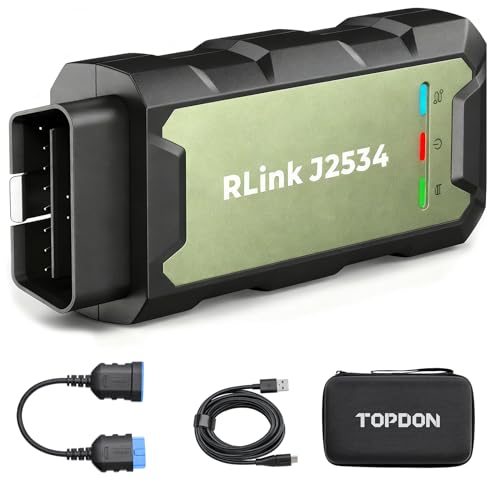
- Advanced VCI Box, Industry-leading J2534 Pass-Thru...
- High-Speed OEM-Level Diagnostics & Programming: Unlock true...
- Coverage for 17 Car Brands & Ultra Reliability: Works...
- User-Friendly RLink Platform & Expert Support: TOPDON’s...
- 6.6 ft USB-C Cable & Portable Storage Case: The RLink J...
Last update on 2026-06-12 / Affiliate links / Images from Amazon Product Advertising API
If the PDF is very large, it may not load in the preview below.
Some older TSBs had multiple PDFs — visit the NHTSA Website to view all PDFs.
If the TSB PDF does not show, download or view it on the NHTSA Website.
Click on the (+) Plus Sign
Then Click on Associated Document(s)
Search NHTSA Database for Recalls
Search NHTSA Database for Vehicle Investigations
View Latest Vehicle Investigations
Search NHTSA Database for Vehicle Complaints
View Latest Vehicle Complaints
TSB/Document ID: SSP 990143
Replacement Service Bulletin Number:
MFR Communication Date: 2014-01-17
MFR Internal Campaign ID/Software Version:
Communication Type: Service Bulletin/Repair Instructions
NHTSA Components: EQUIPMENT:OTHER:OWNERS/SERVICE/OTHER MANUAL
MFR Component System:
MFR Component Subsystem:
Previous TSB | Next TSB |
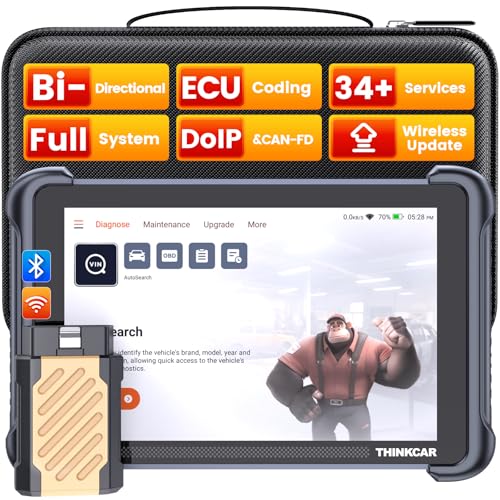
- [Notice] When you receive a used escaner automotriz device, it may be a customer return resold by Amazon without inspection. You can exchange it for a new one through Amazon. As this situation is unavoidable, we sincerely apologize. For any issues, contacting us via Amazon's "Messages" is the best way, and we’ll provide a solution within 24 hours. THINKSCAN 689BT Can Be Used Immediately After It is Turned On, Without Complicated Registration Process, Which is More Convenient & Quick.
- [Good News] THINKSCAN 689BT is the most competitive automotive scan tool to date, offering wireless updates with no subscription fees(valued 500Buc.ks) . With all the features of THINKTOOL PD8,PRO, built on Android 10 platform with 4-core CPU, 4GB RAM
 and 64GB ROM, serving up to 5X faster than older MAX/MINI/PLUS vehicle scanners escaner automotriz, no more slow and delayed feedbacks, it's time to update your garage tool.
 - [Big Money Saver] Premium THINKSCAN 689BT Wireless Diagnostic Scanner Escaner Automotriz, save up to 400USD per year, includes all useful features: Full bi-directional controls, ECU coding, 34+ services, OEM all system diagnostics, Worldwide vehicles coverage, CAN FD & DoIP, FCA AutoAuth(The 689BT only provides a login and purchase portal, and users are required to register for an FCA account and pay a membership fee in order to perform the relevant automotive diagnostics)
- [3000+ Active Tests]Active testing is one of the most useful features in automotive maintenance and greatly improves mechanic efficiency. THINKCAR 689BT bidirectional scanner can send action commends to vehicle sub-systems or components for active test without using vehicle controls. It can perform various tests such as: EVAP Test, Fuel Trim Reset, Injector Buzz Test, Window/ Mirror/ Door Lock Test, Pump and Value Tests, etc. Get functions from "Diagnose>Car Model>System>Active Test".
- [Hot Advanced Features] 689BT bidirectional tool newly adds ECU Coding, Power Balance, Flash Hidden Functions, Reset Adaptive Data, Match Replaced Components, Customize OE-Settings. Such as: 1. changing the color of interior lights 2. switching on/off the auto hold, 3. customizing dash kits 4. activating the auto side mirror folding function 5. disables auto start-stop. Note: Coding functions vary by model&year.

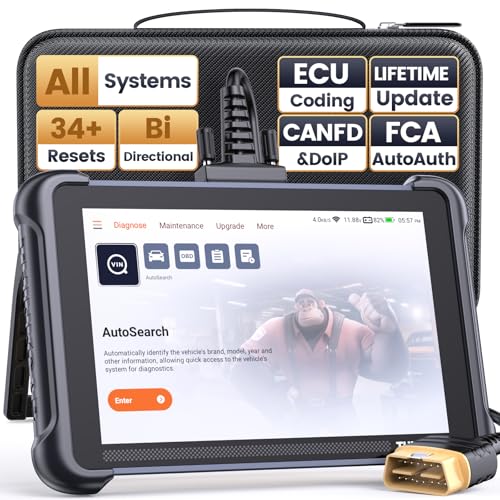
- 【Warm Tips】Wired THINKSCAN 689 is connected through a detachable OBDII cable, and we also have added OBD2 Extension Cable (about 60 cm/2 feet) as g ift, enabling customers handling vehicle repairs with ease. Just click "Bundles Item" above to get it. Note: FCA AutoAuth is a third-party service, additional cost may be required.
- 【Professional Car Diagnostic Tool】Tired of renew fees? Thinkscan 689 scanner provides dealer-level advanced functions without annual fees for auto mechanics and repair shops. 34+ Services, 3000+ Active Test, ECU Coding, 140+ Brands Coverage, FCA AutoAuth, CANFD&DOIP Protocol, Component Matching, Power Balance, V.A.G Guided, Compatible with Google Chrome integration, etc. With strong hardware backing, 64G Memory, Android 10, 4-core processors, and 4150mAh battery. Thinkscan 689 brings you the best as your daily business helper and never lets you drop the ball!
- 【Over 34 Reset Service, Adaptation + Relearn + Calibration + Initialization + Matching】Made for workshops, Thinkscan 689 scanner provides 34+ services for worldwide vehicles: such as Gear/SAS/EPB/TPMS/D.P.F/I.M.M.O/BMS/ETS/Oil/Brake/AFS/GEARBOX/SUNROOF/SUS Reset, ABS Bleed, Injector coding, etc. Warm tips: Compatibility may vary on vehicles' model and year, please contact seller before purchase to make sure it works well on your cars.
- 【Real Active Test】Thinkscan 689 scan tool features over 3000+ full bi-directional control ability, to send commands to vehicle’s systems/components, to verify system input/output without using the vehicle's controls, e.g. turn on the radiator fan, modulate the throttle, open/close windows, operate mirrors, Injector Buz Test, turn on interior&exterior lights, sound horn, test door lock actuators, turn on/off front/rear side ACM Solenoid, Vehicle level position calibration, Wheel Speed Sensor Supply.
- 【Comprehensive Solutions with Advanced Features】Take your vehicle customization to the next level with the Thinkscan 689's advanced ECU coding capabilities. This scan tool provides power balance, PMI, unlock more new features and enhance performance by activating dormant functions, customizing OE settings, matching replaced components, and reprogramming adaptive data to elevate your driving experience. Note: Compatibility varies by car models, please check before order.

- 【Cost-effective OBD2 scanner】 Thinkcar Thinkdiag2 is the most powerful wireless diagnostic tool for it's price! Equipped with multi-functions of Newly added CAN-FD protocol, BiDirectional control(Active Test), 15 Maintenance resets, All Systems diagnosis, Auto VIN, FCA AutoAuth, Unlock the protected FCA vehicle SGW module on Chrysler, Dodge, Jeep, Alfa Romeo, and Fiat vehicles manufactured after 2019.120+ Car brands coverage, No IP limited, etc. Good for workshops & DIYers. Kindly send us VIN to check compatibility before purchase
- 【OE-Level Full Systems Car Scanner with Added CAN FD Protocol】 Upgrade of Thinkdiag, Thinkdiag2 is a bluetooth diagnostic tool can diagnose Full System such as ECM, ABS, SRS, TCM, EPB, TPMS, SAS, A/C, BMS, etc. Thinkdiag2 can read/clear fault codes, read real-time data, read control module information,etc. As the only diagnostic scanner in this price range that supports the CAN-FD protocol, it suits for the latest GM(2019-) , saving $100 to buy a CAN FD adapter, reducing the risk of undetected errors to enhancing the user experience
- 【Bidirectional Test】This bidirectional scan tool Thinkdiag2 allows you to send commands from your smartphone directly to the vehicle's ECU for active testing, quickly locate problem areas, such as A/C clutch, windows, doors, sunroof, etc., reducing the diagnostic time and money. (Note: kindly send us VIN to check compatibility before order.)
- 【15+ Maintenance Functions】Thinkdiag2 OBDII code scanner is designed for individual car owners, DIYers, and small repair shops, which has a separate menu of 15 common special functions, such as Oil reset, EPB reset, SAS calibration, ABS bleeding, injector code, TPMS reset, etc. Enter from the all-system diagnostic menu to unlock more system special functions, and effectively handle the reset and relearn of most cars. Note: The Maintenance functions that each car can do may be different
- 【120+ car brands & FCA Autoauth+10 languages】Thinkcar thinkdiag2 helps you to troubleshoot the problems fast for 100 + US, European, Asian vehicle brands after 1996 that use the OBDII protocol. Only support 12V cars, including gasoline cars and diesel cars. Supporting Autoauth allows you to unlock the protected FCA vehicle SGW module on Chrysler, Dodge, Jeep, Alfa Romeo, Fiat vehicles, etc. (Note: Only provide AutoAuth login portal, and need purchase the registration number on the AutoAuth website by yourself.) Multilingual function allows workshop mechanics to avoid language barriers and use it around the world Without restriction
Last update on 2026-06-12 / Affiliate links / Images from Amazon Product Advertising API
This product presentation was made with AAWP plugin.