
NHTSA ID Number: 10064451
Manufacturer Communication Number: 09-00-89-002I
TSB/Document Date: 2016-05-13
Summary
SUMMARY TO BE PROVIDED ON A FUTURE DATE.
If the PDF is very large, it may not load in the preview below.
Some older TSBs had multiple PDFs — visit the NHTSA Website to view all PDFs.
If the TSB PDF does not show, download or view it on the NHTSA Website.
Click on the (+) Plus Sign
Then Click on Associated Document(s)
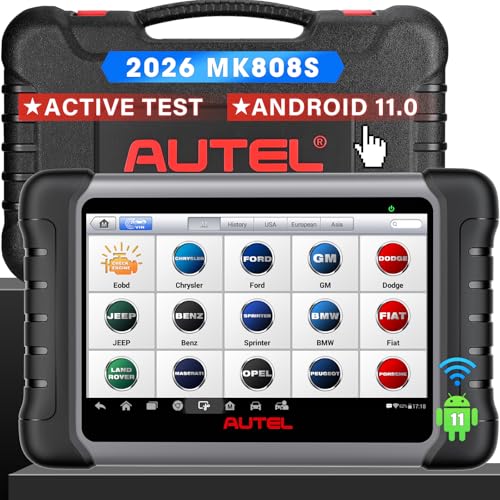
- 💝【Questions? We’re Here Anytime】MK808S is a...
- 🔥🔥🔥【2026 NEWLY RELEASED BI-DIRECTIONAL...
- 【28+ MOST POPULAR RESET SERVICE FOR 150 MAKES】Autel...
- 【ALL SYSTEM DIAGNOSTICS, FACTORY-LEVEL SCANNER】The...
- 【AUT0 SCAN & AUT0V1N, 10X FASTER】How much have you spent...

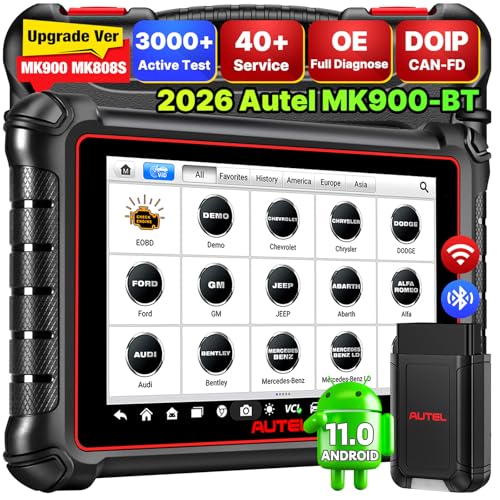
- 💯【Conta.ct us for Support Directly】If you met any...
- 🔥🔥🔥【2026 AUTEL FLAGSHIP MK900BT MK900-BT, NEW...
- 🚗【3000+ ACTIVE TESTS (50➡3000+), SAME AS MS...
- 🚗【40+ HOT SERVICES FOR 150 MAKES (28+➡40+)】Full...
- 🚗【OE ALL SYSTEM DIAGNOSE, AUTO SCAN 2.0: SCAN LICENSE...
This product presentation was made with AAWP plugin.
Search NHTSA Database for Recalls
Search NHTSA Database for Vehicle Investigations
View Latest Vehicle Investigations
Search NHTSA Database for Vehicle Complaints
View Latest Vehicle Complaints
TSB/Document ID: 09-00-89-002I
Replacement Service Bulletin Number:
MFR Communication Date: 2014-05-01
MFR Internal Campaign ID/Software Version:
Communication Type: Service Bulletin/Repair Instructions
NHTSA Components: EQUIPMENT:OTHER:OWNERS/SERVICE/OTHER MANUAL
MFR Component System:
MFR Component Subsystem:
Previous TSB | Next TSB |
File in Section:
Bulletin No.:
Service Bulletin
Date:
00 - General Information
09-00-89-002I
May, 2014
INFORMATION
Subject:
Properly Maintaining Vehicles in Dealer Inventory
Models:
2011-2015 GM Passenger Cars and Trucks
2011-2015 Chevrolet Captiva (sold outside North America)
2012-2015 Chevrolet Captiva Sport (U.S. fleet only)
2011-2015 GMC Terrain (sold outside North America)
2011-2013 Daewoo Winstorm (sold outside North America)
2011-2013 Opel Antara (sold outside North America)
This bulletin is being revised to add the 2015 model year. Please discard Corporate Bulletin
Number 09-00-89-002H.
Dealer Inventories
Important: Dealers are responsible for the storage
and proper care of new vehicles held in dealer
inventory until they are delivered to the customer. Extra
care and attention to detail should be taken to make
sure vehicles that have spent longer times in dealer
inventory are properly delivered to the customer with no
product issues (such as stall/no start issues due to
improper battery maintenance or vehicle vibration due
to tire flat spotting). Damage or deterioration, resulting
from improper storage, is not to be covered by the
New Vehicle Limited Warranty. For more information,
refer to the Service Policy and Procedures Manual –
Section 2.2 New Vehicle Storage – Properly
Maintaining Vehicle in Dealer Inventory.
Most customers consider the condition of their vehicle
at the time of delivery as a direct reflection of the
dealership and potentially the amount of care and
excellence the service department will deliver or not in
the future. Therefore, providing the best vehicle
possible at customer delivery can increase your CSI
(Customer Satisfaction Index), and ultimately the
number of customers in your showroom and service
departments. In order to maintain a high level of quality,
special attention should be paid to the proper
maintenance and storage of your new vehicle
inventories. The list below will assist you in keeping
your vehicle inventory protected and ready for
customer delivery.
Table of Contents
The following is a list of topics included in this bulletin:
• Battery Maintenance
• Tire Flat-Spotting
• Tire Pressure Monitoring System (TPMS)
• Brakes
Copyright 2014 General Motors LLC. All Rights Reserved.
•
•
•
•
•
Protective Shipping Materials
Checking / Cleaning Windshield Wipers
Fuel / Lubricants / Oil Life Monitor
Diesel Engine Special Care
Storage Lot Practices / Vehicle Washing
Battery Maintenance
12 Volt System
Maintain battery charge on vehicles in dealer inventory
per the following:
1. At vehicle delivery to the dealership (PDI), test/
charge the battery using the GR-8 Tool (EL-50313)
in the PDI mode. This step allows the battery
to be charged back up (topped off) at PDI (for
20 minutes or less) to make up for any loss of
charge that occurred during the vehicle transit time
from assembly plant to the dealer.
2. Every 30 days in dealer inventory, test/charge the
battery using the GR-8 Tool (EL-50313) in the PDI
mode. This step will allow the battery state of
charge to be maintained, which maximize over all
battery life. Vehicle batteries that are in dealer
inventory for extended amounts of time without
being maintained/charged will see a significant
overall reduction in the battery's service life.
3. At point of sale (just prior to delivering the vehicle
to the customer), test/charge the battery using the
GR-8 Tool (EL-50313) in the PDI mode. This step
will ensure that the battery is fully charged for the
best customer satisfaction possible.
For additional information and details, please
refer to latest version of Corporate Bulletin
Number 03-06-03-004 – Proper Battery Maintenance
While Vehicle is in Dealer Inventory and Warranty
Code Generated by El-50313/Charger Required for
N0110, Battery Parts Restriction.
Page 2
May, 2014
High Voltage System – Hybrids (except
Chevrolet Volt)
The conventional 12V battery used in hybrid vehicles
requires maintenance in accordance with the '12 Volt
System' above.
Maintenance is not required for the Hybrid high voltage
battery while in dealer inventory.
High Voltage System – Chevrolet Volt
The conventional 12V battery used in the Chevrolet
Volt requires maintenance in accordance with the
'12 Volt System' above.
While routine maintenance is not required for the High
Voltage battery, it is recommended to have the high
voltage battery be charged less than 50% if it will sit for
extended periods of time or while in dealer inventory.
Important: During PDI of the Chevrolet Volt, ‘Final
Inspection and Preparation’ steps require the high
voltage battery be fully charged using the on-board
charger just prior to delivery.
A full charge will require approximately 12 to 14 hours
using the 120V Portable Charge Cord or 4 hours using
a 240V Stationary charger.
Tire Flat-Spotting
All tires, no matter the manufacturer, are susceptible to
flat spotting if the vehicle sits on the dealership lot prior
to customer delivery and is not moved or driven for an
extended period of time. Flat spots on the tires can
cause vibration concerns.
Vibration issues for flat spotting can develop between
30-45 days (depending on the tire design, parking
surface and weather conditions) and usually will be
gone after allowing the tires to heat up after few
minutes of driving at highway speeds on smooth
surface roads.
Vibration issues that develop from allowing the vehicle
to sit without being moved/driven for between
45-90 days usually will be gone after allowing the tires
to heat up after 10 minutes of driving at highway
speeds on smooth surface roads.
To attempt to minimize this concern, the following is
recommended:
– Tires should be inflated to 300 kPa (44 psi) for longer
term storage in inventory. While higher tire pressures
during storage has not been proven to eliminate this
concern, underinflation has been shown to contribute
to its severity, so higher pressure is preferred to
lower pressure.
Tip: Tires on average lose 7 kPa (1 psi) every
30 days. Additionally there is a 7 kPa (1 psi) loss in
pressure for each 6°C (10°F) drop in air
temperature. Example: A tire with 300 kPa (44 psi) at
16°C (60°F) would have 240 kPa (35 psi) after
6 months in inventory at −1°C (30°F) air
temperature.
– Vehicles should be moved every 30 days. If vehicles
are allowed to sit more than 30 days at a time, more
noticeable or objectionable tire vibrations may be
noted. Vibration issues that develop from allowing
the vehicle to sit without being moved/driven for
Bulletin No.: 09-00-89-002I
more than 90 days may become permanent and
would required tire replacement to repair (which
would not be considered a warrantable item)
At the time of delivery, vehicle tire pressures MUST be
reset to the values as outlined on the Tire Pressure
Placard in order to provide the customer with the proper
ride and handling characteristics designed into the
vehicle.
Important: If any tire vibration is noted during the PDI
process before measuring tires on equipment such as
the Hunter GSP 9700, the vehicle MUST be driven a
minimum of 24 km (15 mi) to ensure removal of any flat
spotting (The tendency to "flat spot" is less likely as the
tire accumulates mileage).
Tire Pressure Monitoring
System (TPMS)
The TPMS is learned at the assembly plant and should
not need to be re-learned at customer delivery unless
wheels are replaced or rotated. Vehicles that have
been in dealer inventory for extended amounts of time
may have a TPMS light on indicating proper tire
pressure (air inflation) is required. Properly adjusting all
tire air pressures to the recommended levels and
driving the vehicle will turn the light off (refer to the
Tire and Loading Information label on the driver side
door) - DO NOT re-learn the TPMS. For additional
information refer to the latest version of Corporate
Bulletin Number 09-03-16-002 - Dealership Service
Consultant Procedure as Vehicle Comes into Service
Drive for Tire Pressure Monitor (TPM) System
Message, Light and Customer Information.
Brakes
Extended outside storage may increase the opportunity
for brake noise issues. Vehicle braking systems tend to
be self-cleaning while vehicles are in use, preventing
any build-up of corrosion on the brake rotor surfaces. It
is a good practice if a vehicle needs to be moved (such
as to access other vehicles) to drive it once around the
block and apply the brakes several times. This practice
will not only eliminate the opportunity for rust to build up
on the rotors, but may help to minimize flat spotting of
tires.
Important: Vehicles should be moved and brakes
applied every 30 days in order for this practice to
remain effective.
At times more extensive corrosion can cause pulsation
due to thickness variation. This usually happens when
the vehicle is parked for long periods of time in humid
type conditions and the braking surface area under the
pads corrode at a different rate compared to the rest of
the braking surface area. Cleaning up of braking
surfaces (burnishing) can be accomplished by
10-15 moderate stops from 56-64 km/h (35-40 mph)
with cooling time between stops. If multiple, moderate
braking stops do not correct this condition, refer
to the latest version of Corporate Bulletin
Number 00-05-22-002 – Disc Brake Warranty Service
and Procedures for additional information.
Bulletin No.: 09-00-89-002I
May, 2014
Protective Shipping Materials
Many GM vehicles come with protective coverings,
foam blocks and other preventative measures applied
before vehicle shipping to aid in vehicles being
delivered in the best possible condition.
The exterior protection foam block door and bumper
protectors should be left in place up to the time of the
customer delivery except for vehicles on prominent
display such as the showroom floor. These protective
devices help to minimize lot damage, reduce dealer
expense and increase customer satisfaction.
General Motors has commonized the use of door edge
protection in order to reduce the chance of chips/
scratches on the doors of new vehicles. The protectors
come in the form of a black foam block that adheres to
the painted door panel by a sheet of white, two-sided
tape. This foam block is designed to protect not only
the painted body panel, but also any body cladding or
moldings on the vehicle. The location of the door
protection varies, depending on the contours of the
door or body cladding. The purpose of this protection is
not only to protect the vehicle during transportation
from the plant to the dealer, but also while the vehicle is
either stored or displayed at the dealership. Refer to the
General Motors Service Policy and Procedures Manual,
Article 2.2 for more information and recommendations.
GM recommends the door edge protection stay on the
doors up until delivery to the customer. By leaving this
protection in place, the possibility of door chips,
scratches or dents is virtually eliminated.
Checking/Cleaning Windshield Wipers/
Window Glass
Wiper Blades
Vehicle windshield wipers are exposed to weathering
elements as soon as a vehicle is produced. During
extended outdoor storage the wiper blades may not
function as well due to the following factors:
• Dirt/debris/dried soap stuck on the blade surface
• Oxidation of the rubber blade
• The rubber blade may take a “permanent set” from
non-use.
It is recommended that the wiper blades be cleaned
with a lint free cloth or paper towel soaked with
windshield washer fluid (GM Optikeen recommended)
or a mild detergent. You should see significant amounts
of dirt being removed on the cloth. Be sure to wash the
windshield thoroughly when you clean the blades.
Bugs, road grime, sap and a buildup of car wash/wax
treatments may additionally cause wiper streaking.
Important: Avoid getting windshield washer fluid on
your hands. Wear rubber gloves or avoid direct contact
with washer fluid. NEVER use gasoline, kerosene, or
petroleum based products to clean wiper blades.
Tip: DO NOT operate the wipers if the vehicle is
extremely dirty with gritty or sandy materials, or twigs/
sticks in the cowl area. This type of debris dragged by
the force of the wipers while dry may cause glass
scratching.
Page 3
Window Glass
The interior surfaces of the window glass may appear
hazy (due to surface deposits) after a vehicle has sat in
a “closed-up” condition for an extended period of time.
It is suggested that window washing during the PDI
process be performed with plain water. Washing by this
method increases the amount of time that the windows
will stay clean, as cleaners generally leave a film that
accelerates the deposition of new dirt.
ONLY if satisfactory results cannot be obtained
(streaking), please use GM Vehicle Care Glass Cleaner
(or equivalent) to clean heavier deposits.
Fuel/Lubricants/Oil-Life Monitor
Caution: Do not allow vehicles to run out of fuel
during idle conditions. Allowing a vehicle to run out of
fuel while idling may cause damage to the fuel pump.
Gasoline Fuel
As vehicles age while in inventory the potential for
fueling issues increases. Gasoline powered vehicles
should not encounter any fuel related issues while
being stored for up to one year. Vehicles should have
fresh fuel added as needed or if in stock for over
one year.
Lubricants and Oil Life Monitor
As vehicles are kept in stock for longer periods of time,
questions may be raised not only by the new car prep
personnel, but also by customers. Here are some
suggestions as to proper business practices.
The Oil Life Monitor in new GM vehicles will count
down as vehicles are started, moved and run for the
purpose of battery charging. If vehicles remain in stock
for longer periods, what guidelines should you follow to
answer questions about the oil life monitor?
– When the vehicle was assembled the oil life monitor
begins counting down the useful life of the oil. If the
Oil Life percentage indicates below 90% of the oil life
left before vehicle delivery and the vehicle is older
than 7 months, it is advised that the oil be changed
before delivery to the customer (An alternative would
be to offer the customer a discount coupon good for
a reduced cost oil change, to compensate for used
up oil-life before delivery).
Important: The Oil-Life Monitor should not be reset at
the time of delivery unless the vehicle oil has been
changed.
– If the Oil Life Monitor indicates above 90% or the
vehicle build date is within 6 months or newer, the
vehicle may be delivered without additional action.
There is always some period of time that a vehicle is
in dealer stock before it is delivered, and that small
drop in oil life is expected.
Important: If a vehicle remains in stock for 1 year or
greater, you should change the vehicle engine oil.
Page 4
May, 2014
Bulletin No.: 09-00-89-002I
Diesel Engine Special Care
Storage Lot Practices/Vehicle Washing
Periodic Operation
Diesel powered vehicles should not be left stationary
for more than 45 days. When the storage duration
approaches 45 days, the vehicle should at least be
started and idled until the engine reaches operating
temperature. Ideally, the vehicle should be driven for at
least 1.6 km (1 mi) and then idled to operating
temperature to prevent turbocharger malfunction.
While all damage and every situation cannot be
accounted for, simple thoughtfulness and care should
be your guide. There are many opportunities for
damage to the finish of vehicles. Please review the
following good discussion starters with porters and
technicians:
• Simple winter season conditions can be a good
source of damage for northern dealers. Sharp
snow shovels and ice scrapers can damage
vehicles. Consider the use of plastic shovels
(non-metal edged) for use in and around vehicle
storage lots and make sure snow removal tools
are in good condition. Instruct dealership
personnel to be aware of potential damage when
removing ice buildup from the vehicles.
• Keep bushes and shrubs trimmed back around
vehicle storage lots. Sometimes, when space is at
a premium, every inch of a lot is utilized. Do not
park vehicles near landscaping that, during a
thunderstorm or winter storm, may droop or move
sufficiently to contact vehicles, causing finish
damage.
• Regularly maintain your dealership car wash.
Worn components or improperly working
mechanisms and valves may damage or cause
dulling of vehicle finishes. If your dealership hand
washes and polishes vehicles for delivery,
reconfirm that personnel are dressed in proper
clothing devoid of belt buckles, metal buttons/
snaps, wallet chains, etc.
• Vehicles on the front lot, visible by customers,
should be kept clean and washed regularly for the
sake of a nice dealership appearance. Vehicles in
off-site storage, or secured areas should be kept
clean preferably by touchless methods. Constant
washing may create fine scratches or swirls in the
paint on dark colored vehicles. Lightly power
washing with soap will remove any harmful
accumulations of dirt, bird droppings, acidic
leaves, etc. without the risk of causing scratches.
Fuel
Diesel powered vehicles should not have additional
fuel added to the tank unless required. The
assembly plant fuels vehicles with a special blend of
ultra low sulfur diesel extending its stability over
marketplace diesel fuel. Fuel readily available in the
consumer market may have high levels of Biodiesel
and likewise shorter storage potential. If re-fueling is
required, add only in 15 L (4 gallon) increments using
winter blend fuels where appropriate.
Diesel Exhaust Fluid
Diesel exhaust fluid should not be topped off until
delivery to the customer as DEF has a limited shelf
life and can expire more quickly when in higher
ambient temperatures. Ideally, the refill procedure
should be performed in front of the customer to
facilitate training of the correct technique. Make certain
the GM provided nozzle including internal vent tube is
used to ensure proper feedback from the fill limit valve.
DO NOT OVERFILL THE TANK! When the fluid first
begins to overflow out of the fill neck, the tank is full.
Battery State of Charge
Wherever possible, diesel powered vehicles should
have the batteries maintained with a battery charger as
opposed to running the vehicle for 30 minutes to
conserve the factory fueling.
GM bulletins are intended for use by professional technicians, NOT a "do-it-yourselfer". They are written to inform these
technicians of conditions that may occur on some vehicles, or to provide information that could assist in the proper
service of a vehicle. Properly trained technicians have the equipment, tools, safety instructions, and know-how to do a
job properly and safely. If a condition is described, DO NOT assume that the bulletin applies to your vehicle, or that your
vehicle will have that condition. See your GM dealer for information on whether your vehicle may benefit from the
information.
WE SUPPORT VOLUNTARY
TECHNICIAN
CERTIFICATION
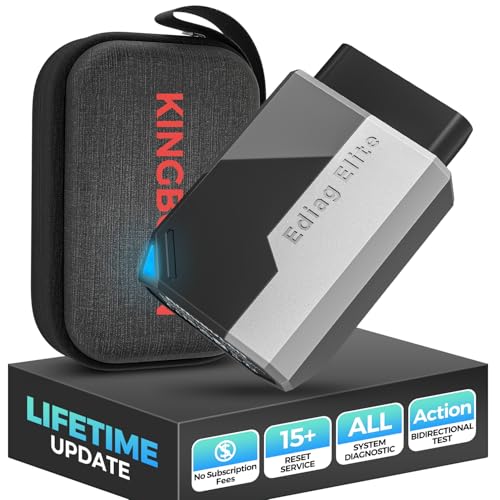
- OBD2 Bluetooth Scanner Lifetime Update: Ediag Elite offers revolutionary Advantage Lifetime Updates with unlimited access to the superior 15+ reset service, bidirectional testing and full system diagnostics.The Ediag Elite is an excellent Bluetooth OBD2 scanner diagnostic tool ideal for DIY's and private car owners.
- Bidirectional Test for Quickly Locating Problems: The Bidirectional Scan tool allows you to send commands directly from your smartphone to your vehicle for active testing. This feature helps to quickly narrow down problems such as air conditioning clutches, windows, doors, sunroofs, etc., reducing diagnostic time for mechanics and helping DIY users locate faults more easily. In addition, Ediag Elite provides fault analysis and repair guidance to help you solve problems efficiently.
- 15+ Maintenance Resets: The current version introduces 15+ popular special features: Oil Reset, Headlight Matching, Bleeding Reset, TPMS Reset, BMS Reset, Gear Box Relearn, Throttle Learning, Injector Coding, SAS Reset and more special functions in system diagnose menu. These functions make it easy for owners to carry out the necessary maintenance and servicing, ensuring that your vehicle stays in top condition, prolonging its service life and preventing common problems and breakdowns. Note: The Special function vary by model& year, Reach us check compatibility.
- Wide Compatibility CANFD & FCA
 Autoauth: Compatible with GM, Ford, Toyota, Chrysler, Honda, Mazda, Nissan, Mitsubishi, Hyundai, KIA with standard OBD2 port from 1996 to newer. More car brands and features will be released gradually. Newest Ediag Elite scanner supports CANFD Protocol and FCA cars. Note: Coverage may vary on different vehicle by model& year ,Please contact us to confirm compatibility before purchase.
 - Perfect for Monitoring The Health of Your Vehicle: Ediag Elite is designed to make vehicle maintenance simple and efficient. With intelligent Auto VIN quick recognition, it is easy to connect to your car without the need for manual input. Real-time data is visualized in a variety of formats, including graphs, numeric, meter displays and clear 4-in-1 data charts, allowing you to effortlessly monitor real-time data. Data logging/reporting is available for playback and further analysis

- No Annual Fees & 2026 Upgraded CAN FD: Why pay $199/year or more for updates? The 2026 newest Kingbolen K7 obd2 scanner features have been upgraded to Lifetime Updates without subscription fees, saving you significant costs in the long run. K7 scan tool also adds the CAN FD protocol for the latest GM models (2019+), enabling faster data transfer, reducing the risk of undetected errors
- 2026 Newest Top-tier Car Scanner: Kingbolen K7 diagnostic scan tool is equipped with most capabilities for daily repair/maintenance: Wireless diagnosis via Bluetooth, Bidirectional Test, ECU Online/Offline Code, 31+ Resets, PMI for Ford, Lincoln, Mazda, Global version for 100+ brand vehicles and 17 languages, no area limit, FCA AutoAuth
- OE-Level Full Systems Scan Tool: K7 professional diagnostic scanner with Auto Vin can do one-click to scan ECUs on most of vehicles, like pcm, ecm, eps, bcm, tpms, sas, a/c system... to read/clear code, view live data, freeze frame, read ecu info. 4-in-1 data stream graphics can make data viewing more intuitive. Detailed diagnostic reports will help you easily master the car situation as it can be shared by bluetooth or email! Adding workshop information can help your customers to know more
- Bidirectional Test/Active Test & ECU Code: Stop guessing and start fixing. Bidirectional scan tool Kingbolen K7 can perform real active test that can send commands to the vehicle's ECU to drive the actuators to work, like window, rear mirrors, sunroof, door, solenoids, wipers, headlamp, etc, helping you quickly find out bad parts and pinpoint faulty issues. K7 bidirectional scanner will be a good choice to save money and time on car repairs when performing complex maintenance and repair
- 31 Reset Functions: Avoid expensive dealership visits for simple services. Experience tells us that just a small repair service may cost a lot of money. Kingbolen K7 is a professional diagnostic scanner with 31 common maintenance services like Oil /SAS/EPB/TPMS Reset, Battery Matching, ABS Bleeding, Injector Code, etc. It effectively handles most of the car reset and relearning jobs, perfect for experienced DIYers and mechanics. Note: Functions in the menu vary across vehicles. Kindly check the compatibility before purchase
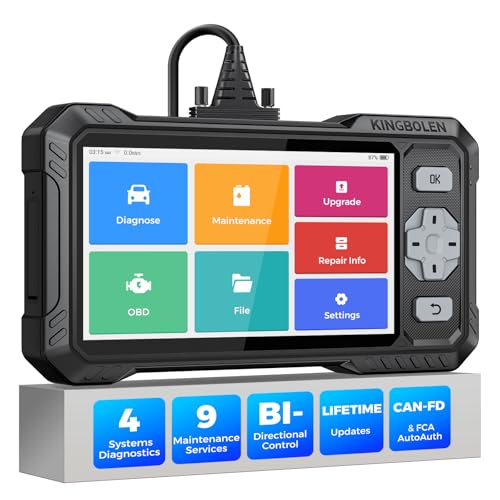
- WHY S608 STANDS OUT:2026 Kingbolen S608 is the only scanner <200 bucks that offers powerful active tests on Engine, ABS, SRS, and Transmission systems. Offers 9 resets,Covers 110+ global brands with a 6.2'' larger touchscreen
- KINGBOLEN'S NEW BIDIRECTIONAL SCAN TOOL: As the 2026 upgraded version of S600, our Newest S608 obd2 scanner has the powerful Bi-directional Control on Engine, ABS, SRS, and Transmission systems. It can send commands to the ECUs of actuators for functional tests and work status checks, such as ABS, fuel injectors, adjusting throttle, coolant pumps, EVAP test, fuel trim reset, etc. No more Guesswork. Quickly identify problem components without teardown, get fuss-free results in seconds.
- 【9 HOT RESET SERVICES CAR SCANNER】Tired of costly mechanic trips for common resets? The Kingbolen S608 obd2 scanner lets you do it yourself, even for beginners—quickly and effortlessly! It offers 9 hot reset functions: Oil/EPB Reset, ABS Bleeding, SAS Calibration, DPF Regeneration, Injector Coding, BMS Matching, Throttle Adaptation, Gear Learning. Stop paying mechanics for 5-minute jobs. Save hundreds per year! 🚗*Function vary from vehicle models. reach us to check compatibility firstly!
- 【4 SYSTEM DIAGNOSTIC TOOL + FULL OBDII FUNCTIONS】Kingbolen S608 is an OBDII scanner and 4 systems diagnostic tool made for home mechanics, DIYers, and professionals. You can access Engine, ABS, SRS, Transmission fault codes, track live data in graphs, and onboard DTC library lookup to find the right troubleshooting procedure, and diagnose with full 10 OBD2 test modes to fix most of emission issues. Give your aging cars routine maintenance to avoid costly repairs, a breakdown, or even a crash.
- 【NEW CAN FD, FCA/RENAULT SGW, 140+ BRANDS】Kingbolen S608 scanner for car supports 140+ vehicle brands, 100,000+ models, 28 languages and can be used worldwide. S608 stays up-to-date with modern vehicles, allows secure access to 2017+ FCA cars and 2015+ Renault cars (📢*Need to purchase an AutoAuth/Renault account by yourself), and supports the latest CAN-FD protocol for 2019+ GM/Chrysler, enabling 2X faster data transfer and more precise diagnostics. 🚗*Check compatibility before purchase.
This product presentation was made with AAWP plugin.
Last update on 2026-05-11 / Affiliate links / Images from Amazon Product Advertising API