
NHTSA ID Number: 11033828
Manufacturer Communication Number: 402061a
TSB/Document Date: 2026-06-15
Summary
Generic documents used to support dealer inquiries and aide in warranty and repair.
receiver/drier, add 2 ounces of oil, to
replace oil removed with the old
receiver/drier, evacuate and recharge.
3. Gradual loss of
cooling and air
flow, over time,
during A/C
operation.
Defective thermostat,
causing continuous
operation of the
compressor and
potentially freezing
condensate within the
evaporator core .
.
Place a jumper across terminals of
thermostat, if the clutch engages then
replace thermostat.
4. Compressor clutch
cycles too rapidly
or discharge air
temperature
increases
excessively during
compressor clutch
“OFF” cycle.
Defective thermostat.
Replace thermostat.
34
Air Conditioning System
A/C System Operation Check
The following is an A/C system "Field Test" and Evaluation Procedure to be used by service
personnel. This procedure can be used to determine if an Evans A/C system is performing
properly, and contains the correct refrigerant charge. The performance guidelines shown are
approximate, and subject to many operational variables. Ambient temperature must be 50 deg F
or above to accurately test for A/C performance.
1. Park the vehicle and set the engine speed at 1500 RPM.
2. Set the HVAC controls to AC on, recirculation inlet air, blower at HIGH speed, and the
temperature control dial to the coldest setting.
3. Visually verify that the A/C compressor clutch is engaged, and the compressor is operating.
Verify that the heater coolant valve is closed, and the heater coil tubes are neutral or cool to the
touch.
4. The suction hose fitting (at the evaporator outlet) should be cold to the touch. This fitting may
sweat or even frost slightly. The liquid hose fitting (at the evaporator inlet) should be warm to
the touch.
5. Chilled air should be discharged from the supply louvers in the dash. After 3-5 minutes of A/C
operation the system should begin to cool.
6. Air inlet / outlet temperature differentials are greatly affected by ambient temperature and
relative humidity. In cool ambient conditions, differentials smaller than 30 degrees may be seen.
Air can only be chilled to a certain level, and then the A/C compressor will cycle off to prevent
evaporator freeze-up. High humidity may also result in smaller differentials; a large amount of
cooling capacity is required to dehumidify the air, as well as cool it.
7. Measure and record the inlet air to the HVAC unit (near front passenger foot area) and vent
discharge air temperature closest to the unit (usually center vent on the front passenger side)
and calculate the differential of the two values. Record the humidity value for the day.
8. Measure and record the suction and discharge refrigerant pressures.
9. Refer to the “Expected AC Performance Guidelines”.
10. If the values fall within the guidelines then the system is functioning properly. If the values don’t
meet the guidelines then troubleshooting will be required.
35
Air Conditioning System
Expected A/C Performance
The following performance guidelines are based on test conditions outlined under "A/C System
Operation Check". Variables such as engine speed, condenser airflow, sun load, blower motor
speed, and chassis voltage will all affect A/C system performance.
Air Temperature (F) Entering A/C Unit
Inlet - Outlet Air Temperature Differential**
FRESH OR RECIRCULATED
LOW HUMIDITY
HIGH HUMIDITY
50
5-10
5-10
60
10-20
10-15
70
20-25
15-20
80
25-30
20-25
90
25-35
20-30
100
30-35
25-30
110
35-40
30-35
** The outlet louver closest to the A/C unit usually discharges the coldest air. The warmest inlet air temperature
(fresh or recirculated) should also be used for the Differential calculation.
A/C System Operating Pressures
Ambient Air Temp (F) Entering
Condenser
Suction Pressure (PSIG) @
Evaporator Outlet
Discharge Pressure (PSIG) @
Compressor Outlet
50
5-15
75-125
60
5-15
100-150
70
10-20
125-175
80
10-20
150-225
90
15-25
175-250
100
15-25
200-275
110
15-30
225-325
36
Air Conditioning System
Recommended R134a Refrigerant Charge Charts
1. Need to know chassis make, model, year built and engine location.
2. Need to know condenser type and location.
FRONT ENGINE CHASSIS
CHARGE
GM (Chevy) P-30, L-19, L-29, L-65
2.75 Lbs.
GM (Chevy) P-12 w/Parallel-Flow Condenser
2.00 Lbs.
2.75 Lbs. (1)
Workhorse before ’05 model except W-24
Workhorse - all models with black Behr condenser and two fans
2.00 Lbs.
Workhorse W22/W24 w/Multi-flow Condenser and no fans
1.50 Lbs.
Ford E-33 w/Serpentine Condenser
2.25 Lbs.
Ford F-53 w/Black Fin & Tube Condenser
2.75 Lbs.
Ford F-53 w/Silver Multi-flow Condenser(starting with MY2012)
2.13 Lbs
Ford F-53 w/Silver Multi-flow Condenser(starting with MY2016)
2.75 Lbs
Ford V-10 Super Duty w/6mm Condenser
2.75 Lbs.
FTL Front Engine Diesel w/Parallel-Flow Condenser
1.5 Lbs.
FTL Front Engine Diesel w/remote mounted condenser and fan
2.25 Lbs.
(1) For W22 without an auxiliary condenser, charge would be 1.75 lbs and performance would be reduced.
DIESEL ENGINE CHASSIS BUILT PRIOR TO 2015
Front-mounted Step well Parallel-Flow Condenser
Spartan (Fleetwood Heritage only)
Spartan Rear-Side Mounted Condenser (>500 HP)
Spartan Rear-Side Mounted Condenser (<500HP)
Spartan Rear-Side Mounted Condenser (Full cover -2011 or later)
Spartan Rear Std Center Mounted Condenser
Spartan Front Mounted Evans Fin & Tube Condenser
Spartan Mid-Engine Chassis
Spartan Front Mounted Parallel Flow Condenser
FTL Rear Mounted Evans Fin & Tube Condenser
FTL Remote Mounted Parallel Flow Condenser w/12” Elec. Fan
FTL Rear Mtd Large Parallel Flow Cond. w/Side Radiator w/No Elec. Fan
FTL Front Mounted Evans Fin & Tube Condenser
Workhorse Pusher Front Mounted Fin & Tube Condenser
Road Master (Monaco/Holiday Rambler) Rear Condenser
DIESEL ENGINE CHASSIS BUILT IN 2015, 2016 & 2017
CHARGE
2.00 Lbs.
5.25 Lbs.
4.50 Lbs.
3.00 Lbs.
5.50 Lbs
3.00 Lbs.
3.50 Lbs.
2.50 Lbs.
2.50 Lbs.
4.50 Lbs.
2.75 Lbs.
4.00 Lbs.
3.50 Lbs.
3.00 Lbs.
4.00 Lbs
CHARGE
FTL Remote Mounted Parallel Flow Condenser w/ 12" Electric Fan,
<=450 Hp
2.25 Lbs.
FTL Rear Mounted Serpentine Condenser Below Side Radiator w/ No
Elect. Fan, >=450 Hp
7 Lbs.
Spartan Rear Mounted Fin & Tube Condenser, Side Radiator w/ No
Elect. Fan, 450 Hp, 40’ Long Chassis
7 Lbs
Spartan Rear Mounted Fin & Tube Condenser, Side Radiator w/ No
Elect. Fan, >=450 Hp, 43’ or Longer Chassis
Spartan Rear Mounted Multi-flow, Side Radiator w/ No Elect. Fan,
600 Hp
37
8 Lbs.
4.5 Lbs
Air Conditioning System
Compressor Function Test
A/C COMPRESSOR OPERATION:
The A/C compressor is the heart of the system since it produces the refrigerant flow. Check to see if
the compressor’s clutch is engaged or rotating and the compressor is operating by producing low
and high side pressure ratios listed in the “Estimated A/C Performance Chart”. Compressor and
engine fan belts should be in good condition and tightened to the correct tension. Check the belts
when the engine is off and the belt is still warm. Do not replace the compressor unless its function
has been properly tested.
These are general guidelines to check the compressor function as part of the AC system, consult the
chassis manufacturer or the compressor supplier before any repair or replacements to the
compressor. Evans does not supply the compressor for RV A/C systems.
A/C COMPRESSOR FUNCTION TEST:
1) Restrict inlet air flow to the condenser with a piece of cardboard to increase the high side
refrigerant pressure.
2) Monitor high side pressure gauge to see if the pressure rises to ~ 300-350 Psig. If the pressure
does rise to this level then remove the cardboard.
3) This is a quick and simple test to see if the compressor has the capacity to build pressure and
pump refrigerant. If it does not achieve that high pressure range then check the items below:
1) Low refrigerant charge.
2) High side refrigerant blockage.
3) Ambient temperature is below 50°F.
4) Clutch slippage or low voltage.
5) Inspect compressor front seal and pressure relief valve for leaks.
6) Clutch voltage should be ±11.5 Vdc. Clutch coil resistance between 2.2 and 4.4 ohms.
7) Check compressor rotation for smoothness.
38
Air Conditioning System
Thermostatic Expansion Valve (TXV) Function Test
TXV OPERATION:
The Thermostatic Expansion Valve or TXV is an interactive device that senses pressure and
temperature then adjusts refrigerant flow to maintain a given superheat. Do not replace this device
unless its function has been properly tested.
Perform the “A/C System Operation Check” first to ensure that there aren’t any other possible
restrictions to refrigerant flow. Look for frost, potentially caused by a restriction, on components
such as the Evaporator, Receiver/Drier, Condenser and adjoining refrigerant hoses.
TXV FUNCTION TEST:
1) A/C system is fully charged.
2) Blower motor set for high speed.
3) Engage compressor and allow A/C system to stabilize.
4) After 5- 10 minutes observe low side refrigerant operating pressures and record.
5) Change the blower motor speed to low and continue to watch the low side pressure. The
pressure should drop ~3 – 4 Psig depending on the heat load in ~1 – 2 minutes.
6) Repeat this procedure 2 – 3 more times.
7) If the low side pressure can be influenced by changing the blower motor fan
speed then the TXV is responding in the changing of the evaporator’s heat load
as designed.
39
Air Conditioning System
Refrigerant Charge Information – R134a
A correct refrigerant charge is necessary to achieve optimum performance from an air
conditioning system. This is very important with the vehicle A/C systems designed for R-134a
refrigerant. When servicing the refrigerant system, the only way to be certain of an exact
charge is to fill an empty system with the specified amount of R-134a. If the A/C system is
operating and the amount (charge) of refrigerant within the system is not known, some simple
checks can be performed to determine if the operating charge is adequate:
1. Compressor clutch engaged, and compressor operating.
2. Suction hose fitting (at evaporator outlet) cold to the touch. This fitting may sweat or even frost
lightly.
3. Chilled discharge air at the dash louvers, when the temperature control is set at the coolest setting
(water valve completely closed).
4. CAUTION!! Some systems may have a sight glass on the receiver drier. The sight glass is only
useful when considered along with steps 1 thru 3 above. R-134a compressor oil circulating in
the system can make a sight glass appear foamy even with a proper system charge!
Disregard a milky or foamy sight glass if the A/C system passes steps 1 thru 3 above. If a clear
sight glass can be seen, this simply confirms an adequate operating charge.
5. See Recommended R134a Refrigerant Charge Charts for recommended refrigerant charges
and Expected A/C Performance Guidelines for acceptable ranges of performance.
40
Air Conditioning System
Service Tips
1. USE ONLY VIRGIN OR NEW R134A REFRIGERANT.
2. RECLAIMING REFRIGERANT, EVACUATING THE A/C SYSTEM AND CHARGING WITH
PROPER AMOUNT OF REFRIGERANT RESOLVES MANY A/C COMPLAINTS.
3. SOME REFRIGERANT LOSS WILL OCCUR IN ONE YEAR’S TIME AND THIS IS
RECOGNIZED AS NORMAL. VIBRATION, HOSE POROSITY AND GENERAL
CONSTRUCTION OF THE SYSTEM MAKE A LEAK PROOF SYSTEM NEARLY IMPOSSIBLE.
4. EVANS DOES NOT RECOMMEND OR ENDORSE THE USE OF “STOP LEAK” OR “LEAK
SEALING” PRODUCTS.
41
Air Conditioning Theory
The Four Major Functions Of An A/C system
To be effective, the dash air conditioner must control four (4) conditions within the vehicle
interior:
It must cool the air
It must circulate the air
It must purify the air
It must dehumidify the air
These functions are essential if passenger comfort is to be maintained when the ambient
temperature and humidity are high.
By performing these functions, the air conditioner maintains the body comfort of the d r i ve r
a n d f ro n t passenger.
ASHRAE has developed a comfort range that is the standard in HVAC commercial, residential
and automotive industries. In the summer, the comfort range is between 73⁰F (22.5⁰C) dry bulb
(db) temperature and 79.5% relative humidity (rh) up to 81⁰F (27⁰C) db and 19.8% rh. In winter,
it is between 67.1⁰F (19.5⁰C) db and 86.5% rh to 76⁰F (24.5⁰C) db and 23% rh.
42
Air Conditioning Theory
A/C System Basic Operation
Air from either the interior of the vehicle (Recirculation Air Inlet Mode) or from the exterior of the
vehicle (Fresh Air Inlet Mode) is sucked into the HVAC unit by an air flow moving device called a
blower assembly.
The air flow passes through a heat absorbing coil called an evaporator located within the HVAC
unit.
The evaporator then transfers the heat from the air to a cool fluid medium called R134a
refrigerant which is encapsulated within a plumbing network.
The heated refrigerant is transferred by a pump or compressor into the engine compartment
where it then rejects this heat to exterior air flow traveling through a heat rejection coil called a
condenser.
This is a continuous process that occurs whenever the compressor is operating.
43
Air Conditioning Theory
Heat Measurement
First we need to understand the
fundamentals of Heat.
The amount of heat energy present in the air and
refrigerant is measured as the temperature.
There are two different temperature scales most
commonly used, Fahrenheit and Celsius.
Heat is measured in British Thermal Units
(BTU’s) and Calories.
BTU – amount of heat energy required to raise
one pound of water one degree Fahrenheit.
Calorie – amount of heat energy required to
raise one gram of water one degree Celsius.
Three Types Of Heat
Sensible Heat: When the heat that is applied to a substance merely raises its temperature, but
does not change its physical state. It is the heat which, added to or subtracted from a substance,
produces the changes in temperature indicated on a thermometer. (i.e. It is the heat that you
feel or sense)
Latent Heat: The heat released or absorbed by a substance when it changes its physical state
to another with no change in temperature. (i.e. ice to liquid and liquid to vapor)
There are two forms of latent heat:
latent heat of fusion in the conversion of a liquid to a solid, or vice versa (i.e. The Freezing
Point – For water it is 32°F or 0°C).
latent heat of vaporization in the conversion of a liquid to a vapor, or vice versa. (i.e. The
Boiling Point – For water it is 212°F or 100°C).
The latent heat of vaporization phenomenon is the founding principle in refrigeration and air
conditioning. It is known as THE COOLING EFFECT!
44
Air Conditioning Theory
Understanding Heat Transfer
How does heat get inside a vehicle?
When a car is driven or parked in the sun, heat enters the vehicle from many sources.
These sources include:
- Ambient air
- Sunlight
- Engine heat
- Road heat
- Transmission
- Exhaust heat
All of these and other miscellaneous heat sources, increase the air temperature within the
vehicle.
In a high ambient temperature situation, (e.g. on a 99 ⁰F or 37⁰C day), the interior of a
vehicle left standing in the sun with windows closed could reach 150 - 158 ⁰F or 65-70⁰C!
Sun
load
Sun
load
Sun
load
Engine Heat
Exhaust Heat
Exhaust Heat
Road Heat
45
Air Conditioning Theory
Understanding Heat Transfer (Continued)
How does heat transfer work in an A/C system?
Three processes of heat transfer:
An air conditioning system’s efficiency is based on
how it moves heat.
Heat Transfer is the method by which heat flows.
Heat always travels from warm material to cold.
The reverse is never true.
For example, if a hot cup of coffee is left standing.
it will cool off, while a cold soda will get warm.
The heat from the warm coffee moves to the cooler
surrounding air (i.e. condenser’s heat rejection).
The heat from the surrounding air moves to the
cooler soda, until a balance is reached (i.e.
evaporator’s heat absorption).
1. Radiation: Heat moves from a heat source to an object
by means of heat rays.
For example, you feel heat from a fireplace, even
though air is traveling past you and going up the
chimney. You are warmed by radiated heat. (i.e.
Engine compartment heat, body of the vehicle exposed
to the sun, etc.)
2. Convection: Heat flows in a stream of air or liquid that
is hotter than what it flows over, around, or through.
For example, a blow dryer generates a stream of
heated air to dry hair. The hair is heated by convection.
(i.e. The inlet air of the HVAC unit scrubbing the
aluminum fins of the evaporator or vice versa with the
condenser)
3. Conduction: Heat travels along a material.
For example, if a spoon is left in a pot of boiling water,
the spoon handle will get hot, even though the handle is
outside the pot. Heat is conducted along the spoon
handle. (i.e. The heat in the coil’s fins passing to the
refrigerant passages & into the refrigerant)
46
Air Conditioning Theory
The Added Value Of Latent Heat Transfer
~6 TIMES MORE HEAT
TRANSFERRED THAN SENSIBLE
HEAT.
R134a refrigerant is about one tenth less in latent heat value but is used instead of water
because it boils at temperatures below the freezing point of water and at a higher pressure than
atmospheric pressure.
It has the needed characteristics to boil at a low temperature and is able to change its state
readily from liquid to vapor, and vice versa.
The A/C system creates the situation were the refrigerant is either evaporating or
condensing to provide the most efficient means of heat transfer.
47
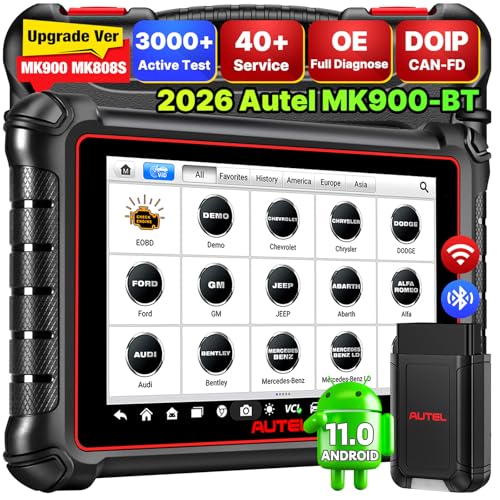
- 💯【Conta.ct us for Support Directly】If you met any...
- 🔥🔥🔥【2026 AUTEL FLAGSHIP MK900BT MK900-BT, NEW...
- 🚗【3000+ ACTIVE TESTS (50➡3000+), SAME AS MS...
- 🚗【40+ HOT SERVICES FOR 150 MAKES (28+➡40+)】Full...
- 🚗【OE ALL SYSTEM DIAGNOSE, AUTO SCAN 2.0: SCAN LICENSE...

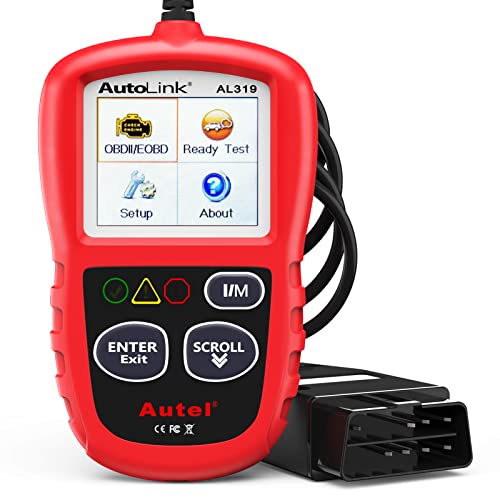
- 【TURN OFF CEL】 This AL319 car scanner diagnostic tool...
- 【EXTENSIVE APPLICATION】 Autel AL319 Compatible with...
- 【FOR END USER & DIYERS】 This error code reader AL319 is...
- 【USER-FRIENDLY DESIGN】 This OBD2 scanner and check...
- 【HIGH-QUALITY SERVICES】 12 months war.ranty from the...
If the PDF is very large, it may not load in the preview below.
Some older TSBs had multiple PDFs — visit the NHTSA Website to view all PDFs.
If the TSB PDF does not show, download or view it on the NHTSA Website.
Click on the (+) Plus Sign
Then Click on Associated Document(s)
Search NHTSA Database for Recalls
Search NHTSA Database for Vehicle Investigations
View Latest Vehicle Investigations
Search NHTSA Database for Vehicle Complaints
View Latest Vehicle Complaints
TSB/Document ID: 402061a
Replacement Service Bulletin Number:
MFR Communication Date: 2026-06-15
MFR Internal Campaign ID/Software Version: 402061a
Communication Type: Service Bulletin/Repair Instructions
NHTSA Components: UNKNOWN OR OTHER
MFR Component System:
MFR Component Subsystem:
Previous TSB | Next TSB |
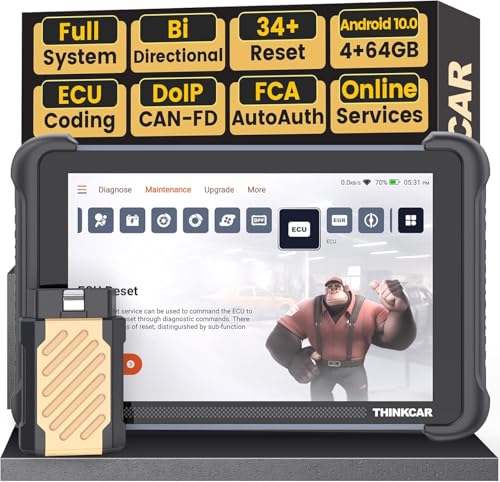
- [Notice] When you receive a used device, it may be a customer return resold by Amazon without inspection. You can exchange it for a new one through Amazon. As this situation is unavoidable, we sincerely apologize. For any issues, contacting us via Amazon's "Messages" is the best way. THINKSCAN 689BT Bidirectional Scan Tool Can Be Used Immediately After It is Turned On, Without Complicated Registration Process, Which is More Convenient & Quick.
- Full Bi-Directional Control & 3000+ Active Tests: Take control and test components like actuators, fuel injectors, relays, and cooling fans in real time. You’ll quickly see if the problem is in the part itself or the control module — saving you hours of guesswork and frustrating trial-and-error.
- Advanced ECU Coding Capabilities: Handle module matching and hidden feature activation with confidence. When you replace an ECU or want to customize settings, this obd2 scanner diagnostic bi directional tool gives you the professional-level capabilities you need without the dealership price tag.
- 34+ Useful Reset and Maintenance Functions: Complete everyday service tasks smoothly with a wide range of helpful reset and maintenance functions. Whether you’re keeping up with regular upkeep or tackling a specific job, this scanner makes maintenance simpler and less stressful for both DIYers and pros.
- Comprehensive Full System Diagnostics: Diagnose every major system — Engine, Transmission, ABS, SRS, TPMS, and more — all in one place. Finally stop wondering if you’re missing something important; get the full picture and clear codes with ease.
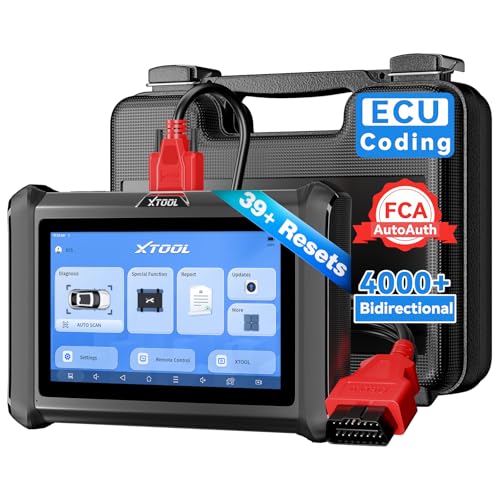
- Top Reasons to Choose the D7S OBD2 Scanner: XTOOL D7S car scan tool, an upgrade of XTOOL D7, offers comprehensive features for automotive technicians, workshops, and DIY enthusiasts 1. Upgraded Hardware: 2+64GB memory, rear camera, intuitive interface, foldable bracket 2. Complete Diagnostics: FCA
 Autoauth, OE-level all system scan, 39+ maintenance services, 4K+ bidirectional, CANFD/DoIP protocol 3. Advanced Capabilities: ECU c0ding, PMI functions 4. Wide Compatibility: Support 10,000+ models, covering 99% vehicle brands 5. Multi-language: Available in 22+ languages, No IP Restrictions 6. 3-Year Updates: Save 300 bucks on software updates for the latest features and optimizations
 - 2026 Upgraded D7S Car Scanner Features: The newly 2026 D7S V2.0 scanner for car brings exciting features for advanced vehicle diagnostics and enhanced user experience 1. FCA AutoAuth: Now supports FCA SGW module for Chrysler, for Jeep, for Dodge (2018+), for Fiat (2017+), enabling faster vehicle communication without gateway restrictions 2. PMI (Offline ECU Pr0gramming): Allows for Ford, for Lincoln, and for Mazda ECU pr0gramming for new modules 3. Optimized Diagnostic Report 2.0: Personalized reports with logos and customer info for auto shops. Note: Compatibility varies by cars, please check before order
- 39+ Services/Resets/Adaptations/Relearns/Calibrations: XTOOL D7S full system car scanner diagnostic tool tackles 99% of common car issues through its 36+ special functions, including Oil Reset, EPB, SAS, BMS, Throttle Reset, Injector C0ding, ABS Bleed, TPMS Reset, Power Balance, etc and also covers specific-vehicle functions like Crank Sensor Relearn, ABS Initialization, Cylinder Power Balance, Fuel Trim Reset, Idle Relearn etc. This car diagnostic scanner enhances efficiency, making repairs and maintenance hassle-free. Tip: DO NOT for All vehicles, please check compatibility first
- Cost-effective ECU C0ding Scan Tool for Specific Brands: Enhance your vehicle's performance with XTOOL D7S! This obd2 scanner all systems bidirectional offers advanced capabilities at an affordable price, supports online for BMW, for Benz and offline for BENZ, for MIT, along with PMI functions for Ford, for Mazda, and for Lincoln. Ideal for technicians and DIY enthusiasts, this automotive scanner diagnostic tool optimizes vehicle performance and enhances the driving experience. Note: Not for all cars and modules, please send car VIN to check the compatibility before purchase
- OE All System Diagnostic & 8 Pids Graphing: XTOOL D7S is a comprehensive all system bi directional obd2 scanner that delivers dealer-level diagnostics, completely controlling over your vehicle’s performance and health. This automotive scan tool can read and clear DTCs, view live data and ECU information, retrieve freeze frames, and perform active tests and full obd2 functions. This bi-directional scan tool can can identify your vehicle's make, model, and year information with just one click and show up to 8 PIDs live data with options for CSV viewing, playback, and recording for in-depth analysis. It is easy-to-use for both professionals and beginners, helping pinpoint issues efficiently
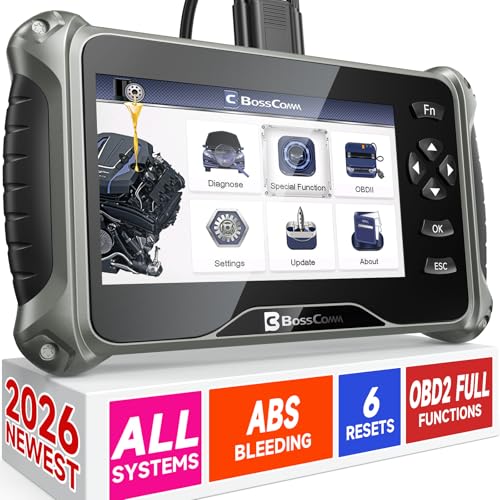
- 【✅Compared to BOSSCOMM IF742, IF745 Offers Full-System Diagnostics】The BOSSCOMM IF745 car diagnostic scanner is an upgraded model of IF742. In addition to supporting all OBD2 Code Reader functions and 6 reset options (ABS/EPB/SAS/BMS/Oil/Throttle), it expands diagnostics from 4 systems (Check Engine/ABS/SRS/Transmission) to vehicle All systems, including Steering, Suspension, and Body Electronics. This provides deeper, more comprehensive diagnostic capabilities.
- 【✨10 OBD2 Functions】The BOSSCOMM IF745 scan tool’s DTC Lookup instantly translates fault codes into user-friendly explanations, its I/M Readiness feature streamlines emissions testing with a single tap, and Freeze Frame lets you pinpoint the exact moment of a fault for in-depth root-cause diagnosis. Combined with a live data dashboard and advanced diagnostics (O2S, OBMon, EVAP), it delivers comprehensive insights for confident troubleshooting.
- 【✨Deep Diagnostics for All Vehicle System Modules】Beyond code reading/clearing and ECU information retrieval, our all-in-one data stream feature lets you inspect all current fault codes and their locations across the vehicle’s systems. This vehicle code reader helps you turn off dashboard warning lights and perform a comprehensive self-check of your car at home—no more back-and-forth trips to the repair shop or hefty inspection fees.
- 【✨6 Essential Resets: ABS Bleeding, Oil, EPB, SAS, Throttle, BMS】The BOSSCOMM IF745 obd2 scanner diagnostic tool swiftly purges air from brake lines to restore braking sensitivity, fine-tunes maintenance cycles to eliminate false alerts, resolves parking brake issues with one-click control, recalibrates steering sensors for stability, optimizes engine idling/acceleration for smoother performance, and deeply resets battery systems to extend lifespan and range via precise parameter adjustments.❗NOTE: Does NOT support bidirectional control, coding, or programming.
- 【✨10,000+ Car Models, AutoVIN, 13 Languages】The BOSSCOMM IF745 vehicle scanner diagnostic tool covers 73+ global car brands and offers support in 13 languages, making it perfect for DIYers, auto mechanics, or as a thoughtful gift. With a single-click AutoVIN feature, it instantly retrieves vehicle serial numbers, streamlining diagnostics for users globally. This adaptable tool balances user-friendliness with precision, catering to both personal and professional requirements.✅Unsure about compatibility? Compatibility will vary on vehicles' model and year, pls reach us via 📧 [email protected] 📧 before purchase.
This product presentation was made with AAWP plugin.