
NHTSA ID Number: 11030804
Manufacturer Communication Number: No. 2518.3
TSB/Document Date: 2026-04-06
Summary
Instructions on advanced technical information for Y1A, Y1B, Y1C- High-Voltage (HV) Battery Measurements during HV Battery Repair
2
Bulletin #: 2518.3
Advanced Technical Information
Part ID: 2708
Y1A, Y1B, Y1C- High-Voltage (HV) Battery Measurements during HV Battery Repair
Vehicles Affected
Models
Model Year
Model Type
VIN Range
Vehicle-Specific Equipment
Taycan
All
Y1A, Y1B, Y1C
All
N/A
Revision History
Revision
Release Date
0
November 6, 2025
1
November 11, 2025
2
December 1, 2025
3
March 6, 2026
Changes
•
•
•
•
•
Original document
• Update to Figure 2
Update to IR Testing Pass/Fail Criteria section on page 8
• Update to General DST Procedure Updates section
Update to IR Testing Pass/Fail Criteria section failure threshold
• Update to Model Years
• Addition of Figure 2, 4, and 5
• Update to Service Information
• Update to General DST Procedure section
Update to DST Procedure for 28-module Taycan Battery Pack section
Update to DST Procedure for 33-module Taycan Battery Pack section
• Update to IR Measurement Procedure section
Condition
All Taycan HV batteries are subject to dielectric strength testing after repair according to Workshop Manual WM
270803A5 Performing measurements on the high-voltage battery. In some cases, the VAS 6972 measurement
equipment can report a failed Dielectric Strength test (DST). This bulletin serves two purposes. One is to provide an
updated test procedure to more accurately isolate test failures, and the second is to serve as an updated diagnostic
guide for interpreting the test results. Every safety warning and HV certification requirement from the Workshop
Manual also applies to the work instructions contained in this document. Measurement specifications or component
replacement requirement guidance listed in this bulletin take precedence over those stated in the Workshop Manual
until this bulletin is removed or the workshop manual is updated.
AfterSales
Mar 6, 2026
Page 1 of 11
Bulletin #: 2518.3
Advanced Technical Information
Part ID: 2708
2
Technical Background
When performing post-repair validation of a Taycan HV battery, it is important to differentiate the purposes of
dielectric strength testing and insulation resistance (IR) measurements. Dielectric strength tests assess the
ability of the battery’s insulation system to withstand a specified high voltage limit without breaking down, ensuring
the overall integrity and safety of the high-voltage system under extreme electrical stress. In contrast, IR
measurements quantify the resistance of the insulation material to direct current leakage, indicating the quality and
degradation of the insulation over time before leading to an insulation fault. Both tests are required according to the
Workshop Manual.
Service Information
The updated work instructions for dielectric strength testing are differentiated by HV battery variant in the
sections below. Updated IR measurement work instructions apply to both variants. The general order of
measurements taken at each point is the same as described in WM 270803A5 Performing measurements on the
high-voltage battery.
1. Split the battery modules into sections by removing the specified busbars.
2. Perform an IR measurement on the first section.
3. Perform a DST on that section.
4. Perform an additional IR measurement on that section.
5. Move on to the next section.
General DST Procedure Updates:
• Due to the limited cable length of the VAS 6972, grounding to the equipotential bonding line is not possible
from all measurement points. The use of the original VAS 6972 ground clamp on the equipotential bonding
line is therefore no longer permitted. An equipotential bonding test can be performed between the screw
and equipotential bonding line to verify a good ground path.
• Suggested grounding points for DST and IR testing on both 28- and 33-module Taycan battery packs have
been modified from WM 270803A5 and are detailed below in figures 1 and 2.
• During a DST, only personnel with a 40 Cal Arc Flash suit and Porsche-approved PPE may be permitted
within the cordoned HV safety zone around the battery pack.
• Perform the self test and safety test for the VAS 6972 tool every time before first use during each repair.
• Do not perform an additional DST back to back on any measurement point to confirm a value.
▷ Any DST must only be performed once per point if a result is obtained. Only retry a test if it does not
yield a result.
▷ If a valid result (pass/fail) is still not possible after 2 attempts at the same point, contact technical
support via PRMS.
▷ Do not perform a follow up DST after replacing modules in a failed section.
AfterSales
Mar 6, 2026
Page 2 of 11
Bulletin #: 2518.3
Advanced Technical Information
Part ID: 2708
2
DST Procedure for 28-module Taycan Battery Pack (Figure 1)
• Only two DSTs are to be performed on a 28-module battery pack during repair.
• The busbar indicated in red must be removed prior to measurements at either point.
• Perform an IR test at points 1 and 2 before the DST at those points.
• Perform a DST only at points 1 and 2 shown below for each repair scope.
• The yellow boxes in Figure 1 designate the sections of frame where a lid screw can be hand-started to
ground the dielectric strength tester.
• Also perform IR tests at points 1 and 2 after a DST, with the negative probe in contact with a clean spot on
the silver frame surface designated by the yellow boxes.
• If the final IR test at measurement point 1 fails, remove busbars and CMC connections from each module
shaded in dark blue for further IR testing as described in the following Updated IR Measurement Procedure
sections.
• If the final IR test at measurement point 2 fails, remove busbars and CMC connections from each module
shaded in light blue module for further IR testing as described in the following Updated IR Measurement
Procedure sections.
• EXAMPLE: Point 1 passes DST and point 2 fails.
▷ Perform IR tests on each light blue module in the failing section (In this example, section 2). No
additional work is required for the passing modules in section 1.
Figure 1 - 28-module HV Battery measurement points
AfterSales
Mar 6, 2026
Page 3 of 11
Bulletin #: 2518.3
Advanced Technical Information
Part ID: 2708
2
Figure 2 - 28-module Flowchart
AfterSales
Mar 6, 2026
Page 4 of 11
Bulletin #: 2518.3
Advanced Technical Information
Part ID: 2708
2
DST Procedure for 33-module Taycan Battery Pack (Figure 3)
• Only a total of three or four DST’s are to be performed on the 33-module battery pack during repair,
depending on scope.
▷ Perform a DST only at points 1, 2, and 3 for any repair scope involving the lower-level modules.
▷ Repair scopes in only the upper “T” section require an initial DST (in addition to the points in figure 2)
at the mid-pack fuse as shown in step 3.9.3 of Safety test after assembly work on the high-voltage
battery with 33 modules in WM 270803A5. Only proceed with removing lower lid if this initial DST
fails.
• If removed, the upper “T” Section should be placed aside on a VAS 6762/44 Insulating mat during testing.
• Perform an IR test at points 1, 2 and 3 before the DST at those points.
• The yellow boxes in Figure 3 designate the section of frame where a lid screw can be hand-started to
ground the dielectric strength tester. If performing a DST on the mid-pack fuse, use the location on the
upper “T” section to ground the negative clamp.
• Perform IR tests at points 1, 2, and 3 after a DST, with the negative probe in contact with a clean spot on
the silver frame surface designated by the yellow boxes.
• If the final IR test at measurement point 1 fails, remove busbars and CMC connections from each module
shaded in dark blue for further IR testing as described in the following Updated IR Measurement Procedure
sections.
• If the final IR test at measurement point 2 fails, remove busbars and CMC connections from each module
shaded in light blue for further IR testing as described in the following Updated IR Measurement Procedure
sections.
• If the final IR test at measurement point 3 fails, remove busbars and CMC connections from each module in
the upper “T” section for further IR testing as described in the following Updated IR Measurement Procedure
sections.
• EXAMPLE: It is possible for battery to have point 1 pass, point 2 pass, and point 3 fail the DST. It would then
only be required to perform further IR tests on each module in the upper “T” section. No additional work
would be required for the passing lower sections.
Figure 3 - 33-module HV Battery measurement points
AfterSales
Mar 6, 2026
Page 5 of 11
Bulletin #: 2518.3
Advanced Technical Information
Part ID: 2708
2
Figure 4 - 33-module Lower Section Flowchart
AfterSales
Mar 6, 2026
Page 6 of 11
Bulletin #: 2518.3
Advanced Technical Information
Part ID: 2708
2
Figure 5 - 33-module Upper Section Flowchart
AfterSales
Mar 6, 2026
Page 7 of 11
Bulletin #: 2518.3
Advanced Technical Information
Part ID: 2708
2
Updated IR Measurement procedure after a DST Failure:
• Perform IR tests at each measurement point in Figures 1 and 3 before and after a DST at that point.
▷ If the DST passes but IR falls below the thresholds in appendix B, proceed with IR testing each module.
▷ If the DST fails but all modules in the section pass, reconnect the modules and proceed with the repair.
• For repair scopes only in the upper level, IR test the upper and lower sections separately after an initial DST
failure.
• Discharge capacitance and remove all the busbars from modules of failed section(s) differentiated by light
and dark blue in Figures 1 and 3.
• Monitor the rate of capacitive discharge on each busbar during removal. Noticeably slow discharge or
inconsistent voltage behavior can also point to a damaged module. Keep in mind that a battery with high
SoC will also lengthen the capacitive discharge process.
• Replace all busbars removed during repair.
• Carefully disconnect all CMC connectors from the modules of failed section(s).
• Two options are available for IR testing in the PIWIS measuring equipment menu. Select “HV System.”
• IR tests are to be performed on every module at each positive terminal twice in a row. The measurements
should be taken immediately back-to-back on on each module before advancing to the next one.
• IR testing is conducted using VAS 6558A or VAS 6558B with both 1000V straight probes on the test leads.
• The equipotential bonding cable is no longer used as a ground point for these module IR tests.
• When IR testing a module on the positive terminal: Contact the positive terminal with the red test probe as
shown in Figure 6.
AfterSales
Mar 6, 2026
Page 8 of 11
Bulletin #: 2518.3
Advanced Technical Information
Part ID: 2708
2
Module IR Testing Procedure: Positive Terminal (Figure 6)
• Place the red probe at the edge closest to the black plastic surrounding the terminal to avoid scratching the
conductive surface.
▷ CAUTION: pay attention to the angle of the red probe in this case. Avoid contact with the side of the
probe and the edge of the module housing. Use a plastic probe cap to expose only the tip of the probe
if available.
• Maintain contact with the black probe to the module case in the center. Ensure that the module casing
surface is clean at the point of contact.
• The equipotential bonding cable is not suitable as a ground point during this test. Use both straight probes
directly on the module to isolate conductive influences.
Figure 6 - IR Test at Positive Terminal
AfterSales
Mar 6, 2026
Page 9 of 11
Bulletin #: 2518.3
Advanced Technical Information
Part ID: 2708
2
IR Testing Pass/Fail Criteria (Figure 7)
• Shown below is an example of passing test result of >5000 MΩ. This is the reading displayed when IR
measures above the 500 MΩ measuring threshold.
• IR values between 200 MΩ and 500 MΩ are also acceptable for the second measurement on a terminal.
• If the first IR test on either module terminal fails, but the second one passes, the module is okay and should
not be replaced.
• If any second terminal IR test shows a number below 200 MΩ, this is considered a failure.
• If IR is below the measurement threshold, the IR test won’t complete in the measurement equipment
display. If the IR test fails to produce a value after multiple attempts on any module terminal, replace it.
• Document any failures in the “Module insulation Resistance Template” Excel file attachment and attach to
the repair PCSS entry.
Figure 7 - Insulation resistance measurement in PIWIS Tester
AfterSales
Mar 6, 2026
Page 10 of 11
Bulletin #: 2518.3
Advanced Technical Information
Part ID: 2708
2
Warranty
For documentation and warranty invoicing, enter the working position and PCSS encryption specified below in the
warranty claim:
APOS
Labor operation
I No.
27080375
High-voltage battery measure
PCSS encryption:
Location (FES5)
2708G
Cell block module
Damage type (SA4)
4053
Voltage loss/drop
Search Items
HV Battery, Isolation resistance, Dielectric strength, Safety test after assembly work
Important Notice: Technical Bulletins issued by Porsche Cars North America, Inc. are intended only for use by professional automotive technicians who have attended Porsche service training courses. They are
written to inform those technicians of conditions that may occur on some Porsche vehicles, or to provide information that could assist in the proper servicing of a vehicle. Porsche special tools may be necessary in
order to perform certain operations identified in these bulletins. Use of tools and procedures other than those Porsche recommends in these bulletins may be detrimental to the safe operation of your vehicle, and
may endanger the people working on it. Properly trained Porsche technicians have the equipment, tools, safety instructions, and know-how to do the job properly and safely. Part numbers listed in these bulletins
are for reference only. The work procedures updated electronically in the Porsche PIWIS diagnostic and testing device take precedence and, in the event of a discrepancy, the work procedures in the PIWIS Tester
are the ones that must be followed.
6000018746
© 2026 Porsche Cars North America, Inc.
AfterSales
Mar 6, 2026
Page 11 of 11
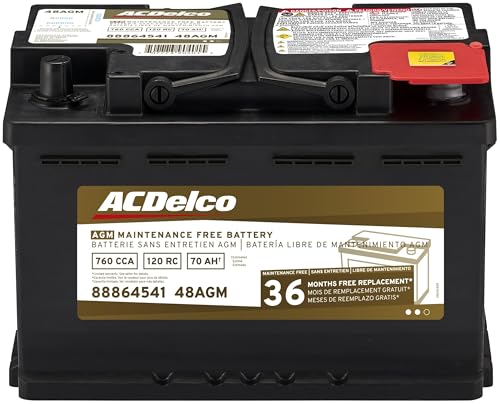
- High density negative paste, improves performance and...
- Enhanced life alloy or Silver Calcium stamped alloy...
- Calcium lead positive grid, maximizes conductivity and...
- Robust envelope separator with puncture resistant back...
- Vent cap design that resists acid leakage

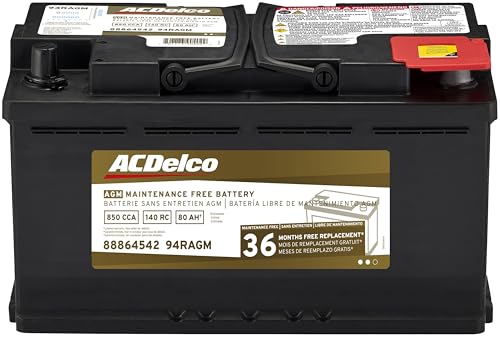
- High density negative paste, improves performance and...
- Enhanced life alloy or Silver Calcium stamped alloy...
- Calcium Lead positive grid, maximizes conductivity and...
- Robust Envelope Separator with puncture-resistant back...
- Vent cap design that resists acid leakage
If the PDF is very large, it may not load in the preview below.
Some older TSBs had multiple PDFs — visit the NHTSA Website to view all PDFs.
If the TSB PDF does not show, download or view it on the NHTSA Website.
Click on the (+) Plus Sign
Then Click on Associated Document(s)
Search NHTSA Database for Recalls
Search NHTSA Database for Vehicle Investigations
View Latest Vehicle Investigations
Search NHTSA Database for Vehicle Complaints
View Latest Vehicle Complaints
TSB/Document ID: No. 2518.3
Replacement Service Bulletin Number:
MFR Communication Date: 2026-03-06
MFR Internal Campaign ID/Software Version:
Communication Type: Service Bulletin/Repair Instructions
NHTSA Components: ELECTRICAL SYSTEM
MFR Component System:
MFR Component Subsystem:
Previous TSB | Next TSB |
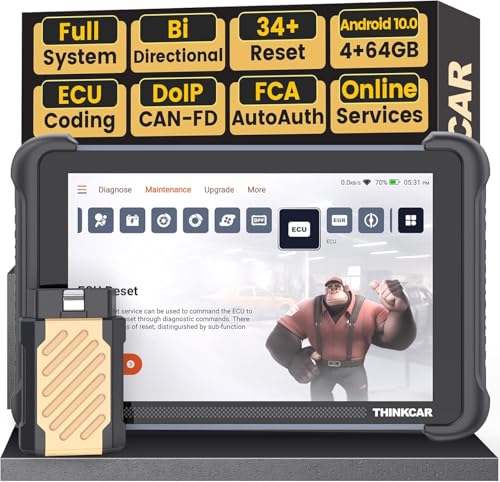
- [Notice] When you receive a used device, it may be a customer return resold by Amazon without inspection. You can exchange it for a new one through Amazon. As this situation is unavoidable, we sincerely apologize. For any issues, contacting us via Amazon's "Messages" is the best way. THINKSCAN 689BT Bidirectional Scan Tool Can Be Used Immediately After It is Turned On, Without Complicated Registration Process, Which is More Convenient & Quick.
- Full Bi-Directional Control & 3000+ Active Tests: Take control and test components like actuators, fuel injectors, relays, and cooling fans in real time. You’ll quickly see if the problem is in the part itself or the control module — saving you hours of guesswork and frustrating trial-and-error.
- Advanced ECU Coding Capabilities: Handle module matching and hidden feature activation with confidence. When you replace an ECU or want to customize settings, this obd2 scanner diagnostic bi directional tool gives you the professional-level capabilities you need without the dealership price tag.
- 34+ Useful Reset and Maintenance Functions: Complete everyday service tasks smoothly with a wide range of helpful reset and maintenance functions. Whether you’re keeping up with regular upkeep or tackling a specific job, this scanner makes maintenance simpler and less stressful for both DIYers and pros.
- Comprehensive Full System Diagnostics: Diagnose every major system — Engine, Transmission
 , ABS, SRS, TPMS, and more — all in one place. Finally stop wondering if you’re missing something important; get the full picture and clear codes with ease.
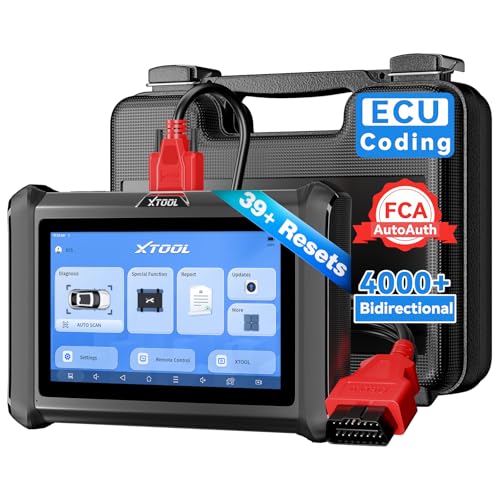
- Top Reasons to Choose the D7S OBD2 Scanner: XTOOL D7S car scan tool, an upgrade of XTOOL D7, offers comprehensive features for automotive technicians, workshops, and DIY enthusiasts 1. Upgraded Hardware: 2+64GB memory, rear camera, intuitive interface, foldable bracket 2. Complete Diagnostics: FCA Autoauth, OE-level all system scan, 39+ maintenance services, 4K+ bidirectional, CANFD/DoIP protocol 3. Advanced Capabilities: ECU coding, PMI functions 4. Wide Compatibility: Support 10,000+ models, covering 99% vehicle brands 5. Multi-language: Available in 22+ languages, No IP Restrictions 6. 3-Year Updates: Save 300 bucks on software updates for the latest features and optimizations
- 2026 Upgraded D7S Car Scanner Features: The newly 2026 D7S V2.0 scanner for car brings exciting features for advanced vehicle diagnostics and enhanced user experience 1. FCA AutoAuth: Now supports FCA SGW module for Chrysler, for Jeep, for Dodge (2018+), for Fiat (2017+), enabling faster vehicle communication without gateway restrictions 2. PMI (Offline ECU Programming): Allows for Ford, for Lincoln, and for Mazda ECU programming for new modules 3. Optimized Diagnostic Report 2.0: Personalized reports with logos and customer info for auto shops. Note: Compatibility varies by cars, please check before order
- Cost-effective ECU Coding Scan Tool for Specific Brands: Enhance your vehicle's performance with XTOOL D7S! This obd2 scanner all systems bidirectional offers advanced capabilities at an affordable price, supports online for BMW, for Benz and offline for BENZ, for MIT, along with PMI functions for Ford, for Mazda, and for Lincoln. Ideal for technicians and DIY enthusiasts, this automotive scanner diagnostic tool optimizes vehicle performance and enhances the driving experience. Note: Not for all cars and modules, please send car VIN to check the compatibility before purchase
- OE All System Diagnostic & 8 Pids Graphing: XTOOL D7S is a comprehensive all system bi directional obd2 scanner that delivers dealer-level diagnostics, completely controlling over your vehicle’s performance and health. This automotive scan tool can read and clear DTCs, view live data and ECU information, retrieve freeze frames, and perform active tests and full obd2 functions. This bi-directional scan tool can can identify your vehicle's make, model, and year information with just one click and show up to 8 PIDs live data with options for CSV viewing, playback, and recording for in-depth analysis. It is easy-to-use for both professionals and beginners, helping pinpoint issues efficiently
- 3 Years Software Update, Value for Money: With 3 years of software updates and 22+ languages(no IP restrictions), XTOOL D7S auto scanner code scanner ensures ongoing compatibility for the latest car models and improved diagnostic functions. This all system vehicle diagnostic scanner comes with a 30-day return policy and a 24-month repair for dependable performance. XTOOL are dedicated to your satisfaction, so enjoy seamless support and lifetime expert assistance. Should you encounter any issues or concerns, don’t hesitate to reach out XTOOL. D7S with newest update with 22 languages freely transfer without authorization, check details from setting-language or from XTOOL
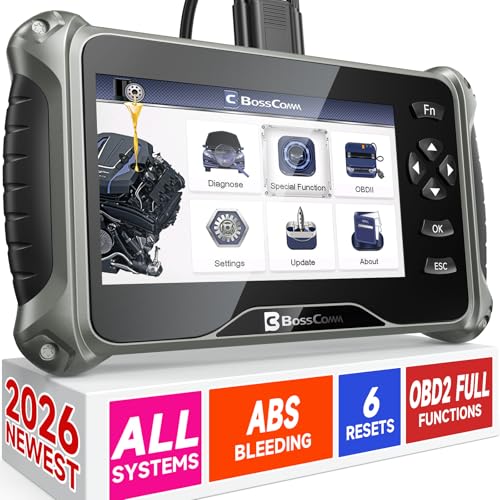
- 【✅Compared to BOSSCOMM IF742, IF745 Offers Full-System Diagnostics】The BOSSCOMM IF745 car diagnostic scanner is an upgraded model of IF742. In addition to supporting all OBD2 Code Reader functions and 6 reset options (ABS/EPB/SAS/BMS/Oil/Throttle), it expands diagnostics from 4 systems (Check Engine/ABS/SRS/Transmission) to vehicle All systems, including Steering, Suspension, and Body Electronics. This provides deeper, more comprehensive diagnostic capabilities.
- 【✨6 Essential Resets: ABS Bleeding, Oil, EPB, SAS, Throttle, BMS】The BOSSCOMM IF745 obd2 scanner diagnostic tool swiftly purges air from brake lines to restore braking sensitivity, fine-tunes maintenance cycles to eliminate false alerts, resolves parking brake issues with one-click control, recalibrates steering sensors for stability, optimizes engine idling/acceleration for smoother performance, and deeply resets battery systems to extend lifespan and range via precise parameter adjustments.❗NOTE: Does NOT support bidirectional control, coding, or programming.
- 【✨Deep Diagnostics for All Vehicle System Modules】Beyond code reading/clearing and ECU information retrieval, our all-in-one data stream feature lets you inspect all current fault codes and their locations across the vehicle’s systems. This vehicle code reader helps you turn off dashboard warning lights and perform a comprehensive self-check of your car at home—no more back-and-forth trips to the repair shop or hefty inspection fees.
- 【✨10 OBD2 Functions】The BOSSCOMM IF745 scan tool’s DTC Lookup instantly translates fault codes into user-friendly explanations, its I/M Readiness feature streamlines emissions testing with a single tap, and Freeze Frame lets you pinpoint the exact moment of a fault for in-depth root-cause diagnosis. Combined with a live data dashboard and advanced diagnostics (O2S, OBMon, EVAP), it delivers comprehensive insights for confident troubleshooting.
- 【✨10,000+ Car Models, AutoVIN, 13 Languages】The BOSSCOMM IF745 vehicle scanner diagnostic tool covers 73+ global car brands and offers support in 13 languages, making it perfect for DIYers, auto mechanics, or as a thoughtful gift. With a single-click AutoVIN feature, it instantly retrieves vehicle serial numbers, streamlining diagnostics for users globally. This adaptable tool balances user-friendliness with precision, catering to both personal and professional requirements.✅Unsure about compatibility? Compatibility will vary on vehicles' model and year, pls reach us via 📧 [email protected] 📧 before purchase.
This product presentation was made with AAWP plugin.