
NHTSA ID Number: 11029912
Manufacturer Communication Number: BW8246
TSB/Document Date: 2026-03-09
Summary
Operators manual: Bendix Fusion Active Safety System With Pedestrian Autonomous Emergency Braking (PAEB) (F3.1) – International
Bendix® Fusion™
Active Safety System with
Pedestrian Autonomous
Emergency Braking (PAEB)
Operator’s Manual
This booklet contains important operational and safety information that benefits you and subsequent drivers.
F3.1
THE BENDIX® ESP® STABILITY SYSTEM
All vehicles equipped with the Bendix® Fusion™ system are also equipped
with the Bendix® ESP® full-stability system. When necessary, the Bendix ESP
system may automatically reduce the accelerator pedal input and/or apply the
service brakes to help you maintain stability during potential loss-of-control or
rollover events.
The Fusion system uses the ESP system to help maintain vehicle stability during
service brake applications. The stability icon will be visible on the dash when
the ESP system activates.
The Bendix ESP stability system and the Fusion system do not replace the
need for you to remain alert, react appropriately and in a timely manner, and
use safe driving practices. Bendix safety technologies complement safe driving
practices. Responsibility for the safe operation of the vehicle remains with you,
the driver, at all times.
Improper use of the Bendix ESP and Bendix Fusion system can result
in a collision causing property damage, serious injuries, or death. Be
sure to read, understand, and follow all these instructions carefully.
Bendix safety technologies complement safe driving practices. No
commercial vehicle safety technology replaces a skilled, alert driver
exercising safe driving techniques and proactive, comprehensive driver
training. Never wait for the system to intervene. Responsibility for the safe
operation of the vehicle remains with the driver at all times.
IMPORTANT
Bendix ® -brand Electronic Control Units (ECUs) are not designed to
store data for purposes of accident reconstruction, and Bendix® ACom®
Diagnostic Software is not intended to retrieve data for purposes of
accident reconstruction. Bendix makes no representations as to the
accuracy of data or video retrieved and interpreted from ECUs for purposes
of accident reconstruction. Bendix does not offer accident reconstruction
services or interpretation of stored data. Bendix ECUs are not protected
from fire, loss of power, impact damage, or other conditions that may be
sustained in a crash situation and may cause data to be unavailable or
irretrievable.
F3.1
1
TABLE OF CONTENTS
Introduction . . . . . . . . . . . . . . . . . . . . . . . . . . . . . . . . . 3
Important Safety Information . . . . . . . . . . . . . . . . . . . . . . . . 4
System Components . . . . . . . . . . . . . . . . . . . . . . . . . . . . 6
System Display . . . . . . . . . . . . . . . . . . . . . . . . . . . . . . . . 6
System Features . . . . . . . . . . . . . . . . . . . . . . . . . . . . . . 7
Active Cruise with Braking (ACB) . . . . . . . . . . . . . . . . . . . . 7
Auto-Resume™ after ACB Braking . . . . . . . . . . . . . . . . . . 8
ACB Stop and Driver-Go™ . . . . . . . . . . . . . . . . . . . . . . 9
ACB Stop and Auto-Go™ . . . . . . . . . . . . . . . . . . . . . . . 10
Service Brake Hold . . . . . . . . . . . . . . . . . . . . . . . . . . . . 15
Following Distance Alerts (FDA) . . . . . . . . . . . . . . . . . . . . 16
Impact Alert (IA) and Autonomous Emergency Braking (AEB) . . . . . 17
Close-Range Braking . . . . . . . . . . . . . . . . . . . . . . . . 18
Pedestrian Autonomous Emergency Braking (PAEB) . . . . . . . . 18
Stationary Vehicle Braking (SVB) . . . . . . . . . . . . . . . . . 19
Multi-lane Autonomous Emergency Braking (AEB) . . . . . . . . 20
Lane Departure Warning (LDW) . . . . . . . . . . . . . . . . . . . . 21
Highway Departure Warning (HDW) . . . . . . . . . . . . . . . . . . 22
Highway Departure Braking (HDB) . . . . . . . . . . . . . . . . . . . 22
Overspeed Alert and Action (OAA) . . . . . . . . . . . . . . . . . . . 24
High Beam Assist (HBA) . . . . . . . . . . . . . . . . . . . . . . . . 25
Pedestrian Brake Hold . . . . . . . . . . . . . . . . . . . . . . . . . 26
Brake Overuse . . . . . . . . . . . . . . . . . . . . . . . . . . . . . 28
System Responses . . . . . . . . . . . . . . . . . . . . . . . . . . . . 29
What to Expect . . . . . . . . . . . . . . . . . . . . . . . . . . . . . . 30
Challenging Scenarios and System Limitations . . . . . . . . . . . . . . . 37
System Maintenance and Troubleshooting . . . . . . . . . . . . . . . . 45
Acronyms and Definitions . . . . . . . . . . . . . . . . . . . . . . . . . 49
IMPORTANT FEATURE INFORMATION
New Functionalities Added: This version of the Bendix® Fusion™ system
includes three (3) new functionalities: Pedestrian Autonomous Emergency
Braking (PAEB), Pedestrian Brake Hold, and High Beam Assist (HBA). In
addition, this version of the Bendix Fusion system can read most - but not
all - roadside automobile and truck speed limit signs in the United States and
Canada. This Operator’s Manual informs you how these features work. Since
this version of the Bendix Fusion system uses a new camera, differences in
traditional features like Autonomous Emergency Braking (AEB), Lane Departure
Warning (LDW), Overspeed Alert and Action (OAA), and Highway Departure
Warning/Braking (HDW/HDB) exist and may or may not be noticed by the driver.
F3.1
2
INTRODUCTION
This Operator’s Manual provides
an overview of the Bendix® Fusion™
Active Safety System with Pedestrian
Autonomous Emergency Braking
(PAEB). This manual explains the
components, features, functions,
and known system limitations. There
are also example descriptions and
explanations of the audio and visual Figure 1 – System Initializing
alerts and system interventions that
can be expected during operation.
Read this manual thoroughly before operating the system. Be familiar with the
possible system actions, alerts, and its limitations.
Keep this manual in the vehicle as a reference at all times. See Figure 1 for
an example of the messages you may see on the integrated display when the
Fusion system is initializing.
Additional Information about Bendix® Systems
For additional information about Bendix® systems, contact your local sales
representative, email the Bendix Tech Team at techteam@bendix.com, or call
the Bendix Tech Team at 1-800-AIR-BRAKE (1-800-247-2725). Representatives
are available to assist you Monday through Thursday, 8:00 a.m. to 6:00 p.m.
and Friday, 8:00 a.m. to 5:00 p.m. ET.
NOTE: All of these alerts and actions are part of the Fusion system’s feature
set released by Bendix. It is possible for this Operator’s Manual to be moved
from vehicle to vehicle. Always verify the features that are included on your
vehicle with your dealer or OEM.
Information about features, operation, and other aspects discussed in this
manual is subject to change and updating, and is posted in the document library
located at B2Bendix.com.
F3.1
3
IMPORTANT SAFETY INFORMATION
As a driver, you are always responsible for the control and safe operation
of the vehicle at all times. The Bendix® Fusion™ system does not replace
the need for a skilled, alert professional driver, reacting appropriately and
in a timely manner, and using safe driving practices.
If you determine that a hazard or unsafe condition exists, you should take
all necessary actions immediately. Never wait for the Fusion system to
intervene.
Due to the inherent limitations of image recognition technology, camerabased safety technology may not be able to detect or may misinterpret lane
markings, vehicles, or other objects and may have limited visibility at night.
At these times, alerts may not occur, or erroneous alerts may occur.
The Fusion system may react ONLY to vehicles that the system determines
are stationary or moving in the same direction as your vehicle. The system
DOES NOT respond to side-to-side moving traffic, or oncoming traffic.
The system will not slow your vehicle or provide an alert as you approach
vehicles in these circumstances. See Figure 2.
Vehicle equipped with the
Bendix ® Fusion™ system
Detected forward vehicle
The system does not brake nor
warn for vehicles approaching from
the side or oncoming vehicles
in other lanes
Figure 2 – Oncoming or Side-approaching Vehicles
When the Fusion system needs to intervene, it works in conjunction with the
®
Bendix Electronic Stability Program (ESP®) full-stability system to activate
the service brakes. The system should never be relied upon to stop your
vehicle or to avoid a collision. You can, and should, still apply full service
braking force, if needed.
The ESP system is specifically calibrated and validated only for your vehicle’s
original configuration. If the vehicle’s chassis components are altered (for
example, a wheel base extension or reduction; tag axle addition or removal;
a major body change such as conversion of a tractor into a truck; or an axle,
suspension, or steering system component modification), the ESP Electronic
Control Unit (ECU) must be updated to reflect these changes. Contact your
OEM prior to making any modifications to your vehicle.
If you modify your vehicle and do not update the ESP ECU, the ESP system
may fail to function as intended. Serious vehicle braking and performance
issues could result, including unnecessary ESP system interventions,
exceeding regulated stopping distance, and/or system faults leading to loss
of system functions. These types of failures can lead to loss-of-control of
the vehicle and/or collisions causing property damage, serious injuries, or
death.
F3.1
4
Potential False Alerts – The Bendix® Fusion™ system may generate a false
alert or false braking. Radar and camera technology has limitations and
false alerts or false braking sometimes occur.
The Fusion system DOES NOT respond to stationary objects. The system
will not slow your vehicle or provide an alert as you approach stationary
objects.
Animals, Non-Metallic, or Limited-Metallic Objects – The Fusion system
will not warn or react to animals, or non-metallic objects. The system may
not warn or react to limited-metallic objects (such as recreational vehicles,
horse-drawn buggies, motorcycles, logging trailers, etc.).
The Pedestrian Autonomous Emergency Braking (PAEB) feature can only
detect pedestrians in the path of the host vehicle and it is important to note
that pedestrians are not instantly detectable, nor are they always detectable.
The system may not react to objects including pedestrians outside the
vehicle’s path.
The system should never be relied upon to stop your vehicle or to avoid a
collision. You can, and should, still apply full braking force, if needed.
Metallic objects may impair the radar. Objects that are radar-reflective – such
as crash barriers, guard rails, construction zone barricades, and tunnel
entrances – may impair the function of the radar.
Approach grades as you would normally, with the appropriate gear selected
and at a safe speed. Active Cruise with Braking (ACB) SHOULD NOT be used
on steep downhill grades. Follow all safe driving practices.
Inspect the radar and mounting bracket regularly and remove any mud, snow,
ice build-up, debris, or other obstructions that may be blocking the radar.
Installing aftermarket deer, bumper, or grille guards is not recommended
and could impair the operation of the radar.
If the bumper and/or radar are damaged or misaligned – or if the radar was
tampered with – do not use the ACB until the vehicle is repaired.
If a problem is detected with the Fusion system, there is an audible alert
and/or an icon on the display. Depending on the type of problem, the system
may disable ACB functions or other safety functionality until service is
performed.
Smaller forward vehicles – such as motorcycles and certain types of
trailers – may be difficult for the system to identify. As the driver, it is your
responsibility to be aware of these types of vehicles, to be cautious, and to
slow down if necessary.
As the driver, you are always responsible for the safe operation of the vehicle
and you should be aware of potential threats that may enter the vehicle’s lane
of travel. As the driver, you should always be alert and ready to intervene.
Never wait for the system to intervene.
Service Brake Hold is not a parking brake. After any Bendix safety system
braking that brings the vehicle to a complete stop, you, the driver, must
intervene. As the driver, you should use caution and manually apply the
parking brake as needed.
F3.1
5
SYSTEM COMPONENTS
See Figure 3. The main Bendix® components used in the Bendix® Fusion™
system are the Bendix® ESP® controller; the Bendix® radar; and the Bendix™
camera.
Bendix® EC-80™ ESP® Controller
Bendix™ FLR-25™ Radar Sensor
Bendix™ FLC-25™ Camera
SafetyDirect® Processor by Rand McNally
Figure 3 – System Components
The Fusion system may detect and monitor moving and stationary vehicles
within its field of view. The radar is located at the front of the vehicle. The
camera is located on the windshield, inside the wiper path.
If the radar or camera becomes misaligned – or any other system problem is
detected – a message (or light) on the display lets you know that service is
needed.
SYSTEM DISPLAY
Driver information about the Fusion system is fully integrated into the vehicle
display. See the System Features section of this manual for more detailed
information about the alerts.
Please verify with the vehicle Original Equipment Manufacturer (OEM) for the
actual audible and visual indications your vehicle may display.
F3.1
6
SYSTEM FEATURES
NOTE: You should check with the vehicle OEM to verify which features
are included on your vehicle.
IMPORTANT FEATURE INFORMATION: DRIVER OVERRIDE
Some driver actions can override Bendix® Fusion™ system activations. Once
an Active Cruise with Braking (ACB) or Autonomous Emergency Braking
(AEB) event has started, you, the driver, can override its activation. Refer to
each specific feature section of this Operator’s Manual for overrides specific
to that feature.
NOTE: At all times, you, the driver, are responsible for the control and safe
operation of the vehicle and you should be alert and ready to intervene. Never
wait for the system to intervene.
Active Cruise with Braking (ACB)
NOTE: The term ACC (Adaptive Cruise Control) may be used instead of – or
interchanged with – ACB.
When normal cruise control is on and set, the ACB feature also becomes
available. The system may not only intervene to maintain the ACB set speed,
but also may potentially intervene – if needed – to maintain a set following
distance behind the detected forward vehicle in front of you.
NOTE: At all times, you, the driver, are responsible for the control and safe
operation of the vehicle and you should be alert and ready to intervene. Never
wait for the system to intervene.
NOTE: You, the driver, can override an ACB system intervention by applying
the accelerator pedal. ACB will be overridden until the accelerator is released;
then, ACB will resume the original set speed and distance control automatically.
When you encounter a detected forward vehicle that slows down below the
ACB set speed, the system has the ability to automatically activate the engine
retarder and apply the service brakes – if needed – in order to maintain the
distance between you and the detected forward vehicle. The following distance
may be adjustable on some vehicles. See Figure 4.
NOT TO SCALE
Detected
forward
vehicle
The shaded area approximates the field of view of the Fusion system.
Detected forward vehicles in this area may generate an alert or braking by the system.
F3.1
Figure 4 – ACB Example
7
Auto-Resume™ after Active Cruise with Braking (ACB)
If Active Cruise with Braking (ACB) is on and set, the Bendix® Fusion™ system
may automatically apply the service brakes during an ACB braking event in order
to maintain the distance between your truck and the detected forward vehicle.
If your vehicle remains above the minimum ACB set speed as defined by the
OEM, your vehicle may automatically accelerate back up to the previous ACB
set speed while still attempting to maintain the set following distance with the
forward vehicle. If your vehicle is below the minimum defined ACB set speed,
ACB may automatically cancel and will not attempt to adjust the vehicle speed.
NOTE: Vehicles equipped with ACB Stop and Auto-Go™ do not have a minimum
defined speed and may auto-resume at very low speeds.
NOTE: At all times, you, the driver, are responsible for the control and safe
operation of the vehicle and you should be alert and ready to potentially
intervene. Never wait for the system to intervene.
Canceling ACB
NOTE: At any time, you, the driver,
can step on the brake pedal or turn
ACB off via the switch to cancel the
ACB feature.
Figure 5 shows an integrated display
message you may see when ACB Figure 5 – ACB Actively Engaged and
Maintaining Set Following Distance
is actively engaged and maintaining
a set following distance behind the
detected forward vehicle.
Additionally, Figure 6 shows a message
you may see on the integrated display
when the ACB function cancels, and
the ACB feature is available for you, Figure 6 – ACB Canceled, Autothe driver, to re-engage.
Resume Available
If your vehicle speed is below the
OEM-defined minimum speed for AEB
operation, the ACB display may be blank. Alerts and messages will come from
the OEM display.
NOTE: At all times, you, the driver, are responsible for the control and safe
operation of the vehicle and you should be alert and ready to intervene. Never
wait for the system to intervene.
NOTE: The term CMS (Collision Mitigation System) may be used instead of –
or interchanged with – AEB.
F3.1
8
Active Cruise with Braking (ACB) Stop and Driver-Go™
NOTE: This feature only applies to
vehicles equipped with Active Cruise
with Braking (ACB) Stop and DriverGo™.
When ACB is on and set, if the
detected for ward vehicle slows
Figure 7 – ACB Actively Engaged
down to a stop, the system may
automatically de-throttle the engine,
activate the engine retarder, and
apply the service brakes to bring
your vehicle to a full stop. You, the
driver, can resume ACB by pressing
down on the throttle. The vehicle will
accelerate back up to the previous
ACB set speed while maintaining
the distance between your truck
and the detected forward vehicle.
Figure 7 shows a message you may Figure 8 – ACB Canceled - Take Vehicle
see on the integrated display when Control
the ACB function is actively engaged.
If you do not press down on the throttle within a few seconds, the service brakes
will hold the vehicle at a stop until you, the driver, intervene.
NOTE: You, the driver, can press the brake pedal, apply the parking brake, or you
can manually accelerate the vehicle by pressing down on the accelerator pedal.
When the vehicle reaches the minimum ACB set speed defined by the OEM,
you can press the resume button to accelerate back up to the previous ACB
set speed.
Figure 8 shows a message you may see on the integrated display when the
ACB Stop and Driver-Go function cancels and you, the driver, must intervene.
Alerts and messages will come from the OEM display.
Please verify with the vehicle OEM for the actual audible and visual indications
your vehicle may display.
NOTE: At all times, you, the driver, are responsible for the control and safe
operation of the vehicle and you should be alert and ready to potentially
intervene. Never wait for the system to intervene.
F3.1
9
Active Cruise with Braking (ACB) Stop and Auto-Go™
NOTE: Certain vehicles with certain engine/powertrain combinations may be
equipped with Active Cruise with Braking (ACB) Stop & Auto-Go™ functionality.
Under certain circumstances, after a normal ACB stop, ACB Stop & Auto-Go
may automatically accelerate the vehicle up to the previous ACB set speed
without additional driver input while also attempting to maintain the set following
distance between your vehicle and the detected forward vehicle.
After a normal ACB stop, the service brakes may hold the vehicle at a stop (refer
to the Service Brake Hold section
of this document). If the detected
forward vehicle moves forward within
a few seconds and a pedestrian is not
detected, your vehicle may accelerate
back up to the previous ACB set
speed while attempting to maintain
the set following distance between Figure 9 – ACB Actively Engaged
your vehicle and the detected forward
vehicle. See Figure 9.
The Bendix ® Fusion™ system may
react to detected pedestrians in
the vehicle path during ACB Stop
and Auto-Go. The Fusion system
can only detect pedestrians in the
vehicle’s path and it is important to
note that pedestrians are not instantly
detectable.
Figure 10 – ACB Canceled - Take
When the vehicle comes to a complete Vehicle Control
stop in ACB, and the system detects a
pedestrian between your vehicle and
the detected forward vehicle, the service brakes may hold the vehicle at a stop
(Service Brake Hold) until you, the driver, intervene.
NOTE: You, the driver, can intervene by pressing the accelerator pedal or the
brake pedal or applying the parking brake.
Figure 10 shows an example of the message you may see on the integrated
display when the ACB Stop and Auto-Go feature cancels after a pedestrian is
detected, and you, the driver, must intervene. Alerts and messages will come
from the OEM display.
NOTE: At all times, you, the driver, are responsible for the control and safe
operation of the vehicle and you should be alert and ready to potentially
intervene. Never wait for the system to intervene.
F3.1
10
If the detected forward vehicle does
not move forward within a few seconds
and there is not a detected pedestrian,
the driver may see a Paused Cruise
Control message on the dash display.
See Figure 11. The service brakes will Figure 11 – Paused Cruise Control
hold the vehicle at a stop until you, the
driver, intervene.
NOTE: You, the driver, can intervene and cancel the system operation by
pressing the brake pedal or applying the parking brake.
If the driver intervenes with the accelerator pedal or ACB resume button, the
ACB feature will automatically re-engage and will accelerate back up to the
previous ACB set speed. It should be noted that stepping on the brake will
cancel ACB and the ACB resume function.
In addition to a pedestrian being detected while the vehicle is stopped, the ACB
Stop and Auto-Go™ feature may also cancel and the Service Brake Hold may
activate under any of the following circumstances:
•
If the forward vehicle is no longer detected
•
If the turn signal is activated
•
If the hazard lights are activated
•
If the steering system input indicates the vehicle is planning to turn
When No Forward Vehicle is Present
When ACB is switched on and set and no forward vehicle is within range of the
Bendix® Fusion™ system, the vehicle will use standard cruise control to help
maintain the set speed.
Curve Speed Control
In sharp curves, ACB may limit acceleration.
F3.1
11
The Detected Forward Vehicle Icon
When ACB is switched on and
set, and a vehicle ahead of you is
detected by the system, the detected
forward vehicle icon on the vehicle
display will illuminate. See Figure 12.
This is an indication to you that the
Bendix® Fusion™ system detected the Figure 12 – Detected Forward Vehicle
forward vehicle, and the system may
automatically intervene to help maintain
the distance.
What is Following Distance?
Following distance refers to the time gap – measured in seconds – between
the vehicle equipped with the Fusion system and the detected forward vehicle.
The following distance between the two will vary based on the speeds of both
vehicles. This physical distance is sometimes referred to as “headway.”
Automatic Service Brake Applications
The vehicle automatically manages service braking priorities among the various
Bendix® vehicle systems that automatically use the service brakes, such as
the Bendix® Electronic Stability Program (ESP®), Bendix® Automatic Traction
Control (ATC), Bendix® Antilock Braking System (ABS), and the Fusion system.
NOTE: Vehicle stability has priority over all other braking requests.
F3.1
12
Following Distance Adjustment
Certain vehicles may be equipped
with a Following Distance Adjustment.
1
If your vehicle is equipped, you, the
driver, can select the following distance
behind a detected forward vehicle
by pressing the Following Distance
Adjustment button (1) on the steering
wheel controls. See Figure 13. By
default, the following distance is set
to mode 0, indicating your vehicle is
approximately 3.5 seconds from the
detected forward vehicle. Each press
of the Following Distance Adjustment
button moves the following distance to
the next mode in the sequence. See
Figure 13 – Steering Wheel Controls
Figure 14.
and Following Distances
When your vehicle is within
approximately 1.25 to 1.50 seconds of the detected forward vehicle, a slowspeed, audible FDA will activate. If the gap decreases to approximately 0.75 to
1.0 seconds, a medium-speed audible FDA will activate.
NOTE: Following Distance Mode 0 is the default setting.
Vehicle Speed Range (mph)
All Speeds
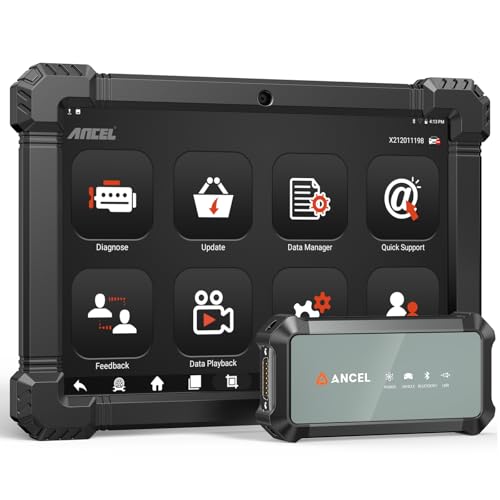
- ALL-IN-ONE HEAVY-DUTY DIAGNOSTIC PLATFORM FOR PROFESSIONAL...
- 42+ SERVICE & RESET FUNCTIONS FOR DAILY MAINTENANCE JOBS...
- ADVANCED BI-DIRECTIONAL CONTROL & ACTIVE TESTING CAPABILITY...
- ECU CODING & MODULE MATCHING FOR POST-REPAIR CALIBRATION...
- FULL-SYSTEM HDOBD/OBD2 DIAGNOSTICS WITH WIDE COVERAGE...

- [Wide Compatibility Heavy Duty Truck Scanner] Compatible...
- [Full-System Diagnostic Truck Scanner] This heavy duty...
- [DTC Library + Live Data] This truck diagnostic scanner's...
- [2-in-1 Heavy Duty & OBDII Diagnostics] This heavy duty...
- [Supports Multiple Vehicle Types] Suitable for various...

If the PDF is very large, it may not load in the preview below.
Some older TSBs had multiple PDFs — visit the NHTSA Website to view all PDFs.
If the TSB PDF does not show, download or view it on the NHTSA Website.
Click on the (+) Plus Sign
Then Click on Associated Document(s)
Search NHTSA Database for Recalls
Search NHTSA Database for Vehicle Investigations
View Latest Vehicle Investigations
Search NHTSA Database for Vehicle Complaints
View Latest Vehicle Complaints
TSB/Document ID: BW8246
Replacement Service Bulletin Number:
MFR Communication Date: 2026-02-10
MFR Internal Campaign ID/Software Version:
Communication Type: Other
NHTSA Components: LANE DEPARTURE: WARNING
MFR Component System: ADAS
MFR Component Subsystem:
Previous TSB | Next TSB |
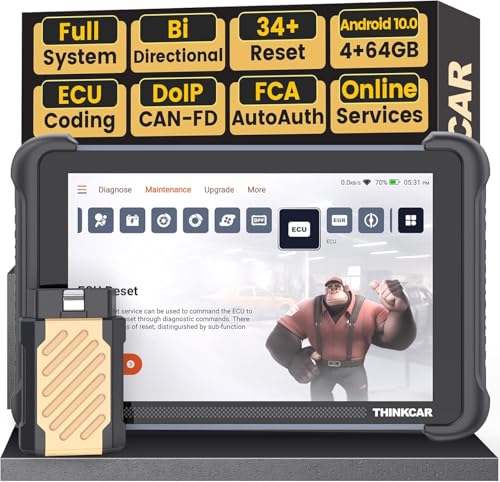
- [Notice] When you receive a used device, it may be a customer return resold by Amazon without inspection. You can exchange it for a new one through Amazon. As this situation is unavoidable, we sincerely apologize. For any issues, contacting us via Amazon's "Messages" is the best way. THINKSCAN 689BT Bidirectional Scan Tool Can Be Used Immediately After It is Turned On, Without Complicated Registration Process, Which is More Convenient & Quick.
- Full Bi-Directional Control & 3000+ Active Tests: Take control and test components like actuators, fuel injectors, relays, and cooling fans in real time. You’ll quickly see if the problem is in the part itself or the control module — saving you hours of guesswork and frustrating trial-and-error.
- Advanced ECU Coding Capabilities: Handle module matching and hidden feature activation with confidence. When you replace an ECU or want to customize settings, this obd2 scanner diagnostic bi directional tool gives you the professional-level capabilities you need without the dealership price tag.
- 34+ Useful Reset and Maintenance Functions: Complete everyday service tasks smoothly with a wide range of helpful reset and maintenance functions. Whether you’re keeping up with regular upkeep or tackling a specific job, this scanner makes maintenance simpler and less stressful for both DIYers and pros.
- Comprehensive Full System Diagnostics: Diagnose every major system — Engine, Transmission
 , ABS, SRS, TPMS, and more — all in one place. Finally stop wondering if you’re missing something important; get the full picture and clear codes with ease.
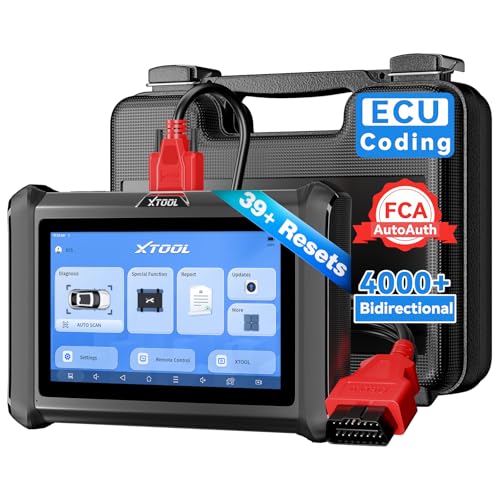
- Top Reasons to Choose the D7S OBD2 Scanner: XTOOL D7S car scan tool, an upgrade of XTOOL D7, offers comprehensive features for automotive technicians, workshops, and DIY enthusiasts 1. Upgraded Hardware: 2+64GB memory, rear camera, intuitive interface, foldable bracket 2. Complete Diagnostics: FCA Autoauth, OE-level all system scan, 39+ maintenance services, 4K+ bidirectional, CANFD/DoIP protocol 3. Advanced Capabilities: ECU coding, PMI functions 4. Wide Compatibility: Support 10,000+ models, covering 99% vehicle brands 5. Multi-language: Available in 22+ languages, No IP Restrictions 6. 3-Year Updates: Save 300 bucks on software updates for the latest features and optimizations
- 2026 Upgraded D7S Car Scanner Features: The newly 2026 D7S V2.0 scanner for car brings exciting features for advanced vehicle diagnostics and enhanced user experience 1. FCA AutoAuth: Now supports FCA SGW module for Chrysler, for Jeep, for Dodge (2018+), for Fiat (2017+), enabling faster vehicle communication without gateway restrictions 2. PMI (Offline ECU Programming): Allows for Ford, for Lincoln, and for Mazda ECU programming for new modules 3. Optimized Diagnostic Report 2.0: Personalized reports with logos and customer info for auto shops. Note: Compatibility varies by cars, please check before order
- Cost-effective ECU Coding Scan Tool for Specific Brands: Enhance your vehicle's performance with XTOOL D7S! This obd2 scanner all systems bidirectional offers advanced capabilities at an affordable price, supports online for BMW, for Benz and offline for BENZ, for MIT, along with PMI functions for Ford, for Mazda, and for Lincoln. Ideal for technicians and DIY enthusiasts, this automotive scanner diagnostic tool optimizes vehicle performance and enhances the driving experience. Note: Not for all cars and modules, please send car VIN to check the compatibility before purchase
- OE All System Diagnostic & 8 Pids Graphing: XTOOL D7S is a comprehensive all system bi directional obd2 scanner that delivers dealer-level diagnostics, completely controlling over your vehicle’s performance and health. This automotive scan tool can read and clear DTCs, view live data and ECU information, retrieve freeze frames, and perform active tests and full obd2 functions. This bi-directional scan tool can can identify your vehicle's make, model, and year information with just one click and show up to 8 PIDs live data with options for CSV viewing, playback, and recording for in-depth analysis. It is easy-to-use for both professionals and beginners, helping pinpoint issues efficiently
- 3 Years Software Update, Value for Money: With 3 years of software updates and 22+ languages(no IP restrictions), XTOOL D7S auto scanner code scanner ensures ongoing compatibility for the latest car models and improved diagnostic functions. This all system vehicle diagnostic scanner comes with a 30-day return policy and a 24-month repair for dependable performance. XTOOL are dedicated to your satisfaction, so enjoy seamless support and lifetime expert assistance. Should you encounter any issues or concerns, don’t hesitate to reach out XTOOL. D7S with newest update with 22 languages freely transfer without authorization, check details from setting-language or from XTOOL
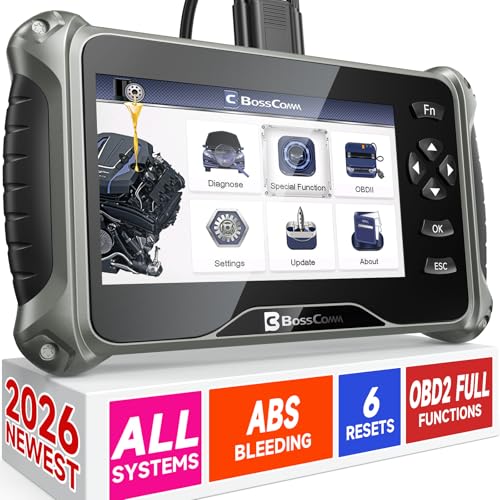
- 【✅Compared to BOSSCOMM IF742, IF745 Offers Full-System Diagnostics】The BOSSCOMM IF745 car diagnostic scanner is an upgraded model of IF742. In addition to supporting all OBD2 Code Reader functions and 6 reset options (ABS/EPB/SAS/BMS/Oil/Throttle), it expands diagnostics from 4 systems (Check Engine/ABS/SRS/Transmission) to vehicle All systems, including Steering, Suspension, and Body Electronics. This provides deeper, more comprehensive diagnostic capabilities.
- 【✨6 Essential Resets: ABS Bleeding, Oil, EPB, SAS, Throttle, BMS】The BOSSCOMM IF745 obd2 scanner diagnostic tool swiftly purges air from brake lines to restore braking sensitivity, fine-tunes maintenance cycles to eliminate false alerts, resolves parking brake issues with one-click control, recalibrates steering sensors for stability, optimizes engine idling/acceleration for smoother performance, and deeply resets battery systems to extend lifespan and range via precise parameter adjustments.❗NOTE: Does NOT support bidirectional control, coding, or programming.
- 【✨Deep Diagnostics for All Vehicle System Modules】Beyond code reading/clearing and ECU information retrieval, our all-in-one data stream feature lets you inspect all current fault codes and their locations across the vehicle’s systems. This vehicle code reader helps you turn off dashboard warning lights and perform a comprehensive self-check of your car at home—no more back-and-forth trips to the repair shop or hefty inspection fees.
- 【✨10 OBD2 Functions】The BOSSCOMM IF745 scan tool’s DTC Lookup instantly translates fault codes into user-friendly explanations, its I/M Readiness feature streamlines emissions testing with a single tap, and Freeze Frame lets you pinpoint the exact moment of a fault for in-depth root-cause diagnosis. Combined with a live data dashboard and advanced diagnostics (O2S, OBMon, EVAP), it delivers comprehensive insights for confident troubleshooting.
- 【✨10,000+ Car Models, AutoVIN, 13 Languages】The BOSSCOMM IF745 vehicle scanner diagnostic tool covers 73+ global car brands and offers support in 13 languages, making it perfect for DIYers, auto mechanics, or as a thoughtful gift. With a single-click AutoVIN feature, it instantly retrieves vehicle serial numbers, streamlining diagnostics for users globally. This adaptable tool balances user-friendliness with precision, catering to both personal and professional requirements.✅Unsure about compatibility? Compatibility will vary on vehicles' model and year, pls reach us via 📧 [email protected] 📧 before purchase.
This product presentation was made with AAWP plugin.