
NHTSA ID Number: 11028113
Manufacturer Communication Number: LI14.20-N-073867
TSB/Document Date: 2026-02-03
Summary
EGR Valve Diagnosis & Cleaning (and EGR Cooler Cleaning) – OM642, Sprinter 906/907 Complaint A: The engine is jolting/bucking between 1700 and 1900 rpm. Complaint B: One or more mechanical related fault codes for EGR Valve stored in CDI control unit, with possible Check Engine Light. Review list of mechanical fault codes in table below. NOTE: If one or more electrical related fault codes for EGR Valve are also present in CDI, utilize Complaint C. Review list of electrical fault codes PDF document in attachments. Complaint C: One or more electrical related fault codes for EGR Valve stored in CDI control unit, with possible Check Engine Light. Review list of electrical fault codes PDF document attached. Cause of Complaint A: Increased friction between the EGR Valve blade and seat due to soot deposits causing a delay of the EGR Valve being able to reach the target value of the EGR Valve position controller. NOTE: This causes the EGR Valve blade and potentially the boost pressure controller to oscillate. Cause of Complaint B: Soot deposits between the EGR Valve blade and seat leading to the EGR Valve no longer being able to meet the desired target of the EGR Valve position controller. Cause of Complaint C: Internal EGR Valve or other electrical faults related to the EGR Valve function.
EGR Valve Diagnosis & Cleaning (and EGR
Cooler Cleaning) – OM642, Sprinter 906/907
Topic number
LI14.20-N-073867
Version
11
Function group
14.20 - Exhaust gas recirculation
Date
1/16/26
Validity
906, 907 Sprinter with OM642 V6 Diesel Engine
Reason for change
OP.no
Complaint
Complaint A:
The engine is jolting/bucking between 1700 and 1900 rpm.
Complaint B:
One or more mechanical related fault codes for EGR Valve stored in CDI control unit, with possible Check Engine
Light. Review list of mechanical fault codes in table below.
NOTE: If one or more electrical related fault codes for EGR Valve are also present in CDI, utilize Complaint C. Review
list of electrical fault codes PDF document in attachments.
Complaint C:
One or more electrical related fault codes for EGR Valve stored in CDI control unit, with possible Check Engine Light.
Review list of electrical fault codes PDF document attached.
NOTE: This LI supersedes LI14.20-N-073813, which is no longer valid.
Cause
Cause of Complaint A:
Increased friction between the EGR Valve blade and seat due to soot deposits causing a delay of the EGR Valve
being able to reach the target value of the EGR Valve position controller.
NOTE: This causes the EGR Valve blade and potentially the boost pressure controller to oscillate.
Cause of Complaint B:
Soot deposits between the EGR Valve blade and seat leading to the EGR Valve no longer being able to meet the desired target of the EGR Valve position controller.
Cause of Complaint C:
Internal EGR Valve or other electrical faults related to the EGR Valve function.
Attachments
02.02.2026 15:48
© Copyright Mercedes-Benz AG
CCUSHWA
Page 1 / 11
Description
OM642 EGR Valve before 1.jpeg
Bottom of sooted EGR Valve.
OM642 EGR Valve before 2.jpeg
Side view of sooted EGR Valve.
Remedy
Remedy for Complaint A:
Perform the following steps:
1. Disable the EGR Valve (Y27/17) by disconnecting the electrical connector.
2. Perform a test drive to check if the jolting/bucking issue resolves.
3. If the jolting/bucking is resolved, proceed to Remedy for Complaint B.
4. If jolting/bucking is still present, proceed with diagnosis to determine the root cause. Consider checking the following, but not limited to:
•EGR system including the EGR Cooler, EGR Bypass Flap, EGR Temperature Sensor, and pipes for proper operation, excessive sooting and/or clogging, as well as EGR Bypass Flap vacuum element, switchover valve, and vacuum
system.
•Visually check the leak oil line or T-piece; reference LI07.00-N-059118.
02.02.2026 15:48
© Copyright Mercedes-Benz AG
CCUSHWA
Page 2 / 11
•Fuel System, including fuel type and quality.
•Intake system for excessive oil accumulation; If present, check for a worn oil separator or turbocharger.
•Combustion and compression.
•Transmission.
•Evaluate DPF Regeneration History.
•Plausibility check of the Exhaust Temperature Sensors and Back Pressure Sensor key on engine off check when the
vehicle is cold.
•Etc.
Remedy for Complaint B:
1. Connect diagnostic unit (see AD00.00-S-2000-04E).
2. Perform an initial quick test, conduct a dynamic EGR valve check, and store the fault freeze frame data (see
AD00.00-S-2000-04E).
3. Procedure in the event of an initial complaint of the EGR valve:
•Clean the EGR Valve with TUNAP 926® (BQ6670128) by performing the steps below. NOTE: Part number
BQ6670128 will transition to A 000 989 46 10 09 once existing inventory is depleted.
4. Procedure in the event of post-initial complaints of the EGR valve:
•Procedure in the event of a repeated complaint of an EGR valve that has already been cleaned:
•EGR valve must be replaced.
•Check EGR track (EGR cooler, EGR bypass flap, and EGR single pipe) for carbonization, and replace if necessary in
the event of significant carbonization.
New Mandatory Requirement:
Anytime the EGR Valve is cleaned or replaced, the EGR Cooler must also be cleaned as part of the same repair
event. This ensures complete soot removal throughout the high‑pressure EGR circuit and prevents repeat complaints
caused by residual cooler carbonization. Perform the EGR Cooler cleaning procedure following the instructions outlined in the “Exhaust Gas Recirculation Cooler Cleaning” section of this LI.
Notes:
•This requirement applies regardless of fault code presence or soot severity.
•If the EGR Cooler shows signs of leakage or internal damage during removal, replacement must be carried out instead of cleaning.
•New EGR cooler seals must be installed after each cleaning.
NOTE: Prior to performing the cleaning procedure, ensure to run a coverage check of the EGR Valve using the following qualifying damage codes: 4901M, 14315. If no coverage, then performing the procedure is considered customer
pay
EGR Valve Removal:
1. Remove the EGR Valve using the appropriate WIS document (document numbers referenced below).
EGR Valve Cleaning:
1. Attempt to gently turn the EGR Valve blades clockwise to ensure they move. If the blades are seized, the EGR Valve must be replaced, and therefore, cleaning is not permitted.
2. Position EGR Valve so open cavity is facing upward. Fill the cavity with cleaner, and then proceed to apply cleaner
to the blades from the outside. Additionally, apply cleaner to the outside where additional soot is found.
3. Allow 15 minutes for the cleaning gel to take effect.
02.02.2026 15:48
© Copyright Mercedes-Benz AG
CCUSHWA
Page 3 / 11
4. Carefully brush the areas with the supplied cleaner brush or another suitable non-metallic brush with soft bristles;
e.g. Kids' size toothbrush and straw cleaning brush (see picture in attachments).
5. Continue to clean the EGR Valve by turning the EGR Valve blades clockwise to the open position to enable cleaning the blade seat area. Hold blades in the open position by placing a suitable non-metallic holder/wedge in the hole
directly in front of the open cavity (see the "Blades Open" attachment).
6. Rinse the cleaned mechanical areas of the EGR Valve with clear, cold water. Be careful not to get the electrical
connection area of the EGR Valve wet. Furthermore, do not use pressurized water; otherwise, the EGR Valve can be
damaged.
7. Dry the cleaned areas of the EGR Valve (DO NOT use compressed air).
8. Check whether soot deposits are still present. If traces of soot deposits are still present, repeat the cleaning process.
NOTES:
•Do not lift, pry up, or use excess force on the blades to open during steps 2 and 5 of the cleaning procedure.
•If, after a second cleaning, the EGR valve blades do not fully open with light pressure or fail to close under their
spring tension, replace the EGR valve. See the attachment video, EGR Valve binding.
•An EGR Valve cleaning video aid is located in the attachments.
Debris Disposal:
•Refer to the attached MSDS as well as observe local regulations for information on disposal.
EGR Valve Installation and Testing:
1. Re-install the EGR Valve with a new gasket using the appropriate WIS document (document numbers referenced
below).
2. Following cleaning, initialization of the EGR Valve via XENTRY Diagnosis is NOT required.
•Perform a test drive to see if the complaint is resolved.
•If the fault persists following the cleaning procedure, proceed to perform further diagnosis to determine the root cause, beginning with Remedy for Complaint A Step 4.
•If no other faults are found following proper diagnosis, it is acceptable to replace the EGR Valve for mechanical issues.
Exhaust Gas Recirculation Cooler Cleaning
Approved Cleaner:
Mercedes-Benz EGR Cooler Cleaning Agent, Part No. A 000 989 91 10 09
Important Notes:
Only the EGR valve and EGR cooler on OM642 engines are approved for this cleaning process.
Cleaning removes carbon and soot deposits from the EGR cooler.
Always check the best-before date on the cleaning fluid bottle. Leftover fluid can be reused if within date—rinse applicators after use.
New Mandatory Requirement:
Anytime the EGR Valve is cleaned or replaced, the EGR Cooler must also be cleaned as part of the same repair
event. This ensures complete soot removal throughout the high‑pressure EGR circuit and prevents repeat complaints
caused by residual cooler carbonization. Perform the EGR Cooler cleaning procedure following the instructions outlined in the “Exhaust Gas Recirculation Cooler Cleaning” section of this LI.
Notes:
02.02.2026 15:48
© Copyright Mercedes-Benz AG
CCUSHWA
Page 4 / 11
•This requirement applies regardless of fault code presence or soot severity.
•If the EGR Cooler shows signs of leakage or internal damage during removal, replacement must be carried out instead of cleaning.
•New EGR cooler seals must be installed after each cleaning.
Safety:
Follow all safety instructions on the cleaner container and the manufacturer’s safety data sheet (SDS).
Wear appropriate personal protective equipment (PPE) as specified in WIS and the SDS.
Video Reference:
A step-by-step video is available in the TIPS document attachments (see video EGR Cooler Cleaning).
EGR Cooler Removal:
1. Remove the EGR cooler according to the relevant WIS repair instructions.
2. Check the bypass of the exhaust gas recirculation cooler for damage and traces of residue (e.g., due to leaks). If
damage or leaks are detected, the exhaust gas recirculation cooler must be replaced. In this case, cleaning the exhaust gas recirculation cooler is not applicable.
3. Fabricate and install a closing cap on the side with the flush slats, using the old seal as needed.
Sealing Cap:
1. Fabricate a sealing cap for the exhaust gas recirculation cooler with reference to the corresponding document.
2. Install the sealing cap on the side with the flush slats using the old seal on the exhaust gas recirculation cooler.
EGR Cooler Cleaning:
1. Fill the EGR cooler (including the bypass channel) with the approved cleaner.
•Do not allow cleaner into the coolant channels.
2. Allow the cleaner to soak in the EGR Cooler for at least 4 hours.
3. Drain the cleaner and remove the sealing cap.
4. Rinse the cooler thoroughly with clean, cold water.
•Do not use pressurized water, at this may damage the cooler.
•Hold the cooler upright and always start flushing from the unsealed side. Flush back and forth until water runs clear.
5. Dry the cooler using compressed air.
•Ideally, a compressed air gun with a pipe attachment should be used to blow through each row of radiator fins individually.
•Blow air through the exhaust gas recirculation cooler from the side with the recessed slats.
•Compressed air must also be blown through the coolant channels.
6. Inspect for remaining soot deposits.
•If deposits remain, repeat the cleaning process.
7. Replace the EGR cooler seal every time cleaning is performed.
Debris Disposal:
•Refer to the attached MSDS as well as observe local regulations for information on disposal.
Installation:
1. Install the EGR cooler per WIS instructions, always using a new seal.
02.02.2026 15:48
© Copyright Mercedes-Benz AG
CCUSHWA
Page 5 / 11
2. Perform a test drive to confirm the repair.
Remedy for Complaint C:
1. Diagnose electrical faults.
2. If the electrical fault is determined to be the EGR Valve, it must be replaced. Cleaning will not be effective for
electrical-related issues of the EGR Valve, and therefore, is not permitted.
Return Visits:
For repeat concerns following EGR valve cleaning as outlined in this LI, the EGR valve should be replaced. If documentation from a previous repair order or the vehicle’s VMI shows that the EGR valve was cleaned during an earlier
visit, replacement is permitted. Be sure to include the previous cleaning date and mileage in your warranty claim. There are no restrictions regarding time or mileage since the past cleaning. Please note that EGR valve replacement for
repeat complaints is only allowed if cleaning was performed on a prior visit (i.e., alternate cleaning and replacement:
clean/replace, clean/replace). If the EGR valve has not previously been cleaned, cleaning should be performed before
considering replacement. Please retain all relevant documentation for warranty auditing purposes.
To identify the root cause of increased soot production and accumulation within the EGR system, consider checking
the following items:
• Speak with the client to determine the primary vehicle usage, including driving habits (highway, city, stop-and-go,
short trips) and the amount of idle time the vehicle/engine undergoes.
• Using the wrong oil or exceeding the maintenance interval can lead to increased soot production and accumulation
within the EGR system. If questionable, obtain an oil sample and send it to ALS Tribology for testing and analysis.
• The use of any Diesel fuel exceeding 5% Biodiesel (B20 fuels) or Renewable Diesel fuels can lead to increased soot
production and accumulation within the EGR system. If questionable, obtain a fuel sample and send it to ALS Tribology for testing and analysis.
• Check the EGR system, including the EGR Cooler, EGR Bypass Flap, EGR Temperature Sensor, and pipes for proper operation, excessive sooting, and/or clogging. Also, inspect the EGR Bypass Flap vacuum element, switchover
valve, and vacuum system.
• Visually check the leak oil line or T-piece; reference LI07.00-N-059118.
• Evaluate the fuel system, including fuel type and quality.
• Inspect the intake system for excessive oil accumulation. If present, check for a worn oil separator or turbocharger.
• Low Engine compression, High cylinder loss, or excess oil in the cylinders.
• Evaluate the transmission.
• Review the DPF regeneration history.
• Perform a plausibility check of the Exhaust Temperature Sensors and Back Pressure Sensor with the key on engine
off when the vehicle is cold.
• Consider other potential factors that may contribute to increased soot production.
Ensure to review and follow the following notes:
•If the EGR valve is found to have a mechanical fault, it should first be cleaned. After cleaning, take the vehicle for a
test drive to determine if the issue is resolved. Only if the problem persists should an EGR valve replacement be considered and accepted as warrantable.
•If the EGR Valve requires replacement following cleaning and diagnosis, provided no remedy utilizing steps outlined
in Remedy for Complaint A Step 4, state in the write-up that cleaning was performed before EGR Valve replacement.
This information will be necessary if EGR Valve replacement is claimed under warranty.
•If the EGR Valve cleaning is unsuccessful in resolving the issue, the cleaning can still be claimed under warranty if
EGR Valve warranty coverage is available for the vehicle.
02.02.2026 15:48
© Copyright Mercedes-Benz AG
CCUSHWA
Page 6 / 11
•If Fault Code P300168 Component 'Exhaust gas recirculation cooler (High pressure)' has a malfunction present in
the CDI Control Module, clean the EGR Cooler per (Exhaust Gas Recirculation Cooler Cleaning), in addition to cleaning/replacing the EGR Valve. Use Damage Code 143159.
•If the EGR Valve is damaged while attempting to remove it, the part must be replaced. Ensure to provide an explanation of the damage on RO and provide pictures of the damage to the warranty claim if the repair is warrantable.
•The EGR Valve and/or Cooler cleaning procedure is NOT valid for OM651 & OM654 equipped Sprinters or Diesel
equipped Passenger Cars.
•Do NOT use TUNAP 926® to clean any other EGR system component. This product is only intended to clean EGR
Valves.
Attachments
File
Description
EGR Valve Electrical Fault Codes.pdf
List of EGR Valve Electrical Fault Codes.
OM642 EGR Valve Cleaning Instructional Video using
TUNAP 926®.mp4
OM642 EGR Valve Cleaning Instructional Video using
TUNAP 926.
TUNAP 926® MSDS.PDF
TUNAP 926 MSDS.
OM642 After Cleaning 1.JPG
Bottom view of cleaned EGR Valve looking at blades.
OM642 EGR After Cleaning 2.JPG
Side view of cleaned EGR Valve.
02.02.2026 15:48
© Copyright Mercedes-Benz AG
CCUSHWA
Page 7 / 11
EGR Valve Cleaner Application.JPG
EGR Valve with cavity filled, and blades covered in cleaner.
Brushes.JPG
Non-metallic soft brushes to assist in cleaning, and pen
cap used to hold blades open for cleaning.
Blades Open.JPG
Hold blades open to clean using suitable non-metallic holder/wedge placed in the hole directly in front of the open
cavity (i.e. pen cap) to clean blade seats.
02.02.2026 15:48
© Copyright Mercedes-Benz AG
CCUSHWA
Page 8 / 11
EGR Valve Binding.mp4
EGR Valve Binding
EGR Cooler Cleaning.mp4
EGR Cooler Cleaning
WIS-References
Document number
Title
Note
AR14.20-D-1050SG
Install, remove exhaust gas recircula- Engine 642 in model 906
tion
AR14.20-D-7662SG
Remove/install exhaust gas recircula- Engine 642 in model 906
tion valve
AR14.20-D-7662TSV
Remove/install exhaust gas recircula- Engine 642 in model 907
tion valve
AR14.20-D-7665TSV
Remove/install exhaust gas recircula- Engine 642 in model 907
tion cooler
Disclaimer
NOTE: The information contained in this document is intended for use by trained, professional technicians with the
knowledge to properly and safely perform diagnosis and repairs on Mercedes-Benz vehicles, using Mercedes-Benz
approved tools and equipment. It informs service technicians about conditions that could occur in certain vehicles and
provides information that could assist in proper vehicle diagnosis, service, or repair. It does not indicate that a defect
is present in any vehicle referenced in this document nor does it imply warranty coverage. DO NOT assume that a
symptom or condition, or a described cause of a symptom or condition, affects any particular vehicle or groups of vehicles, or that a described repair applies to any particular vehicle or groups of vehicles. There can be multiple causes
resulting in the same or similar symptoms or conditions described in this document, and trained professional service
technicians must use their diagnostic skills to make evaluations on a case-by-case basis. The information contained
in this document does not guarantee warranty coverage nor does it extend the vehicle’s warranty in any way.
Symptoms
Power generation > Engine management > Engine running > Runs rough/shakes
Power generation > Engine management > Indicator lamp > Engine diagnosis > lit
Power generation > Engine management > Function > Malfunction
Parts
Part number
ES1 ES2 Designation
Quantity Note
Any additional necessary replacement parts, seals/gaskets, small components, workshop equipment, or consumable materials must be replaced according to the information provided in the WIS documents referenced in this
TIPS document. These items
should be identified based on
the vehicle identification number (VIN) through the XENTRY
Portal Parts Information System.
A000989911009
02.02.2026 15:48
© Copyright Mercedes-Benz AG
Engine
1
CCUSHWA
EPC
The gaskets for the EGR valve and
cooler must be replaced every time
they are removed.
X
OM642 EGR Cooler Cleaner
X
Page 9 / 11
BQ6670128
Engine
0.5
BQ6670128 → will transition to: A 000
989 46 10 09
X
Control unit/fault code
Control unit
Fault text
N3/28 - Motor electronics 'CDI61NFZ' for combustion en- P042FFA - The exhaust gas recirculation positioner (high
gine 'OM642' (CDI) (CR61NFZ)
pressure) is jammed closed. _
P049D00 - The position of the exhaust gas recirculation
positioner (high pressure) is outside the adaptation values. _
P30017E - The position of the exhaust gas recirculation
positioner (high pressure) is outside the adaptation values.
P30017F - The position of the exhaust gas recirculation
positioner (high pressure) is outside the adaptation values. The commanded position cannot be reached.
P300182 - Component 'Exhaust gas recirculation actuator
(high pressure)' has a malfunction. The actuator does not
open.
P300198 - The exhaust gas recirculation positioner (high
pressure) is jammed closed.
P300199 - The exhaust gas recirculation positioner (high
pressure) is jammed open.
CDI60Common Rail Diesel Injection (CR60NFZ)
P14A000 - The position of the exhaust gas recirculation
positioner (high pressure) is outside the adaptation values.
P14A100 - The position of the exhaust gas recirculation
positioner (high pressure) is outside the adaptation values.The commanded position cannot be reached.
P14B700 - The exhaust gas recirculation positioner (high
pressure) is jammed closed.
P14B800 - The exhaust gas recirculation positioner (high
pressure) is jammed open.
P148B00 - Component Exhaust gas recirculation positioner has a malfunction.The actuator does not close.
CDI6Common Rail Diesel Injection (CR6NFZ)
14A000 - Component 'Y27/17 (Exhaust gas recirculation
positioner)' has an internal fault.
14A100 - Component 'Y27/17 (Exhaust gas recirculation
positioner)' has an internal fault.
14B700 - The exhaust gas recirculation valve sticks when
closed.
14B800 - EGR valve jams in opened position.
02.02.2026 15:48
© Copyright Mercedes-Benz AG
CCUSHWA
Page 10 / 11
14CF00 - Event:Component 'Y27/17 (Exhaust gas recirculation positioner)' was temporarily sluggish.(Position
control deviation)
148B00 - Exhaust gas recirculation rate is too high.
Operation numbers/damage codes
Op. no.
Operation text
Time
H
Damage
code
Note
4901M01
Use only for EMP 906 Sprinter with
OM642 with active BlueTec Extended Modification Warranty. Total claim not to exceed 2.5 hours
with supporting documentation and
punch times. Also reference LI document number in technician story per
Warranty Policy 10.11.
1431593
Use only for non-EMP 906, 907
Sprinter with OM642 and vehicle
has EGR Valve Warranty Coverage.
Total claim not to exceed 2.5 hours
with supporting documentation and
punch times. Also reference LI document number in technician story per
Warranty Policy 10.11.
140000
Clean EGR Cooler
0.5 H
Must follow non-time policy with separate and identifiable punch.
070641
Diagnosis of EGR Valve related concerns including CEL, or drivability concern
1.0 H
Punch time must support claimed time.
147613
Remove and install EGR Cooler
H
For time, refer to XOT.
147660
Remove and install EGR Valve
H
For time, refer to XOT.
147683
Clean EGR Valve
0.5 H
Claim time based on ZM rules, not to
exceed .5 per cleaning.
541011
Quick Test
H
For time, refer to XOT.
02.02.2026 15:48
© Copyright Mercedes-Benz AG
CCUSHWA
Page 11 / 11


- Advanced protection against the four main causes of engine...
- Delivers 40% stronger wear protection than industry...
- Provides 15% better deposit defense vs. industry standards...
- Up to 2.5X better heat protection vs. industry standards to...
- Engineered for excellent low-temperature flow, reducing...
If the PDF is very large, it may not load in the preview below.
Some older TSBs had multiple PDFs — visit the NHTSA Website to view all PDFs.
If the TSB PDF does not show, download or view it on the NHTSA Website.
Click on the (+) Plus Sign
Then Click on Associated Document(s)
Search NHTSA Database for Recalls
Search NHTSA Database for Vehicle Investigations
View Latest Vehicle Investigations
Search NHTSA Database for Vehicle Complaints
View Latest Vehicle Complaints
TSB/Document ID: LI14.20-N-073867
Replacement Service Bulletin Number:
MFR Communication Date: 2026-01-16
MFR Internal Campaign ID/Software Version:
Communication Type: Service Bulletin/Repair Instructions
NHTSA Components: ENGINE
MFR Component System:
MFR Component Subsystem:
Previous TSB | Next TSB |
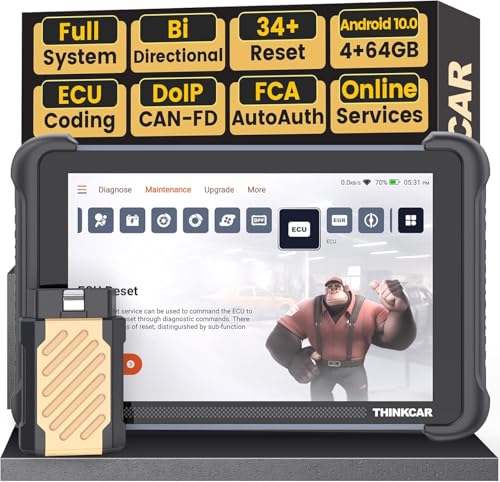
- [Notice] When you receive a used device, it may be a customer return resold by Amazon without inspection. You can exchange it for a new one through Amazon. As this situation is unavoidable, we sincerely apologize. For any issues, contacting us via Amazon's "Messages" is the best way. THINKSCAN 689BT Bidirectional Scan Tool Can Be Used Immediately After It is Turned On, Without Complicated Registration Process, Which is More Convenient & Quick.
- Full Bi-Directional Control & 3000+ Active Tests: Take control and test components like actuators, fuel injectors, relays, and cooling fans in real time. You’ll quickly see if the problem is in the part itself or the control module — saving you hours of guesswork and frustrating trial-and-error.
- Advanced ECU Coding Capabilities: Handle module matching and hidden feature activation with confidence. When you replace an ECU or want to customize settings, this obd2 scanner diagnostic bi directional tool gives you the professional-level capabilities you need without the dealership price tag.
- 34+ Useful Reset and Maintenance Functions: Complete everyday service tasks smoothly with a wide range of helpful reset and maintenance functions. Whether you’re keeping up with regular upkeep or tackling a specific job, this scanner makes maintenance simpler and less stressful for both DIYers and pros.
- Comprehensive Full System Diagnostics: Diagnose every major system — Engine, Transmission, ABS, SRS, TPMS, and more — all in one place. Finally stop wondering if you’re missing something important; get the full picture and clear codes with ease.
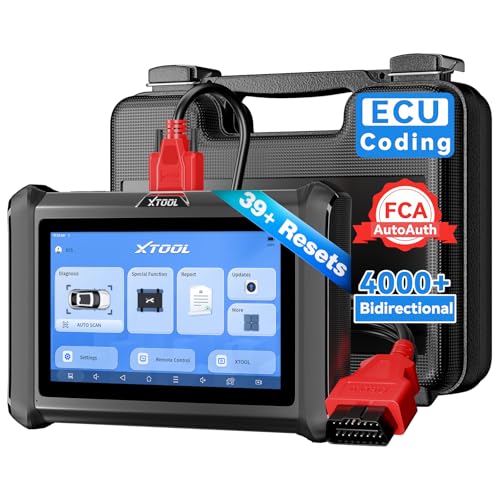
- Top Reasons to Choose the D7S OBD2 Scanner: XTOOL D7S car scan tool, an upgrade of XTOOL D7, offers comprehensive features for automotive technicians, workshops, and DIY enthusiasts 1. Upgraded Hardware: 2+64GB memory, rear camera, intuitive interface, foldable bracket 2. Complete Diagnostics: FCA
 Autoauth, OE-level all system scan, 39+ maintenance services, 4K+ bidirectional, CANFD/DoIP protocol 3. Advanced Capabilities: ECU coding, PMI functions 4. Wide Compatibility: Support 10,000+ models, covering 99% vehicle brands 5. Multi-language: Available in 22+ languages, No IP Restrictions 6. 3-Year Updates: Save 300 bucks on software updates for the latest features and optimizations
 - 2026 Upgraded D7S Car Scanner Features: The newly 2026 D7S V2.0 scanner for car brings exciting features for advanced vehicle diagnostics and enhanced user experience 1. FCA AutoAuth: Now supports FCA SGW module for Chrysler, for Jeep, for Dodge (2018+), for Fiat (2017+), enabling faster vehicle communication without gateway restrictions 2. PMI (Offline ECU Programming): Allows for Ford, for Lincoln, and for Mazda ECU programming for new modules 3. Optimized Diagnostic Report 2.0: Personalized reports with logos and customer info for auto shops. Note: Compatibility varies by cars, please check before order
- Cost-effective ECU Coding Scan Tool for Specific Brands: Enhance your vehicle's performance with XTOOL D7S! This obd2 scanner all systems bidirectional offers advanced capabilities at an affordable price, supports online for BMW, for Benz and offline for BENZ, for MIT, along with PMI functions for Ford, for Mazda, and for Lincoln. Ideal for technicians and DIY enthusiasts, this automotive scanner diagnostic tool optimizes vehicle performance and enhances the driving experience. Note: Not for all cars and modules, please send car VIN to check the compatibility before purchase
- OE All System Diagnostic & 8 Pids Graphing: XTOOL D7S is a comprehensive all system bi directional obd2 scanner that delivers dealer-level diagnostics, completely controlling over your vehicle’s performance and health. This automotive scan tool can read and clear DTCs, view live data and ECU information, retrieve freeze frames, and perform active tests and full obd2 functions. This bi-directional scan tool can can identify your vehicle's make, model, and year information with just one click and show up to 8 PIDs live data with options for CSV viewing, playback, and recording for in-depth analysis. It is easy-to-use for both professionals and beginners, helping pinpoint issues efficiently
- 3 Years Software Update, Value for Money: With 3 years of software updates and 22+ languages(no IP restrictions), XTOOL D7S auto scanner code scanner ensures ongoing compatibility for the latest car models and improved diagnostic functions. This all system vehicle diagnostic scanner comes with a 30-day return policy and a 24-month repair for dependable performance. XTOOL are dedicated to your satisfaction, so enjoy seamless support and lifetime expert assistance. Should you encounter any issues or concerns, don’t hesitate to reach out XTOOL. D7S with newest update with 22 languages freely transfer without authorization, check details from setting-language or from XTOOL
 Autoauth, OE-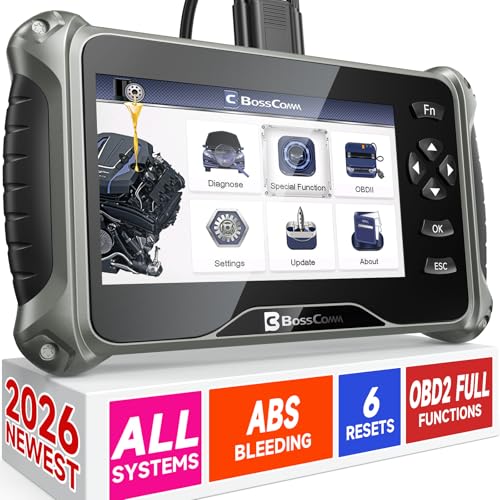
- 🔥 Historical lowest pr-ice now on sa-le--hot se-lling.
- 【🎈𝗜𝗙𝟳𝟰𝟱 𝗽𝗲𝗿𝗳𝗼𝗿𝗺𝘀 𝟲 𝗲𝘀𝘀𝗲𝗻𝘁𝗶𝗮𝗹 𝗿𝗲𝘀𝗲𝘁 𝗳𝘂𝗻𝗰𝘁𝗶𝗼𝗻𝘀—𝗔𝗕𝗦 𝗕𝗹𝗲𝗲𝗱𝗶𝗻𝗴, 𝗢𝗶𝗹 𝗥𝗲𝘀𝗲𝘁, 𝗘𝗣𝗕, 𝗦𝗔𝗦, 𝗧𝗵𝗿𝗼𝘁𝘁𝗹𝗲 𝗥𝗲𝗹𝗲𝗮𝗿𝗻, 𝗮𝗻𝗱 𝗕𝗠𝗦—𝗽𝘂𝘁𝘁𝗶𝗻𝗴 𝗽𝗿𝗼𝗳𝗲𝘀𝘀𝗶𝗼𝗻𝗮𝗹-𝗴𝗿𝗮𝗱𝗲 𝗺𝗮𝗶𝗻𝘁𝗲𝗻𝗮𝗻𝗰𝗲 𝗯𝗮𝗰𝗸 𝗶𝗻 𝘆𝗼𝘂𝗿 𝗵𝗮𝗻𝗱𝘀.】Spongy brakes? Stuck oil light? Parking brake won't release? Off-center steering? Rough idle after battery disconnect? Draining battery? IF745 handles all with a few taps. One tool covers six dealer-level resets, saving hundreds in labor costs. ❗ NOTE: Does NOT support bidirectional control, coding, or programming.
- 【✨ 𝗜𝗙𝟳𝟰𝟱 𝗴𝗼𝗲𝘀 𝗯𝗲𝘆𝗼𝗻𝗱 𝗯𝗮𝘀𝗶𝗰 𝗰𝗼𝗱𝗲 𝗿𝗲𝗮𝗱𝗶𝗻𝗴 𝘄𝗶𝘁𝗵 𝟭𝟬 𝗶𝗻𝘁𝗲𝗴𝗿𝗮𝘁𝗲𝗱 𝗳𝘂𝗻𝗰𝘁𝗶𝗼𝗻𝘀—𝗗𝗧𝗖 𝗟𝗼𝗼𝗸𝘂𝗽, 𝗜/𝗠 𝗥𝗲𝗮𝗱𝗶𝗻𝗲𝘀𝘀, 𝗙𝗿𝗲𝗲𝘇𝗲 𝗙𝗿𝗮𝗺𝗲, 𝗟𝗶𝘃𝗲 𝗗𝗮𝘁𝗮, 𝗢𝟮𝗦, 𝗢𝗕𝗠, 𝗘𝗩𝗔𝗣, 𝗮𝗻𝗱 𝗺𝗼𝗿𝗲. 】Pulling a code tells you something is wrong. IF745 tells you what the code means, when the fault happened, and what data surrounds it. Pass emissions with one I/M Readiness tap. Freeze the fault moment with Freeze Frame. Monitor live sensor data in real time. Turn cryptic codes into clear answers.
- 【🛒 𝗜𝗙𝟳𝟰𝟱 𝗽𝗲𝗿𝗳𝗼𝗿𝗺𝘀 𝗳𝘂𝗹𝗹-𝘀𝘆𝘀𝘁𝗲𝗺 𝗱𝗶𝗮𝗴𝗻𝗼𝘀𝘁𝗶𝗰𝘀 𝗮𝗰𝗿𝗼𝘀𝘀 𝗮𝗹𝗹 𝗺𝗼𝗱𝘂𝗹𝗲𝘀—𝗲𝗻𝗴𝗶𝗻𝗲, 𝗔𝗕𝗦, 𝗮𝗶𝗿𝗯𝗮𝗴, 𝘁𝗿𝗮𝗻𝘀𝗺𝗶𝘀𝘀𝗶𝗼𝗻, 𝘀𝘁𝗲𝗲𝗿𝗶𝗻𝗴, 𝘀𝘂𝘀𝗽𝗲𝗻𝘀𝗶𝗼𝗻, 𝗯𝗼𝗱𝘆 𝗲𝗹𝗲𝗰𝘁𝗿𝗼𝗻𝗶𝗰𝘀, 𝗮𝗻𝗱 𝗺𝗼𝗿𝗲. 】Warning lights on but you don't know why? Skip the $100+ diagnostic fee at the shop. Run a complete self-check from your driveway. IF745 reads and clears fault codes, retrieves ECU info, and displays live data from every accessible module—delivering a full vehicle health report in minutes, without leaving home.
- 【✅𝗜𝗙𝟳𝟰𝟱 𝗳𝗲𝗮𝘁𝘂𝗿𝗲𝘀 𝗮 𝟳-𝗶𝗻𝗰𝗵 𝗱𝗶𝘀𝗽𝗹𝗮𝘆, 𝗲𝗿𝗴𝗼𝗻𝗼𝗺𝗶𝗰 𝗱𝗲𝘀𝗶𝗴𝗻, 𝗪𝗶-𝗙𝗶 𝘂𝗽𝗱𝗮𝘁𝗲𝘀, 𝗮𝗻𝗱 𝘇𝗲𝗿𝗼 𝘀𝘂𝗯𝘀𝗰𝗿𝗶𝗽𝘁𝗶𝗼𝗻 𝗳𝗲𝗲𝘀 𝗳𝗼𝗿 𝗵𝗮𝘀𝘀𝗹𝗲-𝗳𝗿𝗲𝗲 𝗱𝗶𝗮𝗴𝗻𝗼𝘀𝘁𝗶𝗰𝘀.】Large screen means no squinting. Intuitive navigation and customizable data displays put key info at your fingertips. Wi-Fi delivers lifetime free updates without a computer. No recurring fees. No hidden costs. Just a reliable tool that works as hard as you do.
This product presentation was made with AAWP plugin.