
NHTSA ID Number: 11027299
Manufacturer Communication Number: IK1500112
TSB/Document Date: 2026-01-07
Summary
This article will guide the reader through steps to help gain a general understanding of the LPG Gen 1 and Gen 2 fuel supply systems, as well as proper fuel system checks to obtain boost pressure.
Countries:
CANADA, MEXICO, UNITED
STATES
Document
ID:
IK1500112
Availability:
ISIS, FleetISIS, NotSIR
Revision:
1
Major System:
Current
Language:
Other
Languages:
Fuel system
Created:
Last
Modified:
9/11/2025
Author:
Nick
Zipadelli
Viewed:
175
English
NONE
12/12/2025
Less Info
Coding Information
Hide Details
Copy Link
Copy Relative Link
Bookmark
Add to Favorites
Provide Feedback
View My Bookmarks
Helpful
Not Helpful
4
0
Title : PSI 8.8L Propane (LPG) Fuel System Overview and Pressure Testing
Applies To : All PSI 8.8L LPG vehicles
Change Log
Please refer to the change log text box below for recent changes to this article:
12/12/2025 - Updated tooling with alternative part number.
11/19/2025 - Initial Article Release.
**Attention**
Only properly trained and LPG-certified personnel should perform work on PSI
LPG fuel systems. Dealer-approved essential PSI LPG tools must be used when
servicing LPG vehicles. Failure to follow these guidelines may result in serious
injury, death, or damage to the fuel systems.
Description
This article will guide the reader through steps to help gain a general understanding of the LPG Gen 1 and
Gen 2 fuel supply systems, as well as proper fuel system checks to obtain boost pressure.
Symptoms
Diagnostic Trouble Codes & Dashboard Indicator Lights:
DTC/Light
Description
Wait-to-start light
The Wait-To-Start light may stay on when the purge cycle is not
completed.
Customer Observations or Concerns:
Wait-to-start light will not turn off.
Special Tools / Software
Tool Description
Tool Number
Comments
Fuel Pressure Gauge
15-127-02
Liquid-filled pressure gauge (connect to Schrader
valve)
15-132-01-36
Connect to the 80 percent level spit valve
Alternative Dual
Combination Gauge
Z108273
Please note that this gauge must be obtained
directly from PSI, as it is not available through
standard parts channels
WARNINGS
WARNINGS:
Skin contact with propane may result in frostbite, since propane boils at -44°F (-42°C).
Propane is heavier than air and will collect in low-lying areas.
Inhaling a high concentration of propane vapors can displace oxygen in the lungs.
Always contact the local Authority Having Jurisdiction (AHJ) for ventilation requirements.
The AHJ is the organization, office, or individual responsible for enforcing the requirements of the code.
Fuel System Overview:
Purge Cycle Overview - PSI 8.8L LPG Fuel System
:
The PSI 8.8L LPG fuel system utilizes liquid propane injection and does not operate on propane vapor. Therefore, all propane vapor must
be purged from the fuel lines before the system can function properly.
NOTE: If the purge cycle does not complete properly on a Generation 2 vehicle, the ECM cuts the fuel pulses to the
injectors to prevent potential damage.
During the purge cycle, the "Wait-to-start" lamp remains illuminated to inform the operator that the fuel system is currently purging vapor
from the lines.
🔄 Purge Cycle Operation 🔄:
The purge cycle is controlled by both the ECM (Engine Control Module) and the BCM (Body Control Module).
The BCM manages the "Wait-to-Start" indicator and prevents the engine from cranking by locking out the starter until the purge
cycle is complete.
The ECM controls the following components:
Boost pump
Scavange pump
Return and supply lock-off valves
It can be normal to hear clicking or chattering sounds from the lock-off valves during the purge cycle. This is typically caused by the ECM
rapidly opening and closing the valves to accelerate fuel pressure buildup.
Purpose of the Purge Cycle
:
The purge cycle serves to:
Remove propane vapor from the fuel lines.
Deliver liquid propane to the fuel injectors.
Prime the fuel system before startup.
The ECM monitors fuel pressure using:
The fuel pressure sensor at the LPDM (Applicable for Gen 1)
The fuel pressure sensor at the fuel distribution block (Applicable for Gen 2)
Once a sufficient rise in fuel pressure is detected, the purge cycle is considered complete, and the engine will be allowed to start.
How to Obtain Boost Pressure:
To properly obtain boost pressure, two measurements must be taken using two separate pressure gauges.
The first pressure reading should be taken at the Schrader valve located on the LPDM (Generation 1) or the fuel distribution block
Schrader valve (Generation 2).
The second reading must be taken from the 80% level Spit valve on the LPG fuel tank.
Boost pressure is calculated by subtracting static tank pressure from the liquid line pressure.
EXAMPLE:
If the static tank pressure is 100 PSI (measured at the 80% level spit valve), and the liquid line pressure is 150 PSI (measured at the Schrader
Valve, either at the LPDM or the fuel distribution block), then the boost pressure is 50 PSI.
150 PSI (liquid line) – 100 PSI (tank) = 50 PSI boost pressure.
Specifications:
Gen 1 Boost Pressure Specification
45 PSI or more over static tank pressure KOER at idle.
Gen 2 Boost Pressure Specification
50 PSI or more over static tank pressure KOER at idle.
Considerations:
NOTE: LPG fuel tanks are only filled to 80% of their capacity. This allows room for fuel expansion and
accounts for pressure fluctuations caused by changes in temperature.
The static pressure inside the fuel tank will vary based on ambient air temperature - as temperature
increases, so does the static tank pressure.
NOTE: If the fuel system has been recently evacuated, it is essential to purge all nitrogen gas from the
fuel tanks during the refilling process. Failure to perform this procedure may result in poor purging of
the system or hard-starting conditions. The 80 percent liquid spit valve should remain open during the
duration of filling the fuel tanks with propane.
Characteristics of Propane:
Propane is produced while processing natural gas or crude oil. In nature, propane exists as a gas.
When cooled to -44°F (-42°C) or pressurized for storage, propane condenses into a liquid.
Propane expands at a very high rate when it changes from a liquid to a vapor.
When heated above -44°F, 1 part-per-million of liquid propane will instantly expand to become 270 parts-per-million of propane
vapor.
Propane is normally colorless, odorless, and tasteless. A strong, unpleasant-smelling chemical is added to it to aid in detection. This
results in propane smelling like rotten eggs, a skunk's spray, or a dead animal.
Diagnostic Steps
Step
Confirm Fuel Level
Check the mechanical fuel gauge located on the driver's side of the
fuel tank. Reference Figure #1 below for an example.
Decision
Yes, the fuel level is within the
testing specification.
Proceed to step 2.
No, the fuel level is over full.
Is the mechanical gauge above the 1/3rd mark, and below the full mark?
Perform 3.11 Fuel Level Monitoring
System Diagnosis as outlined in the
Generation One or Generation
Two PSI Propane Engine Diagnostic
manual.
No, the fuel level reading is below
1/3rd.
#1
Add propane to the fuel tanks so the
fuel level is greater than 1/3rd.
No, the fuel level is empty.
Confirm fuel float part number per PSI
bulletin PSI112016.
If the PSI bulletin has been followed
and confirmed correct, but the reading
is still empty, add propane to the fuel
tanks so the fuel level is greater than
1/3rd.
Figure #1: Mechanical Fuel Gauge
Connect fuel pressure gauges
Connect the pressure gauge part number 15-132-01-36 to the 80%
level Spit valve located at the driver's side fuel tank, underneath the
tank cover. This should be the smaller fitting.
GEN 1 VEHICLES:
Connect the fuel pressure gauge 15-127-02 to the LPDM
(Liquid Propane Delivery Module) (See Figure #2).
Decision
Yes.
Retest with the engine at operating
temperature (engine oil temperature
at or above 185°F).
If boost pressure remains within
specification, end fuel pressure
GEN 2 VEHICLES:
diagnostics. Reference appropriate
Connect the fuel pressure gauge 15-127-02 to the Schrader symptom diagnostics for the symptom
valve located on the fuel distribution block (See Figure #3). that the vehicle is experiencing.
#2
Record the pressures KOER (Key On Engine Running).
Is the boost pressure within specification?
See Boost Specification Chart
See Obtaining Boost Pressure
NOTE: If liquid propane fuel is found at this fitting while opening, then No.
the fuel tanks are overfull. A problem with the fuel stop fill valve is
suspected and would need to be investigated before any further fuel Proceed to step 3.
pressure diagnostics can resume.
Figure #2
Gen 1 LPDM Schrader Valve Pressure Port Location
Figure #3
Gen 2 Fuel Distribution Block Schrader valve pressure port location.
Step
#3
Inspect the mechanical shut-off valve(s)
Confirm that the mechanical shut-off valves are fully open.
For generation one fuel systems, please refer to Figure #4.
Decision
Yes.
Proceed to step 5.
For generation two fuel systems, please refer to Figure #5.
Are the mechanical shut-off valve(s) fully open?
NOTE: Generation Two fuel systems have two mechanical shut-off
valves. One on the supply lock-off valve and one on the return lock-off
valve.
No.
Proceed to step 4.
Figure #4
Item #3: Emergency Shutoff Valve - Should be fully opened.
Figure #5
Item #3: Emergency Shutoff Valve - Should be fully open.
Step
Sweep the Lockoff valve(s)
Decision
Close the lock-off valve(s).
Yes.
Re-open slowly to avoid tripping the EFVs (Excess Flow Valves) until
fully open:
Proceed to step 5.
Does the engine run?
#4
NOTE: If the engine did not run
previously, but runs after sweeping
the lock-off valve(s), then step 2
should be performed again.
No.
Perform Section 3.9 Fuel System
Diagnostics as outlined in the
Generation One or Generation Two
PSI 8.8L Propane Engine Diagnostic
Manual.
Step
Confirm the EFVs have not been tripped
EFVs can be tripped during recent fuel repairs, such as fuel rails,
lines, boost or scavenge pumps, or fuel filter replacements.
Decision
Yes.
Reset EFVs and re-perform step 2.
Close the emergency shut-off valve(s). Listen and feel for any clicking.
If clicking is present, that is an indication that the EFVs have been
tripped.
Were the EFVs tripped?
#5
NOTE: It is paramount to open the valves slowly to avoid tripping the
EFVs (Excess Flow Valves).
If a clicking sound is heard or felt when opening the valves, it
indicates that the EFVs have tripped.
Step
#6
Check Fuel System Amperage Draw
Connect an amp clamp to the A side of the fuel system fuse KOER
(Key On Engine Running).
Is the amperage below 14 amps?
No.
Proceed to step 6.
Decision
Yes.
Perform Section 3.9 Fuel System
Diagnostics as outlined in the
Generation One or Generation Two
PSI 8.8L Propane Engine Diagnostic
Manual.
NOTE: More than 14 amps can indicate a restriction in the fuel
system, a failed supply lock-off valve, return lock-off valve, or a weak No.
boost or scavange pump. The higher amperage amount is typically
caused by the pump having to work harder and draw more from the
Perform Section 3.9 Fuel System
circuit.
Diagnostics as outlined in the
Generation One or Generation Two
PSI 8.8L Propane Engine Diagnostic
Manual.
If no electrical faults are found within
the 3.9 fuel system diagnostics, open
a Technical Service Case file. Provide
the full step-by-step results from the
diagnostics performed, with numerical
readings where applicable, from both
the 3.9 diagnostics and this article.
Warranty Information
Warranty Claim Coding:
Refer to the Warranty Coding Manual for Group and Noun Codes.
Standard Repair Time(s):
Refer to the SRT Manual for Repair Times
Other Resources
Master Service Information Site
Hide Details
Feedback Information
Viewed:
174
Helpful:
4
Not Helpful: 0
No Feedback Found
Copyright © 2026 Navistar , Inc.


If the PDF is very large, it may not load in the preview below.
Some older TSBs had multiple PDFs — visit the NHTSA Website to view all PDFs.
If the TSB PDF does not show, download or view it on the NHTSA Website.
Click on the (+) Plus Sign
Then Click on Associated Document(s)
Search NHTSA Database for Recalls
Search NHTSA Database for Vehicle Investigations
View Latest Vehicle Investigations
Search NHTSA Database for Vehicle Complaints
View Latest Vehicle Complaints
TSB/Document ID: IK1500112
Replacement Service Bulletin Number:
MFR Communication Date: 2025-12-12
MFR Internal Campaign ID/Software Version: IK1500112
Communication Type: Service Bulletin/Repair Instructions
NHTSA Components: FUEL/PROPULSION SYSTEM
MFR Component System:
MFR Component Subsystem:
Previous TSB | Next TSB |
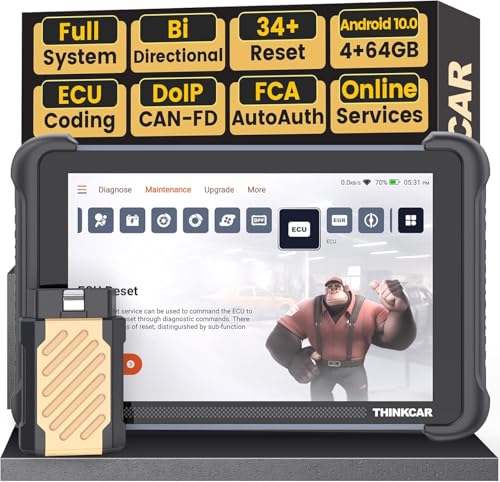
- [Notice] When you receive a used device, it may be a customer return resold by Amazon without inspection. You can exchange it for a new one through Amazon. As this situation is unavoidable, we sincerely apologize. For any issues, contacting us via Amazon's "Messages" is the best way. THINKSCAN 689BT Bidirectional Scan Tool Can Be Used Immediately After It is Turned On, Without Complicated Registration Process, Which is More Convenient & Quick.
- Full Bi-Directional Control & 3000+ Active Tests: Take control and test components like actuators, fuel injectors, relays, and cooling fans in real time. You’ll quickly see if the problem is in the part itself or the control module — saving you hours of guesswork and frustrating trial-and-error.
- Advanced ECU Coding Capabilities: Handle module matching and hidden feature activation with confidence. When you replace an ECU or want to customize settings, this obd2 scanner diagnostic bi directional tool gives you the professional-level capabilities you need without the dealership price tag.
- 34+ Useful Reset and Maintenance Functions: Complete everyday service tasks smoothly with a wide range of helpful reset and maintenance functions. Whether you’re keeping up with regular upkeep or tackling a specific job, this scanner makes maintenance simpler and less stressful for both DIYers and pros.
- Comprehensive Full System Diagnostics: Diagnose every major system — Engine, Transmission, ABS, SRS, TPMS, and more — all in one place. Finally stop wondering if you’re missing something important; get the full picture and clear codes with ease.
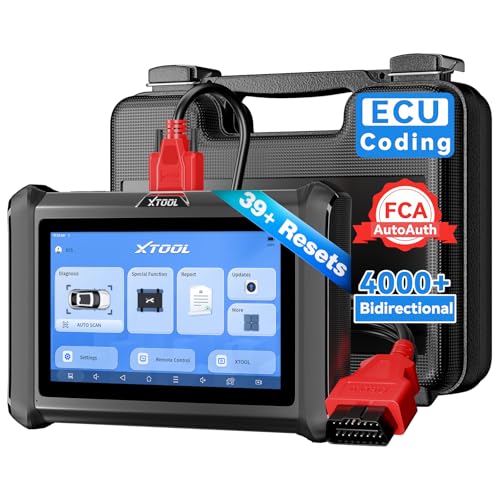
- Top Reasons to Choose the D7S OBD2 Scanner: XTOOL D7S car scan tool, an upgrade of XTOOL D7, offers comprehensive features for automotive technicians, workshops, and DIY enthusiasts 1. Upgraded Hardware: 2+64GB memory, rear camera, intuitive interface, foldable bracket 2. Complete Diagnostics: FCA
 Autoauth, OE-level all system scan, 39+ maintenance services, 4K+ bidirectional, CANFD/DoIP protocol 3. Advanced Capabilities: ECU coding, PMI functions 4. Wide Compatibility: Support 10,000+ models, covering 99% vehicle brands 5. Multi-language: Available in 22+ languages, No IP Restrictions 6. 3-Year Updates: Save 300 bucks on software updates for the latest features and optimizations
 - 2026 Upgraded D7S Car Scanner Features: The newly 2026 D7S V2.0 scanner for car brings exciting features for advanced vehicle diagnostics and enhanced user experience 1. FCA AutoAuth: Now supports FCA SGW module for Chrysler, for Jeep, for Dodge (2018+), for Fiat (2017+), enabling faster vehicle communication without gateway restrictions 2. PMI (Offline ECU Programming): Allows for Ford, for Lincoln, and for Mazda ECU programming for new modules 3. Optimized Diagnostic Report 2.0: Personalized reports with logos and customer info for auto shops. Note: Compatibility varies by cars, please check before order
- Cost-effective ECU Coding Scan Tool for Specific Brands: Enhance your vehicle's performance with XTOOL D7S! This obd2 scanner all systems bidirectional offers advanced capabilities at an affordable price, supports online for BMW, for Benz and offline for BENZ, for MIT, along with PMI functions for Ford, for Mazda, and for Lincoln. Ideal for technicians and DIY enthusiasts, this automotive scanner diagnostic tool optimizes vehicle performance and enhances the driving experience. Note: Not for all cars and modules, please send car VIN to check the compatibility before purchase
- OE All System Diagnostic & 8 Pids Graphing: XTOOL D7S is a comprehensive all system bi directional obd2 scanner that delivers dealer-level diagnostics, completely controlling over your vehicle’s performance and health. This automotive scan tool can read and clear DTCs, view live data and ECU information, retrieve freeze frames, and perform active tests and full obd2 functions. This bi-directional scan tool can can identify your vehicle's make, model, and year information with just one click and show up to 8 PIDs live data with options for CSV viewing, playback, and recording for in-depth analysis. It is easy-to-use for both professionals and beginners, helping pinpoint issues efficiently
- 3 Years Software Update, Value for Money: With 3 years of software updates and 22+ languages(no IP restrictions), XTOOL D7S auto scanner code scanner ensures ongoing compatibility for the latest car models and improved diagnostic functions. This all system vehicle diagnostic scanner comes with a 30-day return policy and a 24-month repair for dependable performance. XTOOL are dedicated to your satisfaction, so enjoy seamless support and lifetime expert assistance. Should you encounter any issues or concerns, don’t hesitate to reach out XTOOL. D7S with newest update with 22 languages freely transfer without authorization, check details from setting-language or from XTOOL
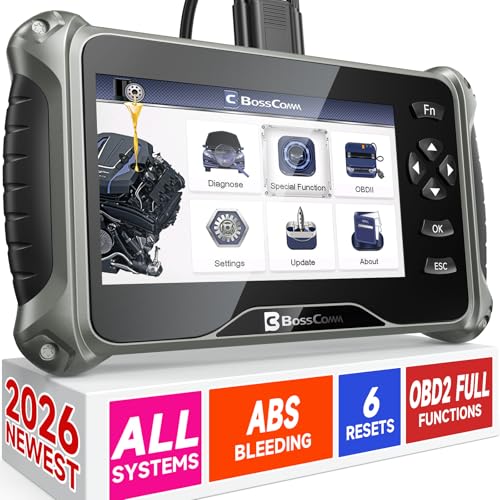
- 【✅Compared to BOSSCOMM IF742, IF745 Offers Full-System Diagnostics】The BOSSCOMM IF745 car diagnostic scanner is an upgraded model of IF742. In addition to supporting all OBD2 Code Reader functions and 6 reset options (ABS/EPB/SAS/BMS/Oil/Throttle), it expands diagnostics from 4 systems (Check Engine/ABS/SRS/Transmission) to vehicle All systems, including Steering, Suspension, and Body Electronics. This provides deeper, more comprehensive diagnostic capabilities.
- 【✨10 OBD2 Functions】The BOSSCOMM IF745 scan tool’s DTC Lookup instantly translates fault codes into user-friendly explanations, its I/M Readiness feature streamlines emissions testing with a single tap, and Freeze Frame lets you pinpoint the exact moment of a fault for in-depth root-cause diagnosis. Combined with a live data dashboard and advanced diagnostics (O2S, OBMon, EVAP), it delivers comprehensive insights for confident troubleshooting.
- 【✨Deep Diagnostics for All Vehicle System Modules】Beyond code reading/clearing and ECU information retrieval, our all-in-one data stream feature lets you inspect all current fault codes and their locations across the vehicle’s systems. This vehicle code reader helps you turn off dashboard warning lights and perform a comprehensive self-check of your car at home—no more back-and-forth trips to the repair shop or hefty inspection fees.
- 【✨6 Essential Resets: ABS Bleeding, Oil, EPB, SAS, Throttle, BMS】The BOSSCOMM IF745 obd2 scanner diagnostic tool swiftly purges air from brake lines to restore braking sensitivity, fine-tunes maintenance cycles to eliminate false alerts, resolves parking brake issues with one-click control, recalibrates steering sensors for stability, optimizes engine idling/acceleration for smoother performance, and deeply resets battery systems to extend lifespan and range via precise parameter adjustments.❗NOTE: Does NOT support bidirectional control, coding, or programming.
- 【✨10,000+ Car Models, AutoVIN, 13 Languages】The BOSSCOMM IF745 vehicle scanner diagnostic tool covers 73+ global car brands and offers support in 13 languages, making it perfect for DIYers, auto mechanics, or as a thoughtful gift. With a single-click AutoVIN feature, it instantly retrieves vehicle serial numbers, streamlining diagnostics for users globally. This adaptable tool balances user-friendliness with precision, catering to both personal and professional requirements.✅Unsure about compatibility? Compatibility will vary on vehicles' model and year, pls reach us via 📧 [email protected] 📧 before purchase.
This product presentation was made with AAWP plugin.