NHTSA ID Number: 11016934
Manufacturer Communication Number: SD-27-5023V
TSB/Document Date: 2025-04-10
Summary
Bendix GSBC (Global Scalable Brake Control) System and EBS-90 Electronic Control Unit (ECU) service data sheets.
SD-27-5023V
Bendix ® GSBC® (Global Scalable Brake Control) System and EBS-90™
Electronic Control Unit (ECU) for Volvo® Trucks
INTRODUCTION
DESCRIPTION
The Bendix® GSBC® (Global Scalable Brake Control) is a
24V Electronic Braking System (EBS) that is comprised of
both hardware and software components that work together
to control the service braking system of the vehicle. The
GSBC system utilizes electronic control systems but
continues to use air to apply and release the brakes, and
can be configured to provide brake control functionality
such as the Bendix® Electronic Stability Program (ESP®)
and Antilock Brake System (ABS) as desired by the vehicle
manufacturer.
In addition to service brake control of single and combination
vehicles, GSBC as installed on Volvo vehicles also provides
ABS, ESP, malfunction indicators, and other advanced
braking system functionalities.
GSBC has been designed for the North American
commercial vehicle market. This document is specifically
for GSBC systems installed on Volvo® vehicles starting for
model year 2024.
The GSBC system can support vehicles with up to five (5)
sensed axles and ten (10) Wheel Speed Sensors (WSSs).
This document is designed to offer technicians
and service personnel a brief overview of how the
system works, provide technical information for how
the Bendix® GSBC® EBS-90™ Electronic Control Unit
(hereafter referred to as “Central ECU” or “GSBC Central
ECU”) operates, and also provide troubleshooting
information for both the GSBC system as a whole and the
Central ECU, specifically.
TABLE OF CONTENTS
INTRODUCTION & DESCRIPTION . . . . . . . . . . . . . . . . . . . . 1
GENERAL SAFETY GUIDELINES . . . . . . . . . . . . . . . . . . . . . 2
GSBC SYSTEM OVERVIEW . . . . . . . . . . . . . . . . . . . . . . . . 3
GSBC SYSTEM COMPARISON . . . . . . . . . . . . . . . . . . . . . . . 6
GSBC SYSTEM COMPONENTS . . . . . . . . . . . . . . . . . . . . . 8
GSBC SYSTEM SCHEMATICS . . . . . . . . . . . . . . . . . . . . . 12
GSBC CENTRAL ECU (EBS-90) . . . . . . . . . . . . . . . . . . . 18
Description . . . . . . . . . . . . . . . . . . . . . . . . . . . . . . . . . . . 18
Maintenance . . . . . . . . . . . . . . . . . . . . . . . . . . . . . . . . . . 19
Electrical Interfaces . . . . . . . . . . . . . . . . . . . . . . . . . . . . 20
Replacement . . . . . . . . . . . . . . . . . . . . . . . . . . . . . . . . . 22
Central ECU Troubleshooting . . . . . . . . . . . . . . . . . . . . 24
TROUBLESHOOTING . . . . . . . . . . . . . . . . . . . . . . . . . . . . . 25
GSBC System & Central ECU DTCs . . . . . . . . . . . . . . . 26
GSBC System & Central ECU Service Actions . . . . . . . 48
GSBC Component DTCs . . . . . . . . . . . . . . . . . . . . . . . . 57
The GSBC ABS functionality automatically controls the
degree of rotational wheel slip during braking by sensing
the rate of angular rotation of the wheel using WSSs. The
WSSs transmit signals to the Central ECU, which interprets
the signals and generates a responsive controlling signal
to the electro-pneumatic modules and modulators which
deliver the pressure requested to each controlled foundation
brake.
The GSBC ESP function augments vehicle directional
stability by applying and adjusting vehicle brake torque
individually at each wheel position to limit vehicle oversteer
and understeer. ESP enhances rollover stability by adjusting
vehicle brake torques in order to reduce lateral acceleration
of the vehicle.
The Central ECU provides the ABS and ESP malfunction
indicator signals to the dashboard by way of a CAN
message.
The Central ECU can receive Power Line Carrier (PLC)
signal(s) from connected towed vehicle(s) which indicate
that one of those vehicle(s) has an active ABS malfunction
or fault. The Central ECU then provides this towed vehicle
ABS malfunction indicator signal to the dashboard by way
of a CAN message.
General Safety Guidelines
GENERAL SAFETY GUIDELINES
WARNING! PLEASE READ AND FOLLOW THESE INSTRUCTIONS
TO AVOID PERSONAL INJURY OR DEATH:
When working on or around a vehicle, the following guidelines should be observed AT ALL TIMES:
▲ Park the vehicle on a level surface, apply the ▲ Never connect or disconnect a hose or line
parking brakes, and always block the wheels .
containing pressure; it may whip and/or cause
Always wear personal protection equipment .
hazardous airborne dust and dirt particles . Wear
eye protection . Slowly open connections with
▲ Stop the engine and remove the ignition key
care, and verify that no pressure is present . Never
when working under or around the vehicle .
remove a component or plug unless you are
When working in the engine compartment,
certain all system pressure has been depleted .
the engine should be shut off and the ignition
key should be removed . Where circumstances ▲ Use only genuine Bendix ® brand replacement
require that the engine be in operation, EXTREME
parts, components, and kits . Replacement
CAUTION should be used to prevent personal
hardware, tubing, hose, fittings, wiring, etc .
injury resulting from contact with moving,
must be of equivalent size, type, and strength as
rotating, leaking, heated, or electrically charged
original equipment and be designed specifically
components .
for such applications and systems .
▲ Do not attempt to install, remove, disassemble, ▲ Components with stripped threads or damaged
or assemble a component until you have read,
parts should be replaced rather than repaired .
and thoroughly understand, the recommended
Do not attempt repairs requiring machining or
procedures . Use only the proper tools and
welding unless specifically stated and approved
observe all precautions pertaining to use of those
by the vehicle and component manufacturer .
tools .
▲ Prior to returning the vehicle to service, make
▲ If the work is being performed on the vehicle’s
certain all components and systems are restored
air brake system, or any auxiliary pressurized air
to their proper operating condition .
systems, make certain to drain the air pressure ▲ For vehicles with Automatic Traction Control
from all reservoirs before beginning ANY work
(ATC), the ATC function must be disabled (ATC
on the vehicle . If the vehicle is equipped with
indicator lamp should be ON) prior to performing
a Bendix ® AD-IS® air dryer system, a Bendix ®
any vehicle maintenance where one or more
™
®
®
DRM dryer reservoir module, a Bendix AD-9si ,
wheels on a drive axle are lifted off the ground
AD-HF®, or AD-HFi® air dryer, be sure to drain the
and moving .
purge reservoir .
▲ The power MUST be temporarily disconnected
▲ F o l l o w i n g t h e v e h i c l e m a n u f a c t u r e r ’s
from the radar sensor whenever any tests USING
recommended procedures, deactivate the
A DYNAMOMETER are conducted on a vehicle
electrical system in a manner that safely removes
equipped with a Bendix® Wingman® system .
all electrical power from the vehicle .
▲ Never exceed manufacturer’s recommended
pressures .
▲ You should consult the vehicle manufacturer's operating and service manuals, and any related literature,
in conjunction with the Guidelines above .
IMPORTANT
Bendix®-brand Electronic Control Units (ECUs) are
not designed to store data for purposes of accident
reconstruction, and Bendix ® ACom ® Diagnostic
Software is not intended to retrieve data for purposes
of accident reconstruction. Bendix makes no
representations as to the accuracy of data or video
retrieved and interpreted from ECUs for purposes
of accident reconstruction. Bendix does not offer
accident reconstruction services or interpretation of
stored data. Bendix ECUs are not protected from fire,
loss of power, impact damage, or other conditions that
may be sustained in a crash situation and may cause
data to be unavailable or irretrievable.
2
SD-27-5023V Rev 000 Bendix® GSBC® System and EBS-90™ (Global Scalable Brake Control System and Electronic Control Unit)
System Overview
SYSTEM OVERVIEW
GSBC is controlled and operated in a similar manner
to previous Bendix brake control systems. Experienced
drivers and technicians may notice more audible solenoid
noises during service brake operation. This is normal and
is an audible confirmation that the system is operating as
expected.
IMPORTANT
PNEUMATIC BACKUP MODE
In Pneumatic Backup Mode, the system will rely on
the pneumatic pressure sent by the Bendix® GSBC®
FBM-40™ (Foot Brake Module, hereafter referred to as
“FBM”) to the EPMs. This will ensure that the vehicle has
all of the designed braking power available to bring the
vehicle to a stop.
When the system is operating in this mode:
•
A red warning lamp will appear on the dashboard
accompanied by a “Truck Brake Failure” message.
•
The GSBC system operates in two (2) modes: Electronic
Primary Mode and Pneumatic Backup Mode.
Some or all of the electronic driver safety features
such as ABS, ESP, Automatic Traction Control
(ATC), and other functions may be unavailable.
•
The system may not be able to provide ABS, ESP,
or other advanced functionalities or interventions.
ELECTRONIC PRIMARY MODE
•
Brake pedal feel and response may be different as
compared to operation in Electronic Primary Mode.
The driver is always to be in control of the service
brakes, which will be operated by the brake pedal under
the driver’s foot.
In Electronic Primary Mode, the driver’s movement
of the brake pedal is translated into an electronic
request for pressure. This is interpreted by the
Central ECU and sent to the Bendix ® GSBC ®
EPM-90™ (Electro-Pneumatic Modules, hereafter referred
to as “EPMs”) that have taken the place of the traditional
relay valves. This electronic control allows the system to
deliver the precise pressure requested to each controlled
foundation brake. This ensures that the desired brake
response is achieved and provides improved brake balance
and feel for the driver across the range of vehicle loading
conditions.
For a schematic showing how GSBC operates in primary
mode, refer to Figure 1 on page 6.
In the event of a serious system malfunction, the
Central ECU may be unable to maintain electronic
control of the system. In the event of this occurs, the
system will revert to Pneumatic Backup Mode.
For a schematic showing how GSBC operates in Pneumatic
Backup Mode, refer to Figure 3 on page 7.
DISPLAY AND STARTUP BEHAVIOR
When the GSBC system is first powered on at vehicle
ignition, experienced technicians and operators may
notice a few things that are different when compared to
previous Bendix brake control products. For complete
information on vehicle display and startup behavior,
refer to BW8207, GSBC System Operator’s Manual, on
B2Bendix.com.
IMPORTANT
The service technician should verify the proper
operation of all installed indicator lamps when applying
ignition power and during vehicle operation. Lamps
that do not illuminate as expected when ignition power
is applied, or red/yellow lamps that remain illuminated
after startup, indicate the need for service and/or
maintenance.
SD-27-5023V Rev 000 Bendix® GSBC® System and EBS-90™ (Global Scalable Brake Control System and Electronic Control Unit)
3
System Overview
PRE-TRIP INFORMATION
TRUCK CHASSIS MODIFICATIONS
Drivers and technicians must perform a pre-trip inspection
in accordance with federal, local, and regional regulations.
The GSBC system differs from previous generations of
brake control systems, which may result in some changes
to a pre-trip inspection process:
If the vehicle’s chassis components are altered (for example,
a wheel base extension or reduction; tag axle addition or
removal; a major body change such as conversion of a
tractor into a truck; or an axle, suspension, or steering
system component modification), the Central ECU must
be updated to reflect these changes. Contact your vehicle
OEM prior to making any modifications to your vehicle.
Indicator Lamps: There is an additional lamp on the
dashboard as compared to previous systems.
This red “BRAKE” lamp should briefly illuminate
for approximately three (3) seconds when
the vehicle is first powered on, but the lamp
should not stay illuminated. If this lamp stays
illuminated, it indicates a fault with the system
or function described by the lamp. For more information
on indicator lamps in normal and faulted operation,
refer to BW8207, GSBC System Operator’s Manual, on
B2Bendix.com.
Change in Components: GSBC is comprised of fewer
components than previous systems. As a result, valves that
an experienced technician may be accustomed to seeing
during pre-trip inspections will not be present on the vehicle.
When conducting a pre-trip inspection, use Table 1 on
page 11 of this document to help locate the main
components of a GSBC system.
VEHICLE INSPECTION
For experienced drivers familiar with Bendix brake control
systems, a pre- or post-trip inspection on a vehicle with
GSBC is similar to the inspection procedure for previous
Bendix systems. For a thorough inspection procedure for a
Bendix air brake system, refer to the following documents
on B2Bendix.com:
•
BW2676 (for components located outside the cab)
•
BW2677 (for components located inside the cab)
If you modify your vehicle and do not update the GSBC
Central ECU, the GSBC system may fail to function as
intended. Serious vehicle braking and performance
issues could result, including unnecessary ESP
system interventions, exceeding regulated stopping
distance, and/or system faults leading to loss of
electronic functions. These types of failures can lead
to a loss-of-control of the vehicle, potential collisions,
property damage, serious injuries, and/or death.
If replacement tires are used that are a different
diameter from the OEM-specified tire size, the brake
control system must be updated with the new tire size
using the appropriate diagnostic tool. Contact the
vehicle manufacturer for more information.
For information specific to the GSBC system components
and general locations, refer to Table 1 on page 11.
4
SD-27-5023V Rev 000 Bendix® GSBC® System and EBS-90™ (Global Scalable Brake Control System and Electronic Control Unit)
System Overview
PRESSURE PLAUSIBILITY CHECKS
To check and confirm the operation of the pneumatic
backup control system hardware, the GSBC system will
occasionally disable parts of the electronic control system
and monitor the operation of the pneumatic valves and
air lines by running a series of self-tests referred to as
“pressure plausibility checks.” These tests are intended
to aid the driver or technician in identifying failures in air
lines or control valves.
If the correct preconditions are met, the tests will run
automatically and without notification to the driver. These
tests are run only at standstill, and are automatically
aborted under certain conditions, such as driver request
for acceleration or parking brake activation. These tests
are designed to operate in the background; no driver
action is required to execute these tests unless indicated
by the dashboard display. The dashboard display will
prompt these tests ONLY IF the system does NOT get the
opportunity to run these tests automatically.
Faults and Potential Causes
Pressure plausibility tests are monitoring functions
designed to ensure that the mechanical components of
the brake system are operating correctly. If the test is not
run, a yellow warning lamp may be set on the dashboard,
accompanied by a warning pop-up on the dashboard when
the vehicle is started.
If a test runs and fails, it can result in a red or yellow EBS
warning lamp on the dashboard. These failed tests are
usually indicative of a problem that has been detected
with the braking system such as a significant air leak, or a
blocked or kinked air line.
Note to Technicians: If a vehicle is in the process of
being repaired or diagnosed and the system displays a
prompt on the dashboard to perform a pressure plausibility
check, that check can be skipped by pressing the throttle.
Running a pressure plausibility test on a faulted or partially
disassembled air system may log additional Diagnostic
Trouble Codes (DTCs) and/or dashboard warning lamps
that are not indicative of additional system faults.
PREVENTIVE SYSTEM CHECKS
IMPORTANT
If the GSBC system detects a problem, the system will
illuminate a warning indicator lamp on the dashboard,
which will indicate which function(s) is/are impacted
by the problem. While any warning indicator lamp is
illuminated, system performance is likely affected,
and the vehicle should be inspected by a qualified
technician.
The system will also log a DTC which can be read with
a compatible vehicle diagnostic software by a properly
trained technician. Refer to the DTC section starting
on page 26 for more information.
EQUIPMENT MAINTENANCE
IMPORTANT
GSBC System Maintenance – Optimal GSBC system
braking performance requires a properly maintained
and inspected system, without any active warning
lamps or DTCs. Have a vehicle with any active warning
indicator lamps diagnosed and repaired by a qualified
technician.
Importance of Brake Maintenance – Optimal braking
requires properly maintained foundation brakes, which
meet appropriate safety standards and regulations.
Brake performance also requires the vehicle be
equipped with properly sized and inflated tires with a
safe tread depth.
Only press the throttle in a workshop scenario if
the vehicle is safely immobilized, not in gear, and
no personnel are in a position to be harmed by a
running engine. Failure to do so can result in a vehicle
movement that may cause property damage, serious
injuries, and/or death.
For more information about pressure plausibility tests,
refer to BW8207, GSBC System Operator’s Manual, on
B2Bendix.com.
SD-27-5023V Rev 000 Bendix® GSBC® System and EBS-90™ (Global Scalable Brake Control System and Electronic Control Unit)
5
GSBC System Comparison
GSBC SYSTEM COMPARISON
GSBC differs from previous brake control system designs
in a number of ways, but the most significant is the way that
the vehicle receives and responds to the driver’s request
for braking. GSBC continuously monitors the position of
the brake pedal using the FBM, and will electronically and
pneumatically transmit the driver’s demand for braking as
soon as the driver moves the brake pedal. The electronic
signal from the FBM is received by the Central ECU,
which in turn commands “smart” relay valves known as
EPMs over the private brake CAN communications link.
The EPMs act on the request and electronically deliver a
controlled pressure to the connected service brakes(s) or
axle(s), fulfilling the driver’s request for braking.
By transmitting signals electronically, brake response and
control on an EBS-style system can be improved when
compared with a purely pneumatic, previous generation
brake control system. This added control also enables new
GSBC functions, if equipped. For more information about
functions for GSBC systems, refer to BW8207, GSBC
Operator’s Manual, on B2Bendix.com.
In comparison, most existing brake control systems in
North America utilize air pressure for both the control signal
pressure and the supply pressure used by the system. This
pressure is then used to apply and release the service
brakes, which makes the operation of the braking system
a mostly pneumatic/mechanical process with electronic
features such as ABS and ESP added as necessary.
GSBC® EBS-90™
Central ECU
Deceleration Demand
Driver Brake
Demand
Pneumatic Signal
Digital Control Signal
Electronic CAN Signal
Wheel Speed Signal
Electronic
Pressure
Demand
Wheel Speed Signal
GSBC®
FBM-40™
Wheel Speed
Sensor
Brake Control Pressure
Service Brake Pressure
Supply Pressure
GSBC® EPM-90™
Foundation
Brakes
Reservoir
Figure 1 – GSBC System Electronic Primary Mode Example
Bendix EC-80
ECU
®
Pneumatic Signal
Solenoid Control Signal
™
Wheel Speed Signal
Solenoid Control
Signal
Driver Brake
Demand
Wheel Speed Signal
Service Brake
Pressure
Brake Control Pressure
Service Brake
Pressure
Wheel Speed
Sensor
Supply Pressure
Foot Brake
Valve
Relay Valve
Reservoir
ABS
Modulator
Foundation
Brakes
Figure 2 – ABS Normal Operation Example
6
SD-27-5023V Rev 000 Bendix® GSBC® System and EBS-90™ (Global Scalable Brake Control System and Electronic Control Unit)
GSBC System Comparison
Because air still supplies the necessary force to apply
and release the service brakes, in the event of a serious
fault or electrical failure, the system will still be able to
control, apply, and release the brakes by falling back
to the underlying, pneumatic/mechanical system that is
capable of operating without electrical power using only
air pressure.
If the GSBC system experiences an electrical or software
malfunction that prevents it from operating in Electronic
Primary Mode, the vehicle will be operating in Pneumatic
Backup Mode where higher-level electronic functionality
may be lost. Operation in this mode will be accompanied by
one (1) or more warning indicator lamps on the dashboard.
Refer to BW8207, GSBC Operator’s Manual, on
B2Bendix.com as well as the vehicle owner’s manual, for
assistance with what specific warning indicator lamps mean
and what actions should be taken in response.
If a red warning lamp appears on the dashboard
and stays illuminated, indicating that the system
is in Pneumatic Backup Mode, pull over and safely
stop the vehicle as soon as possible, and have the
vehicle serviced immediately to identify and correct
the reason for the malfunction. If the issue(s) is not
corrected, serious vehicle braking and performance
issues could result, including unnecessary ESP system
interventions, exceeding regulated stopping distance,
and/or system faults leading to loss of electronic
functions. These types of failures can lead to a lossof-control of the vehicle, potential collisions, property
damage, serious injuries, and/or death.

- Mixes well with conventional fluids
- Low-moisture formula provides excellent vapor lock...
- Ideal for hydraulic and disc brakes


- Ideal for hydraulic and disc brakes
- Mixes well with conventional fluids
- Low-moisture formula provides excellent vapor lock...
If the PDF is very large, it may not load in the preview below.
Some older TSBs had multiple PDFs — visit the NHTSA Website to view all PDFs.
If the TSB PDF does not show, download or view it on the NHTSA Website.
Click on the (+) Plus Sign
Then Click on Associated Document(s)
Search NHTSA Database for Recalls
Search NHTSA Database for Vehicle Investigations
View Latest Vehicle Investigations
Search NHTSA Database for Vehicle Complaints
View Latest Vehicle Complaints
TSB/Document ID: SD-27-5023V
Replacement Service Bulletin Number:
MFR Communication Date: 2025-04-10
MFR Internal Campaign ID/Software Version:
Communication Type: Service Bulletin/Repair Instructions
NHTSA Components: SERVICE BRAKES
MFR Component System:
MFR Component Subsystem:
Previous TSB | Next TSB |
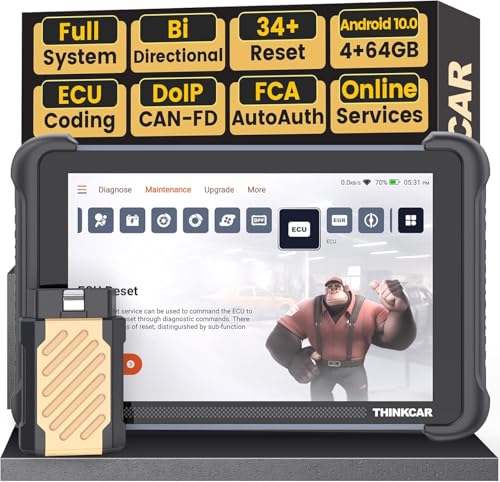
- [Notice] When you receive a used device, it may be a customer return resold by Amazon without inspection. You can exchange it for a new one through Amazon. As this situation is unavoidable, we sincerely apologize. For any issues, contacting us via Amazon's "Messages" is the best way. THINKSCAN 689BT Bidirectional Scan Tool Can Be Used Immediately After It is Turned On, Without Complicated Registration Process, Which is More Convenient & Quick.
- Full Bi-Directional Control & 3000+ Active Tests: Take control and test components like actuators, fuel injectors, relays, and cooling fans in real time. You’ll quickly see if the problem is in the part itself or the control module — saving you hours of guesswork and frustrating trial-and-error.
- Advanced ECU Coding Capabilities: Handle module matching and hidden feature activation with confidence. When you replace an ECU or want to customize settings, this obd2 scanner diagnostic bi directional tool gives you the professional-level capabilities you need without the dealership price tag.
- 34+ Useful Reset and Maintenance Functions: Complete everyday service tasks smoothly with a wide range of helpful reset and maintenance functions. Whether you’re keeping up with regular upkeep or tackling a specific job, this scanner makes maintenance simpler and less stressful for both DIYers and pros.
- Comprehensive Full System Diagnostics: Diagnose every major system — Engine, Transmission, ABS, SRS, TPMS, and more — all in one place. Finally stop wondering if you’re missing something important; get the full picture and clear codes with ease.
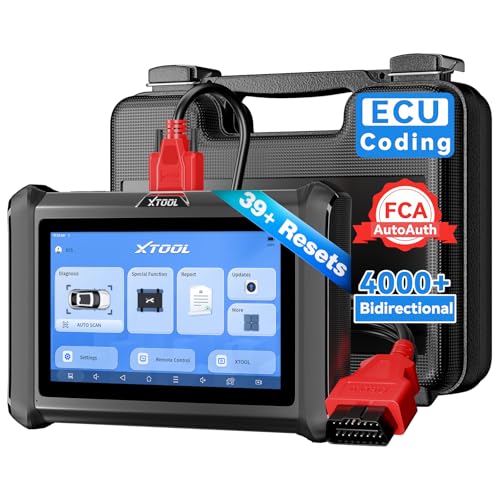
- Top Reasons to Choose the D7S OBD2 Scanner: XTOOL D7S car scan tool, an upgrade of XTOOL D7, offers comprehensive features for automotive technicians, workshops, and DIY enthusiasts 1. Upgraded Hardware: 2+64GB memory, rear camera, intuitive interface, foldable bracket 2. Complete Diagnostics: FCA
 Autoauth, OE-level all system scan, 39+ maintenance services, 4K+ bidirectional, CANFD/DoIP protocol 3. Advanced Capabilities: ECU coding, PMI functions 4. Wide Compatibility: Support 10,000+ models, covering 99% vehicle brands 5. Multi-language: Available in 22+ languages, No IP Restrictions 6. 3-Year Updates: Save 300 bucks on software updates for the latest features and optimizations
 - 2026 Upgraded D7S Car Scanner Features: The newly 2026 D7S V2.0 scanner for car brings exciting features for advanced vehicle diagnostics and enhanced user experience 1. FCA AutoAuth: Now supports FCA SGW module for Chrysler, for Jeep, for Dodge (2018+), for Fiat (2017+), enabling faster vehicle communication without gateway restrictions 2. PMI (Offline ECU Programming): Allows for Ford, for Lincoln, and for Mazda ECU programming for new modules 3. Optimized Diagnostic Report 2.0: Personalized reports with logos and customer info for auto shops. Note: Compatibility varies by cars, please check before order
- Cost-effective ECU Coding Scan Tool for Specific Brands: Enhance your vehicle's performance with XTOOL D7S! This obd2 scanner all systems bidirectional offers advanced capabilities at an affordable price, supports online for BMW, for Benz and offline for BENZ, for MIT, along with PMI functions for Ford, for Mazda, and for Lincoln. Ideal for technicians and DIY enthusiasts, this automotive scanner diagnostic tool optimizes vehicle performance and enhances the driving experience. Note: Not for all cars and modules, please send car VIN to check the compatibility before purchase
- OE All System Diagnostic & 8 Pids Graphing: XTOOL D7S is a comprehensive all system bi directional obd2 scanner that delivers dealer-level diagnostics, completely controlling over your vehicle’s performance and health. This automotive scan tool can read and clear DTCs, view live data and ECU information, retrieve freeze frames, and perform active tests and full obd2 functions. This bi-directional scan tool can can identify your vehicle's make, model, and year information with just one click and show up to 8 PIDs live data with options for CSV viewing, playback, and recording for in-depth analysis. It is easy-to-use for both professionals and beginners, helping pinpoint issues efficiently
- 3 Years Software Update, Value for Money: With 3 years of software updates and 22+ languages(no IP restrictions), XTOOL D7S auto scanner code scanner ensures ongoing compatibility for the latest car models and improved diagnostic functions. This all system vehicle diagnostic scanner comes with a 30-day return policy and a 24-month repair for dependable performance. XTOOL are dedicated to your satisfaction, so enjoy seamless support and lifetime expert assistance. Should you encounter any issues or concerns, don’t hesitate to reach out XTOOL. D7S with newest update with 22 languages freely transfer without authorization, check details from setting-language or from XTOOL
- 🔥 Historical lowest pr-ice now on sa-le--hot se-lling.
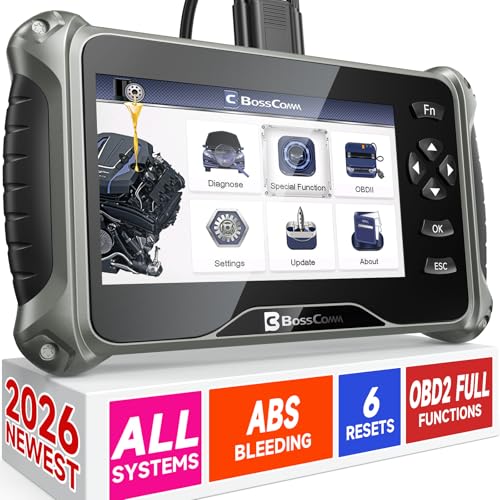
- 【🎈𝗜𝗙𝟳𝟰𝟱 𝗽𝗲𝗿𝗳𝗼𝗿𝗺𝘀 𝟲 𝗲𝘀𝘀𝗲𝗻𝘁𝗶𝗮𝗹 𝗿𝗲𝘀𝗲𝘁 𝗳𝘂𝗻𝗰𝘁𝗶𝗼𝗻𝘀—𝗔𝗕𝗦 𝗕𝗹𝗲𝗲𝗱𝗶𝗻𝗴, 𝗢𝗶𝗹 𝗥𝗲𝘀𝗲𝘁, 𝗘𝗣𝗕, 𝗦𝗔𝗦, 𝗧𝗵𝗿𝗼𝘁𝘁𝗹𝗲 𝗥𝗲𝗹𝗲𝗮𝗿𝗻, 𝗮𝗻𝗱 𝗕𝗠𝗦—𝗽𝘂𝘁𝘁𝗶𝗻𝗴 𝗽𝗿𝗼𝗳𝗲𝘀𝘀𝗶𝗼𝗻𝗮𝗹-𝗴𝗿𝗮𝗱𝗲 𝗺𝗮𝗶𝗻𝘁𝗲𝗻𝗮𝗻𝗰𝗲 𝗯𝗮𝗰𝗸 𝗶𝗻 𝘆𝗼𝘂𝗿 𝗵𝗮𝗻𝗱𝘀.】Spongy brakes? Stuck oil light? Parking brake won't release? Off-center steering? Rough idle after battery disconnect? Draining battery? IF745 handles all with a few taps. One tool covers six dealer-level resets, saving hundreds in labor costs. ❗ NOTE: Does NOT support bidirectional control, coding, or programming.
- 【✨ 𝗜𝗙𝟳𝟰𝟱 𝗴𝗼𝗲𝘀 𝗯𝗲𝘆𝗼𝗻𝗱 𝗯𝗮𝘀𝗶𝗰 𝗰𝗼𝗱𝗲 𝗿𝗲𝗮𝗱𝗶𝗻𝗴 𝘄𝗶𝘁𝗵 𝟭𝟬 𝗶𝗻𝘁𝗲𝗴𝗿𝗮𝘁𝗲𝗱 𝗳𝘂𝗻𝗰𝘁𝗶𝗼𝗻𝘀—𝗗𝗧𝗖 𝗟𝗼𝗼𝗸𝘂𝗽, 𝗜/𝗠 𝗥𝗲𝗮𝗱𝗶𝗻𝗲𝘀𝘀, 𝗙𝗿𝗲𝗲𝘇𝗲 𝗙𝗿𝗮𝗺𝗲, 𝗟𝗶𝘃𝗲 𝗗𝗮𝘁𝗮, 𝗢𝟮𝗦, 𝗢𝗕𝗠, 𝗘𝗩𝗔𝗣, 𝗮𝗻𝗱 𝗺𝗼𝗿𝗲. 】Pulling a code tells you something is wrong. IF745 tells you what the code means, when the fault happened, and what data surrounds it. Pass emissions with one I/M Readiness tap. Freeze the fault moment with Freeze Frame. Monitor live sensor data in real time. Turn cryptic codes into clear answers.
- 【🛒 𝗜𝗙𝟳𝟰𝟱 𝗽𝗲𝗿𝗳𝗼𝗿𝗺𝘀 𝗳𝘂𝗹𝗹-𝘀𝘆𝘀𝘁𝗲𝗺 𝗱𝗶𝗮𝗴𝗻𝗼𝘀𝘁𝗶𝗰𝘀 𝗮𝗰𝗿𝗼𝘀𝘀 𝗮𝗹𝗹 𝗺𝗼𝗱𝘂𝗹𝗲𝘀—𝗲𝗻𝗴𝗶𝗻𝗲, 𝗔𝗕𝗦, 𝗮𝗶𝗿𝗯𝗮𝗴, 𝘁𝗿𝗮𝗻𝘀𝗺𝗶𝘀𝘀𝗶𝗼𝗻, 𝘀𝘁𝗲𝗲𝗿𝗶𝗻𝗴, 𝘀𝘂𝘀𝗽𝗲𝗻𝘀𝗶𝗼𝗻, 𝗯𝗼𝗱𝘆 𝗲𝗹𝗲𝗰𝘁𝗿𝗼𝗻𝗶𝗰𝘀, 𝗮𝗻𝗱 𝗺𝗼𝗿𝗲. 】Warning lights on but you don't know why? Skip the $100+ diagnostic fee at the shop. Run a complete self-check from your driveway. IF745 reads and clears fault codes, retrieves ECU info, and displays live data from every accessible module—delivering a full vehicle health report in minutes, without leaving home.
- 【✅𝗜𝗙𝟳𝟰𝟱 𝗳𝗲𝗮𝘁𝘂𝗿𝗲𝘀 𝗮 𝟳-𝗶𝗻𝗰𝗵 𝗱𝗶𝘀𝗽𝗹𝗮𝘆, 𝗲𝗿𝗴𝗼𝗻𝗼𝗺𝗶𝗰 𝗱𝗲𝘀𝗶𝗴𝗻, 𝗪𝗶-𝗙𝗶 𝘂𝗽𝗱𝗮𝘁𝗲𝘀, 𝗮𝗻𝗱 𝘇𝗲𝗿𝗼 𝘀𝘂𝗯𝘀𝗰𝗿𝗶𝗽𝘁𝗶𝗼𝗻 𝗳𝗲𝗲𝘀 𝗳𝗼𝗿 𝗵𝗮𝘀𝘀𝗹𝗲-𝗳𝗿𝗲𝗲 𝗱𝗶𝗮𝗴𝗻𝗼𝘀𝘁𝗶𝗰𝘀.】Large screen means no squinting. Intuitive navigation and customizable data displays put key info at your fingertips. Wi-Fi delivers lifetime free updates without a computer. No recurring fees. No hidden costs. Just a reliable tool that works as hard as you do.
This product presentation was made with AAWP plugin.