
NHTSA ID Number: 11014880
Manufacturer Communication Number: SD-29-50024
TSB/Document Date: 2025-03-04
Summary
Bendix FLC-25 Camera Service Data
Clear the camera’s DTCs.
»
ycle the ignition power, or use the ACom Diagnostic Software to clear DTCs after troubleshooting
C
– and correcting – any problem with the system.
This DTC is not an indicator of a malfunctioning camera. DO NOT REPLACE THE CAMERA.
Possible Causes:
•
The camera is indicating that there is a problem with parameterization or an error has occurred.
Perform the following:
G
•
Check for proper ABS functionality and repair if necessary.
•
Clear ABS DTCs.
•
Determine if the camera was mounted properly on the windshield per OEM specifications.
•
Verify the correct mounting bracket is installed. Do not alter the angle of the bracket.
•
After addressing the possible causes clear the camera’s DTCs.
»
ycle the ignition power, or use the ACom Diagnostic Software to clear DTCs after troubleshooting
C
– and correcting – any problem with the system.
NOTE: The system will not report newly active J1939 DTCs until the engine has been running for 15 seconds.
Do not attempt to diagnose J1939 DTCs without the engine running.
Call the Bendix Tech Team at 1‑800‑AIR‑BRAKE (1‑800‑247-2725), option 2, for troubleshooting assistance.
Table 2 – Service Action Codes to Recommended Service
24
Service
Action
Code
Recommended Service
This DTC is not an indicator of a malfunctioning camera. DO NOT REPLACE THE CAMERA.
Possible causes:
•
H
Camera NOT CALIBRATED.
Perform the following:
•
Go to Section 3.1 and follow the actions directed in the procedure to calibrate the camera.
•
Clear the system DTCs.
»
ycle the ignition power, or use the ACom Diagnostic Software to clear DTCs after troubleshooting
C
– and correcting – any problem with the system.
This DTC is not an indicator of a malfunctioning camera. DO NOT REPLACE THE CAMERA.
Possible Causes:
The system using the camera has either the incorrect/outdated software version, incorrect parameters,
or wasn’t updated properly during a firmware upgrade.
Perform the following:
J
•
Check that the camera is connected to the original vehicle and calibrated (ensure there are no
calibration faults present).
•
Contact the OEM for the build sheet to confirm the correct parameters and software are loaded.
•
Confirm correct parameters, software, and part numbers are loaded for your VIN.
•
Clear the camera’s DTCs.
»
ycle the ignition power, or use the ACom Diagnostic Software to clear DTCs after troubleshooting
C
– and correcting – any problem with the system.
This DTC is not an indicator of a malfunctioning camera. DO NOT REPLACE THE CAMERA.
Possible Causes:
M
•
These are function specific error codes, and generated when the system notices abnormal operation
of the function.
Perform the following:
•
Cycle ignition power, and resolve faults that may exist on other components.
NOTE: The system will not report newly active J1939 DTCs until the engine has been running for 15 seconds.
Do not attempt to diagnose J1939 DTCs without the engine running.
Call the Bendix Tech Team at 1‑800‑AIR‑BRAKE (1‑800‑247-2725), option 2, for troubleshooting assistance.
Table 2 – Service Action Codes to Recommended Service
25
2.6 TROUBLESHOOTING
DIAGNOSTIC TROUBLE CODES
(DTCS): POWER SUPPLY
HRS HIROSE ELECTRONIC (GT25RM-12DP-2.2H)
Mates with a Hirose number: GT25-12DS-HU/R(50) that uses
female pins TE number: 1318774 or TE number: 1717106
IGNITION VOLTAGE TOO LOW
1. Measure the ignition voltage under load.
2. Ensure that the ignition voltage is greater than 9 VDC.
3. Check the vehicle battery and associated components.
Inspect for damaged wiring, damaged or corroded
connectors, and loose connections.
Figure 4 – Camera and Harness Connector Views
4. Check the condition of the fuse.
POWER SUPPLY TESTS
IGNITION VOLTAGE TOO HIGH
1. T
ake all measurements at the camera’s harness
connector.
1. Measure the ignition voltage.
2. Ensure that ignition voltage is not greater than 16 VDC.
3. Check the vehicle battery and associated components.
4. Inspect for damaged wiring, damaged or corroded
connectors, and loose connections.
CONNECTOR PIN-OUT AND
POWER REQUIREMENTS
The camera has two (2) connectors. See Figure 4.
Nominal
Voltage
Nominal
Current
Pin #
Description
1
Not Used
2
Private
Communications Low
5V
3
J1939 Low
5V
4
Ground GND (-)
Optional
0V
540 mA
5
Not Used
6
Not Used
7
Module Power
14 V
540 mA
8
Private
Communications High
5V
9
J1939 High
5V
10
Ground GND (-)
0V
11
Not Used
12
Not Used
Table 3 – Harness Connector Pins
26
540 mA
2. P
lace a load (e.g. 1157 stop lamp) across the supply
voltage and ground connection. Measure the voltage
with the load. The supply voltage on pin 7 to ground
should measure between 10 to 16 VDC.
3. C
heck for damaged wiring, damaged or corroded
connectors, and loose connections.
4. C
heck the condition of the vehicle battery and
associated components. Ensure the connection to
ground is secure and tight.
5. U
sing the procedures described by the vehicle
manufacturer, check the alternator output for excessive
noise.
2.7 COMMUNICATIONS (J1939
AND PRIVATE) TEST AND
TROUBLESHOOTING PROCEDURES
The Bendix FLC-25 camera requires private network
messages to and from the Fusion system. The camera will
set a DTC if these messages are not present, or if there is
a problem with the private communications system. Refer
to SD-29-50022, Bendix® Fusion™ FLR-25™ Radar Sensor,
on B2Bendix.com for full troubleshooting information.
NOTE: Confirm there are no DTCs on other components.
If there are active DTCs, they should be addressed prior to
performing additional troubleshooting procedures.
1. Take all measurements at the harness connector unless
otherwise indicated.
Do not insert any probe into the pin on the mating
connector of the camera that is greater than the width
of a terminal. Damaged connector pins will require the
replacement of the harness.
2. C
heck for damaged or reversed private communications
wiring.
If the private communications HIGH, or private
communications LOW, wiring circuits are damaged, such
as shorting together, the entire private communications
link will be lost. The problem may be intermittent,
enabling the private communications link to operate
normally sometimes. In this event, multiple DTCs may
be logged in the camera and radar.
If the private communications HIGH, and private
communications LOW, wiring circuits are reversed,
communication over the entire private communications
link will be lost. Devices that use the affected network
will not be able to transmit or receive messages on that
network.
3. C
heck for corroded or damaged wiring connector
problems such as opens or shorts to voltage or ground.
4. I f the connector terminals are corroded, this may be an
indication of water intrusion into the wiring system and
possibly the camera. Replacement of the entire harness
is recommended. If the terminals of the camera are
corroded, replacement of the camera is recommended.
5. C
heck for other private communications devices
which may be inhibiting communication. The service
technician should consult the procedures for private
communications troubleshooting. The device’s power
should be removed and measurements made at the
ECU pins for shorts to ground and power pins and
resistance between the private communications HIGH
or private communications LOW input circuits.
6. U
nplug the camera harness. With the ignition switch
off, measure the resistance (ohms) using a multimeter.
•
rivate Communications: Measure the resistance
P
between harness pins 2 and 8. The reading should
be approximately 120 ohms. If it is not, the vehicle
wiring should be investigated.
•
J 1939: Measure the resistance between harness
pins 3 and 9. The reading should be 0 ohms. If it
is not, the vehicle wiring should be investigated.
2.8 PRIVATE COMMUNICATIONS
NETWORK TEST PROCEDURE
The Bendix FLC-25 camera requires private network
messages to and from the Fusion system. The camera will
set a DTC if these messages are not present, or if there is
a problem with the private communications system.
Refer to SD-29-50022, Bendix ® Fusion ™ FLR-25 ™
Radar Sensor, on B2Bendix.com for full troubleshooting
information.
2.9 TROUBLESHOOTING
WIRING HARNESSES
All wire harness connectors must be properly seated to
maintain electrical connectivity. Push the mating connectors
until they click. When replacing an FLC-25 camera, check
that the wire harness connectors are free of damage,
including corrosion, before plugging into a new camera.
Check for corroded or damaged wiring connector problems
such as opens or shorts to voltage or ground.
If the connector terminals are corroded, this may be an
indication of water intrusion into the wiring system and
possibly into the camera (presumably from a cracked
windshield). Replacement of the entire harness is
recommended. If the terminals of the camera are corroded,
replacement of the camera is recommended.
2.10 CLEARING DIAGNOSTIC
TROUBLE CODES (DTCS)
Cycle the ignition power, or use the ACom Diagnostic
Software to clear DTCs after troubleshooting – and
correcting – any problem with the system.
27
3.0 INSTALLATION AND REPLACEMENT
CAMERA INSTALLATION
Refer to OEM documentation for mounting specifications.
In instances where a third-party bracket and/or cover
is used, follow the applicable OEM instructions. If a
Bendix bracket and/or cover is used, refer to the following
procedures.
Whenever re-installing or replacing a camera –
for example, after a windshield is replaced – the
recommended position for the vehicle must be used.
Failure to install the camera in the correct position can
result in system DTCs being set, system performance
degradation, and/or a collision causing property
damage, serious injuries, or death.
NOTE: A Bendix bracket and cover can be identified by
a Knorr-Bremse® logo on the component. See Figure 5.
Contact the OEM for specific location coordinates of
the windshield where the camera should be installed.
BRACKET INSTALLATION
The bracket should be installed by the windshield supplier
or per the OEM-recommended installer.
Figure 5 – Bendix Bracket and Cover PN Location
1. Hold the camera in a lens-up orientation. Referring to
Figure 6, insert the tabs (A) into the slots (B).
Figure 6 – Camera Installation
28
2. Rotate the camera counterclockwise (when viewed
from the left [driver] side) until the tabs (C) contact
the clips (D).
3. Push the camera down so that the clips (D) are
displaced by the tabs (C), therefore seating the camera.
The clips will audibly click when the tabs reach the
correct position and the clips spring into a locked
position, retaining the camera. See Figure 7.
Figure 8 – Clips in Locked Position
NOTE: Due to proximity to the headliner, it may be
necessary to use an inspection mirror to verify the clips
are locked.
COVER INSTALLATION
See Figure 9.
Figure 7 – Camera Aligned
4. In some cases, the clips will not “click” into position.
Verify that the clips are in the locked position as shown
in Figure 8. Sometimes it is necessary to pry the clips
into the final locked position. In most cases, this can
be done using finger pressure. In some cases, needlenose pliers or small screw drivers may be needed.
1. Line up the large “ears” on the bracket with the slots
in the cover.
2. Align the cylindrical tabs A and A with slots B and B
in the cover.
3. Gently push the cover onto the bracket. The front
surface of the cover will be flush with the back surface
of the bracket when the tabs are properly aligned and
seated.
4. Pull the cover down locking it in position. There will be
an audible click when the cover fully seats.
Figure 9 – Cover Installation
29
BRACKET REMOVAL
The bracket should be removed per OEM recommendations.
COVER AND CAMERA REMOVAL
The camera is most easily removed from the holder if it is
removed from the bracket assembly. This will depend upon
the proximity of the headliner. In most cases, there will not
be sufficient clearance to access the clips that retain the
camera in the holder.
4. Once the hub (B) is released from the beam (A), the
right side of the holder with the camera can be pulled
back from the bracket assembly. This will allow the
entire holder and camera to be removed from the
bracket assembly.
5. Once on the bench, the clips can be released from the
tabs on the camera body. Push on the clips as indicated
by the arrows in Figure 11.
1. Begin by removing the cover from the camera. This is
the reverse of installation. Push the cover up. Once the
cover is moved upward, it can be pulled back, and off
the bracket assembly. Take note of the holder position.
2. Remove the electrical connectors with attached wiring
from the camera. The connectors have locking features
that require squeezing them to facilitate removal.
3.
See Figure 10. Use a screwdriver to pry the locking
beam (A) away from the hub (B) on the right side of
the bracket.
Figure 11 – Camera Removal
6. Once the clips are released, the camera can be rotated
up and out of the clips. This may require the use of
screwdrivers to pry the camera from the clips.
Do NOT pry between the bottom of the camera and the
holder with tools. It is easily broken.
7. Check the holder for damage. If there is no damage,
return the holder to the bracket. Note that the hubs on
the holder fit into slots on the bracket and then can be
slid into place. Start with the hub on the right (curb)
side of the bracket. Once it is seated, push the other
side home, engaging the teeth on the holder with the
threads on the worm shaft.
Figure 10 – Camera Removal
30
8. It may be necessary to adjust the holder position back
to its initial position as previously noted (Step 1).
3.1 CAMERA CALIBRATION
Calibration is done as part of initial drive for service
cameras. It may take up to 20 minutes of driving above
25 mph (40 kph) on well-marked roads in clear weather for
the camera to be ready and fully calibrated. The camera
should not be returned for any calibration faults found in
this time period. If a calibration fault appears while driving,
check the camera for looseness or misalignment and
continue driving to clear the fault.
3.2 DASH SWITCH/LAMPS
Each OEM has their own method for displaying the system
status to the driver, and there will typically will be a switch
on the dash to allow the driver to temporarily disable the
system. Refer to the OEM Operator’s Manual for system
indicator lamp(s) used for the FLC-25 camera, and whether
there is a bulb-check illumination at vehicle power-up.
Additionally, the system self-monitors and will set a DTC
that will typically alert the driver using a similar icon on
the dash display or by a status lamp. Refer to Section 2.0:
Troubleshooting for more information.
3.3 MAINTENANCE
In normal use, the FLC-25 camera needs only a clean,
properly maintained windshield to ensure a clear view of
the road ahead. Protect the camera lens whenever the
inside of the windshield is cleaned.
3.4 CAMERA INTERCHANGEABILITY
Figure 12 – Worm Shaft Adjustment
When replacing cameras only, use replacements with the
same part number (or a direct superseding replacement
number supplied by Bendix). After replacing the camera,
run the engine for two (2) minutes and verify no faults are
present. Once confirmed no faults are shown with the
engine running, drive the vehicle for 5-20 miles (8-32 km)
or until the camera calibration fault is no longer indicated.
Cameras of different vehicle models and model
years must not be interchanged. The use of an
incorrect camera can lead to DTCs being set, and
performance degradation – including unnecessary
system interventions and the potential for situations
where interventions do not occur when they would
normally.
Cameras are designed specifically for a particular
vehicle and model. DTCs caused by relocating cameras
to an incorrect vehicle may result in the vehicle system
using the camera to be partially or fully unavailable.
31
TECHNICAL ASSISTANCE
For additional assistance, the Bendix Tech Team can be
reached by email at techteam@bendix.com or by phone
at 1-800-AIR-BRAKE (1-800-247-2725), option 2. Bendix
Tech Team representatives are available Monday through
Thursday, 8:00 a.m. – 6:00 p.m., and Friday, 8:00 a.m. –
5:00 p.m. ET.
24/7/365 ACCESS
FULL SERVICE AT YOUR FINGERTIPS
1-800-AIR-BRAKE (1-800-247-2725)
TECHTEAM@BENDIX.COM
WEB-BASED TRAINING
LOG ON AND LEARN FROM THE BEST
SAFETYDIRECT is a trademark of RAND MCNALLY.
The trademarks are the property of their respective companies.
Unless otherwise indicated, the trademarks used in this document, including Bendix, are United States trademarks
owned by, or licensed to, Bendix Commercial Vehicle Systems LLC.
32
SD-29-50024 Rev 000 © 2/2025 Bendix Commercial Vehicle Systems LLC, a member of Knorr-Bremse • All Rights Reserved
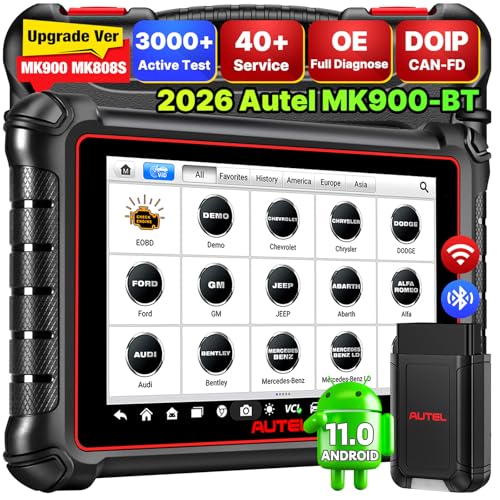
- 💯【Conta.ct us for Support Directly】If you met any...
- 🔥🔥🔥【2026 AUTEL FLAGSHIP MK900BT MK900-BT, NEW...
- 🚗【3000+ ACTIVE TESTS (50➡3000+), SAME AS MS...
- 🚗【40+ HOT SERVICES FOR 150 MAKES (28+➡40+)】Full...
- 🚗【OE ALL SYSTEM DIAGNOSE, AUTO SCAN 2.0: SCAN LICENSE...

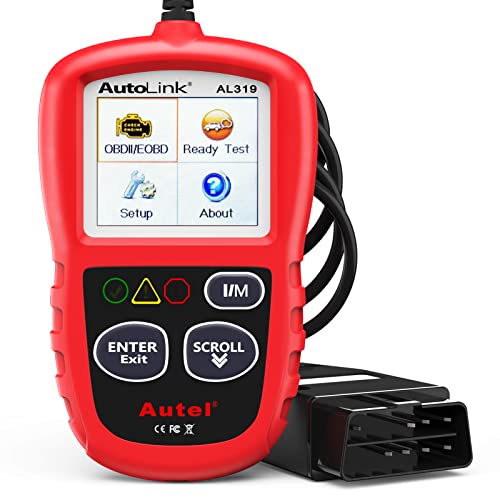
- 【TURN OFF CEL】 This AL319 car scanner diagnostic tool...
- 【EXTENSIVE APPLICATION】 Autel AL319 Compatible with...
- 【FOR END USER & DIYERS】 This error code reader AL319 is...
- 【USER-FRIENDLY DESIGN】 This OBD2 scanner and check...
- 【HIGH-QUALITY SERVICES】 12 months war.ranty from the...
Last update on 2026-06-23 / Affiliate links / Images from Amazon Product Advertising API
If the PDF is very large, it may not load in the preview below.
Some older TSBs had multiple PDFs — visit the NHTSA Website to view all PDFs.
If the TSB PDF does not show, download or view it on the NHTSA Website.
Click on the (+) Plus Sign
Then Click on Associated Document(s)
Search NHTSA Database for Recalls
Search NHTSA Database for Vehicle Investigations
View Latest Vehicle Investigations
Search NHTSA Database for Vehicle Complaints
View Latest Vehicle Complaints
TSB/Document ID: SD-29-50024
Replacement Service Bulletin Number:
MFR Communication Date: 2025-03-04
MFR Internal Campaign ID/Software Version:
Communication Type: Service Bulletin/Repair Instructions
NHTSA Components: FORWARD COLLISION AVOIDANCE: WARNINGS
MFR Component System:
MFR Component Subsystem:
Previous TSB | Next TSB |
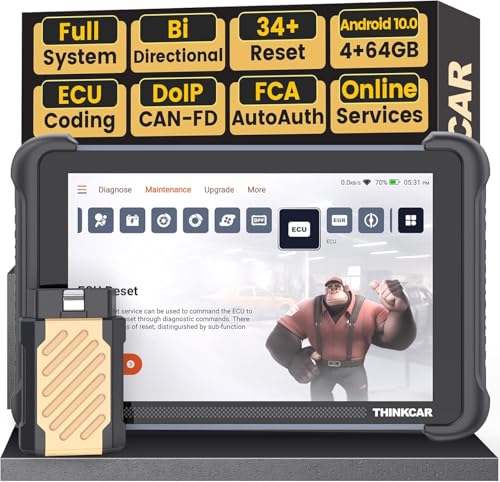
- [Notice] When you receive a used device, it may be a customer return resold by Amazon without inspection. You can exchange it for a new one through Amazon. As this situation is unavoidable, we sincerely apologize. For any issues, contacting us via Amazon's "Messages" is the best way. THINKSCAN 689BT Bidirectional Scan Tool Can Be Used Immediately After It is Turned On, Without Complicated Registration Process, Which is More Convenient & Quick.
- Full Bi-Directional Control & 3000+ Active Tests: Take control and test components like actuators, fuel injectors, relays, and cooling fans in real time. You’ll quickly see if the problem is in the part itself or the control module — saving you hours of guesswork and frustrating trial-and-error.
- Advanced ECU Coding Capabilities: Handle module matching and hidden feature activation with confidence. When you replace an ECU or want to customize settings, this obd2 scanner diagnostic bi directional tool gives you the professional-level capabilities you need without the dealership price tag.
- 34+ Useful Reset and Maintenance Functions: Complete everyday service tasks smoothly with a wide range of helpful reset and maintenance functions. Whether you’re keeping up with regular upkeep or tackling a specific job, this scanner makes maintenance simpler and less stressful for both DIYers and pros.
- Comprehensive Full System Diagnostics: Diagnose every major system — Engine, Transmission, ABS
 , SRS, TPMS, and more — all in one place. Finally stop wondering if you’re missing something important; get the full picture and clear codes with ease.
Last update on 2026-07-02 / Affiliate links / Images from Amazon Product Advertising API
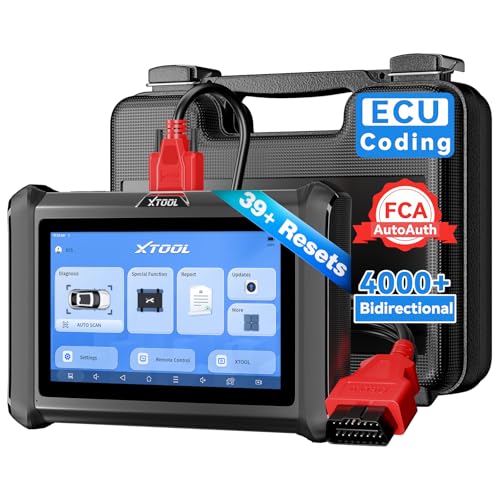
- Top Reasons to Choose the D7S OBD2 Scanner: XTOOL D7S car scan tool, an upgrade of XTOOL D7, offers comprehensive features for automotive technicians, workshops, and DIY enthusiasts 1. Upgraded Hardware: 2+64GB memory, rear camera, intuitive interface, foldable bracket 2. Complete Diagnostics: FCA Autoauth, OE-level all system scan, 39+ maintenance services, 4K+ bidirectional, CANFD/DoIP protocol 3. Advanced Capabilities: ECU c0ding, PMI functions 4. Wide Compatibility: Support 10,000+ models, covering 99% vehicle brands 5. Multi-language: Available in 22+ languages, No IP Restrictions 6. 3-Year Updates: Save 300 bucks on software updates for the latest features and optimizations
- 2026 Upgraded D7S Car Scanner Features: The newly 2026 D7S V2.0 scanner for car brings exciting features for advanced vehicle diagnostics and enhanced user experience 1. FCA AutoAuth: Now supports FCA SGW module for Chrysler, for Jeep, for Dodge (2018+), for Fiat (2017+), enabling faster vehicle communication without gateway restrictions 2. PMI (Offline ECU Pr0gramming): Allows for Ford, for Lincoln, and for Mazda ECU pr0gramming for new modules 3. Optimized Diagnostic Report 2.0: Personalized reports with logos and customer info for auto shops. Note: Compatibility varies by cars, please check before order
- 39+ Services/Resets/Adaptations/Relearns/Calibrations: XTOOL D7S full system car scanner diagnostic tool tackles 99% of common car issues through its 36+ special functions, including Oil Reset, EPB, SAS, BMS, Throttle Reset, Injector C0ding, ABS Bleed, TPMS Reset, Power Balance, etc and also covers specific-vehicle functions like Crank Sensor Relearn, ABS Initialization, Cylinder Power Balance, Fuel Trim Reset, Idle Relearn etc. This car diagnostic scanner enhances efficiency, making repairs and maintenance hassle-free. Tip: DO NOT for All vehicles, please check compatibility first
- Cost-effective ECU C0ding Scan Tool for Specific Brands: Enhance your vehicle's performance with XTOOL D7S! This obd2 scanner all systems bidirectional offers advanced capabilities at an affordable price, supports online for BMW, for Benz and offline for BENZ, for MIT, along with PMI functions for Ford, for Mazda, and for Lincoln. Ideal for technicians and DIY enthusiasts, this automotive scanner diagnostic tool optimizes vehicle performance and enhances the driving experience. Note: Not for all cars and modules, please send car VIN to check the compatibility before purchase
- OE All System Diagnostic & 8 Pids Graphing: XTOOL D7S is a comprehensive all system bi directional obd2 scanner that delivers dealer-level diagnostics, completely controlling over your vehicle’s performance and health. This automotive scan tool can read and clear DTCs, view live data and ECU information, retrieve freeze frames, and perform active tests and full obd2 functions. This bi-directional scan tool can can identify your vehicle's make, model, and year information with just one click and show up to 8 PIDs live data with options for CSV viewing, playback, and recording for in-depth analysis. It is easy-to-use for both professionals and beginners, helping pinpoint issues efficiently
Last update on 2026-06-30 / Affiliate links / Images from Amazon Product Advertising API
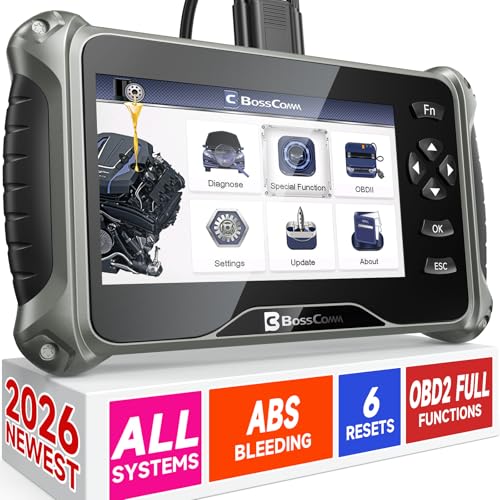
- 【✅Compared to BOSSCOMM IF742, IF745 Offers Full-System Diagnostics】The BOSSCOMM IF745 car diagnostic scanner is an upgraded model of IF742. In addition to supporting all OBD2 Code Reader functions and 6 reset options (ABS/EPB/SAS/BMS/Oil/Throttle), it expands diagnostics from 4 systems (Check Engine/ABS/SRS/Transmission) to vehicle All systems, including Steering, Suspension, and Body Electronics. This provides deeper, more comprehensive diagnostic capabilities.
- 【✨10 OBD2 Functions】The BOSSCOMM IF745 scan tool’s DTC Lookup instantly translates fault codes into user-friendly explanations, its I/M Readiness feature streamlines emissions testing with a single tap, and Freeze Frame lets you pinpoint the exact moment of a fault for in-depth root-cause diagnosis. Combined with a live data dashboard and advanced diagnostics (O2S, OBMon, EVAP), it delivers comprehensive insights for confident troubleshooting.
- 【✨Deep Diagnostics for All Vehicle System Modules】Beyond code reading/clearing and ECU information retrieval, our all-in-one data stream feature lets you inspect all current fault codes and their locations across the vehicle’s systems. This vehicle code reader helps you turn off dashboard warning lights and perform a comprehensive self-check of your car at home—no more back-and-forth trips to the repair shop or hefty inspection fees.
- 【✨6 Essential Resets: ABS Bleeding, Oil, EPB, SAS, Throttle, BMS】The BOSSCOMM IF745 obd2 scanner diagnostic tool swiftly purges air from brake lines to restore braking sensitivity, fine-tunes maintenance cycles to eliminate false alerts, resolves parking brake issues with one-click control, recalibrates steering sensors for stability, optimizes engine idling/acceleration for smoother performance, and deeply resets battery systems to extend lifespan and range via precise parameter adjustments.❗NOTE: Does NOT support bidirectional control, coding, or programming.
- 【✨10,000+ Car Models, AutoVIN, 13 Languages】The BOSSCOMM IF745 vehicle scanner diagnostic tool covers 73+ global car brands and offers support in 13 languages, making it perfect for DIYers, auto mechanics, or as a thoughtful gift. With a single-click AutoVIN feature, it instantly retrieves vehicle serial numbers, streamlining diagnostics for users globally. This adaptable tool balances user-friendliness with precision, catering to both personal and professional requirements.✅Unsure about compatibility? Compatibility will vary on vehicles' model and year, pls reach us via 📧 [email protected] 📧 before purchase.
Last update on 2026-07-02 / Affiliate links / Images from Amazon Product Advertising API
This product presentation was made with AAWP plugin.