
NHTSA ID Number: 11013304
Manufacturer Communication Number: SC-24-013
TSB/Document Date: 2025-01-31
Summary
Transit bus software update to support bugs and enhancement for the fleet. As well as fault updates.
successfully. If the Proterra Diagnostic Tool displays Failed or Timeout please check for active faults
on the Diagnostics tab.
Step 42:
Verify that the odometer value displayed on the dash matches the recorded odometer value. Note
that it’s okay if the new odometer value differs by up to 1 mile. The odometer update process is now
complete.
Step 43:
Navigate to the “Powertrain Config” tab and click on “Get Values”.
Step 44:
Verify all the configurations are same as noted previously.
Step 45:
If the configurations are same, then the programming process is complete, else go to the next step.
Step 46:
Reset the configurations by selecting each configuration parameter individually.
Step 47:
Enter the value noted in steps above, in the “New Value” box and click on the “WRITE” button for
each parameter.
Step 47:
Close PDT.
SC-24-013
Page 16 of
BODY CONTROLLER SOFTWARE UPDATE PROCEDURE
Step 48:
Turn on the 12/24V rear Vehicle Master Disconnect located behind the vehicle curbside rear charge
port access panel.
Step 49:
Make sure the Master Switch is OFF and the Hazard Switch is ON.
Step 50:
Access the Rear Deck above the rear window and remove the protective cap.
Step 51:
Connect to the vehicle using the Nexiq USB Link2 and PDT .
Step 52:
On the laptop, double-click on the Phoenix Diagnostics Tool software icon to start the software.
Step 53:
When the program opens, read and click “OK” for the prompt.
Step 54:
On the Home tab, select the appropriate device from the drop down and click “Connect”.
SC-24-013
Page 17 of
Step 55:
Ensure you have the latest software file “Body_2_2_2_pn066281.mhx” on the computer’s hard drive.
Step 56:
After connecting to the vehicle using the Phoenix Diagnostic tool at the Diagnostic Port, navigate to
the “Body Config” tab
Step 57:
Select “Get Values”. To store a back up copy of the EEPROMs.
Step 58:
Select start Flash on the “Body Config” Tab.
SC-24-013
Page 18 of
Step 59:
Select the Body SW “Body_2_2_2_pn066281.mhx”. The extension type must be .MHX file.
Step 60:
Once the SW is flashed the following screen will pop up. Select “Ok”. Then close the PDT and remove connection to the bus.
Step 61:
Power down the bus at the Curbside Rear, turn both the Vehicle Master Disconnect and LV Battery
Switch to OFF.
SC-24-013
Page 19 of
MVP DASH SOFTWARE UPDATE PROCEDURE
Step 62:
Ensure you have the latest software file “066144_MVP12_Flashing_v5.3.0.MVP12_A” downloaded
to your local machine.
Step 63:
Turn the vehicle on at the rear both the battery saver switch and master disconnect to ON.
Step 64:
Set the Master Switch to OFF and Hazard Switch to ON.
Step 65:
Boot up the PDT and attach the Nexiq in the following configuration at the rear deck.
SC-24-013
Page 20 of
Step 66:
Once the PDT is launched navigate to the “Dash Config” tab.
Step 67:
Select the Dash Firmware “Start Flash” icon.
Step 68:
When prompted select the file “066144_MVP12_Flashing_v5.3.0.MVP12_A” from your hard drive.
Step 69:
Once you get the pop up below, turn on the working light in the SSWB. Select “OK”. Software update is complete.
Step 70:
Power down the bus at the Curbside Rear of the vehicle and at the Battery Saver Switch.
Close PDT.
SC-24-013
Page 21 of
Proterra EV Battery Fire Safety Guide
Thermal Event Diagnostics, Prevention & Response
LEGAL DISCLAIMER
PLEASE READ
This document provides general guidance to the owner/customer (“Owner”) to develop
its own safe work procedures related to Proterra’s electric vehicle and electric vehicle battery
pack (individually and collectively, the “Product”). Any reference to standards, regulations or
laws is not exhaustive, nor intended to advise the Owner of its legal duties or compliance
obligations.
This document is not based on a specific Product configuration. Proterra assumes that
all who purchase the Product have expertise to properly and safely receive, handle, store, use,
and service the Product. Accordingly, this document is intended as a helpful supplement for
the Owner and not a substitute for the Owner’s expertise or responsibility regarding these
topics. If any Owner lacks such expertise or does not agree to the foregoing limited purpose,
such Owner should immediately notify Proterra in writing and should not procure, take
delivery of, or use the Product.
This document is provided “as is,” and Proterra assumes no liability or responsibility for any
loss, damage or expense resulting from the Owner’s, or any agent or affiliate of the Owner’s,
reliance upon, or use of, this document. Proterra makes no warranty or representation, and
expressly disclaims any such warranties or representations, that the content of this document
is complete, accurate, reliable or error free, to the fullest extent permitted by applicable law.
Each Owner assumes the entire risk as to its reliance upon, or use of, this document. Proterra
is not responsible to update the content of this document at any time, including based on
changes, combinations, or conversions of the Product.
1|Page
SEPTEMBER 2023
1 FIRE-SAFETY GUIDELINES FOR AN EV BATTERY
a) In the event there is a battery fire, immediately stop operating or working in/around the vehicle.
All individuals should move at least twenty feet away from the vehicle.
b) Immediately call the local emergency number (e.g., “911”) to report the battery fire and ask for
assistance from fire, police, and medical departments. See First Responder Guide below.
c) It requires specialized training and personal protective equipment (“PPE”) to safely extinguish a
battery fire. The Owner should establish a site-specific safety plan related to EV vehicles and all
on-site first responders should be trained to execute the safety plan. The safety-plan should take
the following factors into consideration:
i)
A battery fire may require application of large amounts of water to the battery pack for a
long period of time from a safe distance to extinguish a battery fire.
Do not:
•
•
•
•
Stand close to the vehicle while attempting to extinguish a battery fire.
Attempt to open a battery pack for purposes of cooling it with water.
Attempt to extinguish a battery fire with a small, limited quantity of water.
Use an “ABC” rated fire extinguisher to put out a battery fire.
ii) Always wear the appropriate PPE, including full body covering fire-fighting clothing and selfcontained breathing apparatus. Hot metals may be ejected from the battery during a fire,
and materials contained inside the battery pack are flammable, corrosive, and should not be
inhaled or allowed to contact the eyes or skin.
iii) The battery pack may vent hot gases composed of volatile organic compounds such as alkylcarbonates, methane, ethylene, and ethane, as well as hydrogen gas, carbon dioxide, carbon
monoxide, soot, and particulates containing oxides of nickel, aluminum, lithium, copper, and
cobalt. Vented gas temperatures may exceed 600°C. The gases may cause burns upon
contact. The gases may ignite unexpectedly creating a fire or explosion.
iv) Battery pack fires may require up to 24 hours to extinguish. It may be necessary to allow the
battery pack to burn while protecting structures or other objects in the vicinity. When all
smoke and fire has visibly subsided and cleared, a thermal imaging camera should be used to
actively measure the temperature of the high voltage battery and monitor temperature
trends — i.e., is the battery consistently cooling down over time, or is it heating up again?
v) The battery pack must be completely cooled and there must not be fire, smoke, or heat
present in the high voltage battery for at least one hour before the vehicle can be released to
second responders (such as vehicle transporters). Second responders must be advised that
2|Page
SEPTEMBER 2023
there is a risk of battery pack re-ignition. Damaged high voltage lithium ion batteries require
special transportation measures, and therefore are prohibited from regular transportation.
vi) Do not contact any high voltage components and always use insulated tools during overhaul.
vii) A battery fire may damage the vehicle’s airbag inflators, stored gas inflation cylinders, gas
struts, and other components which can result in an unexpected explosion. A full “knock
down” procedure should be performed.
d) First Aid Measures
i)
Electric Shock/Electrocution: Seek immediate medical attention (suspected or confirmed);
call 911.
ii) Contact with Leaked Material (Electrolyte, Coolant): The contents of an open or broken
constituent battery cell may cause skin irritation and/or chemical burns. In the event of
contact, immediately flush skin with water and wash affected area with soap/water. Seek
immediate medical attention if a burn or other irritation does not resolve. For eye contact,
immediately flush with a significant amount of water for at least 15 minutes without rubbing
and seek immediate medical attention; call 911.
iii) Vapor or Gas Inhalation (Electrolyte Vapor, Vent Gas): Immediately move to fresh air source.
If not breathing, perform artificial respiration and call 911.
3|Page
SEPTEMBER 2023
2 FIRST RESPONDER GUIDE
Information for first responders to respond to a battery fire involving an electric vehicle can be found at
the National Fire Protection Association website:
https://www.nfpa.org/Training-and-Events/By-topic/Alternative-Fuel-Vehicle-SafetyTraining/Emergency-Response-Guides/Proterra
A sample of the information for first responders located at this website is shown below for reference.
First responders may also contact Proterra at [email protected] if they have any questions.
4|Page
SEPTEMBER 2023
3 BACKGROUND
3.1 THERMAL EVENT VS. THERMAL RUNAWAY.
Each Proterra battery consists of multiple battery cells. Proterra’s diagnostic system is set up to detect a
battery “thermal event” where a single battery cell fails in a manner that may cause an unintended
chemical reaction to occur inside the cell. The battery pack is designed to contain a single battery cell
“thermal event” and prevent a “thermal runaway” (or fire) that involves neighboring battery cells. A
“thermal runaway” may occur if other abnormal conditions exist such that the single cell “thermal event”
is not contained (e.g., physical impact that causes significant damage to the battery pack). A “thermal
runaway” is detectable by smoke, a burning smell, a flame, and other indications of a fire.
If there are any signs that the battery pack may be experiencing a “thermal runaway,” or fire (e.g. smoke,
a burning smell, abnormal popping or whistling noises, a flame, etc.), then you must immediately
discontinue use of the vehicle and follow the emergency guidelines outlined in the above Fire-Safety
Guidelines for an EV Battery.
3.2 DIAGNOSTICS, DRIVER NOTIFICATION & VEHICLE RESPONSE
Proterra vehicles have battery sensors and diagnostics used to detect signals related to temperature,
humidity, internal pack air pressure and isolation. If an abnormal battery condition is detected, Proterra’s
diagnostic system will transmit a message on the vehicle CAN bus. This information will be communicated
to the driver via the vehicle dash as described below.
Critical battery faults which indicate the potential for a thermal event will result in a Fast Flash Red Stop
Lamp in the vehicle dash that blinks at a rate of two times per second, and an audible alarm that pulses
twice per second (collectively, the “Critical Battery Fault Warnings”). Critical Battery Fault Warnings
indicate a critical battery failure which could result in a thermal event. When the Critical Battery Fault
Warnings are active, please immediately follow the procedures set forth in the Operator/Driver Guidelines
section below, as well as the instructions in any applicable sections of the Proterra Driver’s manual.
For any other types of driver’s dash display warning lights (including but not limited to solid, non-flashing
red or yellow “warning” lights) and/or audible alarms, please refer to the vehicle owner’s manual for an
explanation of these warnings and recommended actions.
Figure 1 below shows the Red Stop Lamp as presented on the original Proterra dash. Figure 2 below shows
the Red Stop Lamp as presented on the updated Proterra digital dash.
5|Page
SEPTEMBER 2023
Figure 1 – Red Stop Lamp on Original Dash
Figure 2 – Red Stop Lamp on Digital Dash
6|Page
SEPTEMBER 2023
OWNERS SHOULD ALWAYS MONITOR AND RESPOND TO DASH FAULT LIGHTS AS PART OF THE VEHICLE
OPERATION AND MAINTENANCE ROUTINE. OWNERS MUST PERFORM FOLLOW-UP INVESTIGATION
WHEN DASH FAULT LIGHTS PRESENT. DO NOT IGNORE A DASH FAULT LIGHT.
In addition to the Critical Battery Fault Warnings, a critical battery fault will prevent the vehicle from
charging and cause the vehicle to immediately enter a “limp home” state where the propulsion system
is limited to 50 kW. The “limp home” state will provide enough power to launch the vehicle and
maintain 35 mph on a flat road with an unloaded bus. In addition to the Critical Battery Fault Warnings,
the Owner’s service technicians should be trained by Proterra in use of Proterra’s diagnostic tool to
identify and detect abnormal battery conditions (see https://www.proterra.com/proterra-diagnosticstool/ to download the tool and access training material). The Owner’s consistent and routine use of the
Proterra diagnostic tool is recommended to identify and monitor issues that may require further
investigation.
7|Page
SEPTEMBER 2023
4 OPERATOR/DRIVER GUIDELINES
Prior to operating the vehicle, the driver must perform all recommended safety checks set forth in the
Proterra Driver’s Manual. This inspection includes, but is not limited to, a visual inspection for signs of
damage/malfunction and confirmation that the fault lights in the dashboard display are not illuminated.
If there are any signs of fire prior to operation or while the vehicle is in use (e.g., smoke, a burning smell,
abnormal popping or whistling noises, a flame, etc.), the driver must immediately stop the vehicle in a
safe location and evacuate all passengers in accordance with the emergency guidelines in Fire-Safety
Guidelines for an EV Battery (Section 1). Note -- the vehicle may be in a “limp home” state with limited
propulsion as described above.
If the Critical Battery Fault Warnings are active as described in Section 3.2 (but there is no smoke, burning
smell, abnormal popping or whistling noises, flame, etc.), the vehicle should be promptly parked in a safe
outdoor location at least 20 feet away from other objects such as buildings, trees and other vehicles, and
at least 100 feet away from highly flammable items such as gas stations or propane tanks. Once the
vehicle has been moved to a safe location, the operator and passengers may exit the vehicle and the
vehicle should be removed from service.
The vehicle high voltage system may be left in either state; on or turned off. However, DO NOT open the
12/24 Master Disconnect Switch or Battery Saver Switch (if equipped). Keeping these switches closed will
allow the battery coolant pumps to operate as intended to mitigate heat buildup as well as providing
power to telemetry systems for remote data review.
Next Steps
•
•
•
•
Call the Proterra Regional Field Service Representative (FSR) as soon as possible to report the
issue. Proterra will respond within 2 hours (Mon- Fri between 6 am-6pm ET) or by 9 AM ET the
following business day.
DO NOT attempt to charge the vehicle.
Continue to monitor the vehicle for signs that there could be a thermal runaway (smoke, burning
smell, abnormal popping or whistling noises, flame, etc.).
DO NOT operate or work on the vehicle until Proterra’s service personnel have had the
opportunity to assess the situation and the parties have an agreed action plan.
If there are any signs of a fire (e.g., smoke, a burning smell, abnormal popping or whistling
noises, a flame, etc.), follow the emergency guidelines outlined in Fire-Safety Guidelines for an
EV Battery (Section 1).
5 MONITORING BATTERIES WITH DIAGNOSTIC TOOL
The Proterra Diagnostic Tool (the “Diagnostic Tool”) enables customers to monitor the humidity and
isolation levels of a battery pack that may indicate a critical battery safety condition. These metrics are
used by the software systems described above. As part of a customer’s routine maintenance program,
the Diagnostic Tool should be used every three months to monitor the humidity and internal isolation
levels of each battery pack as described below. If a vehicle has been turned off for three months or
8|Page
SEPTEMBER 2023
more, the customer must use the Diagnostic Tool to check each battery pack prior to starting,
operating or charging the vehicle.
Steps to Use Diagnostic Tool to Check Humidity and Internal Isolation of Battery Packs
Step 1: Connect the Diagnostic tool to a vehicle diagnostic port that has BCAN access. NOTE: The
diagnostic port location varies based on the vintage of the vehicle.
Step 2: View the “Battery Thermal” screen on the left-hand side. Example:
Step 3: View the humidity level of each module per battery pack; the pack ID is located on the graphic
of the A-Bay. If the module humidity levels are less than 70%, the battery pack check is complete. If
there is one or more module(s) that exceeds 70% humidity, you must proceed to the next step.
Example: S1P1, S1P2, S2P1 and S2P2 as shown below. NOTE: your screen and Pack ID may look
different based on the vintage of vehicle.
9|Page
SEPTEMBER 2023
Step 4: (i) View the “Battery Packs” screen (see the “Battery Thermal” screen on the left-hand side
below); and (ii) select the Pack ID of any battery pack(s) with a humidity level that exceeds 70% (see the
pull-down menu in the upper right-hand corner below).
Example: If S2P2 has humidity of 70%, select “String 2 Pack 2” in the pull-down window.
10 | P a g e
SEPTEMBER 2023
Step 5: With the relevant Pack ID selected in the pulldown menu, the internal isolation value should be
recorded.
Step 6: If either of the following conditions are met, proceed to Step 7 below.
a. Condition 1:
• Humidity greater than 90%
b. Condition 2:
• Humidity greater than 70% AND
• Internal Isolation less than 20,000 Kohms
If neither of these conditions are met, no issue has been found with respect to the recorded battery
pack(s) humidity and internal isolation levels, and the battery pack check is complete.
Step 7: If Condition 1 or 2 are present:
The vehicle should be promptly parked in a safe outdoor location at least 20 feet away from other objects
such as buildings, trees and other vehicles, and at least 100 feet away from highly flammable items such
as gas stations or propane tanks. Once the vehicle has been moved to a safe location, the operator and
passengers may exit the vehicle and the vehicle should be removed from service.
The vehicle high voltage system may be left in either state; on or turned off. However, DO NOT open the
12/24 Master Disconnect Switch or Battery Saver Switch (if equipped). Keeping these switches closed will
allow the battery coolant pumps to operate as intended to mitigate heat buildup as well as providing
power to telemetry systems for remote data review.
11 | P a g e
SEPTEMBER 2023
•
•
•
•
Call the Proterra Regional Field Service Representative (FSR) as soon as possible to report the
issue. Proterra will respond within 2 hours (Mon- Fri between 6 am-6pm ET) or by 9 AM ET the
following business day.
DO NOT attempt to charge the vehicle.
Continue to monitor the vehicle for signs that there could be a thermal runaway (smoke, burning
smell, abnormal popping or whistling noises, flame, etc.).
DO NOT operate or work on the vehicle until Proterra’s service personnel have had the
opportunity to assess the situation and the parties have an agreed action plan.
If there are any signs of a fire (e.g., smoke, a burning smell, abnormal popping or whistling noises, a
flame, etc.), follow the emergency guidelines outlined in Fire-Safety Guidelines for an EV Battery
(Section 1).
12 | P a g e
SEPTEMBER 2023


If the PDF is very large, it may not load in the preview below.
Some older TSBs had multiple PDFs — visit the NHTSA Website to view all PDFs.
If the TSB PDF does not show, download or view it on the NHTSA Website.
Click on the (+) Plus Sign
Then Click on Associated Document(s)
Search NHTSA Database for Recalls
Search NHTSA Database for Vehicle Investigations
View Latest Vehicle Investigations
Search NHTSA Database for Vehicle Complaints
View Latest Vehicle Complaints
TSB/Document ID: SC-24-013
Replacement Service Bulletin Number:
MFR Communication Date: 2024-08-15
MFR Internal Campaign ID/Software Version: SC-24-013
Communication Type: Service Bulletin/Repair Instructions
NHTSA Components: ELECTRICAL SYSTEM
MFR Component System:
MFR Component Subsystem:
Previous TSB | Next TSB |
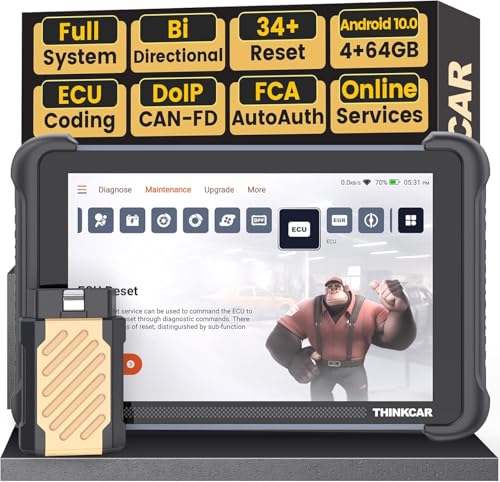
- [Notice] When you receive a used device, it may be a customer return resold by Amazon without inspection. You can exchange it for a new one through Amazon. As this situation is unavoidable, we sincerely apologize. For any issues, contacting us via Amazon's "Messages" is the best way. THINKSCAN 689BT Bidirectional Scan Tool Can Be Used Immediately After It is Turned On, Without Complicated Registration Process, Which is More Convenient & Quick.
- Full Bi-Directional Control & 3000+ Active Tests: Take control and test components like actuators, fuel injectors, relays, and cooling fans in real time. You’ll quickly see if the problem is in the part itself or the control module — saving you hours of guesswork and frustrating trial-and-error.
- Advanced ECU Coding Capabilities: Handle module matching and hidden feature activation with confidence. When you replace an ECU or want to customize settings, this obd2 scanner diagnostic bi directional tool gives you the professional-level capabilities you need without the dealership price tag.
- 34+ Useful Reset and Maintenance Functions: Complete everyday service tasks smoothly with a wide range of helpful reset and maintenance functions. Whether you’re keeping up with regular upkeep or tackling a specific job, this scanner makes maintenance simpler and less stressful for both DIYers and pros.
- Comprehensive Full System Diagnostics: Diagnose every major system — Engine, Transmission, ABS, SRS, TPMS, and more — all in one place. Finally stop wondering if you’re missing something important; get the full picture and clear codes with ease.
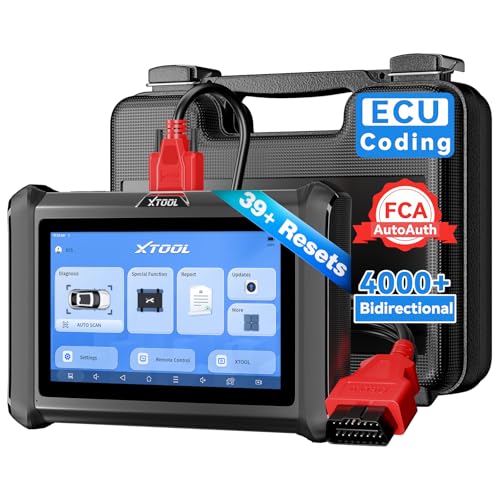
- Top Reasons to Choose the D7S OBD2 Scanner: XTOOL D7S car scan tool, an upgrade of XTOOL D7, offers comprehensive features for automotive technicians, workshops, and DIY enthusiasts 1. Upgraded Hardware: 2+64GB memory, rear camera, intuitive interface, foldable bracket 2. Complete Diagnostics: FCA
 Autoauth, OE-level all system scan, 39+ maintenance services, 4K+ bidirectional, CANFD/DoIP protocol 3. Advanced Capabilities: ECU coding, PMI functions 4. Wide Compatibility: Support 10,000+ models, covering 99% vehicle brands 5. Multi-language: Available in 22+ languages, No IP Restrictions 6. 3-Year Updates: Save 300 bucks on software updates for the latest features and optimizations
 - 2026 Upgraded D7S Car Scanner Features: The newly 2026 D7S V2.0 scanner for car brings exciting features for advanced vehicle diagnostics and enhanced user experience 1. FCA AutoAuth: Now supports FCA SGW module for Chrysler, for Jeep, for Dodge (2018+), for Fiat (2017+), enabling faster vehicle communication without gateway restrictions 2. PMI (Offline ECU Programming): Allows for Ford, for Lincoln, and for Mazda ECU programming for new modules 3. Optimized Diagnostic Report 2.0: Personalized reports with logos and customer info for auto shops. Note: Compatibility varies by cars, please check before order
- Cost-effective ECU Coding Scan Tool for Specific Brands: Enhance your vehicle's performance with XTOOL D7S! This obd2 scanner all systems bidirectional offers advanced capabilities at an affordable price, supports online for BMW, for Benz and offline for BENZ, for MIT, along with PMI functions for Ford, for Mazda, and for Lincoln. Ideal for technicians and DIY enthusiasts, this automotive scanner diagnostic tool optimizes vehicle performance and enhances the driving experience. Note: Not for all cars and modules, please send car VIN to check the compatibility before purchase
- OE All System Diagnostic & 8 Pids Graphing: XTOOL D7S is a comprehensive all system bi directional obd2 scanner that delivers dealer-level diagnostics, completely controlling over your vehicle’s performance and health. This automotive scan tool can read and clear DTCs, view live data and ECU information, retrieve freeze frames, and perform active tests and full obd2 functions. This bi-directional scan tool can can identify your vehicle's make, model, and year information with just one click and show up to 8 PIDs live data with options for CSV viewing, playback, and recording for in-depth analysis. It is easy-to-use for both professionals and beginners, helping pinpoint issues efficiently
- 3 Years Software Update, Value for Money: With 3 years of software updates and 22+ languages(no IP restrictions), XTOOL D7S auto scanner code scanner ensures ongoing compatibility for the latest car models and improved diagnostic functions. This all system vehicle diagnostic scanner comes with a 30-day return policy and a 24-month repair for dependable performance. XTOOL are dedicated to your satisfaction, so enjoy seamless support and lifetime expert assistance. Should you encounter any issues or concerns, don’t hesitate to reach out XTOOL. D7S with newest update with 22 languages freely transfer without authorization, check details from setting-language or from XTOOL
- 🔥 Historical lowest pr-ice now on sa-le--hot se-lling.
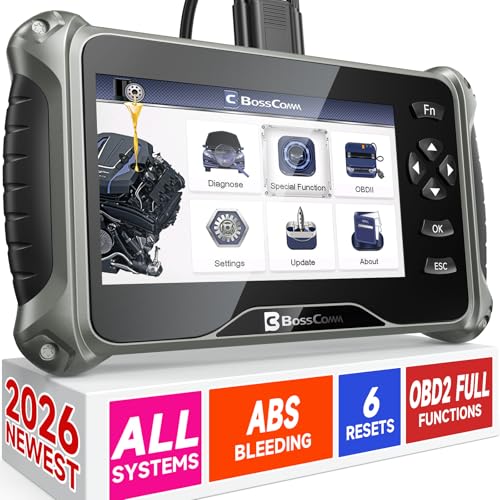
- 【🎈𝗜𝗙𝟳𝟰𝟱 𝗽𝗲𝗿𝗳𝗼𝗿𝗺𝘀 𝟲 𝗲𝘀𝘀𝗲𝗻𝘁𝗶𝗮𝗹 𝗿𝗲𝘀𝗲𝘁 𝗳𝘂𝗻𝗰𝘁𝗶𝗼𝗻𝘀—𝗔𝗕𝗦 𝗕𝗹𝗲𝗲𝗱𝗶𝗻𝗴, 𝗢𝗶𝗹 𝗥𝗲𝘀𝗲𝘁, 𝗘𝗣𝗕, 𝗦𝗔𝗦, 𝗧𝗵𝗿𝗼𝘁𝘁𝗹𝗲 𝗥𝗲𝗹𝗲𝗮𝗿𝗻, 𝗮𝗻𝗱 𝗕𝗠𝗦—𝗽𝘂𝘁𝘁𝗶𝗻𝗴 𝗽𝗿𝗼𝗳𝗲𝘀𝘀𝗶𝗼𝗻𝗮𝗹-𝗴𝗿𝗮𝗱𝗲 𝗺𝗮𝗶𝗻𝘁𝗲𝗻𝗮𝗻𝗰𝗲 𝗯𝗮𝗰𝗸 𝗶𝗻 𝘆𝗼𝘂𝗿 𝗵𝗮𝗻𝗱𝘀.】Spongy brakes? Stuck oil light? Parking brake won't release? Off-center steering? Rough idle after battery disconnect? Draining battery? IF745 handles all with a few taps. One tool covers six dealer-level resets, saving hundreds in labor costs. ❗ NOTE: Does NOT support bidirectional control, coding, or programming.
- 【✨ 𝗜𝗙𝟳𝟰𝟱 𝗴𝗼𝗲𝘀 𝗯𝗲𝘆𝗼𝗻𝗱 𝗯𝗮𝘀𝗶𝗰 𝗰𝗼𝗱𝗲 𝗿𝗲𝗮𝗱𝗶𝗻𝗴 𝘄𝗶𝘁𝗵 𝟭𝟬 𝗶𝗻𝘁𝗲𝗴𝗿𝗮𝘁𝗲𝗱 𝗳𝘂𝗻𝗰𝘁𝗶𝗼𝗻𝘀—𝗗𝗧𝗖 𝗟𝗼𝗼𝗸𝘂𝗽, 𝗜/𝗠 𝗥𝗲𝗮𝗱𝗶𝗻𝗲𝘀𝘀, 𝗙𝗿𝗲𝗲𝘇𝗲 𝗙𝗿𝗮𝗺𝗲, 𝗟𝗶𝘃𝗲 𝗗𝗮𝘁𝗮, 𝗢𝟮𝗦, 𝗢𝗕𝗠, 𝗘𝗩𝗔𝗣, 𝗮𝗻𝗱 𝗺𝗼𝗿𝗲. 】Pulling a code tells you something is wrong. IF745 tells you what the code means, when the fault happened, and what data surrounds it. Pass emissions with one I/M Readiness tap. Freeze the fault moment with Freeze Frame. Monitor live sensor data in real time. Turn cryptic codes into clear answers.
- 【🛒 𝗜𝗙𝟳𝟰𝟱 𝗽𝗲𝗿𝗳𝗼𝗿𝗺𝘀 𝗳𝘂𝗹𝗹-𝘀𝘆𝘀𝘁𝗲𝗺 𝗱𝗶𝗮𝗴𝗻𝗼𝘀𝘁𝗶𝗰𝘀 𝗮𝗰𝗿𝗼𝘀𝘀 𝗮𝗹𝗹 𝗺𝗼𝗱𝘂𝗹𝗲𝘀—𝗲𝗻𝗴𝗶𝗻𝗲, 𝗔𝗕𝗦, 𝗮𝗶𝗿𝗯𝗮𝗴, 𝘁𝗿𝗮𝗻𝘀𝗺𝗶𝘀𝘀𝗶𝗼𝗻, 𝘀𝘁𝗲𝗲𝗿𝗶𝗻𝗴, 𝘀𝘂𝘀𝗽𝗲𝗻𝘀𝗶𝗼𝗻, 𝗯𝗼𝗱𝘆 𝗲𝗹𝗲𝗰𝘁𝗿𝗼𝗻𝗶𝗰𝘀, 𝗮𝗻𝗱 𝗺𝗼𝗿𝗲. 】Warning lights on but you don't know why? Skip the $100+ diagnostic fee at the shop. Run a complete self-check from your driveway. IF745 reads and clears fault codes, retrieves ECU info, and displays live data from every accessible module—delivering a full vehicle health report in minutes, without leaving home.
- 【✅𝗜𝗙𝟳𝟰𝟱 𝗳𝗲𝗮𝘁𝘂𝗿𝗲𝘀 𝗮 𝟳-𝗶𝗻𝗰𝗵 𝗱𝗶𝘀𝗽𝗹𝗮𝘆, 𝗲𝗿𝗴𝗼𝗻𝗼𝗺𝗶𝗰 𝗱𝗲𝘀𝗶𝗴𝗻, 𝗪𝗶-𝗙𝗶 𝘂𝗽𝗱𝗮𝘁𝗲𝘀, 𝗮𝗻𝗱 𝘇𝗲𝗿𝗼 𝘀𝘂𝗯𝘀𝗰𝗿𝗶𝗽𝘁𝗶𝗼𝗻 𝗳𝗲𝗲𝘀 𝗳𝗼𝗿 𝗵𝗮𝘀𝘀𝗹𝗲-𝗳𝗿𝗲𝗲 𝗱𝗶𝗮𝗴𝗻𝗼𝘀𝘁𝗶𝗰𝘀.】Large screen means no squinting. Intuitive navigation and customizable data displays put key info at your fingertips. Wi-Fi delivers lifetime free updates without a computer. No recurring fees. No hidden costs. Just a reliable tool that works as hard as you do.
This product presentation was made with AAWP plugin.