
NHTSA ID Number: 11012670
Manufacturer Communication Number: 16-NA-376
TSB/Document Date: 2025-01-08
Summary
This informational bulletin provides information on higher than expected oil consumption.
Bulletin No.: 16-NA-376
Service Bulletin
Date: December, 2024
INFORMATION
Subject:
Brand:
Information on Higher Than Expected Oil Consumption
Model:
Model Year:
from
to
Silverado
2017
2018
Silverado 2500/3500
2019
2025
Silverado 4500HD,
5500HD, 6500HD
2019
2025
Sierra
2017
2018
Sierra 2500/3500
2019
2025
Involved Region or Country
VIN:
from
Engine:
to
Transmissi
on:
Equipped with 6.6L
Diesel Engine (RPO
L5P or L5D)
North America, Middle East, Israel, South America and Thailand.
Important: Service agents must comply with all International , Federal, State, Provincial, and/or Local laws
applicable to the activities it performs under this bulletin, including but not limited to handling, deploying,
preparing, classifying, packaging, marking, labeling, and shipping dangerous goods. In the event of a
conflict between the procedures set forth in this bulletin and the laws that apply to your dealership, you
must follow those applicable laws.
Information on Engine Oil Consumption Guidelines for the 6.6L Duramax Diesel Engine
All engines require oil to lubricate and protect the load bearing and internal moving parts from wear including
cylinder walls, pistons and piston rings. When a piston moves down its cylinder, a thin film of oil is left on the cylinder
wall. During the combustion process, part of this oil layer is consumed. As a result, varying rates of oil consumption
are accepted as normal in all engines.
Oil Consumption
Oil usage has a direct relationship with the amount of fuel used. The harder an engine works, the more fuel and oil it
will use. Therefore, oil usage as a factor of fuel usage is a more accurate indicator of acceptable oil consumption
levels than vehicle mileage.
The maximum oil consumption for the 6.6L Duramax™ Diesel engine (RPO L5P or L5D) is 2.0 liters (2.0 qt) within
321 liters (80 gallons) of fuel used. For heavy towing applications (9 mpg/26.1 L/100 km (Liters per 100 kilometers)),
this correlates to a consumption of 2.0 liter (2.0 qt) per 1233 Km (766 miles). This rate only applies to vehicles under
warranty, maintained in accordance with the appropriate maintenance schedule, driven at legal speeds and within
design intent of the vehicle.
Many factors can affect an owner's concern with oil consumption. Driving habits and vehicle maintenance vary from
owner to owner. Thoroughly evaluate each case before deciding whether the vehicle in question has abnormal
engine oil consumption.
Copyright 2024 General Motors. All Rights Reserved.
Page 2
December, 2024
Bulletin No.: 16-NA-376
Gasket and External Leaks
Inspect the oil pans, engine covers, and the engine oil cooler for leakage. Inspect the turbocharger oil lines and
fittings for signs of leakage. Inspect the turbocharger outlet pipe for signs of oil, indicating worn turbocharger shaft
bushings or seals. Inspect for oil leakage into the engine coolant.
Improper Reading of the Oil Level Indicator (Dipstick)
The vehicle must be parked on a level surface to obtain accurate oil level readings. Verify that the dipstick tube is
fully seated in the block. When checking the oil level, make sure the dipstick is wiped clean before taking an oil level
reading and fully depress the dipstick until the shoulder bottoms out on the dipstick tube. The dipstick should be the
proper part number for the engine/vehicle that is being checked.
Not Waiting Long Enough After Running Engine to Check Oil Level
The vehicle should be allowed to sit for at least 15 minutes, after the engine has been shut off, before taking an oil
level reading to assure the oil has had enough time to drain back into the crankcase. In order to ensure accurate
results, the temperature of the oil should be close to the same temperature as the last time the oil level was
checked.
Improper Oil Fill After an Oil Change
Following an oil change, verify that the proper amount and type of oil was put in the engine and that the oil level on
the dipstick is not above the full mark or below the add marks. Refer to the Owner's Manual or Service Manual for
information on recommended oil quantity, viscosity, and quality.
High Speed or High RPM Driving
Continuous driving at high speeds/high RPMs may increase oil consumption. Because this may not always be an
everyday occurrence, it is hard to determine exactly how much the oil economy will be affected.
Towing or Heavy Usage
Towing a trailer or hauling additional weight will increase oil consumption. Large frontal area trailers will further
increase the work required from the engine, especially at highway speeds, and thus increases the rate of oil
consumption.
PTO Operation
Operation of a PTO will increase fuel and oil usage, as the PTO driven accessory uses engine power to operate.
Crankcase Ventilation System
Verify that the positive crankcase ventilation (PCV) system is operating properly. Blockages, restrictions or damage
to the PCV system can result in increased oil use.
Oil Dilution from Condensation
On vehicles that are usually driven short distances, less than 8 km (5 mi), especially in colder weather, condensation
generated from cold engine operation may not get hot enough to evaporate out of the oil. When this occurs, the
dipstick may indicate that the oil level is over-full. Subsequent driving on a trip of sufficient length to enable normal
engine operating temperature for 30 minutes or more, in order to vaporize excess moisture, may give the customer
the impression of excessive oil consumption.
Engine Temperature
If an engine is run at overheated temperatures (see Owner's Manual or Service Manual) for more than brief periods,
oil will oxidize at a faster than normal rate. In addition, gaskets may distort, piston rings may stick, and excessive
wear may result. Verify that all cooling system components are in proper working order.
Engine Wear
Piston scuffing, excessive piston-to-wall clearance, tapered or out of round cylinders, worn, damaged or improperly
installed valve guides, seals and piston rings will all cause an increase in oil consumption.
Bulletin No.: 16-NA-376
December, 2024
Page 3
Measurement of Oil Consumption
Engines require a period of time to BREAK IN so that moving parts are properly seated. Therefore, oil economy
should not be tested until the vehicle has accumulated at least 8000 km (5000 mi) and the oil has been changed for
the first time. During initial engine break-in periods before the first oil change, oil consumption may exceed 3.8 liters
(4 quarts) or more per 379 liters (100 gallons) of fuel used.
1. Verify that the engine has no external leaks. Repair as necessary.
2. Begin oil consumption test after next regularly scheduled oil and filter change. It is critical to make sure that the
new oil filter is tightened 1 to 1-1/4 turn after contact. Refer to Engine Oil and Oil Filter Replacement in SI. Oil
changes should not be performed during the test.
3. Verify that the engine is at normal operating temperature (see Owner's Manual or Service Manual).
4. Park the vehicle on a level surface
5. Wait at least 15 minutes, after the engine is shut off, before checking the oil level to make sure that most of the
oil has had time to drain back into the crankcase.
6. Verify that the oil level is at, but not above, the full mark on the dipstick and that the proper viscosity and quality
oil are being used as recommended in the Owner's Manual.
7. Dealer should record the vehicle mileage, date and engine hours at the start of the test on the form included in
this bulletin.
8. Ask the customer to verify and record the date, odometer, oil level, fuel added, and engine hours, each time the
vehicle is fueled, following steps 3-5 and return the vehicle to the dealership if the oil level is found at or below
the add mark, 0.946 liter (1 qt) low, if possible. The dealer will add oil to return the oil level to full. If the oil level
remains above the add mark, the customer should continue to operate the vehicle and verify the engine oil level
until either the oil level drops to or below the add mark or at least 4800 km (3000 mi) has accumulated since the
test began before returning to the dealership for a final evaluation.
9. Refer to Oil Consumption section to compare the final evaluation to the proper acceptable oil consumption.
Explain to the customer that their engine meets the guidelines for oil consumption if it falls into the acceptable
range.
Oil Consumption Worksheet
Owner Name
Location
Dealer Name
Dealer Code
Assign TAC
TAC Case #
Engine Model
Serial #
VIN
Oil Brand
Oil Viscosity
Fuel Brand
DATE
Start
1
2
3
4
ODOMETER
READING
ENGINE HOURS
FUEL QUANTITY
ADDED
OIL QUANTITY
ADDED
———————
———————
Page 4
December, 2024
DATE
Bulletin No.: 16-NA-376
ODOMETER
READING
ENGINE HOURS
FUEL QUANTITY
ADDED
OIL QUANTITY
ADDED
5
6
7
8
9
10
11
12
13
14
15
16
17
18
19
20
21
22
23
24
25
26
27
28
29
30
31
Total
Calculation:
System
Oil Used
/
Fuel Used
=
Qt/Gal or L/L
*
=
Oil Consumption
Qt/100 Gal
L/379L
English
/
=
*
100
=
Metric
/
=
*
379
=
Bulletin No.: 16-NA-376
December, 2024
Page 5
Version
9
Modified
Released November 15, 2016
Revised September 07, 2017 – Added the 2018 Model Year.
Revised July 20, 2018 – Added the 2019 Model Year.
Revised June 26, 2019 – Added 2019 and 2020 Model Years to 2500/3500 Models.
Revised October 22, 2020 – Added 2021 Model Years to 2500/3500 Models, Added
2019–2021 Silverado 4500, 5500 and 6500 HD Models, and added RPO L5D.
Revised September 08, 2022 – Added 2022 and 2023 Model Years.
Revised March 13, 2023 – Added 2024 Model Year to 2500/3500 Models.
Revised August 09, 2024 - Added 2025 to Model Year.
Revised December 10, 2024 - Updated Oil Consumption section.
GM bulletins are intended for use by professional technicians, NOT a "do-it-yourselfer". They are written to inform these
technicians of conditions that may occur on some vehicles, or to provide information that could assist in the proper
service of a vehicle. Properly trained technicians have the equipment, tools, safety instructions, and know-how to do a job
properly and safely. If a condition is described, DO NOT assume that the bulletin applies to your vehicle, or that your
vehicle will have that condition. See your GM dealer for information on whether your vehicle may benefit from the
information.
WE SUPPORT VOLUNTARY
TECHNICIAN
CERTIFICATION
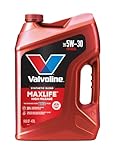


- Advanced protection against the four main causes of engine...
- Delivers 40% stronger wear protection than industry...
- Provides 15% better deposit defense vs. industry standards...
- Up to 2.5X better heat protection vs. industry standards to...
- Engineered for excellent low-temperature flow, reducing...
If the PDF is very large, it may not load in the preview below.
Some older TSBs had multiple PDFs — visit the NHTSA Website to view all PDFs.
If the TSB PDF does not show, download or view it on the NHTSA Website.
Click on the (+) Plus Sign
Then Click on Associated Document(s)
Search NHTSA Database for Recalls
Search NHTSA Database for Vehicle Investigations
View Latest Vehicle Investigations
Search NHTSA Database for Vehicle Complaints
View Latest Vehicle Complaints
TSB/Document ID: 16-NA-376
Replacement Service Bulletin Number:
MFR Communication Date: 2024-12-10
MFR Internal Campaign ID/Software Version:
Communication Type: Service Bulletin/Repair Instructions
NHTSA Components: ENGINE
MFR Component System:
MFR Component Subsystem:
Previous TSB | Next TSB |
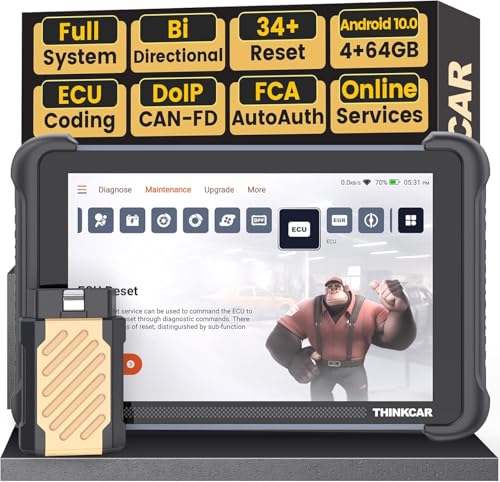
- [Notice] When you receive a used device, it may be a customer return resold by Amazon without inspection. You can exchange it for a new one through Amazon. As this situation is unavoidable, we sincerely apologize. For any issues, contacting us via Amazon's "Messages" is the best way. THINKSCAN 689BT Bidirectional Scan Tool Can Be Used Immediately After It is Turned On, Without Complicated Registration Process, Which is More Convenient & Quick.
- Full Bi-Directional Control & 3000+ Active Tests: Take control and test components like actuators, fuel injectors, relays, and cooling fans in real time. You’ll quickly see if the problem is in the part itself or the control module — saving you hours of guesswork and frustrating trial-and-error.
- Advanced ECU Coding Capabilities: Handle module matching and hidden feature activation with confidence. When you replace an ECU or want to customize settings, this obd2 scanner diagnostic bi directional tool gives you the professional-level capabilities you need without the dealership price tag.
- 34+ Useful Reset and Maintenance Functions: Complete everyday service tasks smoothly with a wide range of helpful reset and maintenance functions. Whether you’re keeping up with regular upkeep or tackling a specific job, this scanner makes maintenance simpler and less stressful for both DIYers and pros.
- Comprehensive Full System Diagnostics: Diagnose every major system — Engine, Transmission, ABS, SRS, TPMS, and more — all in one place. Finally stop wondering if you’re missing something important; get the full picture and clear codes with ease.
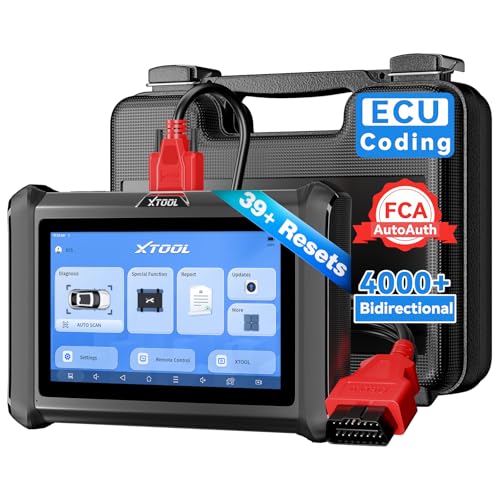
- Top Reasons to Choose the D7S OBD2 Scanner: XTOOL D7S car scan tool, an upgrade of XTOOL D7, offers comprehensive features for automotive technicians, workshops, and DIY enthusiasts 1. Upgraded Hardware: 2+64GB memory, rear camera, intuitive interface, foldable bracket 2. Complete Diagnostics: FCA
 Autoauth, OE-level all system scan, 39+ maintenance services, 4K+ bidirectional, CANFD/DoIP protocol 3. Advanced Capabilities: ECU coding, PMI functions 4. Wide Compatibility: Support 10,000+ models, covering 99% vehicle brands 5. Multi-language: Available in 22+ languages, No IP Restrictions 6. 3-Year Updates: Save 300 bucks on software updates for the latest features and optimizations
 - 2026 Upgraded D7S Car Scanner Features: The newly 2026 D7S V2.0 scanner for car brings exciting features for advanced vehicle diagnostics and enhanced user experience 1. FCA AutoAuth: Now supports FCA SGW module for Chrysler, for Jeep, for Dodge (2018+), for Fiat (2017+), enabling faster vehicle communication without gateway restrictions 2. PMI (Offline ECU Programming): Allows for Ford, for Lincoln, and for Mazda ECU programming for new modules 3. Optimized Diagnostic Report 2.0: Personalized reports with logos and customer info for auto shops. Note: Compatibility varies by cars, please check before order
- Cost-effective ECU Coding Scan Tool for Specific Brands: Enhance your vehicle's performance with XTOOL D7S! This obd2 scanner all systems bidirectional offers advanced capabilities at an affordable price, supports online for BMW, for Benz and offline for BENZ, for MIT, along with PMI functions for Ford, for Mazda, and for Lincoln. Ideal for technicians and DIY enthusiasts, this automotive scanner diagnostic tool optimizes vehicle performance and enhances the driving experience. Note: Not for all cars and modules, please send car VIN to check the compatibility before purchase
- OE All System Diagnostic & 8 Pids Graphing: XTOOL D7S is a comprehensive all system bi directional obd2 scanner that delivers dealer-level diagnostics, completely controlling over your vehicle’s performance and health. This automotive scan tool can read and clear DTCs, view live data and ECU information, retrieve freeze frames, and perform active tests and full obd2 functions. This bi-directional scan tool can can identify your vehicle's make, model, and year information with just one click and show up to 8 PIDs live data with options for CSV viewing, playback, and recording for in-depth analysis. It is easy-to-use for both professionals and beginners, helping pinpoint issues efficiently
- 3 Years Software Update, Value for Money: With 3 years of software updates and 22+ languages(no IP restrictions), XTOOL D7S auto scanner code scanner ensures ongoing compatibility for the latest car models and improved diagnostic functions. This all system vehicle diagnostic scanner comes with a 30-day return policy and a 24-month repair for dependable performance. XTOOL are dedicated to your satisfaction, so enjoy seamless support and lifetime expert assistance. Should you encounter any issues or concerns, don’t hesitate to reach out XTOOL. D7S with newest update with 22 languages freely transfer without authorization, check details from setting-language or from XTOOL
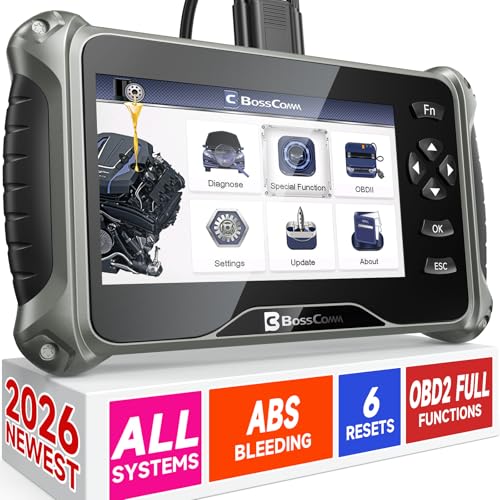
- 🔥 Historical lowest pr-ice now on sa-le--hot se-lling.
- 【🎈𝗜𝗙𝟳𝟰𝟱 𝗽𝗲𝗿𝗳𝗼𝗿𝗺𝘀 𝟲 𝗲𝘀𝘀𝗲𝗻𝘁𝗶𝗮𝗹 𝗿𝗲𝘀𝗲𝘁 𝗳𝘂𝗻𝗰𝘁𝗶𝗼𝗻𝘀—𝗔𝗕𝗦 𝗕𝗹𝗲𝗲𝗱𝗶𝗻𝗴, 𝗢𝗶𝗹 𝗥𝗲𝘀𝗲𝘁, 𝗘𝗣𝗕, 𝗦𝗔𝗦, 𝗧𝗵𝗿𝗼𝘁𝘁𝗹𝗲 𝗥𝗲𝗹𝗲𝗮𝗿𝗻, 𝗮𝗻𝗱 𝗕𝗠𝗦—𝗽𝘂𝘁𝘁𝗶𝗻𝗴 𝗽𝗿𝗼𝗳𝗲𝘀𝘀𝗶𝗼𝗻𝗮𝗹-𝗴𝗿𝗮𝗱𝗲 𝗺𝗮𝗶𝗻𝘁𝗲𝗻𝗮𝗻𝗰𝗲 𝗯𝗮𝗰𝗸 𝗶𝗻 𝘆𝗼𝘂𝗿 𝗵𝗮𝗻𝗱𝘀.】Spongy brakes? Stuck oil light? Parking brake won't release? Off-center steering? Rough idle after battery disconnect? Draining battery? IF745 handles all with a few taps. One tool covers six dealer-level resets, saving hundreds in labor costs. ❗ NOTE: Does NOT support bidirectional control, coding, or programming.
- 【✨ 𝗜𝗙𝟳𝟰𝟱 𝗴𝗼𝗲𝘀 𝗯𝗲𝘆𝗼𝗻𝗱 𝗯𝗮𝘀𝗶𝗰 𝗰𝗼𝗱𝗲 𝗿𝗲𝗮𝗱𝗶𝗻𝗴 𝘄𝗶𝘁𝗵 𝟭𝟬 𝗶𝗻𝘁𝗲𝗴𝗿𝗮𝘁𝗲𝗱 𝗳𝘂𝗻𝗰𝘁𝗶𝗼𝗻𝘀—𝗗𝗧𝗖 𝗟𝗼𝗼𝗸𝘂𝗽, 𝗜/𝗠 𝗥𝗲𝗮𝗱𝗶𝗻𝗲𝘀𝘀, 𝗙𝗿𝗲𝗲𝘇𝗲 𝗙𝗿𝗮𝗺𝗲, 𝗟𝗶𝘃𝗲 𝗗𝗮𝘁𝗮, 𝗢𝟮𝗦, 𝗢𝗕𝗠, 𝗘𝗩𝗔𝗣, 𝗮𝗻𝗱 𝗺𝗼𝗿𝗲. 】Pulling a code tells you something is wrong. IF745 tells you what the code means, when the fault happened, and what data surrounds it. Pass emissions with one I/M Readiness tap. Freeze the fault moment with Freeze Frame. Monitor live sensor data in real time. Turn cryptic codes into clear answers.
- 【🛒 𝗜𝗙𝟳𝟰𝟱 𝗽𝗲𝗿𝗳𝗼𝗿𝗺𝘀 𝗳𝘂𝗹𝗹-𝘀𝘆𝘀𝘁𝗲𝗺 𝗱𝗶𝗮𝗴𝗻𝗼𝘀𝘁𝗶𝗰𝘀 𝗮𝗰𝗿𝗼𝘀𝘀 𝗮𝗹𝗹 𝗺𝗼𝗱𝘂𝗹𝗲𝘀—𝗲𝗻𝗴𝗶𝗻𝗲, 𝗔𝗕𝗦, 𝗮𝗶𝗿𝗯𝗮𝗴, 𝘁𝗿𝗮𝗻𝘀𝗺𝗶𝘀𝘀𝗶𝗼𝗻, 𝘀𝘁𝗲𝗲𝗿𝗶𝗻𝗴, 𝘀𝘂𝘀𝗽𝗲𝗻𝘀𝗶𝗼𝗻, 𝗯𝗼𝗱𝘆 𝗲𝗹𝗲𝗰𝘁𝗿𝗼𝗻𝗶𝗰𝘀, 𝗮𝗻𝗱 𝗺𝗼𝗿𝗲. 】Warning lights on but you don't know why? Skip the $100+ diagnostic fee at the shop. Run a complete self-check from your driveway. IF745 reads and clears fault codes, retrieves ECU info, and displays live data from every accessible module—delivering a full vehicle health report in minutes, without leaving home.
- 【✅𝗜𝗙𝟳𝟰𝟱 𝗳𝗲𝗮𝘁𝘂𝗿𝗲𝘀 𝗮 𝟳-𝗶𝗻𝗰𝗵 𝗱𝗶𝘀𝗽𝗹𝗮𝘆, 𝗲𝗿𝗴𝗼𝗻𝗼𝗺𝗶𝗰 𝗱𝗲𝘀𝗶𝗴𝗻, 𝗪𝗶-𝗙𝗶 𝘂𝗽𝗱𝗮𝘁𝗲𝘀, 𝗮𝗻𝗱 𝘇𝗲𝗿𝗼 𝘀𝘂𝗯𝘀𝗰𝗿𝗶𝗽𝘁𝗶𝗼𝗻 𝗳𝗲𝗲𝘀 𝗳𝗼𝗿 𝗵𝗮𝘀𝘀𝗹𝗲-𝗳𝗿𝗲𝗲 𝗱𝗶𝗮𝗴𝗻𝗼𝘀𝘁𝗶𝗰𝘀.】Large screen means no squinting. Intuitive navigation and customizable data displays put key info at your fingertips. Wi-Fi delivers lifetime free updates without a computer. No recurring fees. No hidden costs. Just a reliable tool that works as hard as you do.
This product presentation was made with AAWP plugin.