
NHTSA ID Number: 11012615
Manufacturer Communication Number: IB09-N-001H
TSB/Document Date: 2025-01-07
Summary
INFORMATION BULLETIN: THE INFORMATION SET FORTH IN THIS BULLETIN IS INTENDED TO AID TECHNICIANS IN PROPERLY TESTING THE BATTERIES AND ALTERNATORS IN THE AFFECTED ISUZU VEHICLES. IT IS IMPORTANT TO CONFIRM THE BATTERY IS IN GOOD CONDITION PRIOR TO DIAGNOSIS OF THE ALTERNATOR AND CHARGING SYSTEM. NEVER REPLACE AN ALTERNATOR BEFORE TESTING THE BATTERY’S CONDITION. BATTERIES MUST BE FULLY CHARGED FOR THE ECM AND/OR STARTER RELAY TO FULLY ENGAGE WITH THE STARTER. IF THE BATTERY VOLTAGE IS LOW, THE ECM WILL NOT ENGAGE OR MAY PARTIALLY ENGAGE THE STARTER. REPLACE THE ALTERNATOR ONLY IF IT FAILS THE ON VEHICLE TESTING PROCEDURE.
BULLETIN NUMBER:
IB09-N-001H
IMPORTANT SERVICE
INFORMATION FOR:
✓ SERVICE MANAGER
✓ SERVICE ADVISOR
✓ TECHNICIAN
✓ PARTS DEPARTMENT
✓ WARRANTY PERSONNEL
ISSUE DATE:
DECEMBER 2024
GROUP:
ELECTRICAL
ON-VEHICLE ALTERNATOR DIAGNOSTICS AND BATTERY
CHARGING PROCEDURES AND TIPS
AFFECTED VEHICLES
•
•
•
2018MY to current Isuzu FTR
All Isuzu N-Series
Equipped with Gasoline and Diesel Engines
2010MY and Prior GMC/Chevrolet W-Series
This bulletin supersedes bulletin IB09-N-001G. This bulletin is being revised to
update Models and bulletin information. Please discard previous bulletin IB09-N001G.
INFORMATION
CONDITION
Many of the alternator cores returned by dealers have been determined to have No
Trouble Found after testing. All warranty cores returned to the CV Warranty Parts Center
are inspected and tested for quality improvement purposes, including both OEM and
remanufactured cores.
The information set forth in this bulletin is intended to aid technicians in properly testing
the batteries and alternators in the affected Isuzu vehicles. It is important to confirm the
battery is in good condition prior to diagnosis of the alternator and charging system. Never
replace an alternator before testing the battery’s condition. Batteries must be fully charged
for the ECM and/or starter relay to fully engage with the starter. If the battery voltage is
low, the ECM will not engage or may partially engage the starter. Replace the alternator
ONLY if it fails the On Vehicle Testing Procedure.
COMMON SYMPTOMS
•
Battery discharge warning light on.
•
Dim headlights.
•
Noisy operation (such as belts squealing, worn bearings or brushes).
•
No crank/no start (refer to bulletin IB12-N-001 for additional details).
•
Battery voltage is below 11.4 volts – the starter will cycle back and forth into the
flex-plate, which can be inaccurately diagnosed as a starter issue.
BATTERY CHARGING AND TESTING DIAGNOSTIC TIPS
The diagnostic tips set forth below can aid technicians in properly charging and testing a
battery. Replace the battery only when a battery fails the following tests.
NOTE: Absorbed Glass Matt (AGM) batteries require a battery charger designed for
AGM batteries. Using a regular charger can damage AGM batteries and lead
to reduced capacity, shorter lifespan, and potential failure of the AGM battery over
time.
Caution: Overcharging an AGM battery can lead to gas venting, which poses safety
risks, including the potential for explosion if the gas ignites.
COMMON CAUSES
The following are some common causes that may contribute to a weak or dead battery.
•
The vehicle headlights and accessories are left on for an extended period of time.
•
A fault or flaw in the vehicle charging system.
•
The electrical load of the vehicle exceeds the alternator capacity (such as
Bodybuilder add-on power equipment).
•
Extended slow speed driving with many accessories turned on.
•
Loose or poor battery cable to post connection or corrosion.
•
High parasitic drain (greater than 50mA).
•
Loose belt.
•
A fault or flaw in the vehicle’s electrical system (such as shorted or pinched wires).
•
There may be a faulty starter or cranking circuit.
•
Slow, extended or no engine cranking.
•
Vehicle stored for a long period of time (See the Service Policy and Procedure
Manual (SP&P), Article 2.15 and 2.16).
Caution: Batteries produce explosive gases, contain corrosive acid and supply
levels of electrical current high enough to cause skin burns. Therefore, to reduce
the risk of personal injury when working near a battery, always shield your eyes
and avoid leaning over the battery whenever possible. Do not expose the battery
to open flames or sparks. Avoid spilling battery fluid (electrolyte). Flush any
contacted area with water immediately and get medical help if eyes are affected.
BATTERY CHARGING TIPS
If the vehicle is equipped with more than one battery, disconnect the cables to
inspect/charge/test each battery separately in a well-ventilated area.
•
Most batteries are maintenance-free and have a Hydrometer built in for a visual
check.
o Green dot = 65% or above state-of-charge; sufficient for load test.
o Dark = below 65% state-of-charge; charging required.
o Clear or Light Yellow = Low fluid level. This may have been caused by
excessive or prolonged charging, a broken/damaged case, a seal leak, the
battery tipping over or normal battery wear-out. Replace the battery. Do not
attempt to charge, test or jump start the battery.
•
Charging rates between 3 and 50 amps are satisfactory as long as there is no
spewing of fluid and the battery does not feel excessively hot over 51°C (125°F).
If any of these conditions occur while charging, it will be necessary to reduce
amperes or temporarily stop to cool down.
An automatic charger will monitor the charger output based on the battery status to protect
the battery from overcharging/overheating, but the battery still should be checked every
30 minutes to ensure it is not overcharging and/or overheating.
•
The time required for a charge will vary. This is usually measured in hours. For
instance, charging at a rate of 25 amperes for two hours would provide the
battery with a 50 ampere-hour charge.
o Battery Size — A completely discharged large, heavy-duty battery would
require charging more than twice as long as a small passenger car
battery.
o Temperature — A longer time will be needed to charge any battery at
-17°C (0°F) than at 21°C (70°F). A warmer battery will accept more
charging current.
o State-of-Charge — A completely discharged battery will require charging
more than twice as much as a half-charged battery.
o Charger Capacity — A charger that can supply only 5 amps will take much
longer to charge a battery than will a 30-amp charger.
BATTERY TESTING
If the vehicle is equipped with more than one battery, disconnect the cables to
inspect/charge/test each battery separately in a well-ventilated area. Be sure that the
battery is properly charged, and the Hydrometer has a green dot visible before testing.
Test the battery using a Vehicle Charging/Starting System Tester, commonly known as
VAT40 or Snap-On MT1552, or equivalent.
1. Connect the positive lead of the tester to the positive (+) post of the battery, and
the negative lead of the tester to the negative post of the battery.
2. Monitor the battery voltage with the key OFF. Battery voltage should range
between 12V and 13V. If the voltage is within this range, the battery circuit is good.
Voltages below this range indicate that the battery needs to be charged before
testing. Voltages above this range indicate a failed battery that needs to be
replaced.
3. Connect the round current-probe cable of the tester onto either of the power leads
to measure the current draw.
4. Determine the Cold Cranking Amps (CCA) rating of the battery.
5. Apply a load of 1⁄2 the CCA rating for 15 seconds and take a voltage reading at
the end, before releasing the load. Turn off load and wait for 15 seconds to allow
the battery to recover before repeating test, if necessary.
6. Depending on the battery temperature, if the voltage does not drop below the
minimum voltage as shown in the reference table below, then the battery is good
and should be returned to service. If the voltage does drop below the referenced
voltage, charge the battery until fully charged and then retest the battery.
Temperature
21°C (70°F)
10°C (50°F)
-1°C (30°F)
-10°C (14°F)
-18°C (0°F)
Minimum
Voltage
9.6
9.4
9.1
8.8
8.5
TESTING FOR PARASITIC DRAIN
A parasitic drain is when an electrical device is using battery power when the vehicle is
off, and the key is in the “OFF” position and removed. Therefore, when testing, make sure
the key is OFF and removed for at least 5 minutes and all other electrical devices, like the
dome light, are OFF.
1. Turn the key OFF and remove. Inspect the vehicle for any other electrical devices
that may still be drawing current and turn them off.
2. Install a 10A or 20A capable multimeter between the negative battery cable and
the negative battery terminal.
3. Monitor the amperage for a few minutes after the amperage reading stabilizes
(when the ammeter is connected the vehicle control modules may wake up). If the
amperage is under 50mA the current drain is normal.
NOTE: Current drain over 50mA is caused by a continuous electrical load. Locate the
system generating the excessive load and repair as necessary. Be sure to isolate the
body application for potential causes.
AMMETER
+
-
+
ON-VEHICLE ALTERNATOR TESTING PROCEDURE
Be sure that the belts are not slipping, and the battery is fully charged for a valid test. Also
all other electrical problems must be corrected prior to testing. Refer to the applicable
Workshop Manual (WSM) for specific electrical wiring schematics.
Test the alternator using a Charging/Starting System Tester, commonly known as VAT40
or Snap-on MT1552, or equivalent.
1. Connect the positive lead of the tester to the positive post of the vehicle’s battery,
and the negative lead of the tester to the negative post of the vehicle’s battery.
2. Place the round current-probe cable of the tester onto the B-terminal of the
alternator.
•
Test #1 — Under no electrical load and cold condition with all accessories
off (A/C, headlights, radio, wipers), the regulating voltage should be
between 13V and 15V with the engine running at 2,000 rpm.
•
Test #2 — Begin the test under no electrical load and in a cold condition,
with all accessories still off and the engine running at 2,000 rpm. Apply an
electrical load by turning the tester’s Load Control knob clockwise until a
reading of 50% of the battery’s CCA rating is displayed.
o For an alternator rated 80 Amp, the output current should be more
than 50A.
o For an alternator rated 110 Amp, the output current should be more
than 70A.
o For an alternator rated 140 Amp, the output current should be more
than 88A.
o For an alternator rated at 145 Amps, the output current should be
more than 105A.
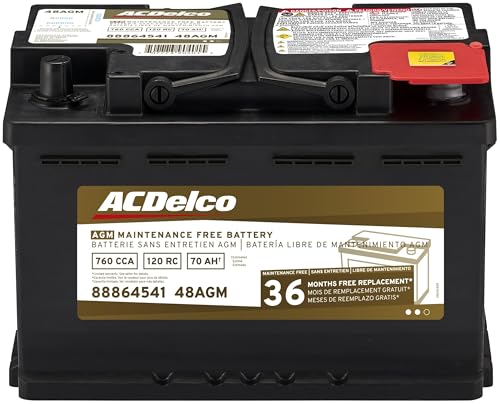
- High density negative paste, improves performance and...
- Enhanced life alloy or Silver Calcium stamped alloy...
- Calcium lead positive grid, maximizes conductivity and...
- Robust envelope separator with puncture resistant back...
- Vent cap design that resists acid leakage

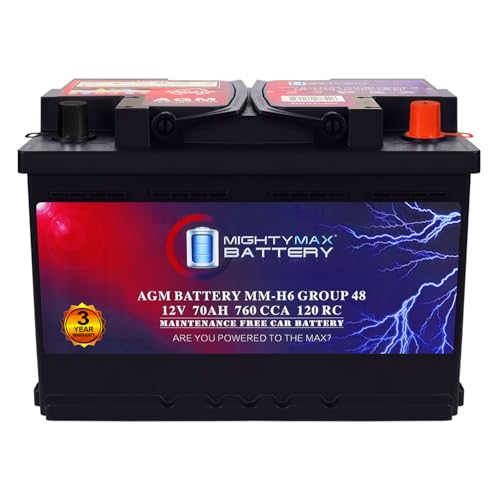
- Fast Starting Power: This 12V 70Ah 760 CCA delivers strong...
- Made to Last: With its 120-minute Reserve Capacity supports...
- All Power, No Mess AGM Design: Sealed and spill-proof, the...
- Strength That Starts on the Inside: The rugged construction...
- Tested Tough & Certified Safe: Mighty Max batteries are...
If the PDF is very large, it may not load in the preview below.
Some older TSBs had multiple PDFs — visit the NHTSA Website to view all PDFs.
If the TSB PDF does not show, download or view it on the NHTSA Website.
Click on the (+) Plus Sign
Then Click on Associated Document(s)
Search NHTSA Database for Recalls
Search NHTSA Database for Vehicle Investigations
View Latest Vehicle Investigations
Search NHTSA Database for Vehicle Complaints
View Latest Vehicle Complaints
TSB/Document ID: IB09-N-001H
Replacement Service Bulletin Number:
MFR Communication Date: 2024-12-05
MFR Internal Campaign ID/Software Version:
Communication Type: Service Bulletin/Repair Instructions
NHTSA Components: ELECTRICAL SYSTEM
MFR Component System: Electrical
MFR Component Subsystem:
Previous TSB | Next TSB |
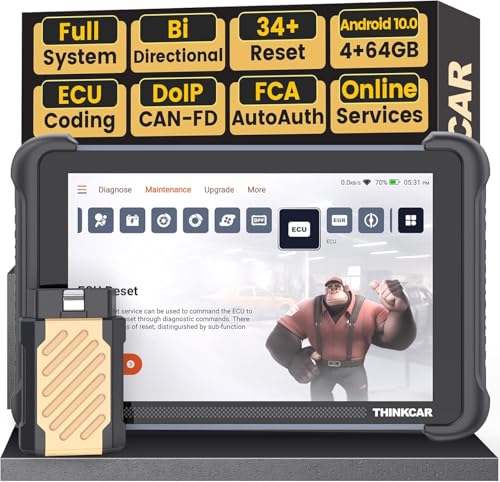
- [Notice] When you receive a used device, it may be a customer return resold by Amazon without inspection. You can exchange it for a new one through Amazon. As this situation is unavoidable, we sincerely apologize. For any issues, contacting us via Amazon's "Messages" is the best way. THINKSCAN 689BT Bidirectional Scan Tool Can Be Used Immediately After It is Turned On, Without Complicated Registration Process, Which is More Convenient & Quick.
- Full Bi-Directional Control & 3000+ Active Tests: Take control and test components like actuators, fuel injectors, relays, and cooling fans in real time. You’ll quickly see if the problem is in the part itself or the control module — saving you hours of guesswork and frustrating trial-and-error.
- Advanced ECU Coding Capabilities: Handle module matching and hidden feature activation with confidence. When you replace an ECU or want to customize settings, this obd2 scanner diagnostic bi directional tool gives you the professional-level capabilities you need without the dealership price tag.
- 34+ Useful Reset and Maintenance Functions: Complete everyday service tasks smoothly with a wide range of helpful reset and maintenance functions. Whether you’re keeping up with regular upkeep or tackling a specific job, this scanner makes maintenance simpler and less stressful for both DIYers and pros.
- Comprehensive Full System Diagnostics: Diagnose every major system — Engine, Transmission, ABS, SRS, TPMS, and more — all in one place. Finally stop wondering if you’re missing something important; get the full picture and clear codes with ease.
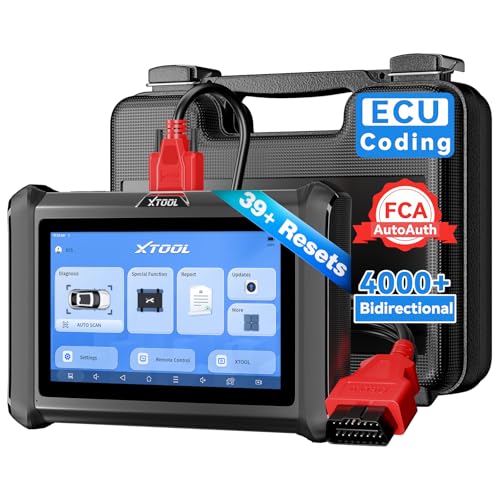
- Top Reasons to Choose the D7S OBD2 Scanner: XTOOL D7S car scan tool, an upgrade of XTOOL D7, offers comprehensive features for automotive technicians, workshops, and DIY enthusiasts 1. Upgraded Hardware: 2+64GB memory, rear camera, intuitive interface, foldable bracket 2. Complete Diagnostics: FCA
 Autoauth, OE-level all system scan, 39+ maintenance services, 4K+ bidirectional, CANFD/DoIP protocol 3. Advanced Capabilities: ECU coding, PMI functions 4. Wide Compatibility: Support 10,000+ models, covering 99% vehicle brands 5. Multi-language: Available in 22+ languages, No IP Restrictions 6. 3-Year Updates: Save 300 bucks on software updates for the latest features and optimizations
 - 2026 Upgraded D7S Car Scanner Features: The newly 2026 D7S V2.0 scanner for car brings exciting features for advanced vehicle diagnostics and enhanced user experience 1. FCA AutoAuth: Now supports FCA SGW module for Chrysler, for Jeep, for Dodge (2018+), for Fiat (2017+), enabling faster vehicle communication without gateway restrictions 2. PMI (Offline ECU Programming): Allows for Ford, for Lincoln, and for Mazda ECU programming for new modules 3. Optimized Diagnostic Report 2.0: Personalized reports with logos and customer info for auto shops. Note: Compatibility varies by cars, please check before order
- Cost-effective ECU Coding Scan Tool for Specific Brands: Enhance your vehicle's performance with XTOOL D7S! This obd2 scanner all systems bidirectional offers advanced capabilities at an affordable price, supports online for BMW, for Benz and offline for BENZ, for MIT, along with PMI functions for Ford, for Mazda, and for Lincoln. Ideal for technicians and DIY enthusiasts, this automotive scanner diagnostic tool optimizes vehicle performance and enhances the driving experience. Note: Not for all cars and modules, please send car VIN to check the compatibility before purchase
- OE All System Diagnostic & 8 Pids Graphing: XTOOL D7S is a comprehensive all system bi directional obd2 scanner that delivers dealer-level diagnostics, completely controlling over your vehicle’s performance and health. This automotive scan tool can read and clear DTCs, view live data and ECU information, retrieve freeze frames, and perform active tests and full obd2 functions. This bi-directional scan tool can can identify your vehicle's make, model, and year information with just one click and show up to 8 PIDs live data with options for CSV viewing, playback, and recording for in-depth analysis. It is easy-to-use for both professionals and beginners, helping pinpoint issues efficiently
- 3 Years Software Update, Value for Money: With 3 years of software updates and 22+ languages(no IP restrictions), XTOOL D7S auto scanner code scanner ensures ongoing compatibility for the latest car models and improved diagnostic functions. This all system vehicle diagnostic scanner comes with a 30-day return policy and a 24-month repair for dependable performance. XTOOL are dedicated to your satisfaction, so enjoy seamless support and lifetime expert assistance. Should you encounter any issues or concerns, don’t hesitate to reach out XTOOL. D7S with newest update with 22 languages freely transfer without authorization, check details from setting-language or from XTOOL
- 🔥 Historical lowest pr-ice now on sa-le--hot se-lling.
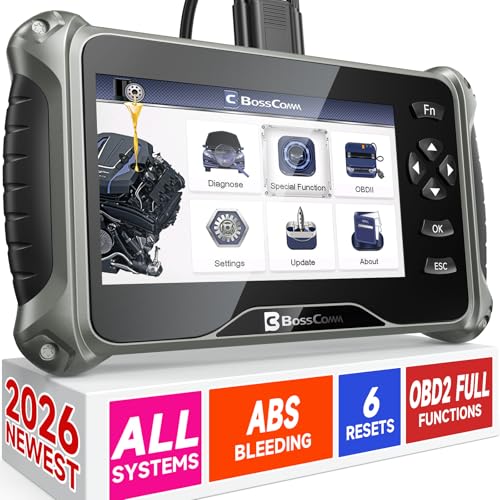
- 【🎈𝗜𝗙𝟳𝟰𝟱 𝗽𝗲𝗿𝗳𝗼𝗿𝗺𝘀 𝟲 𝗲𝘀𝘀𝗲𝗻𝘁𝗶𝗮𝗹 𝗿𝗲𝘀𝗲𝘁 𝗳𝘂𝗻𝗰𝘁𝗶𝗼𝗻𝘀—𝗔𝗕𝗦 𝗕𝗹𝗲𝗲𝗱𝗶𝗻𝗴, 𝗢𝗶𝗹 𝗥𝗲𝘀𝗲𝘁, 𝗘𝗣𝗕, 𝗦𝗔𝗦, 𝗧𝗵𝗿𝗼𝘁𝘁𝗹𝗲 𝗥𝗲𝗹𝗲𝗮𝗿𝗻, 𝗮𝗻𝗱 𝗕𝗠𝗦—𝗽𝘂𝘁𝘁𝗶𝗻𝗴 𝗽𝗿𝗼𝗳𝗲𝘀𝘀𝗶𝗼𝗻𝗮𝗹-𝗴𝗿𝗮𝗱𝗲 𝗺𝗮𝗶𝗻𝘁𝗲𝗻𝗮𝗻𝗰𝗲 𝗯𝗮𝗰𝗸 𝗶𝗻 𝘆𝗼𝘂𝗿 𝗵𝗮𝗻𝗱𝘀.】Spongy brakes? Stuck oil light? Parking brake won't release? Off-center steering? Rough idle after battery disconnect? Draining battery? IF745 handles all with a few taps. One tool covers six dealer-level resets, saving hundreds in labor costs. ❗ NOTE: Does NOT support bidirectional control, coding, or programming.
- 【✨ 𝗜𝗙𝟳𝟰𝟱 𝗴𝗼𝗲𝘀 𝗯𝗲𝘆𝗼𝗻𝗱 𝗯𝗮𝘀𝗶𝗰 𝗰𝗼𝗱𝗲 𝗿𝗲𝗮𝗱𝗶𝗻𝗴 𝘄𝗶𝘁𝗵 𝟭𝟬 𝗶𝗻𝘁𝗲𝗴𝗿𝗮𝘁𝗲𝗱 𝗳𝘂𝗻𝗰𝘁𝗶𝗼𝗻𝘀—𝗗𝗧𝗖 𝗟𝗼𝗼𝗸𝘂𝗽, 𝗜/𝗠 𝗥𝗲𝗮𝗱𝗶𝗻𝗲𝘀𝘀, 𝗙𝗿𝗲𝗲𝘇𝗲 𝗙𝗿𝗮𝗺𝗲, 𝗟𝗶𝘃𝗲 𝗗𝗮𝘁𝗮, 𝗢𝟮𝗦, 𝗢𝗕𝗠, 𝗘𝗩𝗔𝗣, 𝗮𝗻𝗱 𝗺𝗼𝗿𝗲. 】Pulling a code tells you something is wrong. IF745 tells you what the code means, when the fault happened, and what data surrounds it. Pass emissions with one I/M Readiness tap. Freeze the fault moment with Freeze Frame. Monitor live sensor data in real time. Turn cryptic codes into clear answers.
- 【🛒 𝗜𝗙𝟳𝟰𝟱 𝗽𝗲𝗿𝗳𝗼𝗿𝗺𝘀 𝗳𝘂𝗹𝗹-𝘀𝘆𝘀𝘁𝗲𝗺 𝗱𝗶𝗮𝗴𝗻𝗼𝘀𝘁𝗶𝗰𝘀 𝗮𝗰𝗿𝗼𝘀𝘀 𝗮𝗹𝗹 𝗺𝗼𝗱𝘂𝗹𝗲𝘀—𝗲𝗻𝗴𝗶𝗻𝗲, 𝗔𝗕𝗦, 𝗮𝗶𝗿𝗯𝗮𝗴, 𝘁𝗿𝗮𝗻𝘀𝗺𝗶𝘀𝘀𝗶𝗼𝗻, 𝘀𝘁𝗲𝗲𝗿𝗶𝗻𝗴, 𝘀𝘂𝘀𝗽𝗲𝗻𝘀𝗶𝗼𝗻, 𝗯𝗼𝗱𝘆 𝗲𝗹𝗲𝗰𝘁𝗿𝗼𝗻𝗶𝗰𝘀, 𝗮𝗻𝗱 𝗺𝗼𝗿𝗲. 】Warning lights on but you don't know why? Skip the $100+ diagnostic fee at the shop. Run a complete self-check from your driveway. IF745 reads and clears fault codes, retrieves ECU info, and displays live data from every accessible module—delivering a full vehicle health report in minutes, without leaving home.
- 【✅𝗜𝗙𝟳𝟰𝟱 𝗳𝗲𝗮𝘁𝘂𝗿𝗲𝘀 𝗮 𝟳-𝗶𝗻𝗰𝗵 𝗱𝗶𝘀𝗽𝗹𝗮𝘆, 𝗲𝗿𝗴𝗼𝗻𝗼𝗺𝗶𝗰 𝗱𝗲𝘀𝗶𝗴𝗻, 𝗪𝗶-𝗙𝗶 𝘂𝗽𝗱𝗮𝘁𝗲𝘀, 𝗮𝗻𝗱 𝘇𝗲𝗿𝗼 𝘀𝘂𝗯𝘀𝗰𝗿𝗶𝗽𝘁𝗶𝗼𝗻 𝗳𝗲𝗲𝘀 𝗳𝗼𝗿 𝗵𝗮𝘀𝘀𝗹𝗲-𝗳𝗿𝗲𝗲 𝗱𝗶𝗮𝗴𝗻𝗼𝘀𝘁𝗶𝗰𝘀.】Large screen means no squinting. Intuitive navigation and customizable data displays put key info at your fingertips. Wi-Fi delivers lifetime free updates without a computer. No recurring fees. No hidden costs. Just a reliable tool that works as hard as you do.
This product presentation was made with AAWP plugin.