
NHTSA ID Number: 11007288
Manufacturer Communication Number: Circular 91FN_REV2
TSB/Document Date: 2024-09-06
Summary
91FN Dealer Communication - Revision. Affected vehicles will receive the latest software version via a software update. This software contains an optimized self-diagnosis function for the high-voltage battery . In addition to the software update, the high-voltage battery cells may experience an increased self-discharge. The high-voltage battery will be evaluated, and any affected high-voltage cell modules will be replaced.
•
Enter SVM code ME321CAN and follow the on screen prompts.
•
Select communication path CAN when prompted.
•
Proceed to Step 4 once the SVM is complete.
The repair information in this document is intended for use only by skilled technicians who have the proper tools, equipment and training to correctly and safely maintain your vehicle. These
procedures are not intended to be attempted by “do-it-yourselfers,” and you should not assume this document applies to your vehicle, or that your vehicle has the condition described. To
determine whether this information applies, contact an authorized Audi dealer. 2024 Audi of America, Inc. and Audi Canada. All Rights Reserved.
91FN Page 24 of 48
Step 4 – Perform Bus Sleep
•
Perform a five minute bus sleep.
•
See Appendix A for specific bus sleep instructions.
•
Proceed to Step 5 once the five minute bus sleep is complete.
Step 5 – Road Test + Clear Fault Memory + Perform Calibration Drive
•
Perform a road test/calibration drive at a speed above 25 mph (40
km/h).
•
Erase the entire event memory.
•
Send the diagnostic log to GFF Paperless.
•
Perform a calibration drive at a speed above 25 mph (40 km/h).
CAUTION
When performing this road test, the vehicle will momentarily lose
acceleration when the three-phase drive -VX54- calibrates. Ensure the
road test is performed in a safe manner.
Step 6 – Reset AX4
•
To prevent charging complaints after the software update is complete,
the high-voltage battery charger control module (J1050/AX4) must be
reset.
•
Remove fuse SB3 from the under-hood SB fuse panel for one minute
and then insert it again.
•
Reference ELSA Wiring Diagrams for fuse location, if necessary:
o
•
ELSA Wiring Diagram > Component locations > Component
Locations: Fuses > Page 3: Fuse Panel B SB, from January
2021
Proceed to Section D once the reset is complete.
The repair information in this document is intended for use only by skilled technicians who have the proper tools, equipment and training to correctly and safely maintain your vehicle. These
procedures are not intended to be attempted by “do-it-yourselfers,” and you should not assume this document applies to your vehicle, or that your vehicle has the condition described. To
determine whether this information applies, contact an authorized Audi dealer. 2024 Audi of America, Inc. and Audi Canada. All Rights Reserved.
91FN Page 25 of 48
Section C – Cell Module Replacement (if necessary)
NOTE
If a module requires replacement due to increased self-discharge, the “Check cell equalization” test plan may
prompt some additional steps that need to be performed. Ensure that the additional steps and test plans are
performed before closing the HV battery since data from both the new and old cell modules is required.
Example:
The repair information in this document is intended for use only by skilled technicians who have the proper tools, equipment and training to correctly and safely maintain your vehicle. These
procedures are not intended to be attempted by “do-it-yourselfers,” and you should not assume this document applies to your vehicle, or that your vehicle has the condition described. To
determine whether this information applies, contact an authorized Audi dealer. 2024 Audi of America, Inc. and Audi Canada. All Rights Reserved.
91FN Page 26 of 48
CRITICAL REPAIR STEP
STOP!
Before balancing the new cell module, be sure that the vehicle is ready for the repair to be performed.
If possible, the high voltage battery should be de-energized right after recording the voltage reading to avoid possible
voltage variations.
Charging the vehicle, driving the vehicle, leaving the ignition on, or running the HVAC can change the high voltage
battery voltage.
After reading out the maximum cell module voltage from the MVBs, avoid moving the vehicle if possible. The vehicle
must not be charged or have any electrical consumers used. If this step is not followed, there is a risk that the new
cell module will not be balanced correctly resulting in possible faults and having to remove and re-balance the cell
module again.
Perform cell balancing on new cell module:
•
Check Measured Value Block (MVB)
“maximum voltage for battery cells, IDE08217.
•
The voltage reading listed will be entered in
the DSS Manager program when balancing
the new cell module.
•
Follow the VAS6910 operating instructions in
conjunction with the DSS Manager program to
perform the cell balancing on the new cell
module.
TIP
Operating instructions for the VAS6910 and DSS
Manager program can be found on the Audi Special
Tools and Equipment website.
The repair information in this document is intended for use only by skilled technicians who have the proper tools, equipment and training to correctly and safely maintain your vehicle. These
procedures are not intended to be attempted by “do-it-yourselfers,” and you should not assume this document applies to your vehicle, or that your vehicle has the condition described. To
determine whether this information applies, contact an authorized Audi dealer. 2024 Audi of America, Inc. and Audi Canada. All Rights Reserved.
91FN Page 27 of 48
Populate Guided Functions test plans:
•
Perform a diagnostic scan of the vehicle.
•
Select “Self Test” and populate the following
Guided Function test plans:
o
008C - Classification of high-voltage
battery
o
High-voltage system, de-energize
o
008C - Initiation
o
VAS 6558 Hybrid test module
De-energize the high-voltage system:
DANGER
High voltage increases the risk of fatal injury
Electrocution can cause severe bodily or fatal
injury
Have a high-voltage technician or a high-voltage
expert de-energize the high-voltage system.
•
Follow the Guided Functions test plan steps.
•
Pay close attention to all of the test plan steps.
Raise the vehicle:
TIP
Removal of the high-voltage battery is not possible
on all hoists. Make sure that there is enough
clearance. Pay attention that the high-voltage
battery has enough clearance during the lifting
process so that the Scissor Lift Table -VAS6131Bcan be set down.
•
Pivot in the hoist with the vehicle support plate
on the frame of the high-voltage battery
. Then pivot back the hoist arm with the
vehicle support plate so that the highvoltage battery can be lowered in the next
steps.
The repair information in this document is intended for use only by skilled technicians who have the proper tools, equipment and training to correctly and safely maintain your vehicle. These
procedures are not intended to be attempted by “do-it-yourselfers,” and you should not assume this document applies to your vehicle, or that your vehicle has the condition described. To
determine whether this information applies, contact an authorized Audi dealer. 2024 Audi of America, Inc. and Audi Canada. All Rights Reserved.
91FN Page 28 of 48
Remove lower covers:
•
Reference ELSA Repair Manual.
•
Remove the front underbody trim panel .
Refer to → Body Exterior; Rep. Gr.66;
Underbody Trim Panel; Front Underbody Trim
Panel, Removing and Installing.
•
Front wheel housing liner, loosening in the
area of the high-voltage battery threaded
connection.
Refer to → Body Exterior; Rep. Gr.66; Wheel
Housing Liner; Front Wheel Housing Liner,
Removing and Installing.
•
Remove the side underbody trim panels.
Refer to → Body Exterior; Rep. Gr.66;
Underbody Trim Panel; Side Underbody Trim
Panel, Removing and Installing.
•
Remove the rear center underbody trim panel
.
Refer to → Body Exterior; Rep. Gr.66;
Underbody Trim Panel; Rear Center
Underbody Trim Panel, Removing and
Installing.
•
Remove the rear underbody trim panel .
Refer to → Body Exterior; Rep. Gr.66;
Underbody Trim Panel; Rear Underbody Trim
Panel, Removing and Installing
Perform high-voltage battery leak test:
•
Before disconnecting the high-voltage battery
connectors, remove the protective covers
from both of the connectors first.
The repair information in this document is intended for use only by skilled technicians who have the proper tools, equipment and training to correctly and safely maintain your vehicle. These
procedures are not intended to be attempted by “do-it-yourselfers,” and you should not assume this document applies to your vehicle, or that your vehicle has the condition described. To
determine whether this information applies, contact an authorized Audi dealer. 2024 Audi of America, Inc. and Audi Canada. All Rights Reserved.
91FN Page 29 of 48
•
See ELSA Repair Manual: Repair Manual >
Motor > Electric Drive Motor 0EH, 0EJ > 93
Electric drive > High-Voltage Battery Unit >
High-Voltage Battery Leak Test, 1 AX2
•
Perform these steps in conjunction with
Guided Function test plan, “008C – Initiation >
select option: Leak test of battery housing.”
Remove high-voltage battery:
•
See ELSA Repair Manual: Repair Manual >
Motor > Electric Drive Motor 0EH, 0EJ > 93
Electric drive > High-Voltage Battery Unit >
High-Voltage Battery 1 AX2, Removing and
Installing, 82 kWh
•
Note the following when removing the highvoltage battery:
o
Mark the position of the scissor lift
table on the floor to aid in repositioning
the
table
during
reinstallation.
o
Pay close attention to all wiring
harnesses when lowering the battery.
o
Pay close attention to coolant hoses
when lowering the battery.
Secure media duct/channel (if necessary):
•
If the media duct/channel had not yet
been secured, install new bolts and
torque to 20 Nm.
Part Number
Part Description
N -102-252-02
NOTE
If the media channel is already secured with bolts,
the bolts do not have to be replaced again.
The repair information in this document is intended for use only by skilled technicians who have the proper tools, equipment and training to correctly and safely maintain your vehicle. These
procedures are not intended to be attempted by “do-it-yourselfers,” and you should not assume this document applies to your vehicle, or that your vehicle has the condition described. To
determine whether this information applies, contact an authorized Audi dealer. 2024 Audi of America, Inc. and Audi Canada. All Rights Reserved.
91FN Page 30 of 48
Clean high-voltage battery cover:
•
Vacuum all loose dirt and debris from highvoltage battery.
•
Clean the connection element threads using
pipe brush -VAS294029- (or equivalent) as
shown.
The repair information in this document is intended for use only by skilled technicians who have the proper tools, equipment and training to correctly and safely maintain your vehicle. These
procedures are not intended to be attempted by “do-it-yourselfers,” and you should not assume this document applies to your vehicle, or that your vehicle has the condition described. To
determine whether this information applies, contact an authorized Audi dealer. 2024 Audi of America, Inc. and Audi Canada. All Rights Reserved.
91FN Page 31 of 48
Remove high-voltage battery cover:
CRITICAL REPAIR STEP
STOP!
RISK OF SEVERE CONSEQUENTIAL DAMAGE!
USE HAND TOOLS ONLY!
Do not use power tools to remove any of the hollow
bolts or any of the perimeter bolts.
Using power tools to remove the bolts can damage
the threads in the lower housing. Damaged threads
for the hollow bolts cannot be repaired and will
require replacement of the lower housing.
Claims for lower housing replacements due to
improper bolt removal will be denied.
•
See ELSA Repair Manual: Repair Manual >
Motor > Electric Drive Motor 0EH, 0EJ > 93
Electric drive > High-Voltage Battery Unit >
High-Voltage Battery 1 AX2 , Opening
DANGER
High voltage increases the risk of fatal injury
Electrocution can cause severe bodily or fatal
injury
Pay close attention to which Repair Manual steps
require Personal Protective Equipment.
NOTE
The upper part of battery housing can be reused
under certain circumstances and does not have to
be replaced.
To determine if the cover can be reused, refer to the
ELSA Repair Manual: Repair Manual > Motor >
Electric Drive Motor 0EH, 0EJ > 93 Electric drive >
High-Voltage Battery Unit > Battery Housing Upper
Section, Checking for Re-Use
The repair information in this document is intended for use only by skilled technicians who have the proper tools, equipment and training to correctly and safely maintain your vehicle. These
procedures are not intended to be attempted by “do-it-yourselfers,” and you should not assume this document applies to your vehicle, or that your vehicle has the condition described. To
determine whether this information applies, contact an authorized Audi dealer. 2024 Audi of America, Inc. and Audi Canada. All Rights Reserved.
91FN Page 32 of 48
Identify cell module which requires replacement:
•
Identify the module that requires replacement
and clearly mark its location.
The repair information in this document is intended for use only by skilled technicians who have the proper tools, equipment and training to correctly and safely maintain your vehicle. These
procedures are not intended to be attempted by “do-it-yourselfers,” and you should not assume this document applies to your vehicle, or that your vehicle has the condition described. To
determine whether this information applies, contact an authorized Audi dealer. 2024 Audi of America, Inc. and Audi Canada. All Rights Reserved.
91FN Page 33 of 48
Perform insulation measurement:
•
Perform insulation measurement according to
ELSA Repair Manual: Repair Manual > Motor
> Electric Drive Motor 0EH, 0EJ > 93 Electric
drive > High-Voltage Battery Unit > Voltage
and Insulation Measurement, 82 kWh
•
Perform the measurement in conjunction with
ODIS test plan, “VAS 6558 Hybrid test
module.”
Clean high-voltage battery sealant off of lower
housing:
•
Clean old sealant using a lint free cloth and
Cleaner D -009-401-04 or isopropyl alcohol.
The repair information in this document is intended for use only by skilled technicians who have the proper tools, equipment and training to correctly and safely maintain your vehicle. These
procedures are not intended to be attempted by “do-it-yourselfers,” and you should not assume this document applies to your vehicle, or that your vehicle has the condition described. To
determine whether this information applies, contact an authorized Audi dealer. 2024 Audi of America, Inc. and Audi Canada. All Rights Reserved.
91FN Page 34 of 48
Disconnect the high-voltage circuit:
•
See ELSA Repair Manual: Repair Manual >
Motor > Electric Drive Motor 0EH, 0EJ > 93
Electric drive > High-Voltage Battery Unit >
Circuit, Disconnecting, 82 kWh
Remove the cell module:
•
See ELSA Repair manual: Repair Manual >
Motor > Electric Drive Motor 0EH, 0EJ > 93
Electric drive > High-Voltage Battery
Components > Battery Module, Removing
•
Ensure the shock protection is installed on ALL
open high-voltage connections.
TIP
Pay close attention to the wiring harnesses, so they
are not damaged or pinched during removal.
The cell module can be freed from the adhesive
bond from either end of the cell module.
Clean the mounting area for the new cell module:
•
When cleaning the cell module mounting area,
use extreme care so the sealant for the highvoltage battery splines and lower housing is
not damaged and that no cleaners come into
contact with the sealant.
•
Vacuum any loose debris from the mounting
area of the cell module.
•
Clean cell module mounting area with Cleaner
D -009-401-04 or isopropyl alcohol and allow
it to completely dry.
•
Do not allow the cleaner to come in contact
with any of the lower housing frame sealant.
The repair information in this document is intended for use only by skilled technicians who have the proper tools, equipment and training to correctly and safely maintain your vehicle. These
procedures are not intended to be attempted by “do-it-yourselfers,” and you should not assume this document applies to your vehicle, or that your vehicle has the condition described. To
determine whether this information applies, contact an authorized Audi dealer. 2024 Audi of America, Inc. and Audi Canada. All Rights Reserved.
91FN Page 35 of 48
Installing new cell module(s):
•
Reference ELSA Repair manual: Repair
Manual > Motor > Electric Drive Motor 0EH,
0EJ > 93 Electric drive > High-Voltage Battery
Components > Battery Module, installing
•
Note the following when installing the new cell
module(s):
•
Peel off the protective backing and apply the
separating foil as needed along the
outer frame edges, in the area where the cell
module is mounted.
Part Number
Part Description
0Z1-998-474
Separating foil/film
•
If the cell module being replaced is in the
corner of the high-voltage battery, the
separating foil must be applied to both outer
frame edges as shown in area .
TIP
Having a second technician pre-fold the separating
film before installing will aid in applying the film.
The repair information in this document is intended for use only by skilled technicians who have the proper tools, equipment and training to correctly and safely maintain your vehicle. These
procedures are not intended to be attempted by “do-it-yourselfers,” and you should not assume this document applies to your vehicle, or that your vehicle has the condition described. To
determine whether this information applies, contact an authorized Audi dealer. 2024 Audi of America, Inc. and Audi Canada. All Rights Reserved.
91FN Page 36 of 48
•
Clean the bottom of the cell module using
Cleaner D -009-401-04 or isopropyl alcohol
and allow it to dry completely.
•
Double check the expiration date of the paste
before applying.
•
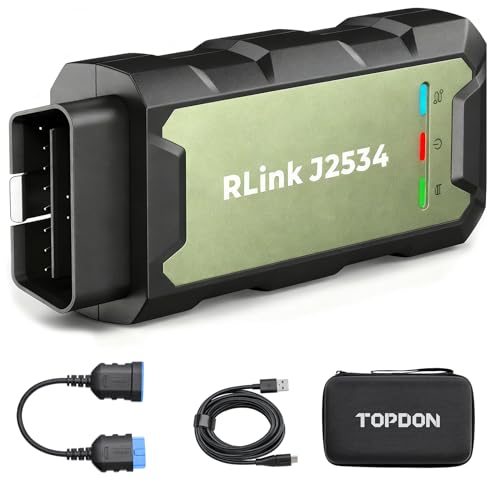
- Advanced VCI Box, Industry-leading J2534 Pass-Thru...
- High-Speed OEM-Level Diagnostics & Programming: Unlock true...
- Coverage for 17 Car Brands & Ultra Reliability: Works...
- User-Friendly RLink Platform & Expert Support: TOPDON’s...
- 6.6 ft USB-C Cable & Portable Storage Case: The RLink J...
Last update on 2026-06-12 / Affiliate links / Images from Amazon Product Advertising API
If the PDF is very large, it may not load in the preview below.
Some older TSBs had multiple PDFs — visit the NHTSA Website to view all PDFs.
If the TSB PDF does not show, download or view it on the NHTSA Website.
Click on the (+) Plus Sign
Then Click on Associated Document(s)
Search NHTSA Database for Recalls
Search NHTSA Database for Vehicle Investigations
View Latest Vehicle Investigations
Search NHTSA Database for Vehicle Complaints
View Latest Vehicle Complaints
TSB/Document ID: Circular 91FN_REV2
Replacement Service Bulletin Number:
MFR Communication Date: 2024-08-14
MFR Internal Campaign ID/Software Version: 91FN
Communication Type: Service Campaign
NHTSA Components: UNKNOWN OR OTHER
MFR Component System:
MFR Component Subsystem:
Previous TSB | Next TSB |
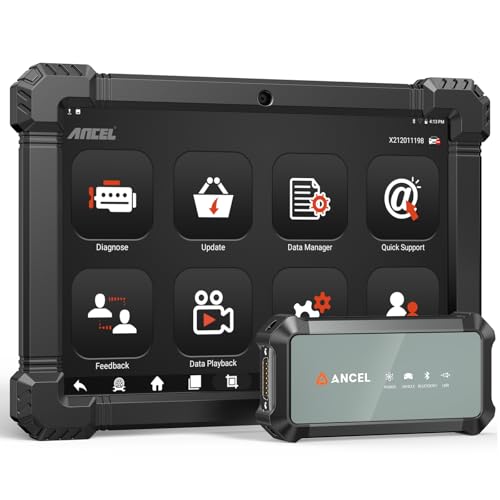
- 2026 ALL-IN-ONE HEAVY DUTY TRUCK SCANNER – BUILT FOR DIESEL DIAGNOSTICS:The ANCEL X7HD PRO combines full-system diagnostics, bi-directional control, ECU coding, HDOBD/OBD2 functions, and 42+ reset services in one powerful heavy duty truck scanner. This diesel scan tool helps technicians, fleet owners, and repair shops diagnose problems faster, reduce downtime, and complete more repairs without switching between multiple truck diagnostic tools. Features a 10.1" Android tablet, Bluetooth & Wi-Fi, live data graphing, and 2 years of f-ree updates
- 42+ RESET FUNCTIONS – MORE THAN A BASIC TRUCK CODE READER:Perform essential service functions including forced DPF regeneration, injector coding, speed limiter adjustment, idle adjustment, oil reset, ABS reset, SRS reset, EPB reset, throttle reset, and suspension calibration. Designed for real truck maintenance and fleet service, this commercial truck diagnostic scanner helps reduce dealer visits, avoid unnecessary downtime, and handle more repair jobs with one diesel diagnostic tool
- ACTIVE TEST & ECU CODING – ADVANCED BIDIRECTIONAL SCAN TOOL FOR TRUCKS:Quickly locate faults by activating components and sending commands directly to vehicle systems. Test injectors, ABS, throttle, cooling systems, and other modules in real time without unnecessary disassembly. ECU coding and module matching help adapt replacement parts, restore factory settings, and reduce repeat repairs, making this semi truck scan tool ideal for advanced troubleshooting and daily shop work
- FULL-SYSTEM HDOBD/OBD2 DIAGNOSTICS – WIDE TRUCK & ENGINE COVERAGE:Read and clear codes, monitor live data, freeze frame, and diagnose engine, transmission, ABS, body, and other major systems. Compatible with Freightliner
 , Kenworth, Peterbilt, Volvo, Mack, International, and other commercial truck brands, plus Cummins, Caterpillar, Detroit, Paccar, and Navistar diesel engines. Also supports full OBD2/EOBD diagnostics for standard vehicles, making it a versatile truck obd2 scanner for mixed fleets and repair shops
 - PROFESSIONAL HARDWARE + RELIABLE SUPPORT – BUILT FOR DAILY SHOP USE:This professional diesel diagnostic computer features a 10.1" touchscreen, Android 10.0 system, 6000mAh battery, Bluetooth/Wi-Fi connectivity, and built-in front & rear cameras for documenting repairs and remote troubleshooting. Includes 2 years of fr-ee updates, 1-year w-arranty, and responsive technical support. Contact [email protected] before purchase to confirm compatibility and supported functions for your truck or diesel engine

- 【Built for Heavy Duty Diesel Diagnostics】Designed for SAE J1939 and J1708 compliant trucks, buses, and diesel-powered commercial vehicles. HD601 truck scanner diagnostic tool helps owner-operators, small fleets, mobile technicians, and independent repair shops quickly identify fault codes, view live data, and make informed repair decisions—saving time, reducing downtime, and avoiding unnecessary shop visits
- 【Full System Diagnostics+All HD OBD Modes】The New HD601 heavy duty truck scanner delivers full-system diagnostics on SAE J1939 and J1708-compliant commercial vehicles—digging into engine, transmission, ABS, fuel, every system that keeps your rig rolling. It supports all HD OBD modes, giving you live data, freeze frame, ECU info, vehicle info, emissions data tracking, plus code reading and clearing. Not just what broke, but why—so you fix it right the first time. Pinpoint issues faster, cut repair costs, and spend less time on the shoulder
- 【Wide Heavy-Duty Vehicle Coverage】Supports a wide range of heavy-duty vehicle manufacturers and systems, including Freightliner, Kenworth, Peterbilt, Volvo, International, Detroit, Cummins, Paccar, Allison, Eaton, Bendix, Wabco, and more. Coverage varies by vehicle make, model, year, and system configuration. Contact our support team before purchase if compatibility verification is needed
- 【Speaks Major Truck Protocol】The New HD601 diesel truck scanner is built for American-made trucks—and supports the heavy‑duty protocols you' re most likely to run into on the road: SAE J1939, J1708/J1587, ISO 15765‑4, ISO 14230‑4, ISO 9141‑2, J1850 PWM/VPW, ISO 27145‑4, and EURO‑6. For most trucks, model years, and systems, it speaks the language your vehicle understands. Just plug it in and start diagnosing—no guesswork, no gatekeeping. Note: vehicle functions and module availability may vary by manufacturer and model year
- 【Save Hundreds on Diagnostic Fees】Why pay $150–300 for someone to read your codes? With the New ANCEL heavy duty truck scanner, you can pull fault codes yourself—in minutes, without leaving the truck. One or two uses pays for the tool. After that, every diagnostic is money back in your pocket. Smart investment for owner-operators, techs, and small fleets. Read and clear stored fault codes in minutes. Active fault codes may require repairs before they can be cleared
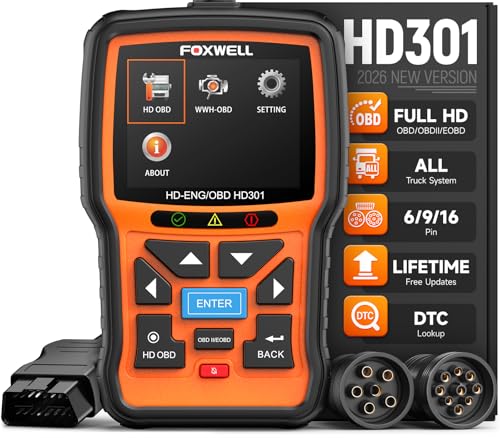
- 【One Tool, Total Fleet Coverage: 6/9/16 Pin Ready】Featuring an integrated 16-pin OBD2 connector and professional-grade 6-pin & 9-pin adapters, this heavy duty truck scanner provides extensive support for J1939, J1708, J1587, ISO 14230-4, ISO 15765-4 and ISO 9141-2, ISO 27145-4 protocols. It offers reliable diagnostic coverage for major American diesel brands—including Cummins, Paccar, Caterpillar, Detroit, and Freightliner—making it a versatile semi truck scanner for managing any diverse fleet.
- 【2 in 1 Diesel Code Reader & Advanced HD OBDII】Equipped with professional-grade diesel scanner capabilities, the HD301 features intuitive Read/Erase codes and turn off the "Check Engine" light. With the built-in DTC Lookup library, you can instantly access fault code definitions on-device without searching the internet. It also retrieves hundreds of essential live sensor data—such as coolant temperature, fuel pressure, and engine RPM—in a stable text format for precise and rapid troubleshooting. (Please note that the HD301 can not support DPF Regen.)
- 【Full System Truck Diagnostic】The FOXWELL HD301 heavy duty scan tool is engineered to deeply access and scan all available electronic control modules specifically for truck, including Engine, Transmission, ABS, SRS, Chassis, and Body Control. This professional truck scanner diagnostic tool allows you to identify issues across the entire vehicle, ensuring your rig stays in peak condition for the long haul.
- 【Versatile for most big Rigs: Commercial, Passenger & Beyond】Engineered for more than just trucks, this heavy duty scan tool offers extensive coverage for pickups, buses, trailers, and even marine vessels. From construction machinery (excavators, loaders) to agricultural equipment (tractors, harvesters), it provides a true all-in-one diagnostic solution.
- 【Plug-and-Play & No Subscription】Designed for the road! No WiFi, no batteries, and no complex App setup required. Simply plug it into your vehicle’s diagnostic port to start scanning immediately. Enjoy lifetime free software updates to keep your HD301 diesel truck scanner current with the latest vehicle models and features—without any hidden subscription fees—While overcoming language barriers with support for Spanish and English.
Last update on 2026-06-12 / Affiliate links / Images from Amazon Product Advertising API
This product presentation was made with AAWP plugin.