
NHTSA ID Number: 11006911
Manufacturer Communication Number: fsd_12-5-1-2_082024.pdf
TSB/Document Date: 2024-09-04
Summary
Tesla does not provide physical owner's manual copies. Instead, all available owner’s manual content is integrated into the vehicle software, and only the content relevant for a given vehicle, based on vehicle configuration and software version installed, is displayed on its touchscreen. This file contains all available owner’s manual content for the vehicle converted to PDF format, and given the distribution method and NHTSA’s submission format requirements, it is the best available representative copy of owner’s manual content. However, a customer who accesses the owner’s manual via their vehicle’s touchscreen would only see the parts of this PDF file that are relevant to their vehicle.
Owner's Manual
Owners Manual
Owner's Manual
75
Owners Manual
76
Owner's Manual
Owners Manual
Owner's Manual
77
Owners Manual
NOTE: To display more details about the roadway and its surroundings, such as road markings, stop lights, objects (such as
trash cans and poles), etc., touch Controls > Autopilot > Full Self-Driving Visualization Preview (if equipped).
1. When Autosteer is available but you haven't activated it, the icon is gray. When Autosteer is actively steering
Model SModel XModel 3Model Y, the icon is blue (see Autosteer on page 548).
2. Currently selected drive mode: Park, Reverse, Neutral, or Drive.
3. Driving speed.
4. The power meter displays real-time power usage (see Regenerative Braking on page 456 for more information). The power
meter may display vertically at the top of the driving status screen but the function is the same.
5. Other cars detected on the road (as applicable).
6. Your Model SModel XModel 3Model Y. Colored lines radiate from the image of your Model SModel XModel 3Model Y as
objects are detected (other motorists, guard rails, etc.). The location of the lines correspond to the location of the detected
object. The color of the lines (white, yellow, orange, or red) represents the object's proximity to Model SModel XModel
3Model Y, with white being the farthest and red being very close and requiring your immediate attention. See Lane Assist
on page 629.
7. When Autosteer is active and detecting the driving lane, the lane is highlighted in blue (see Autosteer on page 548).
NOTE: If Navigate on Autopilot is active, the driving lane displays as a single blue line in front of Model SModel XModel
3Model Y (see Navigate on Autopilot on page 554).
8. The speed limit that is currently being detected by Speed Assist (see Speed Assist on page 642).
NOTE: A blue outline may appear around the speed limit icon to notify that you are above the speed limit.
NOTE: The icon associated with the detected speed limit reflects the style of speed limit signs used in your market region.
9. Total estimated driving distance (or energy) available. Touch the displayed value to change how available energy is
displayed. You can toggle between driving distance and percentage of battery energy remaining. You can also change how
energy is displayed by touching Controls > Display > Energy Display.
NOTE: When anticipating when you need to charge, use range estimates as a general guideline only.
10. The set cruising speed. When Traffic-Aware Cruise Control is available but you haven't set a cruising speed, the number is
gray (see Traffic-Aware Cruise Control on page 547).
WARNING: Pay attention to important alert messages that display at the bottom of the car status area of the
touchscreen. Ignoring these messages can result in serious injury or death.
WARNING: Although the touchscreen shows surrounding traffic, some vehicles may not be displayed. Never rely on the
touchscreen to determine if a vehicle is present (for example, in your blind spot). Always use your mirrors and perform
shoulder checks.
78
Owner's Manual
Owners Manual
Instrument Panel
Instrument Panel Overview
The instrument panel changes depending on whether Model SModel XModel 3Model Y is:
• Off or Parked (shown below).
• Driving (see Instrument Panel - Driving on page 81).
• Charging (see Charging Instructions on page 715).
When Model SModel XModel 3Model Y is off or Parked, the instrument panel shows remaining estimated range, vehicle
status, and outside temperature.
Owner's Manual
79
Owners Manual
1. When the car is off and you initially press the brake, indicator lights flash briefly along the top of the instrument panel.
Unless an indicator light applies to a current situation, it should turn off. If an indicator light fails to turn on or off, refer to
Indicator Lights on page 82.
2. An image of your car and its accompanying status (such as lights on, door open, etc.).
3. Total estimated driving distance (or energy) available. Instead of driving distance, you can display the percentage of
battery energy remaining. To do so, touch Controls > Display > Energy Display.
NOTE: When anticipating when you need to charge, use estimates as a general guideline only.
4. Estimated outside temperature.
5. Pay attention to instructions or important alert messages that display here. If any alerts are in effect, you can view
information about them by touching Controls and then touching the bell icon located at the top of the screen.
6. Currently selected drive mode: Park, Reverse, Neutral, or Drive. If Auto Shift out of Park is enabled, Drive or Reverse is
automatically selected (based on sensor input) and displayed on the instrument panel when the driver's door is closed and
seatbelt is buckled (see Seat Belts on page 254).
7. Current time of day.
See Popup Messages and Vehicle Alerts on page 34 for more information about alert popups on your vehicle's touchscreen.
80
Owner's Manual
Owners Manual
Instrument Panel - Driving
When Model SModel XModel 3Model Y is driving (or ready to drive), the instrument panel shows your current driving status
and a real-time visualization of the road as detected by the Autopilot components. The visualization automatically zooms in
and out based on the detected road type.
NOTE: Touch Controls > Autopilot > Full Self-Driving Visualization Preview (if equipped) to display more details about the
roadway and its surroundings, such as road markings, stop lights, objects (such as trash cans and poles), etc.
1. The instrument panel displays your location on a map, a wiper menu, Auto Shift out of Park instructions, etc. When a
navigation route is active, the upcoming portion of the route displays.
Owner's Manual
81
Owners Manual
2. The speed limit (if available) that is currently being detected by Speed Assist (see Speed Assist on page 642).
NOTE: A blue outline may appear around the speed limit icon to notify that you are above the speed limit.
3. Current driving speed.
4. The currently set cruising speed. When Traffic-Aware Cruise Control is available but you haven't set a cruising speed by
engaging Traffic-Aware Cruise Control or Autosteer, the icon is gray (see Autopilot Features on page 546).
5. Autosteer is actively steering Model SModel XModel 3Model Y. When Autosteer is available but you haven't activated it,
the icon is gray (see Autosteer on page 548).
6. When navigating, upcoming instructions in the navigation route appear here.
7. Total estimated driving distance (or energy) available. Instead of driving distance, you can display the percentage of
battery energy remaining (touch Controls > Display > Energy Display).
NOTE: When anticipating when you need to charge, use estimates as a general guideline only.
8. Surrounding road users are shown in their corresponding locations.
WARNING: Although the instrument panel shows surrounding traffic, some vehicles may not be displayed. Never rely
on the instrument panel to determine if a vehicle is present (for example, in your blind spot). Always use your mirrors
and perform shoulder checks.
9. Your Model SModel XModel 3Model Y.
10. The power meter displays real-time power usage. During acceleration, the bar fills to the right to represent power being
used. During deceleration (when Model SModel XModel 3Model Y is moving and you release your foot from the accelerator
pedal), the bar fills to the left with a green color to represent power being fed back to the Battery by regenerative braking
(see Regenerative Braking on page 456).
11. When Autosteer is active and detects the driving lane, it is highlighted in blue (see Autopilot Features on page 546).
Depending on the current driving scenario, you may see neighboring lanes.
NOTE: In situations where Autosteer is unable to detect lane markings, the driving lane is determined based on the vehicle
you are following.
NOTE: If Navigate on Autopilot is active, the driving lane displays as a single blue line in front of Model SModel XModel
3Model Y (see Navigate on Autopilot on page 554).
Indicator Lights
Indicator lights display along the top of the instrument panel to show status and alert you of specific vehicle conditions.
Indicator
Description
(USA) A brake system fault is detected or the brake fluid level is low. See Braking and Stopping on page 454.
Contact Tesla immediately.
(Canada) A brake system fault is detected or the brake fluid level is low. See Braking and Stopping on page
454. Contact Tesla immediately.
(USA) A brake booster fault has been detected. See Braking and Stopping on page 454.
82
Owner's Manual
Owners Manual
Indicator
Description
(Canada) A brake booster fault has been detected. See Braking and Stopping on page 454.
(USA) An ABS (Anti-lock Braking System) fault is detected. See Braking and Stopping on page 454. Contact
Tesla immediately.
(Canada) An ABS (Anti-lock Braking System) fault is detected. See Braking and Stopping on page 454.
Contact Tesla immediately.
(USA) A parking brake fault is detected. Contact Tesla. See Parking Brake on page 462.
(Canada) A parking brake fault is detected. Contact Tesla. See Parking Brake on page 462.
(USA) The parking brake is manually applied. See Parking Brake on page 462.
(Canada) The parking brake is manually applied. See Parking Brake on page 462.
Tire pressure warning. The pressure of a tire is out of range. If a fault with the Tire Pressure Monitoring
System (TPMS) is detected, the indicator flashes. For a TPMS fault, contact Tesla. See Tire Care and
Maintenance on page 742.
A seat belt for an occupied seat is not fastened. See Seat Belts on page 254.
Airbag safety. If this red indicator does not flash on briefly when Model SModel XModel 3Model Y prepares to
drive, or if it remains on, contact Tesla immediately. See Airbags on page 342Airbags on page 320.
Owner's Manual
83
Owners Manual
Indicator
Description
Front fog lights are on, if equipped. See Lights on page 426.
Parking lights (side marker lights, tail lights, and license plate lights) are on. See Lights on page 426.
Low beam headlights are on.
High beam headlights are on. Illuminates when high beams are on but the Auto High Beam setting (if
equipped) is turned off or if the Auto High Beam setting is turned on but is temporarily unavailable. See Lights
on page 426.
High beam headlights are currently turned on, and Auto High Beam (if equipped) is ready to turn off the high
beams if light is detected in front of Model SModel XModel 3Model Y. See Lights on page 426.
High beam headlights are temporarily turned off because Auto High Beam (if equipped) is on and is detecting
light in front of Model SModel XModel 3Model Y. When light is no longer detected, the high beams
automatically turn back on. See Lights on page 426.
If a fault is detected with the Adaptive Front Lighting this indicator displays, if equipped. See #unique_147 on
page .
If a fault is detected with the Adaptive Front Lighting this indicator displays, if equipped. See Adaptive Front
Lighting System (AFS) on page 431.
This indicator flashes amber when the electronic stability control systems are actively minimizing wheel spin
by controlling brake pressure and motor power. See Traction Control on page 490. If this indicator remains
on, a fault is detected and you should immediately contact Tesla.
If a fault is detected that reduces the performance of the air suspension system, this amber indicator light
displays (see Air Suspension on page 465). If the problem persists, contact Tesla.
84
Owner's Manual
Owners Manual
Indicator
Description
If a fault is detected that disables the air suspension system, this red indicator light displays (see Air
Suspension on page 465). Contact Tesla.
Vehicle Hold is actively applying the brakes. See Vehicle Hold on page 487.
Electronic stability control systems are no longer minimizing wheel spin. See Traction Control on page 490.
Model SModel XModel 3Model Y is in Transport mode and can roll freely. It does not automatically shift into
Park when you exit. See Activate Transport Mode on page 897.
Trailer mode (if equipped) is active. See Towing and Accessories on page 530.
A blue snowflake appears when some of the energy stored in the Battery may not be available due to cold
weather conditions. During these cold weather conditions, charging rates may also be limited. If
Model SModel XModel 3Model Y is plugged in, you can heat your Battery by turning on climate control with
the mobile app. The snowflake disappears when the Battery is sufficiently warm.
A green icon appears when regenerative braking is limited. See Regenerative Braking on page 456 for more
information.
Vehicle power is currently being limited because the energy remaining in the Battery is low, the vehicle's
systems are being heated or cooled, or an error is detected by the drive inverter.
Owner's Manual
85
Owners Manual
Instrument Panel
Instrument Panel Overview
The instrument panel changes depending on whether Model SModel XModel 3Model Y is:
• Off (shown below).
• Driving (see Instrument Panel - Driving on page 91Instrument Panel - Driving on page 93Instrument Panel - Driving on
page 95).
• Charging (see Charging Status on page 719).
When Model SModel XModel 3Model Y is off, the instrument panel shows remaining estimated range, status of doors, and
outside temperature. When you press the brake, indicator lights flash on briefly along the top. Unless an indicator light applies
to a current situation, it should turn off. If an indicator light fails to turn on or off, contact Tesla.
NOTE: The following illustration is provided for demonstration purposes only. Depending on vehicle options, software version,
and market region, the information displayed may be slightly different.
86
Owner's Manual
Owners Manual
The following indicators illuminate on the instrument panel to advise you or alert you of a specific condition.
If the touchscreen displays this red brake indicator at any time other than briefly when you first start
Model SModel XModel 3Model Y, a brake system fault is detected, or the level of the brake fluid is low.
Contact Tesla immediately. Apply steady pressure and keep the brake pedal firmly pressed to stop the
vehicle when safe to do so.
USA:
Canada:
If the touchscreen displays this red brake indicator at any time other than briefly when you first start
Model SModel XModel 3Model Y, a brake system fault is detected, or the level of the brake fluid is low.
Contact Tesla immediately. Apply steady pressure and keep the brake pedal firmly pressed to stop the
vehicle when safe to do so.
The touchscreen displays this amber brake indicator if a brake booster fault is detected. Apply steady
pressure and keep the brake pedal firmly pressed to stop the vehicle when safe to do so. Hydraulic Boost
Compensation will be active (see Hydraulic Boost Compensation on page 1215).
USA:
The touchscreen displays this amber brake indicator if a brake booster fault is detected. Apply steady
pressure and keep the brake pedal firmly pressed to stop the vehicle when safe to do so. Hydraulic
Boost Compensation will be active (see Hydraulic Boost Compensation on page 1215).
Canada:
The ABS indicator briefly flashes amber on the touchscreen when you first start Model SModel XModel
3Model Y. If this indicator lights up at any other time, an ABS fault has occurred and the ABS is not
operating. Contact Tesla. The braking system remains fully operational and is not affected by an ABS
failure. However, braking distances may increase. Drive cautiously and avoid heavy braking.
USA:
Canada:
Owner's Manual
The ABS indicator briefly flashes amber on the touchscreen when you first start Model SModel XModel
3Model Y. If this indicator lights up at any other time, an ABS fault has occurred and the ABS is not
operating. Contact Tesla. The braking system remains fully operational and is not affected by an ABS
failure. However, braking distances may increase. Drive cautiously and avoid heavy braking.
87
Owners Manual
When you manually apply the parking brake using the touchscreen, the red parking brake indicator lights
up on the touchscreen.
USA:
When you manually apply the parking brake using the touchscreen, the red parking brake indicator
lights up on the touchscreen.
Canada:
If the parking brake experiences an electrical issue, the amber parking brake indicator lights up and a fault
message displays on the touchscreen.
USA:
If the parking brake experiences an electrical issue, the amber parking brake indicator lights up and a
fault message displays on the touchscreen.
Canada:
Low beam headlights are on.
High beam headlights are on. Illuminates when high beams are on but the Auto High Beam setting is turned off
or if the Auto High Beam setting is turned on but is temporarily unavailable. See High Beam Headlights on page
430.
High beam headlights are currently turned on, and Auto High Beam is ready to turn off the high beams if light is
detected in front of Model SModel XModel 3Model Y. See High Beam Headlights on page 430.
High beam headlights are temporarily turned off because Auto High Beam is on and is detecting light in front of
Model SModel XModel 3Model Y. When light is no longer detected, the high beams automatically turn back on.
See High Beam Headlights on page 430.
Parking lights (side marker lights, tail lights, and license plate lights) are on. See Lights on page 426.
Front fog lights, if equipped. See Lights on page 426.
Adaptive Front Lighting, if equipped. See #unique_147 on page .
88
Owner's Manual
Owners Manual
Adaptive Front Lighting, if equipped. See Adaptive Front Lighting System (AFS) on page 431.
Electronic stability control systems are actively minimizing wheel spin by controlling brake pressure and motor
power (indicator flashes amber). See Traction Control on page 490. If this indicator remains on, a fault is
detected and you should immediately contact Tesla.
If a fault is detected that reduces the performance of the air suspension system, this amber indicator light
displays (see Air Suspension on page 465Air Suspension on page 468Air Suspension on page 470). If the
problem persists, contact Tesla.
If a fault is detected that disables the air suspension system, a red indicator lights up on the instrument panel
(see Air Suspension on page 465Air Suspension on page 468Air Suspension on page 470). Contact Tesla.
Airbag safety. If this red indicator does not flash on briefly when Model SModel XModel 3Model Y prepares to
drive, or if it remains on, contact Tesla immediately. See Airbags on page 342Airbags on page 320.
Vehicle Hold is actively applying the brakes. See Vehicle Hold on page 487.
Tire pressure warning. The pressure of a tire is out of range. If a fault with the Tire Pressure Monitoring System
(TPMS) is detected, the indicator flashes. For a TPMS fault, contact Tesla. See Tire Care and Maintenance on
page 742.
A door or trunk is open. See Keys and Doors on page 143, Rear Trunk on page 165, or Front Trunk on page
181.
A seat belt for an occupied seat is not fastened. See Seat Belts on page 254.
NOTE: Depending on the date of manufacture, rear seating positions may not be equipped with a seat belt
reminder.
Electronic stability control systems are no longer minimizing wheel spin. On a Rear Wheel Drive vehicle, the
traction control system has been turned off, or on an All-Wheel Drive vehicle, Slip Start has been enabled. See
Traction Control on page 490.
Model SModel XModel 3Model Y is in Transport mode and can roll freely. It does not automatically shift into
Park when you exit. See Instructions for Transporters on page 878Instructions for Transporters on page
886Instructions for Transporters on page 905.
Owner's Manual
89
Owners Manual
Trailer mode (if equipped) is active. See Towing and Accessories on page 530.
Appears when some of the energy stored in the Battery may not be available due to cold weather conditions.
During these cold weather conditions, charging rates may also be limited. If Model SModel XModel 3Model Y is
plugged in, you can heat your Battery by turning on climate control with the mobile app. The snowflake icon
disappears when the Battery is sufficiently warm.
Vehicle power is currently being limited because the energy remaining in the Battery is low or the vehicle's
systems are being heated or cooled.
Flashes green when the left turn signal is operating. Both turn signal indicators flash green when the hazard
warning flashers are operating.
Flashes green when the right turn signal is operating. Both turn signal indicators flash green when the hazard
warning flashers are operating.
Popup Messages and Vehicle Alerts
Popup messages appear on the instrument panel. For example, a seat belt reminder appears if a seat belt is unfastened in an
occupied seat, an alert appears to notify you of an incoming phone call, a text message appears (when applicable), and voice
commands appear when in use.
You can view a list of vehicle alerts and notifications by touching the notifications icon on the touchscreen.
NOTE: Not all alerts provide additional information at this time.
90
Owner's Manual
Owners Manual
Instrument Panel - Driving
When Model SModel XModel 3Model Y is driving (or ready to drive), the instrument panel shows your current driving status
and a real-time visualization of the road as detected by the Autopilot components (see About Autopilot on page 543). The
visualization automatically zooms in and out as needed to inform you when a vehicle is detected in your blind spot.
NOTE: The following illustration is provided for demonstration purposes only. Depending on vehicle options, software version,
and market region, the information displayed may be slightly different.
NOTE: Touch Controls > Autopilot > Full Self-Driving Visualization Preview (if equipped) to display more details about the
roadway and its surroundings, such as road markings, stop lights, objects (such as trash cans and poles), etc.
Owner's Manual
91
Owners Manual
1. Indicator lights display along the top to provide status (see Instrument Panel Overview on page 86).
2. When you are actively navigating to a destination, navigation instructions display here. Use the left steering wheel buttons
to change what displays on the left side of the instrument panel whenever navigation instructions are not displayed (see
Using Left Steering Wheel Buttons on page 381).
3. Autosteer is actively steering Model SModel XModel 3Model Y. When Autosteer is available but you haven't activated it,
the icon is gray (see Autosteer on page 578).
4. Traffic-Aware Cruise Control is cruising at a set speed. When Traffic-Aware Cruise Control is available but you haven't set
a cruising speed, the icon is gray and the speed is not shown (see Traffic-Aware Cruise Control on page 567).
5. Driving speed.
6. The speed limit (if available) that is currently being detected by Speed Assist (see Speed Assist on page 642).
NOTE: A blue outline may appear around the speed limit icon to notify that you are above the speed limit.
7. On the Energy graph, dashed lines appear on the power meter if Model SModel XModel 3Model Y is limiting power. The
dashed lines appear on the top portion (energy being used) when power available for acceleration is being limited, and on
the bottom portion (energy being gained) when power that can be gained by regenerative braking is limited.
Model SModel XModel 3Model Y limits power for many reasons. Here are just a few examples:
◦ Acceleration may be limited when the Battery is reaching a low state of charge or if the powertrain is hot.
◦ Both acceleration and regenerative braking may be limited when the ambient temperature is either very high or very low.
◦ Regenerative braking may be limited when the Battery is fully charged.
NOTE: Use the right steering wheel buttons to control what displays on the right side of the instrument panel (see Using
Right Steering Wheel Buttons on page 382).
8. Pay attention to important alert messages that display here. If any alerts are in effect, you can view information about them
by touching the alert icon (exclamation mark) on the touchscreen’s status bar (the topmost area of the touchscreen).
9. Use the right steering wheel buttons to change what displays on the right side of the instrument panel whenever a phone
call is not active (see Using Right Steering Wheel Buttons on page 382).
10. Total estimated driving distance (or energy) available. Instead of driving distance, you can display the percentage of
battery energy remaining. To do so, touch Controls > Display > Energy Display.
NOTE: When anticipating when you need to charge, use range estimates as a general guideline only.
11. Currently selected drive mode: Park, Reverse, Neutral, or Drive.
12. The car in front of you (if applicable).
NOTE: In situations where Autosteer is unable to detect lane markings, the driving lane is determined based on the vehicle
you are following. In these situations, the car in front of you is highlighted in blue.
13. Pay attention to important driving-related messages that appear at the bottom center of the instrument panel.
14. Your Model SModel XModel 3Model Y.
15. When Autosteer is active and detects the driving lane, it is highlighted in blue (see Autosteer on page 578). Depending on
the current driving scenario, you may see neighboring lanes.
NOTE: If Navigate on Autopilot is active, the driving lane displays as a single blue line in front of Model SModel XModel
3Model Y (see Navigate on Autopilot on page 584).
WARNING: Although the instrument panel shows surrounding traffic, some vehicles may not be displayed. Never rely on
the instrument panel to determine if a vehicle is present (for example, in your blind spot). Always use your mirrors and
perform shoulder checks.
92
Owner's Manual
Owners Manual
Instrument Panel - Driving
When Model SModel XModel 3Model Y is driving (or ready to drive), the instrument panel shows your current driving status.
The visualization automatically zooms in and out to as needed to inform you when a vehicle is detected in your blind spot.
NOTE: The following illustration is provided for demonstration purposes only. Depending on vehicle options, software version,
and market region, the information displayed may be slightly different.
1. Indicator lights display along the top to provide status (see Instrument Panel Overview on page 86).
Owner's Manual
93
Owners Manual
2. When you are actively navigating to a destination, navigation instructions display here. Use the left steering wheel buttons
to change what displays on the left side of the instrument panel whenever navigation instructions are not displayed (see
Using Left Steering Wheel Buttons on page 381).
3. When you set a cruising speed using cruise control, the set speed displays on the cruise control icon (see Cruise Control
on page 472).
4. Driving speed.
5. The speed limit (if available) that is currently being detected by Speed Assist (see Speed Assist on page 642).
6. On the Energy graph, dashed lines appear on the power meter if Model SModel XModel 3Model Y is limiting power. The
dashed lines appear on the top portion (energy being used) when power available for acceleration is being limited, and on
the bottom portion (energy being gained) when power that can be gained by regenerative braking is limited.
Model SModel XModel 3Model Y limits power for many reasons. Here are just a few examples:
◦ Acceleration may be limited when the Battery is reaching a low state of charge or if the powertrain is hot.
◦ Both acceleration and regenerative braking may be limited when the ambient temperature is either very high or very low.
◦ Regenerative braking may be limited when the Battery is fully charged.
7. Pay attention to important alert messages that display here. If any alerts are in effect, you can view information about them
by touching the alert icon (exclamation mark) on the touchscreen’s status bar (the topmost area of the touchscreen).
8. Use the right steering wheel buttons to change what displays on the right side of the instrument panel whenever a phone
call is not active (see Using Right Steering Wheel Buttons on page 382).
9. Total estimated driving distance (or energy) available. Instead of driving distance, you can display the percentage of
battery energy remaining. To do so, touch Controls > Display > Energy Display.
NOTE: When anticipating when you need to charge, use range estimates as a general guideline only.
NOTE: In cold weather, some of the stored energy in the Battery may not be available on your drive because the Battery is
too cold. When this happens, a portion of the Battery meter is blue and the driving distance value has a snowflake image
next to it. If Model SModel XModel 3Model Y is plugged in, you can heat your Battery using wall power by turning on
climate control using the mobile app. When the Battery warms up, the blue portion on the meter and the snowflake image
are no longer displayed.
10. Currently selected drive mode: Park, Reverse, Neutral, or Drive.
11. The car in front of you (if applicable).
12. Pay attention to important driving-related messages that appear at the bottom center of the instrument panel.
13. Your Model SModel XModel 3Model Y.
14. Driving lane (if detected). Depending on the current driving scenario, you may see neighboring lanes.
WARNING: Although the instrument panel shows surrounding traffic, some vehicles may not be displayed. Never rely on
the instrument panel to determine if a vehicle is present (for example, in your blind spot). Always use your mirrors and
perform shoulder checks.
94
Owner's Manual
Owners Manual
Instrument Panel - Driving
When Model SModel XModel 3Model Y is driving (or ready to drive), the instrument panel shows your current driving status.
NOTE: The following illustration is provided for demonstration purposes only. Depending on vehicle options, software version,
and market region, the information displayed may be slightly different.
1. Indicator lights display along the top to provide status (see Instrument Panel Overview on page 86).
2. When you are actively navigating to a destination, navigation instructions display here. Use the left steering wheel buttons
to change what displays on the left side of the instrument panel whenever navigation instructions are not displayed (see
Using Left Steering Wheel Buttons on page 381).
3. Cruise control status displays here, if engaged (see Cruise Control on page 472).
4. Dashed lines appear on the power meter if Model S is limiting power. The dashed lines appear on the top portion (energy
being used) when power available for acceleration is being limited, and on the bottom portion (energy being gained) when
power that can be gained by regenerative braking is limited. Model SModel XModel 3Model Y limits power for many
reasons. Here are just a few examples:
◦ Acceleration may be limited when the Battery is reaching a low state of charge or if the powertrain is hot.
◦ Both acceleration and regenerative braking may be limited when the ambient temperature is either very high or very low.
◦ Regenerative braking may be limited when the Battery is fully charged.
5. Driving speed.
6. Pay attention to important alert messages that display here. If any alerts are in effect, you can view information about them
by touching the alert icon (exclamation mark) on the touchscreen’s status bar (the topmost area of the touchscreen).
7. Use the right steering wheel buttons to change what displays on the right side of the instrument panel whenever a phone
call is not active (see Using Right Steering Wheel Buttons on page 382).
8. Total estimated driving distance (or energy) available. Instead of driving distance, you can display the percentage of
battery energy remaining. To do so, touch Controls > Display > Energy Display.
NOTE: When anticipating when you need to charge, use range estimates as a general guideline only.
Owner's Manual
95
Owners Manual
NOTE: In cold weather, some of the stored energy in the Battery may not be available on your drive because the Battery is
too cold. When this happens, a portion of the Battery meter is blue and the driving distance value has a snowflake image
next to it. If Model SModel XModel 3Model Y is plugged in, you can heat your Battery using wall power by turning on
climate control using the mobile app. When the Battery warms up, the blue portion on the meter and the snowflake image
are no longer displayed.
9. Currently selected drive mode: Park, Reverse, Neutral, or Drive.
10. Pay attention to important driving-related messages that appear at the bottom center of the instrument panel.
11. Your Model SModel XModel 3Model Y.
96
Owner's Manual
Owners Manual
Voice Commands
NOTE: For your convenience, Tesla allows you to choose from a variety of languages to use for voice commands. To choose a
different language, touch Controls > Display > Voice Recognition Language.
Use voice commands to easily control settings and preferences without using the touchscreen. Voice commands are designed
to understand natural requests. The following is a non-exhaustive list of actions that you can perform with voice commands:
• Adjust climate preferences
• Tweak the windshield wiper speed and frequency
• Control various aspects of your vehicle
• Navigate to a location
• Call a contact
• Interact with apps and settings
To initiate a voice command, press and release the right scroll wheel button on the steering wheelsteering yoke (or steering
wheel)press and release the right scroll wheel button on the steering wheelsteering yoke (or steering wheel)fully press the
microphone button on the right side of the steering wheelsteering yoke (or steering wheel)fully press the microphone button
on the right side of the steering wheelsteering yoke (or steering wheel)touch the voice button on the right side of the steering
wheelsteering yoke (or steering wheel). When a chime sounds, make your request.
Owner's Manual
97
If the PDF is very large, it may not load in the preview below.
Some older TSBs had multiple PDFs — visit the NHTSA Website to view all PDFs.
If the TSB PDF does not show, download or view it on the NHTSA Website.
Click on the (+) Plus Sign
Then Click on Associated Document(s)
Search NHTSA Database for Recalls
Search NHTSA Database for Vehicle Investigations
View Latest Vehicle Investigations
Search NHTSA Database for Vehicle Complaints
View Latest Vehicle Complaints
TSB/Document ID: fsd_12-5-1-2_082024.pdf
Replacement Service Bulletin Number:
MFR Communication Date: 2024-08-31
MFR Internal Campaign ID/Software Version: fsd-12-5-1-2
Communication Type: Over The Air
NHTSA Components: UNKNOWN OR OTHER
MFR Component System:
MFR Component Subsystem:
Previous TSB | Next TSB |
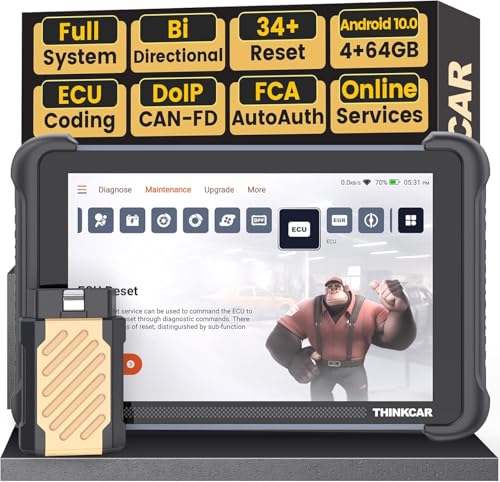
- [Notice] When you receive a used device, it may be a customer return resold by Amazon without inspection. You can exchange it for a new one through Amazon. As this situation is unavoidable, we sincerely apologize. For any issues, contacting us via Amazon's "Messages" is the best way. THINKSCAN 689BT Bidirectional Scan Tool Can Be Used Immediately After It is Turned On, Without Complicated Registration Process, Which is More Convenient & Quick.
- Full Bi-Directional Control & 3000+ Active Tests: Take control and test components like actuators, fuel injectors, relays, and cooling fans in real time. You’ll quickly see if the problem is in the part itself or the control module — saving you hours of guesswork and frustrating trial-and-error.
- Advanced ECU Coding Capabilities: Handle module matching and hidden feature activation with confidence. When you replace an ECU or want to customize settings, this obd2 scanner diagnostic bi directional tool gives you the professional-level capabilities you need without the dealership price tag.
- 34+ Useful Reset and Maintenance Functions: Complete everyday service tasks smoothly with a wide range of helpful reset and maintenance functions. Whether you’re keeping up with regular upkeep or tackling a specific job, this scanner makes maintenance simpler and less stressful for both DIYers and pros.
- Comprehensive Full System Diagnostics: Diagnose every major system — Engine, Transmission, ABS, SRS, TPMS, and more — all in one place. Finally stop wondering if you’re missing something important; get the full picture and clear codes with ease.
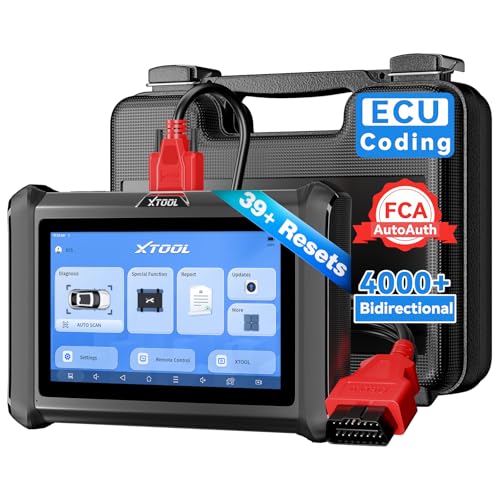
- Top Reasons to Choose the D7S OBD2 Scanner: XTOOL D7S car scan tool, an upgrade of XTOOL D7, offers comprehensive features for automotive technicians, workshops, and DIY enthusiasts 1. Upgraded Hardware: 2+64GB memory, rear camera, intuitive interface, foldable bracket 2. Complete Diagnostics: FCA
 Autoauth, OE-level all system scan, 39+ maintenance services, 4K+ bidirectional, CANFD/DoIP protocol 3. Advanced Capabilities: ECU c0ding, PMI functions 4. Wide Compatibility: Support 10,000+ models, covering 99% vehicle brands 5. Multi-language: Available in 22+ languages, No IP Restrictions 6. 3-Year Updates: Save 300 bucks on software updates for the latest features and optimizations
 - 2026 Upgraded D7S Car Scanner Features: The newly 2026 D7S V2.0 scanner for car brings exciting features for advanced vehicle diagnostics and enhanced user experience 1. FCA AutoAuth: Now supports FCA SGW module for Chrysler, for Jeep, for Dodge (2018+), for Fiat (2017+), enabling faster vehicle communication without gateway restrictions 2. PMI (Offline ECU Pr0gramming): Allows for Ford, for Lincoln, and for Mazda ECU pr0gramming for new modules 3. Optimized Diagnostic Report 2.0: Personalized reports with logos and customer info for auto shops. Note: Compatibility varies by cars, please check before order
- 39+ Services/Resets/Adaptations/Relearns/Calibrations: XTOOL D7S full system car scanner diagnostic tool tackles 99% of common car issues through its 36+ special functions, including Oil Reset, EPB, SAS, BMS, Throttle Reset, Injector C0ding, ABS Bleed, TPMS Reset, Power Balance, etc and also covers specific-vehicle functions like Crank Sensor Relearn, ABS Initialization, Cylinder Power Balance, Fuel Trim Reset, Idle Relearn etc. This car diagnostic scanner enhances efficiency, making repairs and maintenance hassle-free. Tip: DO NOT for All vehicles, please check compatibility first
- Cost-effective ECU C0ding Scan Tool for Specific Brands: Enhance your vehicle's performance with XTOOL D7S! This obd2 scanner all systems bidirectional offers advanced capabilities at an affordable price, supports online for BMW, for Benz and offline for BENZ, for MIT, along with PMI functions for Ford, for Mazda, and for Lincoln. Ideal for technicians and DIY enthusiasts, this automotive scanner diagnostic tool optimizes vehicle performance and enhances the driving experience. Note: Not for all cars and modules, please send car VIN to check the compatibility before purchase
- OE All System Diagnostic & 8 Pids Graphing: XTOOL D7S is a comprehensive all system bi directional obd2 scanner that delivers dealer-level diagnostics, completely controlling over your vehicle’s performance and health. This automotive scan tool can read and clear DTCs, view live data and ECU information, retrieve freeze frames, and perform active tests and full obd2 functions. This bi-directional scan tool can can identify your vehicle's make, model, and year information with just one click and show up to 8 PIDs live data with options for CSV viewing, playback, and recording for in-depth analysis. It is easy-to-use for both professionals and beginners, helping pinpoint issues efficiently
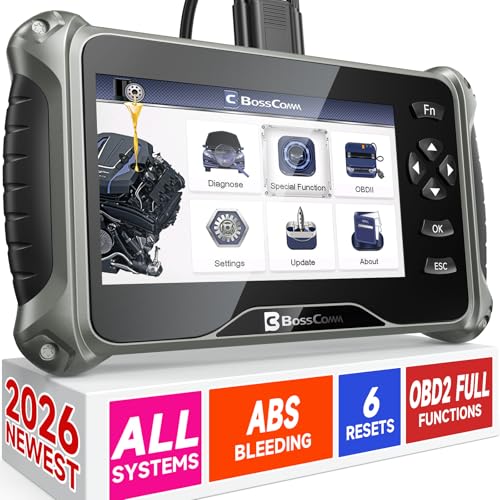
- 【✅Compared to BOSSCOMM IF742, IF745 Offers Full-System Diagnostics】The BOSSCOMM IF745 car diagnostic scanner is an upgraded model of IF742. In addition to supporting all OBD2 Code Reader functions and 6 reset options (ABS/EPB/SAS/BMS/Oil/Throttle), it expands diagnostics from 4 systems (Check Engine/ABS/SRS/Transmission) to vehicle All systems, including Steering, Suspension, and Body Electronics. This provides deeper, more comprehensive diagnostic capabilities.
- 【✨10 OBD2 Functions】The BOSSCOMM IF745 scan tool’s DTC Lookup instantly translates fault codes into user-friendly explanations, its I/M Readiness feature streamlines emissions testing with a single tap, and Freeze Frame lets you pinpoint the exact moment of a fault for in-depth root-cause diagnosis. Combined with a live data dashboard and advanced diagnostics (O2S, OBMon, EVAP), it delivers comprehensive insights for confident troubleshooting.
- 【✨Deep Diagnostics for All Vehicle System Modules】Beyond code reading/clearing and ECU information retrieval, our all-in-one data stream feature lets you inspect all current fault codes and their locations across the vehicle’s systems. This vehicle code reader helps you turn off dashboard warning lights and perform a comprehensive self-check of your car at home—no more back-and-forth trips to the repair shop or hefty inspection fees.
- 【✨6 Essential Resets: ABS Bleeding, Oil, EPB, SAS, Throttle, BMS】The BOSSCOMM IF745 obd2 scanner diagnostic tool swiftly purges air from brake lines to restore braking sensitivity, fine-tunes maintenance cycles to eliminate false alerts, resolves parking brake issues with one-click control, recalibrates steering sensors for stability, optimizes engine idling/acceleration for smoother performance, and deeply resets battery systems to extend lifespan and range via precise parameter adjustments.❗NOTE: Does NOT support bidirectional control, coding, or programming.
- 【✨10,000+ Car Models, AutoVIN, 13 Languages】The BOSSCOMM IF745 vehicle scanner diagnostic tool covers 73+ global car brands and offers support in 13 languages, making it perfect for DIYers, auto mechanics, or as a thoughtful gift. With a single-click AutoVIN feature, it instantly retrieves vehicle serial numbers, streamlining diagnostics for users globally. This adaptable tool balances user-friendliness with precision, catering to both personal and professional requirements.✅Unsure about compatibility? Compatibility will vary on vehicles' model and year, pls reach us via 📧 [email protected] 📧 before purchase.

This product presentation was made with AAWP plugin.