
NHTSA ID Number: 10253676
Manufacturer Communication Number: OwnersI
TSB/Document Date: 2024-04-29
Summary
Tesla does not provide physical owner's manual copies. Instead, all available owner?s manual content is integrated into the vehicle software, and only the content relevant for a given vehicle, based on vehicle configuration and software version installed, is displayed on its touchscreen. This file contains all available owner?s manual content for 2021-2024 Model X vehicles converted to PDF format, and given the distribution method and NHTSA?s submission format requirements, it is the best available representative copy of owner?s manual content. However, a customer who accesses the owner?s manual via their vehicle?s touchscreen would only see the parts of this PDF file that are relevant to their vehicle.
◦ Exclude Favorites: Sentry Mode does not automatically enable at any location in your Favorites list.
NOTE: To recognize a location listed as Home, Work, or a Favorite, Model 3 must be parked within
approximately 1,640 feet (500 meters) of the saved location.
To set up your Home or Work location, touch Navigate > Set Home/Set Work. To set up a Favorite, touch the star
when viewing an address on the map. Manually turning Sentry Mode on or off using the touchscreen or the
mobile app overrides your Home, Work, or Favorite exclusion preferences until your next drive.
• Set Camera-Based Detection
When Camera-Based Detection is enabled, Sentry Mode uses the vehicle’s external cameras in addition to vehicle
sensors to detect a security event while parked. If disabled, your vehicle only saves clips to the USB drive if a
physical threat is detected. To adjust, touch Controls > Safety > Sentry Mode > Camera-Based Detection.
• View Live Camera
NOTE: View Live Camera requires premium connectivity and version 4.2.1 (or newer) of the Tesla mobile app
installed on a phone that has been paired as a key to Model 3.
When Sentry Mode is enabled, use the mobile app to remotely view the area surrounding Model 3 as seen
through the exterior cameras. To enable, touch Controls > Safety > Sentry Mode > View Live Camera via Mobile
App on the touchscreen to see what Sentry Mode records in real-time. Ensure there are no occupants in the
vehicle and all doors are locked. Then, on the mobile app, navigate to Safety > Sentry Mode > View Live Camera.
When View Live Camera is actively in use, Model 3 periodically flashes its exterior lights and displays a message
on the touchscreen to notify others that the area surrounding the vehicle is being viewed through the cameras.
View Live Camera is limited to approximately one hour (or 15 minutes for some regions) of cumulative usage per
day.
If Model 3 is equipped with a pedestrian warning speaker (see Pedestrian Warning System on page 136), you can
press and hold the microphone button on the mobile app to transmit your voice through this speaker.
You can also enable Dog Mode at the same time and switch the live camera view to see through the interior
camera on the mobile app. See Keep Climate On, Dog, and Camp on page 199 for more information. This feature
is not supported in vehicles with Autopilot computer 2.0 or 2.5. Touch Controls > Software > Autopilot computer
to find out which computer your vehicle has.
194
Owners Manual
NOTE: If Dog and Sentry are enabled at the same time, Sentry defaults to Disable Sentry Sounds to protect your
pet.
NOTE: Video quality can vary depending on network connectivity. No audio is captured.
NOTE: The live camera feed is fully encrypted and cannot be accessed by Tesla.
See Viewing Video Recordings on page 195 for more information on viewing Sentry Mode footage.
NOTE: When the internal storage reaches full capacity, new recordings overwrite the older recordings.
USB Drive Requirements for Recording Videos
NOTE: For some vehicles manufactured after approximately November 1, 2021, the center console USB ports may
only support charging devices. Tesla recommends using the USB port inside the glove box for all other functions.
Some features require you to use a USB drive (for example, Dashcam, Sentry Mode and Track Mode, if equipped)
that meet these requirements:
• Minimum storage capacity of 64 GB. Use a USB drive with as much available storage as possible. Video footage
can occupy a large amount of space.
• A sustained write speed of at least 4 MB/s. Note that sustained write speed differs from peak write speed.
• USB 2.0 compatible. If using a USB 3.0 drive, it must also support USB 2.0.
• Properly formatted (described below).
NOTE: In some market regions you can purchase recommended USB drives on http://www.tesla.com.
Automatically Formatting a USB Drive
Insert the USB drive into a front USB port and touch Controls > Safety > Format USB Drive. This automatically
formats the USB drive as exFAT and creates a folder for TeslaCam and TeslaTrackMode (if equipped). The USB drive
is now ready to record and save video footage.
Format USB Drive is available only when a USB drive (with one or fewer partitions) is inserted into a front USB port.
Choosing Format USB Drive erases any existing content on the USB drive—before using this feature, move any
content you want to keep to a different device.
Manually Formatting a USB Drive
If Model 3 is unable to format the USB drive, format it using a computer:
1. Format the USB drive as exFAT, MS-DOS FAT (for Mac), ext3, or ext4 (NTFS is currently not supported).
2. Create a base-level folder titled TeslaCam and for use with Track Mode (if equipped), create a base-level folder
called TeslaTrackMode. You can use one USB drive for Dashcam, Sentry Mode, Track Mode (if equipped), and
audio files, but you must create separate partitions for each folder on an exFAT USB drive.
3. Once formatted, insert the USB drive into the glovebox USB port (if equipped), otherwise use a front USB port in
the center console. Do not use a rear USB port because they can be used only to charge devices. It may take a
few seconds for Model 3 to recognize the USB drive.
4. Once recognized, ensure icons for Dashcam and Sentry Mode are available when you touch Controls. Model 3 is
now ready to record videos.
NOTE: You may need to first enable Sentry Mode by touching Controls > Sentry.
Viewing Video Recordings
If footage is saved, you can view the clips on the touchscreen or a computer.
When the USB drive runs out of storage space, video footage can no longer be saved. To prevent the USB drive from
getting full, regularly move saved videos to another device and delete them from the USB drive.
195
Owners Manual
Viewing on the Touchscreen
You can view recorded footage on the touchscreen when Model 3 is in Park. Touch the Dashcam icon located in the
app launcher. The tabs display a list of all video clips, organized by location and timestamp. Pause, rewind, fast
forward, and delete clips as needed.
Navigate to Controls > Safety > Delete Dashcam Clips to delete all Dashcam and Sentry Mode footage.
NOTE: Dashcam recording pauses when you launch the Viewer.
Viewing on a Computer
Insert the USB drive into a computer and navigate to the TeslaCam or TeslaTrackMode folder.
The TeslaCam folder contains sub-folders:
• Saved Clips: Contains all recordings that are saved using Dashcam.
• Sentry Clips: Contains recordings from all Sentry Mode security events. If storage space on the USB drive
becomes limited, the oldest Sentry Clips are deleted to provide space for new ones. Once deleted, you cannot
retrieve them.
Climate
196
Owners Manual
Operating Climate Controls
Overview of Climate Controls
Climate controls are available at the bottom of the touchscreen. By default, climate control is set to Auto, which
maintains optimum comfort in all but the most severe weather conditions. When you adjust the cabin temperature
while in the Auto setting, the system automatically adjusts the heating, air conditioning, air distribution, and fan
speed to maintain the cabin at your selected temperature.
Touch the displayed temperature at the bottom of the touchscreen to access the main climate controls screen,
where you can adjust your climate preferences. You can return to Auto at any time by touching Auto. Touch the
power button on the main climate controls screen to toggle on or off. For quick access to common controls, touch <
or > to display the climate popup.
While the cabin is warming up or cooling down, the fan speed may be reduced. The touchscreen displays Warming
Up or Cooling Down while getting to your preferred temperature.
NOTE: The climate control system is powered by the high voltage Battery. Therefore, prolonged use decreases
driving range.
WARNING: To avoid burns resulting from prolonged use, individuals who have peripheral neuropathy, or whose
capacity to feel pain is limited because of diabetes, age, neurological injury, or some other condition, should
exercise caution when using the climate control system and seat heaters.
Adjusting Climate Control Settings
NOTE: Easily adjust your climate preferences, such as turning on the seat heater or changing the cabin temperature,
hands-free by using voice commands (see Voice Commands on page 21).
NOTE: For one-touch access to seat heaters and defrosters, you can add these controls to My Apps. See
Customizing My Apps on page 6.
1. Touch to turn the climate control system on or off.
2. Touch to adjust the climate settings for the front cabin.
3. Choose where air flows into the front cabin (windshield, face-level, or foot-level vents). You can choose one or
more vents.
4. Touch to adjust the climate settings for the rear cabin. If set to Auto, the rear vents turn on automatically when
the front climate system is on and a passenger is detected (see Ventilation on page 202).
197
Owners Manual
5. Touch the driver's side seat icon to adjust seat heaters for the driver. The seat operates at three levels from 3
(highest) to 1 (lowest). The seat icon displays twisting lines that turn red (heating) corresponding with the set
level. Auto, which displays when the climate control system is set to Auto, warms the front seats based on cabin
temperature. For one-touch access to seat heaters, you can add them to the touchscreen's bottom bar (see
Customizing My Apps on page 6).
6. Touch to control the heated steering wheel, if equipped. The icon displays red twisting lines that correspond to
the set level. If set to Auto, the steering wheel is heated as needed, based on cabin temperature, whenever the
climate control system is set to Auto. For one-touch access, you can add this control to the touchscreen's bottom
bar (see Customizing My Apps on page 6).
7. Touch to turn on the wiper defrosters (if equipped). Wipers defrost for 30 minutes then turn off automatically.
8. Touch the passenger's side seat icon to adjust seat heaters for the front passenger. The seat operates at three
levels from 3 (highest) to 1 (lowest). The seat icon displays twisting lines that turn red (heating) to corresponding
with the set level. Auto, which displays when the climate control system is set to Auto, warms the front seats
based on cabin temperature. For one-touch access to seat heaters, you can add them to the touchscreen's
bottom bar (see Customizing My Apps on page 6).
9. When in Park, these settings display to allow you to keep the climate control system operating, even when you
leave Model 3 (see Keep Climate On, Dog, and Camp on page 199).
10. Touch to adjust how air flows from the front vents. See Ventilation on page 202.
11. When Model 3 is in Park, touch Schedule to set a recurring daily time when you want Model 3 to be ready to drive
by preconditioning the Battery and cabin climate and/or charging during off-peak hours (see Scheduled
Charging and Scheduled Departure on page 235).
12. Touch to control the flow of air inside the cabin. Air can be drawn into Model 3 from outside or air can be
recirculated inside the cabin.
13. Use the slider to adjust the fan speed. When in Auto, the fan speed levels change to Low/ Medium/ High.
NOTE: Adjusting the fan speed may change the selected setting for how air is drawn into Model 3 in order to
increase or reduce air flow.
14. Touch to turn the air conditioning system on or off. Turning it off reduces cooling, but saves energy.
NOTE: Because Model 3 runs much quieter than a gasoline-powered vehicle, you may notice the sound of the air
conditioning compressor as it is operating. To minimize noise, reduce the fan speed.
15. Touch to warm up the rear windshield. After 15 minutes, the rear window defroster automatically turns off. The
exterior side mirrorsand charge port (on some vehicles) are also heated whenever the rear window defroster is
operating. See Cold Weather Best Practices on page 204 for more information on preparing for cold weather.
16. The windshield defroster distributes air flow to the windshield. Touch once to defog the windshield (the icon turns
blue). Touch a second time to defrost the windshield. Touch a third time to turn off and restore the air
distribution, heating, and fan to their previous settings.
17. Touch Auto to turn the Auto setting on or off.
198
Owners Manual
Climate Popup
Touch the temperature arrows on the bottom of the touchscreen to display a popup for easy access to some of the
most common climate controls:
NOTE: For one-touch access to seat heaters and defrosters, you can add these controls to My Apps. See
Customizing My Apps on page 6.
1. Touch to access the main climate controls screen.
2. Enable or disable heated seats.
3. Enable or disable the front or rear windshield defrosters.
4. Modify the cabin temperature by dragging the slider. You can also enable temperature splitting which allows the
driver and front passenger to customize their own climate preferences. The front passenger can touch the
temperature icon on the bottom of the touchscreen or the main climate controls screen to adjust. Touch Split
again to disable climate splitting.
Keep Climate On, Dog, and Camp
The Keep Climate On, Dog, and Camp settings allow you to keep the climate control system running when in Park,
even after you've left Model 3 or choose to stay inside the vehicle. These settings are useful when it is important to
maintain the cabin temperature in hot or cold weather conditions. For example, when leaving groceries in Model 3 on
hot days, you may want to use Keep Climate On to prevent spoilage.
Dog is designed to maintain a comfortable cabin temperature for your pet while you actively and frequently monitor
this temperature using the mobile app (which requires both your phone and the vehicle to have cellular
connectivity). When in Dog, the touchscreen displays the current cabin temperature to inform people passing by
that your pet is safe. This setting is not intended for people, and should only be used for short periods of time while
you stay in close proximity should you need to return to the vehicle in situations where the temperature can no
longer be maintained.
NOTE: To avoid accidentally pressing the window switch (such as your dog stepping on it), the windows cannot be
rolled down while Dog is enabled.
NOTE: If Dog and Sentry are enabled at the same time, Sentry defaults to Disable Sentry Sounds to protect your
pet. See Sentry Mode on page 193 for more information.
Live Camera view is now available if Sentry Mode or Dog Mode, or both, are enabled. When Sentry Mode is on, the
cameras show a live view of the vehicle's surroundings. When Dog Mode is on, the interior cabin camera shows the
inside of the vehicle so you can check on your pet at any time. If both are enabled, switch the camera views by
touching the gray circles or the interior icon that correspond to different cameras on the mobile app. See Sentry
Mode on page 193 for more information.
NOTE: Enabling the interior cabin camera for Dog or Sentry Mode requires the mobile app version 4.15.0 or higher.
This feature is not supported in vehicles with Autopilot computer 2.0 or 2.5. Touch Controls > Software > Autopilot
computer to find out which computer your vehicle has.
NOTE: View Live Camera is limited to approximately one hour (or 15 minutes for some regions) of cumulative usage
per day.
199
Owners Manual
Camp allows you to power electronics through the USB ports and low voltage outlet in addition to maintaining the
cabin temperature. The touchscreen remains on so you can play music, browse the internet, play games in the
arcade, or watch shows in Tesla Theater. You can also control media and climate settings from a paired phone. Camp
is ideal for remaining inside your vehicle, such as camping or staying with a child. While active, Sentry Mode and the
vehicle alarm system are disabled. Walk-Away Door Lock is inactive.
To operate Keep Climate On, Dog, or Camp:
1. Make sure the Battery's charge level is at least 20%.
2. Engage Park. The Keep Climate On, Dog, and Camp settings are available only when Model 3 is in Park.
3. If necessary, adjust the climate settings.
4. On the climate controls screen, touch Keep Climate On, Dog, or Camp.
NOTE: You can also control Dog and Camp from the mobile app, by swiping up from the gray bar on the Climate
screen.
The climate control system attempts to maintain your climate settings until you shift out of Park or manually turn it
off. Avoid using Keep Climate On, Dog, or Camp when the Battery's charge level is low. If the Battery's charge level
drops below 20%, the Tesla mobile app attempts to repeatedly send notifications reminding you to check on
anything that you have left in Model 3.
NOTE: Software updates cannot be performed when Keep Climate On, Dog, or Camp is active.
WARNING: Never leave a child unattended in your vehicle.
WARNING: Check local laws for any restrictions on leaving pets unattended in your vehicle.
WARNING: You are responsible for the safety of your dog or pet. Never leave them in Model 3 for long periods
of time. Constantly monitor the vehicle temperature and their well-being. Make sure you have sufficient cellular
coverage on your phone and time to return to the vehicle, if necessary.
WARNING: In the unlikely event that your climate control system needs service or is not working as expected,
avoid using Keep Climate On, Dog, and Camp. Never rely on your vehicle to protect something irreplaceable.
WARNING: You can adjust and monitor the climate control system remotely using the mobile app. However, if
you use the mobile app to turn off the climate control system, Keep Climate On, Dog, and Camp stop
operating.
Cabin Overheat Protection
Cabin Overheat Protection prevents the cabin from getting too hot in scorching ambient conditions. While not
necessary to activate whenever you leave Model 3, the climate control system can reduce and maintain the
temperature of your vehicle’s cabin. This can prevent the cabin from getting too hot after leaving it parked in the
sun, making the vehicle more comfortable when you return. Cabin Overheat Protection may take up to 15 minutes to
enable once you exit the vehicle. This feature is intended for passenger comfort and has no impact on the reliability
of your vehicle's components.
To turn on, touch Controls > Safety > Cabin Overheat Protection and choose:
• On: The air conditioning operates when the cabin temperature exceeds 105° F (40° C), or the selected
temperature if available, on the touchscreen or mobile app. Customizing temperatures may require the most
recent version of the mobile app.
• No A/C: Only the fan operates to prevent touch surfaces from getting too hot.
• Off: Disables Cabin Overheat Protection.
You can also enable Cabin Overheat Protection remotely through the mobile app by touching Climate. Swipe up on
the bottom menu and select a setting under Cabin Overheat Protection (see Mobile App on page 87).
Cabin Overheat Protection operates until 12 hours has elapsed once you exit Model 3, or until the Battery energy
drops below 20%, whichever comes first. Using Cabin Overheat Protection requires energy from the Battery, which
may decrease range.
NOTE: To enable Cabin Overheat Protection, Tilt/Intrusion must be turned off.
200
Owners Manual
WARNING: Due to automatic shut-off, extreme outside conditions, or other potential inability to maintain the
selected temperature, the inside of the vehicle can become dangerously hot, even when Cabin Overheat
Protection is enabled. If you experience temperatures exceeding the selected temperature repeatedly, contact
Tesla service.
WARNING: Never leave children or pets in the vehicle unattended. Due to automatic shut-off or extreme
outside conditions, the inside of the vehicle can become dangerously hot, even when Cabin Overheat
Protection is enabled.
Climate Control Operating Tips
• When you use the mobile app to turn on the climate control system, it automatically turns off when the charge
level drops to 20%, or if two hours has passed. To cool or heat the cabin for a longer period of time, charge the
vehicle and re-enable your climate control preference through the mobile app.
• You may hear the sound of the climate system inside the cabin of Model 3 when Parked. It makes a low fan noise.
The climate system attempts to dry itself out to minimize additional moisture or musty odors. This is a normal
operation and not a cause for concern.
• If your vehicle is equipped with a heat pump (to determine if your vehicle has a heat pump, touch Controls >
Software > Additional Vehicle Information), you can improve the efficiency of the cabin heating by reducing your
selected acceleration mode (see Acceleration Modes on page 127). This allows the heat pump system to take
more heat from the Battery to efficiently heat the cabin, instead of maintaining the Battery's ability to provide
peak acceleration performance. This helps to maximize driving efficiency in colder weather. Note that when
subsequently increasing the acceleration mode, the Battery requires time to warm up before the increased level
of acceleration is available.
• Your charge port latch may freeze in extremely cold weather or icy conditions. In cases where you cannot remove
or insert the charge cable, or your vehicle is not Supercharging due to the latch being frozen in place, enable
Defrost Car in the mobile app. This helps thaw ice on the charge port latch so the charge cable can be removed
or inserted. See Cold Weather Best Practices on page 204 for more information.
• If the climate control system is louder than you prefer, manually reduce the fan speed.
• In addition to cooling the interior, the air conditioning compressor also cools the Battery. Therefore, in hot
weather, the air conditioning compressor can turn on even if you turned it off. This is normal because the system’s
priority is to cool the Battery to ensure it stays within an optimum temperature range to support longevity and
optimum performance.
• Even when not in use, you may hear Model 3 emit a whining noise or the sound of water circulating. These sounds
are normal and occur when the internal cooling systems turn on to support various vehicle functions, such as
maintaining the low voltage battery and balancing the temperature of the high voltage Battery.
• To ensure the climate control system operates efficiently, close all windows and ensure that the exterior grille in
front of the windshield is free of ice, snow, leaves, and other debris.
• In very humid conditions, it is normal for the windshield to fog slightly when you first turn on the air conditioning.
• It is normal for a small pool of water to form under Model 3 when parked. Extra water produced by the
dehumidifying process is drained underneath.
• Model 3 is designed to automatically maximize efficiency; therefore, your air conditioning compressor and
external fan may run and make noise even when the outside temperature is cold and your vehicle is heating or
supercharging.
• To reduce the temperature in the cabin in hot weather conditions, the fan may turn on to vent the cabin when the
vehicle is parked. This occurs only if the battery's charge level is above 20%.
201
Owners Manual
Ventilation
Adjusting the Front Vents
Model 3 has a unique horizontal face-level vent that spans the width of the dashboard. Using the touchscreen, you
can pinpoint exactly where you want to direct the air flowing from this vent when heating or cooling the front cabin
area.
1. Driver vent and controls
2. Passenger vent and controls
When the face-level vent is on you can adjust the direction of the air flow from each vent. To adjust the direction of
the air flow, simply touch the radiating air waves from the corresponding vent on the touchscreen. The air flows in a
single stream when centered or splits into mirrored air streams when air is directed outward or inward from the
center of the vent.
NOTE: You can direct the face-level vents toward the windows to help defrost or defog them.
NOTE: When you split a vent into two separate air flows, the air flow in each direction is not as strong as when all air
is flowing in a single direction.
NOTE: Outside air is drawn into Model 3 through the grill in front of the windshield. Keep the grill clear of
obstructions, such as leaves and snow.
Adjusting the Rear Vents
Model 3 has vents located at the back of the center console where air flows from when the setting is turned on from
the touchscreen. To direct the flow of air in the rear cabin area, adjust the vents at the rear of the center console up,
down, or from side to side as necessary.
202
Owners Manual
Cabin Air Filter(s)
Model 3 has one or more air filters to prevent pollen, industrial fallout, road dust and other particles from entering
through the vents.
NOTE: Cabin air filter(s) require periodic replacement. See Service Intervals on page 240.
203
Owners Manual
Cold Weather Best Practices
To ensure that Model 3 provides you with the best ownership experience possible in harsh cold weather conditions,
follow these best practices.
Before Driving
When snow and ice accumulate on your vehicle, moving parts, such as the door handles, windows, mirrors, and
wipers can freeze in place. To achieve maximum range and performance, it is helpful to warm the cabin and Battery
before driving. There are several ways to do so:
• Touch Schedule, available on both the charging and climate control screens, to set a time when you want your
vehicle to be ready to drive (see Scheduled Charging and Scheduled Departure on page 235).
• In the mobile app, navigate to Climate to customize the temperature at which you want to heat the cabin. This
also warms the high voltage Battery as needed.
• In the mobile app, navigate to Climate > Defrost Car to melt snow, ice, and frost on the windshield, charge port (if
equipped), windows, and mirrors. This also warms the high voltage Battery as needed.
NOTE: Tesla recommends activating climate settings at least 30-45 minutes before departure (see Operating
Climate Controls on page 197). Preconditioning times depend on outside temperature and other factors. The
mobile app will notify you once your vehicle has reached the desired preconditioning temperature.
Charge Port
If your charge port latch freezes in place and a charging cable becomes stuck in the charge port, try manually
releasing the charge cable. See Manually Releasing Charge Cable on page 233.
In extremely cold weather or icy conditions, it is possible that your charge port latch may freeze in place. In these
weather conditions, on some vehicles, you can thaw ice on the charge port latch so the charge cable can be
removed and inserted. To do so, enable Defrost Car using the mobile app.
You can also prevent the occurrence of a charge port latch freezing in place by using the Schedule settings (see
Scheduled Charging and Scheduled Departure on page 235).
NOTE: If your charge port latch is frozen in place, it may not lock the charging cable in place when inserted, but it
can still charge at a slow AC rate even if the latch is not engaged.
Charging
By using Trip Planner (if available) to navigate to a Tesla charging location, Model 3 pre-heats the high voltage
Battery to ensure when you arrive at the charger, the temperature of the Battery is optimal and ready to charge. This
reduces the amount of time it takes to charge. See (see Trip Planner on page 216).
NOTE: Tesla recommends using Trip Planner to navigate to a charging location for at least 30-45 minutes before
arrival to ensure optimal Battery temperature and charging conditions. If the drive to the charging location is less
than 30-45 minutes, consider preconditioning the Battery before driving (see Before Driving on page 204).
NOTE: The thermal system may produce steam under certain conditions for vehicles equipped with a heat pump (to
determine if your vehicle has a heat pump, touch Controls > Software > Additional Vehicle Information). For
example, odorless steam can come from the front of your vehicle while charging at a Supercharger in cold
temperature. This is normal and not a cause for concern.
Windows
In the mobile app, go to Climate and select Defrost Car, which helps melt snow, ice, and frost on the windshield,
windows, and mirrors.
In cold temperatures, Model 3 automatically makes a slight adjustment to the position of the windows to make it
easier to open doors.
NOTE: Always connect to an external, low voltage power supply before opening a door when the vehicle has no
power to avoid breaking a window.
204
Owners Manual
Use the mobile app to schedule a service appointment for Tesla to provide hydrophobic coating to the side and rear
windows (not the front windshield) for a nominal fee.
Doors
In severe winter conditions, ice buildup can make it more difficult to open door handles. You can use the mobile app
to pop open the driver door in this situation.
1. In the mobile app, touch and hold any of the four quick control buttons and follow the instructions to customize
quick controls with Unlatch Door.
2. When you are next to your car, touch Unlatch Door to pop open the driver door.
Removing Ice From Door Handle
In severe winter conditions, ice buildup within the door handle can prevent the door handle from opening. The
process for freeing a Model 3 door handle is slightly different than others to remove ice buildup.
NOTE: Preemptively applying WD-40 to the door handle pivot pins can help prevent ice buildup inside your door
handle.
CAUTION: Do not attempt to use tools or excessive force to release the door handle from ice buildup.
If your vehicle's door handles are black: Perform the following to remove ice from the door handle:
1. Forcefully press the frontmost part of the door handle. It will rock slightly inward to help break the ice.
205
Owners Manual
2. Press the rearmost part of the door handle to try to open as you normally would.
3. Once the door handle is able to move, open and close it a few more times to release any remaining ice buildup.
Make sure the door handle is fully pressed in (retracted) prior to entering the vehicle, and check that the door is
fully closed before driving away.
If your vehicle's door handles are silver: You can usually remove the ice with a few forceful bumps to the door
handle using the bottom of your fist. Perform the following to remove ice from the door handle:
CAUTION: Remove any jewelry or objects that can damage the paint prior to performing the procedure, and
do not attempt to use tools or excessive force.
1. Forcefully press the rearmost part of the door handle to try to open the door handle.
2. Working in a circular pattern around the perimeter of the door handle, use the bottom of your fist to forcefully
bump the door handle to break and release the ice buildup.
206
Owners Manual
3. Aiming for the rearmost end of the wide part of the door handle, use the bottom of your fist to forcefully bump
the door handle. Increase the intensity of the bumps as necessary, repeating steps 1 through 3 until the ice is
removed and the door handle can be opened.
CAUTION: Never bump the vehicle so hard as to cause a dent; the force used should be similar to knocking
on your neighbor’s front door.
4. Once the door handle is able to move, open and close it a few more times to release any remaining ice buildup.
Make sure the door handle is fully pressed in (retracted) prior to entering the vehicle, and check that the door is
fully closed before driving away.
Mirrors
If ice buildup is expected when parking, turn off Auto-Fold Mirrors. Touch Controls > Auto-Fold. Ice can prevent
exterior side mirrors from folding or unfolding.
NOTE: Side mirrors automatically heat as needed during preconditioning, or when the rear defroster is turned on.
Wipers
If you expect snow or ice to build up when parked, touch Controls > Service > Wiper Service Mode. This raises the
wipers against the windshield so they can defrost when the windshield defrosts (see Wipers and Washers on page
114). You can also turn on wiper defrosters (if equipped). See Operating Climate Controls on page 197.
Tires and Tire Chains
Use winter tires to increase traction in snowy or icy conditions. You can purchase winter tires on the Tesla Shop (see
Seasonal Tire Types on page 250).
Tire chains provide additional traction when driving in snowy or icy conditions. Check local regulations to determine
if tire chains are recommended or required during winter months. See Using Tire Chains on page 251 for more
information.
Your vehicle’s tire pressures will drop in cold ambient temperatures. If the TPMS indicator light appears, inflate the
tires before driving. The tires will lose one PSI for every 10° F (6° C) drop in outside temperature (see Tire Care and
Maintenance on page 243). Proper tire pressures help protect tires from potholes and improve range when properly
inflated.
While Driving
Cold weather can increase energy consumption because more power is required for driving, cabin and Battery
heating. Follow these suggestions to reduce energy consumption:
207
Owners Manual
• Use seat heaters to keep warm. Seat heaters use less energy than the cabin heater. Lowering the cabin
temperature and using seat heaters reduces energy consumption (see Operating Climate Controls on page 197).
• Slow down your driving and avoid frequent and rapid acceleration.
• If your vehicle is equipped with a heat pump (to determine if your vehicle has a heat pump, touch Controls >
Software > Additional Vehicle Information), you can improve the efficiency of the cabin heating by reducing your
selected acceleration mode (see Acceleration Modes on page 127). This allows the heat pump system to take
more heat from the Battery to efficiently heat the cabin, instead of maintaining the Battery's ability to provide
peak acceleration performance. This helps to maximize driving efficiency in colder weather. Note that when
subsequently increasing the acceleration mode, the Battery requires time to warm up before the increased level
of acceleration is available.
Regenerative Braking
Regenerative braking can be limited if the Battery is too cold. As you continue to drive, the Battery warms up and
regenerative power increases (see Regenerative Braking on page 117).
NOTE: Limited regenerative braking can be avoided if you allow enough time to precondition your vehicle or if you
use Schedule to precondition Model 3 before your departure time (see Scheduled Charging and Scheduled
Departure on page 235).
NOTE: Installing winter tires can result in temporarily reduced regenerative braking power but after a short period of
driving, Model 3 recalibrates to correct this. Touch Service > Wheel & Tire > Tires to select winter tires and quicken
this process.
Cold Battery
A blue snowflake icon appears on your touchscreen when some of the stored energy in the Battery is
unavailable because the Battery is cold. This portion of unavailable energy displays in blue on the Battery
meter. Regenerative braking, acceleration, and charging rates may be limited. The snowflake icon no longer
displays when the Battery is sufficiently warm.
After Driving
Leave Model 3 plugged in when not in use. This uses the charging system, rather than the Battery itself, to keep the
Battery warm (see High Voltage Battery Information on page 225).
Scheduled Departure
When parked, plug in Model 3 and use the Schedule settings, available on both the charging and climate control
screens, to set a time when you want to precondition Model 3 (see Scheduled Charging and Scheduled Departure on
page 235). You can also use Schedule to prevent the charge port latch freezing in place. Your vehicle determines the
appropriate time to begin charging so it is complete during off-peak hours and the cabin and Battery are warm by
your set departure time.
Storage
If you leave Model 3 parked for an extended period of time, plug the vehicle into a charger to prevent normal range
loss and to keep the Battery at an optimal temperature. Your vehicle is safe to stay plugged in for any length of time.
When not in use, Model 3 enters a sleep mode to conserve energy. Reduce the number of times you check your
vehicle’s status on the mobile app, as this automatically wakes up your vehicle and starts normal energy
consumption.
208
Owners Manual
Hot Weather Best Practices
To ensure that Model 3 provides you with the best ownership experience possible in hot ambient conditions, follow
these best practices.
Before Driving
There are several ways to prepare your vehicle for a drive, without having to get into an already hot vehicle:
• Precondition the cabin by moving the direction of air flow from the vents, and turn the seat heaters on or off. In
the mobile app, navigate to Climate to customize the temperature at which you want to cool the cabin.
• Touch Schedule, available on both the Charging and Climate Control screens, to set a time when you want your
vehicle to be ready to drive (see Scheduled Charging and Scheduled Departure on page 235).
• Enable Cabin Overheat Protection, which prevents the cabin from getting too warm in hot ambient conditions.
You can choose whether you want the A/C or just the fan to run when the temperature in the cabin exceeds 105°
F (40° C) or the selected temperature (if available).
• In the mobile app, navigate to Controls to vent the windows.
NOTE: Tesla recommends activating climate settings at least 30-45 minutes before departure (see Operating
Climate Controls on page 197). Preconditioning times depend on outside temperature and other factors. The mobile
app will notify you once your vehicle has reached the desired preconditioning temperature.
After Driving
Leave Model 3 plugged in when not in use, especially if using Preconditioning or Cabin Overheat Protection. This
uses the charging system, rather than the battery itself, to maintain a comfortable temperature (see High Voltage
Battery Information on page 225). In addition, there are several ways to minimize a hot cabin:
• Before leaving your vehicle (to run errands, for example), use Dog Mode to keep the cabin cool for pets or
perishable goods. See Keep Climate On, Dog, and Camp on page 199 for more information.
• Tesla recommends turning the air conditioning off approximately 30 seconds before pressing Park to reduce
puddling below the vehicle.
• Park in the shade to help reduce power consumption and maintain cooler cabin temperatures.
• Use a sun shade (available on the Tesla Shop) if you have to park outside in the sun.
• When parked, plug in Model 3 and Schedule your charging. Your vehicle determines the appropriate time to
begin charging so it is complete during off-peak hours. The cabin and Battery are also prepared by your set
departure time. For more information, see Scheduled Charging and Scheduled Departure on page 235.
Charging
When using Trip Planner or navigating to a Supercharger station, your vehicle automatically prepares the Battery for
most efficient charging. In extreme heat, you may not see the message that the vehicle is preconditioning the
Battery while navigating to a Supercharger, but it is still preparing the Battery for charging.
NOTE: Tesla recommends using Trip Planner to navigate to a charging location for at least 30-45 minutes before
arrival to ensure optimal Battery temperature and charging conditions. If the drive to the charging location is less
than 30-45 minutes, consider preconditioning the Battery before driving (see Before Driving on page 204).
If possible, leave your vehicle plugged into a charger whenever not in use, even in warm weather, especially if using
preconditioning or Cabin Overheat Protection.
Storage
If you leave Model 3 parked for an extended period of time, plug the vehicle into a charger to prevent normal range
loss and to keep the Battery at an optimal temperature. Your vehicle is safe to stay plugged in for any length of time.
When not in use, Model 3 enters a sleep mode to conserve energy. Reduce the number of times you check your
vehicle’s status on the mobile app, as this automatically wakes up your vehicle and starts normal energy
consumption.
209
Owners Manual
Navigation and Entertainment
Maps and Navigation
Map Overview
The touchscreen displays a map at all times (except when Model 3 is shifted into Reverse).
Use your finger(s) to interact with the map:
• To move the map in any direction, hold and drag a finger.
• To rotate the map in any direction, hold and turn two fingers.
• To zoom the map in or out, expand or pinch two fingers, respectively.
NOTE: When you rotate or move the map, your current location is no longer tracked. The message "Tracking
Disabled" displays briefly next to the map orientation icon and the icon turns gray. To re-enable tracking, touch the
map's orientation icon and choose North Up or Heading Up.
NOTE: The map zooms in and out automatically when a navigation route is active.
To change the orientation of the map, toggle between these options:
North Up: North is always at the top of the screen.
Heading Up: The direction you are driving is always at the top of the screen. The map rotates as you
change direction. This icon has an integrated compass that indicates the direction you are driving.
NOTE: Touching this icon while navigating to a destination displays the route overview.
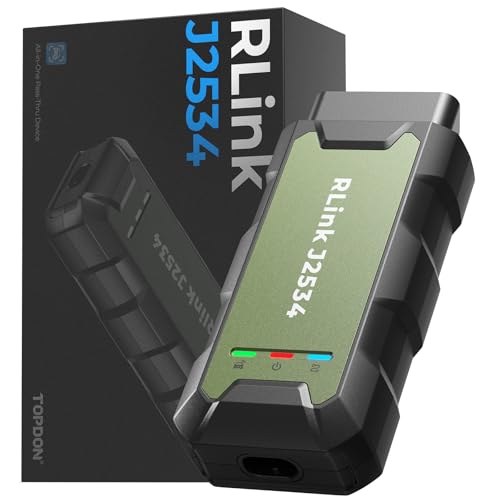
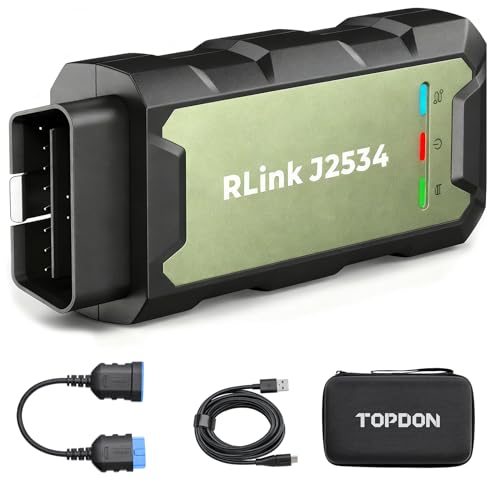
- Advanced VCI Box, Industry-leading J2534 Pass-Thru...
- High-Speed OEM-Level Diagnostics & Programming: Unlock true...
- Coverage for 17 Car Brands & Ultra Reliability: Works...
- User-Friendly RLink Platform & Expert Support: TOPDON’s...
- 6.6 ft USB-C Cable & Portable Storage Case: The RLink J...
Last update on 2026-06-23 / Affiliate links / Images from Amazon Product Advertising API
If the PDF is very large, it may not load in the preview below.
Some older TSBs had multiple PDFs — visit the NHTSA Website to view all PDFs.
If the TSB PDF does not show, download or view it on the NHTSA Website.
Click on the (+) Plus Sign
Then Click on Associated Document(s)
Search NHTSA Database for Recalls
Search NHTSA Database for Vehicle Investigations
View Latest Vehicle Investigations
Search NHTSA Database for Vehicle Complaints
View Latest Vehicle Complaints
TSB/Document ID: OwnersI
Replacement Service Bulletin Number:
MFR Communication Date: 2024-03-30
MFR Internal Campaign ID/Software Version:
Communication Type: Service Bulletin/Repair Instructions
NHTSA Components: EQUIPMENT
MFR Component System:
MFR Component Subsystem:
Previous TSB | Next TSB |
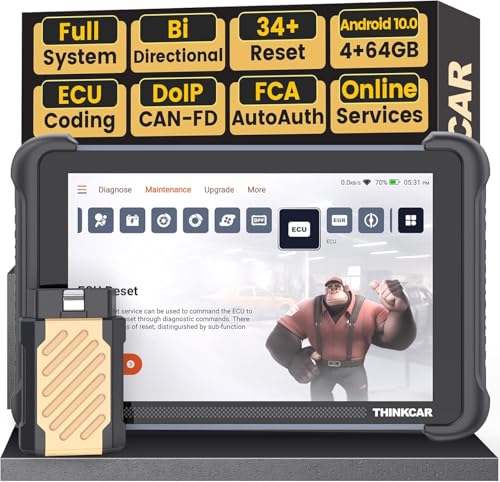
- [Notice] When you receive a used device, it may be a customer return resold by Amazon without inspection. You can exchange it for a new one through Amazon. As this situation is unavoidable, we sincerely apologize. For any issues, contacting us via Amazon's "Messages" is the best way. THINKSCAN 689BT Bidirectional Scan Tool Can Be Used Immediately After It is Turned On, Without Complicated Registration Process, Which is More Convenient & Quick.
- Full Bi-Directional Control & 3000+ Active Tests: Take control and test components like actuators, fuel injectors, relays, and cooling fans in real time. You’ll quickly see if the problem is in the part itself or the control module — saving you hours of guesswork and frustrating trial-and-error.
- Advanced ECU Coding Capabilities: Handle module matching and hidden feature activation with confidence. When you replace an ECU or want to customize settings, this obd2 scanner diagnostic bi directional tool gives you the professional-level capabilities you need without the dealership price tag.
- 34+ Useful Reset and Maintenance Functions: Complete everyday service tasks smoothly with a wide range of helpful reset and maintenance functions. Whether you’re keeping up with regular upkeep or tackling a specific job, this scanner makes maintenance simpler and less stressful for both DIYers and pros.
- Comprehensive Full System Diagnostics: Diagnose every major system — Engine, Transmission, ABS
 , SRS, TPMS, and more — all in one place. Finally stop wondering if you’re missing something important; get the full picture and clear codes with ease.
Last update on 2026-07-02 / Affiliate links / Images from Amazon Product Advertising API
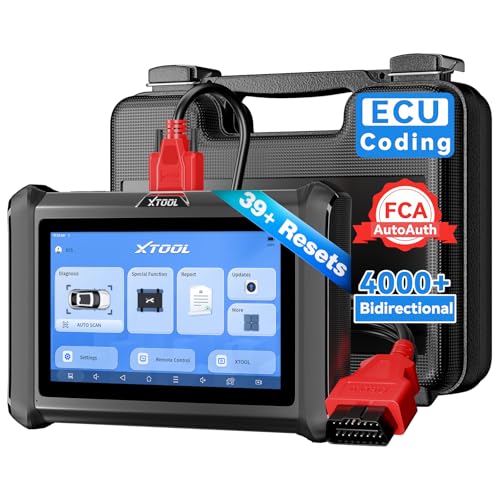
- Top Reasons to Choose the D7S OBD2 Scanner: XTOOL D7S car scan tool, an upgrade of XTOOL D7, offers comprehensive features for automotive technicians, workshops, and DIY enthusiasts 1. Upgraded Hardware: 2+64GB memory, rear camera, intuitive interface, foldable bracket 2. Complete Diagnostics: FCA Autoauth, OE-level all system scan, 39+ maintenance services, 4K+ bidirectional, CANFD/DoIP protocol 3. Advanced Capabilities: ECU c0ding, PMI functions 4. Wide Compatibility: Support 10,000+ models, covering 99% vehicle brands 5. Multi-language: Available in 22+ languages, No IP Restrictions 6. 3-Year Updates: Save 300 bucks on software updates for the latest features and optimizations
- 2026 Upgraded D7S Car Scanner Features: The newly 2026 D7S V2.0 scanner for car brings exciting features for advanced vehicle diagnostics and enhanced user experience 1. FCA AutoAuth: Now supports FCA SGW module for Chrysler, for Jeep, for Dodge (2018+), for Fiat (2017+), enabling faster vehicle communication without gateway restrictions 2. PMI (Offline ECU Pr0gramming): Allows for Ford, for Lincoln, and for Mazda ECU pr0gramming for new modules 3. Optimized Diagnostic Report 2.0: Personalized reports with logos and customer info for auto shops. Note: Compatibility varies by cars, please check before order
- 39+ Services/Resets/Adaptations/Relearns/Calibrations: XTOOL D7S full system car scanner diagnostic tool tackles 99% of common car issues through its 36+ special functions, including Oil Reset, EPB, SAS, BMS, Throttle Reset, Injector C0ding, ABS Bleed, TPMS Reset, Power Balance, etc and also covers specific-vehicle functions like Crank Sensor Relearn, ABS Initialization, Cylinder Power Balance, Fuel Trim Reset, Idle Relearn etc. This car diagnostic scanner enhances efficiency, making repairs and maintenance hassle-free. Tip: DO NOT for All vehicles, please check compatibility first
- Cost-effective ECU C0ding Scan Tool for Specific Brands: Enhance your vehicle's performance with XTOOL D7S! This obd2 scanner all systems bidirectional offers advanced capabilities at an affordable price, supports online for BMW, for Benz and offline for BENZ, for MIT, along with PMI functions for Ford, for Mazda, and for Lincoln. Ideal for technicians and DIY enthusiasts, this automotive scanner diagnostic tool optimizes vehicle performance and enhances the driving experience. Note: Not for all cars and modules, please send car VIN to check the compatibility before purchase
- OE All System Diagnostic & 8 Pids Graphing: XTOOL D7S is a comprehensive all system bi directional obd2 scanner that delivers dealer-level diagnostics, completely controlling over your vehicle’s performance and health. This automotive scan tool can read and clear DTCs, view live data and ECU information, retrieve freeze frames, and perform active tests and full obd2 functions. This bi-directional scan tool can can identify your vehicle's make, model, and year information with just one click and show up to 8 PIDs live data with options for CSV viewing, playback, and recording for in-depth analysis. It is easy-to-use for both professionals and beginners, helping pinpoint issues efficiently
Last update on 2026-06-30 / Affiliate links / Images from Amazon Product Advertising API
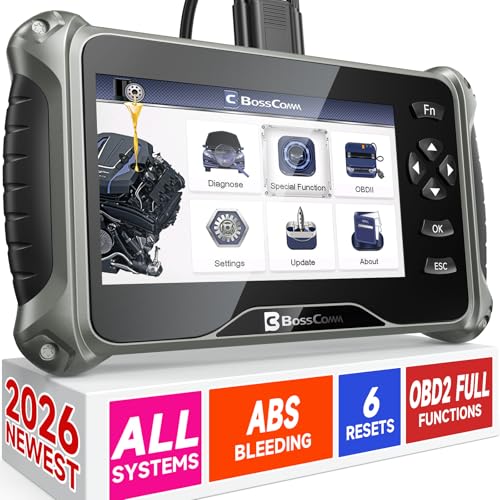
- 【✅Compared to BOSSCOMM IF742, IF745 Offers Full-System Diagnostics】The BOSSCOMM IF745 car diagnostic scanner is an upgraded model of IF742. In addition to supporting all OBD2 Code Reader functions and 6 reset options (ABS/EPB/SAS/BMS/Oil/Throttle), it expands diagnostics from 4 systems (Check Engine/ABS/SRS/Transmission) to vehicle All systems, including Steering, Suspension, and Body Electronics. This provides deeper, more comprehensive diagnostic capabilities.
- 【✨10 OBD2 Functions】The BOSSCOMM IF745 scan tool’s DTC Lookup instantly translates fault codes into user-friendly explanations, its I/M Readiness feature streamlines emissions testing with a single tap, and Freeze Frame lets you pinpoint the exact moment of a fault for in-depth root-cause diagnosis. Combined with a live data dashboard and advanced diagnostics (O2S, OBMon, EVAP), it delivers comprehensive insights for confident troubleshooting.
- 【✨Deep Diagnostics for All Vehicle System Modules】Beyond code reading/clearing and ECU information retrieval, our all-in-one data stream feature lets you inspect all current fault codes and their locations across the vehicle’s systems. This vehicle code reader helps you turn off dashboard warning lights and perform a comprehensive self-check of your car at home—no more back-and-forth trips to the repair shop or hefty inspection fees.
- 【✨6 Essential Resets: ABS Bleeding, Oil, EPB, SAS, Throttle, BMS】The BOSSCOMM IF745 obd2 scanner diagnostic tool swiftly purges air from brake lines to restore braking sensitivity, fine-tunes maintenance cycles to eliminate false alerts, resolves parking brake issues with one-click control, recalibrates steering sensors for stability, optimizes engine idling/acceleration for smoother performance, and deeply resets battery systems to extend lifespan and range via precise parameter adjustments.❗NOTE: Does NOT support bidirectional control, coding, or programming.
- 【✨10,000+ Car Models, AutoVIN, 13 Languages】The BOSSCOMM IF745 vehicle scanner diagnostic tool covers 73+ global car brands and offers support in 13 languages, making it perfect for DIYers, auto mechanics, or as a thoughtful gift. With a single-click AutoVIN feature, it instantly retrieves vehicle serial numbers, streamlining diagnostics for users globally. This adaptable tool balances user-friendliness with precision, catering to both personal and professional requirements.✅Unsure about compatibility? Compatibility will vary on vehicles' model and year, pls reach us via 📧 [email protected] 📧 before purchase.
Last update on 2026-07-02 / Affiliate links / Images from Amazon Product Advertising API
This product presentation was made with AAWP plugin.